


Primary sourceArtifact13 BC
Via Julia Augusta
13 BC
A Roman road built on Augustus's order linking Italy to Gaul after his conquest of the Alps, showing his investment in imperial infrastructure.
Commissioned by Augustus to connect Italy to Gaul after his Alpine conquest, part of his imperial building program.
About this source
What it is
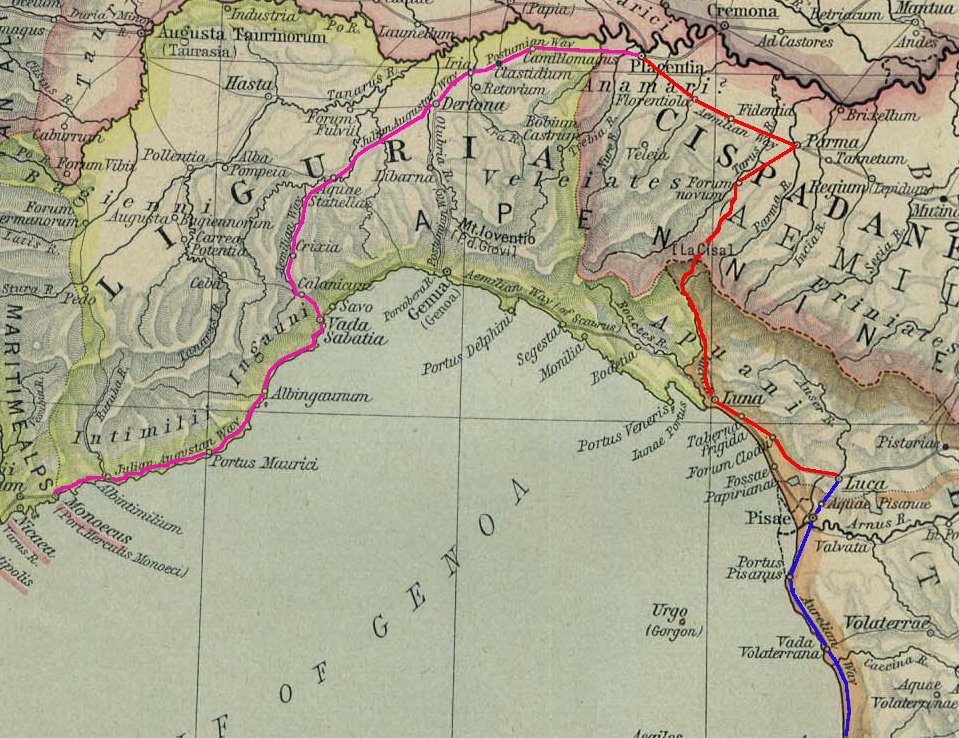
The Via Julia Augusta was a Roman road begun in 13 BC under Augustus, formed by joining earlier roads, running from Placentia in Italy to Arelate in Gaul along the Ligurian coast. Later emperors renewed its engineering works.
Why it matters
The road illustrates Augustus's programme of building infrastructure to bind conquered territory to Rome, following his victory over Alpine tribes. The route passed the Tropaeum Alpium, a monument celebrating that victory, and included bridges and funerary monuments built by Roman engineers. Its long use and later decline and restoration show how Roman infrastructure shaped the region for centuries afterward.
Look closer
- Why would an emperor invest in roads soon after a military conquest?
- What does the survival of bridges and monuments along the road tell us about Roman engineering?
- What might this road have meant for ordinary people living along its route, compared to the emperor who ordered it?
This artifact is part of the curated material that grounds the AI version of Augustus on Humy.ai — when students ask about related events, the AI can quote it and cite it.
More Augustus sources
Meet the AI Augustus →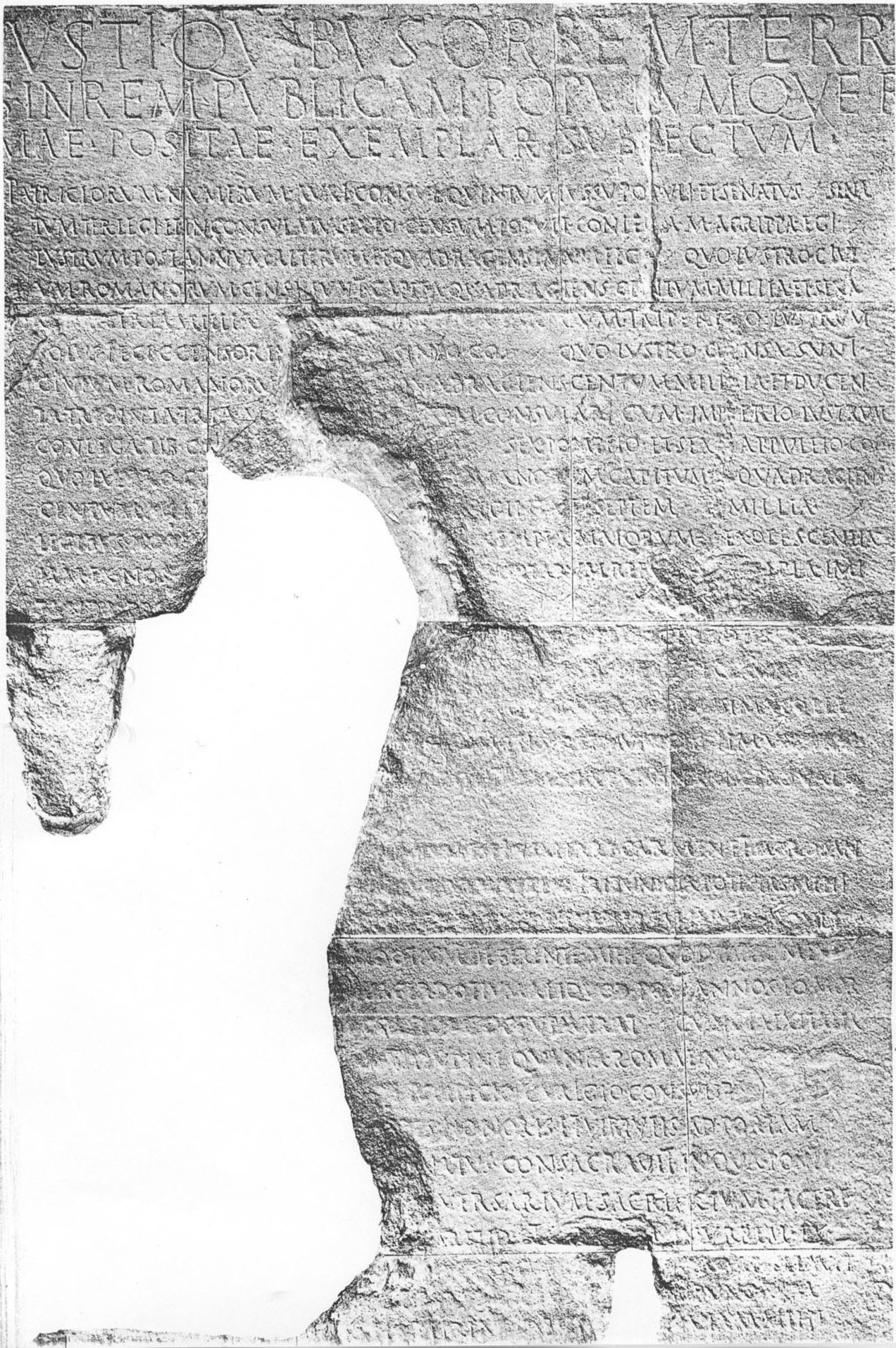 Document
Primary source
Res Gestae Divi Augusti
Augustus · 14 AD
 Painting
Secondary source
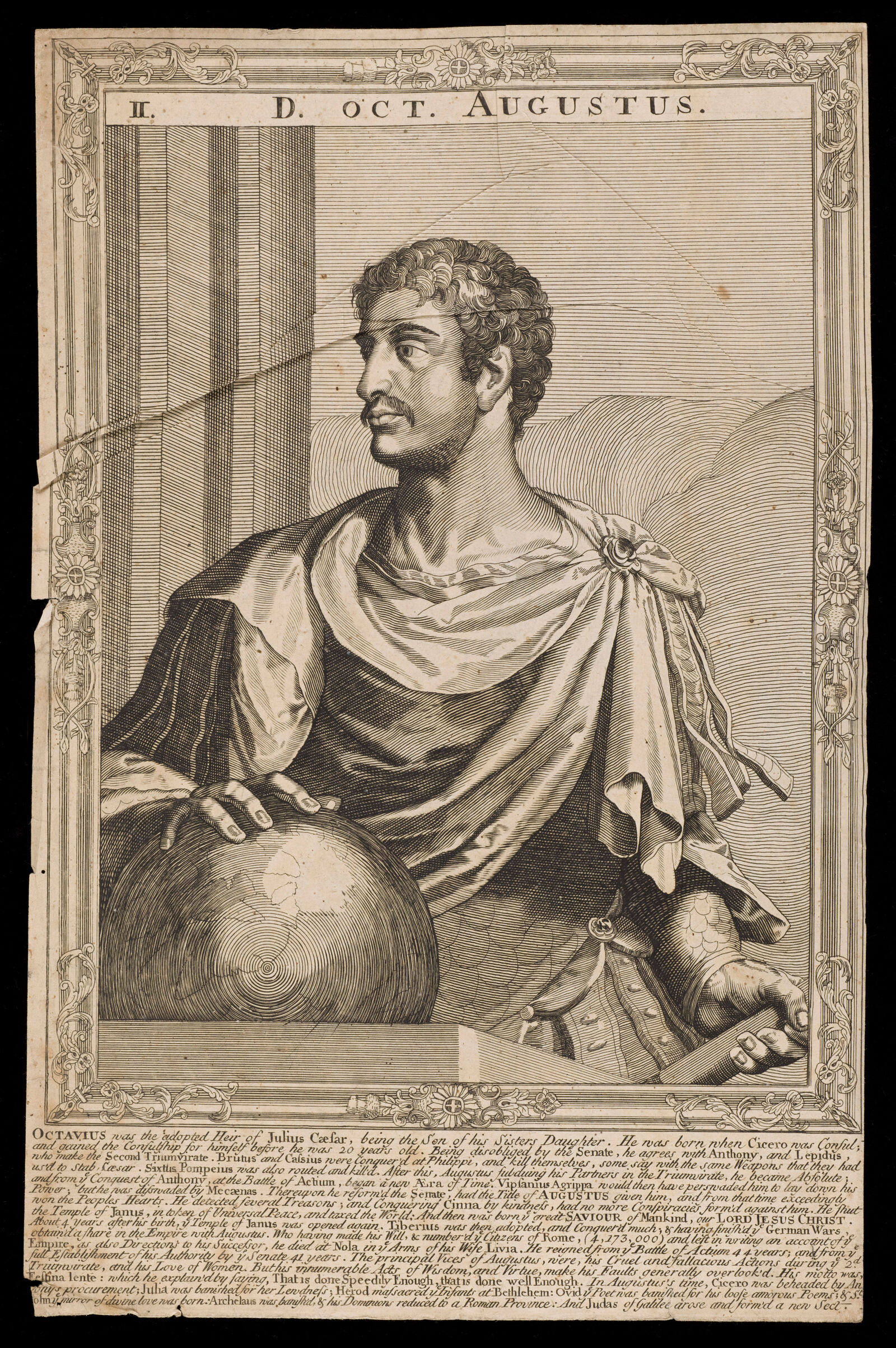
Emperor Augustus with Globe
After Titian (engraving by A. Sadeler, after Titian) · between 1700 and 1799 (possibly 17th century)
 Sculpture
Primary source
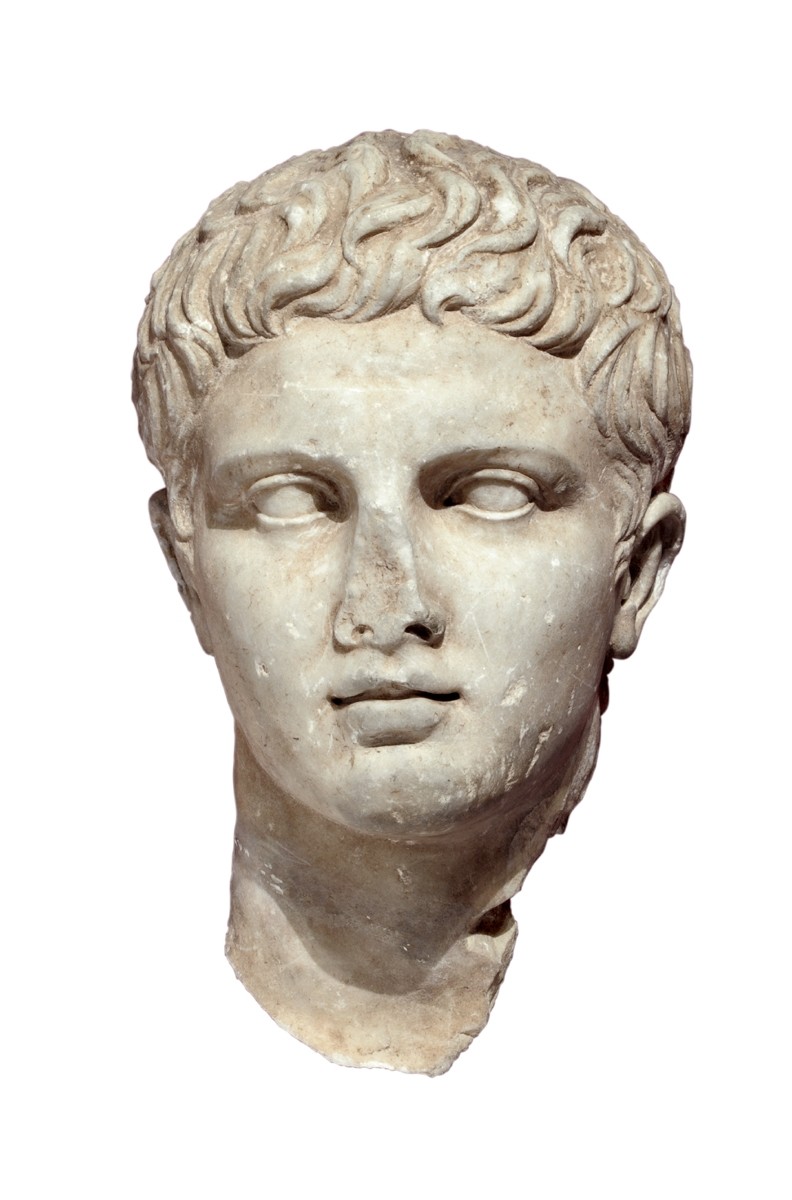
Relief Head of the Young Augustus
 Sculpture
Secondary source
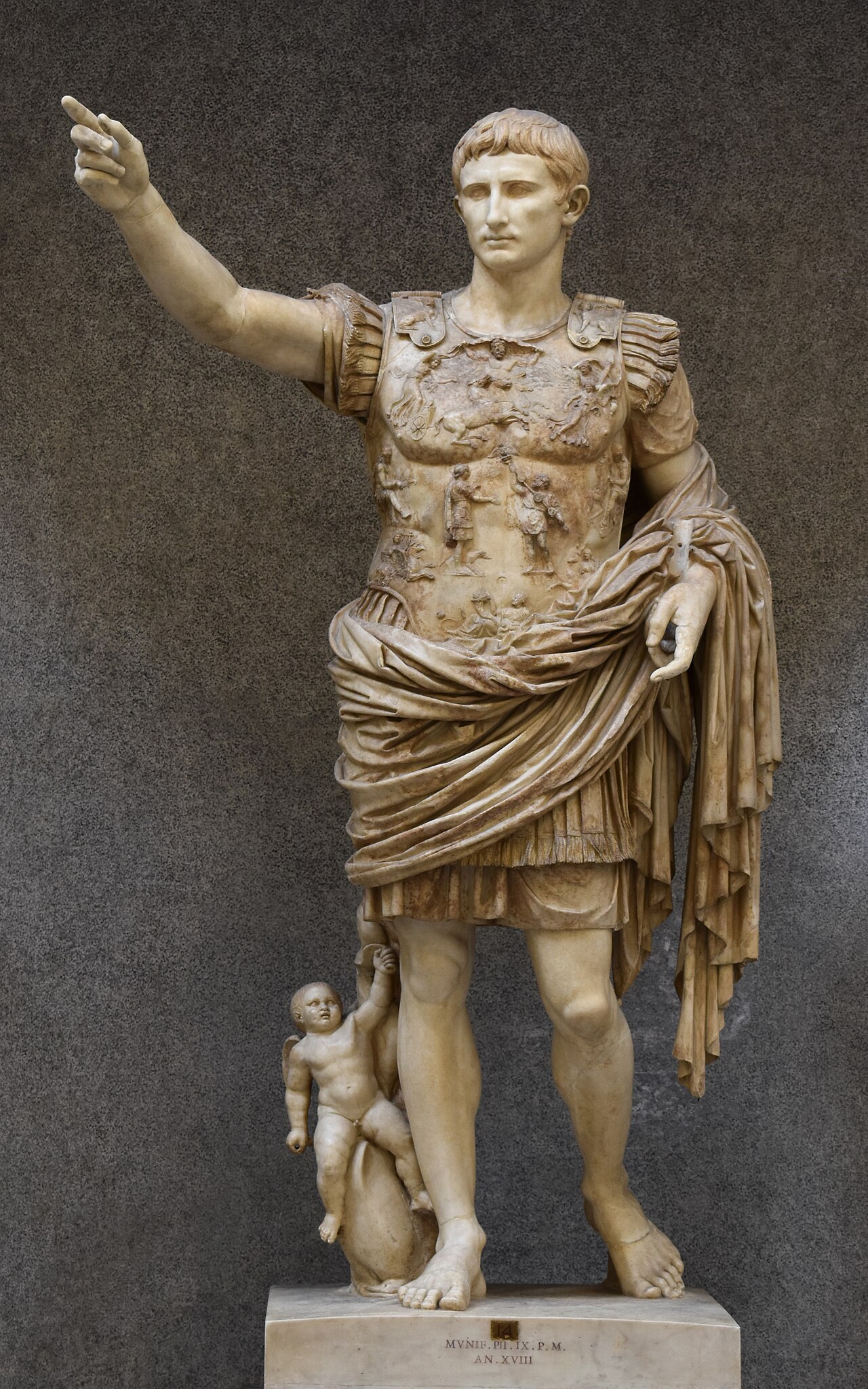
Augustus of Prima Porta
c. 19 BCE or later
 Artifact
Primary source
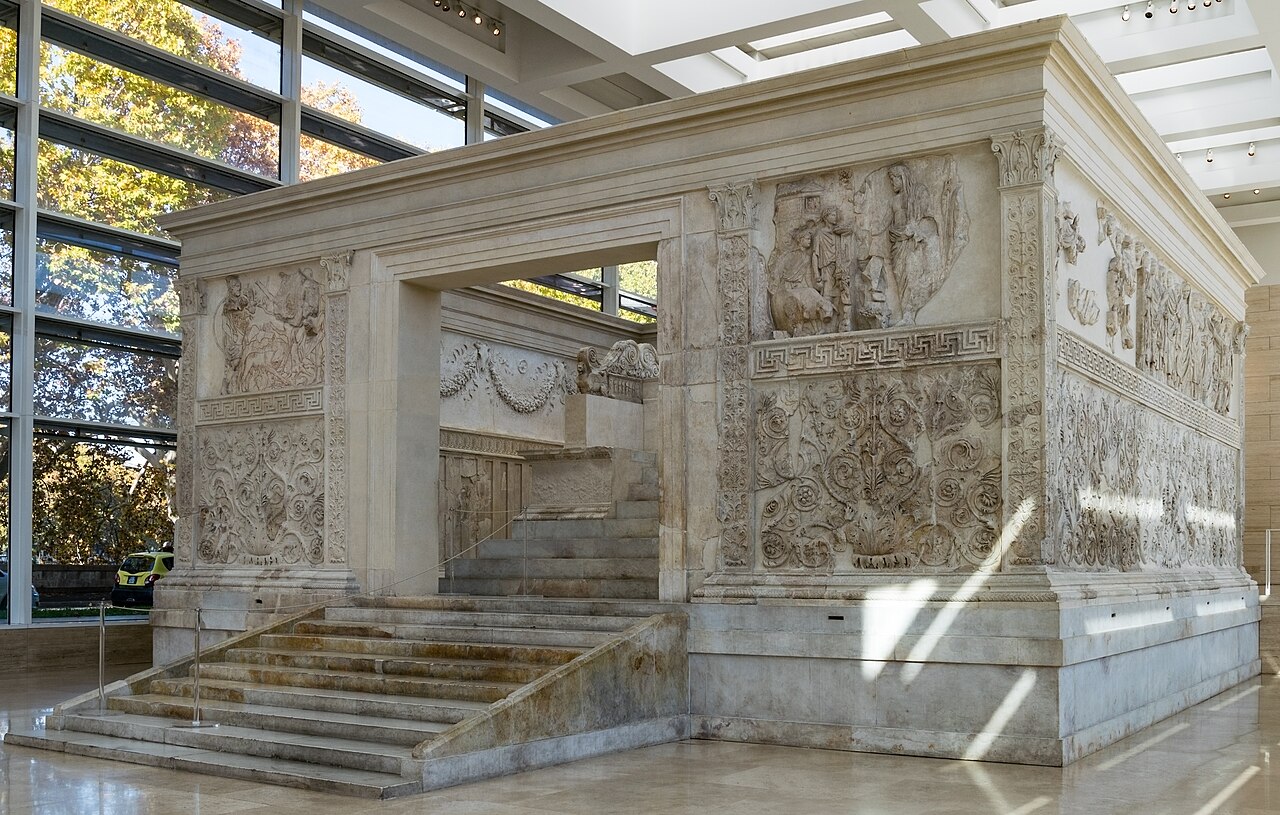
Ara Pacis
13-9 BCE
Ready when you are
Start chatting with Augustus now.
20 messages free · No credit card · Available in 50+ languages.