


Secondary sourcePainting1538
Virgil
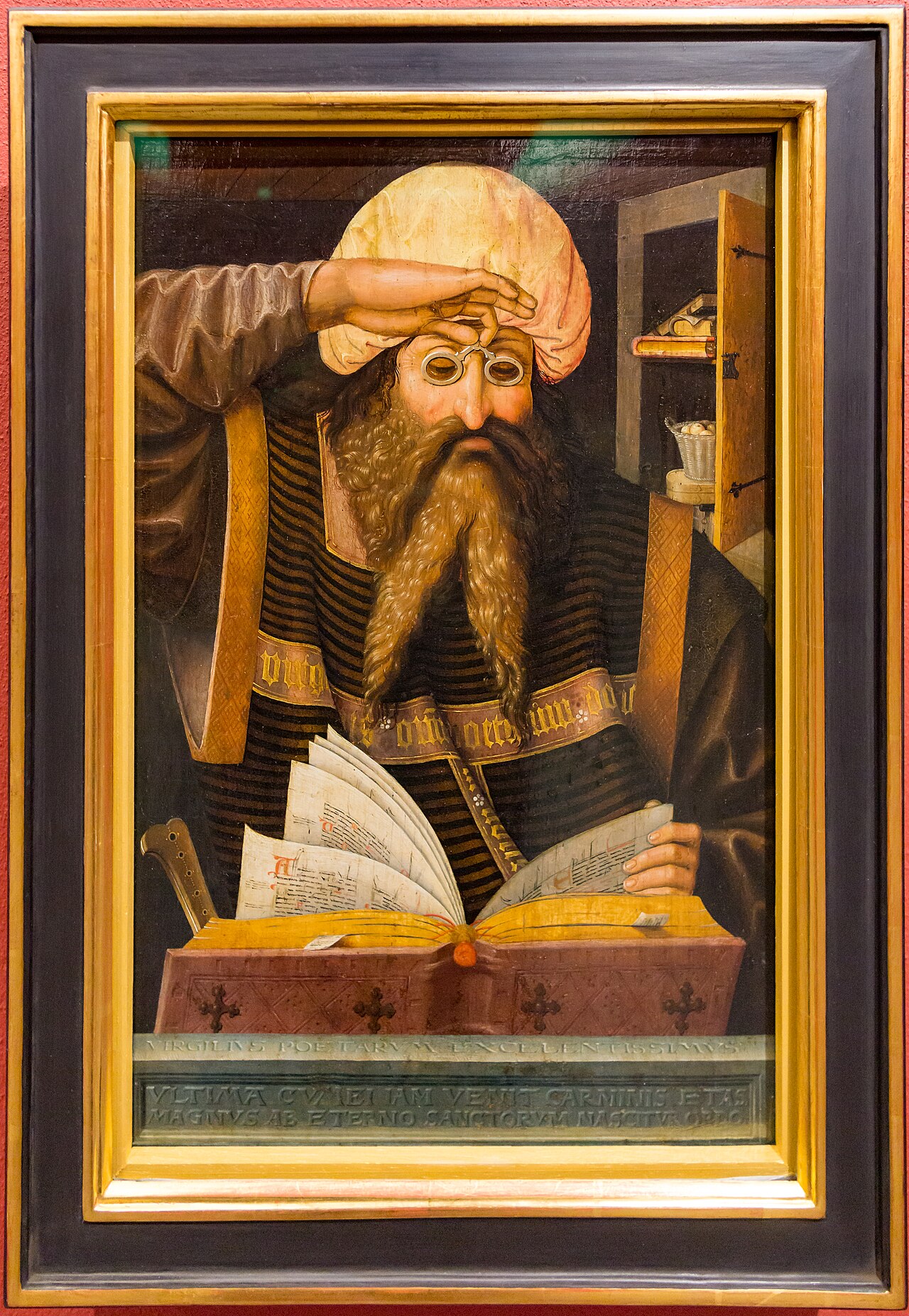
Ludger tom Ring the Elder · 1538
A 1538 imagined portrait of Virgil as a learned scholar, painted centuries after his death with no basis in a real likeness.
An imagined Renaissance portrait of Virgil, created over 1500 years after his death with no real likeness to go by.
About this source
What it is
This 1538 painting by the German artist Ludger tom Ring the Elder shows a bearded man in robes and a turban, wearing spectacles and reading a book at a lectern. It is identified as a portrait of Virgil and is held in the Westphalian State Museum of Art and Cultural History.
Why it matters
No portrait of Virgil was made during his own lifetime, so images like this are entirely imagined by later artists. This painting shows how northern European artists in the Renaissance pictured ancient authors as wise, scholarly figures, dressed in clothing that reflected ideas of learning rather than historical accuracy about Roman dress.
Look closer
- What details in the painting suggest the figure is meant to look wise or scholarly?
- Since no real likeness of Virgil survived, what choices did the artist have to make up?
- Why might later cultures want to imagine a face for a famous ancient author?
This painting is part of the curated material that grounds the AI version of Virgil on Humy.ai — when students ask about related events, the AI can quote it and cite it.
Ready when you are
Start chatting with Virgil now.
20 messages free · No credit card · Available in 50+ languages.