


Secondary sourcePainting1794
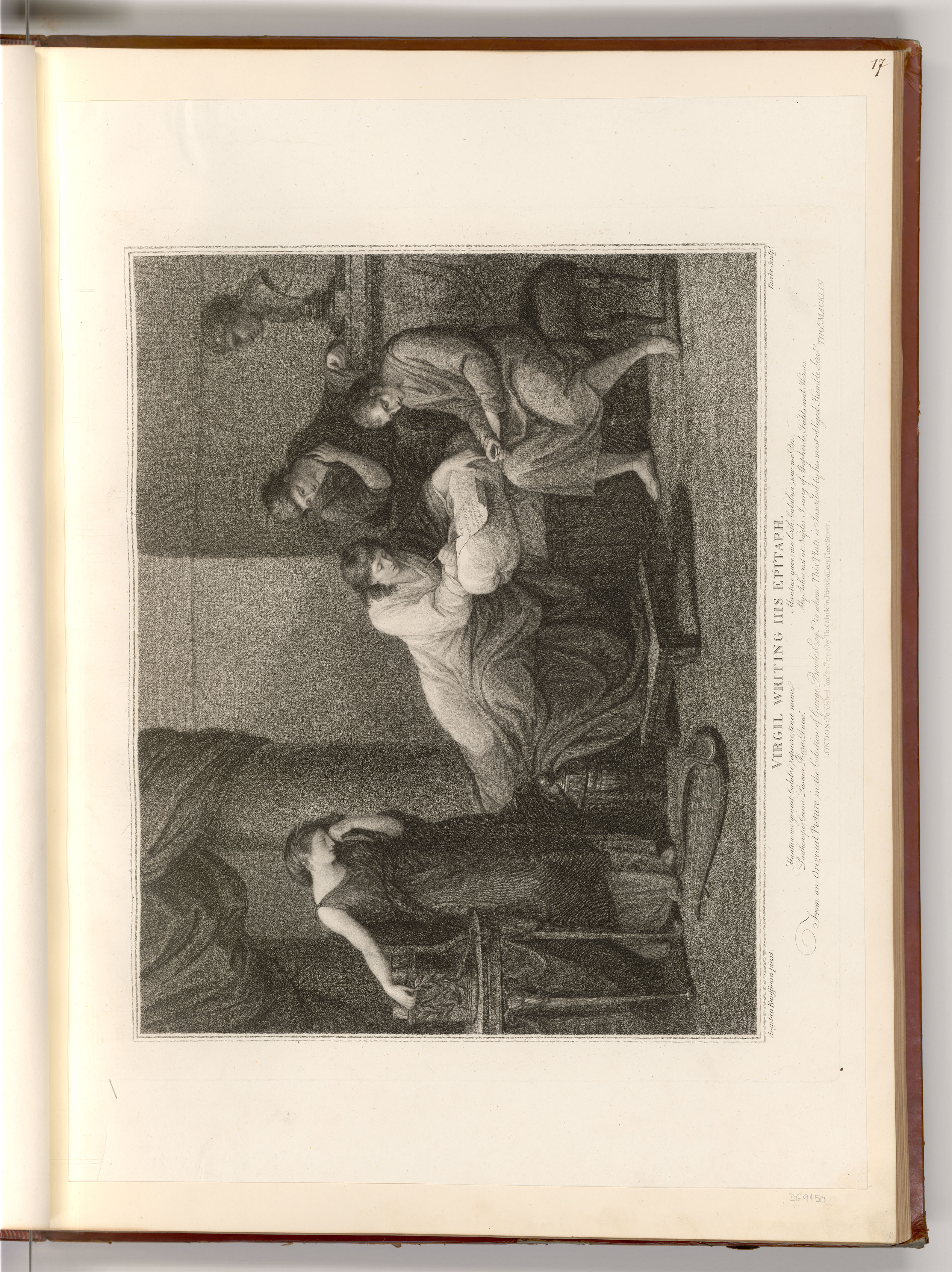
Virgil Writing His Epitaph
1794
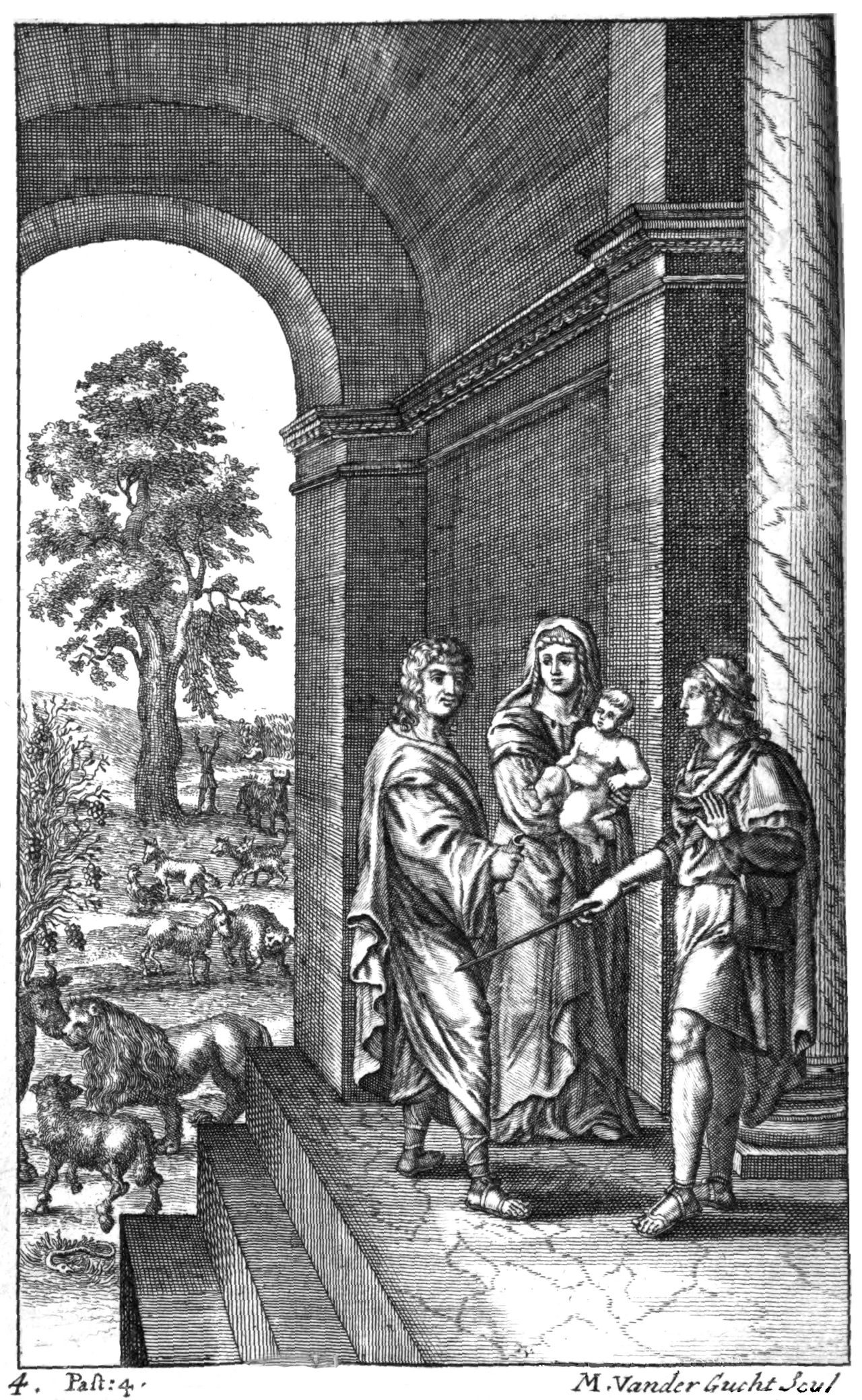
An 1794 engraved print of a later imagined scene in which Virgil composes his own epitaph, with a bust, a lyre and a laurel wreath.
An imagined later scene of Virgil composing his epitaph, showing how the poet's life was dramatised for readers of 1794.
About this source
What it is
This is an engraved print from 1794, titled Virgil Writing His Epitaph, held by the Albertina Museum in Vienna. The catalogue record calls it a drawing, but the image is an engraved print. It shows a woman seated at a desk holding a scroll and writing, with a bust on a pedestal behind her. Two men lean in, and a woman in the foreground rests beside a lyre and a laurel wreath. The curator notes that the scene is later and imagined, not a record of an actual event.
Why it matters
Scenes like this one show how eighteenth-century artists pictured poets at work. The lyre, wreath and bust are symbols of poetic fame, and the print turns Virgil's writing of his own epitaph into a moment of reflection on death and reputation. It tells us what its makers and buyers valued in a poet, not what Virgil actually did.
Look closer
- Which objects in the print signal that this is a scene about poetry and fame?
- Why does the artist place a woman in the foreground, and what role does she seem to have?
- What would a viewer in 1794 have needed to know about Virgil to understand this scene?
This painting is part of the curated material that grounds the AI version of Virgil on Humy.ai — when students ask about related events, the AI can quote it and cite it.
Ready when you are
Start chatting with Virgil now.
20 messages free · No credit card · Available in 50+ languages.