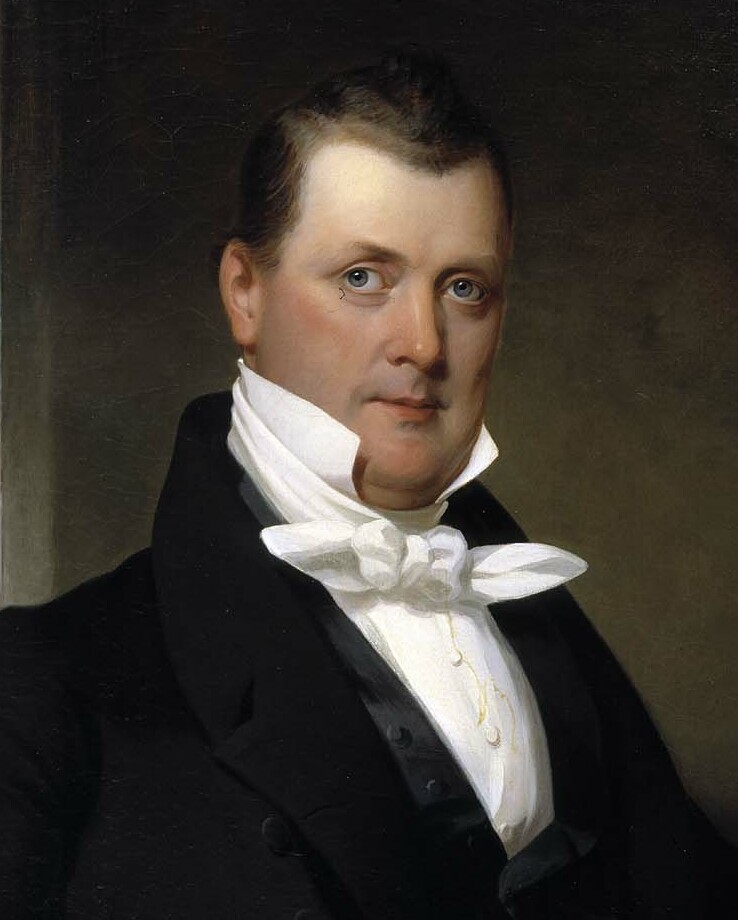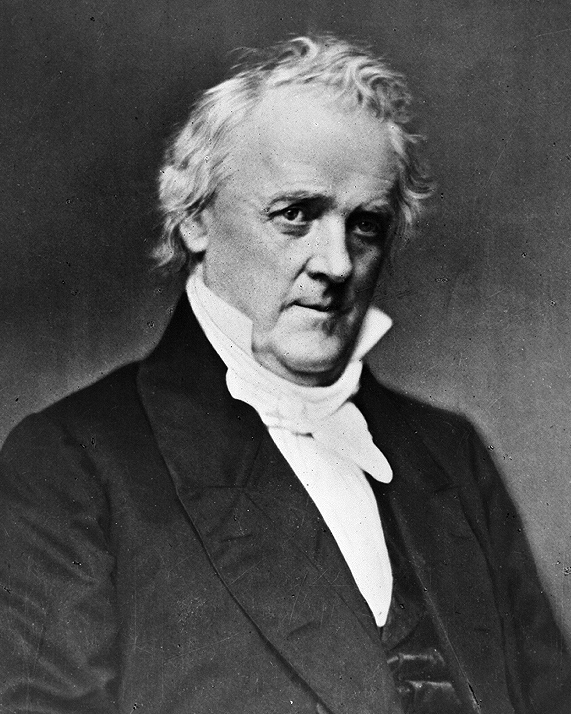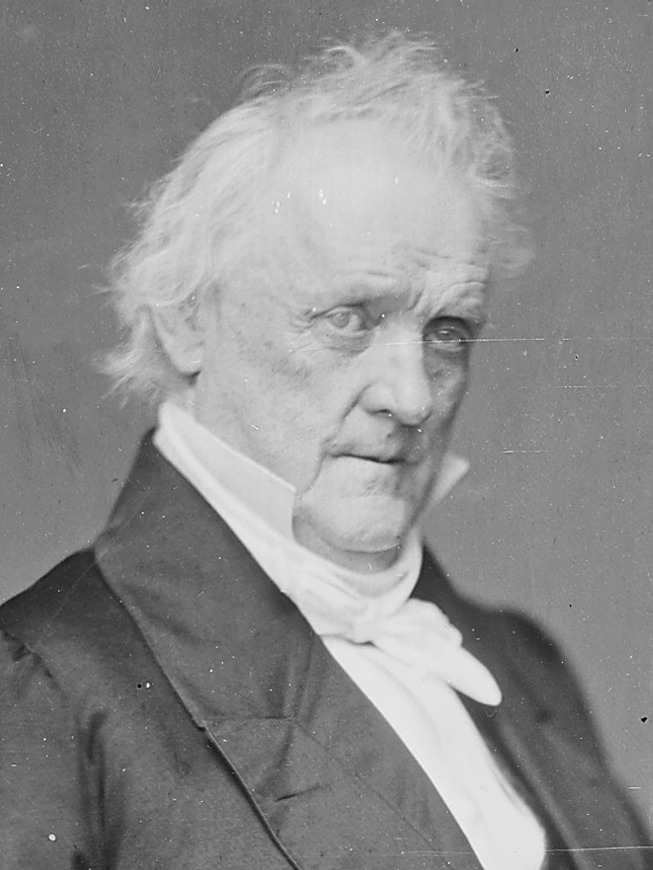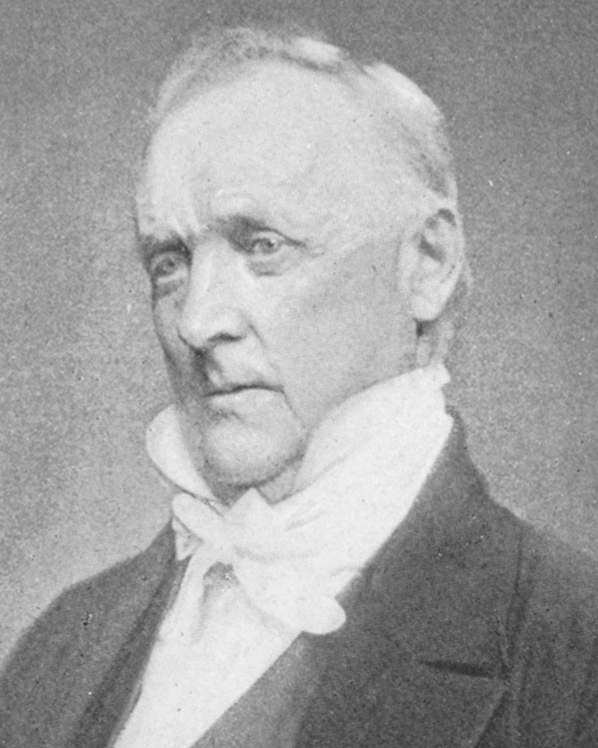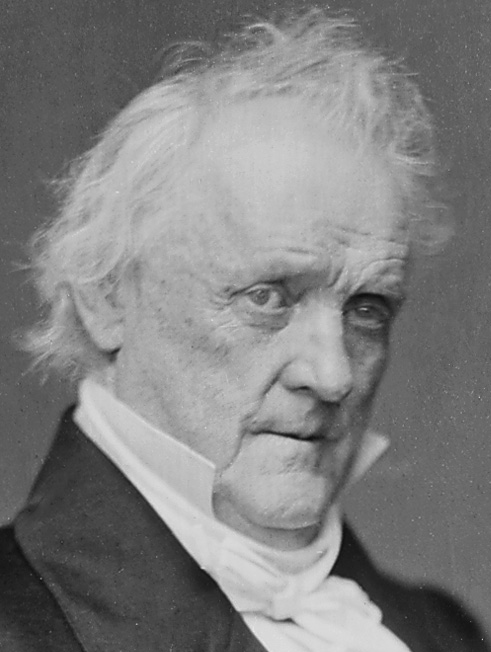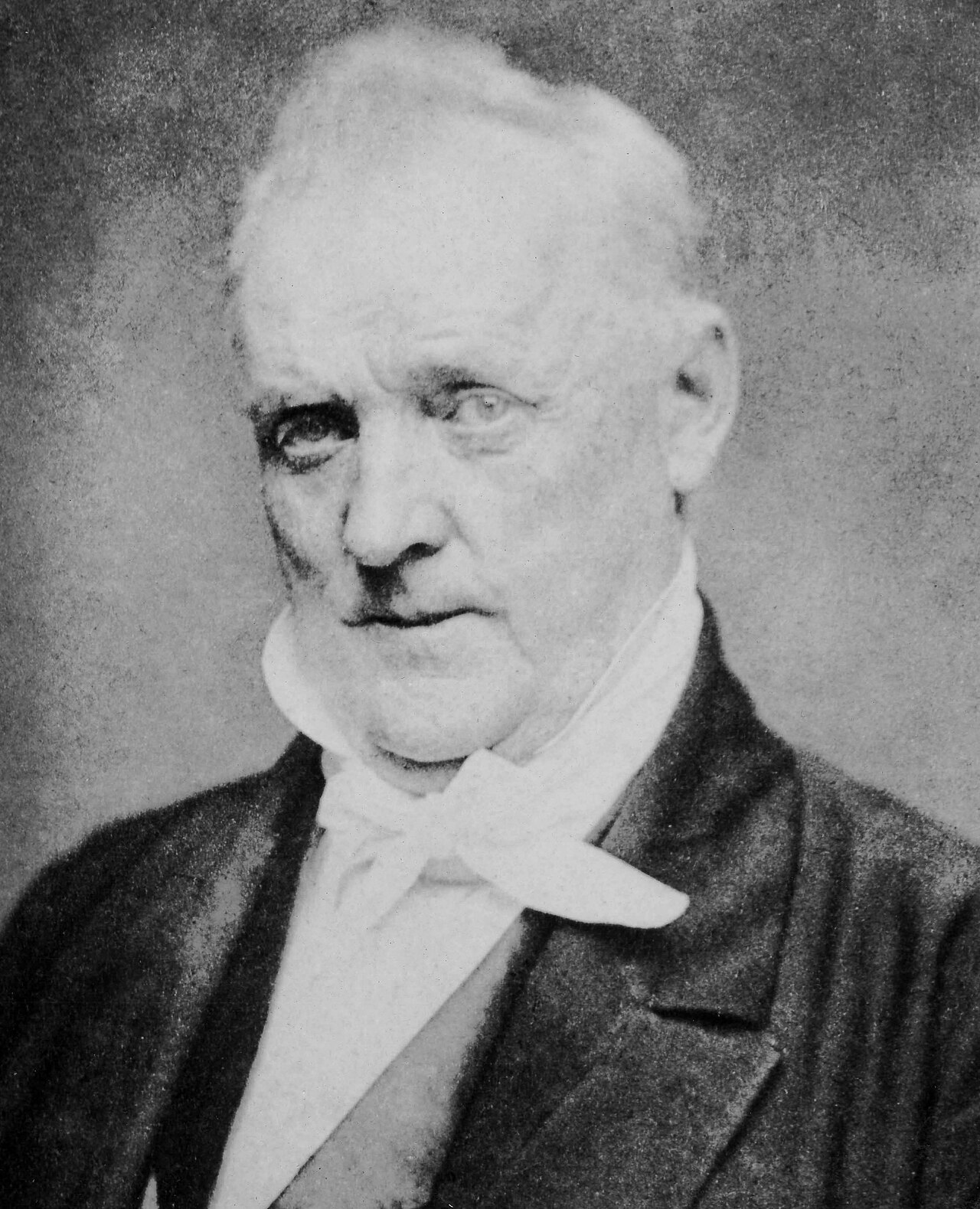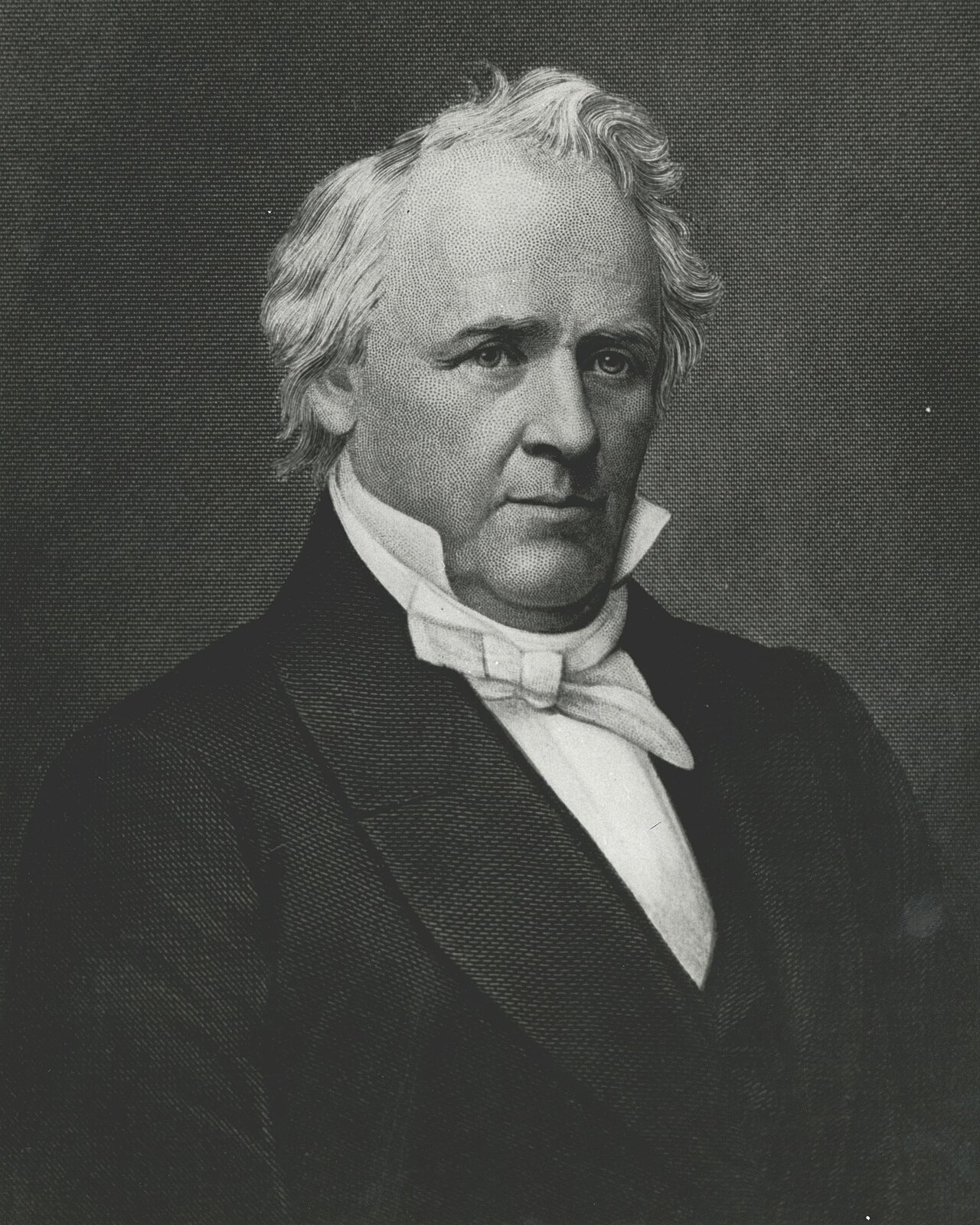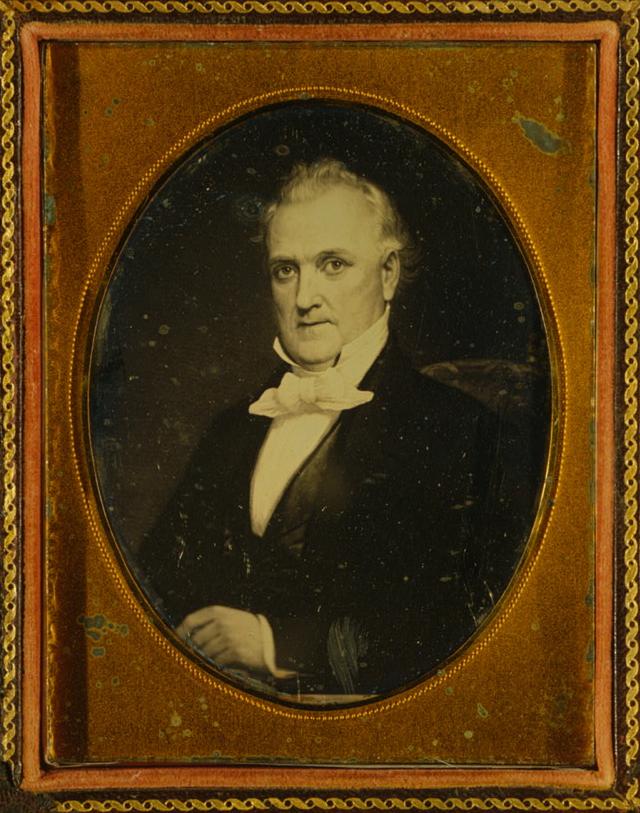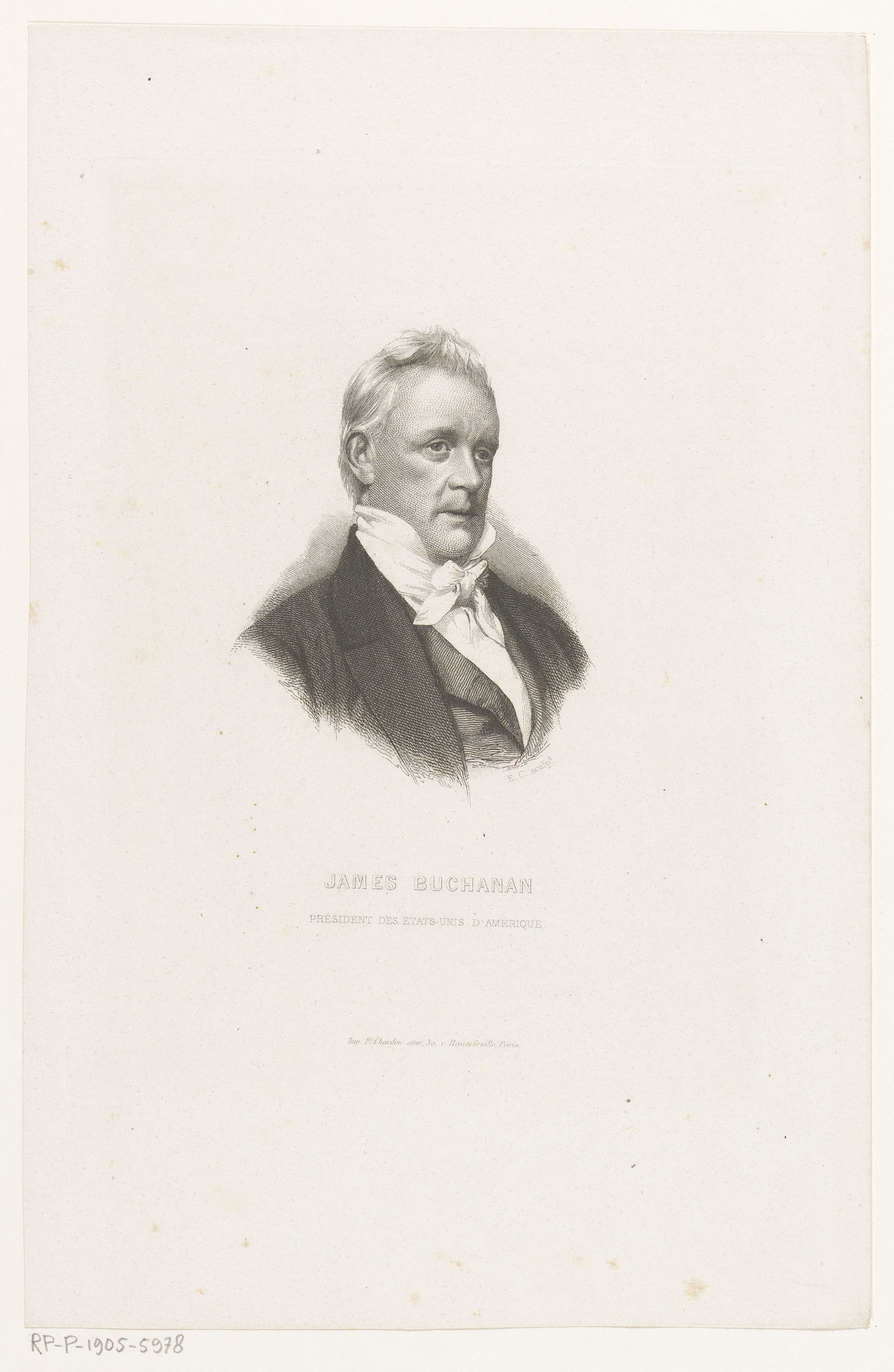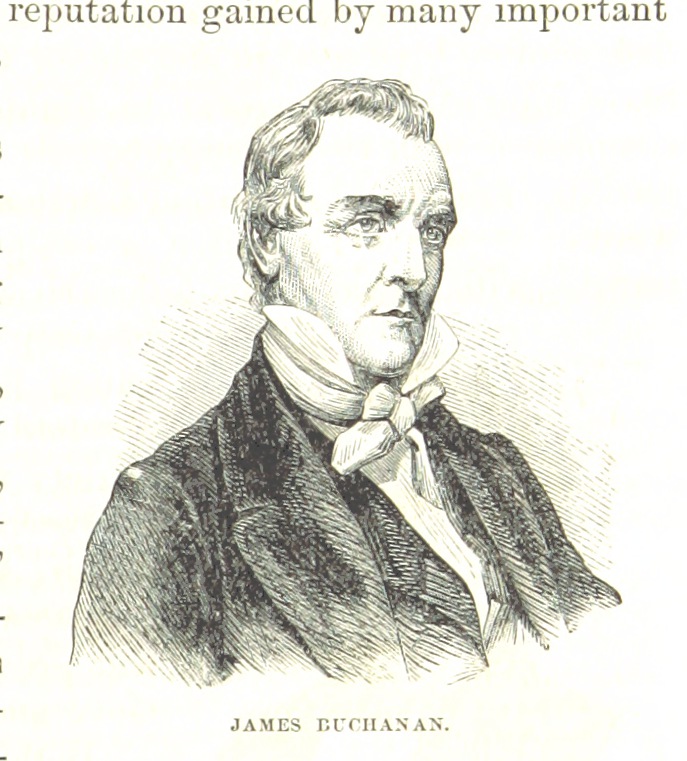
Portrait of James Buchanan

AI Historical Figure

James Buchanan

Sensitive

15th President of the United States.

Chat with James Buchanan via text or voice — in 42 languages, drawing on a curated biography and 82 historical sources. Available 24/7.

Start chatting with James Buchanan20 messages free · No credit card
Lived
1791–1868
From
United States
Known for
Politics & government
James Buchanan

James Buchanan

Online · responds in seconds

Hello — I'm James Buchanan. 15th President of the United States. What would you like to ask me?

20 messages free · No credit card · Powered by Humy.ai

Live preview · Switch between 42 languages above · Send a message to continue in the app

Multilingual

Talk to James Buchanan in 42 languages

Ask James Buchanan questions in any language below, and the rest of Humy's app speaks it too. Pick yours to open the chat in that language.

Also in German (Austria), German (Switzerland), English (UK), English (Australia), English (Canada).

The sources behind this AI

82 sources · 25 documents · 16 books · 15 photographs · 11 paintings · 4 artifacts · 3 speeches · 3 letters · 3 newspaper articles · 2 sculptures

James Buchanan doesn’t improvise from thin air. The AI is grounded in 82 curated historical sources students can inspect. Open any of them to see what informs the conversation.

Speech

Primary source

Fourth Annual Message to Congress

James Buchanan · 3 December 1860

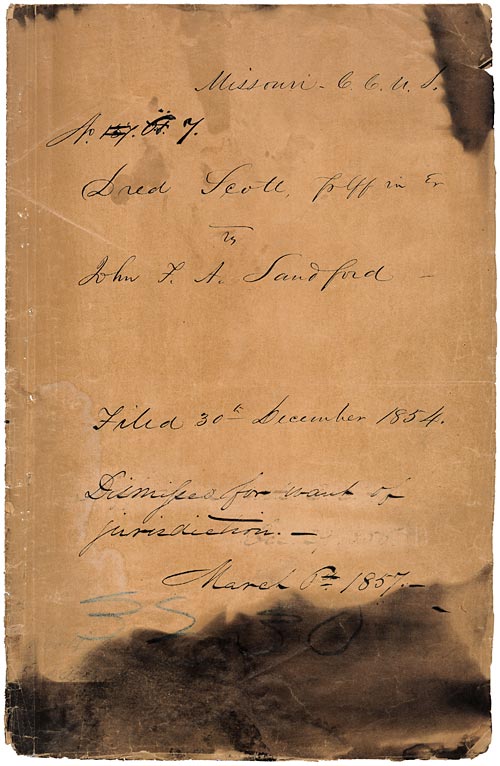
Handwritten cover sheet of the court record for Dred Scott v. Sandford. Top reads 'Missouri C.C.U.S.' with a case number, then 'Dred Scott, Plaintiff in Error, v. John F. A. Sandford', 'Filed 30th December 1854', 'Dismissed for want of jurisdiction', and 'March 6th 1857'. Scorched and darkened edges, with a blue pencil mark at lower left.Document

Primary source

Dred Scott v. Sandford

Roger B. Taney · 6 March 1857

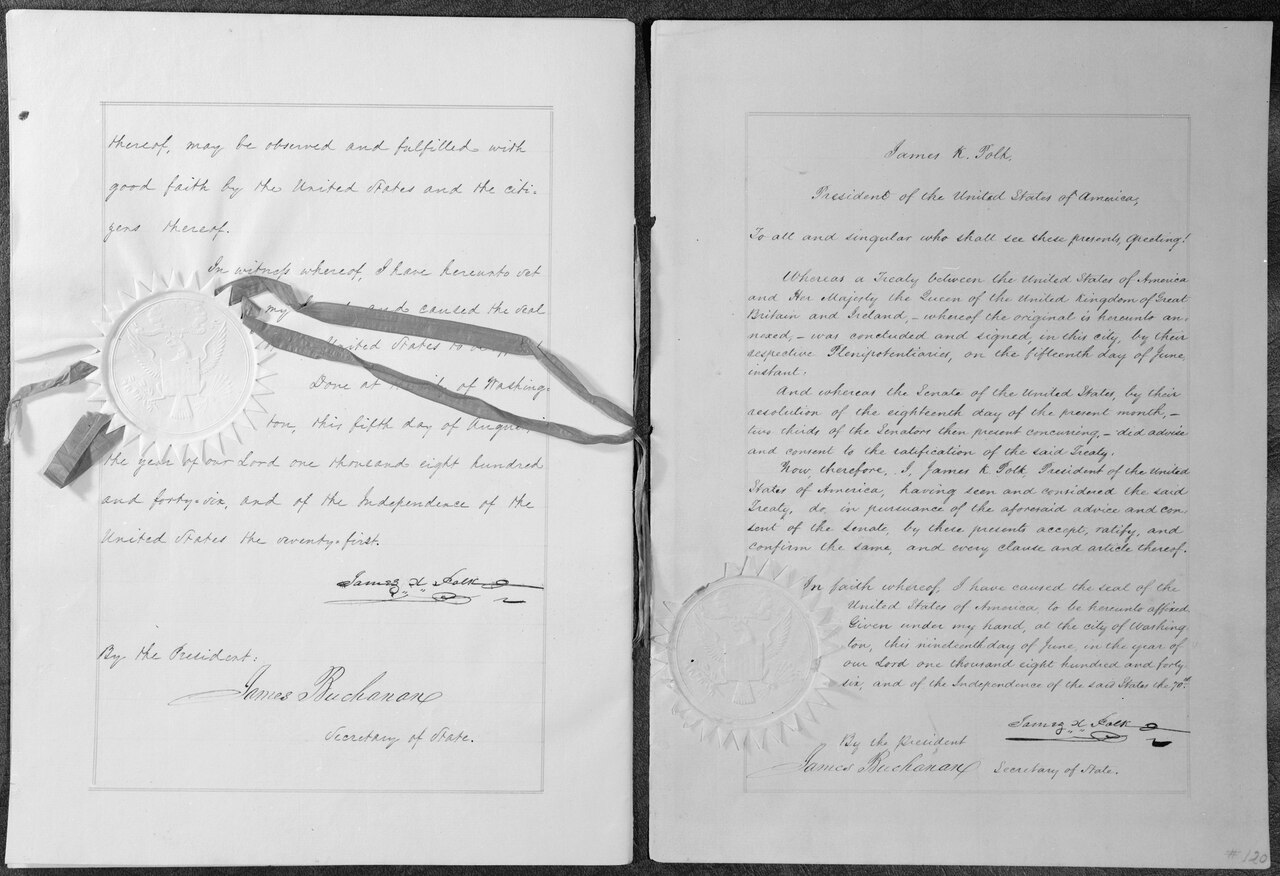
Two pages of the Oregon Treaty, handwritten in ink on paper, laid side by side. Each has a wax seal with a ribbon on the left page and a seal on the right. Signatures appear at the bottom: James Buchanan as Secretary of State, and James K. Polk as President.Document

Primary source

Oregon Treaty

15 June 1846

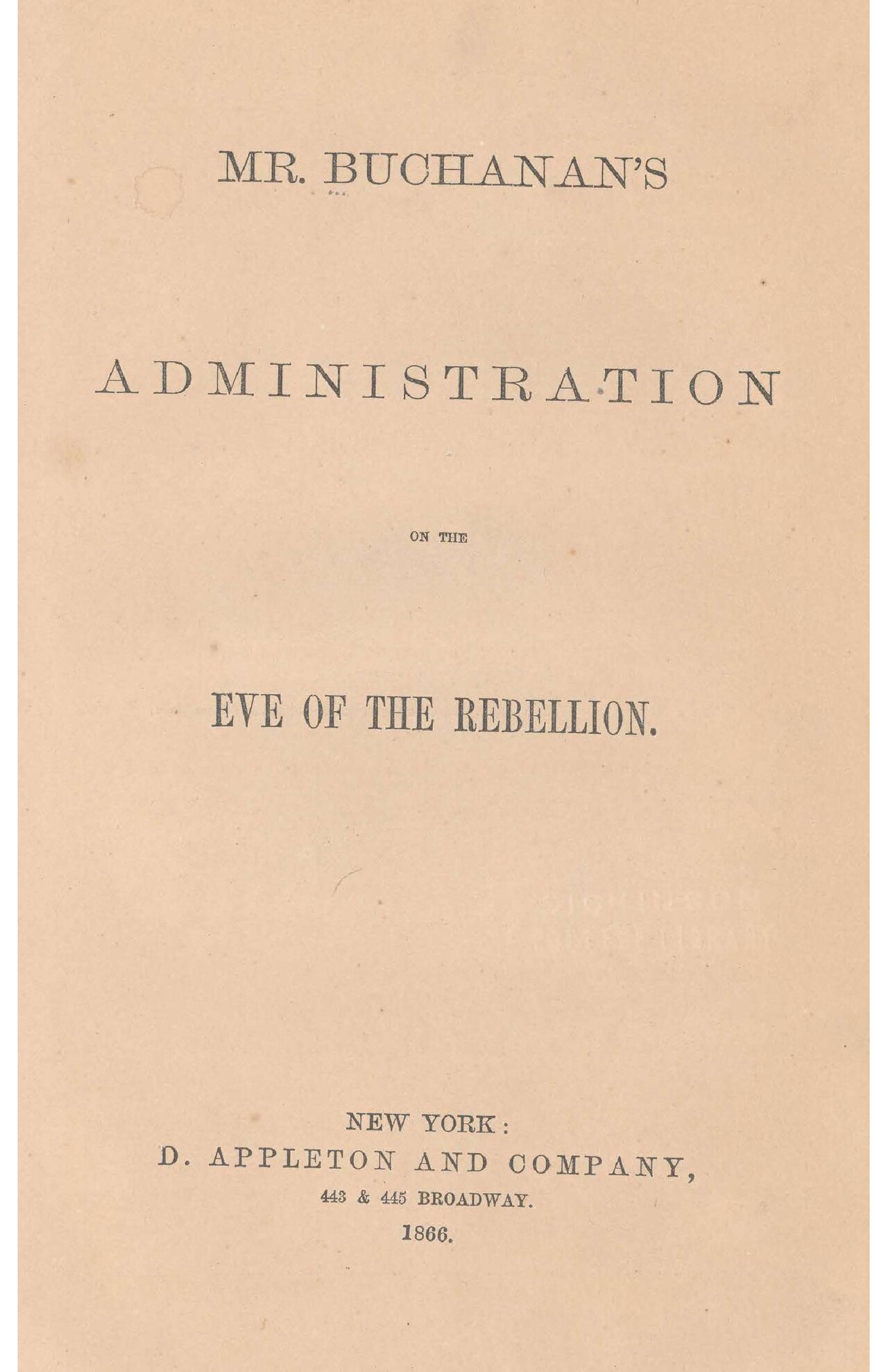
Title page of a book on a peach-colored background. Large text reads: MR. BUCHANAN'S ADMINISTRATION, with smaller text ON THE, then EVE OF THE REBELLION. Below: NEW YORK: D. APPLETON AND COMPANY, 443 & 445 BROADWAY, 1866.Book

Primary source

Mr. Buchanan's Administration on the Eve of the Rebellion

James Buchanan · 1866

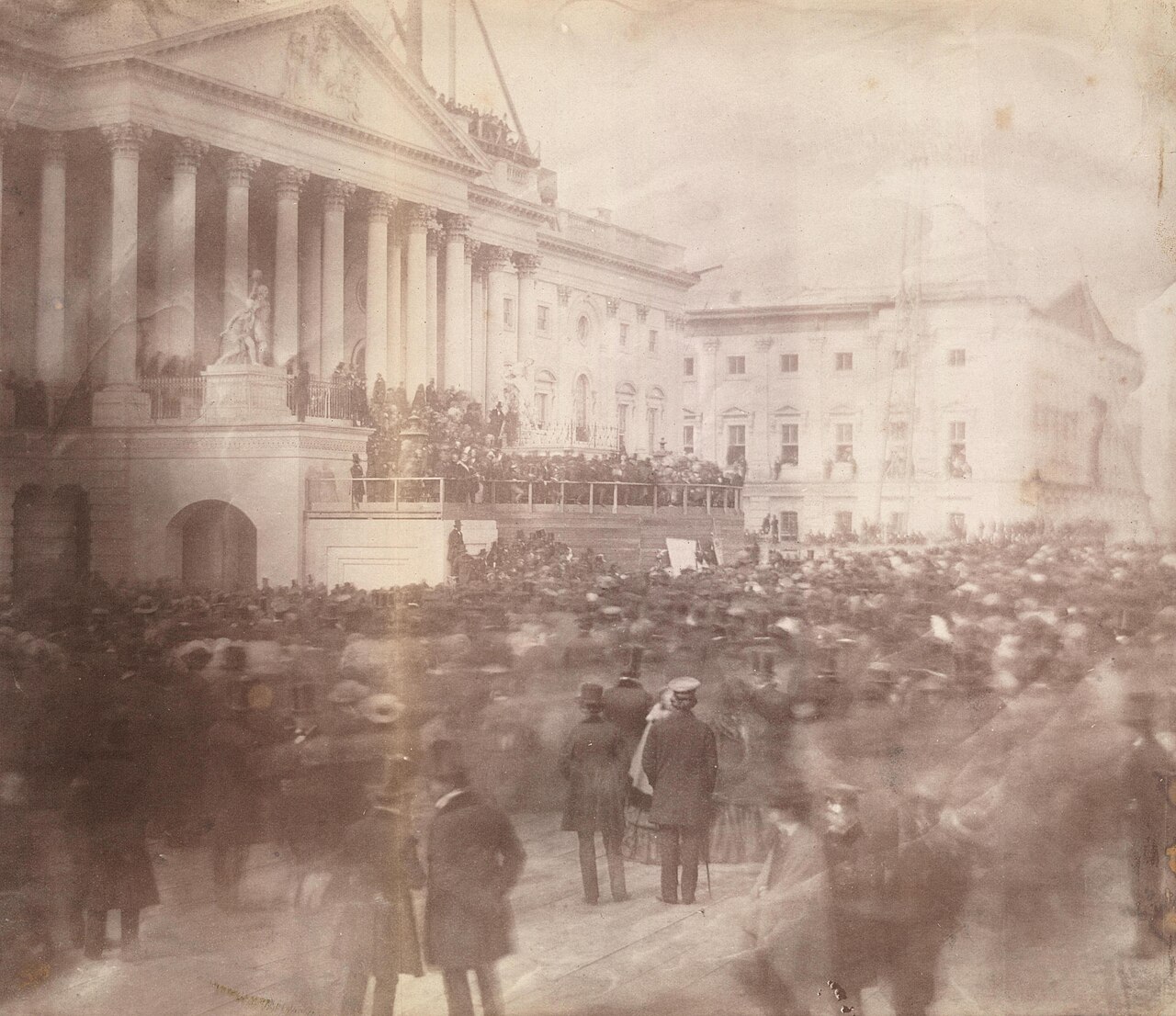
Sepia photograph of a large crowd in front of the east portico of the US Capitol during the 1857 inauguration. Columns, a balcony with officials, and a statue are visible; people in top hats fill the foreground.Photograph

Primary source

Inauguration of James Buchanan photograph

John Wood · 4 March 1857

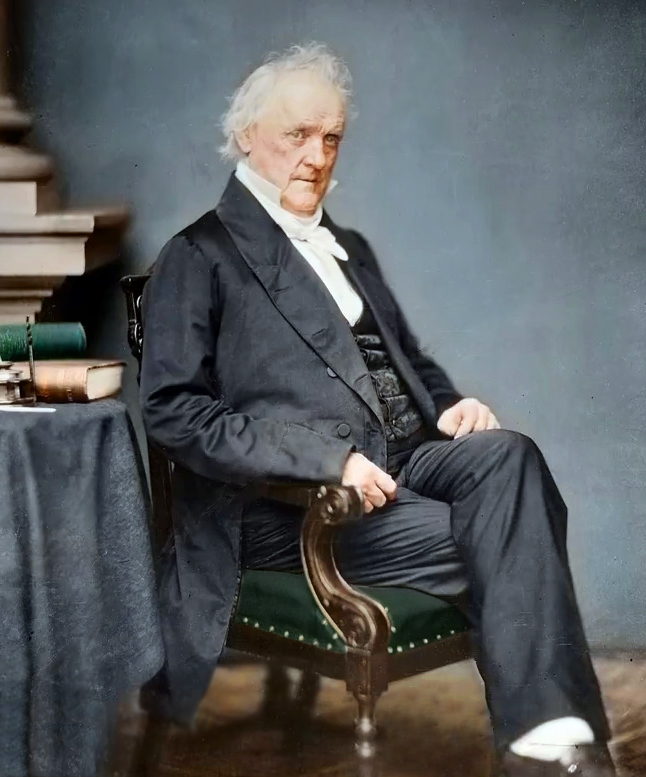
Colorized photograph of an elderly man with white hair seated in a dark wooden chair with a green upholstered seat. He wears a dark coat, white cravat, and dark trousers, with one hand resting on the chair arm. A table with books and a green-wrapped object stands at left against a blue-gray backdrop.Photograph

Primary source

President James Buchanan (colorized)

Mathew Benjamin Brady

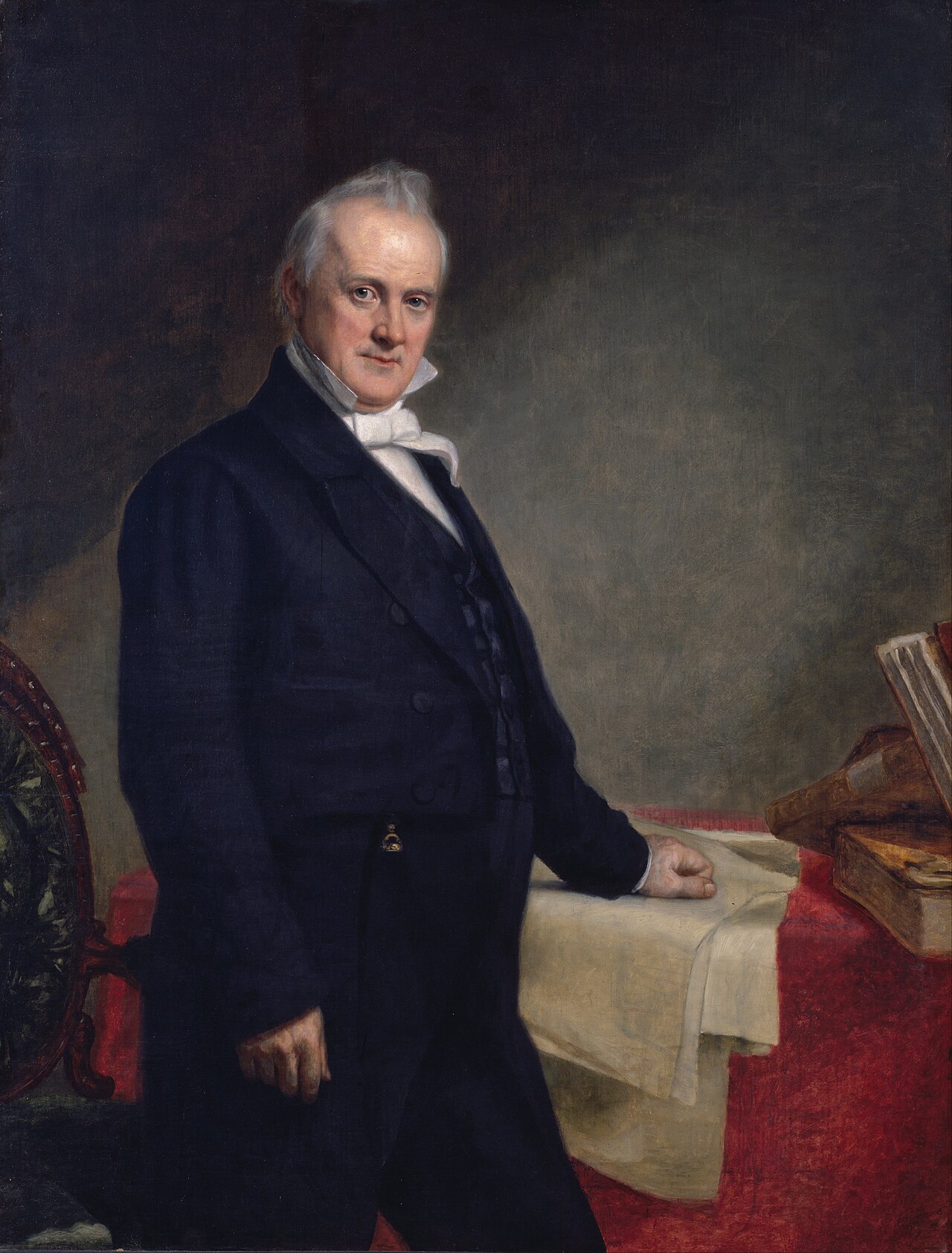
Oil portrait of an older man with white hair, wearing a dark navy suit, white shirt and white cravat. He stands beside a red-draped table with a cream cloth, a stack of books and a glass object on the right, against a dark background with a red-upholstered chair at left.Painting

Primary source

James Buchanan

George Peter Alexander Healy · 1859

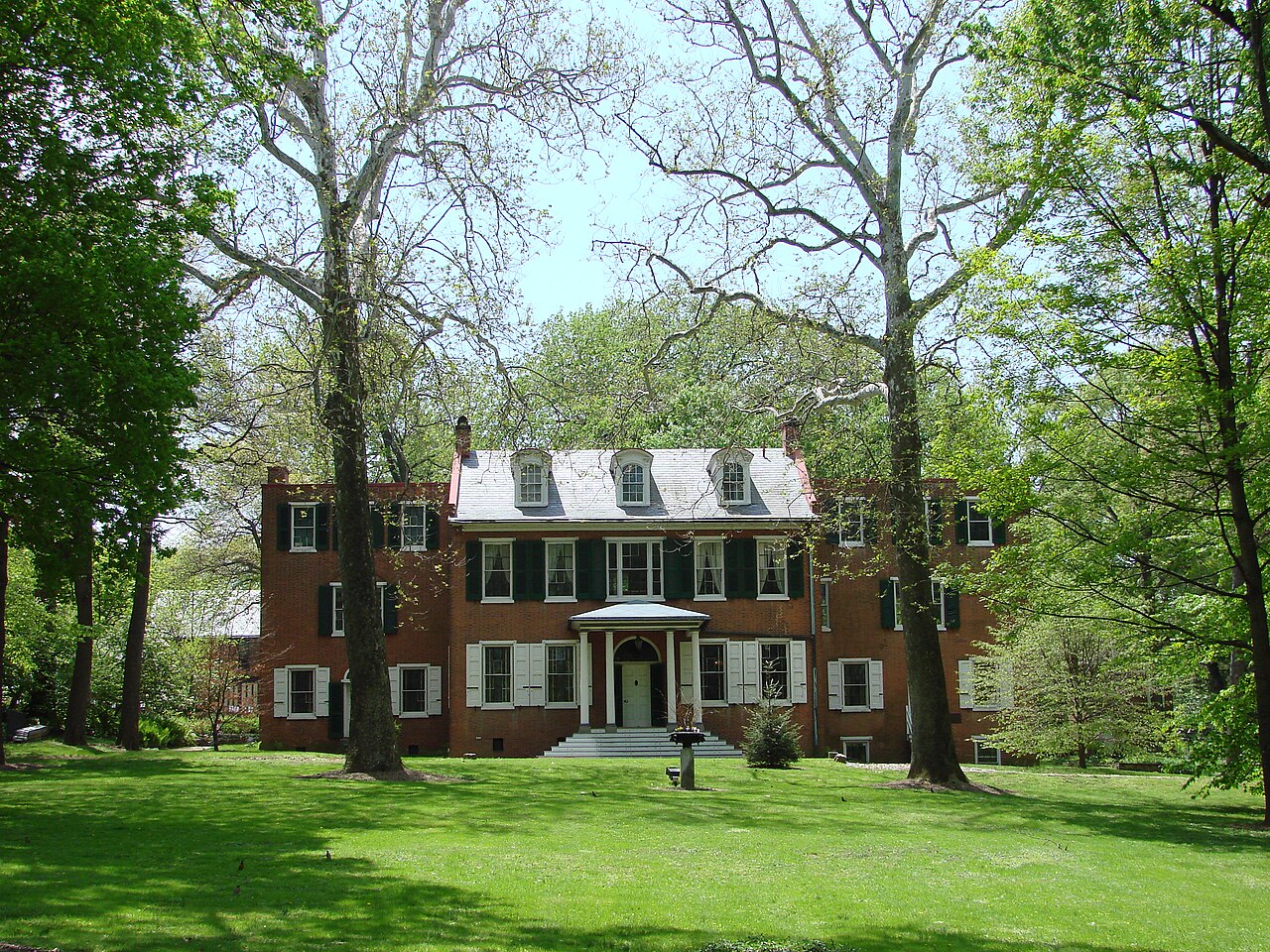
Front view of a two-story red brick Georgian-style house with white-trimmed windows, dark green shutters, dormer windows in a gray slate roof, and a white portico with columns over a central door reached by steps. Large bare-branched and leafy trees frame the scene across a green lawn.Artifact

Primary source

Wheatland

1828

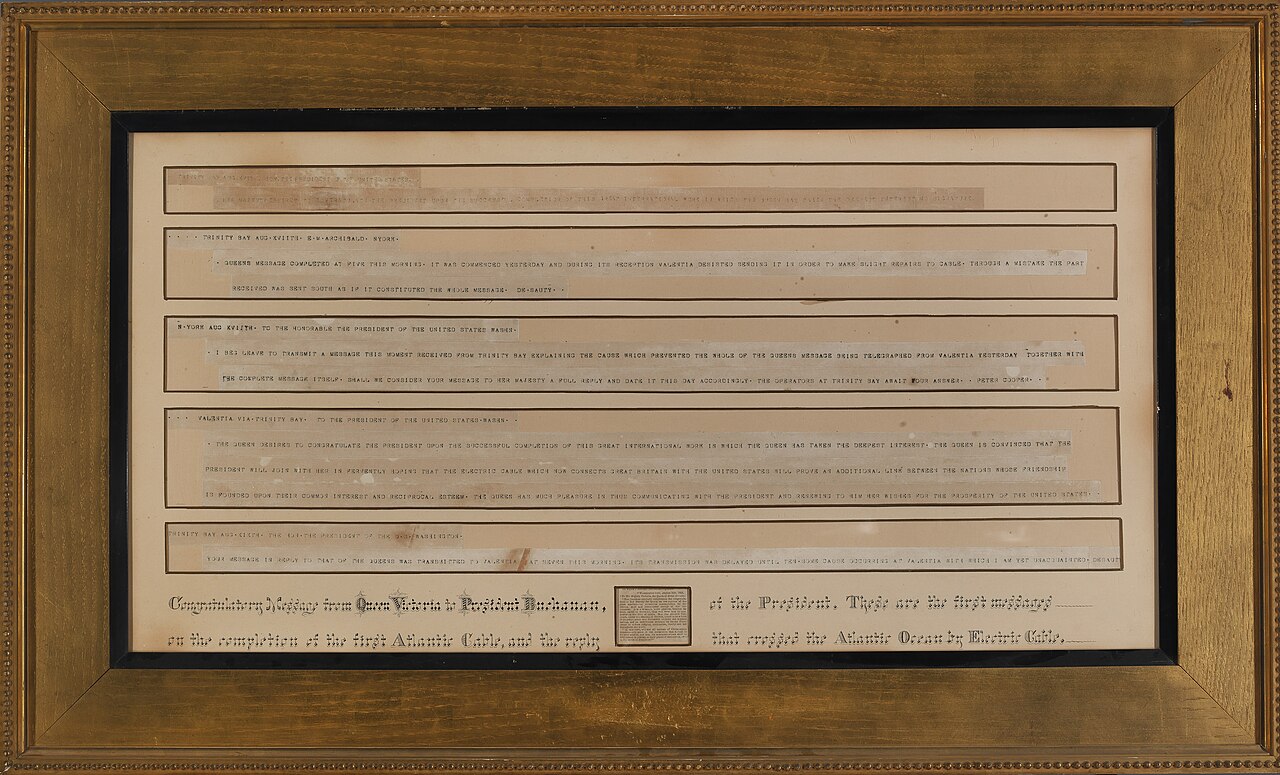
A framed printed telegram under glass in a gold frame, with several horizontal text blocks of typed telegraph message and a small inset label at bottom center. Printed text reads congratulations from Queen Victoria to President Buchanan on the first Atlantic cable.Document

Primary source

Queen Victoria's Telegram to President Buchanan

Queen Victoria · 1858

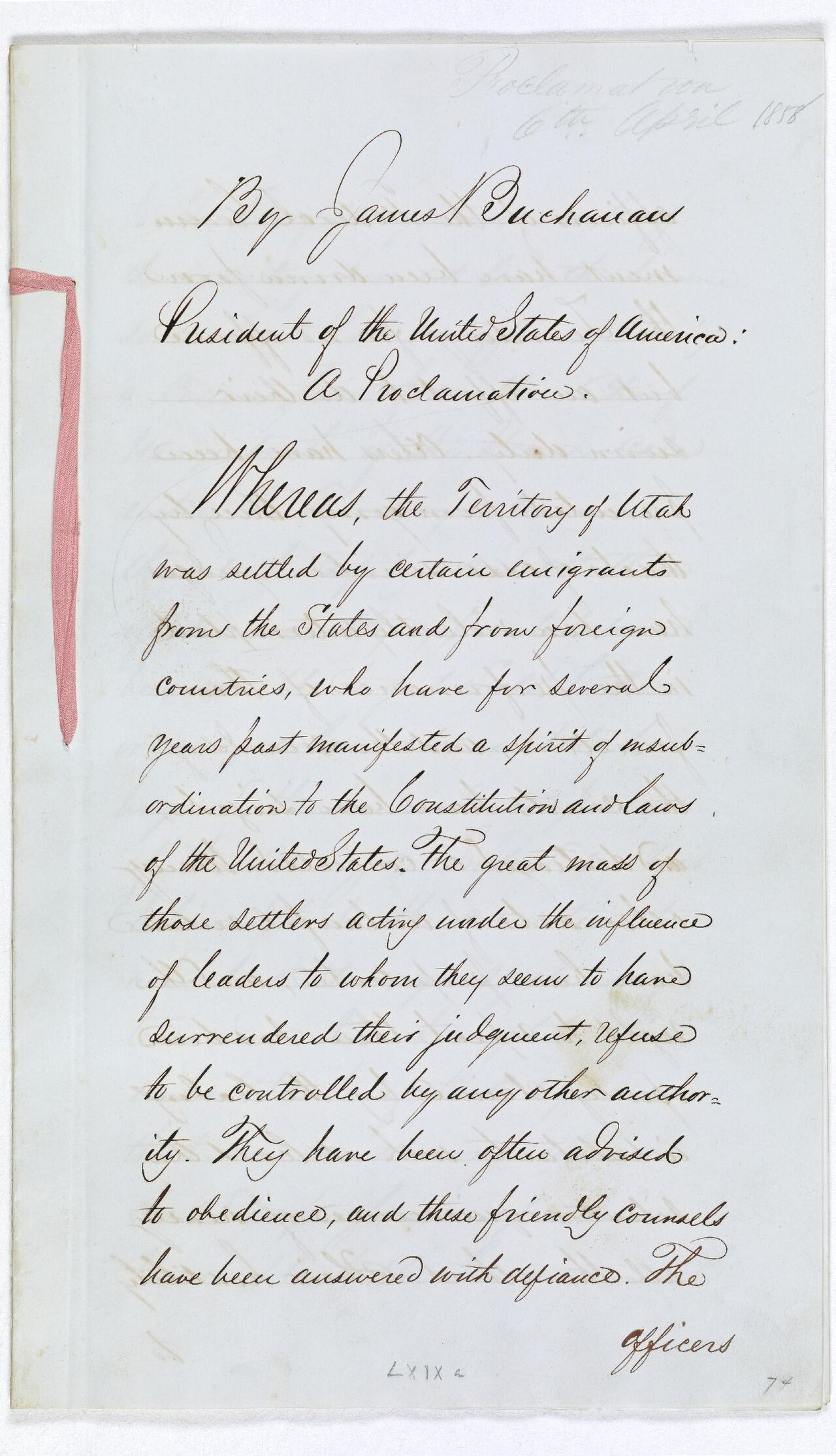
Handwritten manuscript proclamation signed 'By James Buchanan, President of the United States of America: A Proclamation', beginning 'Whereas, the Territory of Utah was settled by certain emigrants...'. A pink ribbon runs down the left edge. Faint pencil note at top right reads 'Proclamation 6th April 1858'.Document

Primary source

Proclamation on the Utah Territory Rebellion

James Buchanan · 6 April 1858

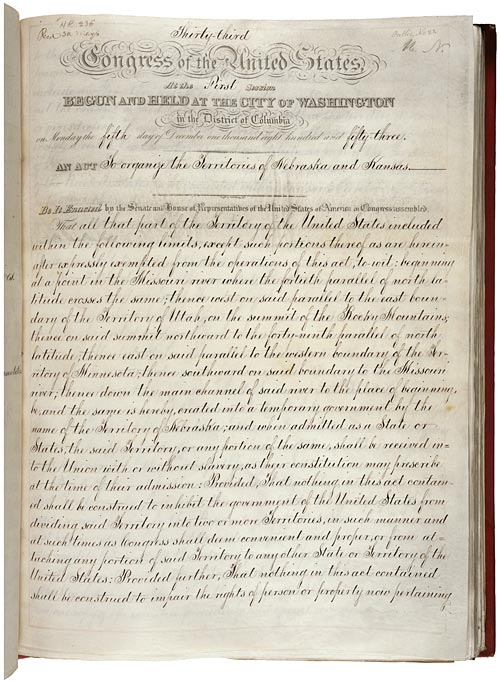
Handwritten manuscript page of the Kansas-Nebraska Act, headed 'Thirty-third Congress of the United States, First Session, begun and held at the city of Washington, December 1853,' with the title 'An Act to organize the Territories of Nebraska and Kansas' in ornate script.Document

Primary source

Kansas-Nebraska Act

United States Congress · 1854

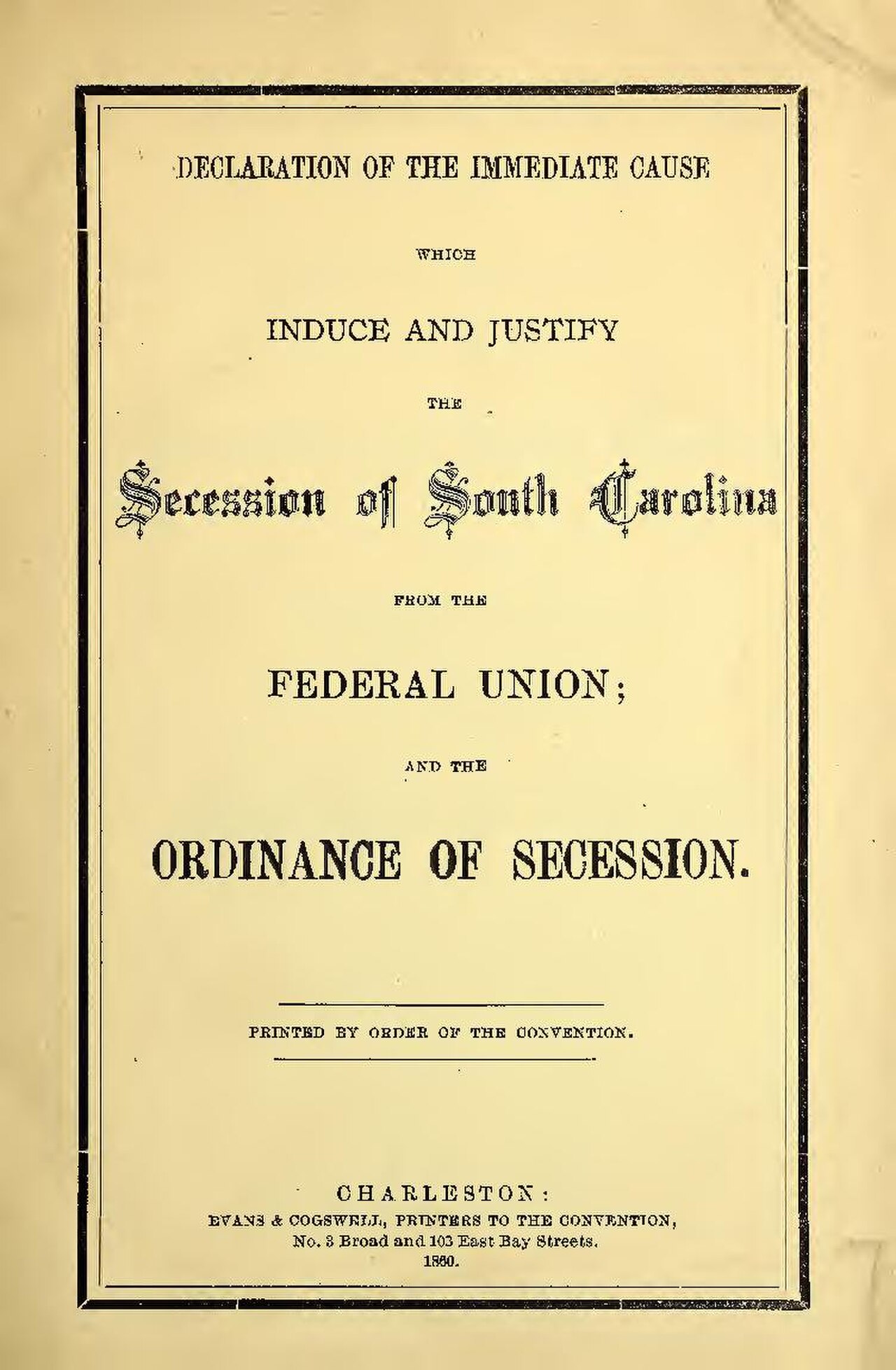
Title page of a printed pamphlet reading 'Declaration of the Immediate Cause which Induce and Justify the Secession of South Carolina from the Federal Union; and the Ordinance of Secession', with 'Printed by order of the convention' and imprint 'Charleston: Evans & Cogswell, Printers to the Convention, No. 3 Broad and 103 East Bay Streets, 1860'.Document

Primary source

Declaration of the Immediate Causes of Secession of South Carolina

South Carolina Secession Convention · 24 December 1860

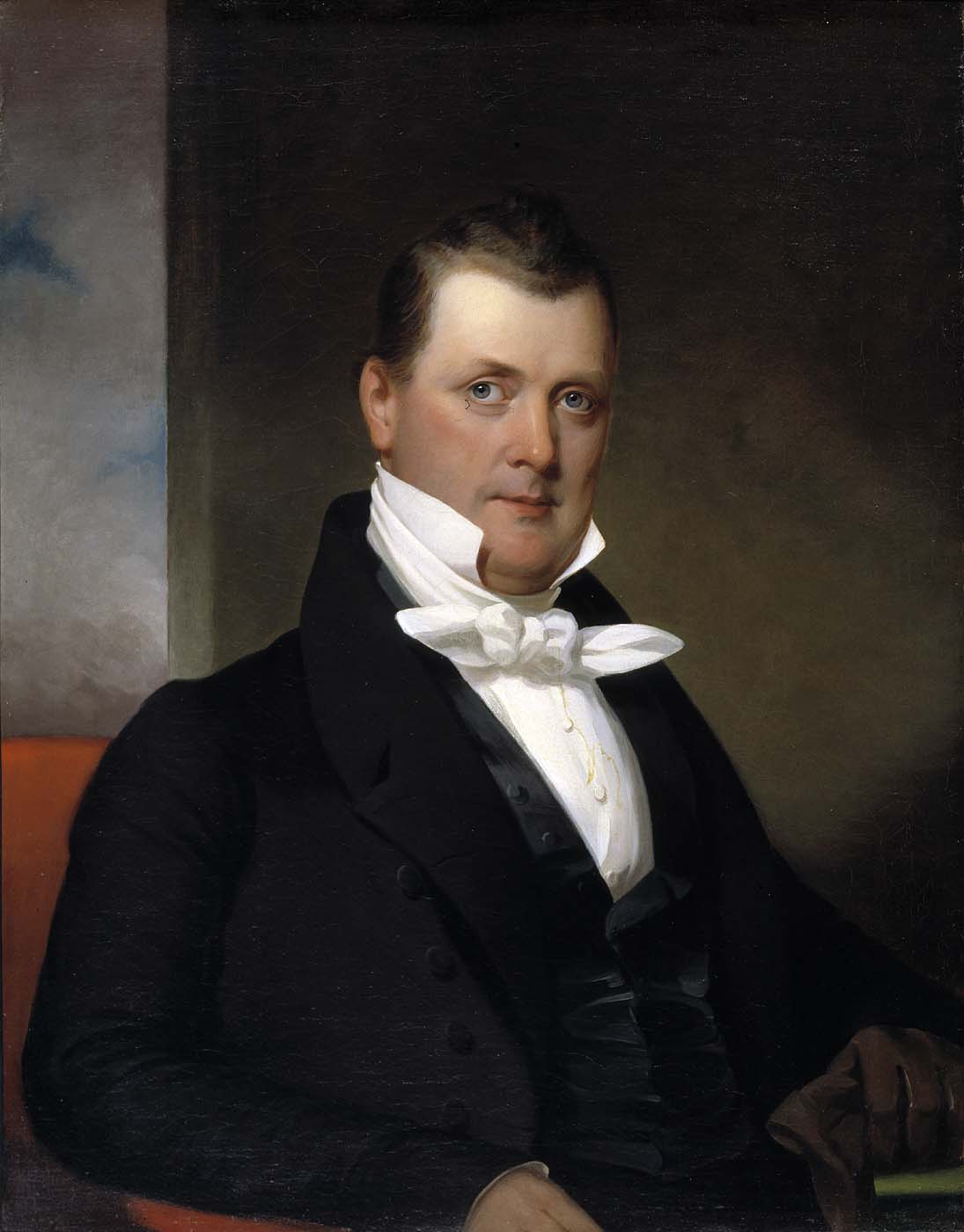
Oil portrait of a man with swept-back brown hair and light blue eyes, wearing a black double-breasted coat, white high collar, white cravat tied in a bow, and dark waistcoat. He sits against a dark background with an orange chair at left, one hand resting on a brown glove.Painting

Primary source

Portrait of James Buchanan

Jacob Eichholtz · 1834

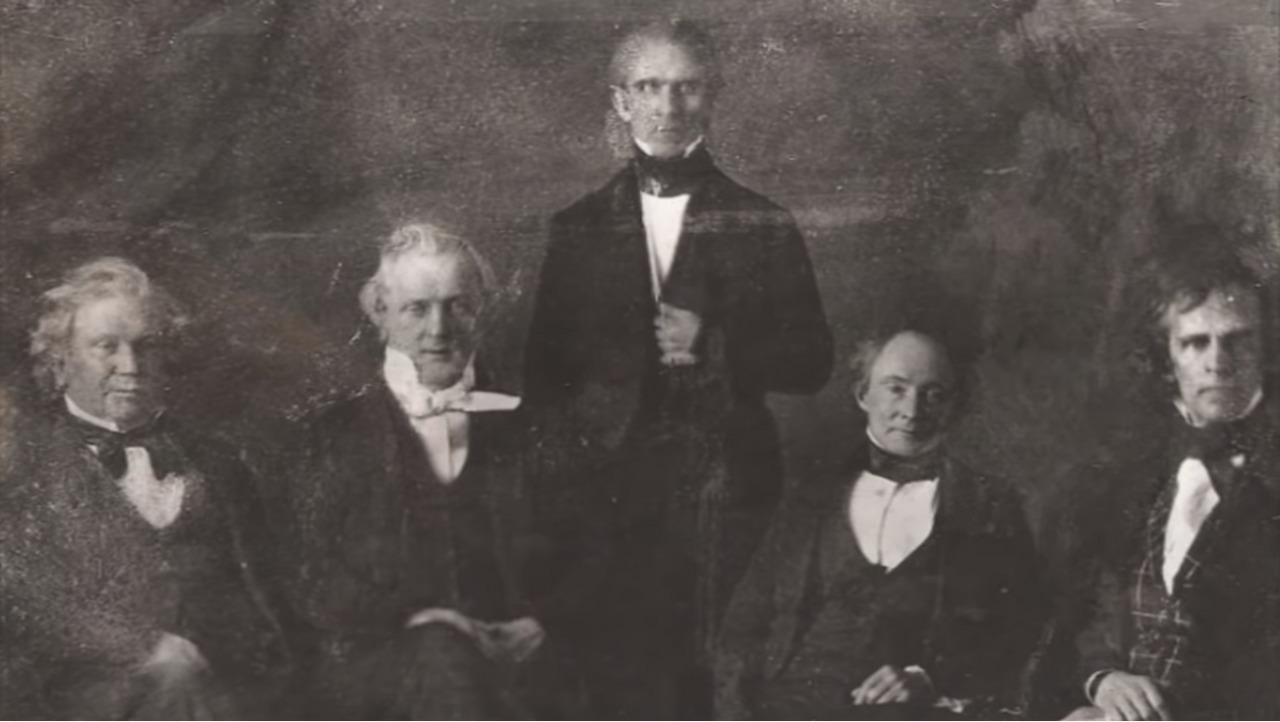
Sepia-toned daguerreotype-style group portrait of five men in 19th-century formal dress. Seated on the left and center-right, standing in the middle, with dark backgrounds and white cravats and shirt collars.Photograph

Primary source

President Polk and His Cabinet

Mathew Brady · 17 February 1849

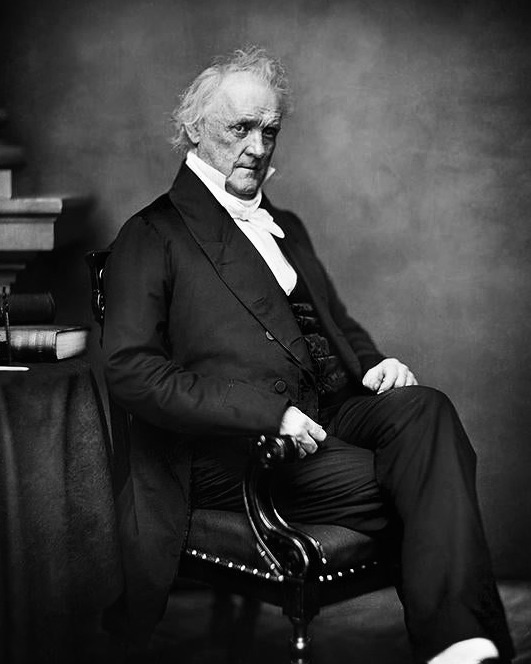
Black and white photograph of an elderly man with white hair seated in a dark upholstered chair with carved wooden arms, wearing a dark suit, white cravat, and waistcoat, with books on a table to his left against a plain studio backdrop.Photograph

Primary source

Portrait of James Buchanan

Mathew B. Brady

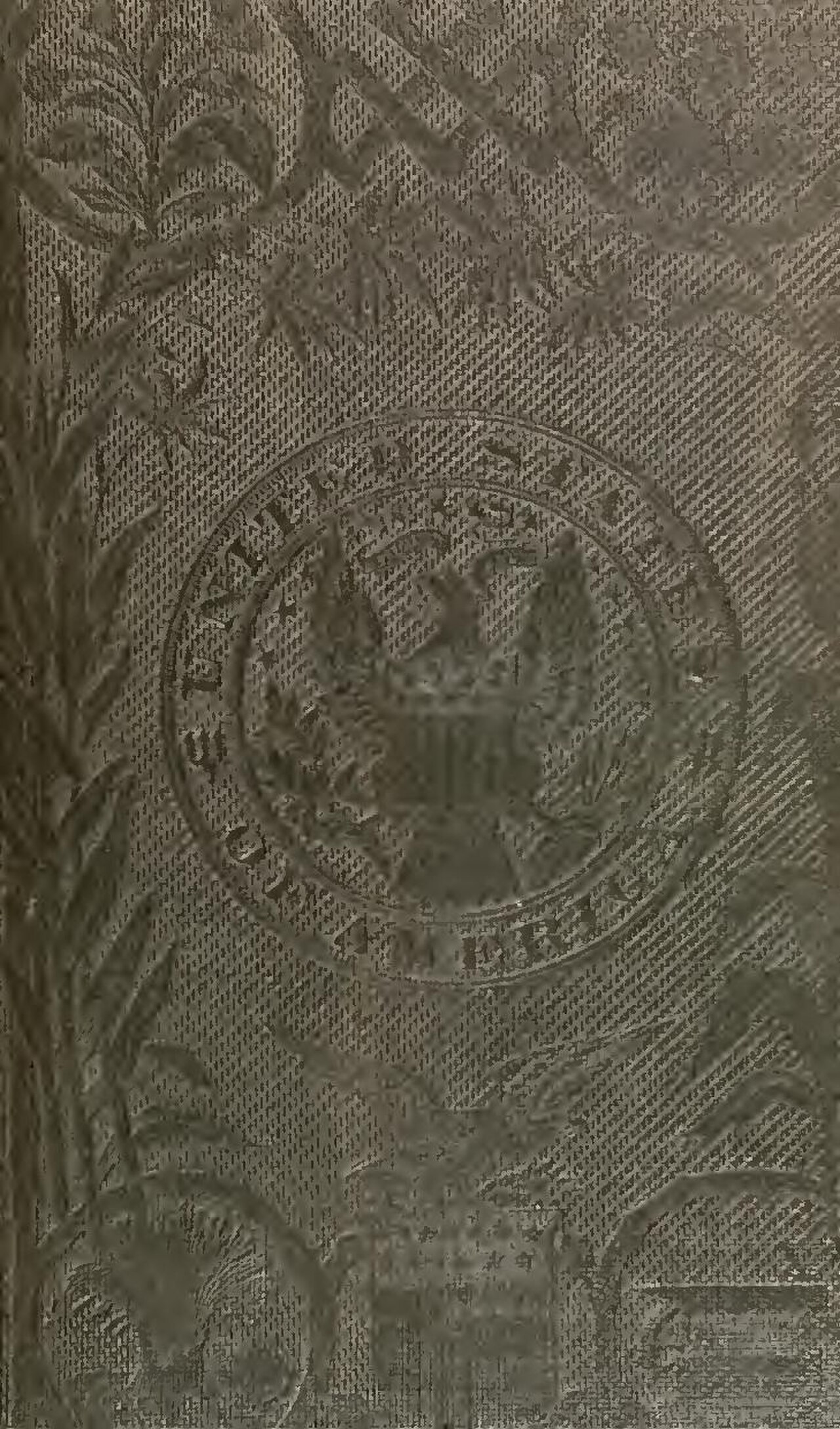
Embossed cover of a bound book in dark brown-gray tone, with a central circular seal showing an eagle with raised wings above a shield, surrounded by partially legible lettering and ornate floral and leafy decorative patterns.Document

Primary source

Covode Committee Report on Alleged Corruptions in Government

United States House Select Committee to Investigate Alleged Corruptions in Government · 1860

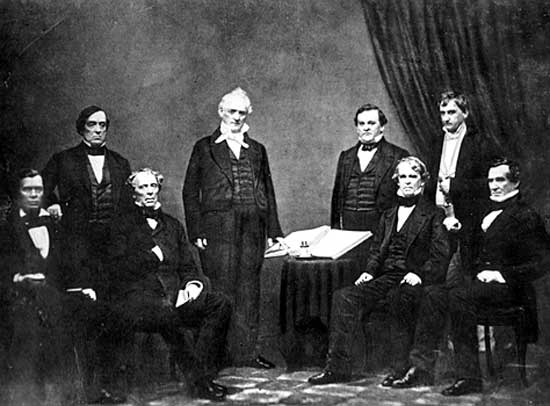
Black-and-white group photograph of eight men in 19th-century formal dress posed in a studio before a draped curtain. Some sit and some stand around a small table holding an open book. The man at center stands.Photograph

Primary source

President Buchanan and His Cabinet

Mathew B. Brady studio · c. 1859

Document

Primary source

1859 State of the Union Address

James Buchanan · 19 December 1859

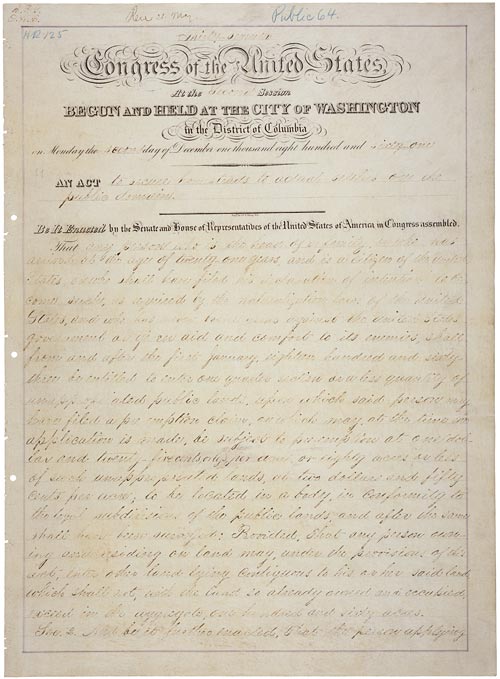
Scan of the handwritten enrolled Homestead Act of 1862. Ornate printed header reads 'Congress of the United States' over 'Begun and held at the City of Washington in the District of Columbia,' followed by handwritten legislative text beginning 'Be it enacted by the Senate and House of Representatives of the United States of America in Congress assembled.' Yellowed paper with a hole-punched left edge.Document

Primary source

Homestead Act

20 May 1862

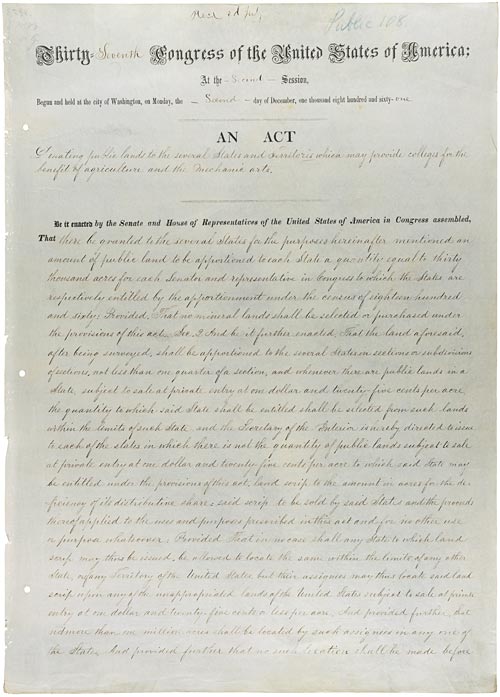
Scanned page of the enrolled Morrill Act of 1862, headed 'Thirty-Seventh Congress of the United States of America' with 'An Act' and a handwritten legislative text on land grants for colleges of agriculture and the mechanic arts.Document

Primary source

Morrill Act

2 July 1862

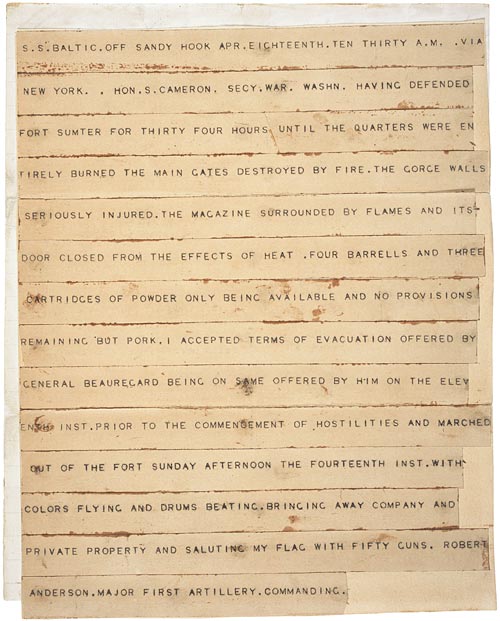
Scan of a typed telegram on aged paper, with lines of capital letters and red-brown stains, reading from Sandy Hook and Fort Sumter, signed by Major Robert Anderson, addressed to Secretary Cameron about the surrender of the fort.Document

Primary source

Telegram Announcing the Surrender of Fort Sumter

Robert Anderson · 18 April 1861

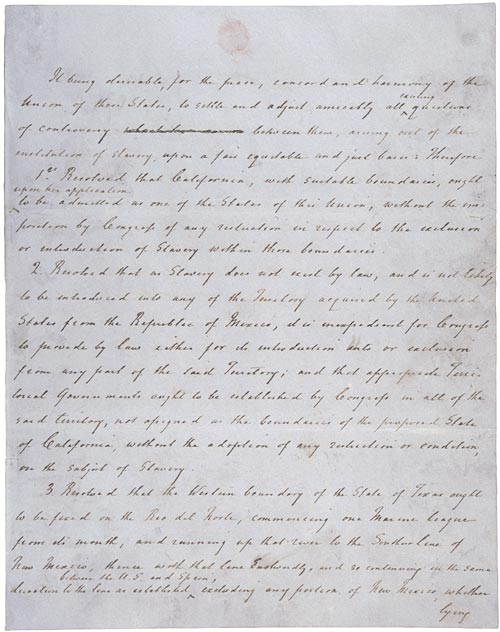
Handwritten manuscript on aged paper with cursive text and crossed-out words, showing the resolutions of the Compromise of 1850, including provisions on California statehood and slavery in the territories.Document

Primary source

Compromise of 1850

Henry Clay · 29 January 1850 (resolutions); statutes enacted September 1850

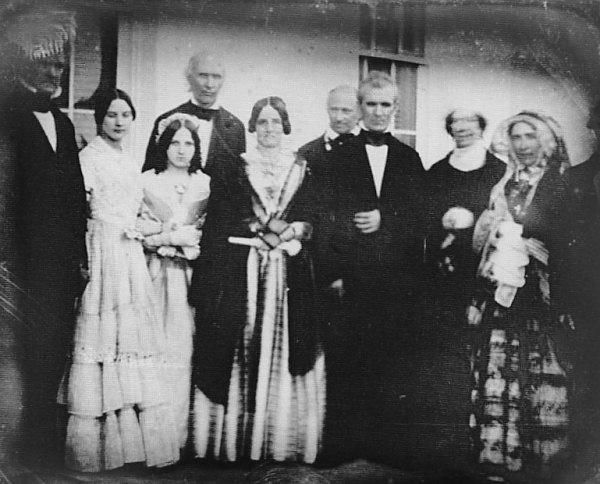
Black and white daguerreotype of a group of about eight people in 19th-century dress standing outdoors in front of a building with windows. An older woman in a dark shawl and lace cap stands at right, and a man in a dark suit stands center-right.Photograph

Primary source

Gathering on the White House South Portico

John Plumbe, Jr. · c. 1848

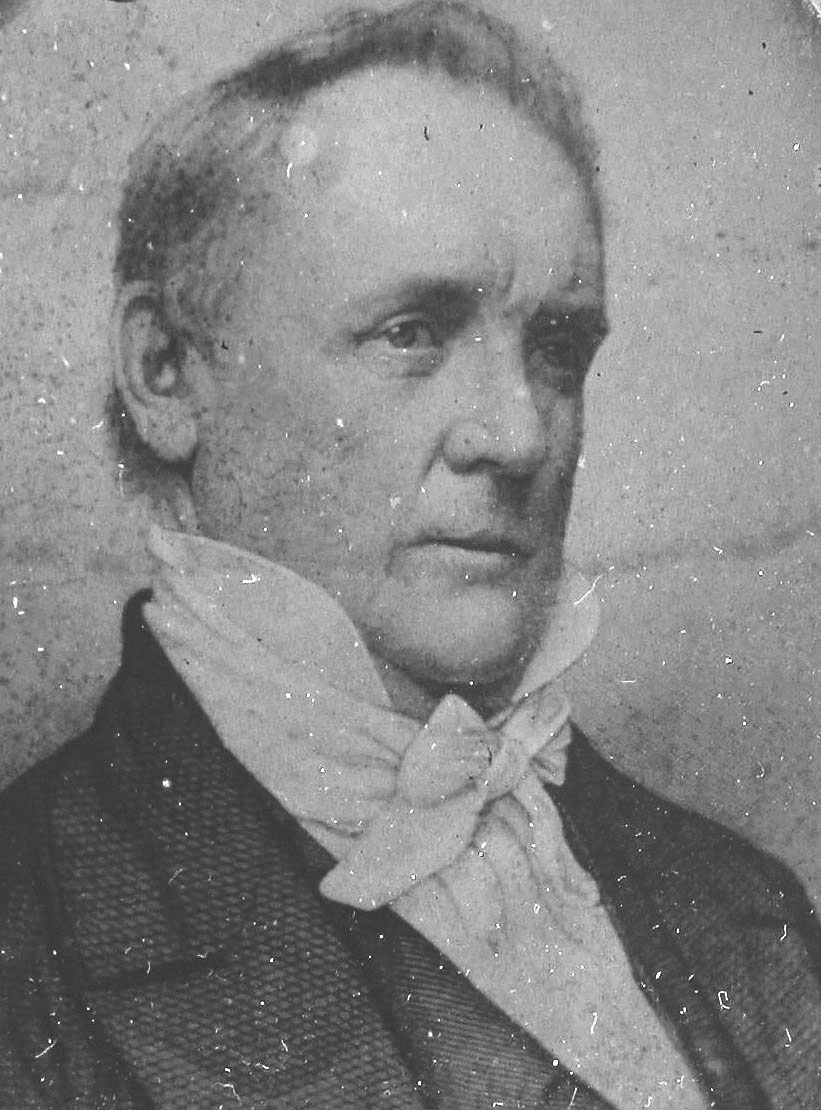
Black-and-white photograph of an older man with short graying hair, gazing to his right, wearing a dark coat and a light cravat tied in a bow over a high white collar. Scratches and specks mar the image.Photograph

Primary source

Daguerreotype Portrait of James Buchanan

Unknown

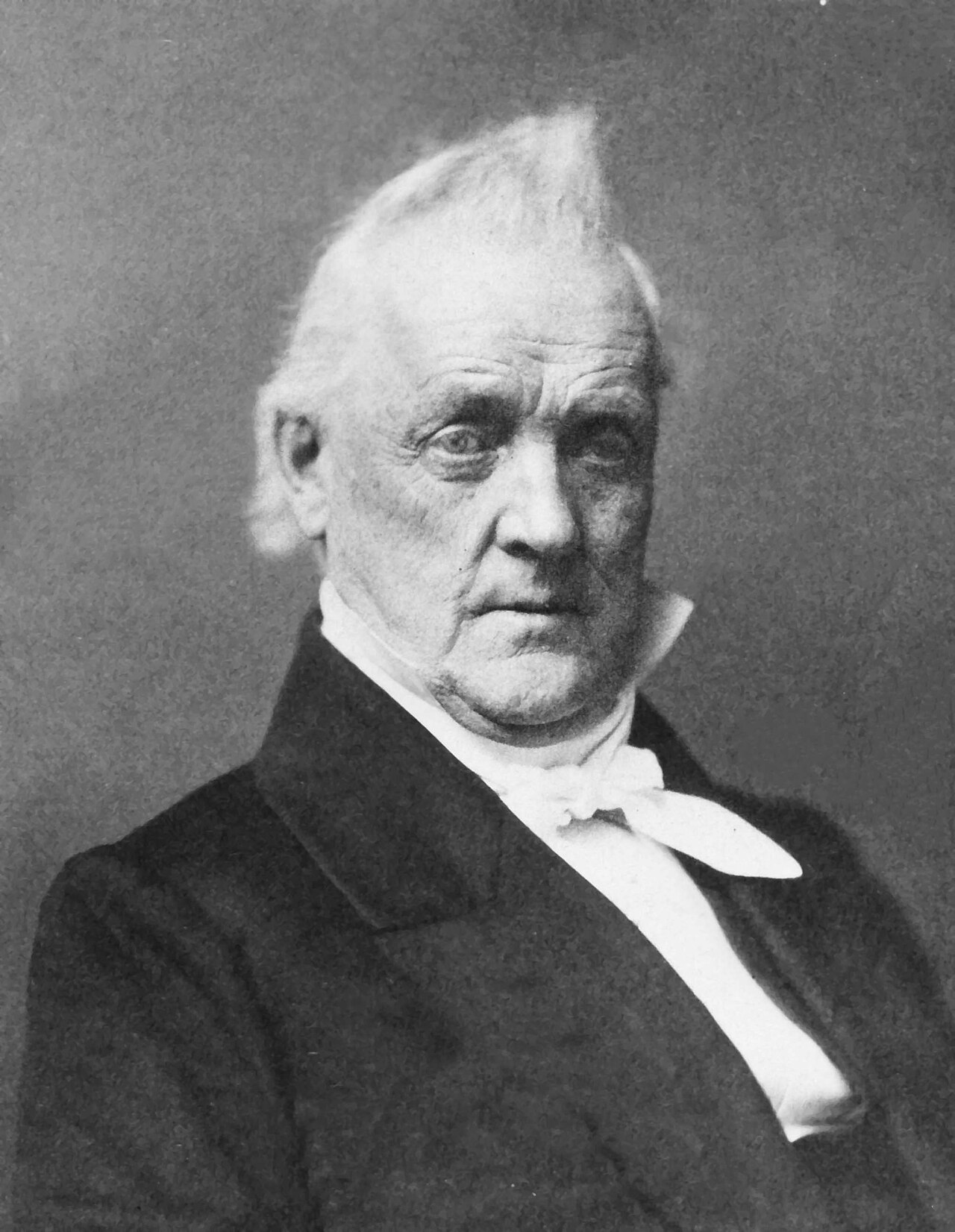
Black-and-white portrait photograph of an elderly man with white hair swept up at the front, wearing a dark jacket, white shirt, and white bow tie, facing slightly to the side against a plain gray background.Photograph

Primary source

James Buchanan in Retirement

Unknown

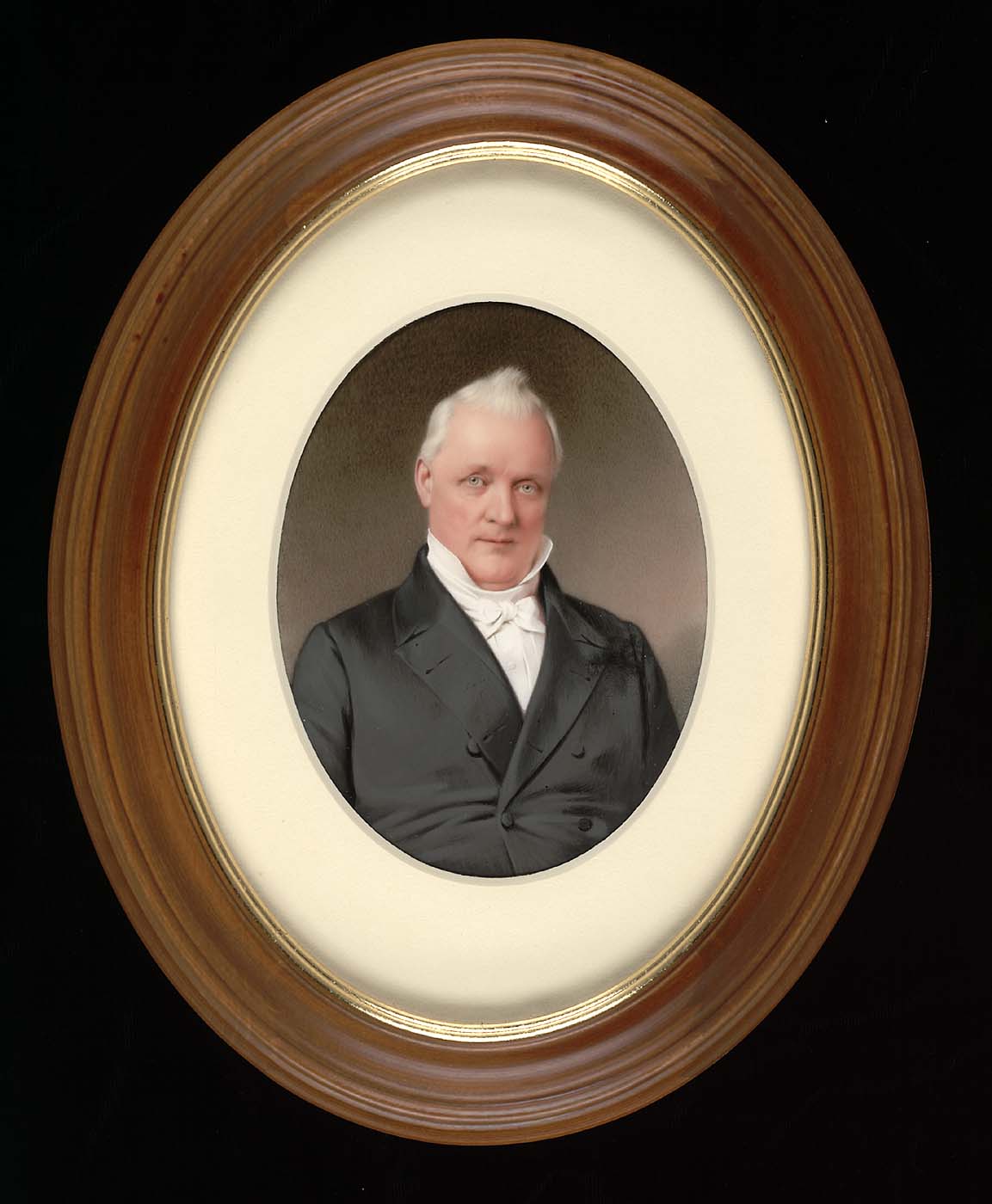
Oval miniature portrait of an elderly man with white hair, white high collar and cravat, and dark coat, set in an oval wooden frame with a gold inner edge and cream mat against a black background.Painting

Primary source

James Buchanan

John Henry Brown · 1865

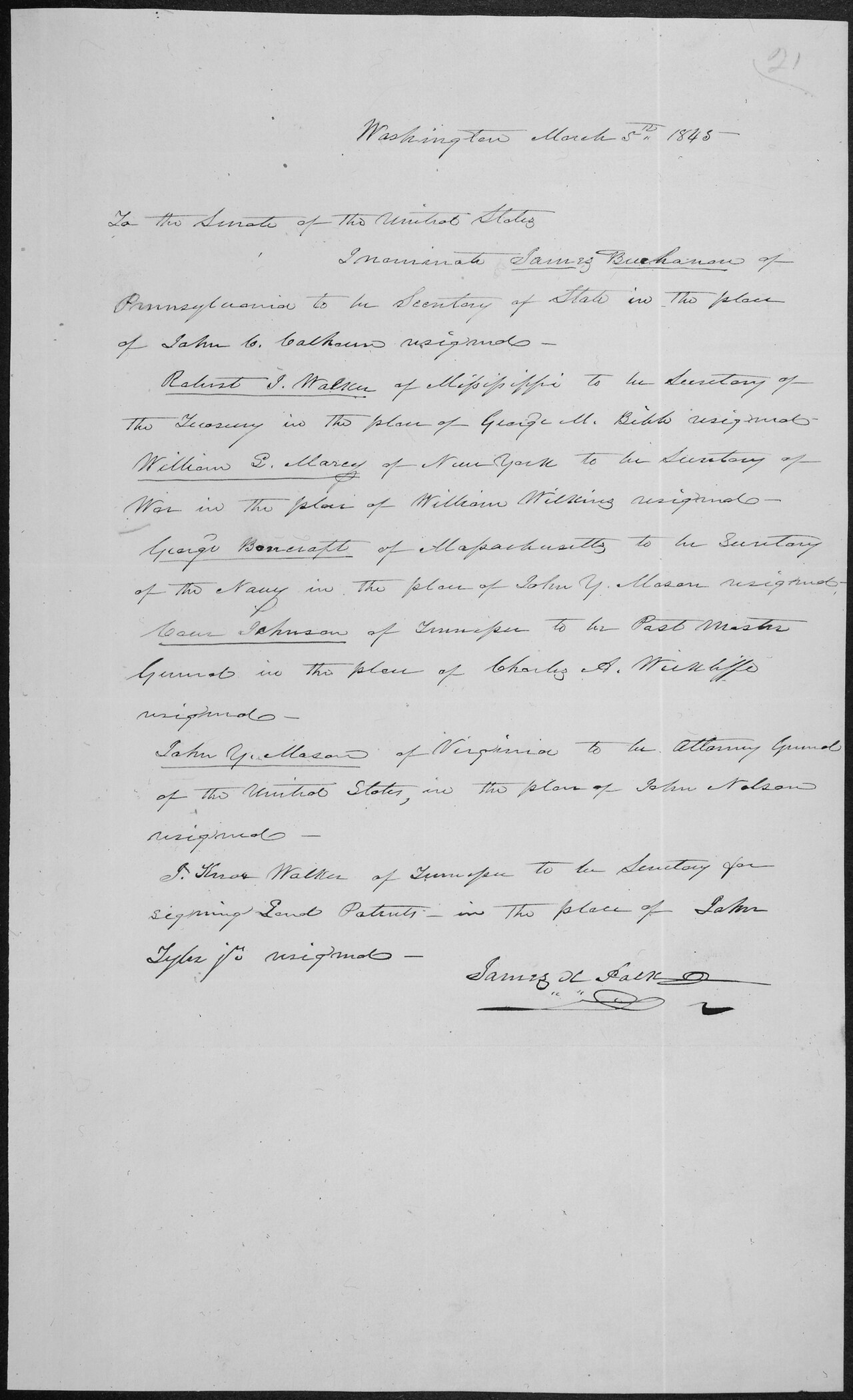
Scan of a handwritten nomination letter dated Washington, March 5th, 1845, addressed to the Senate of the United States, nominating cabinet members including James Buchanan, Robert J. Walker, William L. Marcy, George Bancroft, Isaac Johnson, John Y. Mason, and J. Knox Walker, signed by James K. Polk. Page number 21 appears in the upper right corner.Document

Primary source

Message of President James Polk Nominating His Cabinet

James K. Polk · March 5, 1845

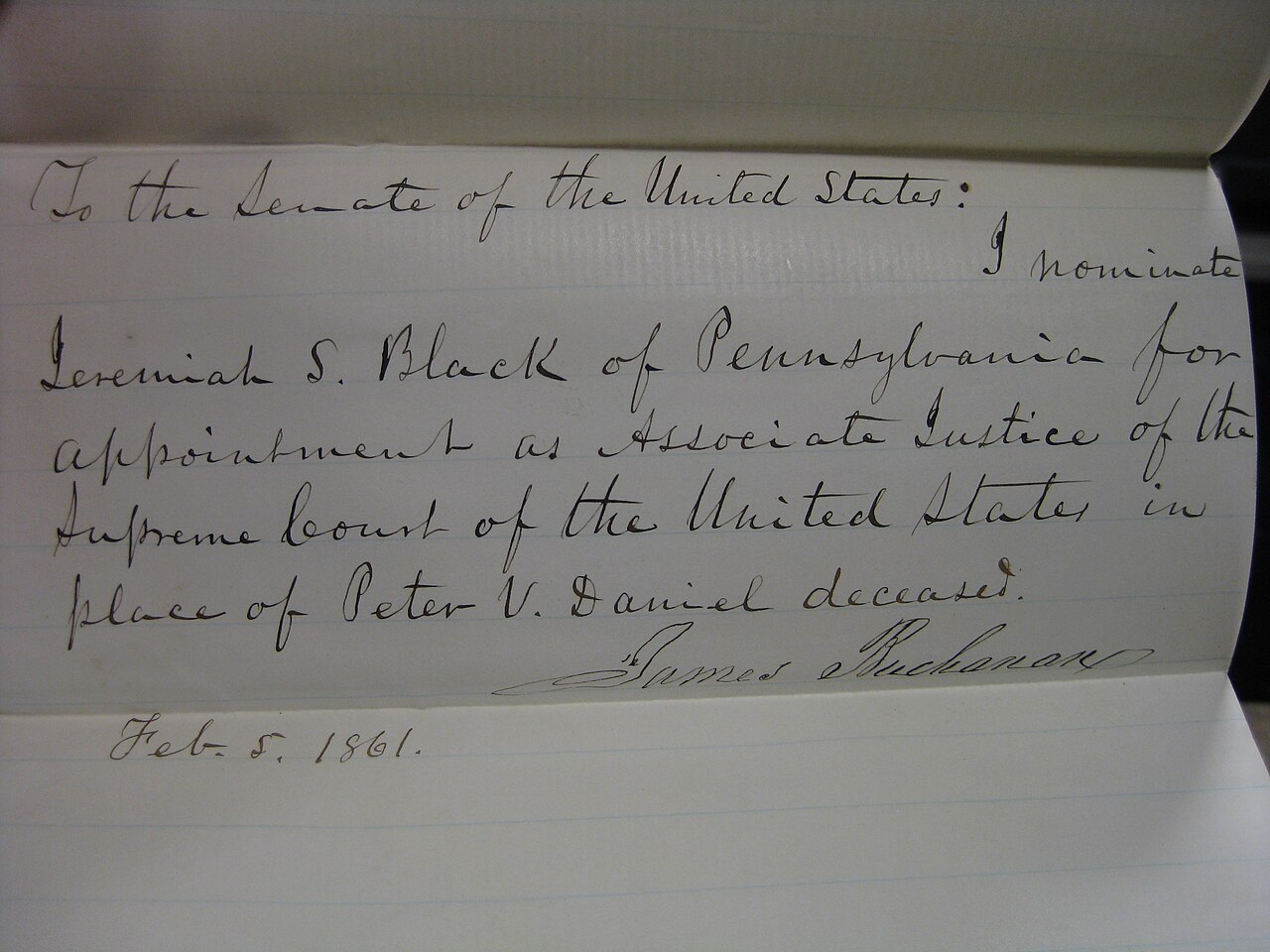
Handwritten nomination letter in cursive on lined paper: 'To the Senate of the United States: I nominate Jeremiah S. Black of Pennsylvania for appointment as Associate Justice of the Supreme Court of the United States in place of Peter V. Daniel deceased.' Signed James Buchanan, dated Feb. 5, 1861.Document

Primary source

Black Nomination

James Buchanan · 5 February 1861

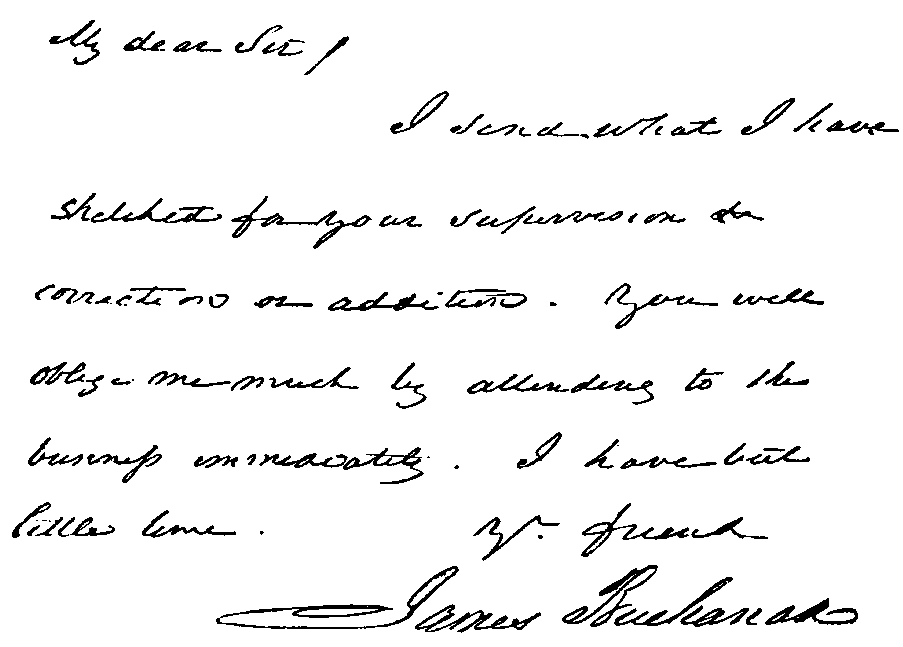
Handwritten letter in cursive ink, beginning 'My dear Sir', saying 'I send what I have sketched for your supervision & correction or additions. You will oblige me much by attending to the business immediately. I have but little time.' Signed 'J. Buchanan' with a flourished signature at bottom.Letter

Primary source

Letter from James Buchanan to Aaron V. Brown

James Buchanan · undated

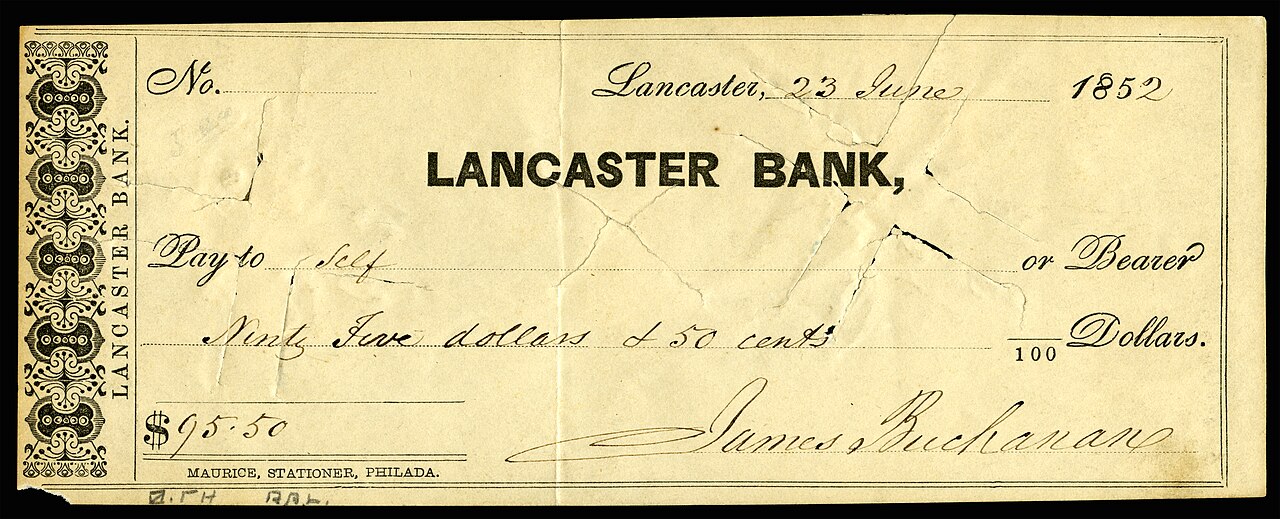
Scan of an aged cream-colored bank check dated 23 June 1852, issued by Lancaster Bank, payable to Self for ninety-five dollars and fifty cents, signed in cursive 'James Buchanan' at lower right. Printed border with ornamental pattern at left and 'Maurice, Stationer, Philada' at bottom. Creases and tears visible.Document

Primary source

Check Signed by James Buchanan

James Buchanan · 23 June 1852

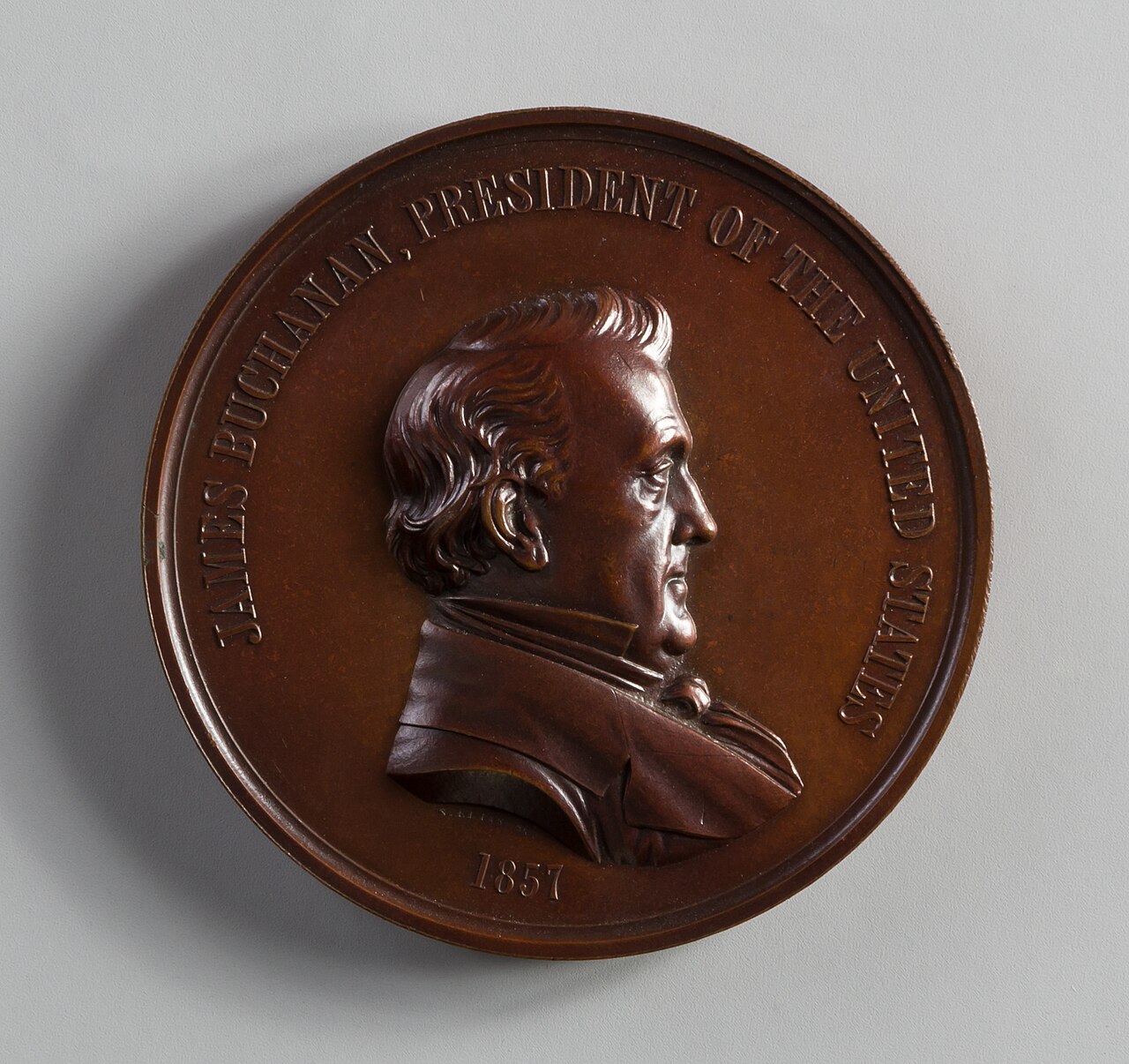
Photograph of a bronze-brown medal on a gray background. Left-facing profile bust of a man with swept-back hair, high collar and cravat, in relief. Inscription around the rim reads JAMES BUCHANAN, PRESIDENT OF THE UNITED STATES; the date 1857 appears at the bottom.Sculpture

Primary source

Medal of James Buchanan

Salathiel Ellis · 1857

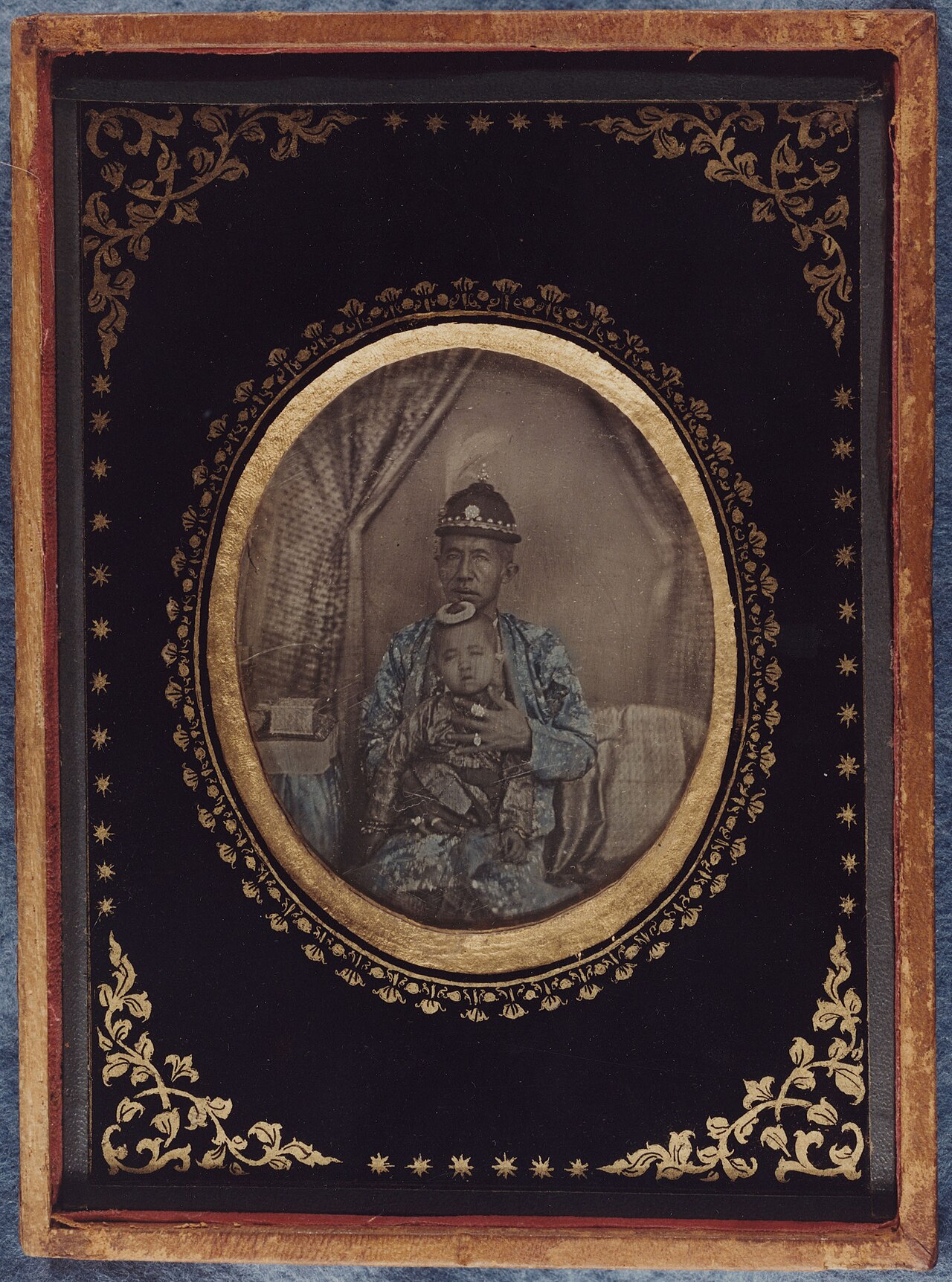
Framed daguerreotype in a black velvet case with gilt decorative border. A seated man in a dark cap with a feather and a blue patterned robe holds a young child on his lap. A curtain and a small table appear in the background.Photograph

Primary source

Daguerreotype of King Mongkut and Child

1861

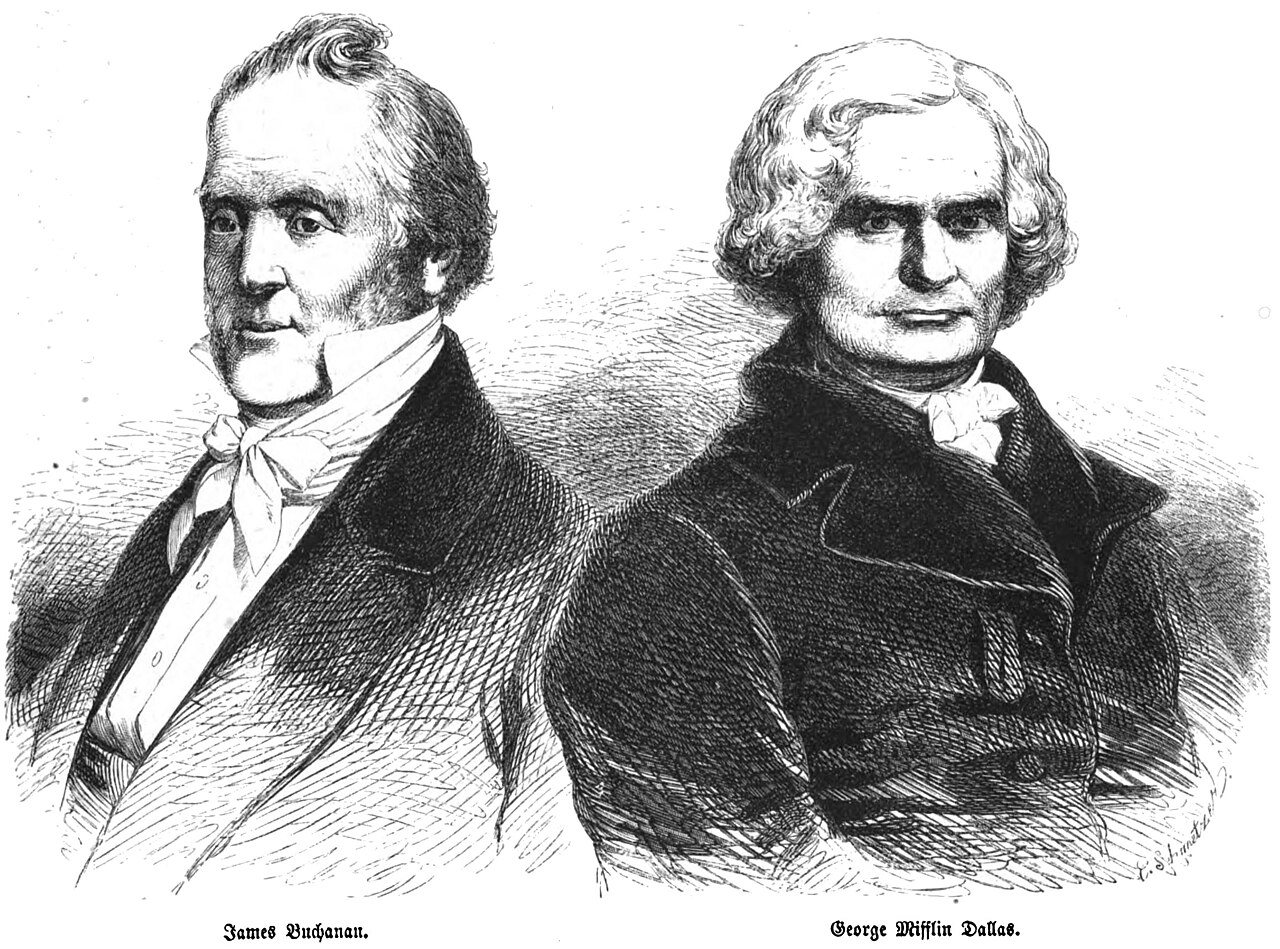
Black and white engraving of two men in profile-facing portraits side by side. On the left, a man with wavy hair, a high white collar and bow tie. On the right, a man with curly white hair in a dark coat. Printed captions below read James Buchanan and George Mifflin Dallas.Newspaper article

Secondary source

Buchanan und Dallas

1856

Handwritten cursive signature reading 'James Buchanan' in dark ink on a light background.Artifact

Primary source

Signature of James Buchanan

James Buchanan

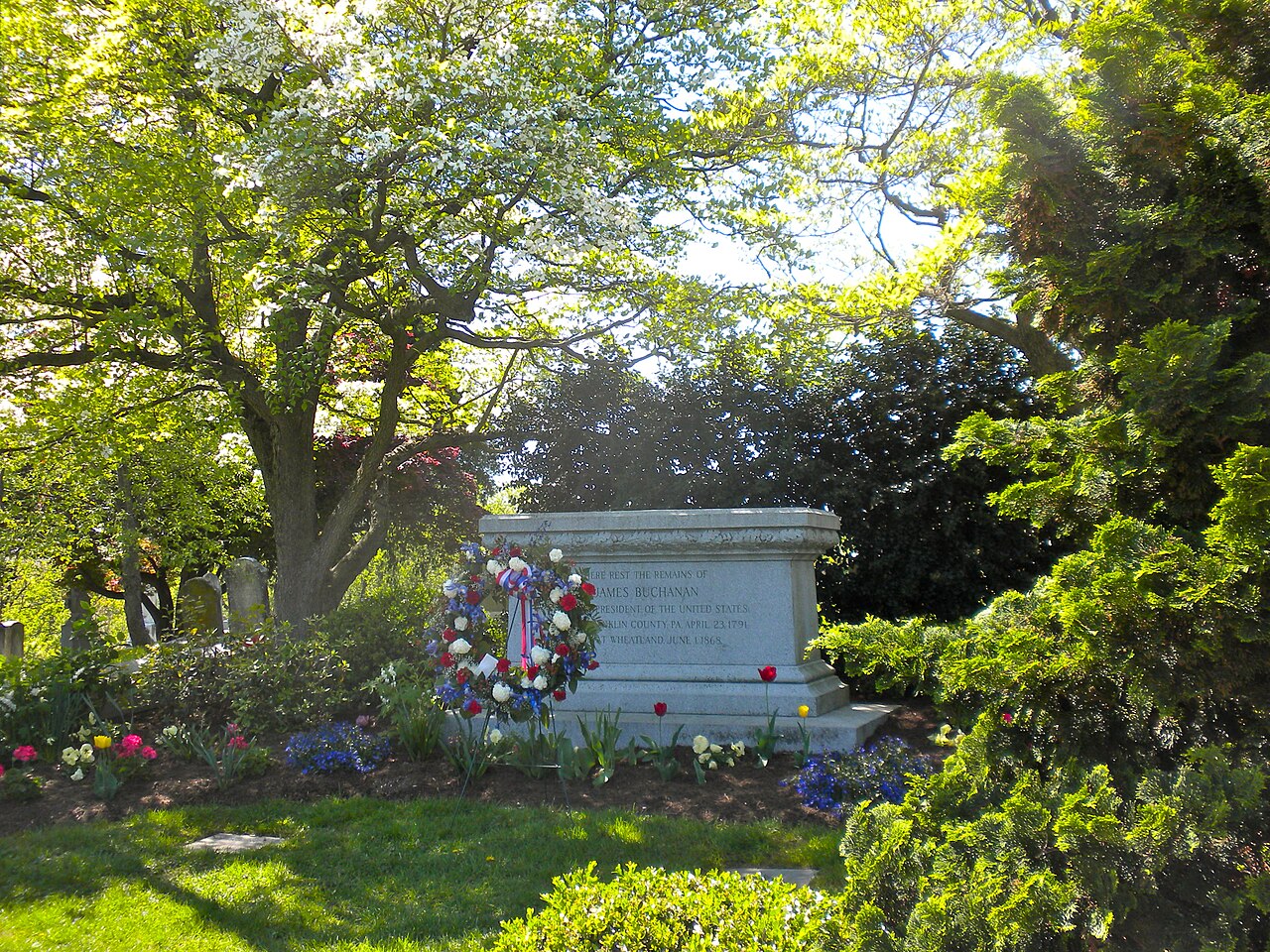
A stone sarcophagus-style grave monument inscribed with the name James Buchanan, set among trees and flowers, with a red, white and blue wreath leaning against its base. Tulips and other plants surround the grave in a green lawn.Sculpture

Secondary source

Grave of James Buchanan

The Works of James Buchanan, Volume 7Book

Primary source

The Works of James Buchanan, Volume 7

James Buchanan · 1908

Speech

Primary source

First State of the Union Address

James Buchanan · 8 December 1857

Private Letters of General Scott and Ex-President Buchanan's ReplyDocument

Primary source

Private Letters of General Scott and Ex-President Buchanan's Reply

Winfield Scott · 1862

Trescot Narrative and Letter on Negotiations with President BuchananDocument

Secondary source

Trescot Narrative and Letter on Negotiations with President Buchanan

William Henry Trescot · 1908

Oil portrait of a man with short, swept-back dark hair and light blue eyes, wearing a black coat, white high collar, and white cravat tied in a loose bow, against a dark brownish background.Painting

Primary source

Portrait of James Buchanan

Jacob Eichholtz · 1834

Book

Secondary source

Life of James Buchanan, Fifteenth President of the United States, Vol. 1

George Ticknor Curtis · 1883

James Buchanan and His Cabinet on the Eve of SecessionBook

Secondary source

James Buchanan and His Cabinet on the Eve of Secession

Philip Gerald Auchampaugh · 1926

Document

Primary source

Ostend Manifesto

James Buchanan · 15 October 1854

Document

Primary source

A Compilation of the Messages and Papers of the Presidents: James Buchanan

James Buchanan · 1857-1861 (compiled later)

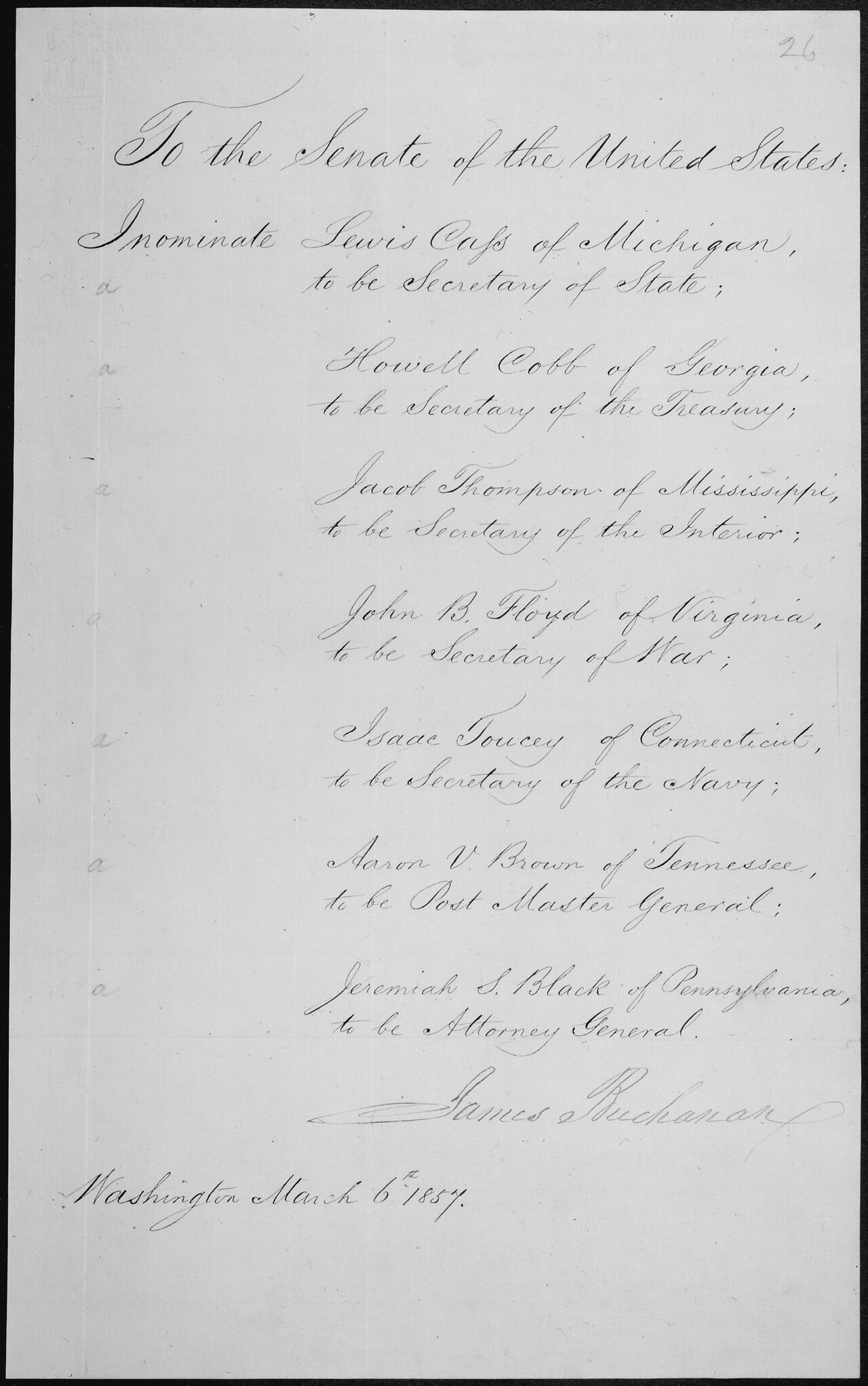
Handwritten scan of a page addressed 'To the Senate of the United States', nominating seven men to cabinet posts, signed James Buchanan and dated Washington, March 6, 1857. The page number 26 is in the upper right corner.Document

Primary source

Message of President Buchanan Nominating His Cabinet

James Buchanan · 6 March 1857

Black-and-white portrait of an older man with white wavy hair, wearing a dark suit jacket, white shirt, and white cravat, looking toward the viewer against a dark background.Photograph

Primary source

Daguerreotype Portrait of President James Buchanan

Mathew Brady · between 1850 and 1868

Memoir of James Buchanan of PennsylvaniaBook

Primary source

Memoir of James Buchanan of Pennsylvania

Democratic Party (Pa.) · 1856

Gen. Jackson and James BuchananBook

Primary source

Gen. Jackson and James Buchanan

Francis Preston Blair · 1856

James Buchanan, His Doctrines and Policy as ExhibitedBook

Primary source

James Buchanan, His Doctrines and Policy as Exhibited

1856

The Life and Public Services of James BuchananBook

Primary source

The Life and Public Services of James Buchanan

R. G. Horton · 1860

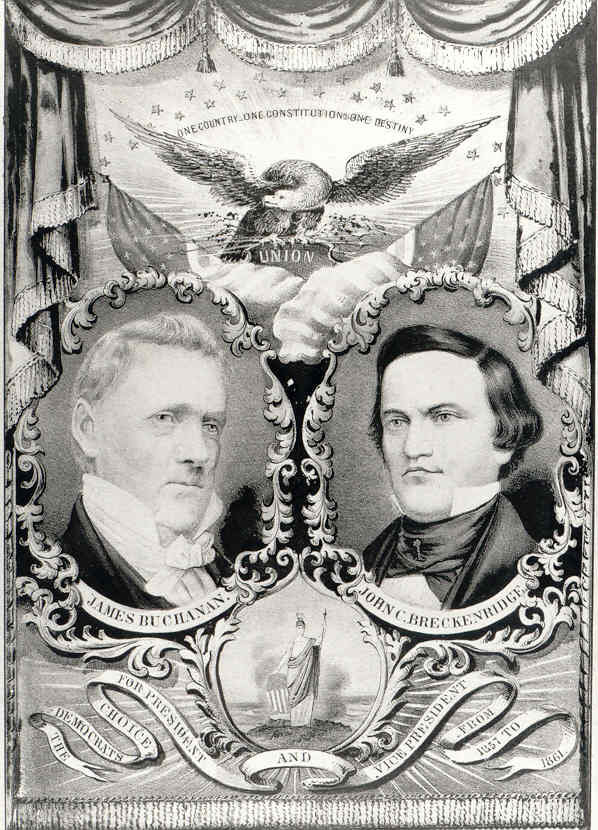
Black-and-white campaign poster with a central eagle above a banner reading 'One Country, One Constitution, One Destiny' and the word 'Union' on a shield. Flags flank the eagle. Oval portraits of two men, James Buchanan on the left and John C. Breckinridge on the right, sit within ornate scrollwork. Below, a ribbon reads 'Choice of the Democratic Party for President and Vice President 1856', above a small figure of Liberty holding a pole and shield.Artifact

Primary source

1856 Democratic Campaign Poster, Buchanan and Breckinridge

Unknown author · 1856

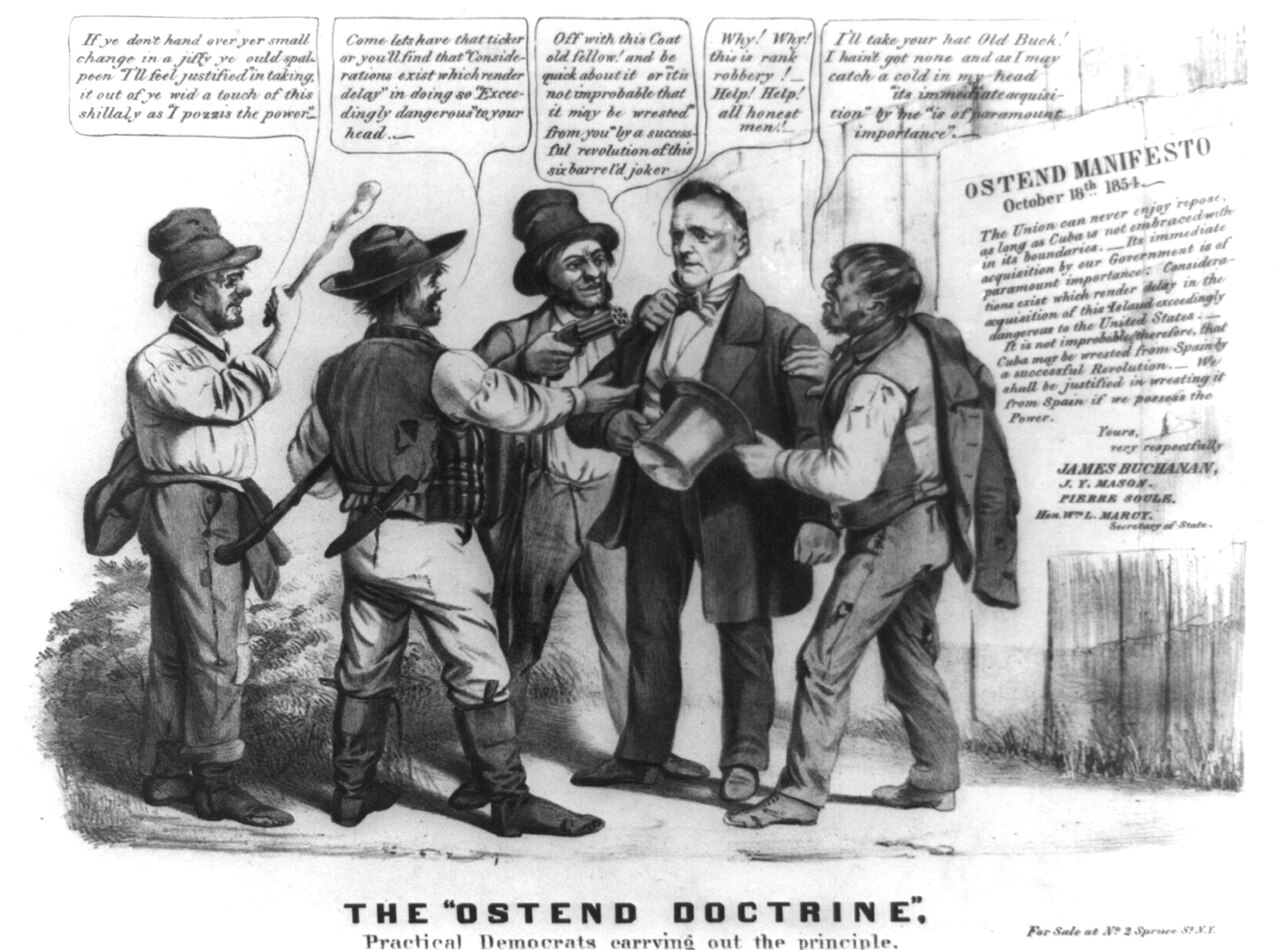
Black-and-white lithograph cartoon titled The Ostend Doctrine, showing four rough men surrounding a well-dressed man in a dark coat and cravat, who holds a top hat. One man grabs his collar and another reaches for his hat while speech bubbles issue threats. At right, a text panel reads Ostend Manifesto, October 18th 1854, signed by James Buchanan, John Mason, and Pierre Soule.Painting

Primary source

The Ostend Doctrine

Louis Maurer and Nathaniel Currier · 1856

Black-and-white photographic portrait of an elderly man with white, tousled hair, wearing a dark jacket and white high collar with a bow tie, turned slightly to the side and looking toward the viewer against a grey backdrop.Photograph

Primary source

Portrait of Hon. James Buchanan

Mathew Benjamin Brady · c. 1860-1865

Black and white photograph of an elderly man with short white hair, wearing a dark coat and a white high-collared shirt with a white cravat tied at the neck, turned slightly to his left against a plain gray background.Photograph

Primary source

Photograph of President James Buchanan

Unknown photographer · 1860s

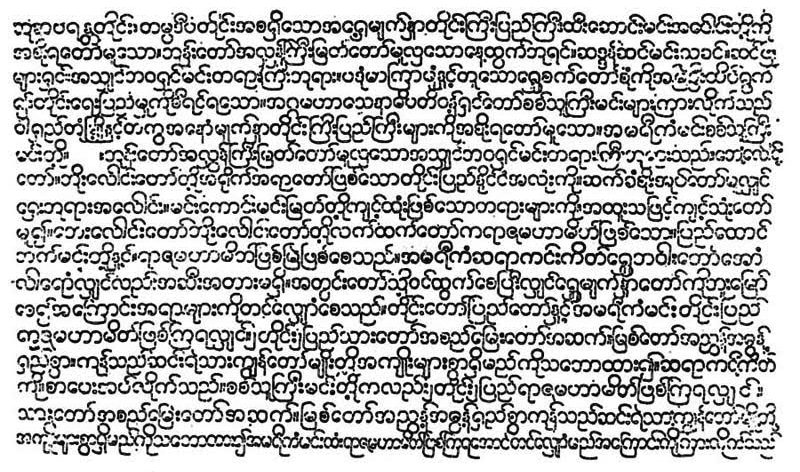
Scan of a handwritten letter in Burmese script, dense black text in multiple lines on a light paper background, with ornate decorative characters at the top of the page.Letter

Primary source

Letter from King Mindon of Burma to President Buchanan

Mindon Min · February 1857

Black-and-white photographic portrait of an elderly man with wavy white hair, seen from a three-quarter angle. He wears a dark coat, a high white collar, and a white cravat, and has a serious, neutral expression against a plain gray background.Photograph

Primary source

Hon. James Buchanan

Mathew Benjamin Brady · c. 1860-1865

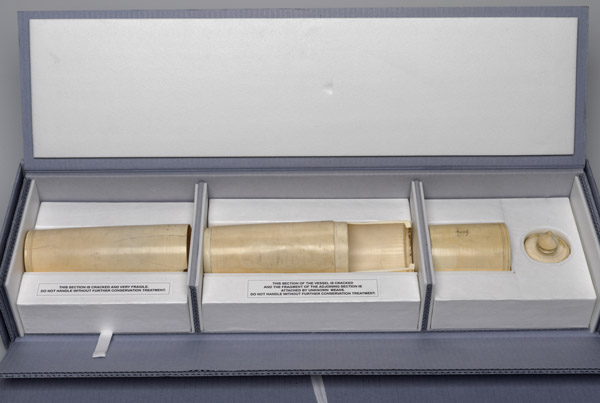
A cream-colored cylindrical scroll-like object partially rolled, lying in a gray archival storage box divided into three compartments. Labels on the white tray read 'This section of the vessel is cracked and very fragile. Do not handle without further conservation treatment.' A small rolled cap sits in the right compartment.Letter

Primary source

Letter from the King and Court of Ava to the President

King and Court of Ava · 16 April 1857

Black and white photographic portrait of an elderly man with white hair, wearing a dark coat, white shirt, and white bow tie, turned slightly to his left and looking toward the viewer against a mottled gray background.Photograph

Primary source

James Buchanan photograph by Meade Brothers

Meade Brothers · 1860

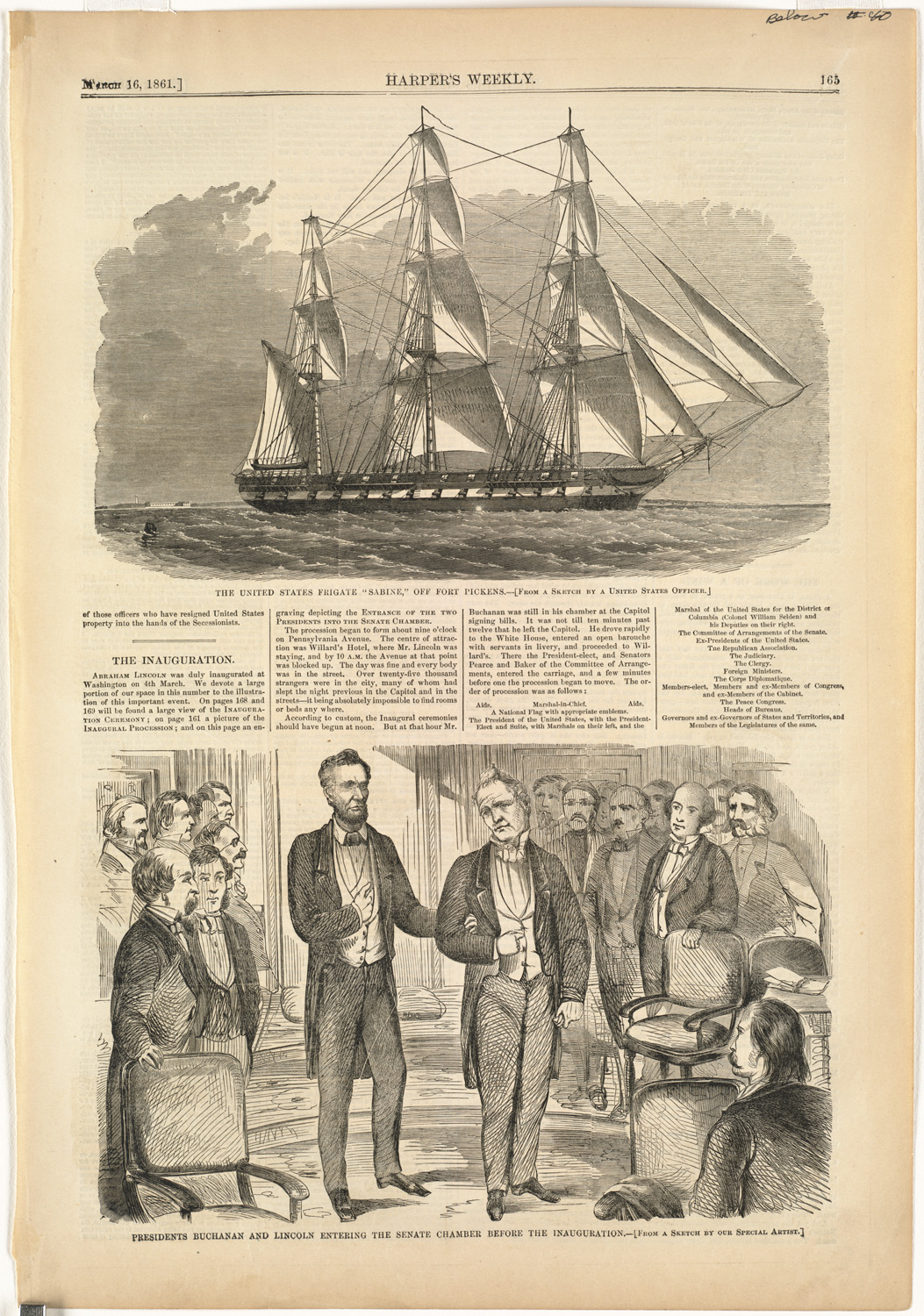
A Harper's Weekly page dated March 16, 1861, with a top illustration of the frigate Sabine off Fort Pickens and a lower wood engraving of Presidents Buchanan and Lincoln entering the Senate Chamber, surrounded by standing men. Text columns describe the inauguration.Painting

Primary source

Buchanan and Lincoln Entering the Senate Chamber

Winslow Homer · 16 March 1861

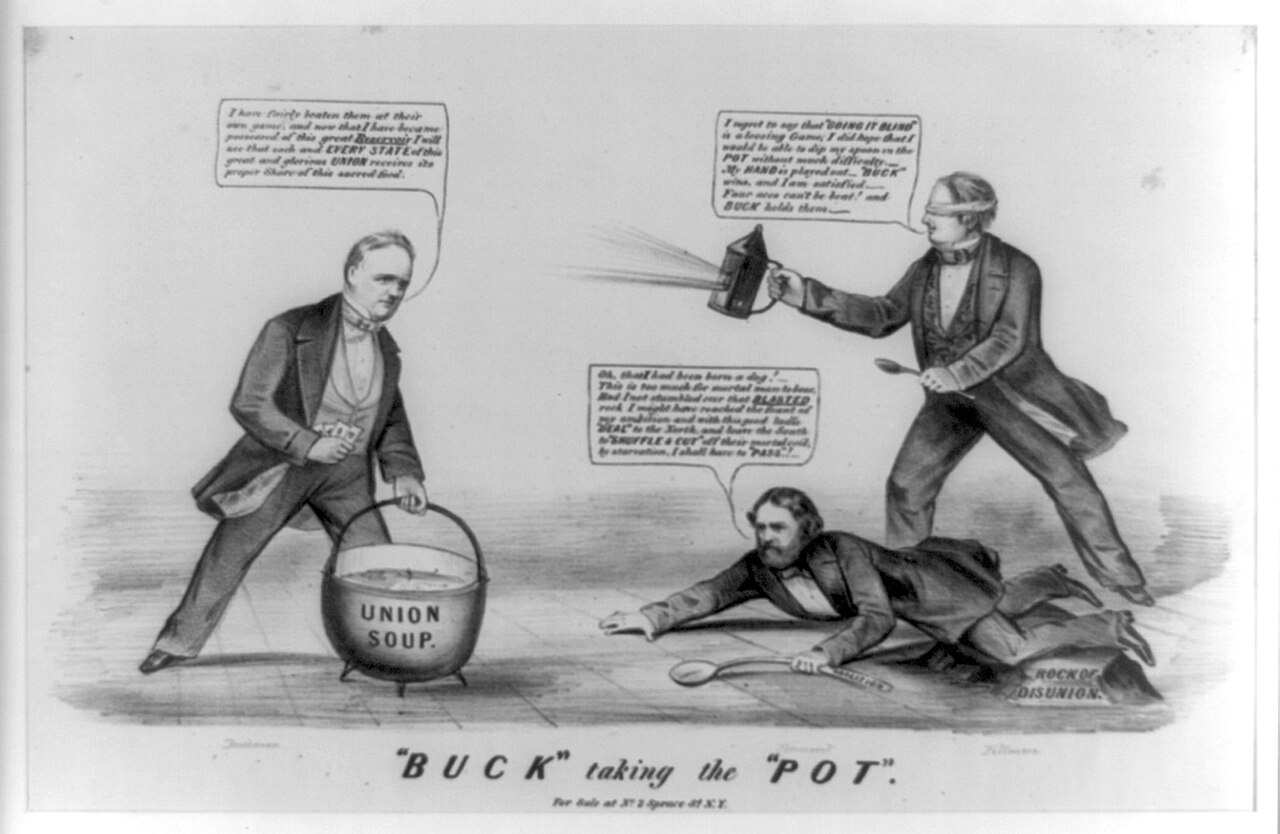
Black-and-white lithograph cartoon titled "Buck taking the Pot." A man in a dark suit stands at left beside a large pot labeled "Union Soup" and holds a pile of cards, saying he has won the game. At right, a blindfolded man holds a candle-like lantern toward a sprawling man on the floor, who has a card in one hand, and a cloth bag labeled "Rock of Disunion" lies nearby.Painting

Primary source

Union Soup: Buchanan Wins the Card Game

Bernard F. Reilly · 1856

Book

Secondary source

James Buchanan, by George Ticknor Curtis

George Ticknor Curtis · 1914

Buchanan and Breckinridge Campaign SheetDocument

Primary source

Buchanan and Breckinridge Campaign Sheet

1856

Black-and-white engraved portrait of an older man with wavy white hair, wearing a dark coat, white shirt, and white bow tie with a high collar, facing slightly to the side against a dark background.Painting

Secondary source

James Buchanan as Secretary of State

U.S. Department of State · 1845-1849 (tenure); image published 2008

Sepia-toned oval portrait of an older man with light, swept-back hair, wearing a dark coat, white shirt, and white bow tie, shown head and shoulders and facing left. The oval image sits in a gold-brown velvet case with a beaded gold border.Painting

Secondary source

Painting of James Buchanan, Head-and-Shoulders Portrait

Unknown · after 1855

Engraved print of a man with swept-back gray hair in a dark coat and white cravat, turned three-quarters to the left. Caption below reads 'JAMES BUCHANAN, Président des États-Unis d'Amérique'. Printer's imprint and signature visible.Painting

Secondary source

Portrait of James Buchanan

Unknown

Black and white engraved portrait of an older man with swept-back hair, wearing a dark coat and a white cravat tied at the neck, facing slightly to the right. Printed caption below reads 'JAMES BUCHANAN'. Text fragment above reads 'reputation gained by many important'.Painting

Secondary source

James Buchanan Portrait from Lossing's Pictorial History of the Civil War

Lossing and Barritt

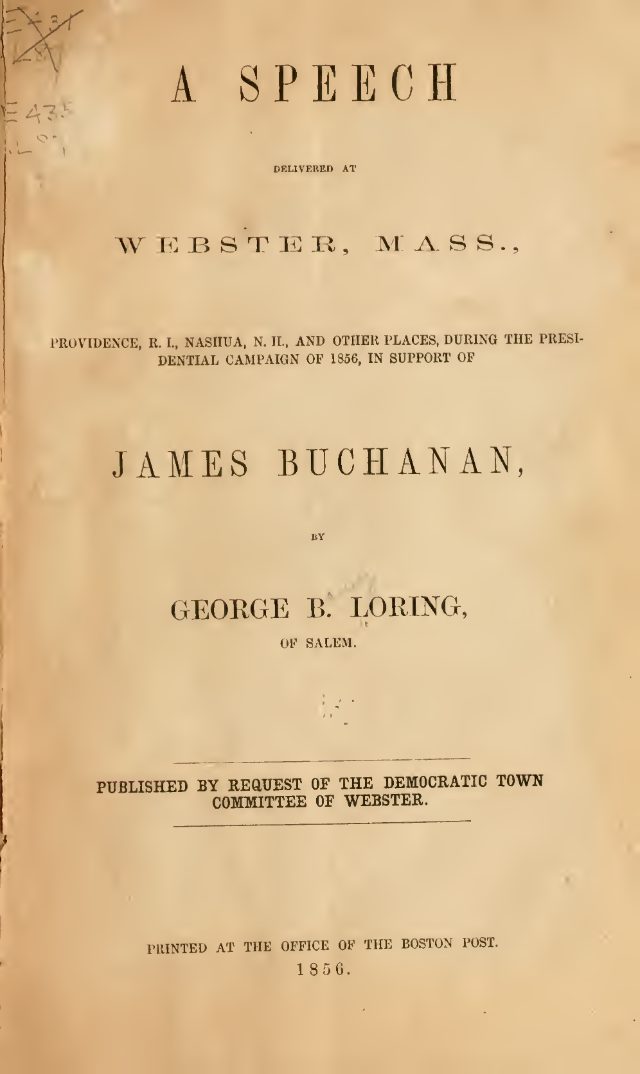
Speech by George B. Loring Supporting James BuchananSpeech

Primary source

Speech by George B. Loring Supporting James Buchanan

George Bailey Loring · 1856

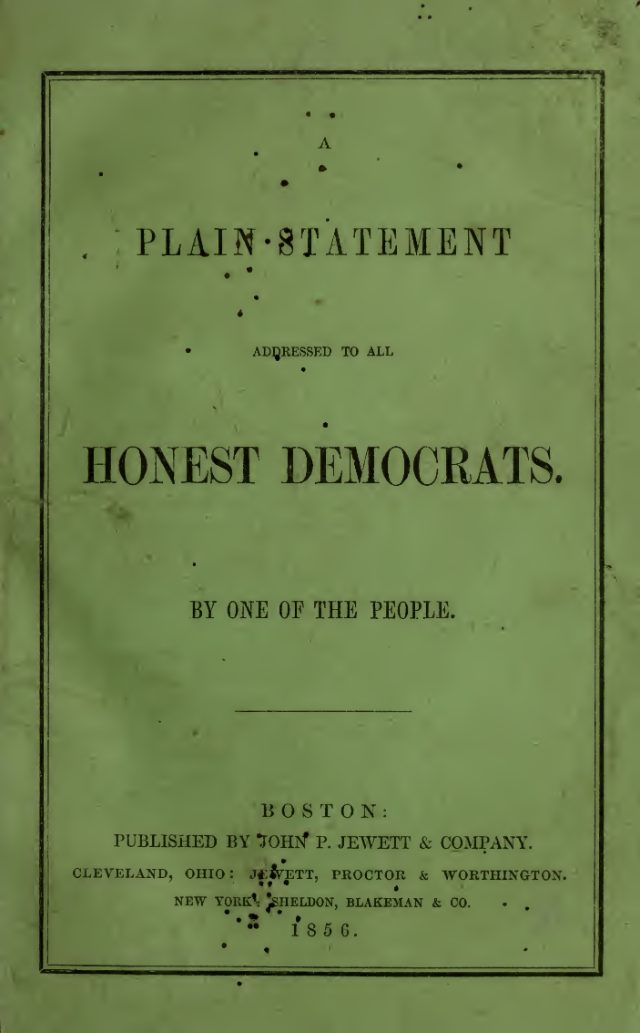
A Plain Statement Addressed to All Honest DemocratsBook

Primary source

A Plain Statement Addressed to All Honest Democrats

1856

Book

Tertiary source

Buchanan, James, in Appletons' Cyclopaedia of American Biography

George Ticknor Curtis · 1900

Book

Tertiary source

Buchanan, James, in The New International Encyclopaedia

1905

Document

Tertiary source

Mozart entry, The Nuttall Encyclopaedia

James Wood · 1900

Book

Tertiary source

Buchanan, James, in Encyclopaedia Britannica, 11th ed.

1911

Book

Tertiary source

Buchanan, James (The New Student's Reference Work)

1914

Book

Tertiary source

Buchanan, James (The Encyclopedia Americana)

Walter L. Fleming · 1920

Book

Tertiary source

Buchanan, James (Collier's New Encyclopedia)

1921

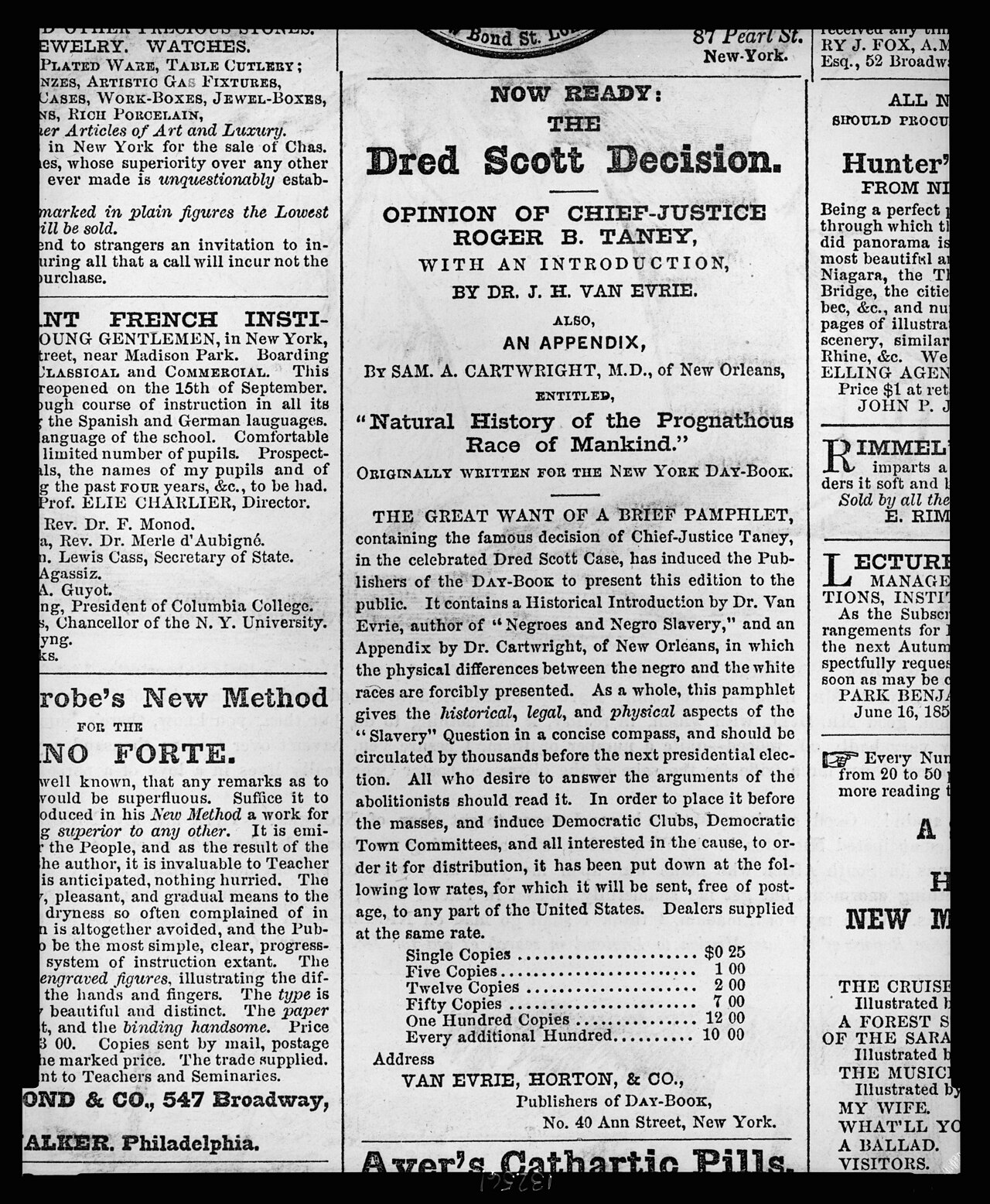
Scanned newspaper advertisement page, black and white. Central column reads 'Now ready: The Dred Scott Decision, Opinion of Chief-Justice Roger B. Taney', with introduction by Dr. J. H. Van Evrie and an appendix by Sam. A. Cartwright. Body text describes the pamphlet and lists bulk prices. Surrounding columns show other ads for schools, books, and pills.Newspaper article

Primary source

Now ready: the Dred Scott decision, opinion of Chief Justice Taney, 1859

1859

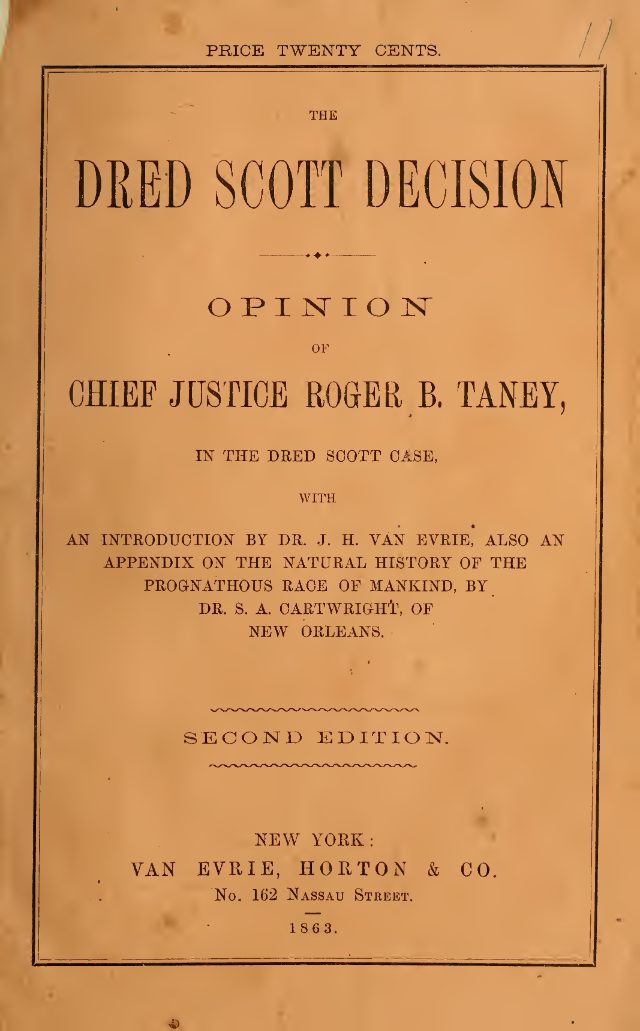
The Dred Scott Decision: Opinion of Chief Justice Taney (1863 edition)Document

Primary source

The Dred Scott Decision: Opinion of Chief Justice Taney (1863 edition)

Roger B. Taney · 1863

Newspaper article

Primary source

A Weighty List of Names (The Liberator, 1857)

September 18, 1857

Document

Primary source

Presidential Proclamation ratifying the Oregon Treaty

James K. Polk · 19 June 1846

Handwritten cursive signature reading 'James Buchanan' in black ink on a white background, with a long looping flourish extending under the first name.Document

Secondary source

Signature of James Buchanan (Appletons, 1900)

James Buchanan · 1900

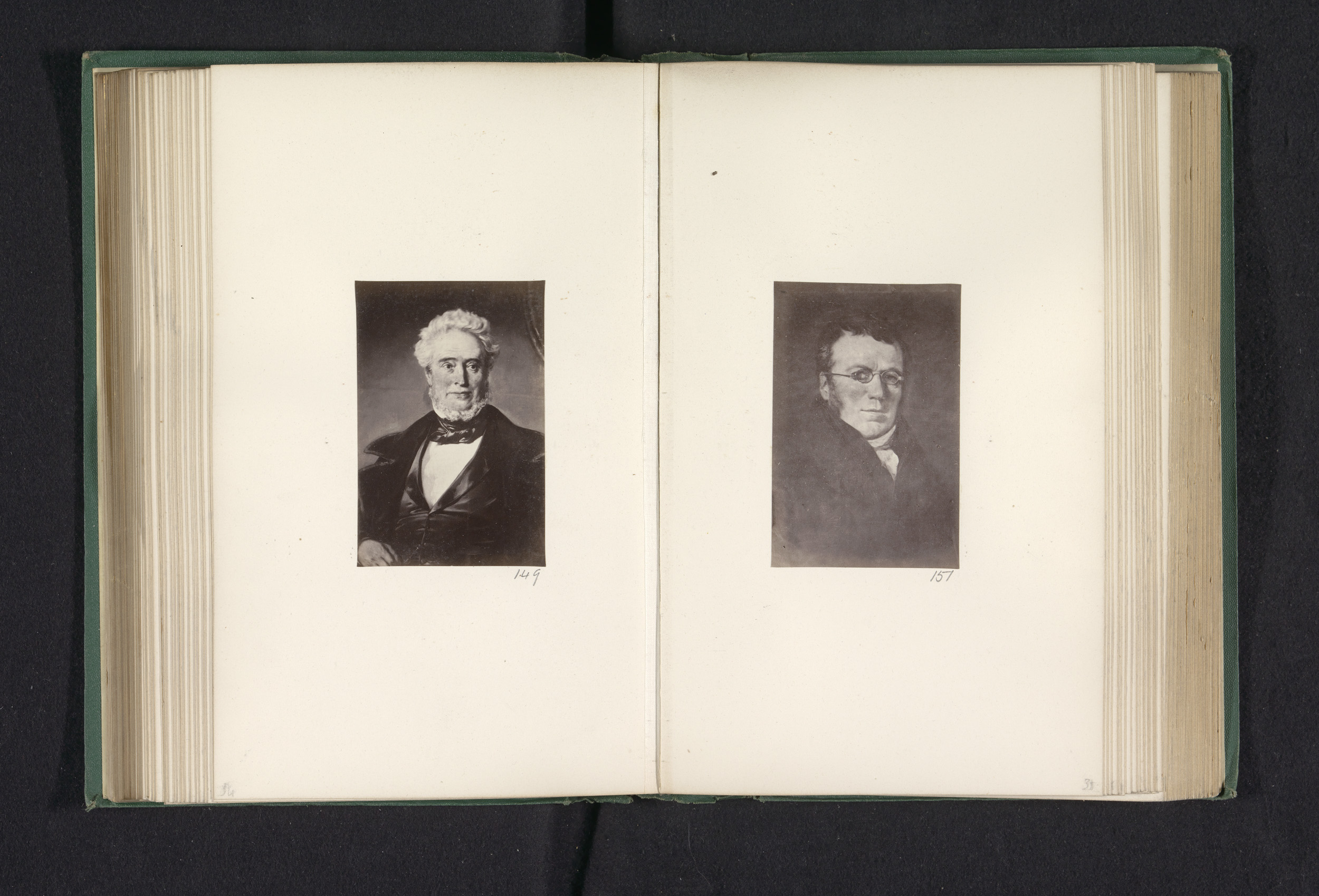
Open green-bound album with two photographic reproductions of portraits on facing pages. Left: an older man with white hair and beard, dark coat and bow tie, numbered 149. Right: a man with glasses and dark hair, numbered 157.Photograph

Secondary source

Photograph of a painted portrait of James Buchanan

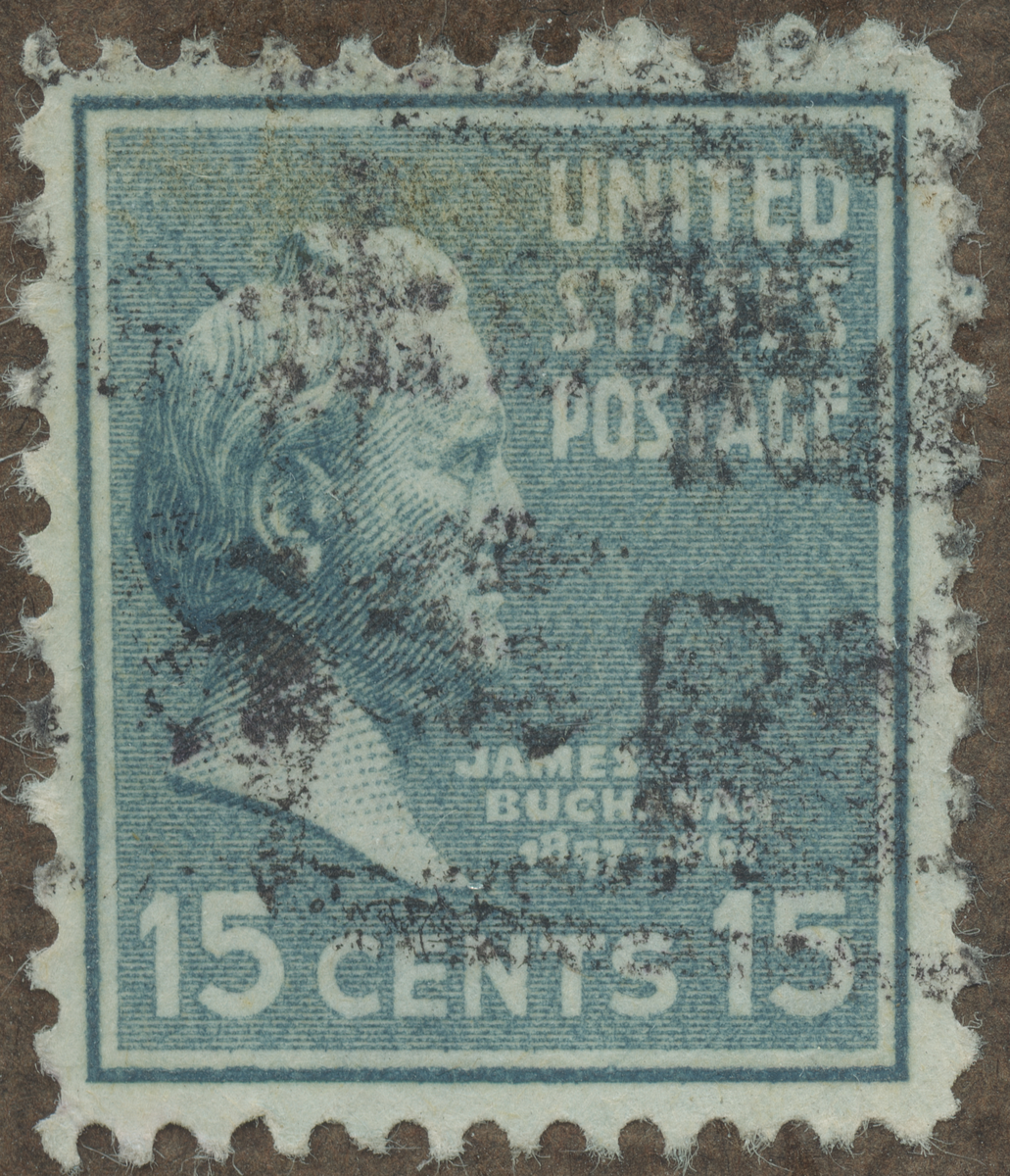
Scan of a blue 15-cent United States postage stamp with a perforated edge and a black postmark smudge. It reads 'UNITED STATES POSTAGE' and '15 CENTS 15', with a profile portrait of a man and the name 'JAMES BUCHANAN 1791-1868'.Artifact

Secondary source

1938 United States stamp showing James Buchanan

1938

Want the full shelf? Chat with James Buchanan in the app and open the Sources panel — every quote links back to the original.

Use James Buchanan in class

1 collection

A ready-made collection from the Humy team that features James Buchanan. Preview it, then try it free.

Trusted by educators worldwide

Conversations
375,000+
Real exchanges between students and historical figures
Messages exchanged
4,142,000+
Across every figure, classroom and language
Historical figures
100,000+
Each informed by a curated biography and selected sources
Languages supported
50+
From English and Spanish to Arabic and Korean

Paying customers

Used by 98 schools and universities

Partner school logo
Tecnológico de Monterrey logo
Hyper Island logo
Partner school logo
Chambersburg Area School District logo
Broward County Public Schools logo
Nebo School District logo
National Louis University logo
South Florida PBS logo
Punahou School logo
University of Wisconsin–River Falls logo
Partner school logo
Partner school logo
Archbishop Mitty High School logo
Kingsburg High School logo
Norwalk Public Schools logo
Partner school logo
Connections logo
Partner school logo
Moore Public Schools logo
Partner school logo
Partner school logo
Partner school logo
Partner school logo
Robbinsville Public Schools logo
Partner school logo
Partner school logo
Partner school logo
Tecnológico de Monterrey logo
Hyper Island logo
Partner school logo
Chambersburg Area School District logo
Broward County Public Schools logo
Nebo School District logo
National Louis University logo
South Florida PBS logo
Punahou School logo
University of Wisconsin–River Falls logo
Partner school logo
Partner school logo
Archbishop Mitty High School logo
Kingsburg High School logo
Norwalk Public Schools logo
Partner school logo
Connections logo
Partner school logo
Moore Public Schools logo
Partner school logo
Partner school logo
Partner school logo
Partner school logo
Robbinsville Public Schools logo
Partner school logo
Partner school logo

What educators are saying

“We enjoyed the program last year and used it frequently.”
“My students say it’s a welcome change of pace. I’m not a fan of the “sage on the stage” model, so I try to incorporate research-oriented and self-paced activities. With Humy, students have to take charge of their learning. They’ve become more adept at critical thinking, forming better questions, and improving their reading comprehension. The interview feature has been my go-to tool. I create assignments where students must ask historical figures a set number of questions, then summarize the responses to ensure they’re truly absorbing the material. This approach lets them actively explore the past rather than passively consuming information.”
“Humy has helped me bring historical figures, sometimes long past, to life. When my students interact with these figures in real-time, it eliminates some of the perceived “ancient” characteristics of my curriculum. This has shifted my students’ thinking away from viewing history as abstract or irrelevant. Real-time interactions make historical figures relatable, even allowing students to ask off-topic questions that help put historical lives in a more relevant context for 13-year-olds. The feature I use the most is the interview feature. After teaching a topic, most recently Gandhi and Joan of Arc, I have the students ask pointed, focused questions. We practice good conversation techniques beforehand, teaching them to listen (or read) carefully and formulate thoughtful follow-up questions rather than just interrogating. It helps students practice effective conversation skills.”

FAQ

Frequently asked questions

Who is James Buchanan?
15th President of the United States. On Humy.ai you can chat with an AI version of James Buchanan that draws on a short biography and 82 historical sources during the conversation — by text or voice, in 42 languages.
Is James Buchanan AI free?
James Buchanan is part of Humy's full library of more than 100,000 figures, which comes with a paid plan. A free account (no credit card) includes 20 messages a month with the free library's figures, so you can try how the conversations work first.
What sources does the James Buchanan AI use?
It draws on a short biography and 82 historical sources (documents, books and photographs), including “Fourth Annual Message to Congress”, “Dred Scott v. Sandford” and “Oregon Treaty”. Each source has its own page on Humy.ai.
How historically accurate is the AI version of James Buchanan?
Each figure uses a short biography and a small set of selected historical sources as context (retrieval-augmented generation), so answers stay closer to known material than the model's general knowledge alone. It isn't a citation-grade research tool — like any LLM, the AI can get details wrong or extrapolate. Treat it as a strong starting point for inquiry and cross-reference important claims.
Can I talk to James Buchanan by voice?
Yes. In addition to text chat, you can call James Buchanan and hear their voice respond in real time — useful for auditory learners, interview practice and Socratic dialogue.
Is Humy.ai safe and compliant for schools?
Yes. Humy.ai is used by more than 100 schools, universities and organisations. The platform is FERPA- and GDPR-aligned, supports SSO, and offers an IT-approval pack tailored for school procurement teams.

Ready when you are

Start chatting with James Buchanan now.

20 messages free · No credit card · Available in 50+ languages.