


Secondary sourcePhotograph1537
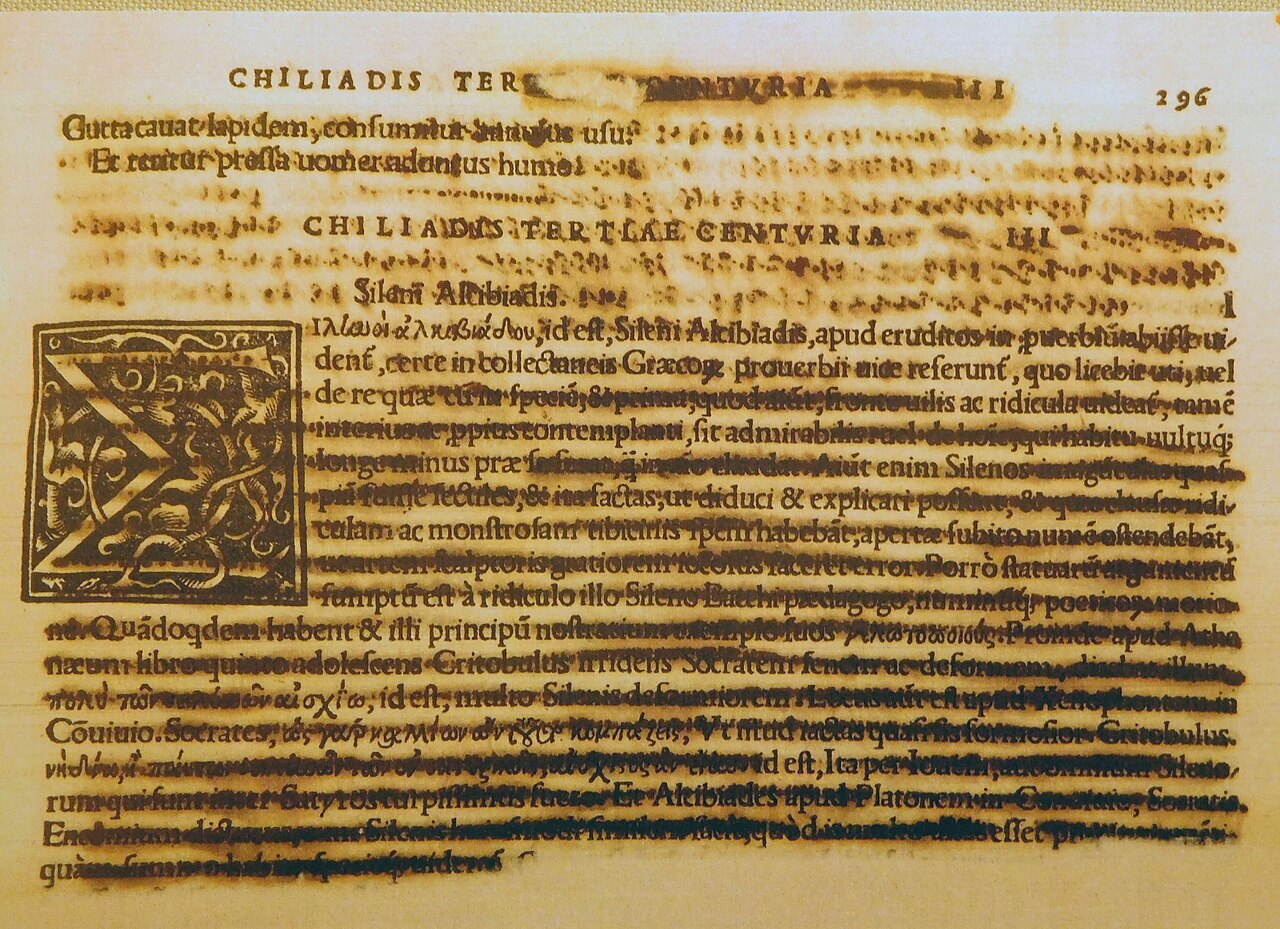
Adagia, 1537 edition, page 296 (Sileni Alcibiadis)
Ian Alexander · 1537
A page from a 1537 Venetian edition of Erasmus's Adagia in which Jesuit censors blacked out much of the Latin and Greek text.
Shows how Erasmus's Adagia, one of his best-known works, was altered by censors after his death.
About this source
What it is
This is a scanned page from a 1537 printed edition of the Adagia, a large collection of Latin and Greek proverbs and short essays by Erasmus, published in Venice by V. Ravani e soci. The page, number 296, contains the essay 'Sileni Alcibiadis'. The scan is held in the Biblioteca di Brera. Much of the text is covered by censor marks, and the page is brownish with age.
Why it matters
The Adagia was one of the most widely read books of the sixteenth century. Its anti-clerical essays made it a target for Catholic censors after Erasmus died. The heavy blacking-out on this copy shows how Counter-Reformation censors, including Jesuits, treated his work, keeping the book in circulation while removing passages they judged dangerous.
Look closer
- Which parts of the page were removed, and which were left readable?
- Who would have decided which words to cover, and why?
- How does the censored copy change what a reader in 1537 could learn from this essay?
This photograph is part of the curated material that grounds the AI version of Desiderius Erasmus on Humy.ai — when students ask about related events, the AI can quote it and cite it.
More Desiderius Erasmus sources
Meet the AI Desiderius Erasmus →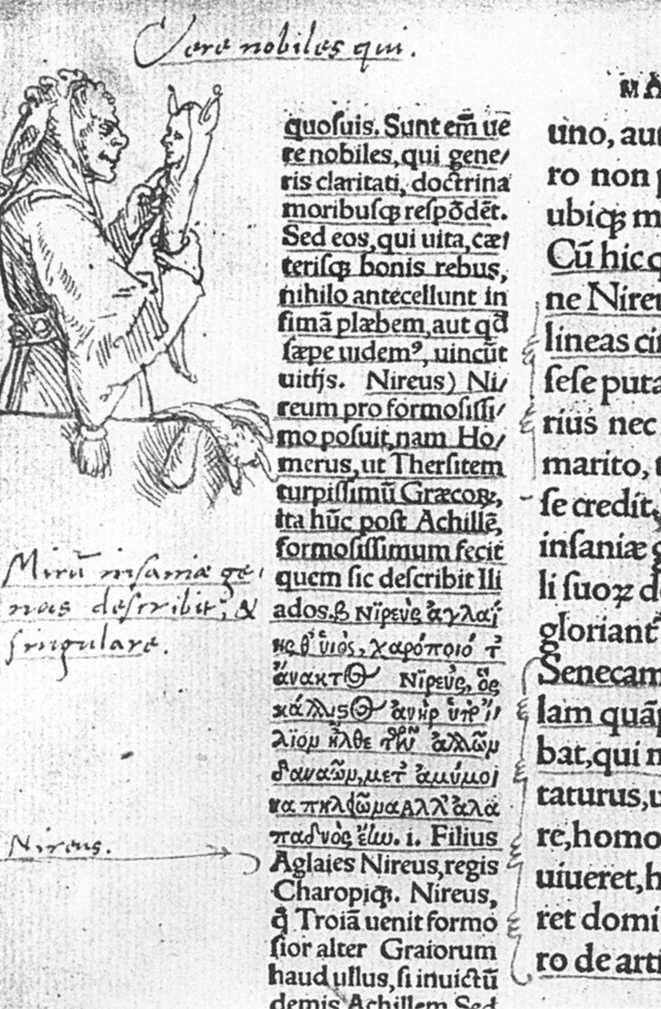 Book
Primary source
In Praise of Folly
Erasmus · 1511 (written 1509)
 Book
Primary source
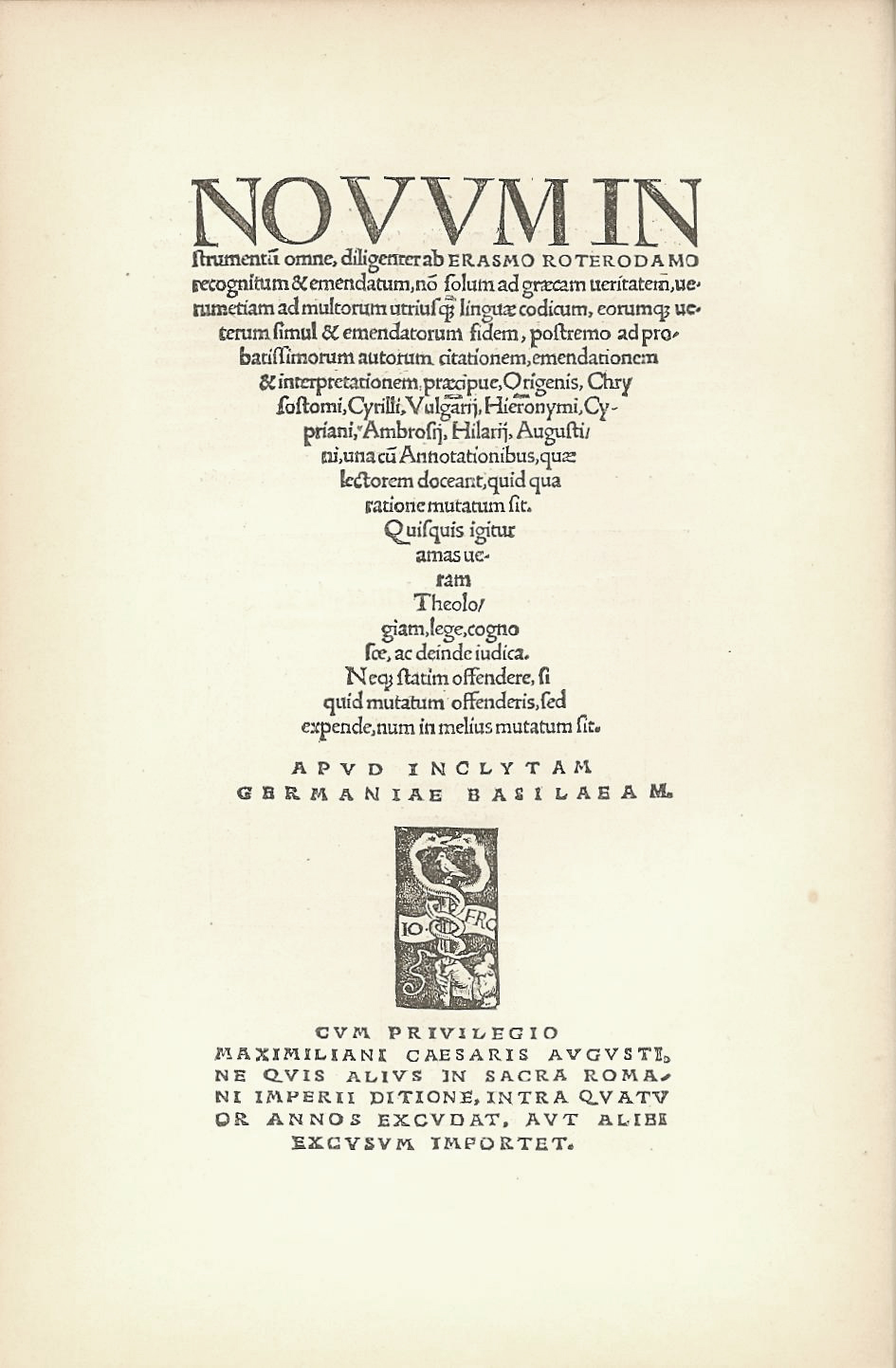
Novum Instrumentum omne
Erasmus · 1516
 Book
Primary source
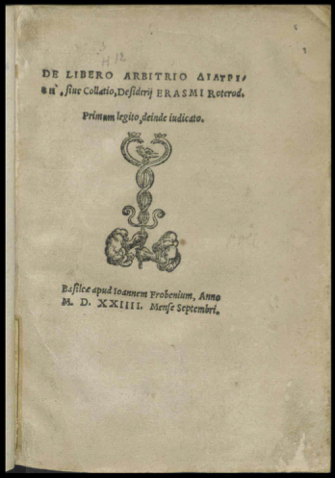
De libero arbitrio diatribe sive collatio
Erasmus · 1524
 Book
Primary source
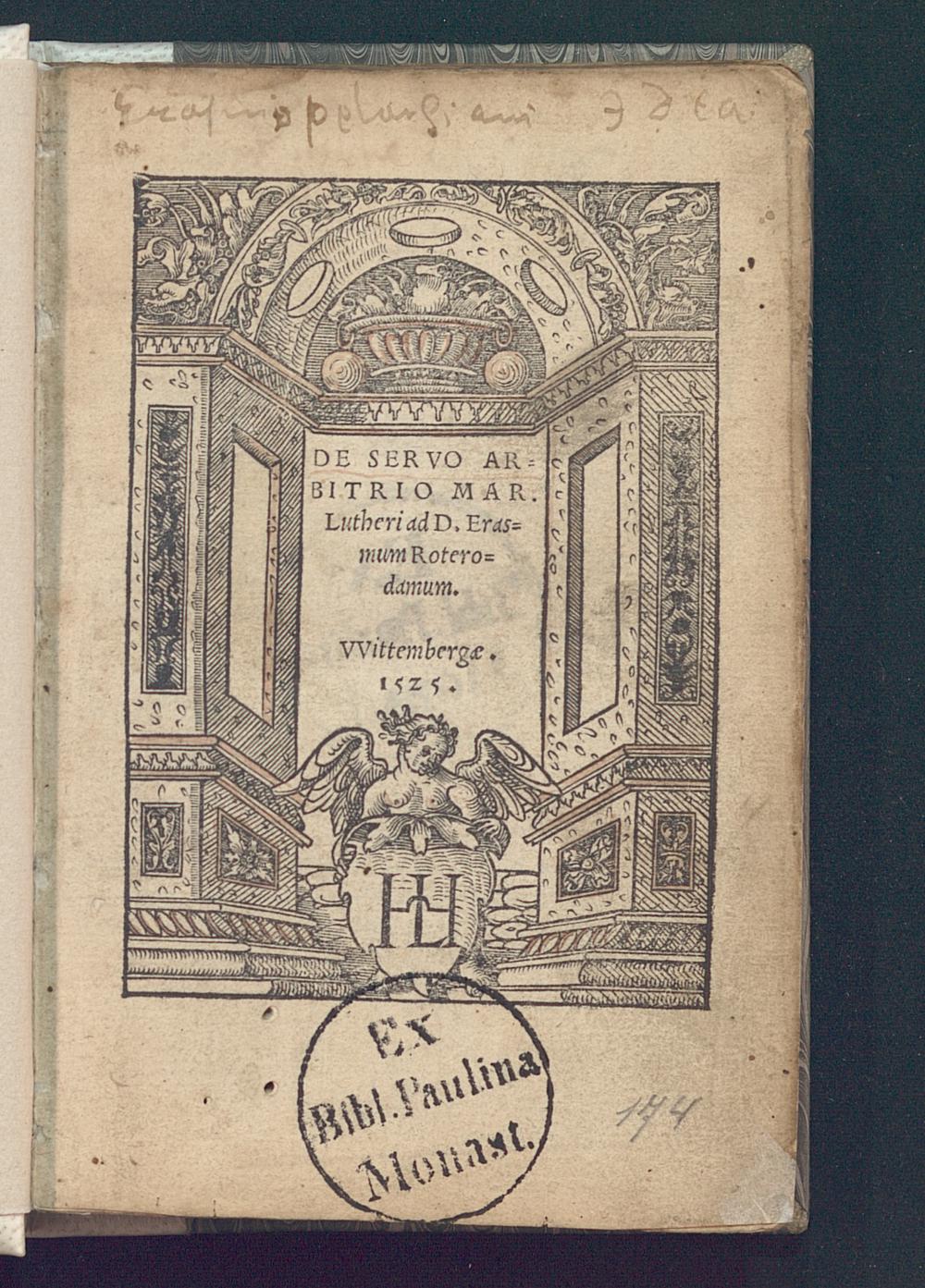
On the Bondage of the Will
Martin Luther · 1525
 Painting
Primary source
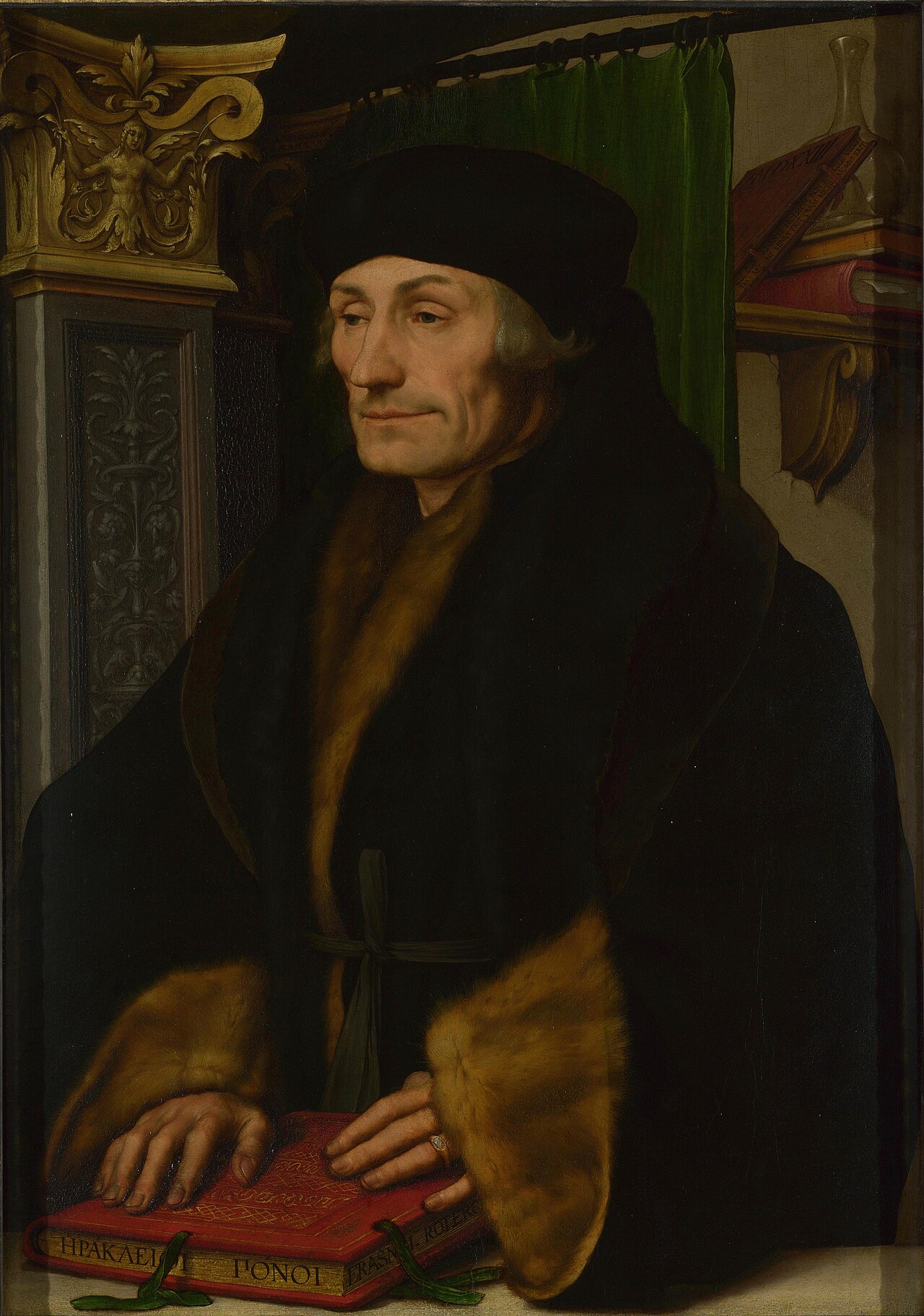
Erasmus
Hans Holbein the Younger · 1523
Ready when you are
Start chatting with Desiderius Erasmus now.
20 messages free · No credit card · Available in 50+ languages.