


Primary sourceBook1526
Das der freie Wille nichts sey
Martin Luther; translated by Justus Jonas · 1526
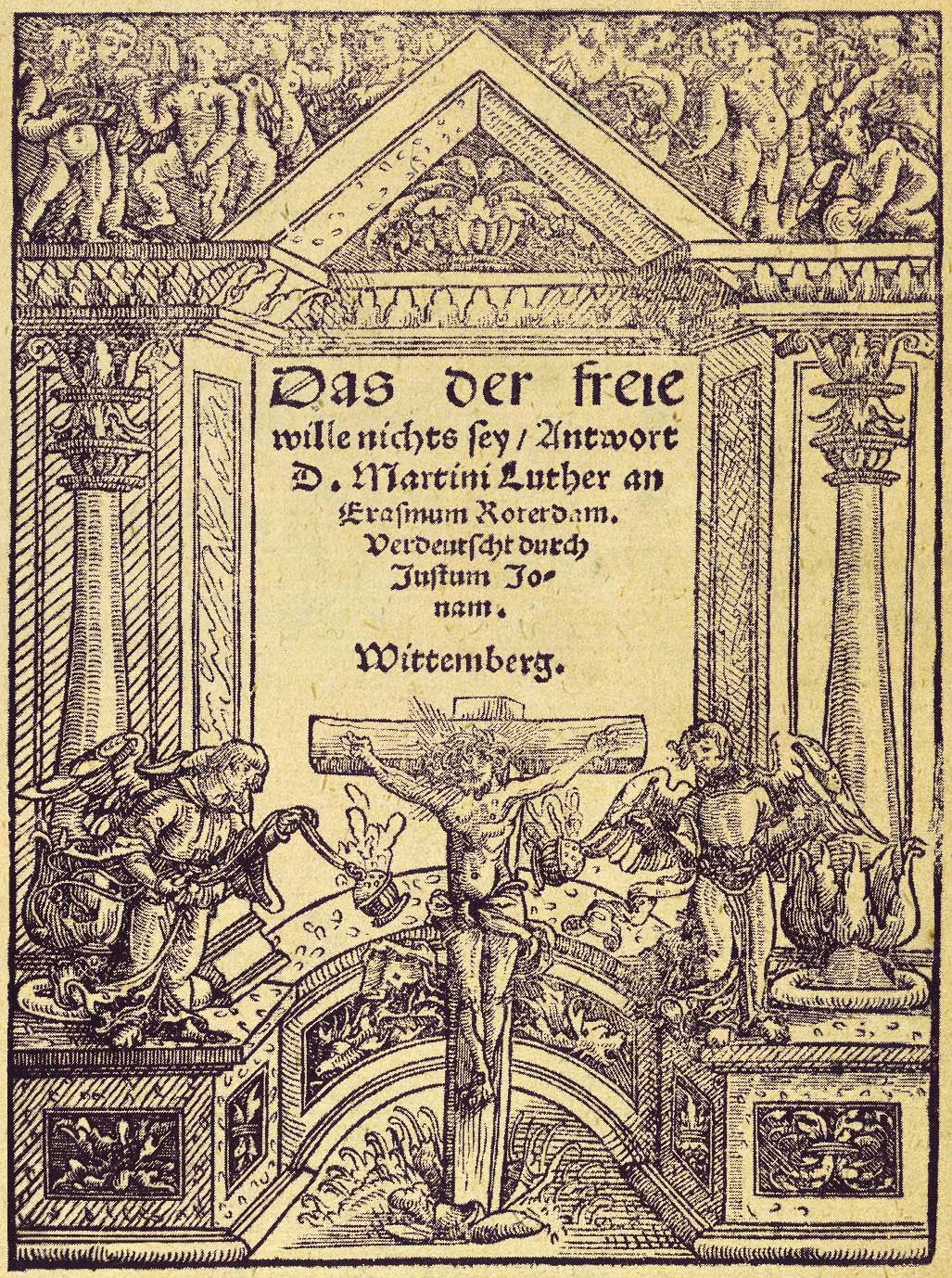
A 1526 German book printed in Wittenberg, containing Luther's reply to Erasmus on free will, translated into German by Justus Jonas.
Shows how Luther's reply to Erasmus on free will was published in German, carrying Erasmus's dispute into a wider public.
About this source
What it is
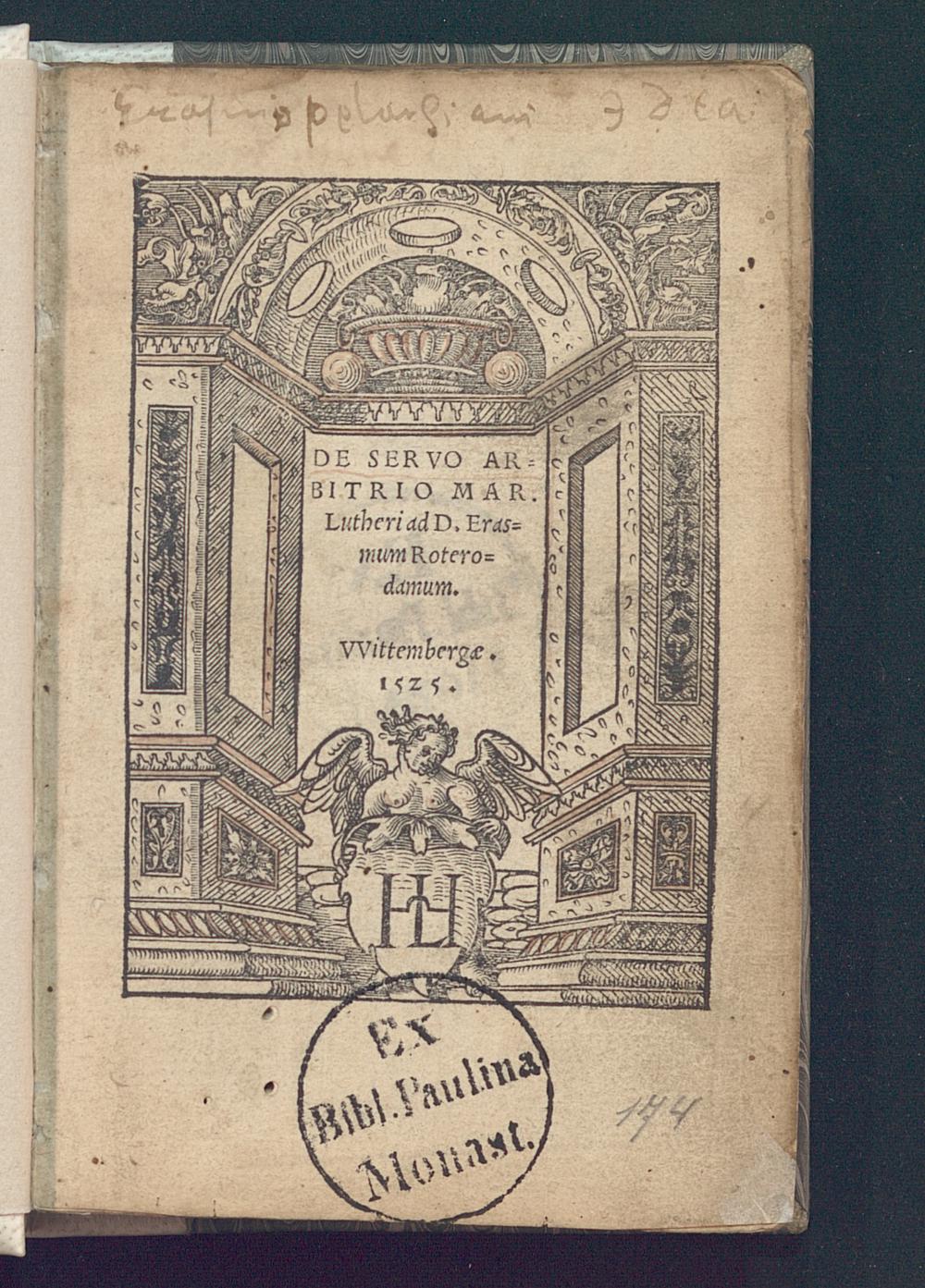
This is the title page of a German book printed in Wittenberg in 1526, in black letter type. The title reads 'Das der freie Wille nichts sey' and names Martin Luther and Erasmus. The book is Luther's reply to Erasmus, translated into German by Justus Jonas. A woodcut architectural frame surrounds the text, with nude putti, a crucifixion and two robed figures on the page.
Why it matters
Erasmus had written in Latin on the question of free will, and Luther answered him in print. Jonas's German version carried this scholarly dispute to a wider, vernacular public. The book shows how the Reformation debates moved out of Latin academic circles and into the language of ordinary readers.
Look closer
- What do the names on the title page tell you about who the book was meant to be read as a response to?
- Why might printers have used religious and classical images in the frame?
- What does this book leave out about the views of Erasmus himself?
This book is part of the curated material that grounds the AI version of Desiderius Erasmus on Humy.ai — when students ask about related events, the AI can quote it and cite it.
More Desiderius Erasmus sources
Meet the AI Desiderius Erasmus →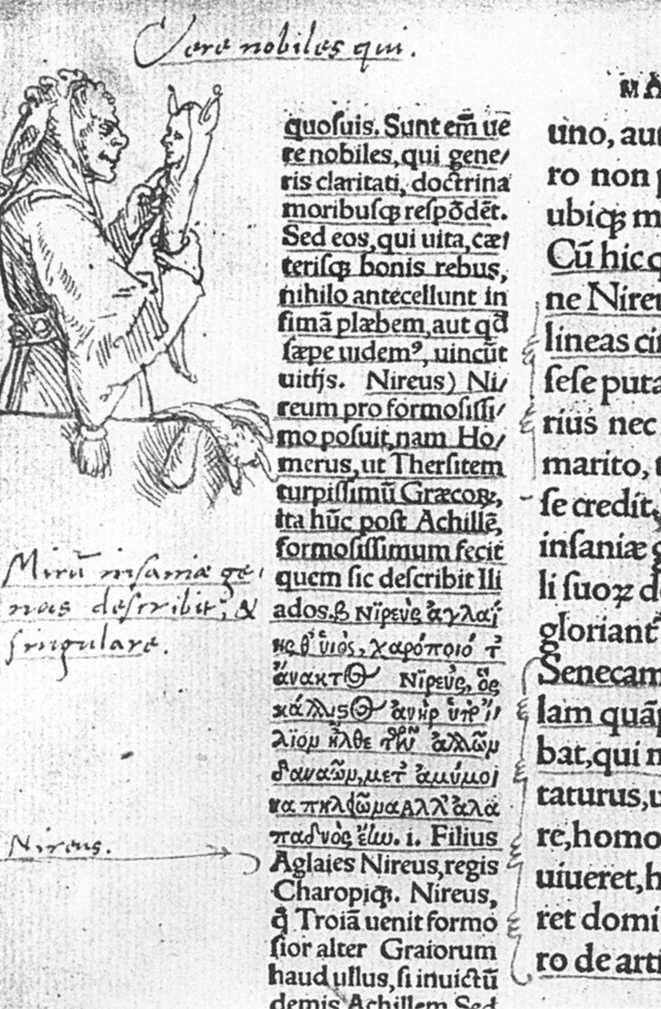 Book
Primary source
In Praise of Folly
Erasmus · 1511 (written 1509)
 Book
Primary source
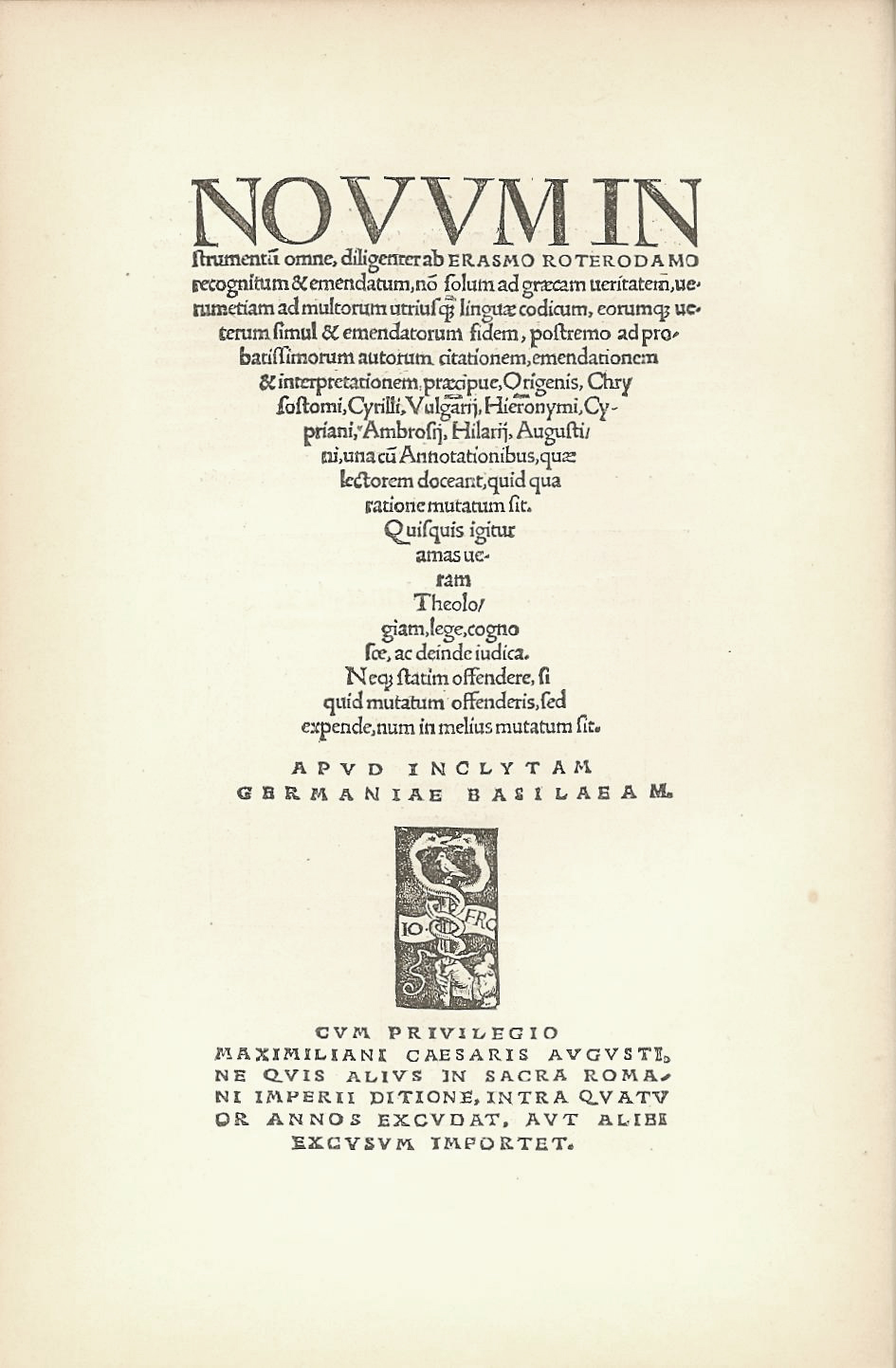
Novum Instrumentum omne
Erasmus · 1516
 Book
Primary source
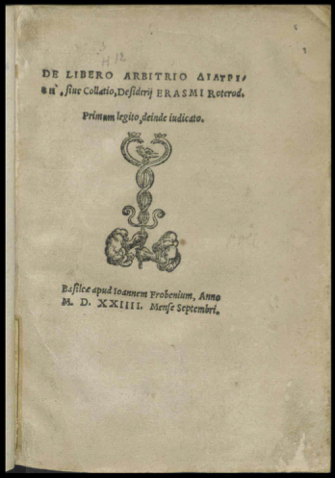
De libero arbitrio diatribe sive collatio
Erasmus · 1524
 Book
Primary source
On the Bondage of the Will
Martin Luther · 1525
 Painting
Primary source
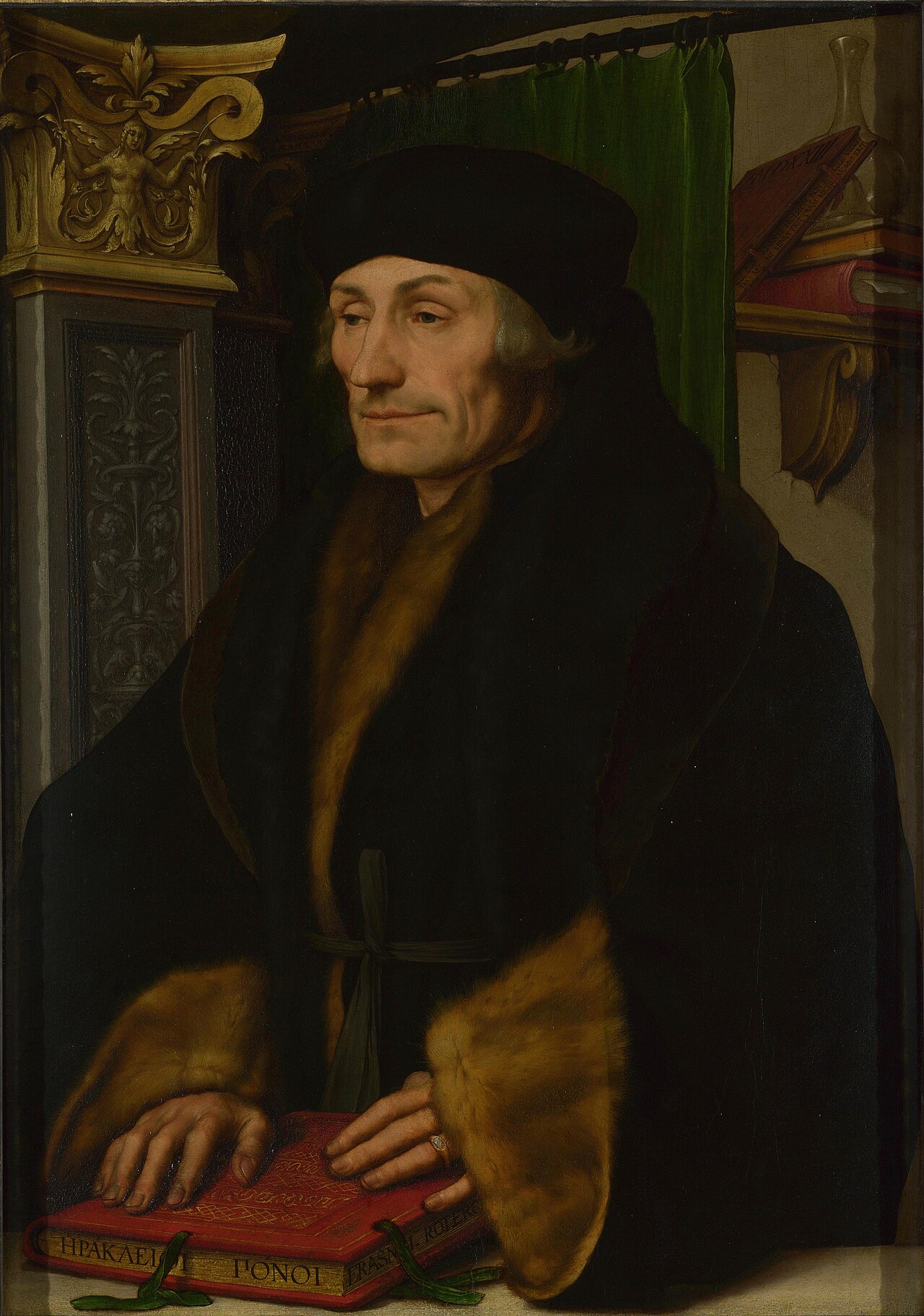
Erasmus
Hans Holbein the Younger · 1523
Ready when you are
Start chatting with Desiderius Erasmus now.
20 messages free · No credit card · Available in 50+ languages.