


Primary sourcePainting1517
Desiderius Erasmus
Quinten Massys · 1517
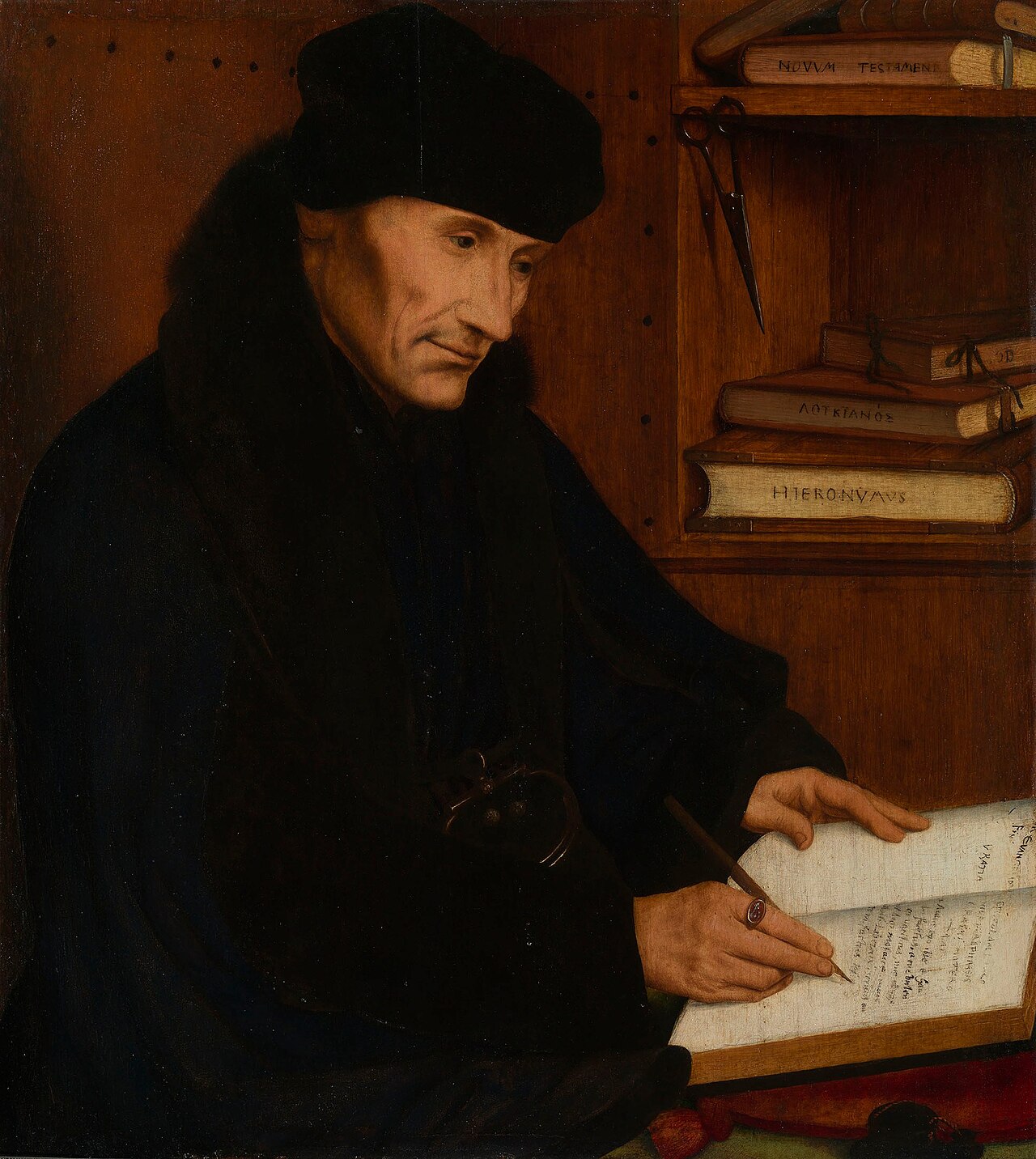
A 1517 portrait of Erasmus by Quinten Massys, painted as half of a friendship diptych sent to Thomas More.
This portrait shows Erasmus himself, painted as a gift within his own circle of humanist friends.
About this source
What it is
This panel painting of Erasmus was made in 1517 by the Flemish artist Quinten Massys. It is now held in the Royal Collection. It shows an older man in a fur-trimmed cap, seated at a desk writing, with books labelled Novum Testamentum, works of Erasmus, and the writings of Jerome on a shelf behind him.
Why it matters
The painting was made as one half of a friendship diptych, paired with a portrait of Pieter Gillis, and sent as a gift to the English humanist Thomas More. It shows how portraits could serve as tokens of friendship among scholars, and reveals the close network of humanists — Erasmus, Gillis, and More — who exchanged letters, books, and even paintings across Europe.
Look closer
- What do the books on the shelf tell you about what Erasmus valued?
- Why might a painted portrait be sent as a gift between friends instead of a letter?
- What does the setting — a scholar at his desk — suggest about how Erasmus wanted to be remembered?
This painting is part of the curated material that grounds the AI version of Desiderius Erasmus on Humy.ai — when students ask about related events, the AI can quote it and cite it.
More Desiderius Erasmus sources
Meet the AI Desiderius Erasmus →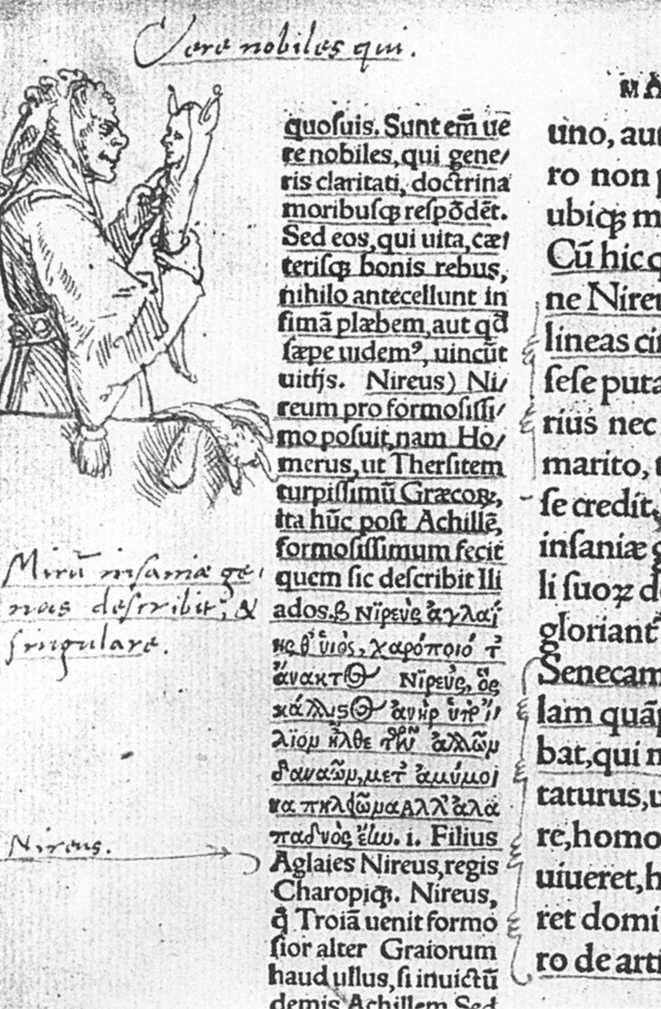 Book
Primary source
In Praise of Folly
Erasmus · 1511 (written 1509)
 Book
Primary source
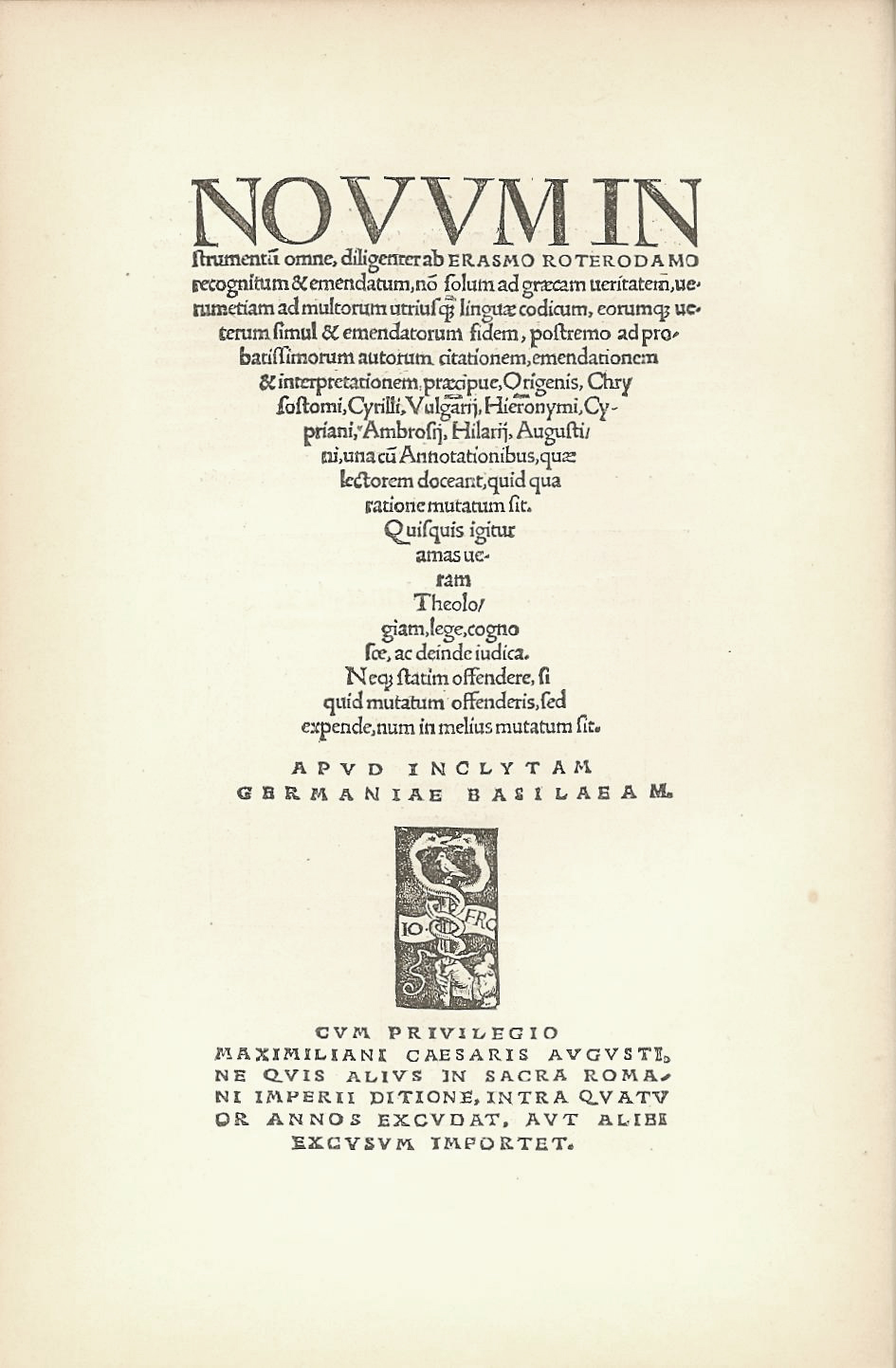
Novum Instrumentum omne
Erasmus · 1516
 Book
Primary source
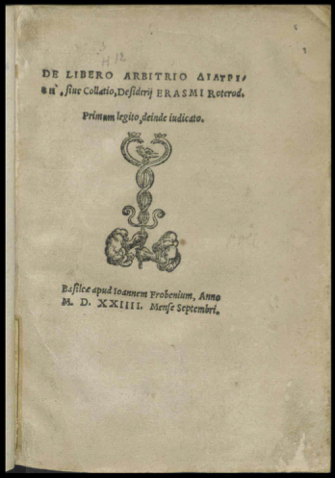
De libero arbitrio diatribe sive collatio
Erasmus · 1524
 Book
Primary source
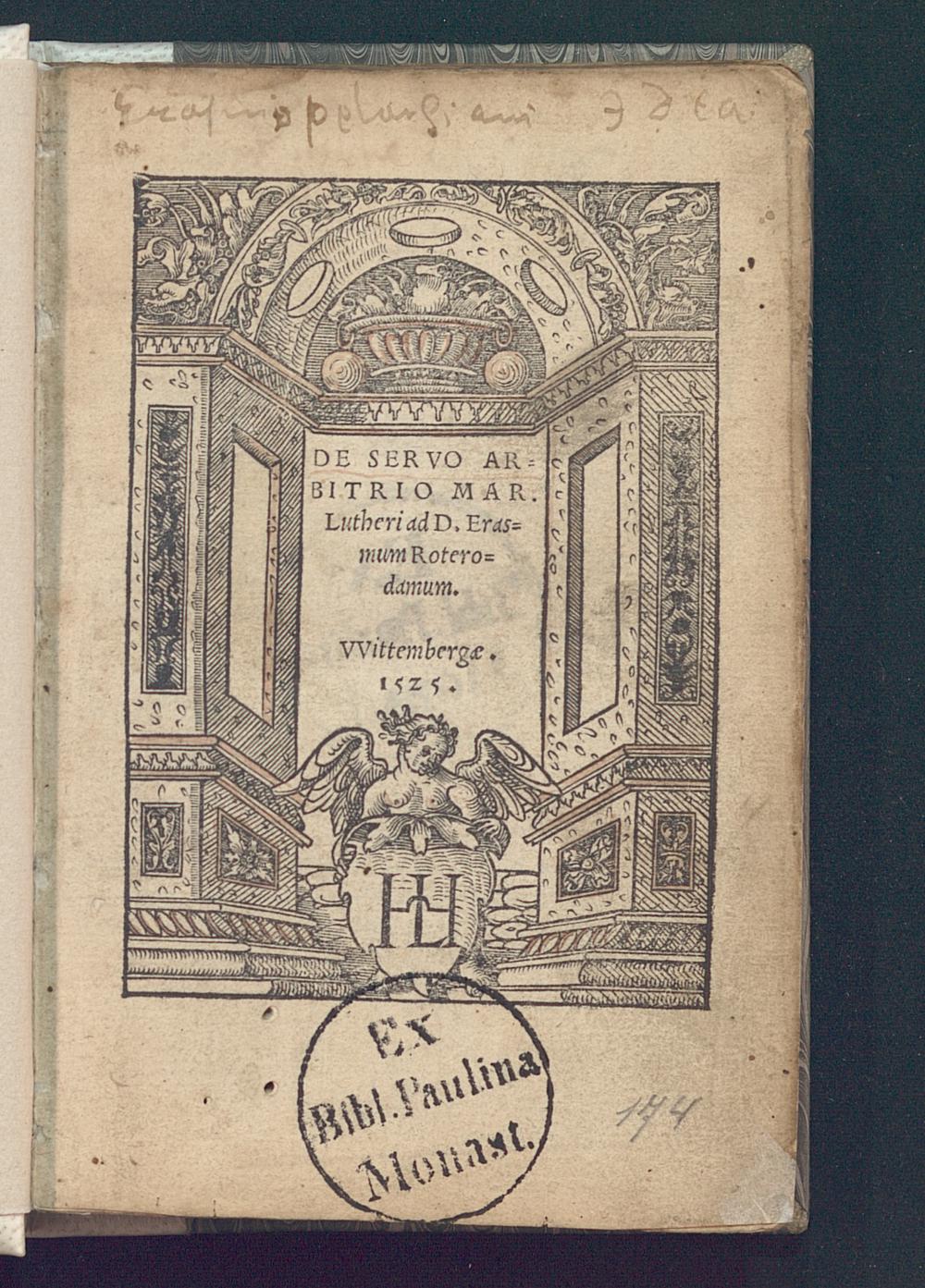
On the Bondage of the Will
Martin Luther · 1525
 Painting
Primary source
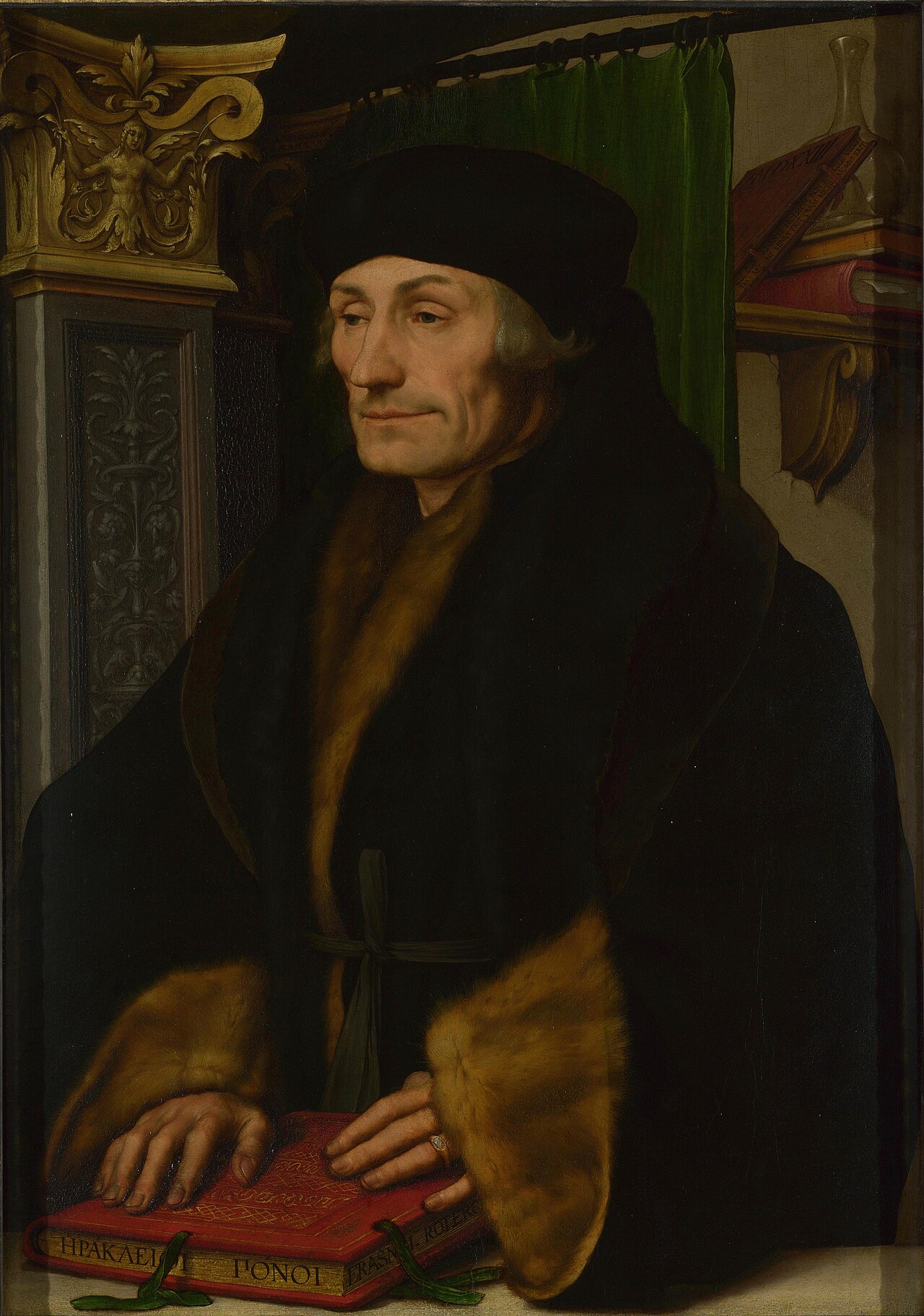
Erasmus
Hans Holbein the Younger · 1523
Ready when you are
Start chatting with Desiderius Erasmus now.
20 messages free · No credit card · Available in 50+ languages.