


Primary sourceBook1538
Epistolarum opus (Basel, 1538)
Desiderius Erasmus · 1538
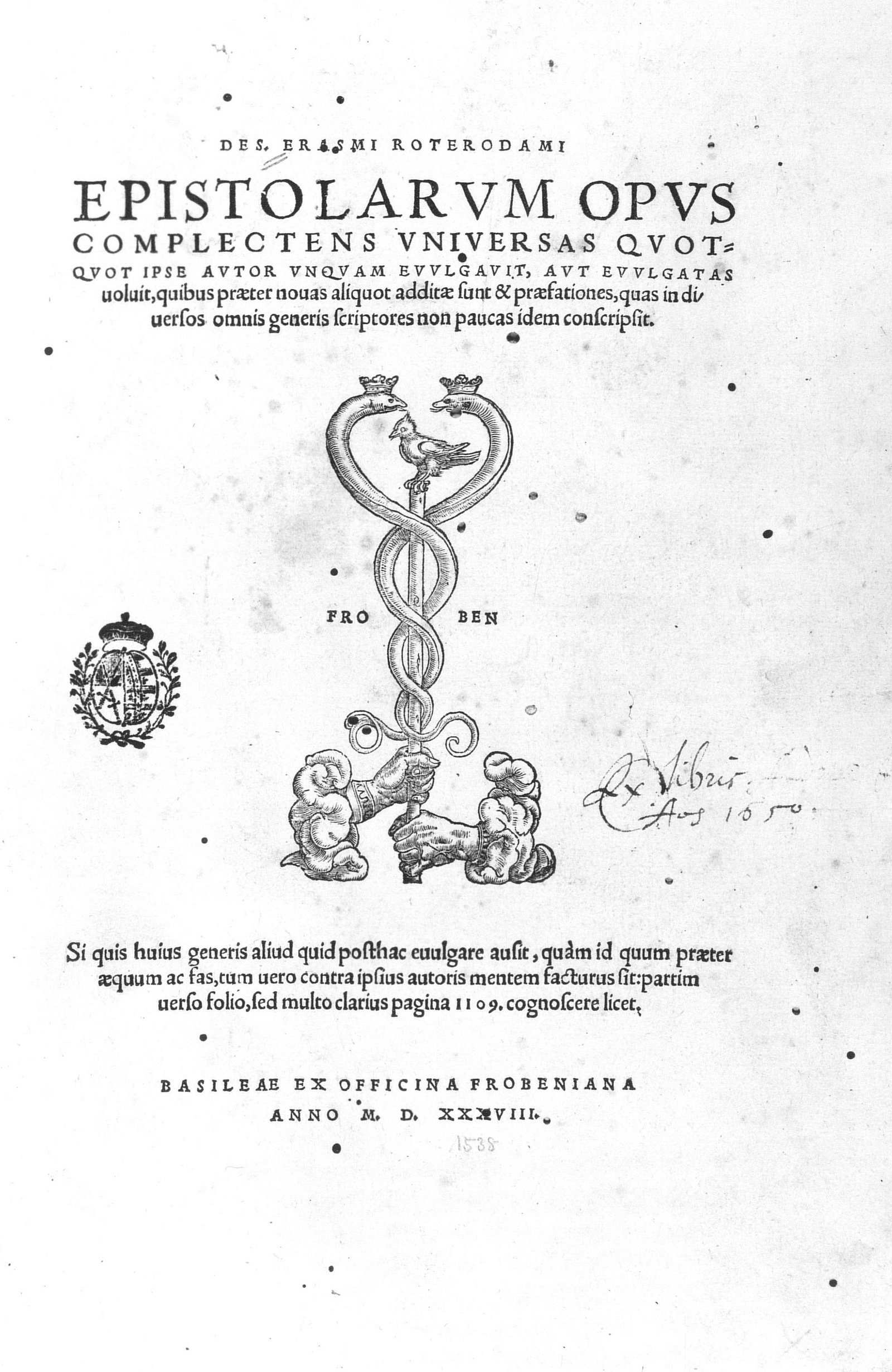
The title page of the 1538 Froben edition of Erasmus's collected letters, printed two years after his death. Its printer's device shows a staff with two serpents.
Shows Erasmus as the writer of the letters collected here, published by Froben in the year after his death.
About this source
What it is
This is the title page of Epistolarum opus, a collection of Erasmus's letters printed in Basel by Froben in 1538. The page reads DES. ERASMI ROTERODAMI, then EPISTOLARUM OPUS, and ends with the imprint Basileae ex officina Frobeniana, anno M.D.XXXVIII. A woodcut in the centre shows a staff with two crowned serpents forming a heart shape, with the word FROBEN on either side. The book is held by the Deutsche Fotothek, and this record is a black-and-white photograph of the title page, not the book itself. A handwritten note reads Ex libris and Anno 1550.
Why it matters
Erasmus corresponded with scholars, church leaders and rulers across Europe, and his letters were read as a record of the ideas of his age. This edition was printed after his death, so it shows how his friends, printers and readers preserved his correspondence. The printing house Froben had worked with Erasmus for many years, which links his writing to the business of early printing.
Look closer
- What do the title, the printer's mark and the imprint tell you about who wanted this book published?
- Why might a printer choose a symbol like the staff and serpents to identify the book?
- What does a collection of letters leave out about the people who received them and the replies they sent?
This book is part of the curated material that grounds the AI version of Desiderius Erasmus on Humy.ai — when students ask about related events, the AI can quote it and cite it.
More Desiderius Erasmus sources
Meet the AI Desiderius Erasmus →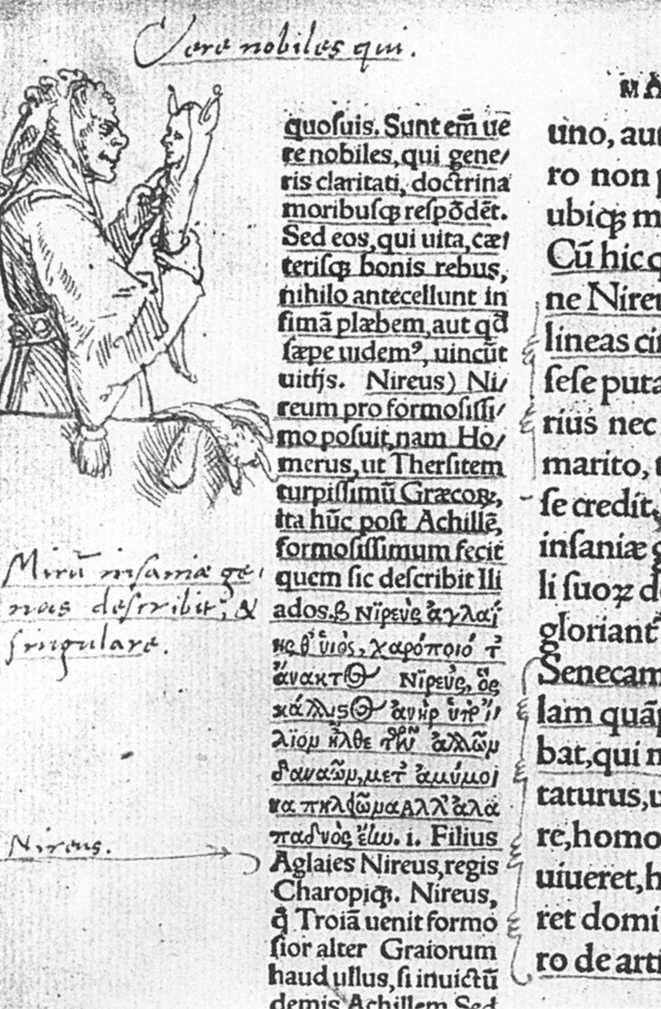 Book
Primary source
In Praise of Folly
Erasmus · 1511 (written 1509)
 Book
Primary source
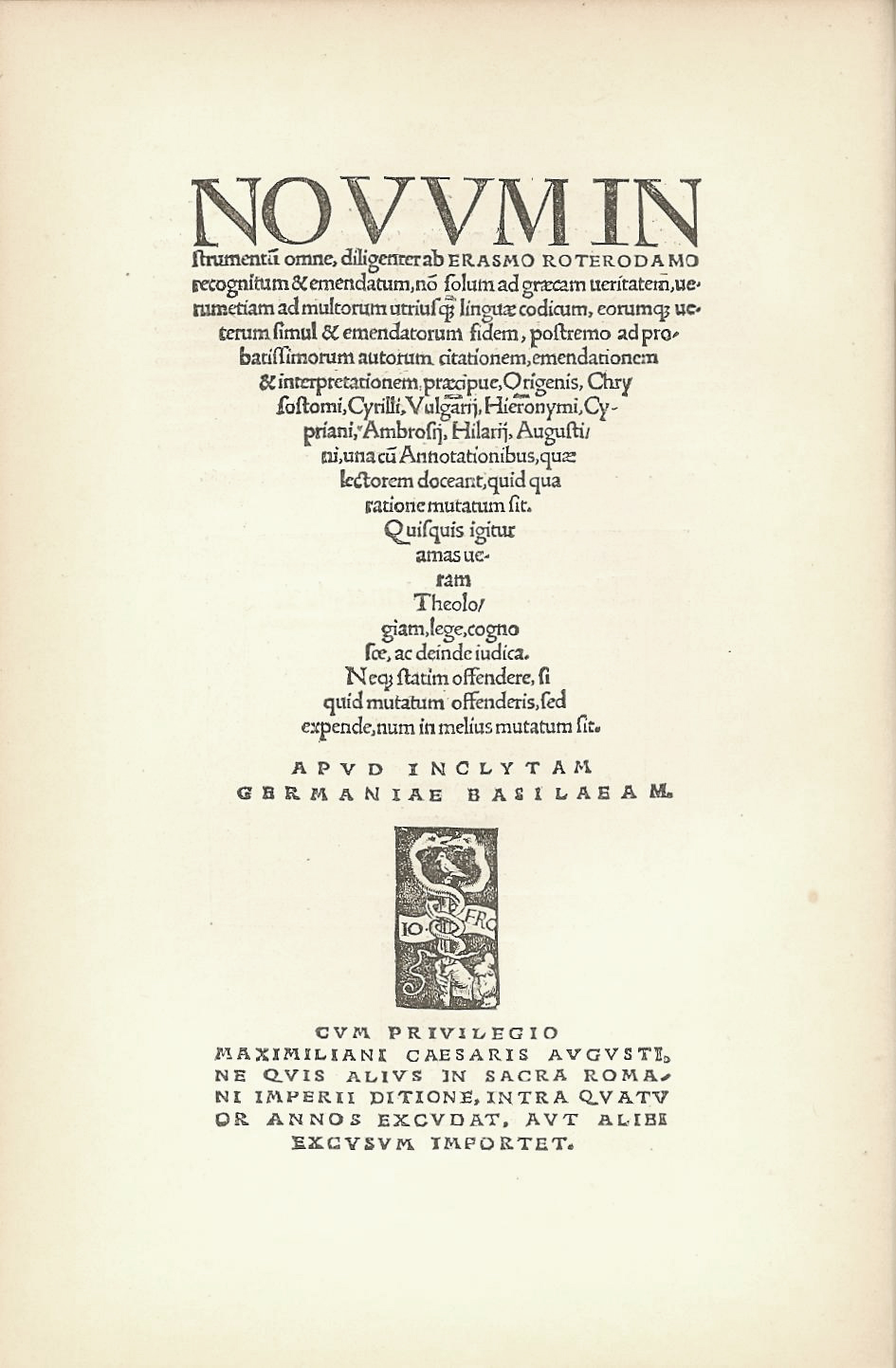
Novum Instrumentum omne
Erasmus · 1516
 Book
Primary source
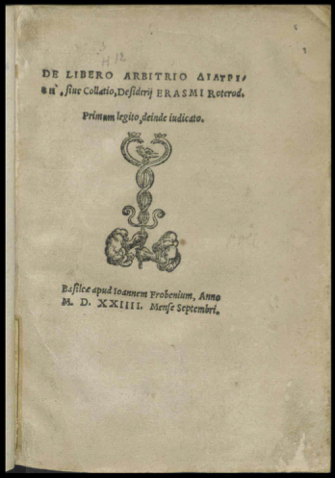
De libero arbitrio diatribe sive collatio
Erasmus · 1524
 Book
Primary source
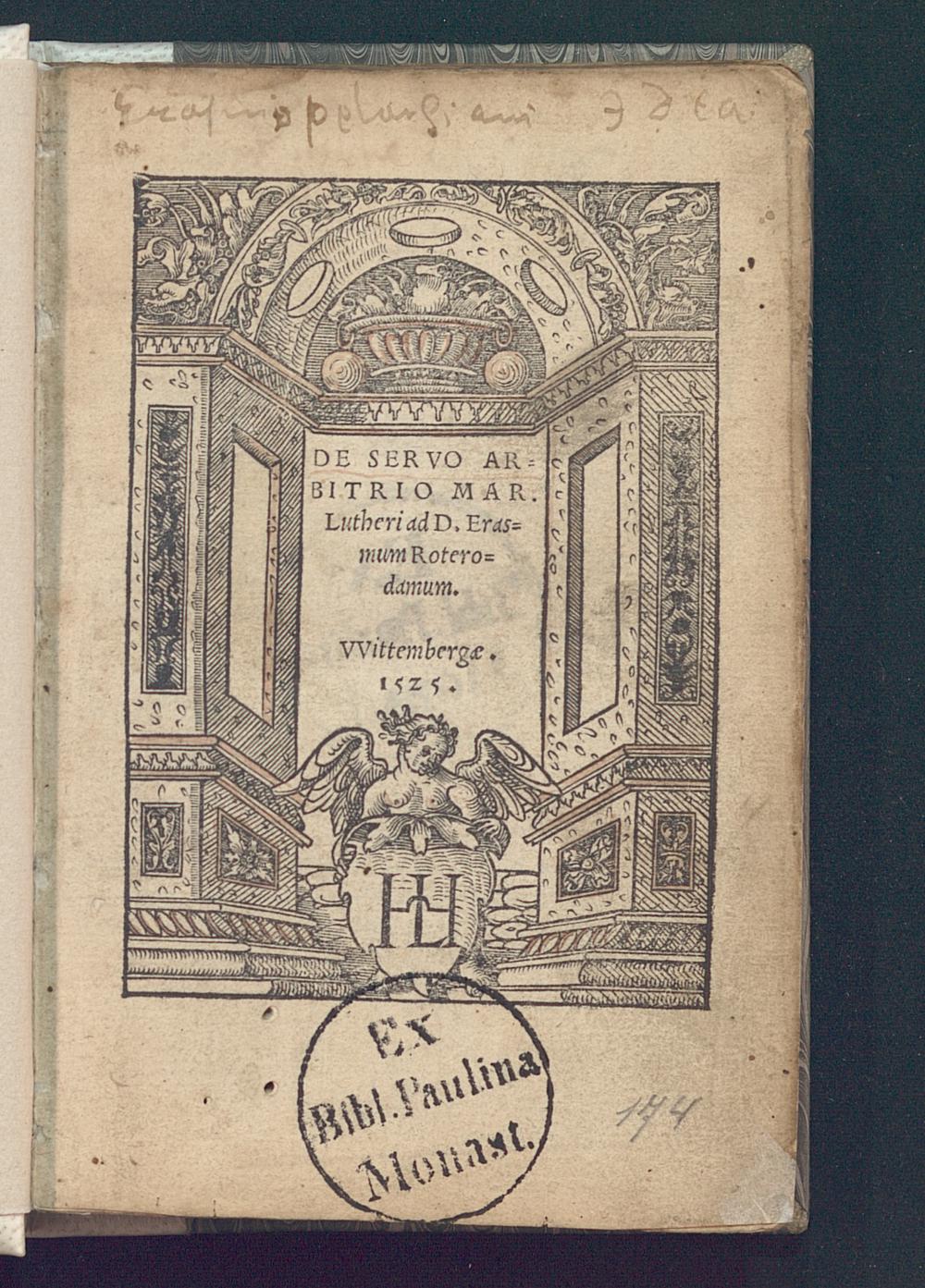
On the Bondage of the Will
Martin Luther · 1525
 Painting
Primary source
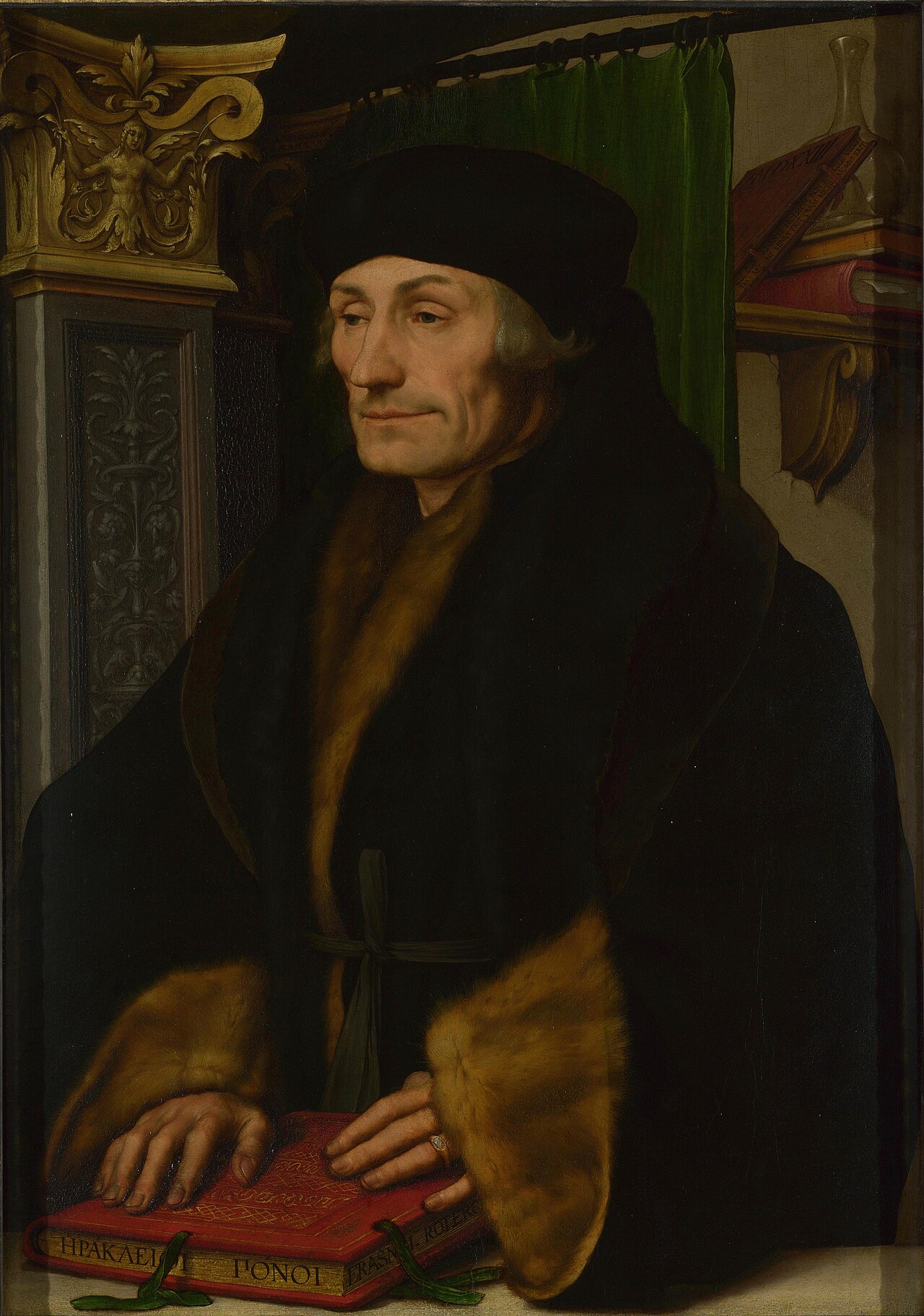
Erasmus
Hans Holbein the Younger · 1523
Ready when you are
Start chatting with Desiderius Erasmus now.
20 messages free · No credit card · Available in 50+ languages.