


Primary sourceDocument
Handschrift von Erasmus v. Rotterdam
Erasmus
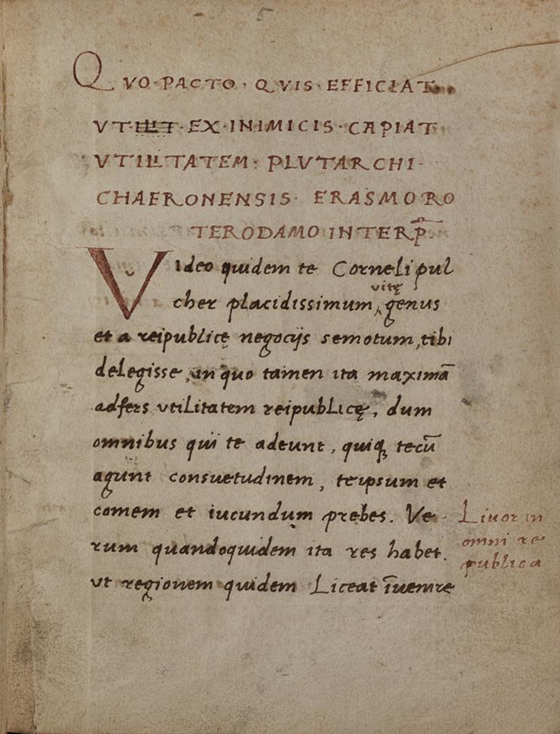
An autograph manuscript page of Erasmus's Latin translation of Plutarch's essay on profiting from one's enemies.
This autograph page, in Erasmus's own hand, shows him at work translating a classical Greek text.
About this source
What it is
This is a page from Erasmus's own handwritten manuscript of his Latin translation of Plutarch's essay 'How One May Profit by One's Enemies'. The page shows the title in red decorative capitals, with Erasmus's cursive script and marginal notes.
Why it matters
As an autograph document, this page preserves Erasmus's own handwriting and working method as a translator of classical Greek texts into Latin. It shows how humanists like Erasmus kept ancient authors such as Plutarch alive for Renaissance readers, and the marginal notes reveal him revising his own work.
Look closer
- What does the handwriting and the marginal note tell you about how Erasmus worked?
- Why might Erasmus have chosen to translate this particular essay by Plutarch?
- What does translating ancient Greek texts show about the values of Renaissance humanists?
This document is part of the curated material that grounds the AI version of Desiderius Erasmus on Humy.ai — when students ask about related events, the AI can quote it and cite it.
More Desiderius Erasmus sources
Meet the AI Desiderius Erasmus →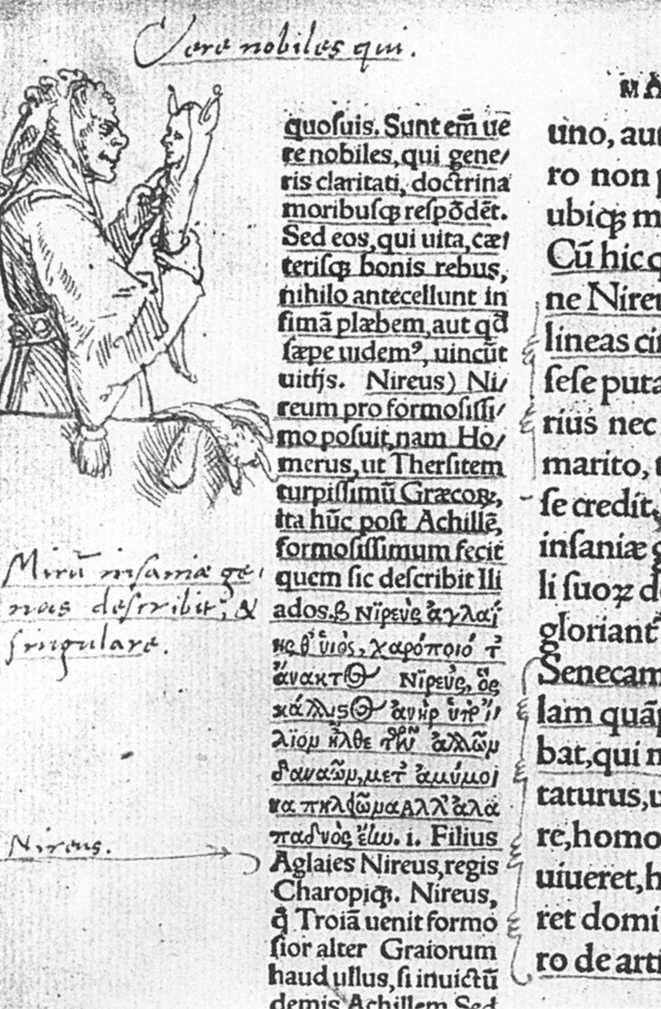 Book
Primary source
In Praise of Folly
Erasmus · 1511 (written 1509)
 Book
Primary source
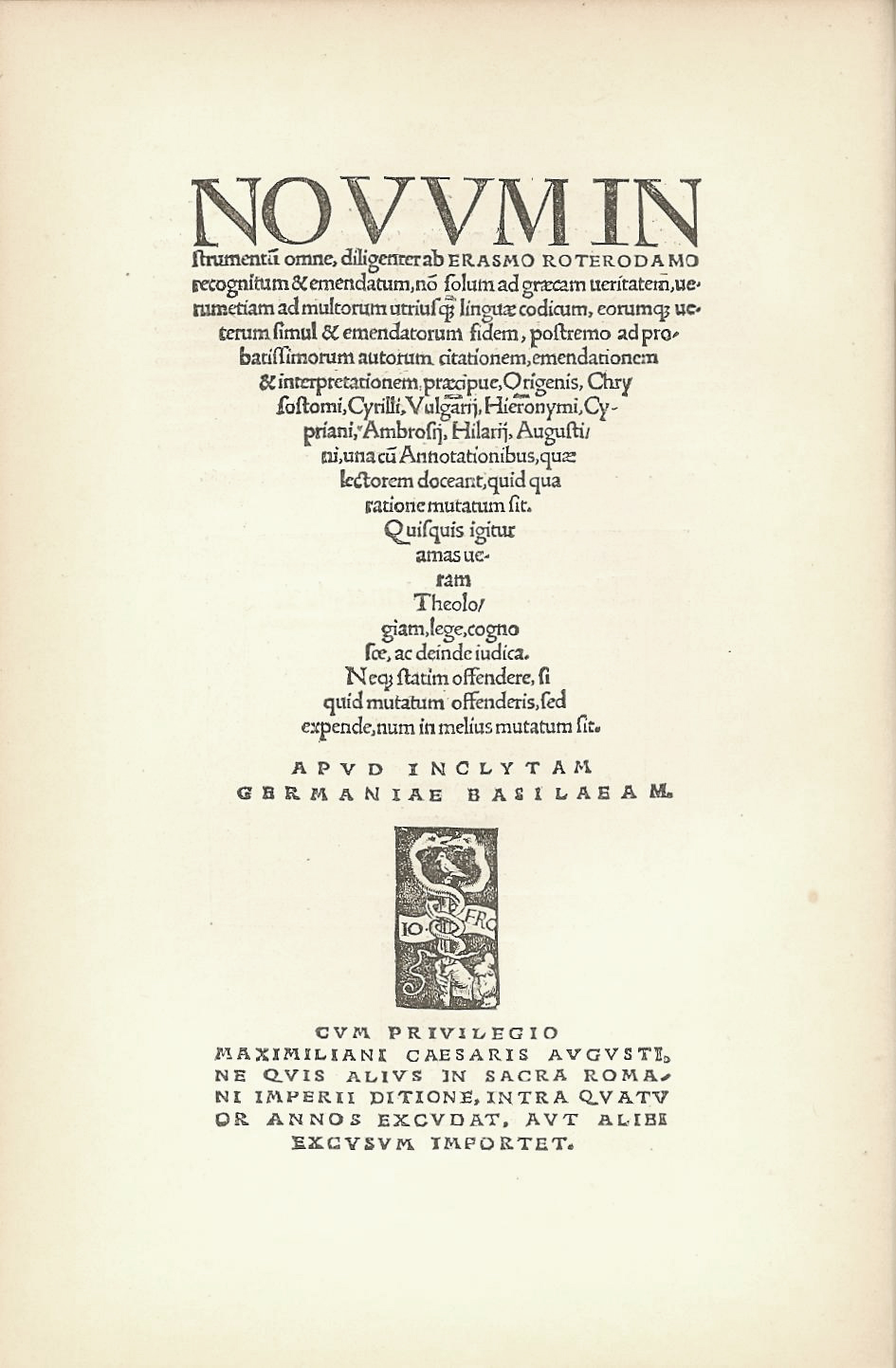
Novum Instrumentum omne
Erasmus · 1516
 Book
Primary source
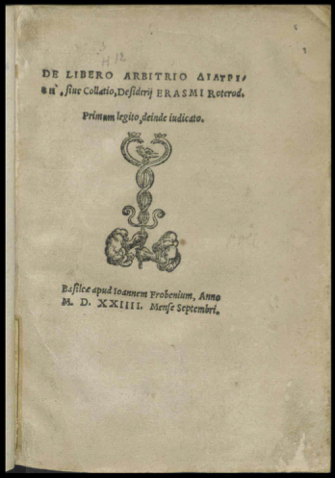
De libero arbitrio diatribe sive collatio
Erasmus · 1524
 Book
Primary source
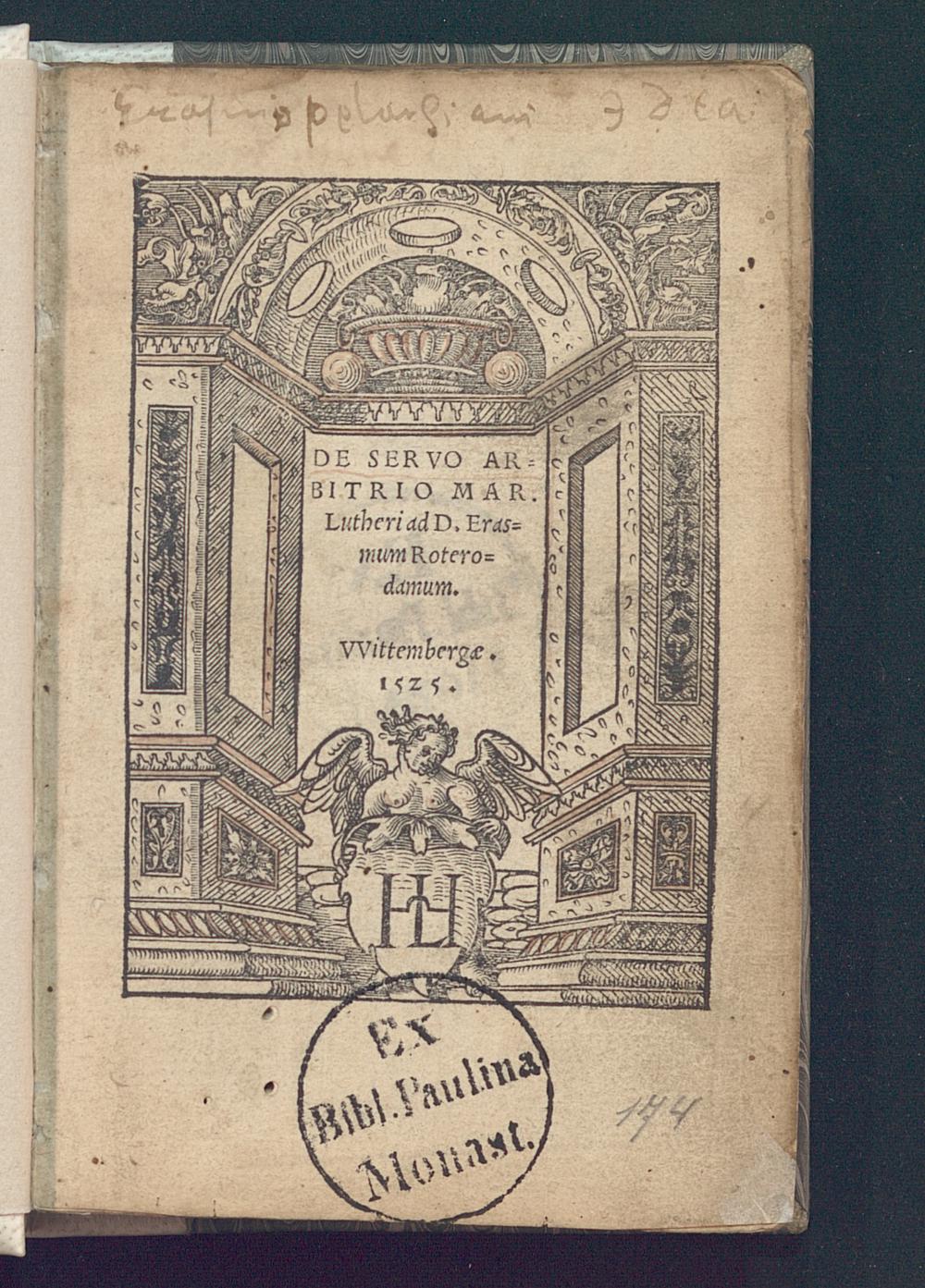
On the Bondage of the Will
Martin Luther · 1525
 Painting
Primary source
Erasmus
Hans Holbein the Younger · 1523
Ready when you are
Start chatting with Desiderius Erasmus now.
20 messages free · No credit card · Available in 50+ languages.