


Primary sourceBook1823
On the Bondage of the Will
Martin Luther · 1823
Martin Luther's 1525 reply to Erasmus on free will, shown here in an 1823 English translation, documenting their famous Reformation dispute.
Luther addressed this work directly to Erasmus, making it a primary record of their public theological quarrel over free will.
About this source
What it is
This is an 1823 English translation of Martin Luther's On the Bondage of the Will, written in Latin in 1525 as a direct reply to Erasmus of Rotterdam. The translation was made by Edward Thomas Vaughan, with a preface and notes.
Why it matters
Luther wrote this work to answer Erasmus's arguments defending free will. The exchange between the two men was one of the most important intellectual clashes of the Reformation, showing how humanist scholars like Erasmus and reformers like Luther disagreed sharply over theology even though both sought to reform the Church and renew Christian learning.
Look closer
- Why do you think Luther addressed his book directly to Erasmus rather than writing a general treatise?
- What does this dispute reveal about the different goals of humanists and reformers in the 16th century?
- This is a 19th-century English translation of a 16th-century Latin text—what might change in tone when it is translated centuries later?
This book is part of the curated material that grounds the AI version of Desiderius Erasmus on Humy.ai — when students ask about related events, the AI can quote it and cite it.
More Desiderius Erasmus sources
Meet the AI Desiderius Erasmus →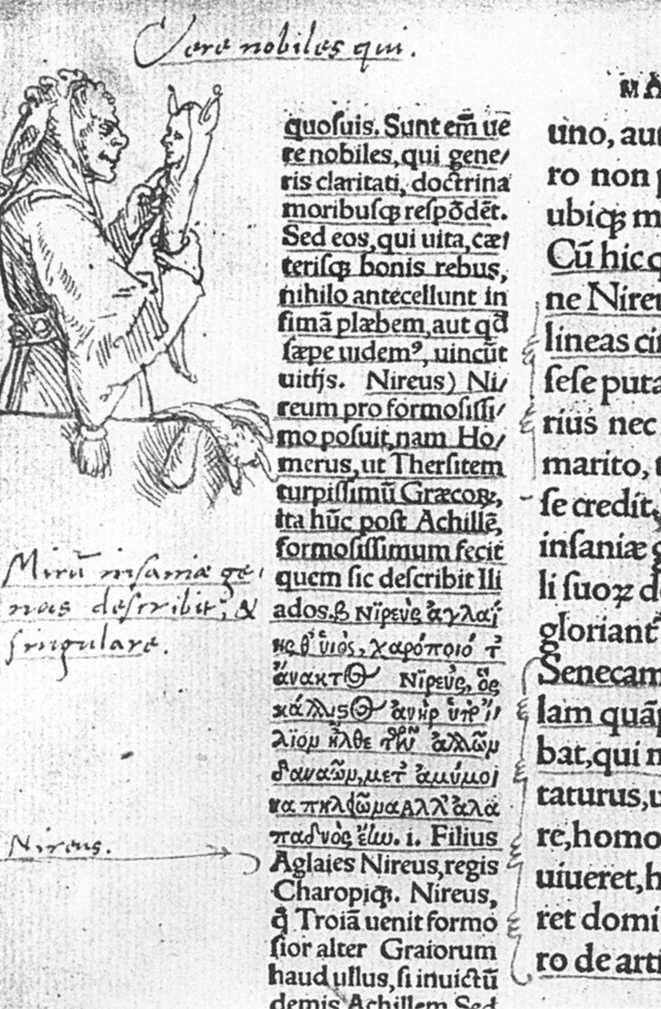 Book
Primary source
In Praise of Folly
Erasmus · 1511 (written 1509)
 Book
Primary source
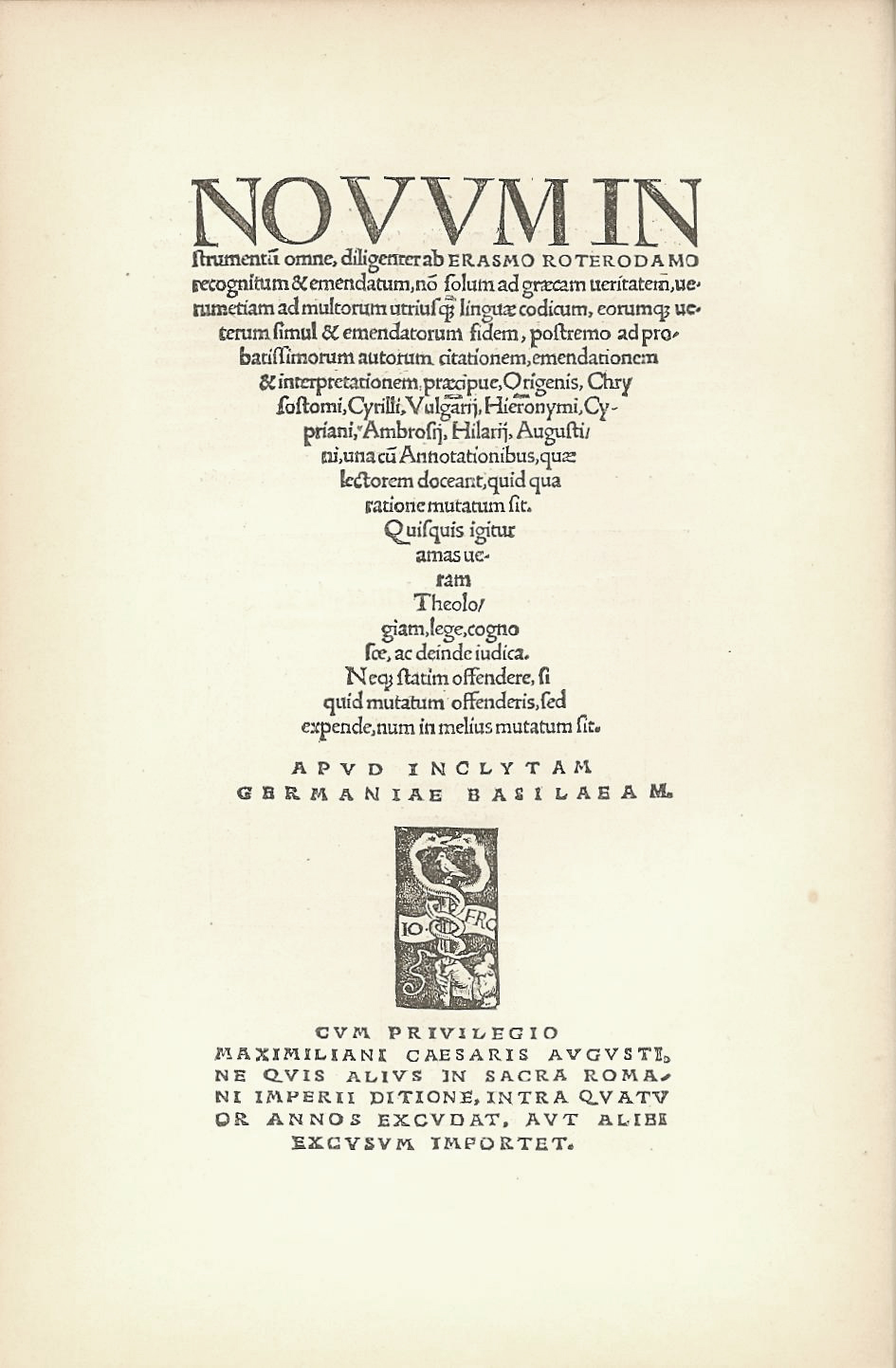
Novum Instrumentum omne
Erasmus · 1516
 Book
Primary source
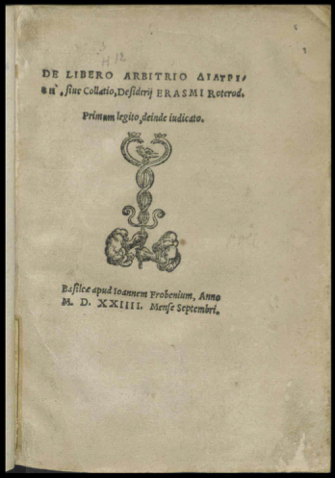
De libero arbitrio diatribe sive collatio
Erasmus · 1524
 Book
Primary source
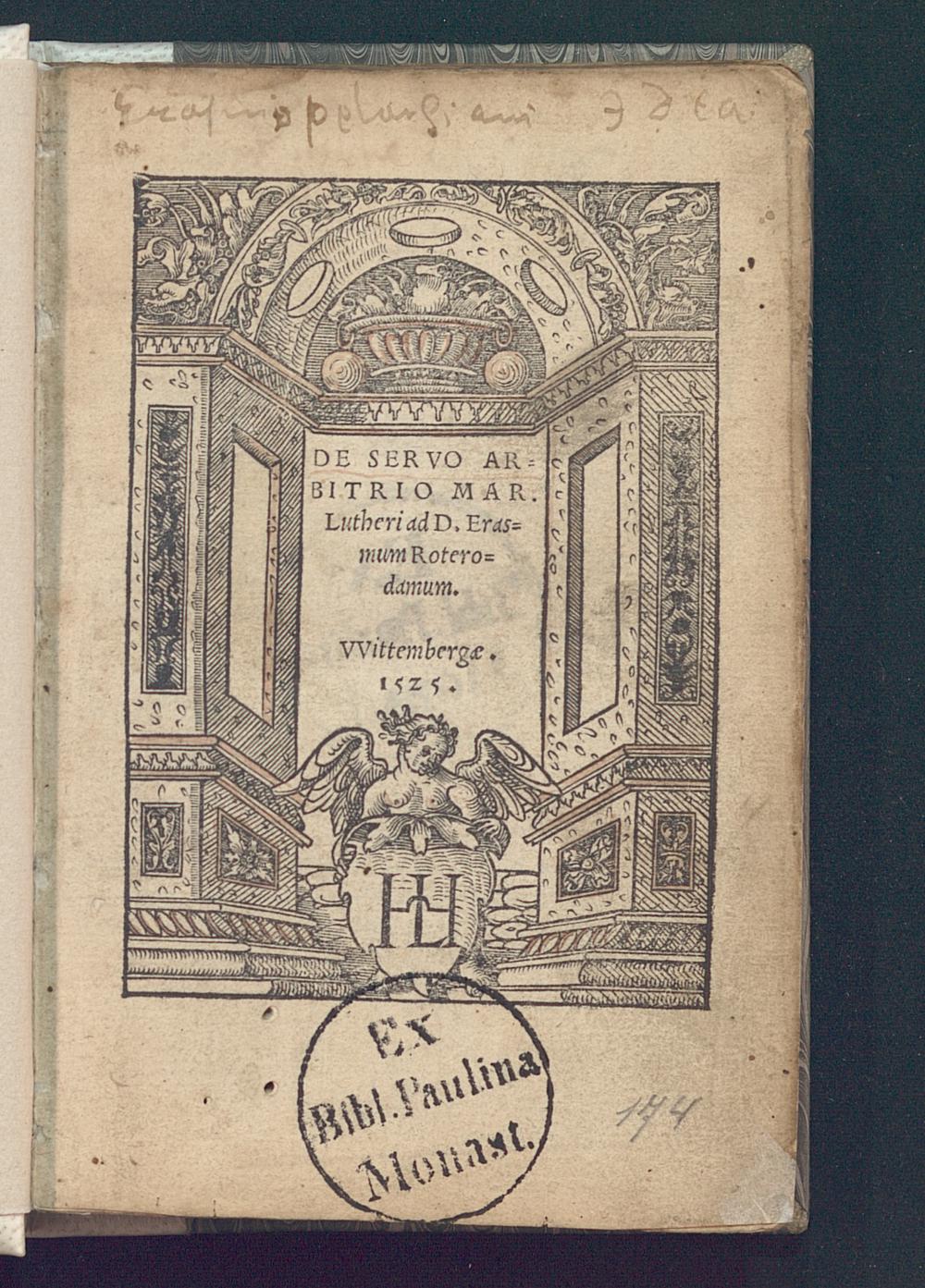
On the Bondage of the Will
Martin Luther · 1525
 Painting
Primary source
Erasmus
Hans Holbein the Younger · 1523
Ready when you are
Start chatting with Desiderius Erasmus now.
20 messages free · No credit card · Available in 50+ languages.