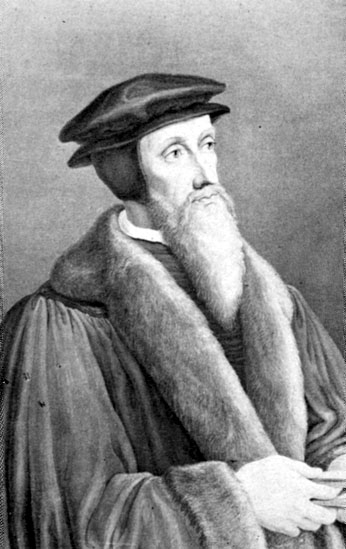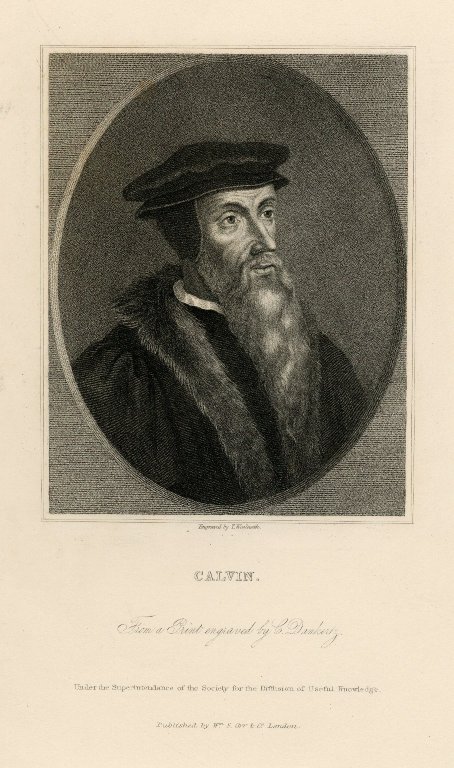
Portrait of John Calvin

AI Historical Figure

John Calvin

Influential Protestant theologian and key figure in the development of Calvinism.

Chat with John Calvin via text or voice — in 42 languages, drawing on a curated biography and 81 historical sources. Available 24/7.

Start chatting with John Calvin20 messages free · No credit card
Lived
1509–1564
From
FranceSwitzerland
Known for
ReligionActivism & reform
John Calvin

John Calvin

Online · responds in seconds

Hello — I'm John Calvin. Influential Protestant theologian and key figure in the development of Calvinism. What would you like to ask me?

20 messages free · No credit card · Powered by Humy.ai

Live preview · Switch between 42 languages above · Send a message to continue in the app

Multilingual

Talk to John Calvin in 42 languages

Ask John Calvin questions in any language below, and the rest of Humy's app speaks it too. Pick yours to open the chat in that language.

Also in German (Austria), German (Switzerland), English (UK), English (Australia), English (Canada).

The sources behind this AI

81 sources · 44 books · 17 paintings · 6 artifacts · 4 letters · 4 documents · 3 sculptures · 2 speeches · 1 documentary

John Calvin doesn’t improvise from thin air. The AI is grounded in 81 curated historical sources students can inspect. Open any of them to see what informs the conversation.

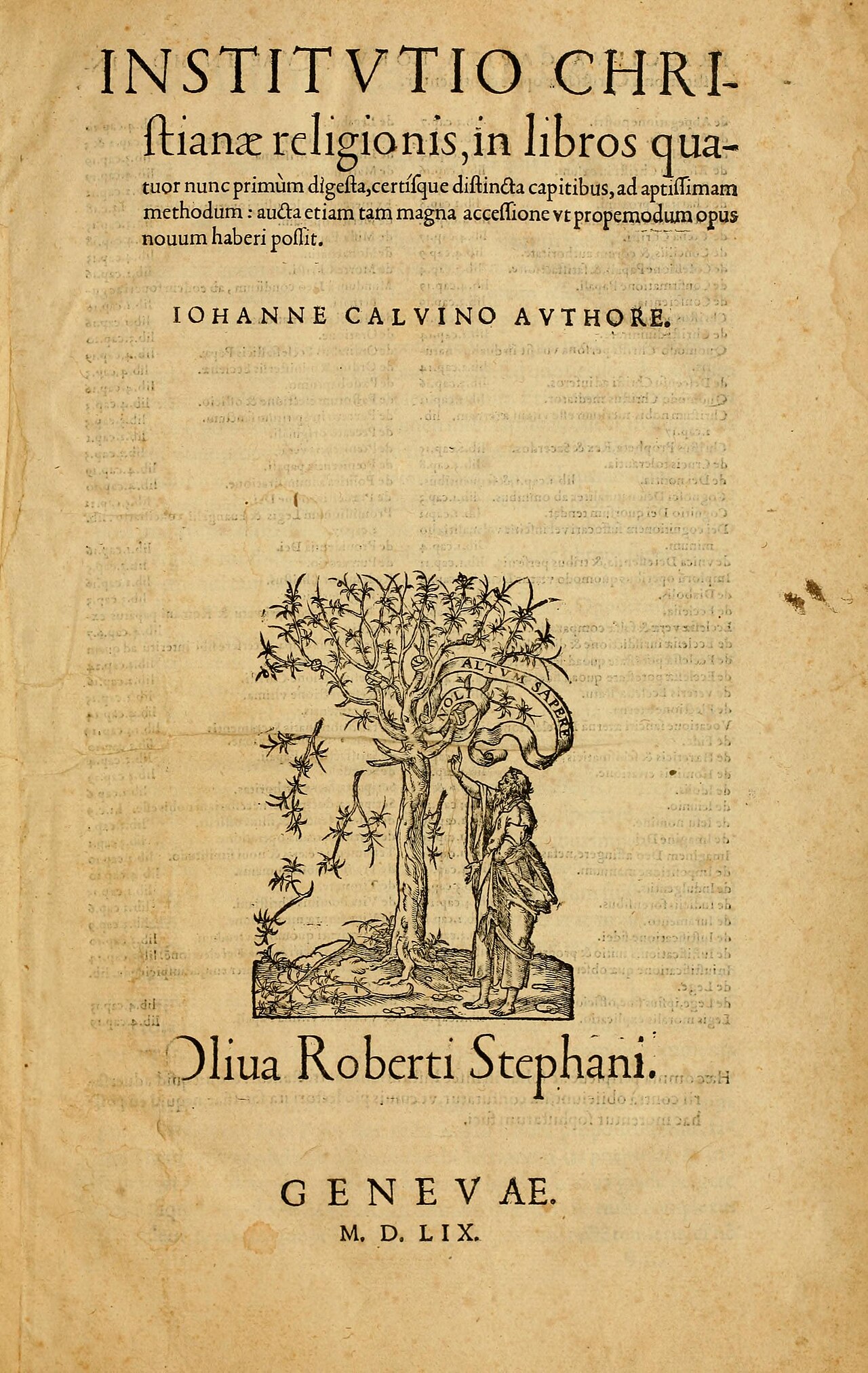
Title page of the 1559 Geneva edition of Calvin's Institutio Christianae religionis, printed by Robert Estienne. Title text reads 'Institutio Christianae religionis... Iohanne Calvino authore.' A woodcut shows a tree with the motto 'Altum sapere' and a figure reaching toward it. Printed 'Geneva, M.D.LIX.'Book

Primary source

Institutes of the Christian Religion

John Calvin · 1536 (first edition); revised to 1559

Book

Primary source

Geneva Catechism

John Calvin

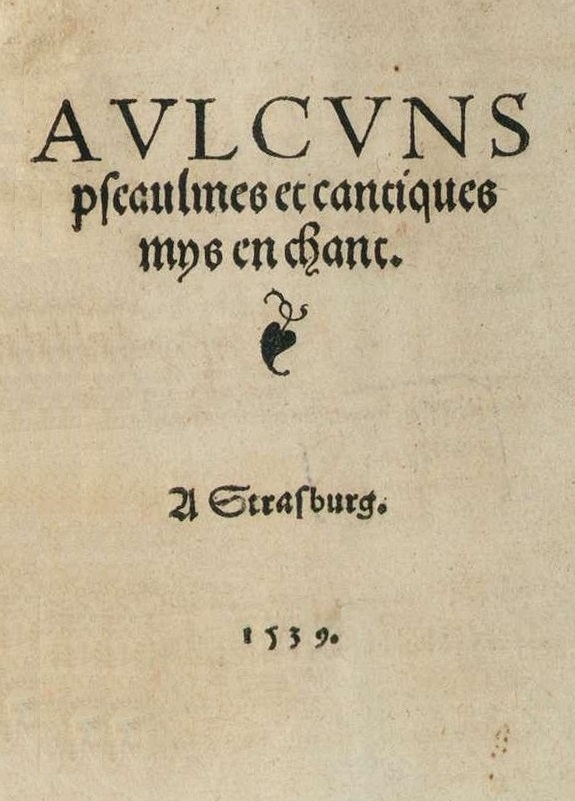
Title page of a 1539 printed book in black letter type on aged paper, reading 'Aulcuns pseaulmes et cantiques mys en chant', with a small ornament, 'A Strasburg', and the date 1539.Book

Primary source

Genevan Psalter

John Calvin · 1562 (complete edition)

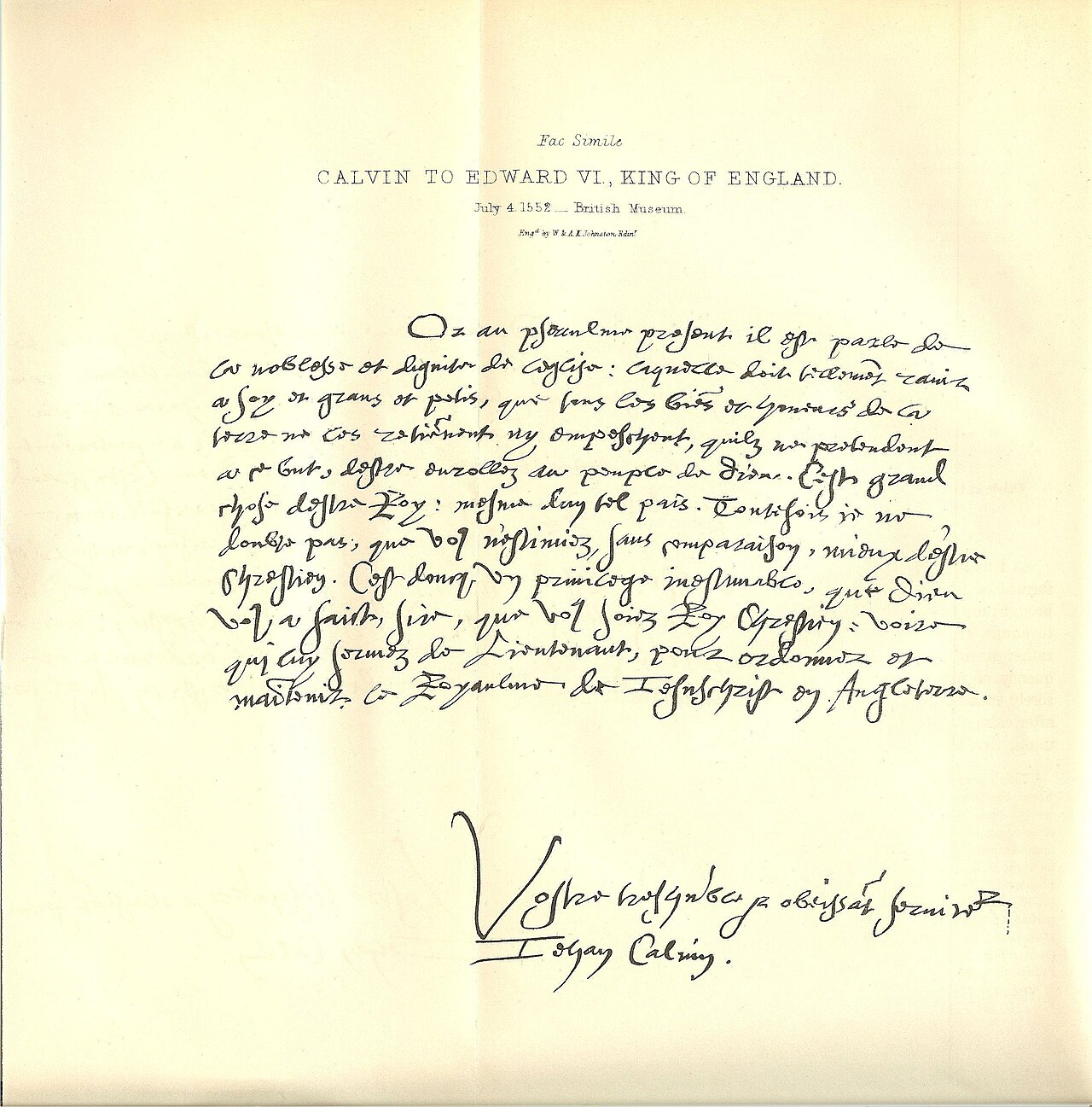
Printed facsimile page titled 'Calvin to Edward VI, King of England, July 4 1552, British Museum', showing a handwritten letter in French script with a signature 'Vostre bon frère ... Iehan Calvin' at the bottom.Letter

Primary source

Letter to Edward VI of England

John Calvin · 4 July 1552

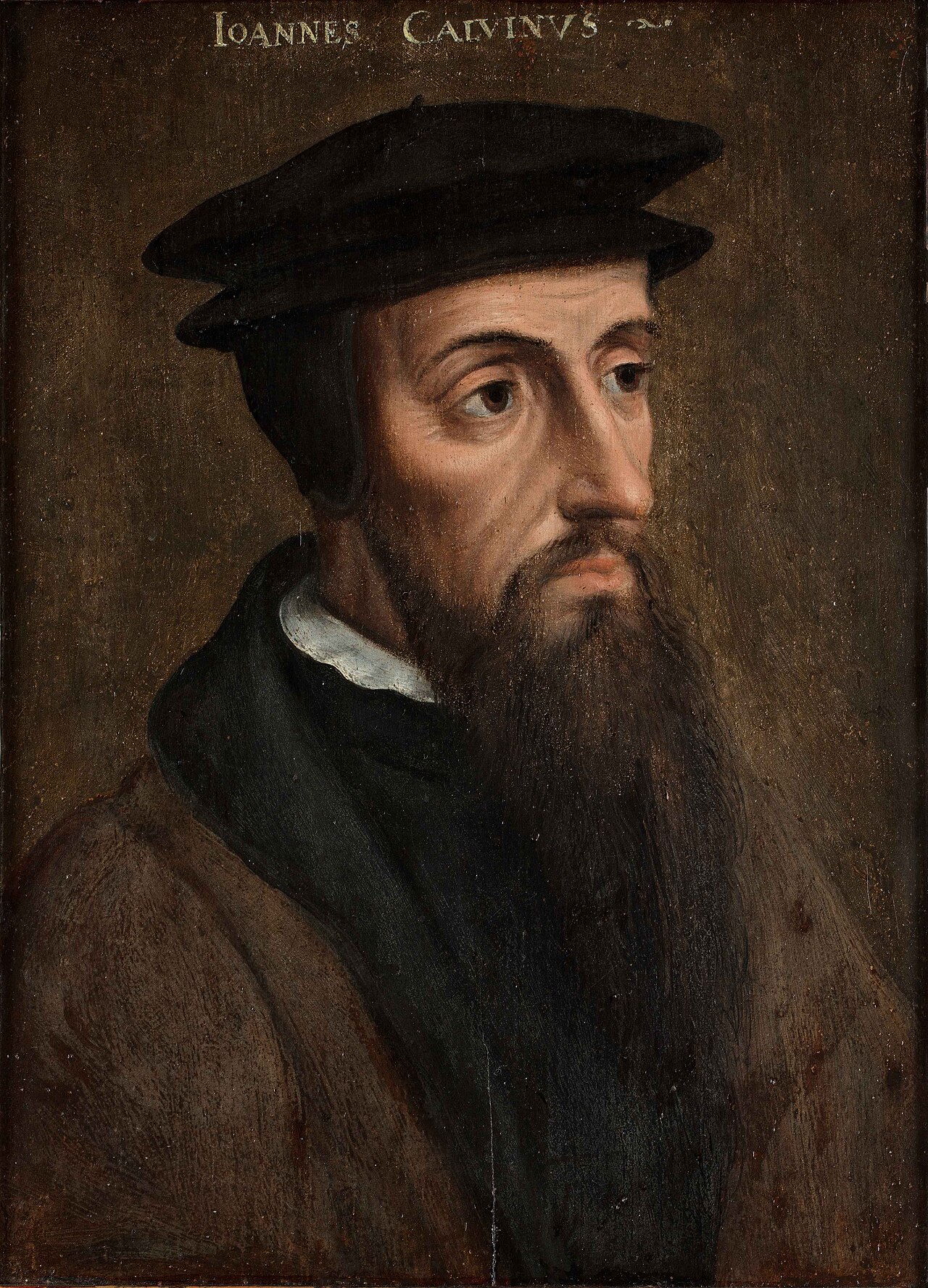
Painted portrait of a bearded man in a black beret, dark-brown garment, black collar with white linen edge, turned three-quarters to the left against a brown background. Inscription at top reads IOANNES CALVINVS.Painting

Primary source

Portrait of John Calvin

Unknown · 1550

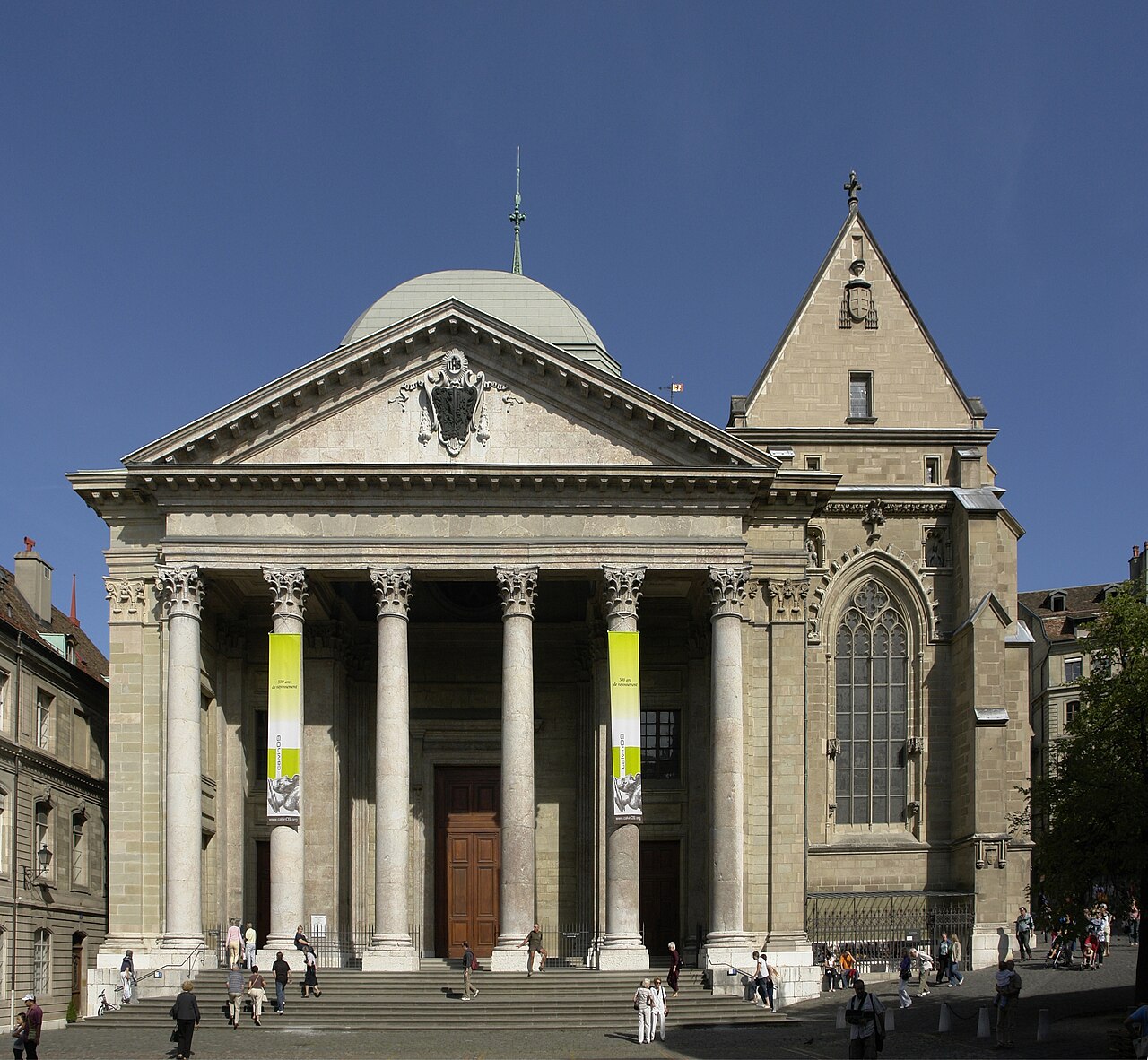
Front facade of Saint-Pierre Cathedral in Geneva under a clear blue sky. A neoclassical portico with four tall Corinthian columns and a triangular pediment with a coat of arms stands before a domed roof. On the right, a Gothic section with a pointed gable and a tall pointed window. Yellow-green banners hang on the columns, and people walk on the wide stone steps.Artifact

Primary source

St. Pierre Cathedral

c. 1150 onward

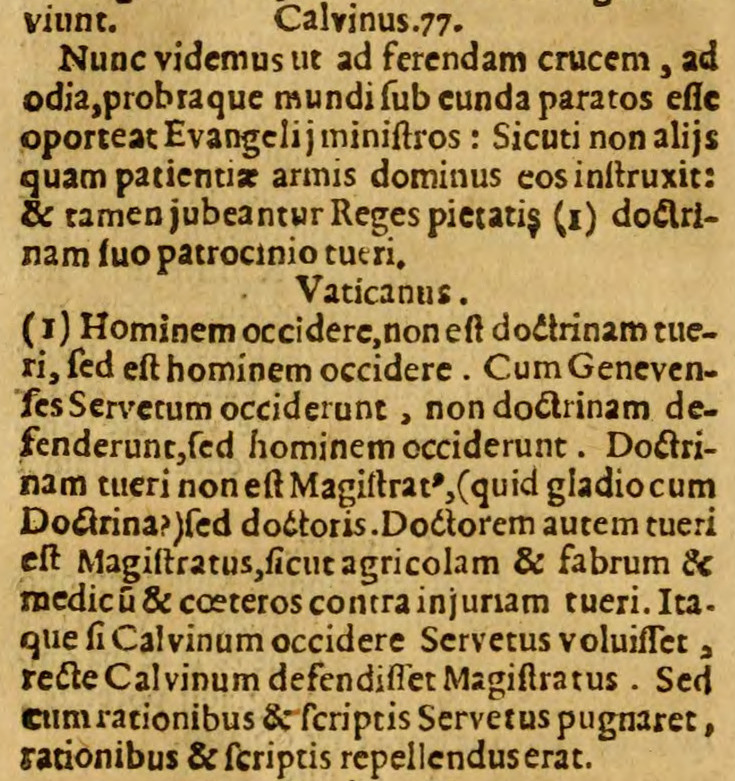
Crop of a printed page in Latin black-letter type, with marginal note headings reading Calvinus and Vaticanus. The text includes the line 'Hominem occidere, non est doctrinam tueri, sed est hominem occidere.' Paper is aged and yellowed.Book

Secondary source

Contra libellum Calvini

Sebastian Castellio · 1612

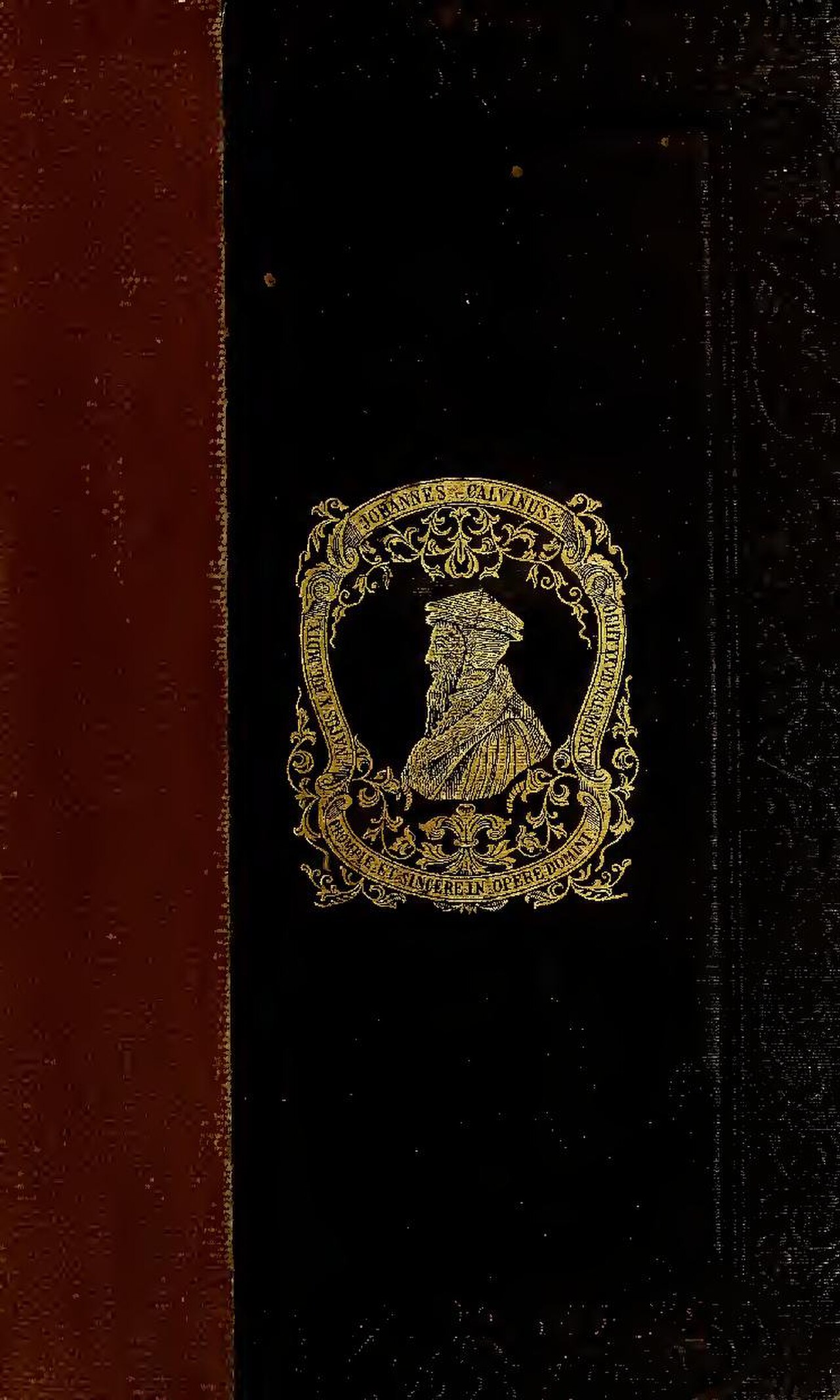
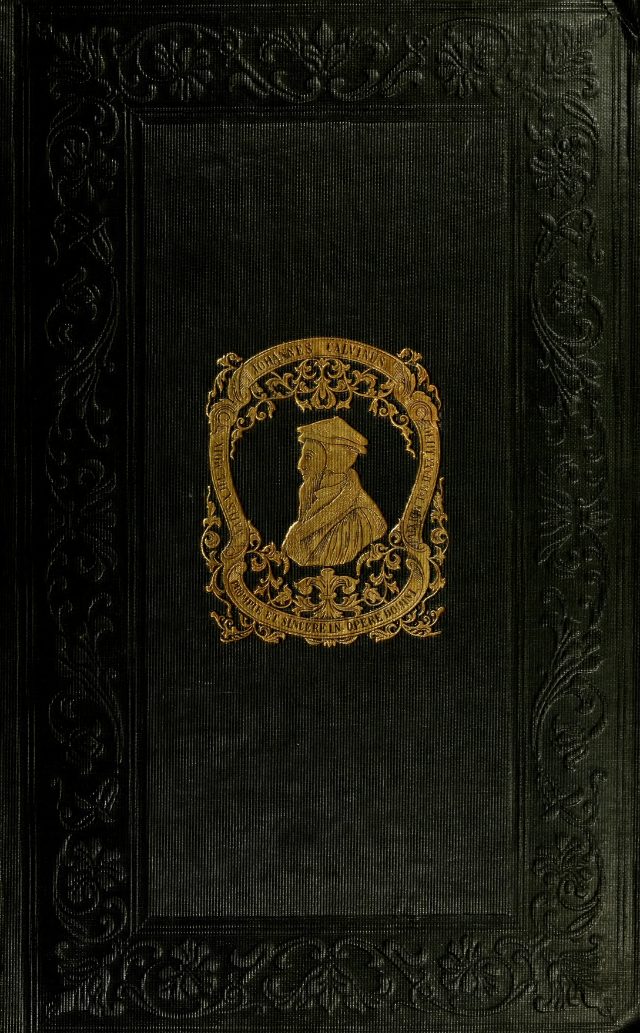
Front cover of a dark book with a red spine on the left. A gold-embossed oval frame in the center contains a profile bust of a bearded man in a cap and robe, with Latin lettering around the border.Book

Primary source

Commentary on the Epistle to the Romans

John Calvin · 1540

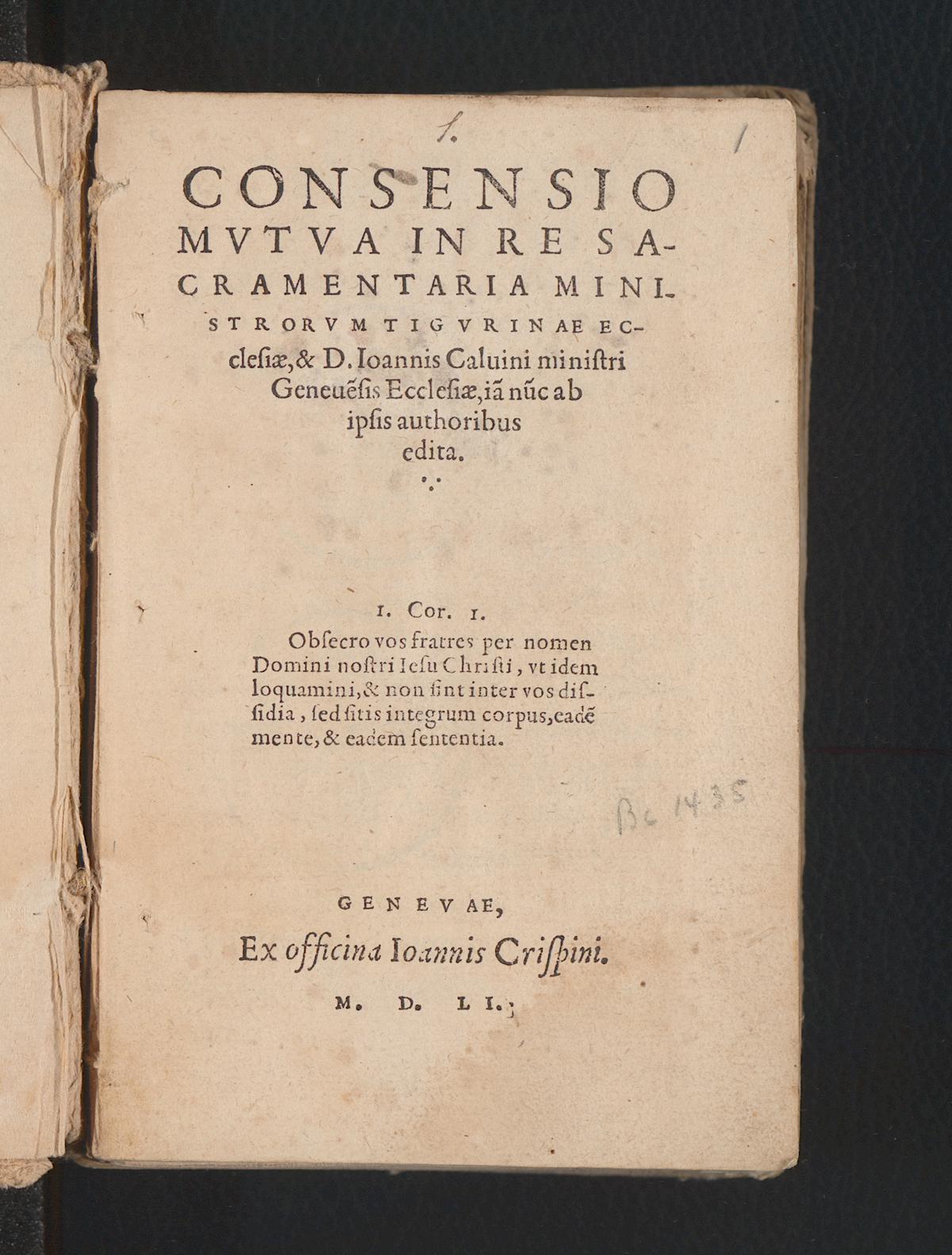
Title page of a 1551 printed book in Latin, Consensio Mutua in re sacramentaria, printed at Geneva by Ioannis Crispini. Epigraph from 1 Corinthians 1 below the title. Pale paper with a handwritten shelfmark.Document

Primary source

Consensus Tigurinus

John Calvin · 1551

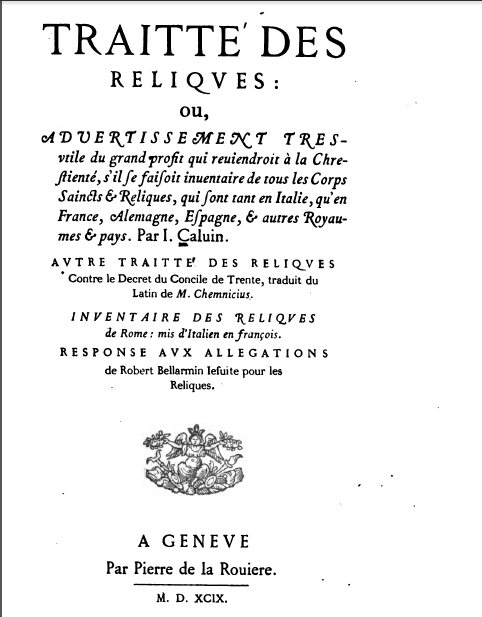
Title page of a 1599 Geneva edition of Calvin's Traitté des reliques, printed by Pierre de la Rouiere. Large title in black letters, a short descriptive subtitle in italics, a small ornamental emblem with cherubs, and the imprint MDXCIX at the bottom.Book

Primary source

Treatise on Relics

John Calvin · 1543

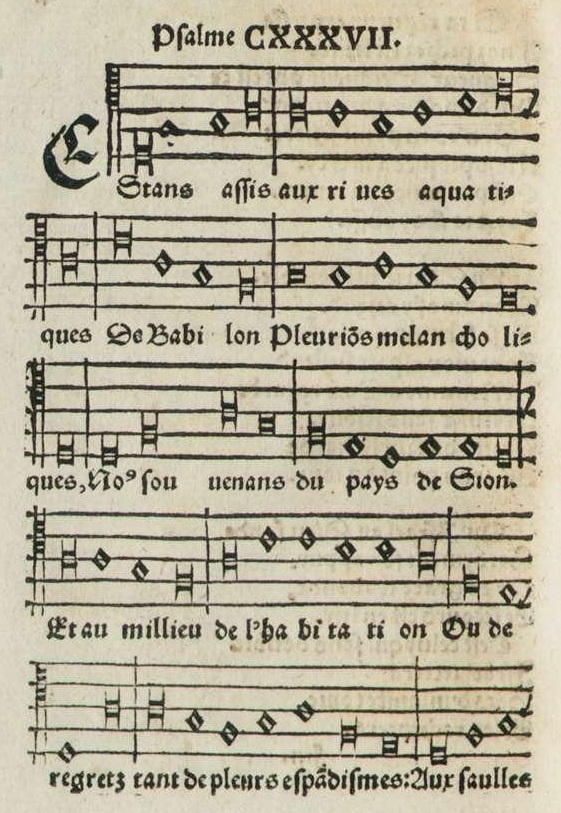
Page of an early printed psalter with the heading 'Psalme CXXXVII' above a decorated initial E and five-line staves of square and diamond-shaped musical notes, with French text beneath each line of music, beginning 'Estans assis aux rivieres aquatiques'.Book

Primary source

Aulcuns Pseaulmes, Psalm 137

Jean Calvin · 1539

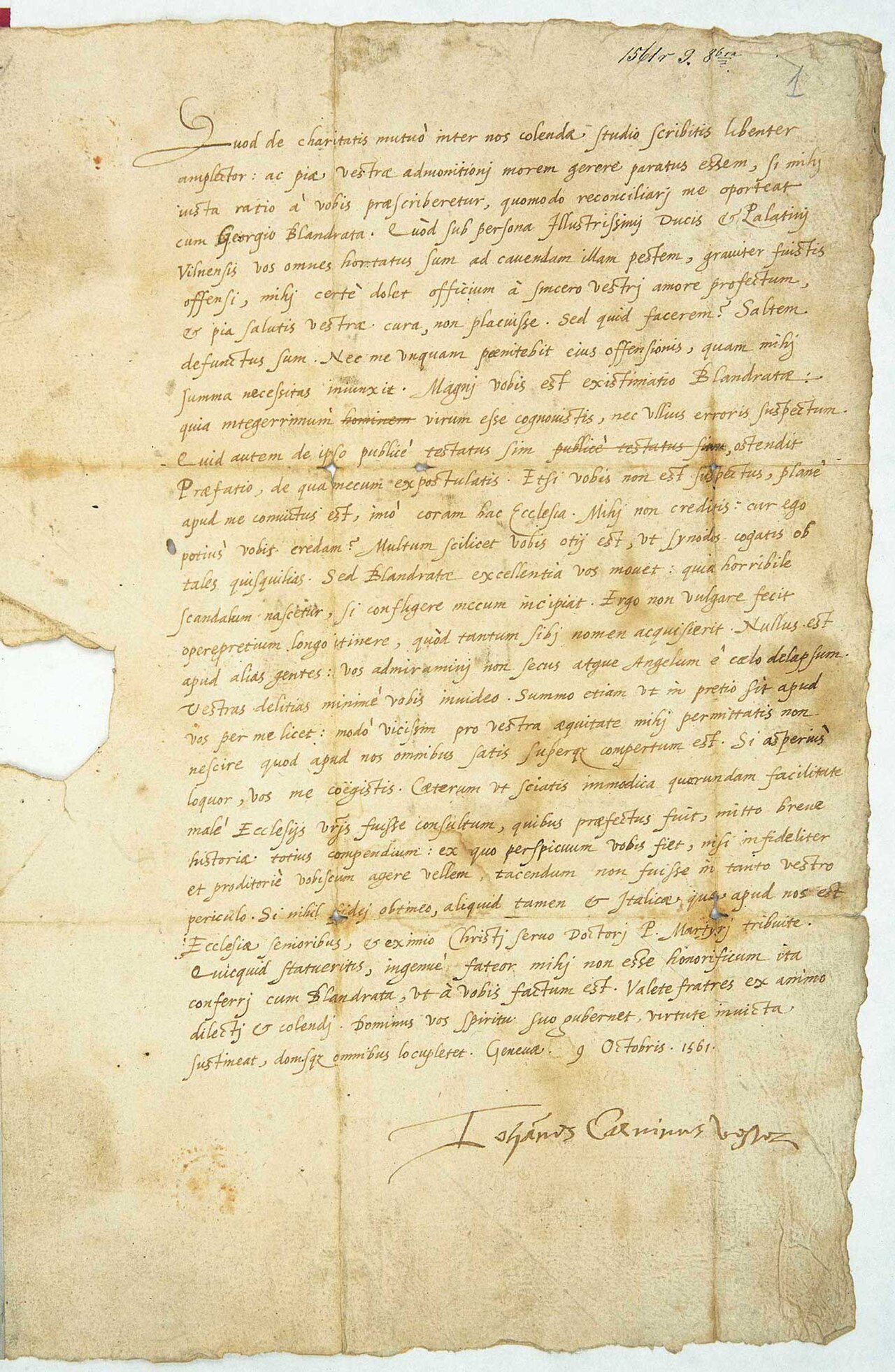
Handwritten letter in faded brown ink on aged, torn paper, with a large ornamental opening letter and a dated closing line reading Geneva, 9 October 1561, signed by a cursive signature at the bottom right. Some paper is missing at the left edge.Letter

Primary source

Letter to the Calvinist Synod in Vilnius

John Calvin · 9 October 1561

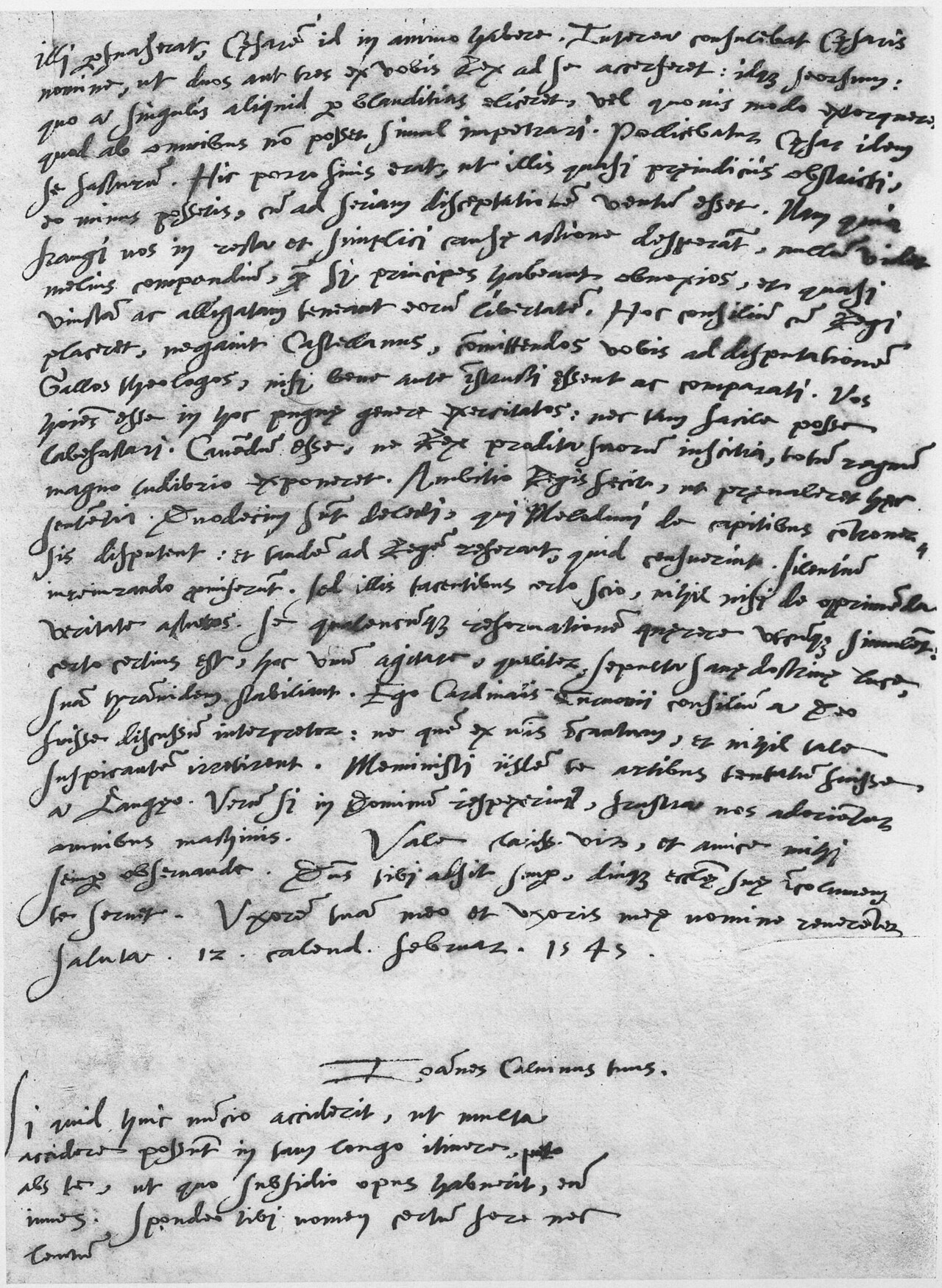
Black-and-white photograph of a handwritten letter in dense, cursive Latin script on aged paper, with a signature and date line near the bottom reading 1545, and a short postscript beneath.Letter

Primary source

Letter to Philip Melanchthon

John Calvin · 1545

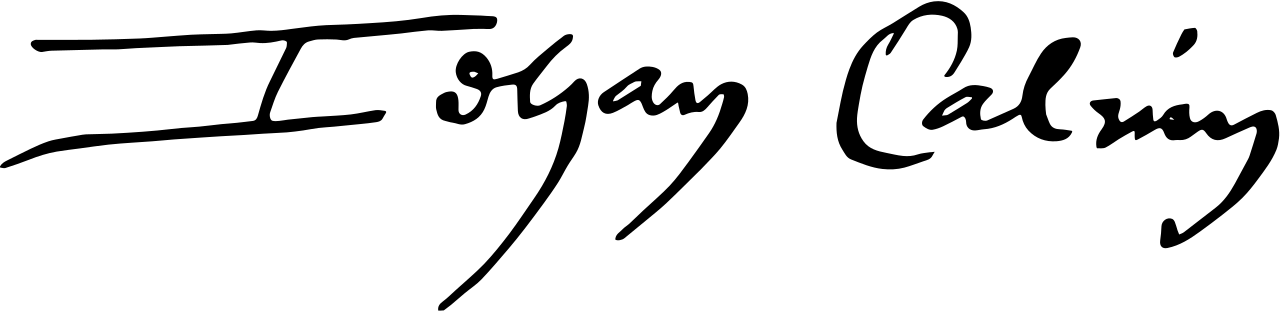
Black ink handwritten signature reading 'John Calvin' in cursive script on a white background, with a long underlined flourish extending to the left beneath the first letters.Artifact

Primary source

Signature of John Calvin

John Calvin

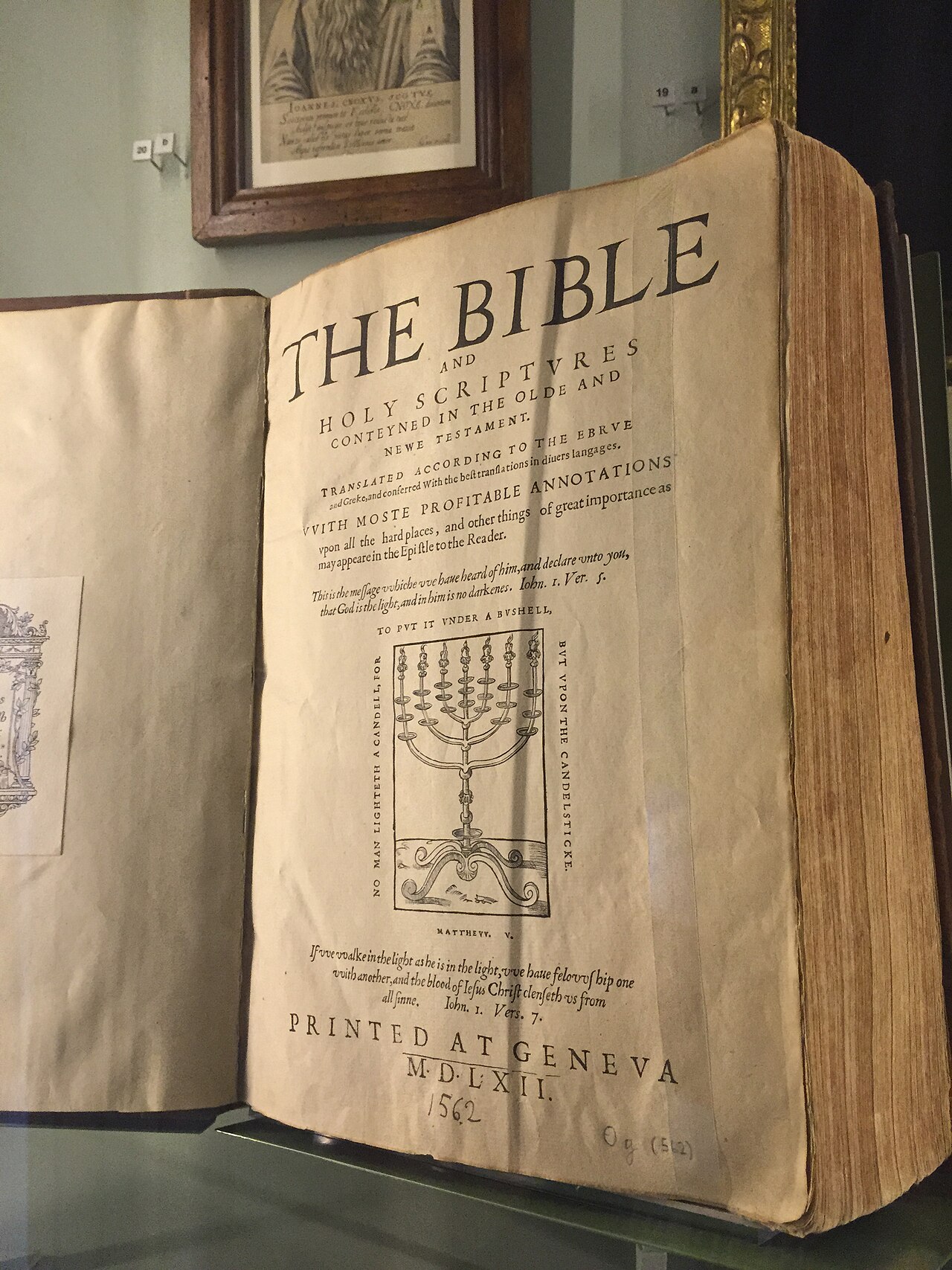
Open book on a display stand showing the title page of 'The Bible and Holy Scriptures' printed at Geneva, dated M.D.LXII (1562), with a woodcut of a candlestick and a handwritten 1562 and shelf mark. Framed print on wall behind.Book

Primary source

Geneva Bible

Reformed Christianity · 1560

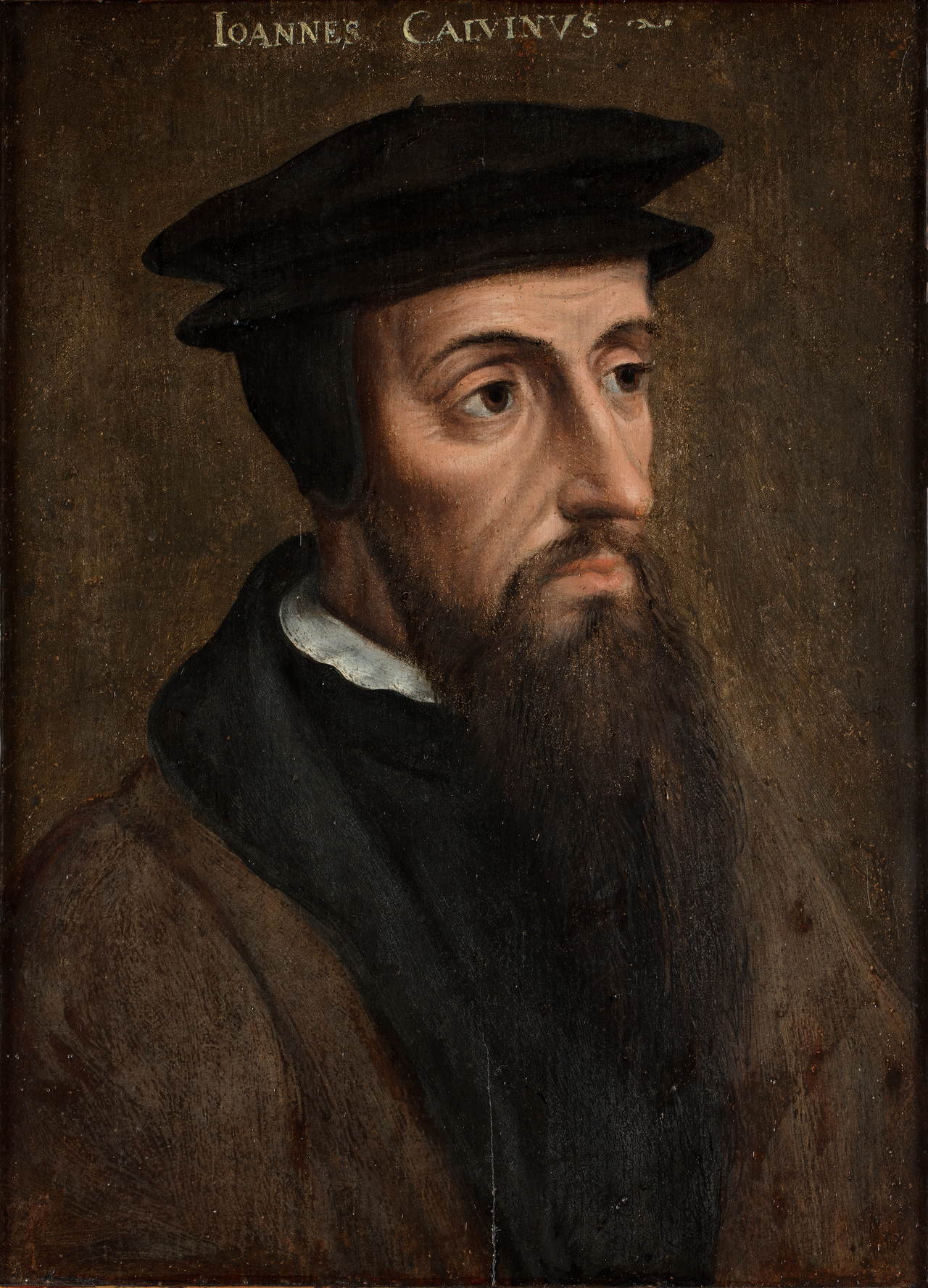
Painted portrait of a bearded man in a black beret and dark brown robe with a black collar and white collar edge, turned to the side with a serious expression. Latin inscription 'IOANNES CALVINUS' across the top.Painting

Secondary source

Portrait of John Calvin

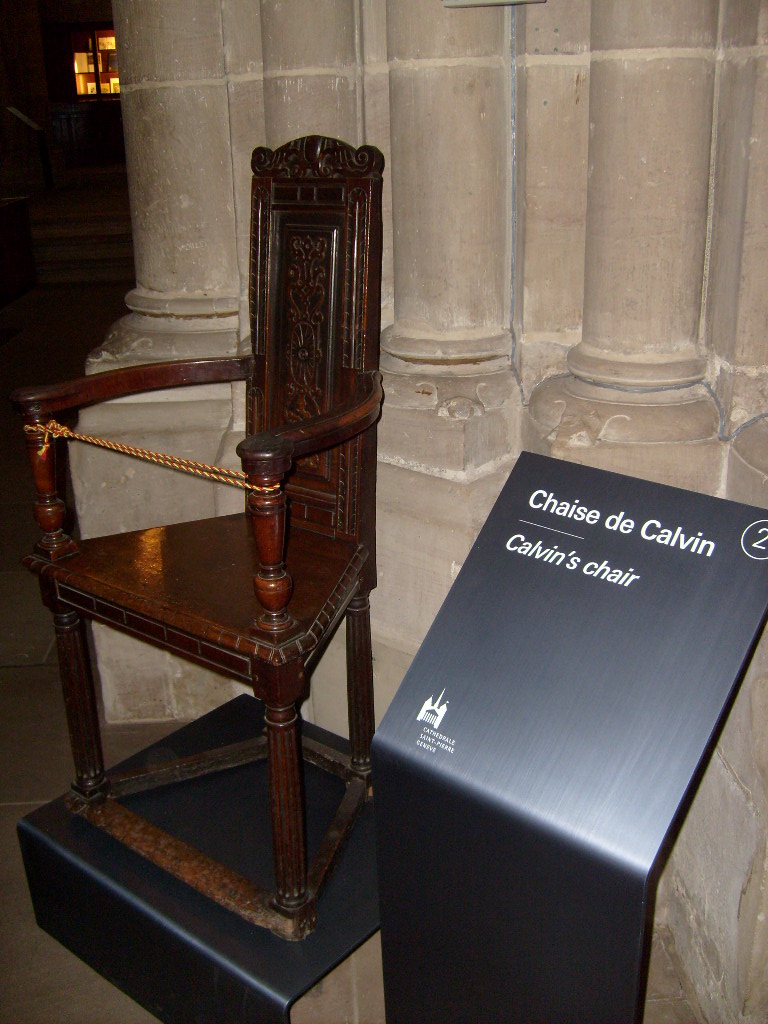
A carved dark wooden armchair with a rope tied across its arms, set on a black pedestal in a stone-columned cathedral. A black sign beside it reads 'Chaise de Calvin' and 'Calvin's chair'.Artifact

Secondary source

Calvin's Chair

15th-16th century

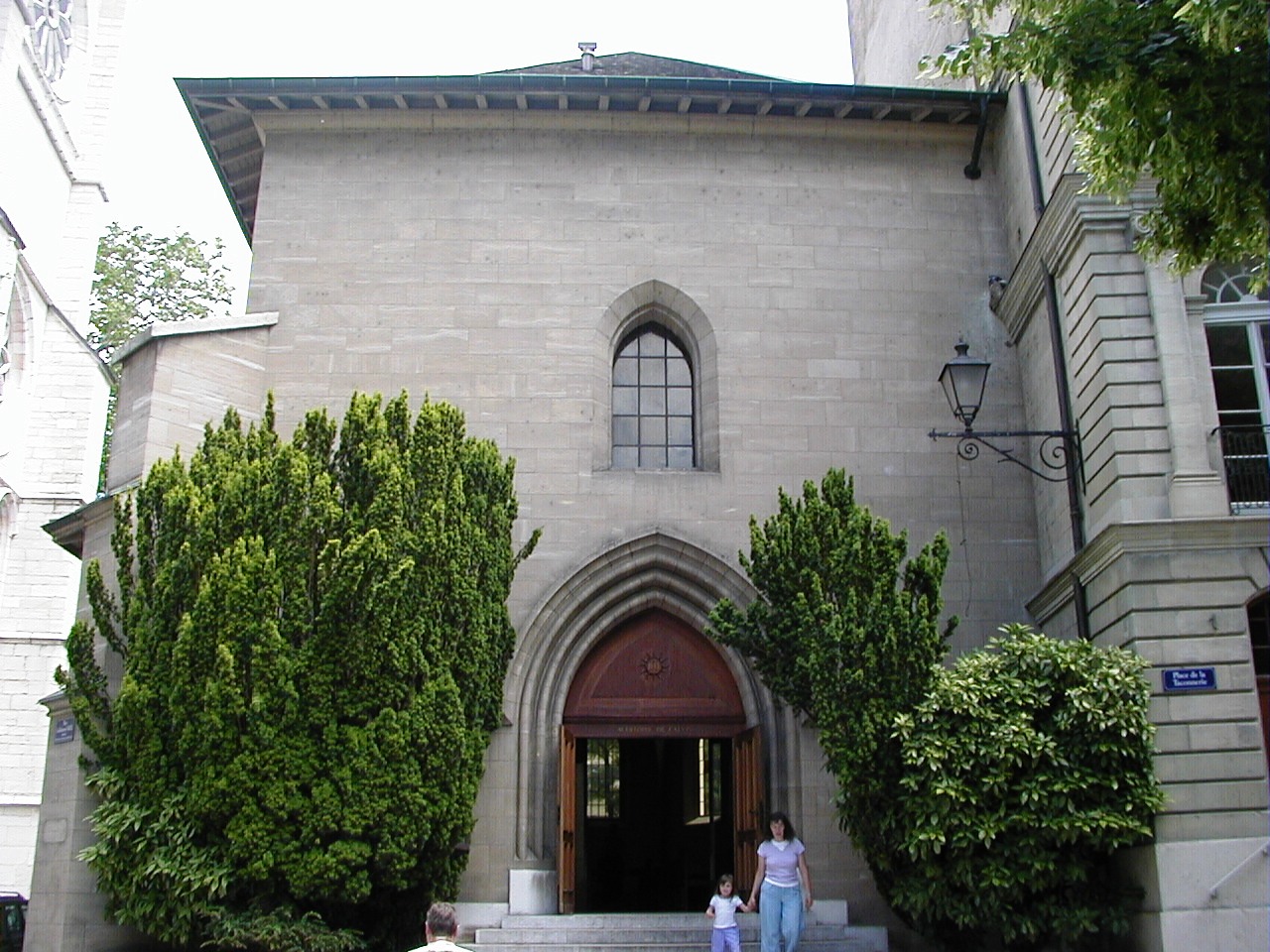
Front facade of a stone church with a pointed Gothic arched doorway and a tall narrow arched window above it. Shrubs flank the entrance, and a woman and a small child stand on the steps outside the open door.Artifact

Primary source

Reformed Church L'Auditoire

1401

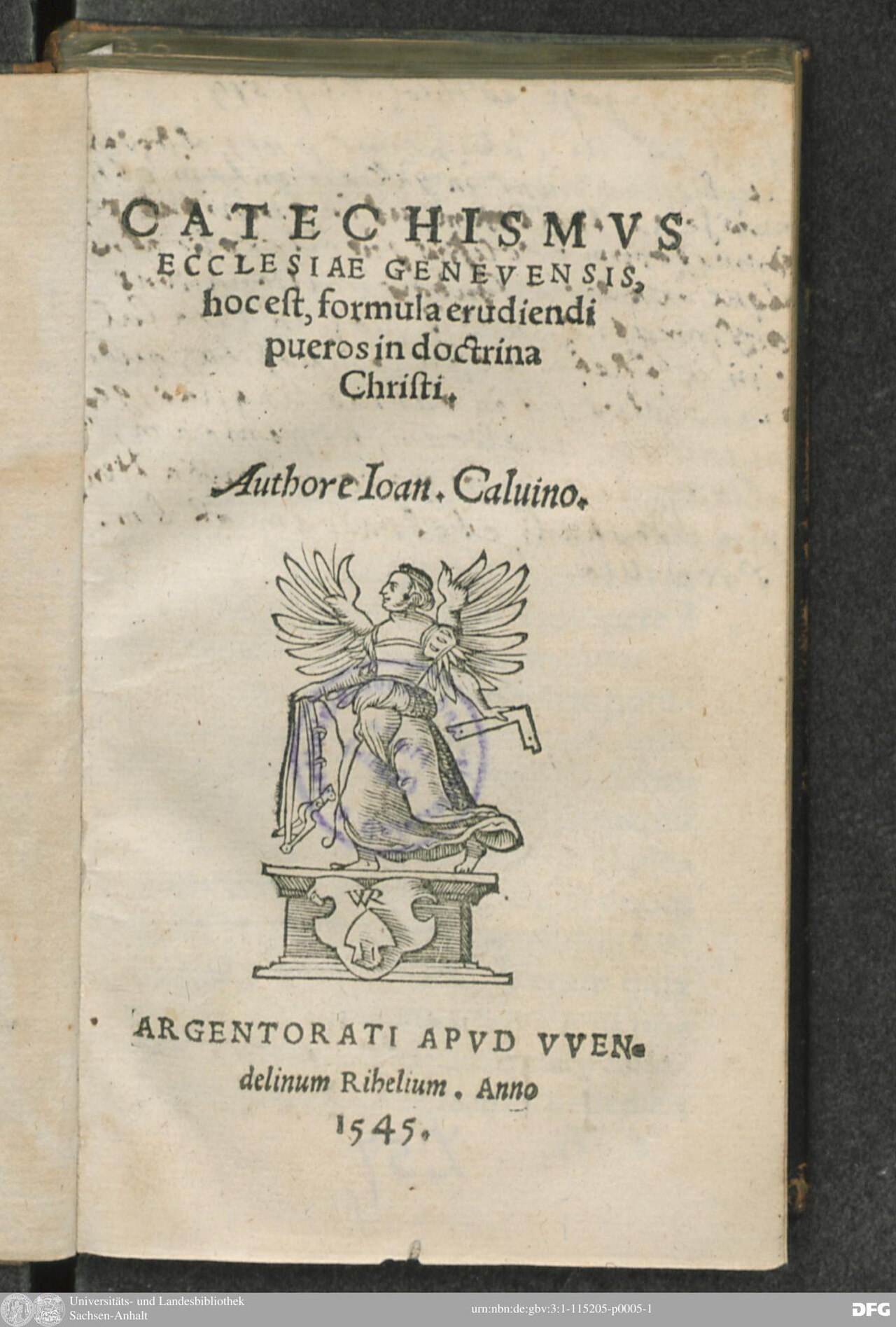
Title page of the 1545 printed Catechismus Ecclesiae Genevensis by Jean Calvin, in old black-letter type with an engraved woodcut of a winged figure seated on a pedestal with a shield, and the printer's imprint at bottom. Scanned book page with a library stamp.Book

Primary source

Genevan Catechism

Jean Calvin · 1545

Black book cover, rotated sideways, with a white rectangular library barcode label near the top left reading 3 1761 03532 3609 in black digits and a vertical barcode above it.Book

Primary source

Commentaries on Genesis

John Calvin · 1554

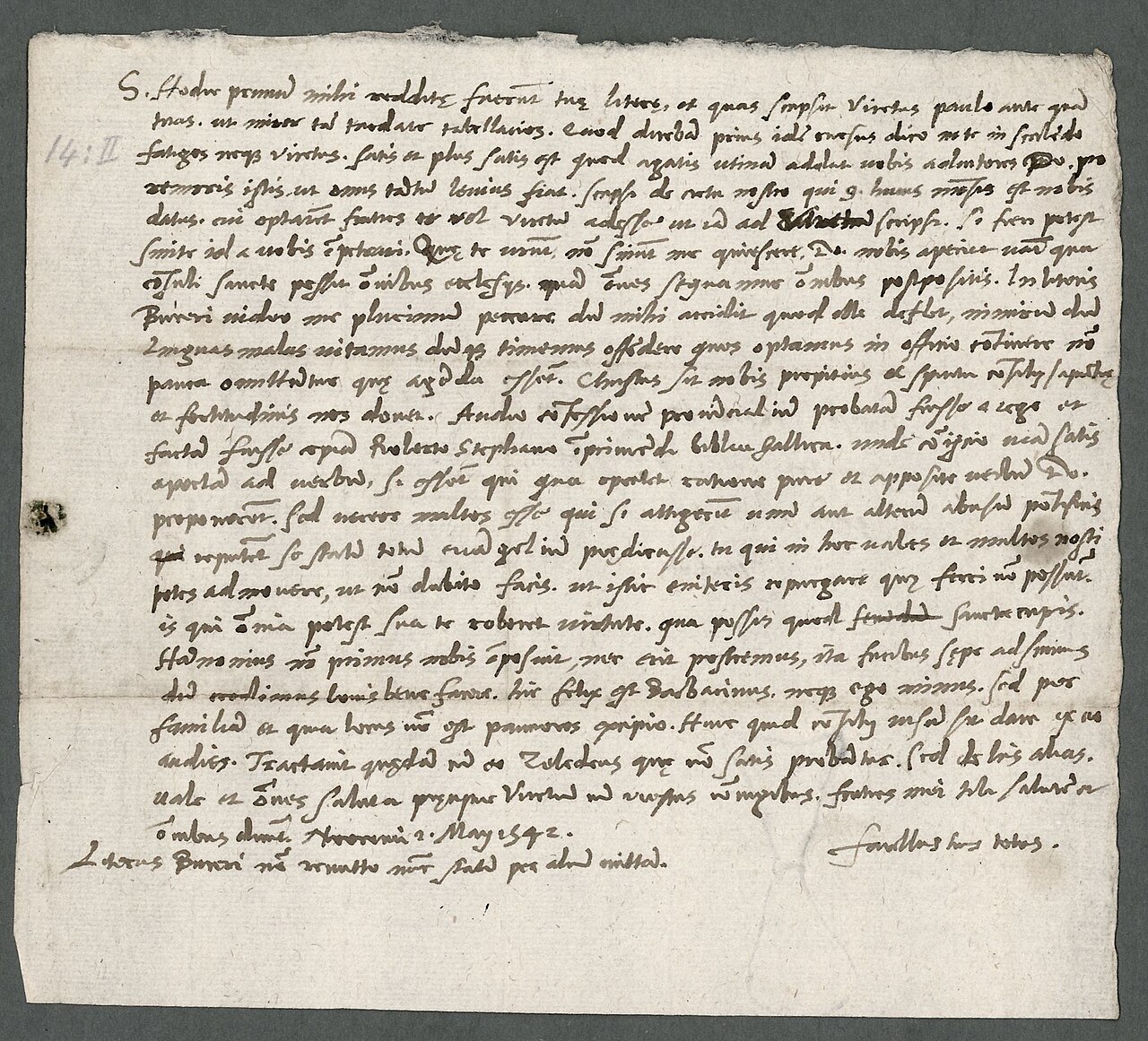
Scan of a handwritten 16th-century letter in brown ink on aged paper, dense cursive Latin script in several paragraphs, with a signature and a dated line reading May 2, 1542 at the bottom. A faint marginal number 14 appears on the left.Letter

Primary source

Letter in the Neuchâtel Pastors' Archive, 1542

2 May 1542

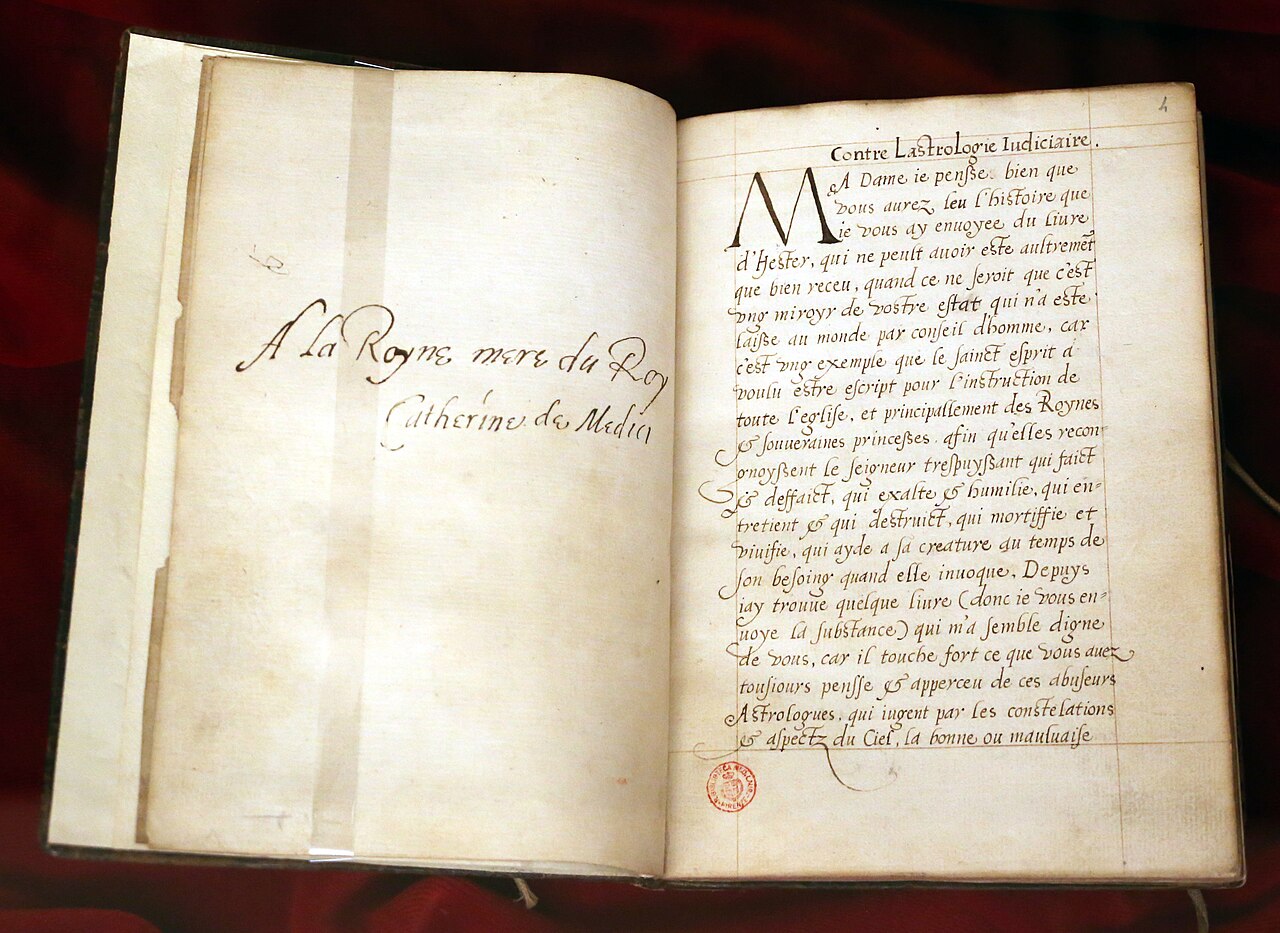
Open manuscript volume on red fabric. Left page has handwritten dedication: 'A la Royne mere du Roy Catherine de Medici'. Right page is titled 'Contre Lastrologie Iudiciaire' in French cursive script with a decorated initial M and a red wax seal at lower left.Book

Primary source

Advertissement contre l'astrologie judiciaire

Jean Calvin · 16th century

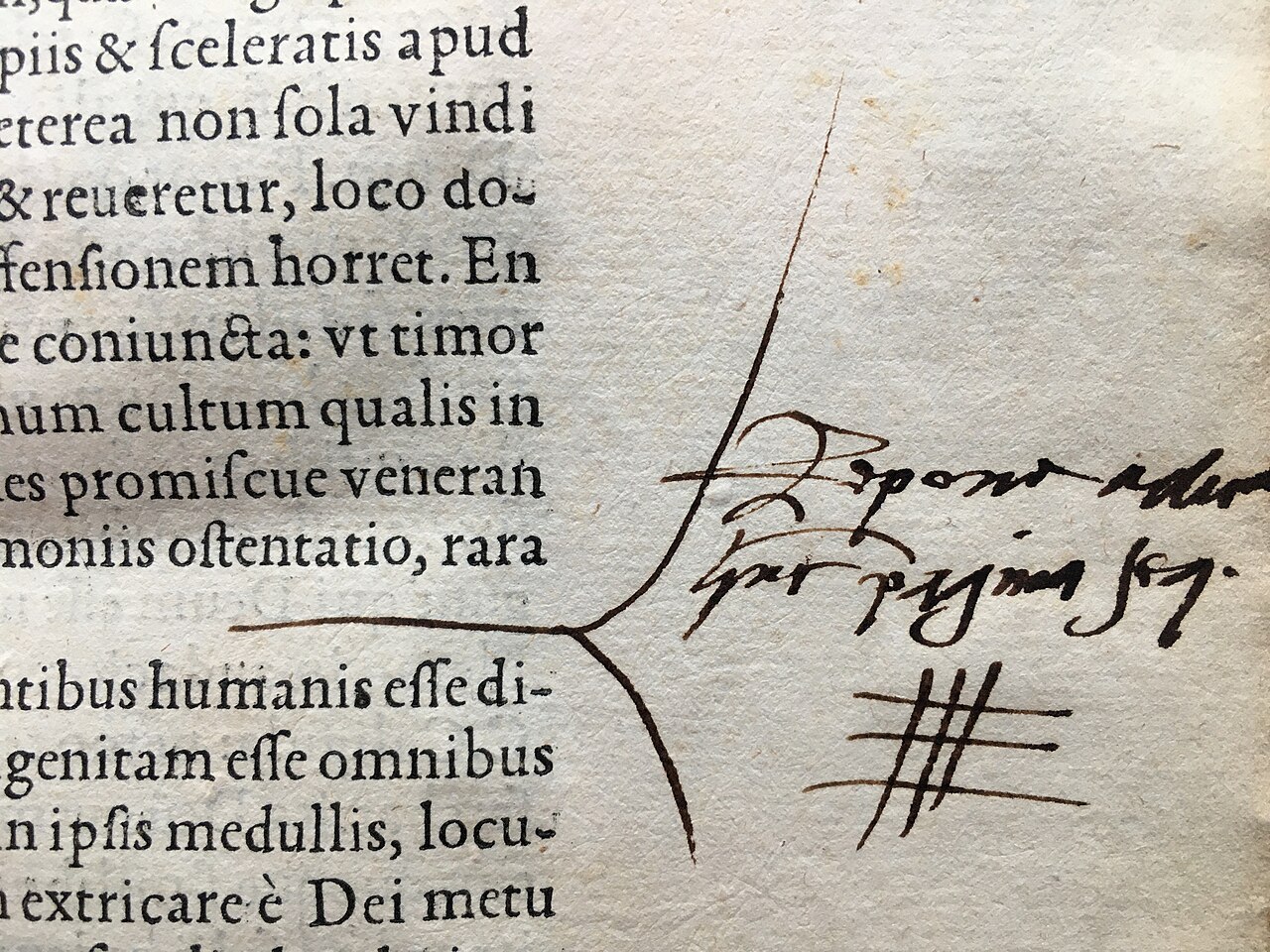
Close-up of a printed page in Latin with a handwritten marginal annotation in brown ink beside a drawn bracket and a tally-mark group of four strokes with a slash. The handwriting reads partly in cursive, and the printed text is in old serif type.Book

Primary source

Marginal Note by Calvin

Jean Calvin

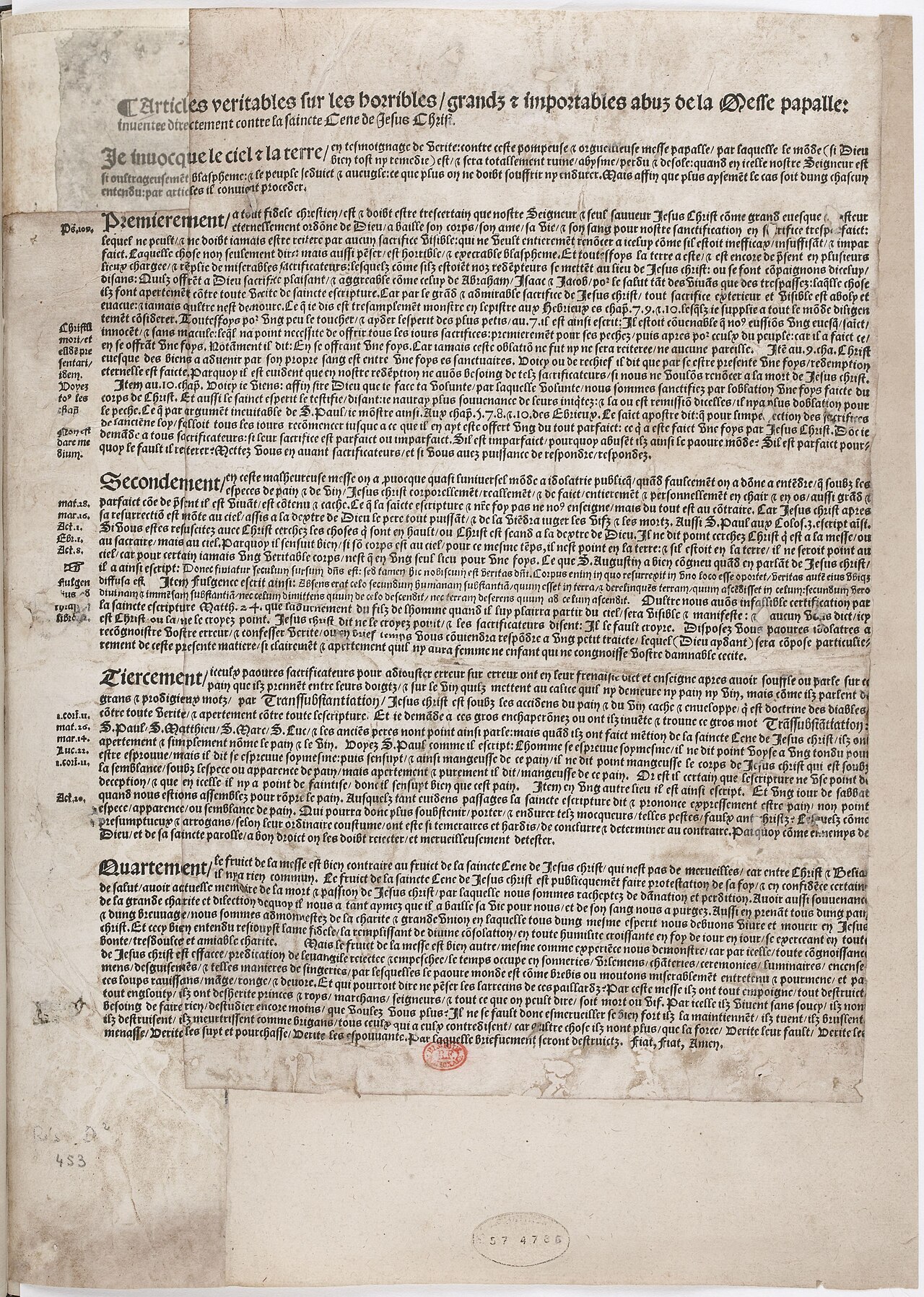
Scan of a 1534 printed placard in French, titled Articles veritables sur les horribles, grandz et importables abuz de la messe papalle. Dense black-letter text in columns on aged paper, with a red library stamp at the bottom.Document

Primary source

Affair of the Placards

Antoine Marcourt · 1534

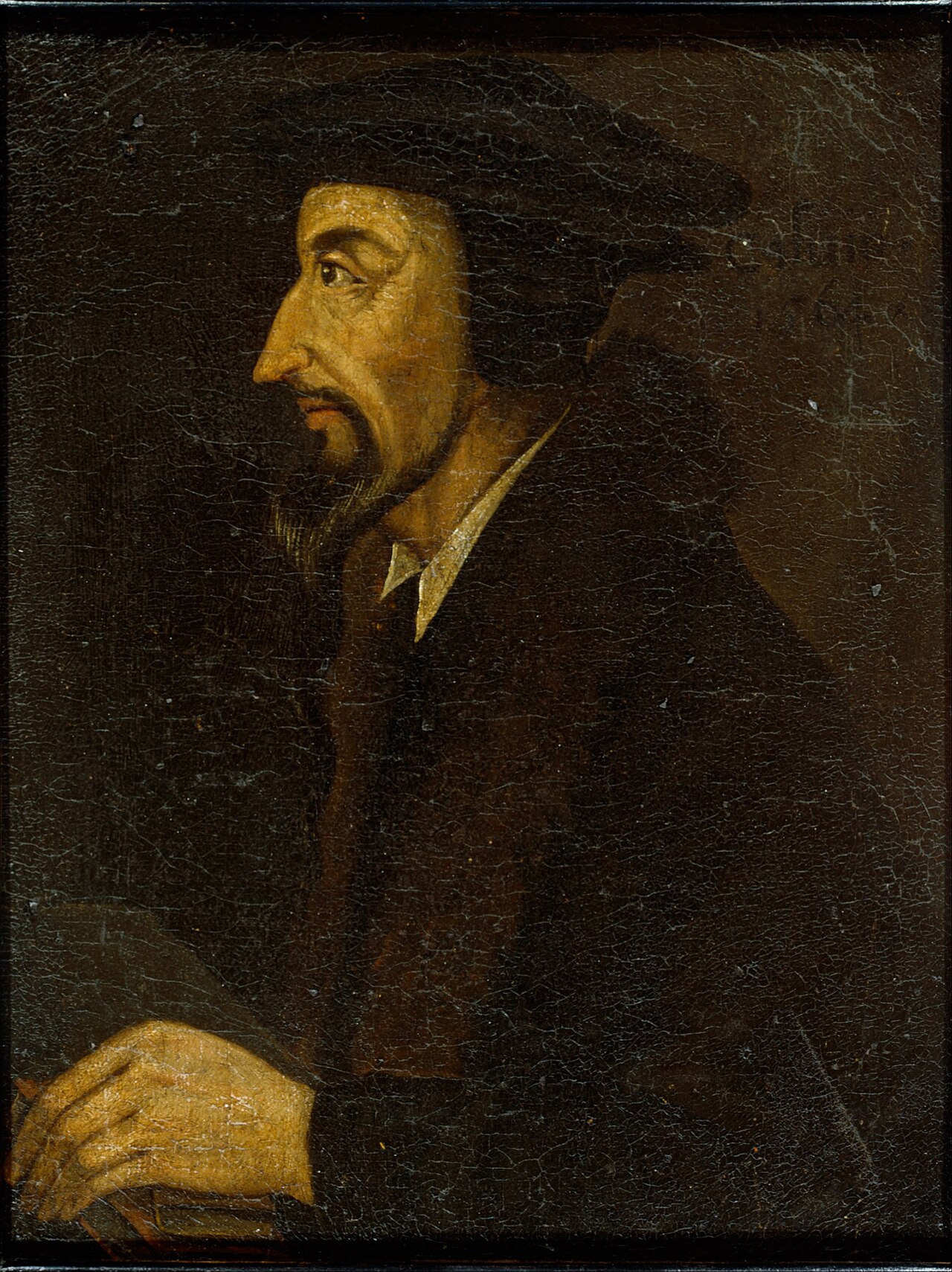
Painting of a bearded man in profile facing left, wearing a black beret, dark robe and white collar, with his clasped hands resting at the lower left. The background is dark with cracked varnish.Painting

Primary source

John Calvin

British School · 1564

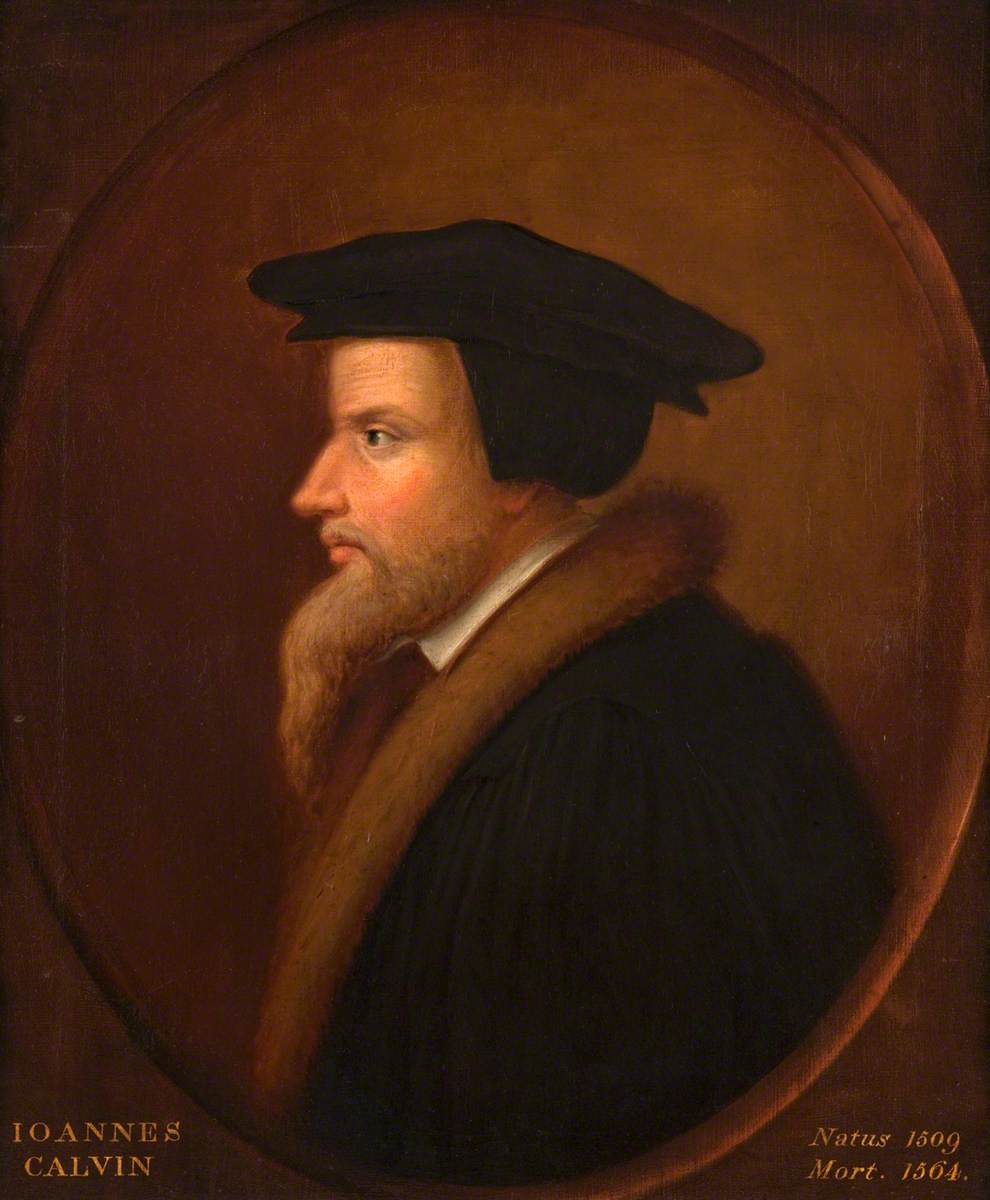
Oval painted portrait of a bearded man in left profile, wearing a black flat cap, white collar, and dark robe with a brown fur collar, set against a reddish-brown background. Gold lettering at the bottom reads IOANNES CALVIN, and at the lower right reads Natus 1509, Mort 1564.Painting

Secondary source

John Calvin (1509–1564)

after William Scrots

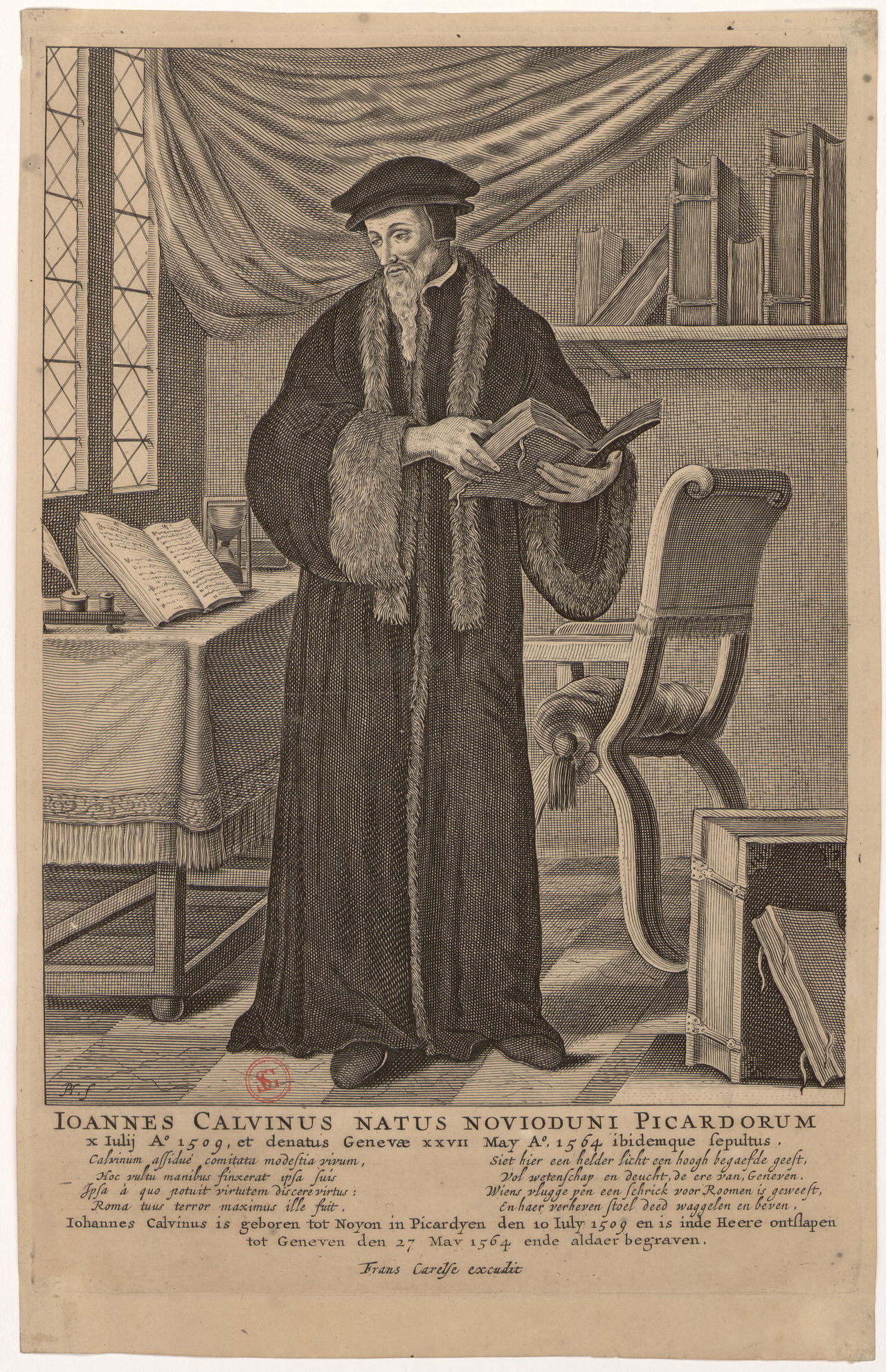
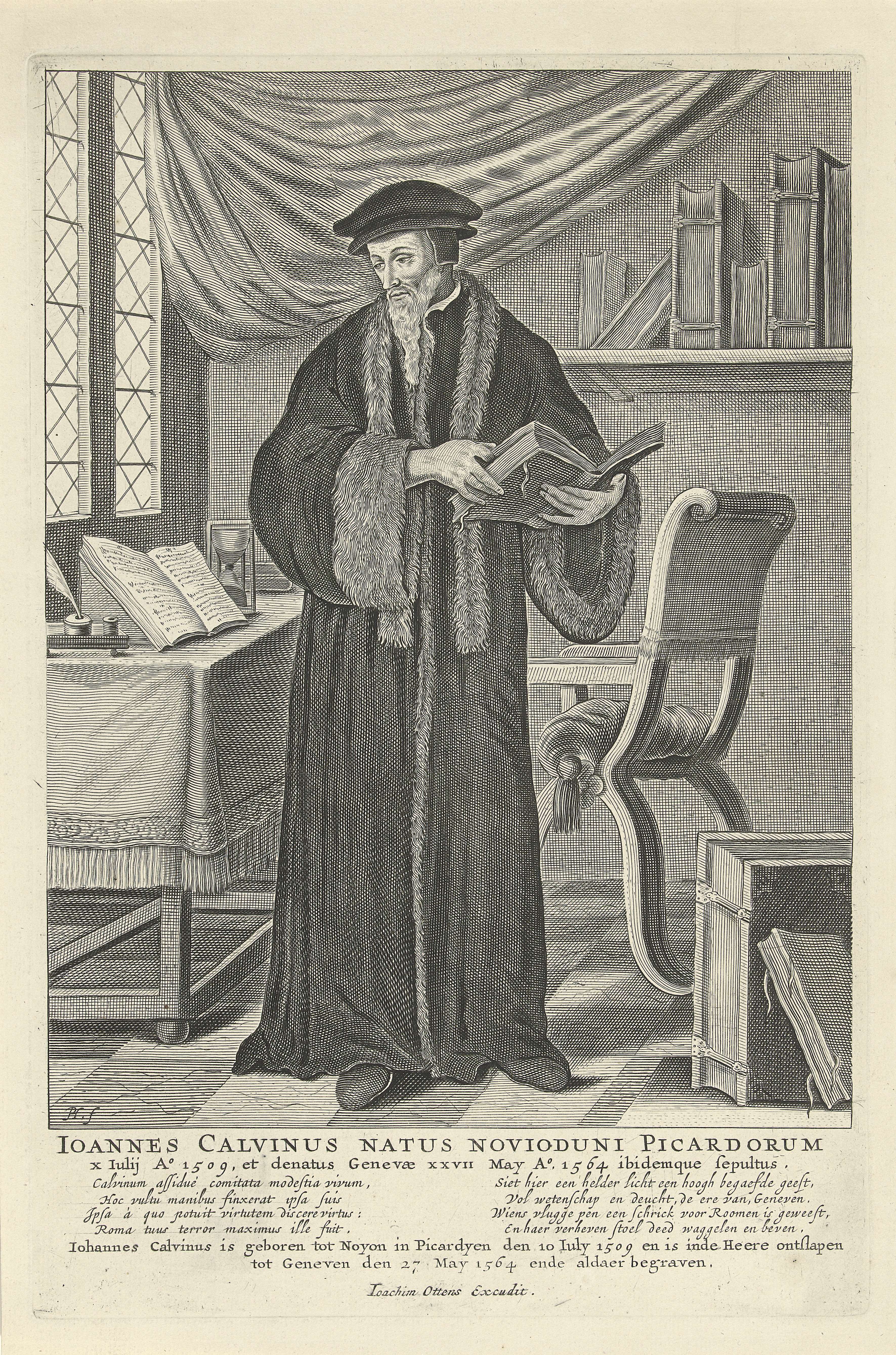
Engraved print of John Calvin standing in a study, wearing a dark fur-trimmed gown and a black cap, holding an open book. A draped curtain, bookshelves, an open book on a table, an hourglass, and a chair surround him. Latin and Dutch inscriptions appear in the margins below.Painting

Secondary source

Ioannes Calvinus natus Novioduni Picardorum X Iulii 1509, et denatus Genevae XXVII May A. 1564 ibidemque sepultus

1601

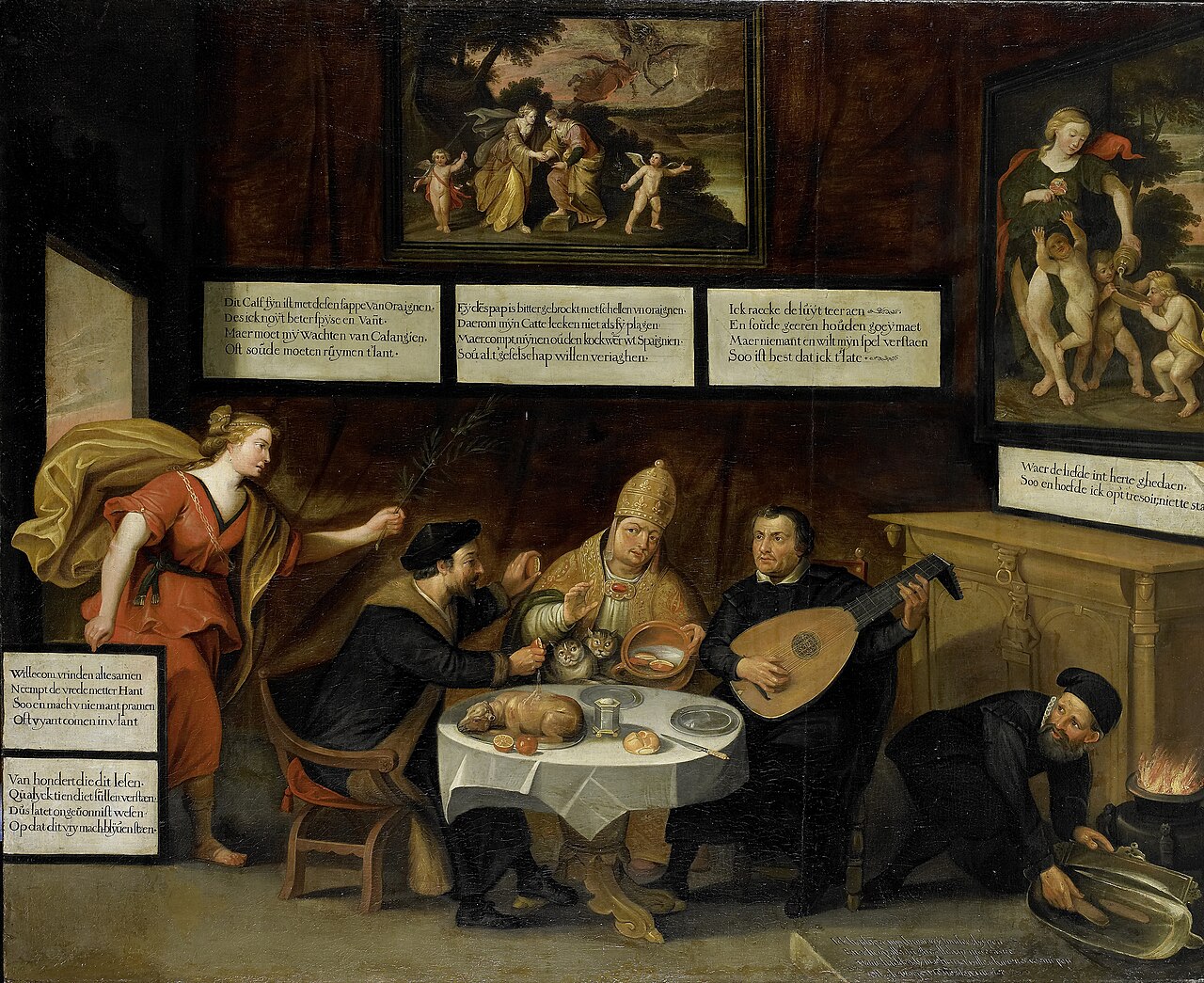
Allegorical painting of an interior: a woman in red with a palm branch stands at left. At a round table, a man in black, a pope in gold vestments with cats, and a man playing a lute sit together. A servant kneels at right by a fireplace. Verse panels hang on the wall, with paintings above and beside.Painting

Secondary source

Peace Urges the Churches to Tolerance

1600-1624

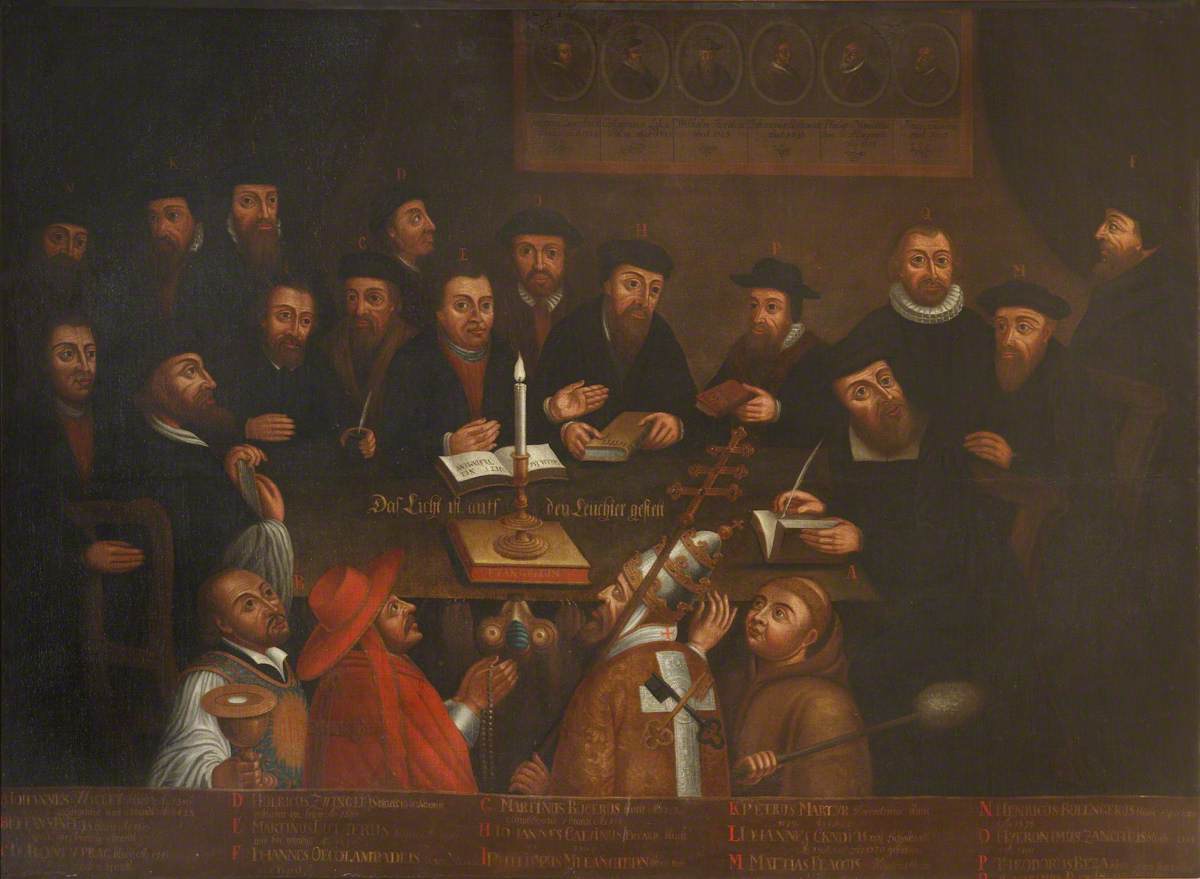
Painting of a crowded table scene with about two dozen bearded men in dark robes and hats gathered around an open book and a lit candle. Robed figures in the lower foreground, including a man in red and a monk-like figure, look up at the group. A framed panel of portrait medallions hangs above, and Latin and German inscriptions run along the bottom edge.Painting

Secondary source

The Protestant Reformers

1610

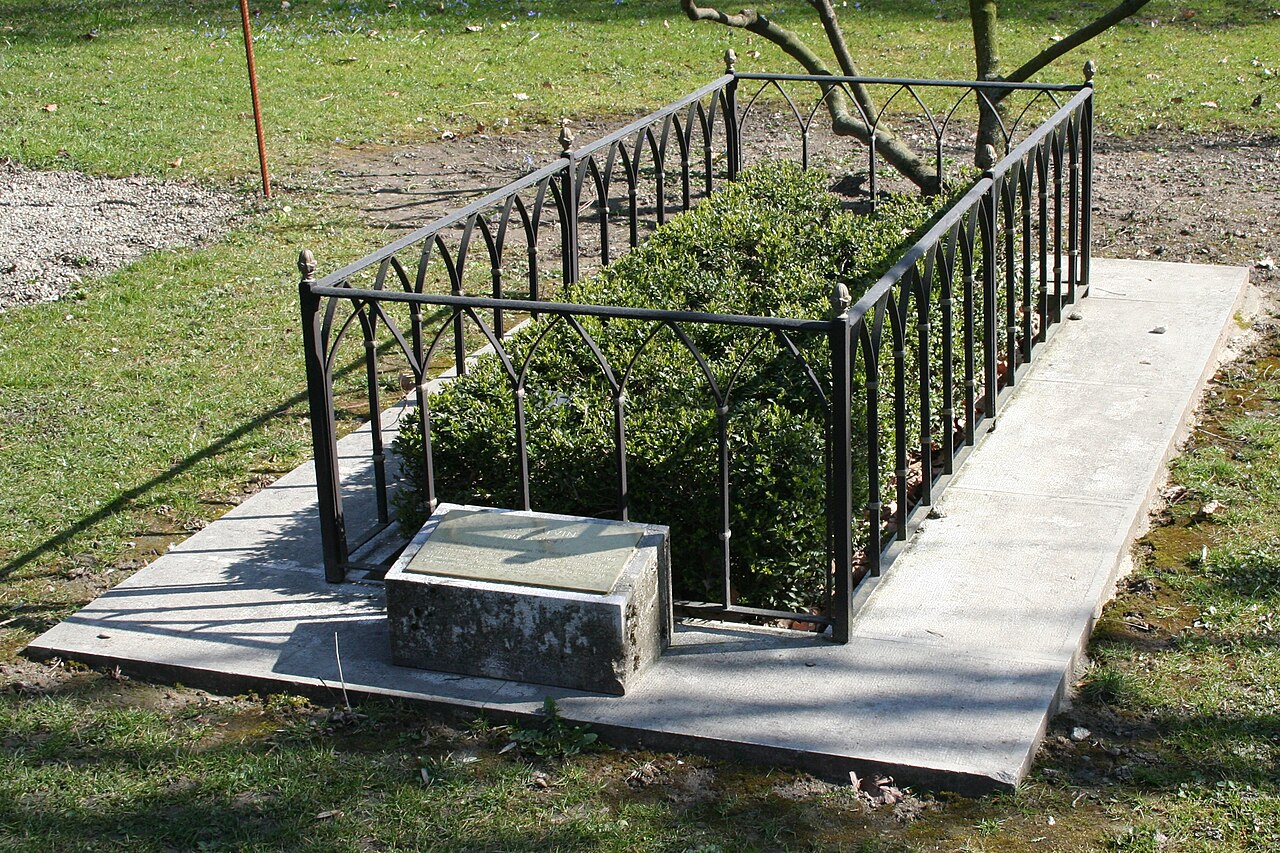
A small rectangular concrete plot in a grassy park, bordered by a black wrought-iron railing with pointed arch motifs and finials. Inside stands a low boxwood hedge. A raised concrete slab with a plaque sits at the front left, and concrete paths surround the plot. Bare tree branches appear at the top.Artifact

Secondary source

Grave of John Calvin

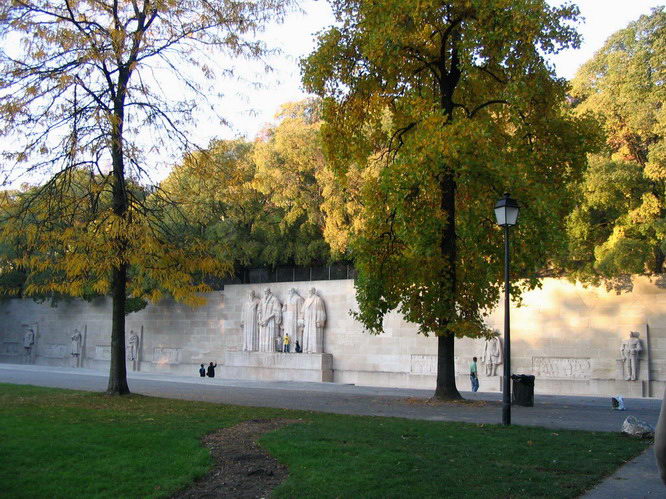
Long pale stone wall with carved relief sculptures of standing figures, set in a park with autumn trees, a lamp post, a paved path and a grass lawn. Several people walk along the path.Sculpture

Secondary source

Reformation Wall

Paul Landowski and Henri Bouchard · 1909

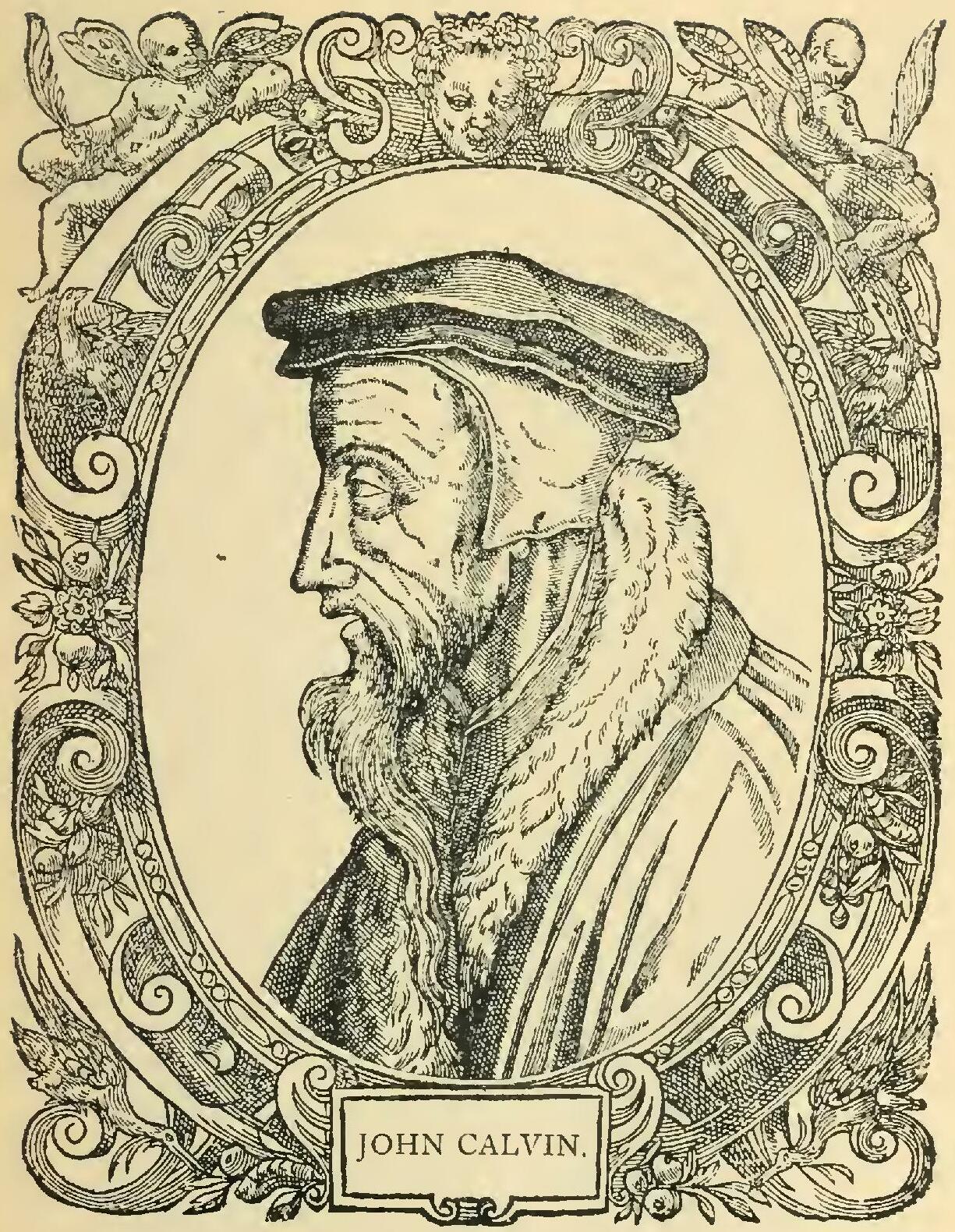
Woodcut portrait in profile of an elderly bearded man in a fur-collared cap and robe, set inside an ornate oval frame with scrolls, cherubs and foliage. Caption below reads 'JOHN CALVIN.'Painting

Primary source

Icones (Portrait of John Calvin)

Theodore Beza · 1580

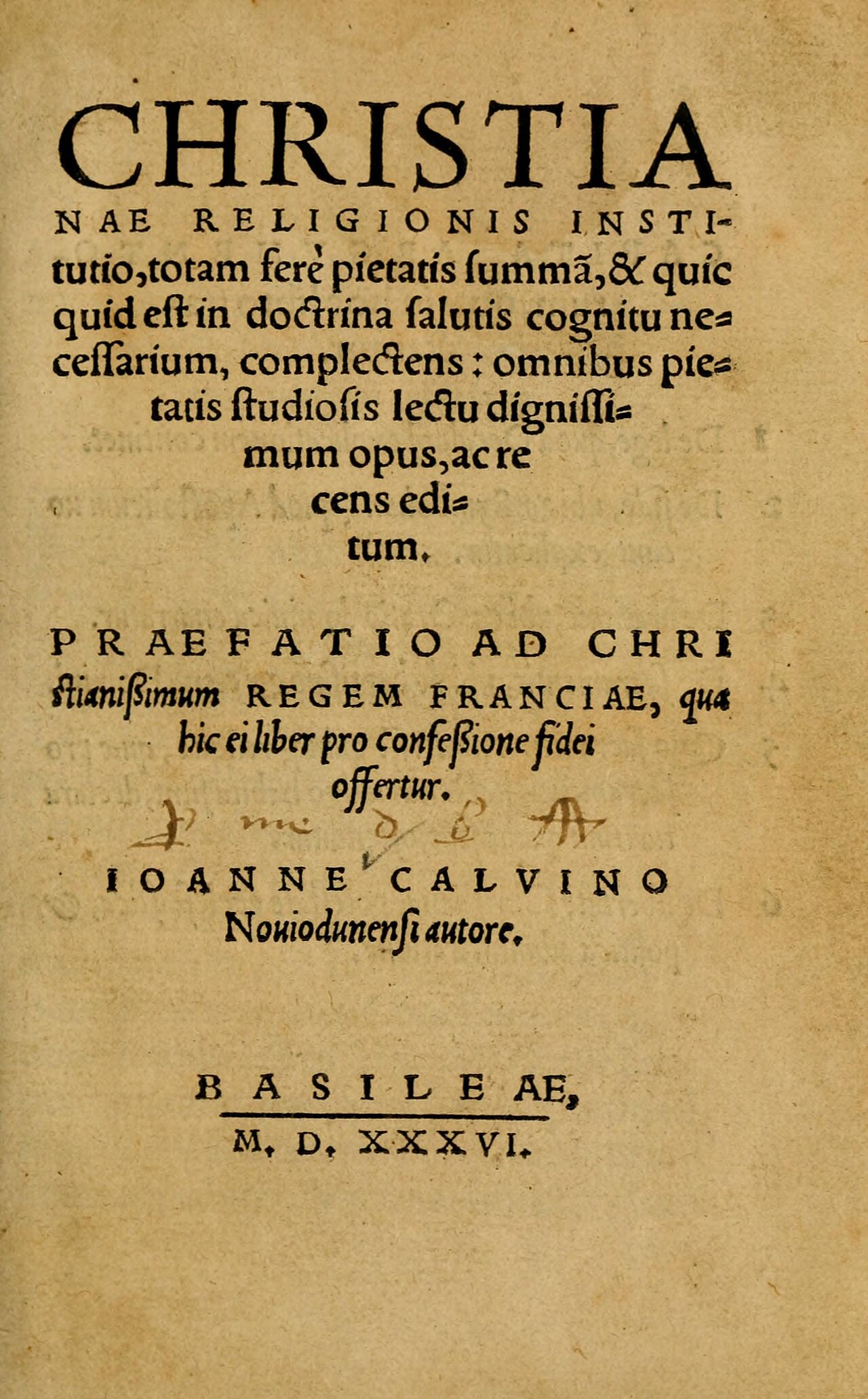
Title page of a 1536 Latin book, Christianae religionis institutio, in black print on aged yellowed paper. Large heading CHRISTIANAE, followed by dedicatory text to the King of France, author named as Ioanne Calvino Noviodunensi autore, and printed at Basileae, MDXXXVI.Book

Primary source

Title Page of Calvin's Institutes, 1536 Edition

John Calvin · 1536

The Life of John CalvinBook

Primary source

The Life of John Calvin

Theodore Beza · 1836 (text written 1564)

Book

Primary source

Institutes of the Christian Religion (Allen Translation)

John Calvin

Commentaries on the Epistles to Timothy, Titus, and PhilemonBook

Primary source

Commentaries on the Epistles to Timothy, Titus, and Philemon

John Calvin · 1856

Sermons of John Calvin upon the Ten CommandmentsSpeech

Primary source

Sermons of John Calvin upon the Ten Commandments

John Calvin · 1581

Book

Primary source

Institutes of the Christian Religion (Beveridge Translation)

John Calvin · 1845

Book

Secondary source

John Calvin, the Organiser of Reformed Protestantism

Williston Walker · 1906

Speech

Primary source

On Suffering Persecution

John Calvin

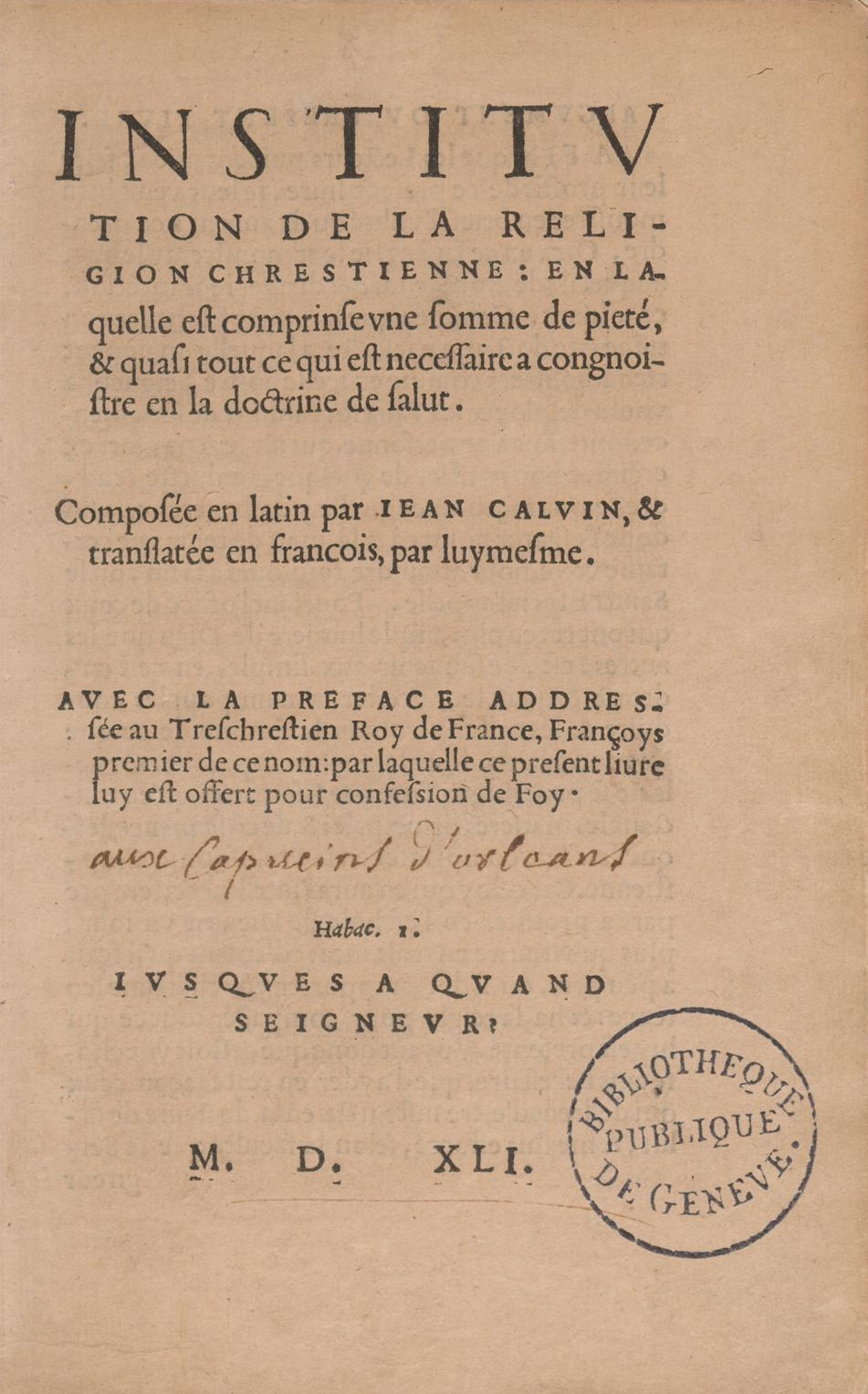
Title page of a 1541 French book, Institution de la religion chrestienne, composed in Latin by Jean Calvin and translated into French by himself, with a preface addressed to the King of France. Includes handwritten inscription, Habac. 1 verse, a Bibliotheque Publique de Geneve stamp, and date MDXLI.Book

Primary source

Title page of Institution de la religion chrestienne (1541 French edition)

John Calvin · 1541

Book

Secondary source

History of the Life, Works, and Doctrines of John Calvin

J. M. V. Audin

Book

Secondary source

John Calvin: His Life, Letters, and Work

Hugh Young Reyburn · 1914

Book

Secondary source

The Life and Times of John Calvin, the Great Reformer

Paul Emil Henry · 1849

The Early Years of John Calvin, 1509-1536Book

Secondary source

The Early Years of John Calvin, 1509-1536

Thomas M'Crie · 1880

John Calvin and the Genevan Reformation: A SketchBook

Secondary source

John Calvin and the Genevan Reformation: A Sketch

Thomas Cary Johnson · 1900

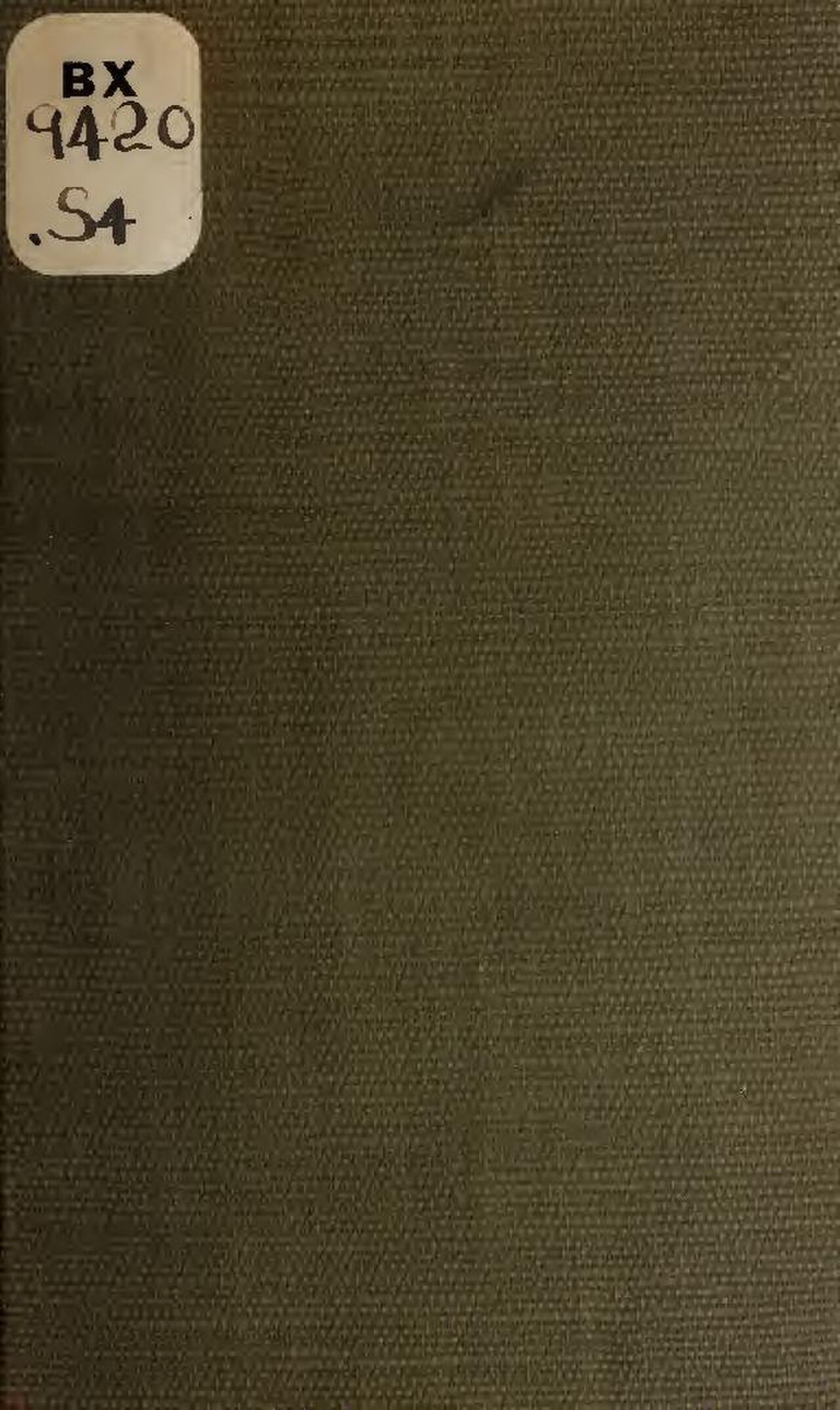
Cover of a book bound in olive-green cloth with a white library call-number label in the upper left corner reading BX 9420 .S4 in black handwriting and print.Book

Primary source

Secret Providence

Jean Calvin

Close view of a marbled endpaper with blue, green, and cream swirls and a brown leather hinge or board edge along the left side. No text is visible.Book

Primary source

The Institution of Christian Religion

Jean Calvin; translated by Thomas Norton · 1561

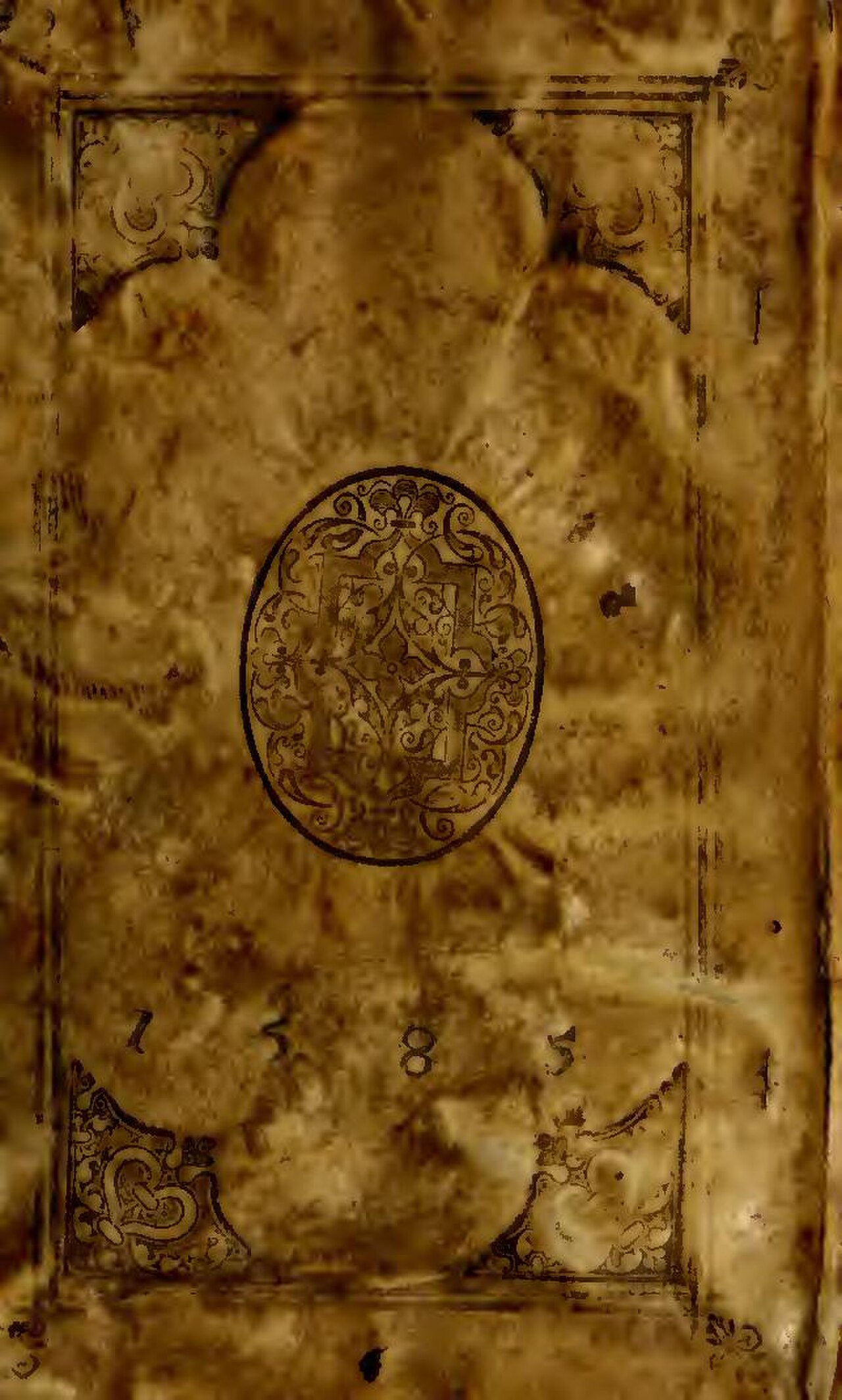
Scanned cover of an old book with aged, stained brown leather or paper. Ornamental corner pieces and an oval central panel with intricate scrollwork decorate the surface. Numbers 1, 5, 8, 5 appear in the lower area.Book

Primary source

Institutio christianae religionis (1559 final edition)

Jean Calvin, edited by Nicolas Colladon and Augustin Marlorat · 1559

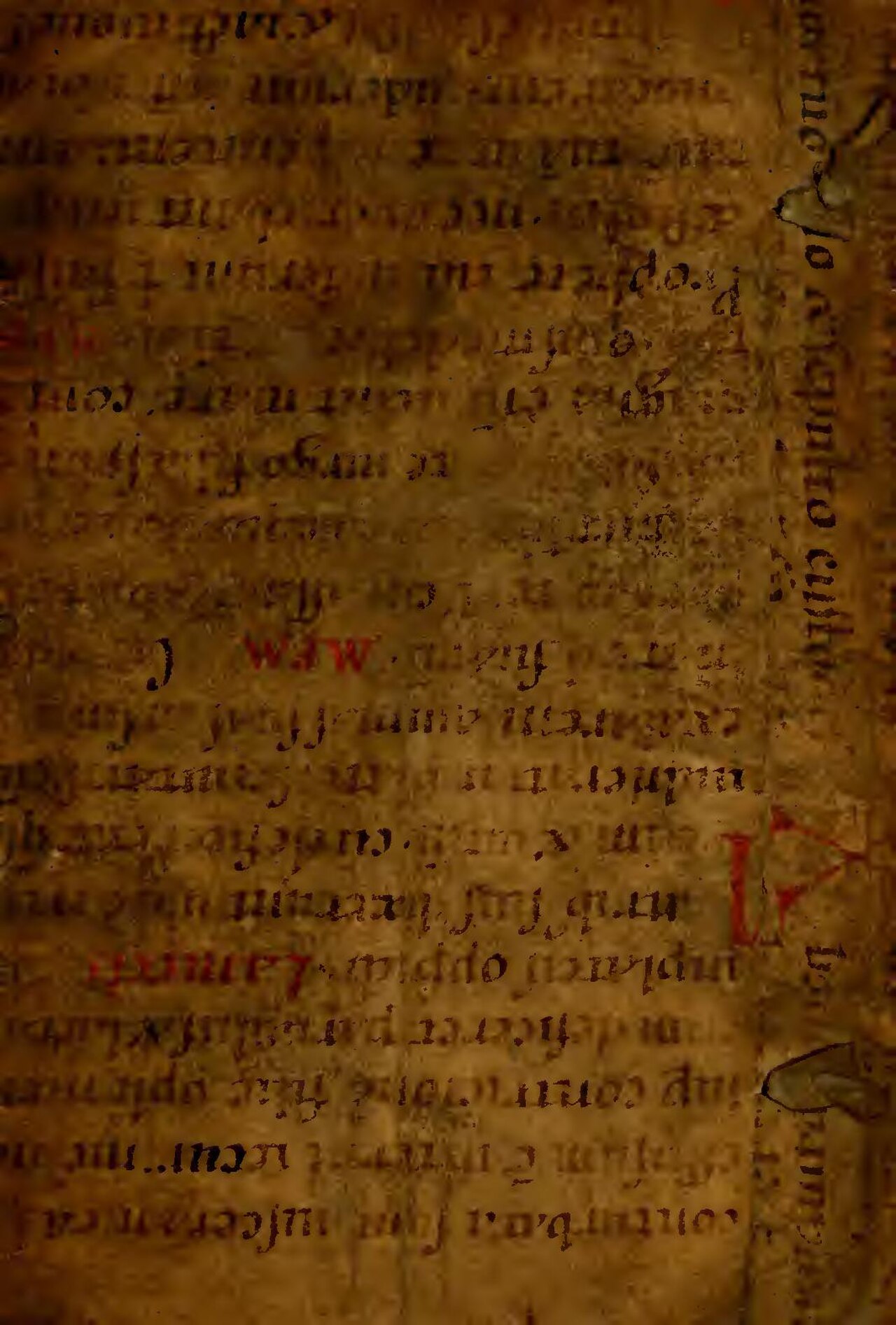
Scanned page of an early printed book in Latin with aged, brownish paper. Dense black-letter text runs in several lines, with red decorated initial letters and a red 'waw' Hebrew letter marking a section. Handwritten marginal annotations appear along the right edge, with a pointing-hand mark near the top and bottom.Book

Primary source

In librum Iosue commentarius

Jean Calvin

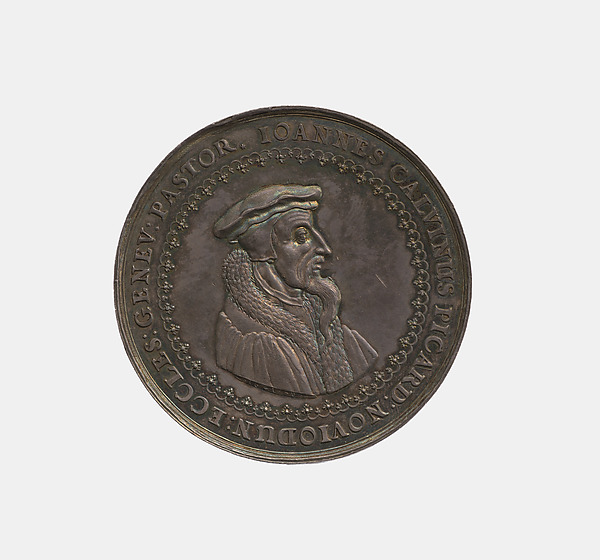
Photograph of a dark bronze-toned medal, circular, showing a profile bust of a bearded man in a flat cap and high collar, facing right. Inscription around the rim reads IOANNES CALVINUS PICARD NOVIOD ECCLES GENEV PASTOR.Artifact

Secondary source

Silver Medal of John Calvin

Sebastian Dadler · 1641

Document

Secondary source

Commentary on the Epistle of Paul to the Galatians

John Calvin · 16th century

Book

Primary source

Sermons on Psalm 119

John Calvin · 1580

Book

Primary source

A Selection of the Most Celebrated Sermons of John Calvin

John Calvin · 1831

Book

Tertiary source

Calvin, John (1911 Encyclopaedia Britannica entry)

William Lindsay Alexander and Alexander James Grieve · 1911

Book

Tertiary source

John Calvin (Catholic Encyclopedia entry)

William Barry · 1913

Book

Secondary source

Du calvinisme (essay on Calvin's French works)

Eugène Lerminier · 1842

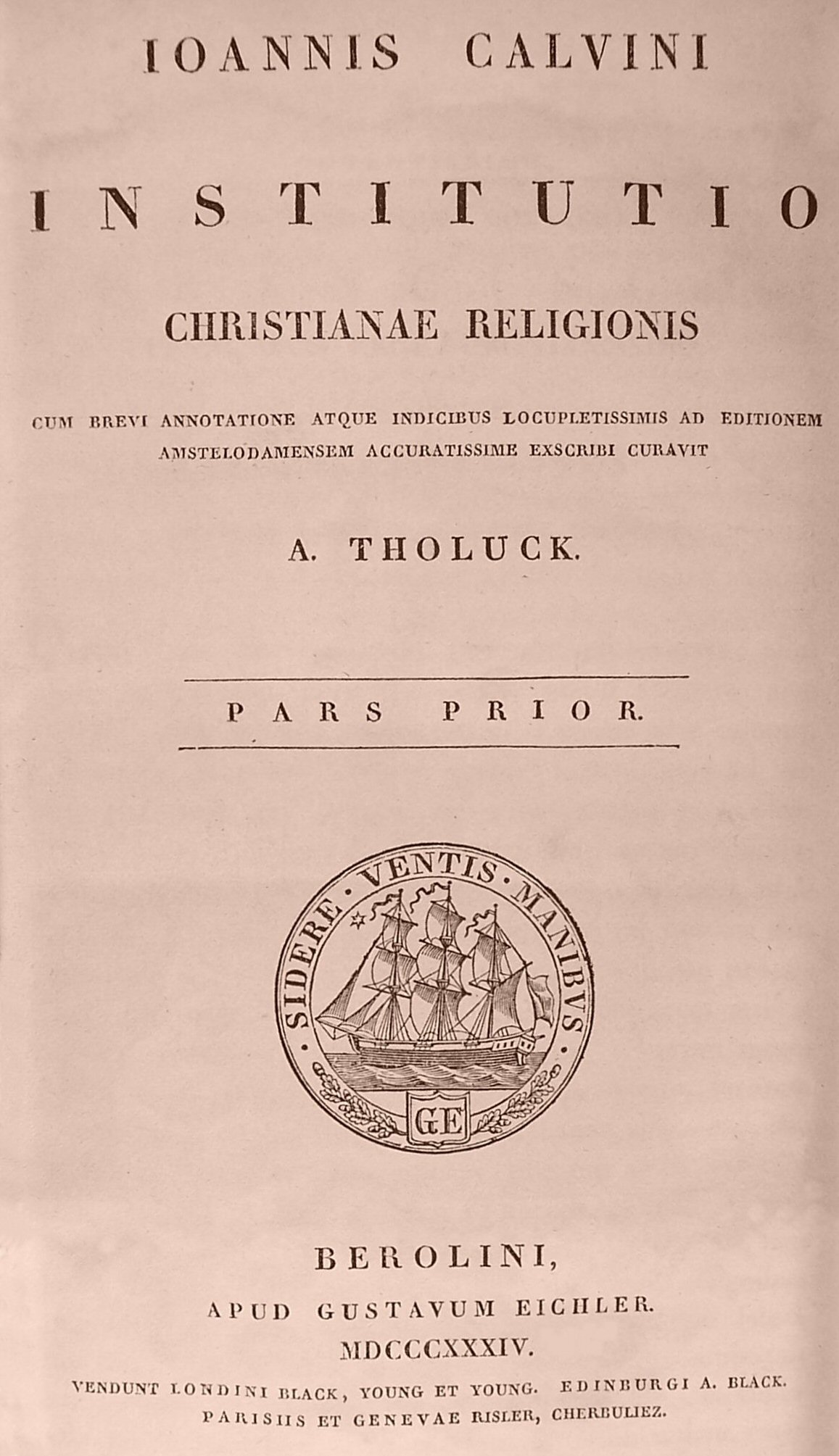
Title page of a Latin book: 'Ioannis Calvini Institutio Christianae Religionis', edited by A. Tholuck, 'Pars Prior', printed at Berolini apud Gustavum Eichler, MDCCCXXXIV (1834). Below is a ship with the motto 'Sidere Ventis Manibus' and the initials GE.Book

Secondary source

Title page of Institutio Christianae Religionis, 1834 edition

John Calvin · 1834

Calvin Defended: A Memoir of John CalvinBook

Secondary source

Calvin Defended: A Memoir of John Calvin

Thomas Smyth · 1909

John Calvin, the StatesmanBook

Secondary source

John Calvin, the Statesman

Richard Taylor Stevenson · 1907

Front cover of a green cloth book. Top left reads 'CALVIN' in italic capitals; a library call label reads 'PC 2117 .C3'. Center title 'Pages Choisies' in italic, with 'JORDAN' at right. Below is a dark laurel wreath enclosing an ancient oil lamp.Book

Primary source

Pages choisies de Calvin

Jean Calvin (text); Daniel Jordan (editor)

A heavily faded, sepia-toned scan of a page with dark blotches, stains, and bleed-through marks. No readable text or clear vignette is visible; the image is mostly blurred, mottled brown and cream texture with a dark border along the right edge.Book

Primary source

Institutio christianae religionis, Latin edition

Jean Calvin

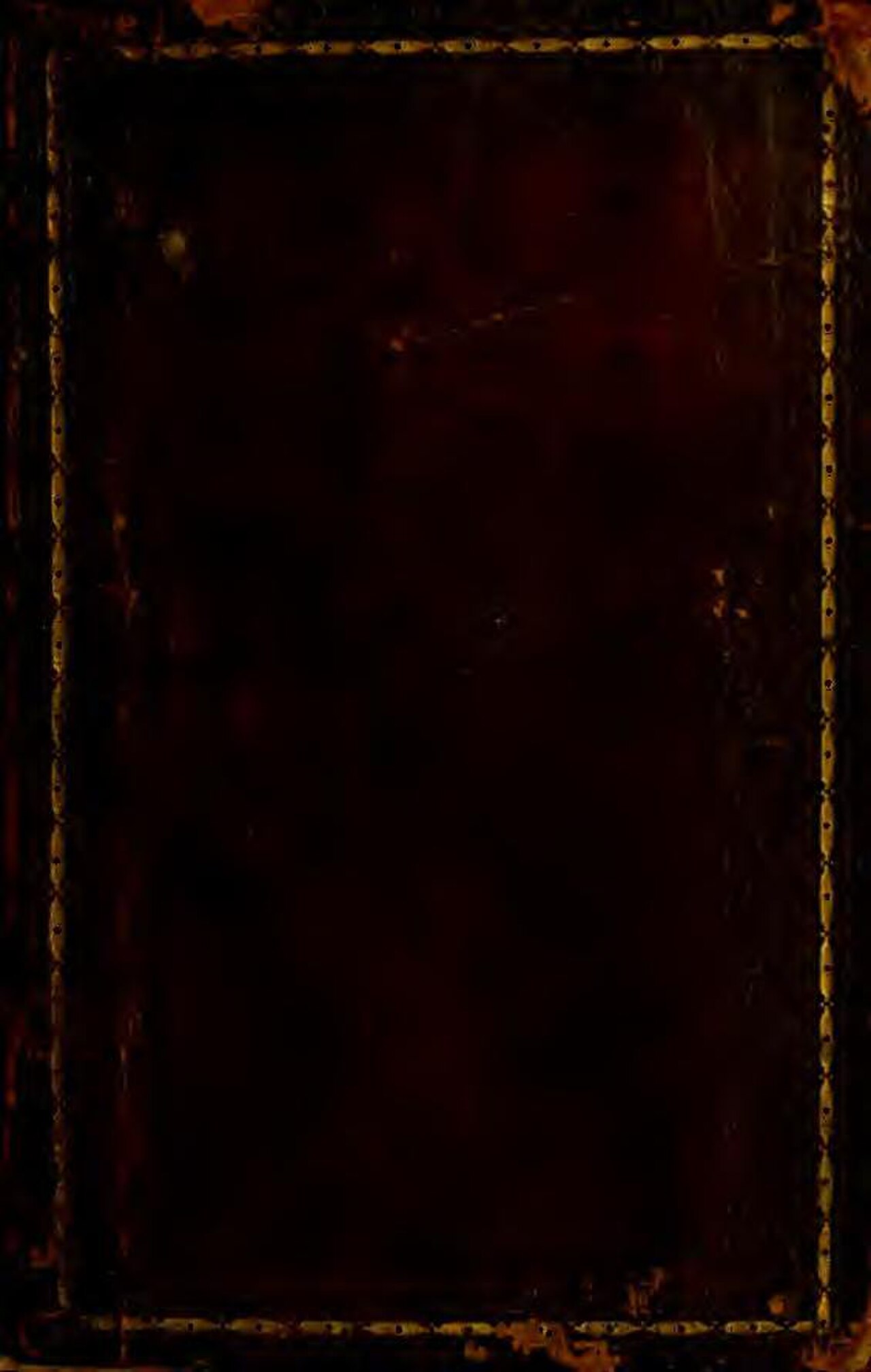
Dark reddish-brown leather book cover with a decorative gold-tooled border of dotted and beaded lines framing a blank central panel. The leather shows wear and faded spots.Book

Primary source

An Abridgement of the Institution of the Christian Religion

Jean Calvin, with William Lawne and Christopher Fetherstone (as listed in the record)

Plain brown cover of a bound book with a white octagonal library label reading RARE BOOKS, G-38, C1393 in black lettering near the lower left corner.Book

Primary source

Acta Synodi Tridentinae

Jean Calvin

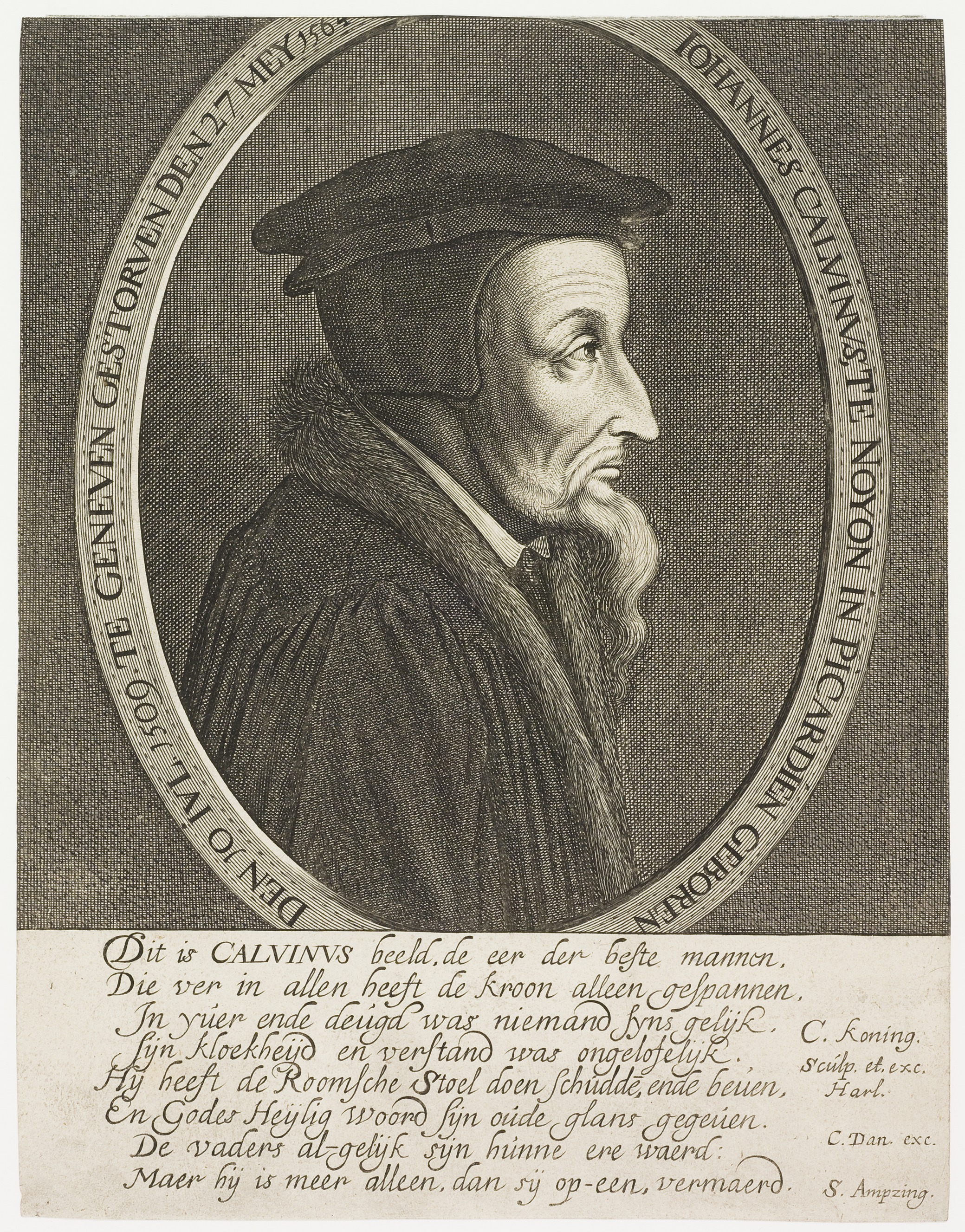
Engraved oval portrait in profile of an elderly bearded man in a black cap and dark robe with a white collar, framed by a Latin inscription band reading Johannes Calvinus, with Dutch verses and engraver credits printed below.Painting

Secondary source

Johannes Calvinus print by Cornelis Koning, with Dutch verses

Cornelis Koning

Engraved print of a standing man in a dark academic gown and cap, holding a book, in a study with an open book on a table, a chair, and bookshelves. Latin and Dutch inscriptions appear below the figure.Painting

Secondary source

Portret van Johannes Calvijn in een studeerkamer

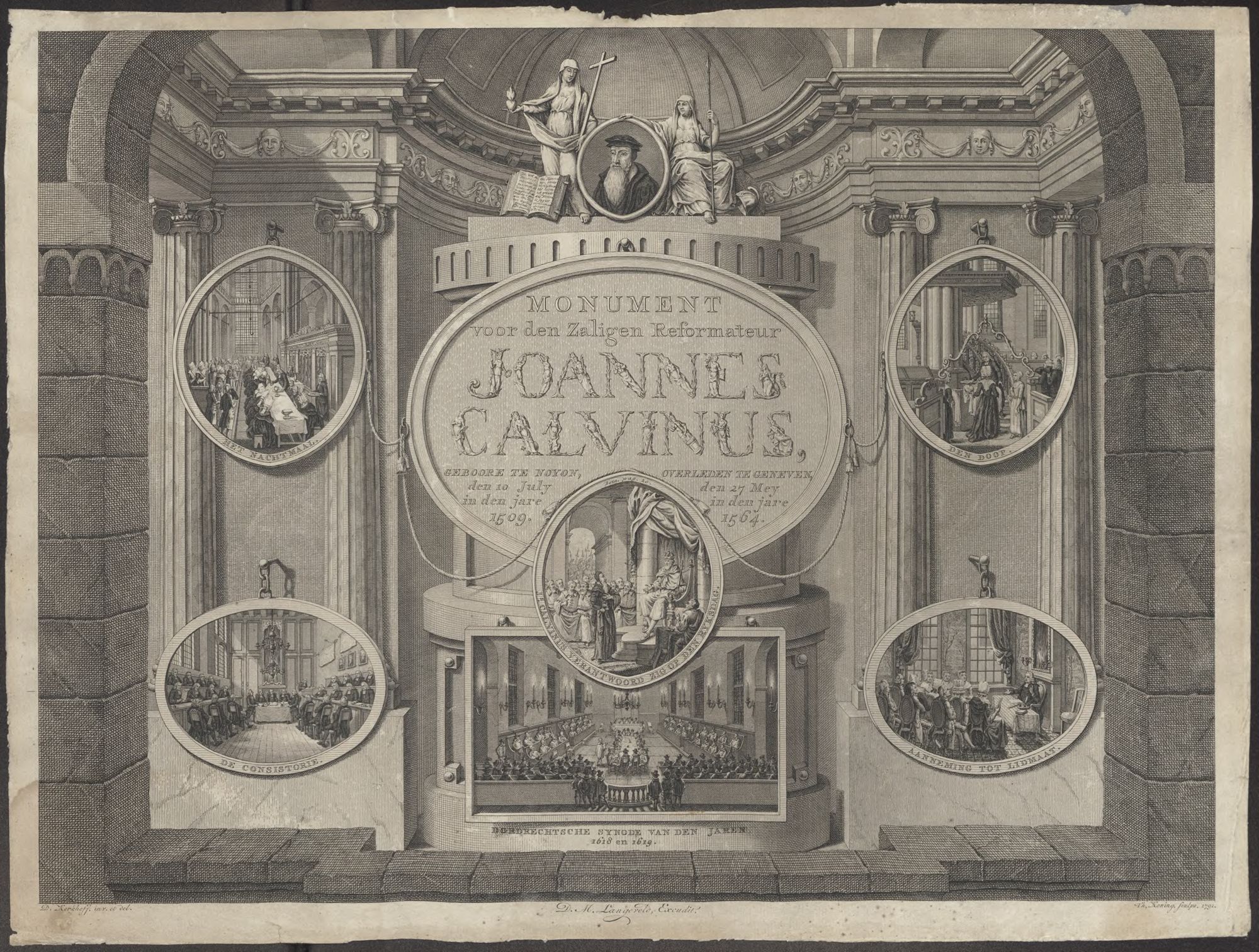
Engraved commemorative print with an architectural frame. Central oval reads 'Monument voor den Zaligen Reformateur Joannes Calvinus', with birth and death dates. An inset portrait of Calvin sits at top between two allegorical figures. Six scenes surround and below: Lord's Supper, Baptism, The Consistory, a synod session, a bishop's audience, and Admission to Ministry. Signed Kerkhoff and Koning.Painting

Secondary source

Commemorative print to John Calvin after D. Kerkhoff

Koning, Th

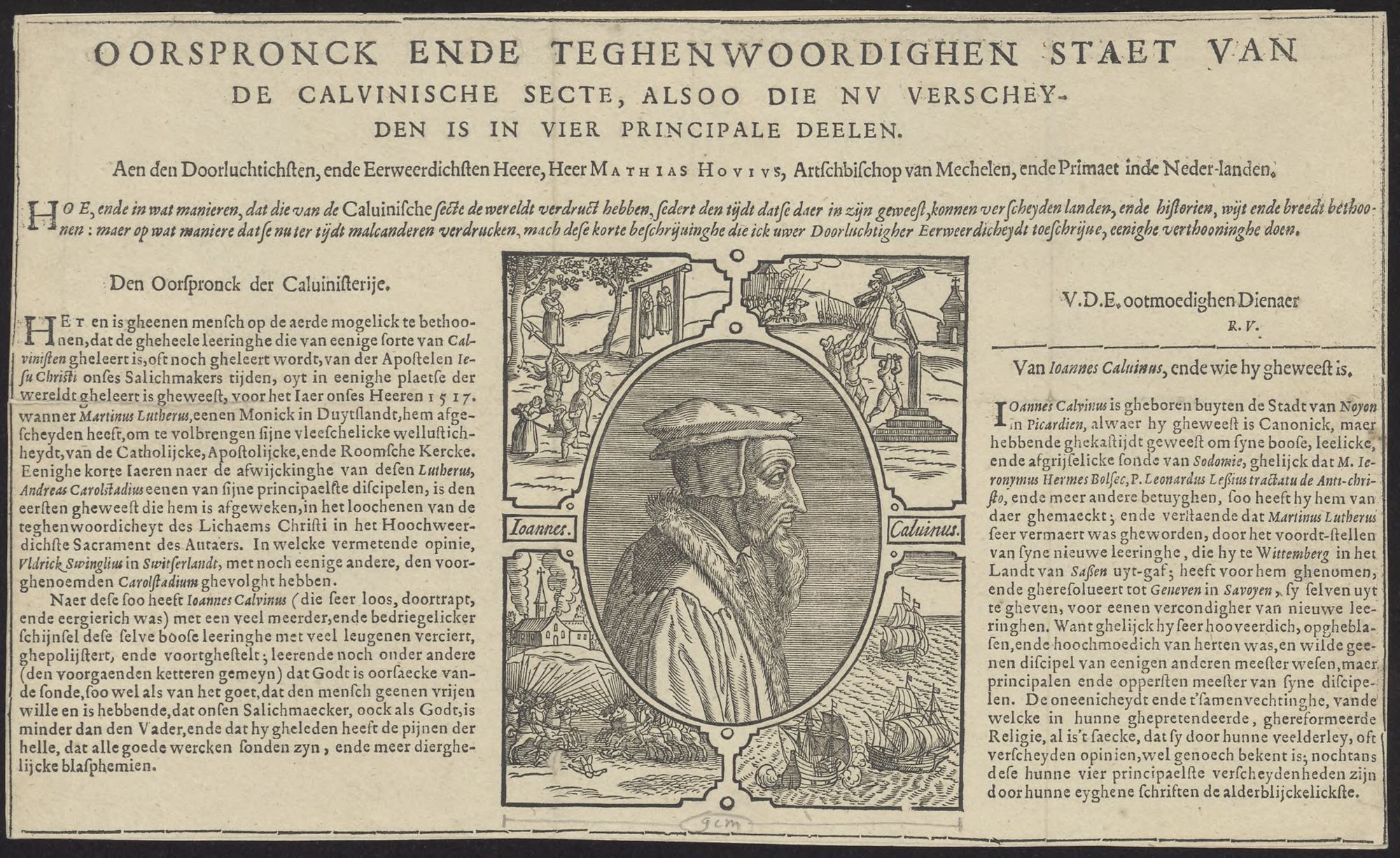
Printed broadside with a central oval woodcut portrait of John Calvin in profile wearing a cap and fur-collared robe, framed by four vignettes of scenes including burning and executions. Dense Dutch text surrounds it under a heading.Painting

Secondary source

Oorspronck ende teghenwoordighe

Colour lithograph of a bearded elderly man in white nightshirt propped in bed, reaching out his hand, surrounded by several men in period dress and ruffs, one kneeling at the bedside; an open book and candlestick sit on a table at right. Title below reads 'La Mort de Calvin / The Death of Calvin'.Painting

Secondary source

John Calvin on his deathbed

W.L. Walton, after Oakley · c. 1865

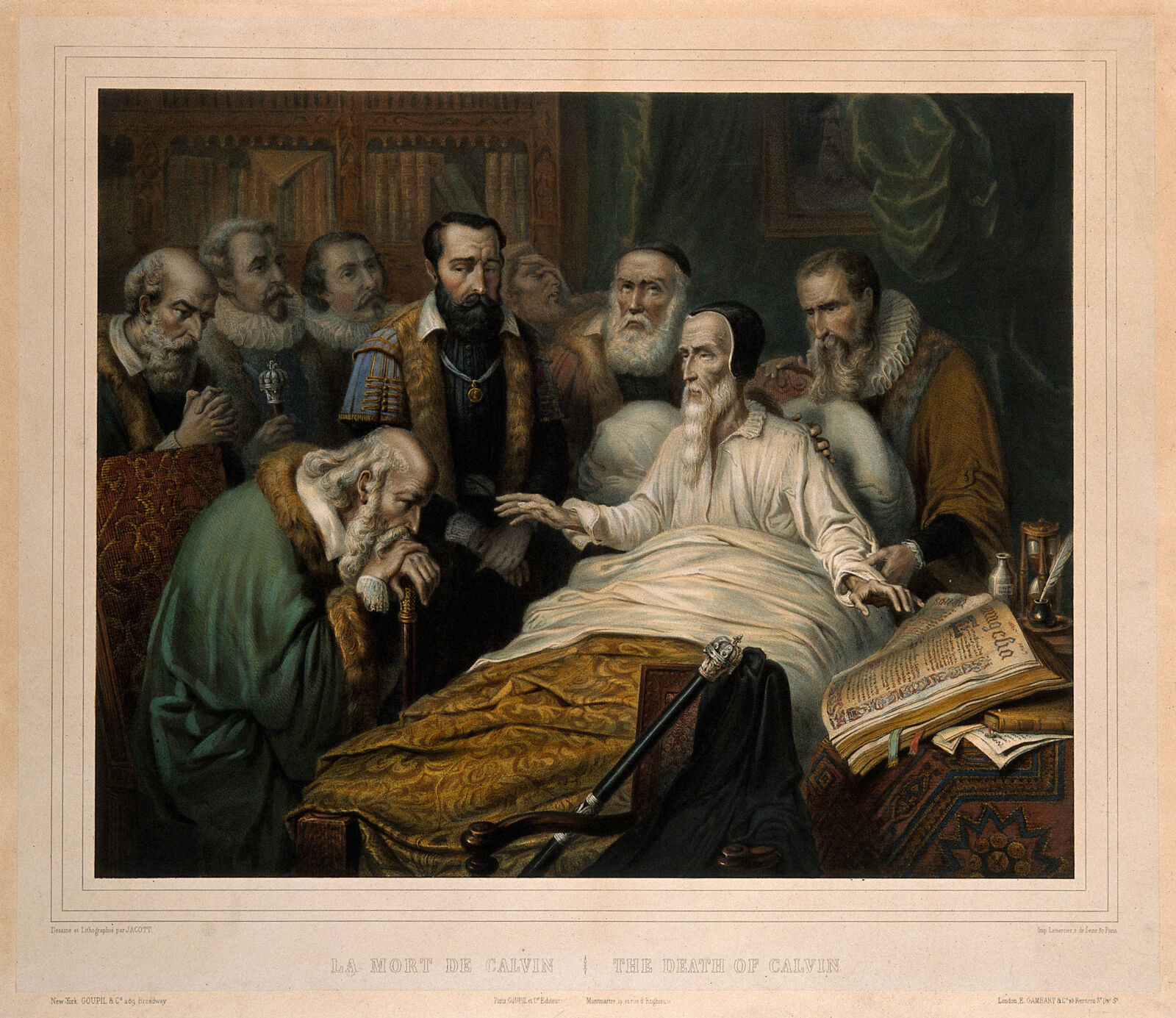
Colour lithograph titled 'La Mort de Calvin / The Death of Calvin'. An elderly bearded man in a white nightshirt lies in bed, gesturing with one hand, while about eight men in period dress with ruffs and fur-trimmed robes gather around him. One man in green kneels at the bed's edge, and an open book and hourglass rest on a table at right.Painting

Secondary source

The Death of Calvin

Jean-Julien Jacott · 1850

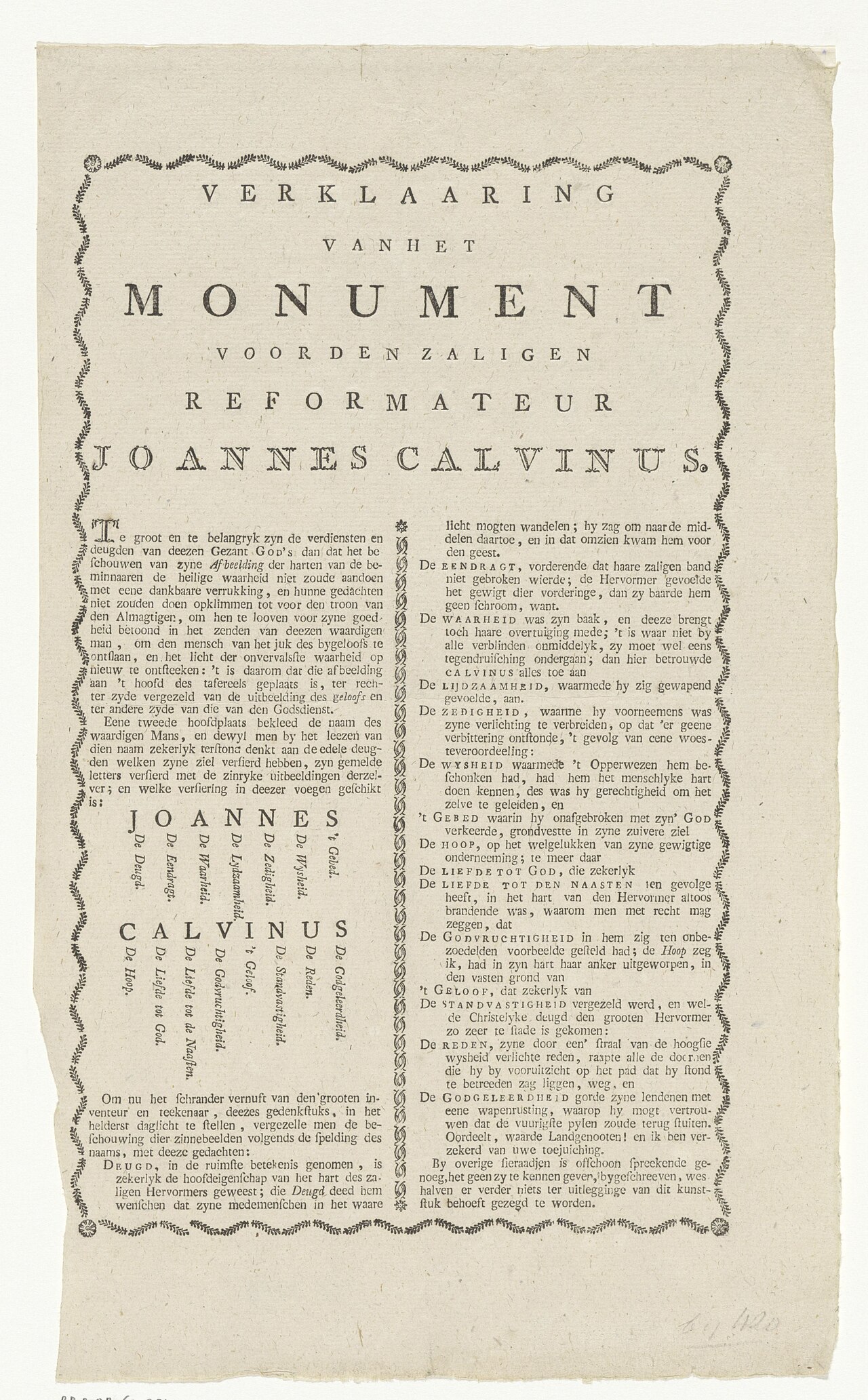
Printed explanatory text sheet titled 'Verklaaring van het Monument voor den Zaligen Reformateur Joannes Calvinus' in two columns of Dutch text with a decorative border, with allegorical figure labels listed in the middle.Document

Secondary source

Explanatory Text for the Monument to Calvin Print

1791

Book

Tertiary source

Calvin, John (Encyclopedia Americana, 1920)

Charles H. Parkhurst · 1920

Book

Secondary source

The Reformation in Europe in the Time of Calvin, vol. 1

J. H. Merle d'Aubigné · 1863

Book

Secondary source

Cambridge Modern History, Vol. II, Chapter IX: The Reformation in France

1912

Book

Secondary source

Servetus and Calvin: A Study of the Early Reformation

Robert Willis

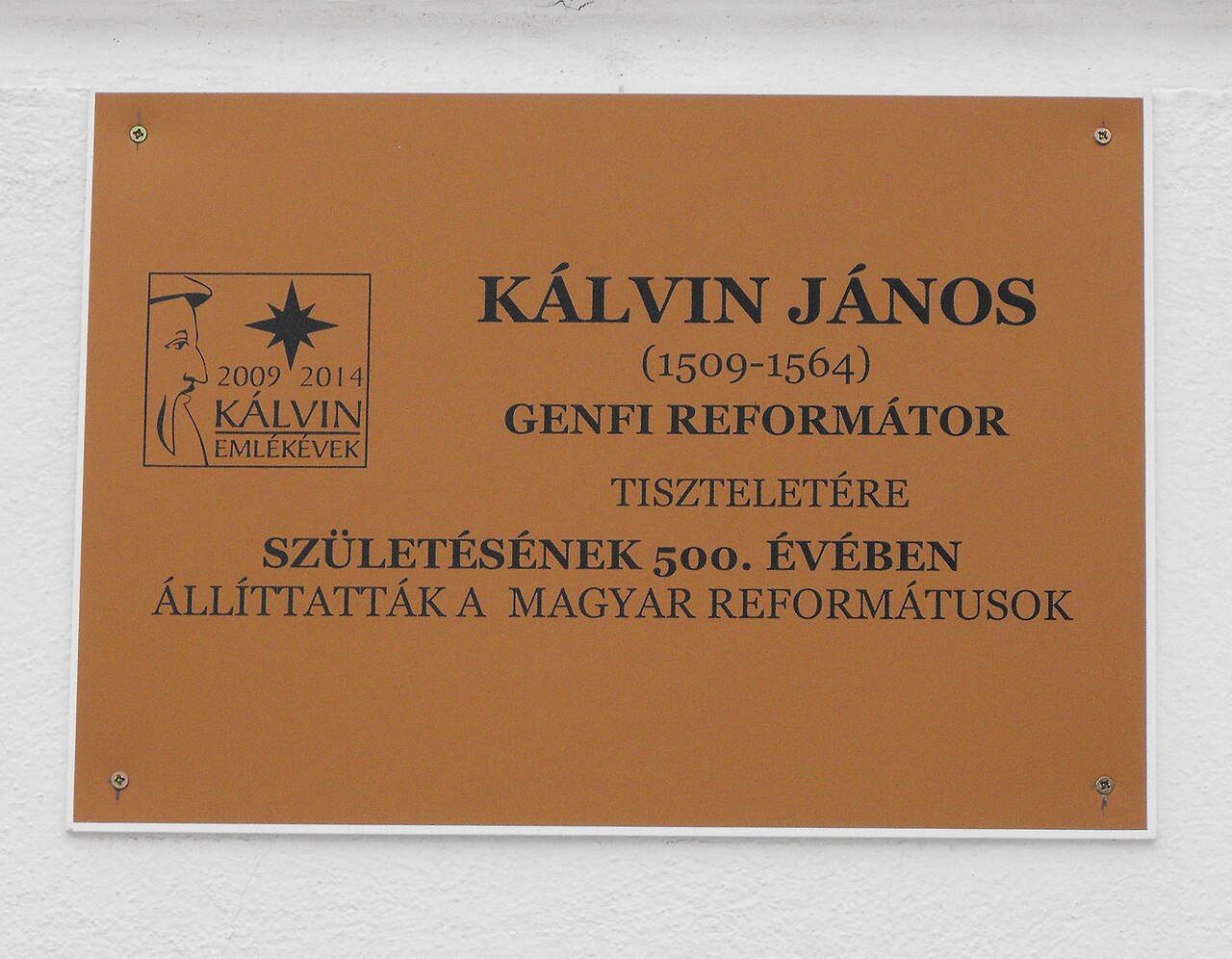
A bronze-brown rectangular memorial plaque mounted on a white wall with four corner screws. Hungarian text reads Kálvin János, 1509-1564, Genfi reformátor, honoring him for the 500th year of his birth. A small Kálvin Emlékévek 2009-2014 logo appears at left.Sculpture

Secondary source

Memorial tablet to John Calvin in Makó

Burrows · 22 February 2010

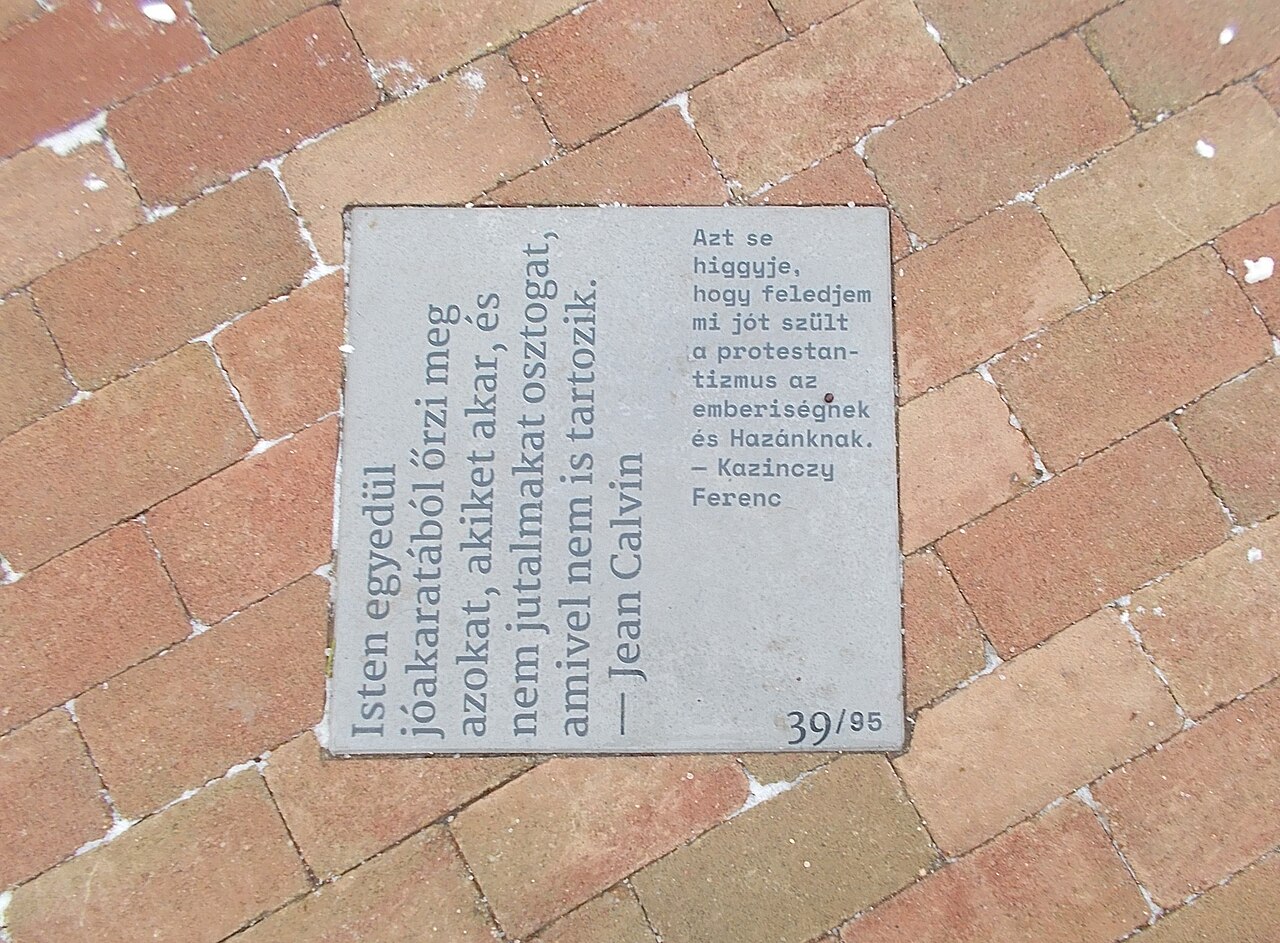
Square grey stone plaque set into a brick paved floor. Left side has Hungarian text attributed to Jean Calvin; right side has smaller Hungarian text attributed to Ferenc Kazinczy. Number 39/95 in the lower right corner.Sculpture

Secondary source

Plaque with quotations by Calvin and Kazinczy, Budapest

Globetrotter19 · December 2018

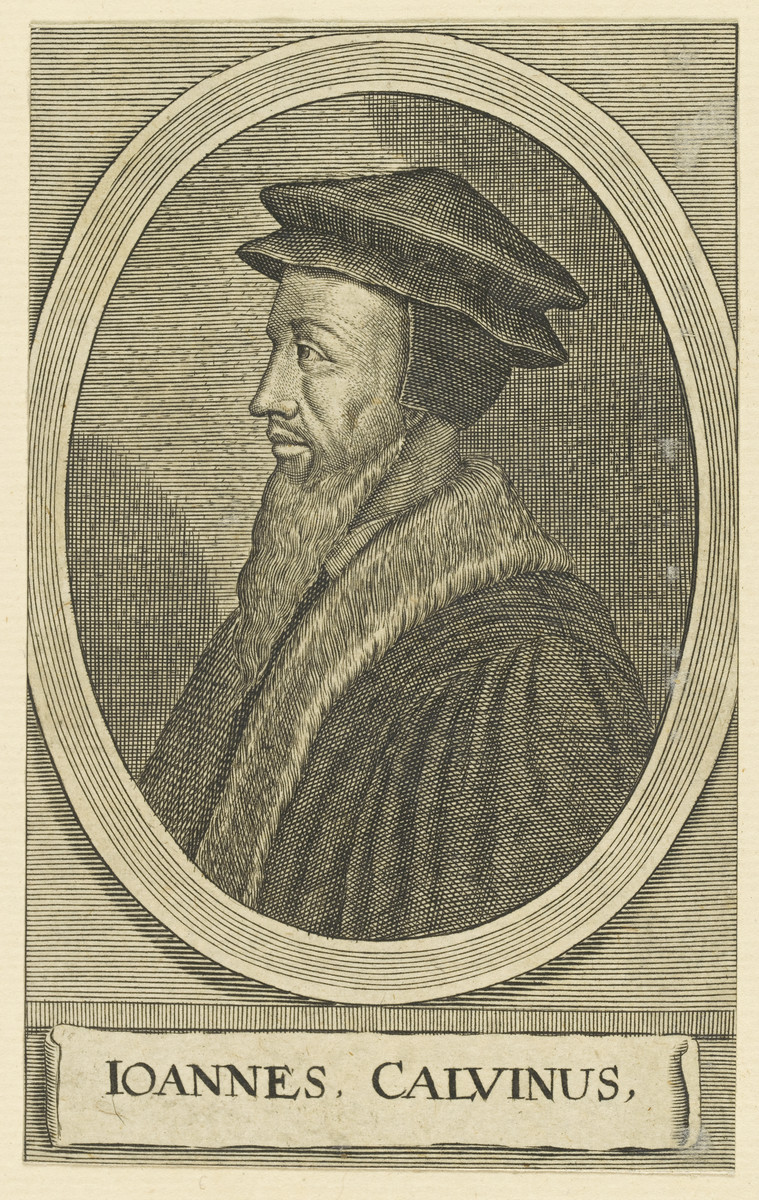
Engraved oval portrait of a bearded man in profile facing left, wearing a flat brimmed cap and a fur-collared robe. An oval frame surrounds him, with the Latin inscription IOANNES CALVINUS on a plaque below.Painting

Secondary source

Portrait of Ioannes Calvinus

Documentary

Secondary source

Audio reading of Calvin's Institutes, Book I, chapter 1

Onagrus · 23 November 2024

Black and white engraved portrait of a bearded man in a dark cap and fur-trimmed robe, looking to the right, with hands resting at the bottom of the frame. This is a print illustrating the Swedish encyclopedia entry for Johannes Calvin.Painting

Tertiary source

Johannes Calvin, Swedish encyclopedia entry with portrait

Oval engraved portrait of a bearded man in a dark cap and fur-trimmed dark robe with a white collar, facing right. Below the oval are the captions 'CALVIN', 'From a Print engraved by C. Dankerts', and a publisher line referring to the Society for the Diffusion of Useful Knowledge.Painting

Secondary source

Steel engraved portrait of Calvin by Thomas Woolnoth, 1853

Thomas A. Woolnoth · 1853

Want the full shelf? Chat with John Calvin in the app and open the Sources panel — every quote links back to the original.

Use John Calvin in class

1 collection

A ready-made collection from the Humy team that features John Calvin. Preview it, then try it free.

Trusted by educators worldwide

Conversations
375,000+
Real exchanges between students and historical figures
Messages exchanged
4,142,000+
Across every figure, classroom and language
Historical figures
100,000+
Each informed by a curated biography and selected sources
Languages supported
50+
From English and Spanish to Arabic and Korean

Paying customers

Used by 98 schools and universities

Partner school logo
Tecnológico de Monterrey logo
Hyper Island logo
Partner school logo
Chambersburg Area School District logo
Broward County Public Schools logo
Nebo School District logo
National Louis University logo
South Florida PBS logo
Punahou School logo
University of Wisconsin–River Falls logo
Partner school logo
Partner school logo
Archbishop Mitty High School logo
Kingsburg High School logo
Norwalk Public Schools logo
Partner school logo
Connections logo
Partner school logo
Moore Public Schools logo
Partner school logo
Partner school logo
Partner school logo
Partner school logo
Robbinsville Public Schools logo
Partner school logo
Partner school logo
Partner school logo
Tecnológico de Monterrey logo
Hyper Island logo
Partner school logo
Chambersburg Area School District logo
Broward County Public Schools logo
Nebo School District logo
National Louis University logo
South Florida PBS logo
Punahou School logo
University of Wisconsin–River Falls logo
Partner school logo
Partner school logo
Archbishop Mitty High School logo
Kingsburg High School logo
Norwalk Public Schools logo
Partner school logo
Connections logo
Partner school logo
Moore Public Schools logo
Partner school logo
Partner school logo
Partner school logo
Partner school logo
Robbinsville Public Schools logo
Partner school logo
Partner school logo

What educators are saying

“We enjoyed the program last year and used it frequently.”
“My students say it’s a welcome change of pace. I’m not a fan of the “sage on the stage” model, so I try to incorporate research-oriented and self-paced activities. With Humy, students have to take charge of their learning. They’ve become more adept at critical thinking, forming better questions, and improving their reading comprehension. The interview feature has been my go-to tool. I create assignments where students must ask historical figures a set number of questions, then summarize the responses to ensure they’re truly absorbing the material. This approach lets them actively explore the past rather than passively consuming information.”
“Humy has helped me bring historical figures, sometimes long past, to life. When my students interact with these figures in real-time, it eliminates some of the perceived “ancient” characteristics of my curriculum. This has shifted my students’ thinking away from viewing history as abstract or irrelevant. Real-time interactions make historical figures relatable, even allowing students to ask off-topic questions that help put historical lives in a more relevant context for 13-year-olds. The feature I use the most is the interview feature. After teaching a topic, most recently Gandhi and Joan of Arc, I have the students ask pointed, focused questions. We practice good conversation techniques beforehand, teaching them to listen (or read) carefully and formulate thoughtful follow-up questions rather than just interrogating. It helps students practice effective conversation skills.”

FAQ

Frequently asked questions

Who is John Calvin?
Influential Protestant theologian and key figure in the development of Calvinism. On Humy.ai you can chat with an AI version of John Calvin that draws on a short biography and 81 historical sources during the conversation — by text or voice, in 42 languages.
Is John Calvin AI free?
John Calvin is part of Humy's full library of more than 100,000 figures, which comes with a paid plan. A free account (no credit card) includes 20 AI messages a month with the free library's figures, so you can try how the conversations work first. The free plan's 20 AI messages a month are shared by you and your students: enough to try Humy yourself; a whole class needs Plus.
What sources does the John Calvin AI use?
It draws on a short biography and 81 historical sources (books, paintings and artifacts), including “Institutes of the Christian Religion”, “Geneva Catechism” and “Genevan Psalter”. Each source has its own page on Humy.ai.
How historically accurate is the AI version of John Calvin?
Each figure uses a short biography and a small set of selected historical sources as context (retrieval-augmented generation), so answers stay closer to known material than the model's general knowledge alone. It isn't a citation-grade research tool — like any LLM, the AI can get details wrong or extrapolate. Treat it as a strong starting point for inquiry and cross-reference important claims.
Can I talk to John Calvin by voice?
Yes. In addition to text chat, you can call John Calvin and hear their voice respond in real time — useful for auditory learners, interview practice and Socratic dialogue.
Is Humy.ai safe and compliant for schools?
Yes. Humy.ai is used by more than 100 schools, universities and organisations. The platform is FERPA- and GDPR-aligned, supports SSO, and offers an IT-approval pack tailored for school procurement teams.

Ready when you are

Start chatting with John Calvin now.

20 messages free · No credit card · Available in 50+ languages.