Portrait of Mahatma Gandhi

AI Historical Figure

Mahatma Gandhi

Leader of the Indian independence movement through nonviolent civil disobedience.

Chat with Mahatma Gandhi via text or voice — in 42 languages, drawing on a curated biography and 71 historical sources. Available 24/7.

Start chatting with Mahatma Gandhi20 messages free · No credit card
Lived
1869–1948
From
India
Known for
Politics & governmentPhilosophy
Mahatma Gandhi

Mahatma Gandhi

Online · responds in seconds

Hello — I'm Mahatma Gandhi. Leader of the Indian independence movement through nonviolent civil disobedience. What would you like to ask me?

20 messages free · No credit card · Powered by Humy.ai

Live preview · Switch between 42 languages above · Send a message to continue in the app

Multilingual

Talk to Mahatma Gandhi in 42 languages

Ask Mahatma Gandhi questions in any language below, and the rest of Humy's app speaks it too. Pick yours to open the chat in that language.

Also in German (Austria), German (Switzerland), English (UK), English (Australia), English (Canada).

The sources behind this AI

71 sources · 18 books · 12 documents · 11 photographs · 8 letters · 7 artifacts · 5 speeches · 4 paintings · 3 interviews · 2 newspaper articles · 1 news clip

Mahatma Gandhi doesn’t improvise from thin air. The AI is grounded in 71 curated historical sources students can inspect. Open any of them to see what informs the conversation.

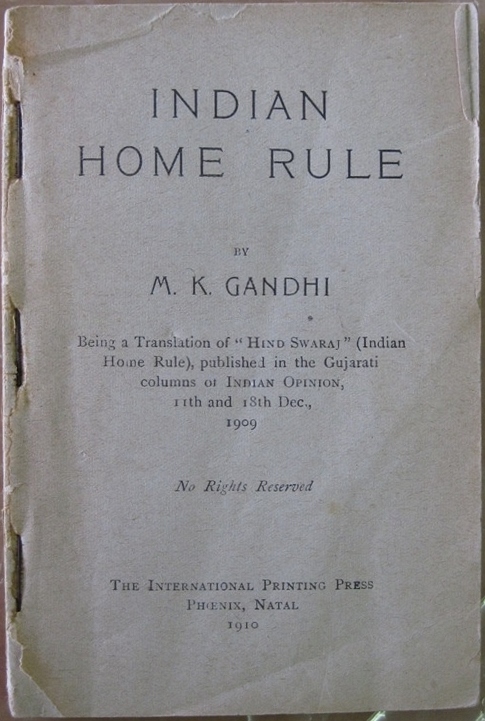
Cover of the 1910 English edition of Indian Home Rule by M. K. Gandhi, a translation of Hind Swaraj, printed by the International Printing Press in Phoenix, Natal. Text reads 'No Rights Reserved'.Book

Primary source

Hind Swaraj

Mahatma Gandhi · 1909

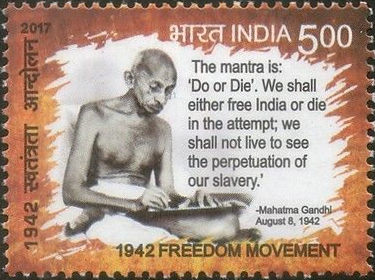
Indian postage stamp marked INDIA 500 and 2017, titled 1942 FREEDOM MOVEMENT. It shows a black-and-white portrait of Mahatma Gandhi seated, bare-chested and wrapped in a cloth. Beside him is a quotation: 'The mantra is: Do or Die. We shall either free India or die in the attempt; we shall not live to see the perpetuation of our slavery.' Attributed to Mahatma Gandhi, August 8, 1942.Speech

Primary source

Quit India speech

Mahatma Gandhi · 8 August 1942

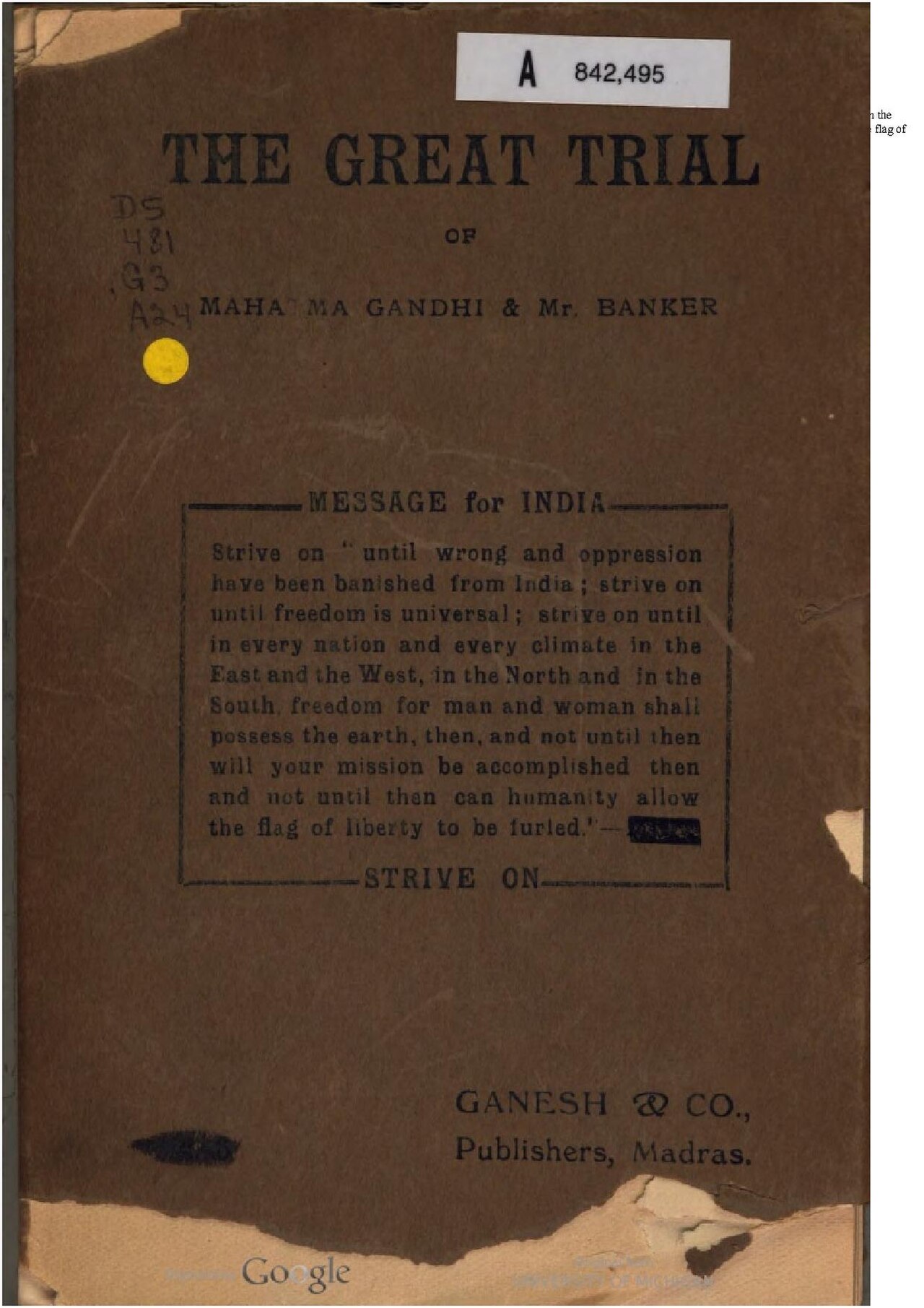
Cover of a brown paper pamphlet titled 'The Great Trial of Mahatma Gandhi & Mr. Banker'. A white library label reads A 842,495. A boxed 'Message for India' quote is printed in the middle. The publisher is Ganesh & Co., Madras. The cover is torn at the edges and has a yellow dot and a Google watermark at the bottom.Document

Primary source

Great Trial of 1922

March 1922

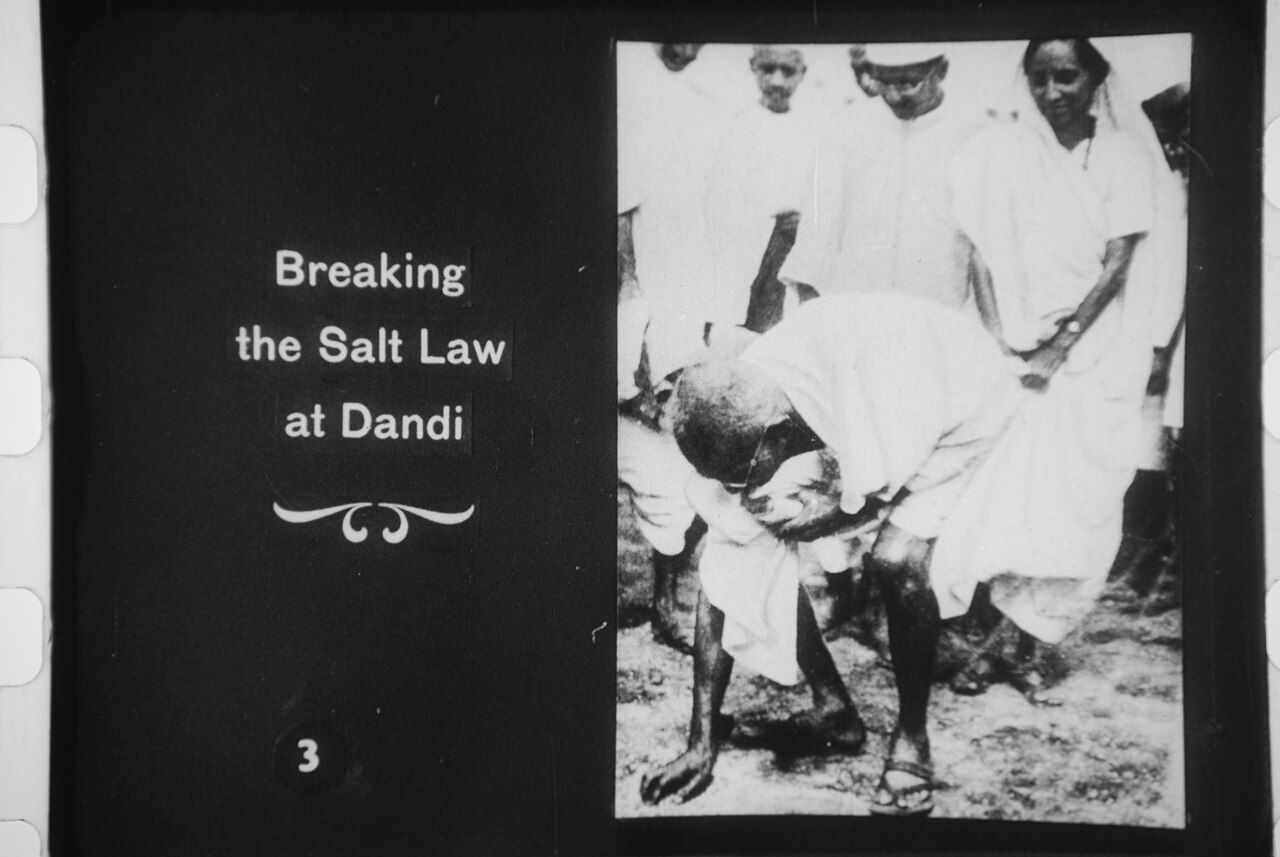
Black-and-white film frame. On the left, title card reads 'Breaking the Salt Law at Dandi' with the number 3. On the right, a photo shows a bent-over man in light clothing picking up salt from the ground, with people in white standing behind him.Photograph

Primary source

Photograph of Gandhi picking up salt at Dandi

Unknown press photographer · 6 April 1930

Speech

Primary source

Spiritual Message to the World

Mohandas K. Gandhi · 17 October 1931

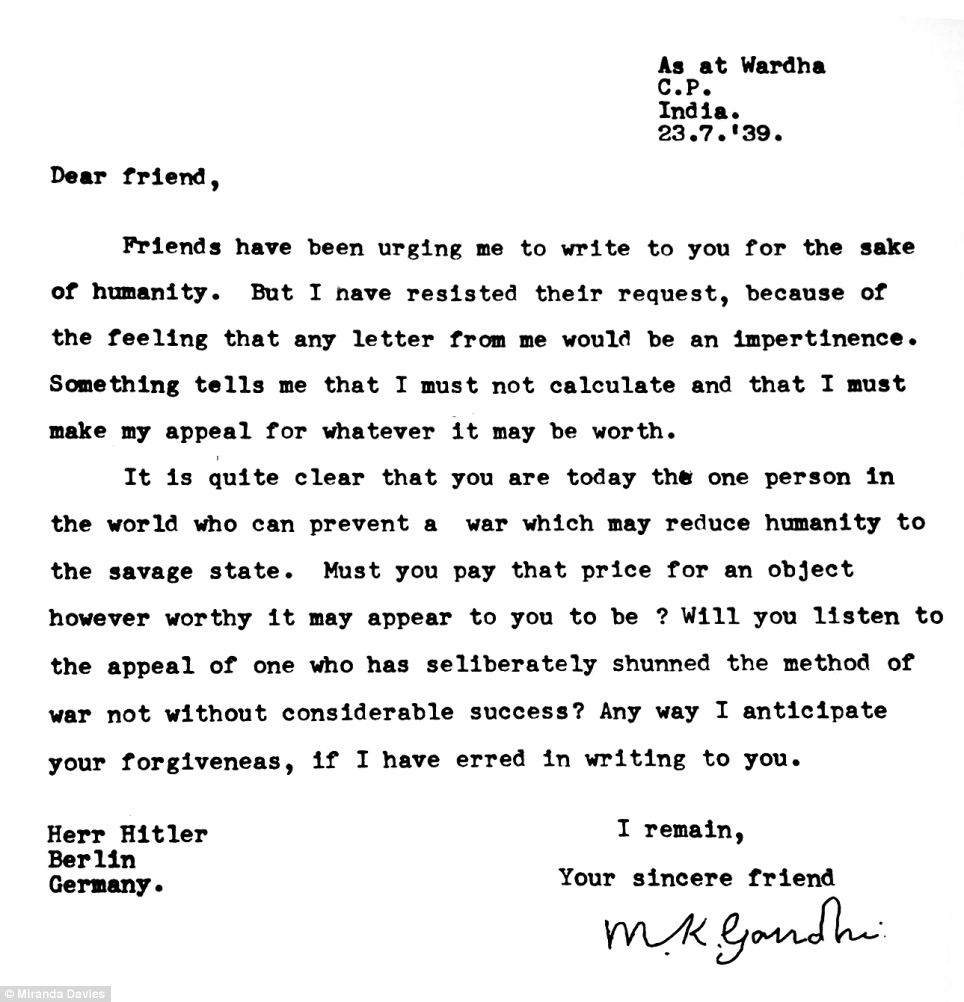
Typed letter dated 23.7.39 from Wardha, C.P., India, addressed 'Dear friend' to Herr Hitler, Berlin, Germany, appealing for peace. Signed in ink 'M.K. Gandhi' with 'Your sincere friend' above the signature.Letter

Primary source

Gandhi to Hitler

Mohandas K. Gandhi · 23 July 1939

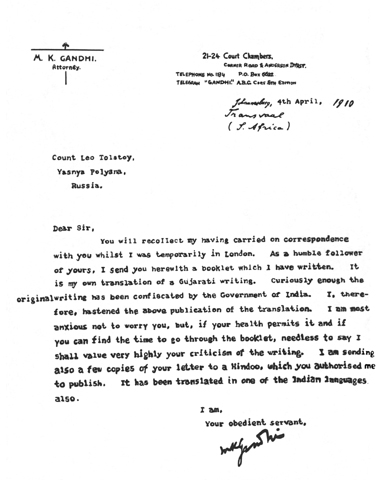
Typed letter on letterhead of M. K. Gandhi, Attorney, 21-24 Court Chambers, dated Johannesburg (Transvaal) 4th April 1910, addressed to Count Leo Tolstoy, Yasnya Polyana, Russia. Signed in handwriting by Gandhi.Letter

Primary source

Correspondence between Tolstoy and Gandhi

Mahatma Gandhi · 1909–1910

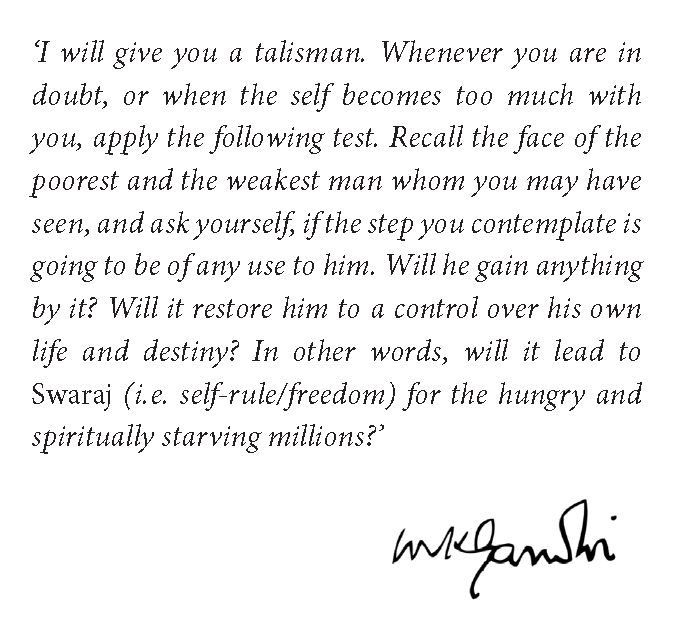
Typeset quotation in italic serif type reading 'I will give you a talisman...' ending with 'will it lead to Swaraj (i.e. self-rule/freedom) for the hungry and spiritually starving millions?' with a handwritten signature 'M.K. Gandhi' at lower right. This is a printed reproduction of the text, not the manuscript itself.Document

Primary source

Gandhi's Talisman

Mohandas K. Gandhi · 1947

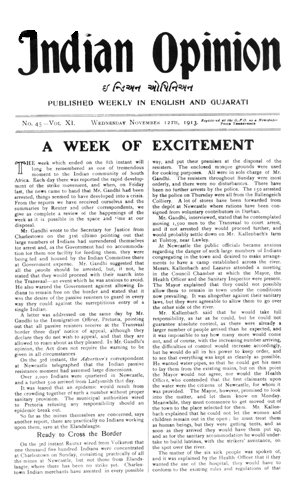
Front page of the newspaper Indian Opinion, published Wednesday, November 1913 (Vol. XI, No. 45), with the masthead 'Indian Opinion' in large black letters and the subtitle 'Published Weekly in English and Gujarati'. The main headline reads 'A Week of Excitement', followed by dense columns of newsprint text.Newspaper article

Primary source

Indian Opinion

Mohandas Gandhi, M. H. Nazar, Madanjit Viyavaharik · 1903–1961 (issue shown: 12 November 1913)

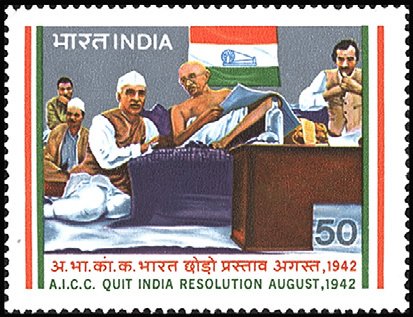
Postage stamp of India, value 50, showing a painted scene of men seated around a wooden desk under the Indian flag, with a man in a white dhoti reclining on a bed-like seat. Text reads in Hindi and English: AICC Quit India Resolution August 1942.Document

Secondary source

Quit India Resolution

All India Congress Committee · 8 August 1942

Interview

Primary source

Fox Movietone Interview with Gandhi

Fox Movietone News · 30 April 1931

Book

Primary source

Sarvodaya

Mahatma Gandhi · 1908

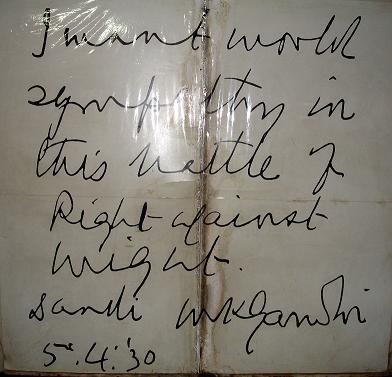
Handwritten manuscript on cream paper, behind glass or plastic sheeting, reading in cursive: 'I want world sympathy in this battle of Right against Might.' Signed 'Mahatma Gandhi' and dated '5.4.30' at the bottom.Document

Primary source

I Want World Sympathy in This Battle of Right Against Might

Mahatma Gandhi · 5 April 1930

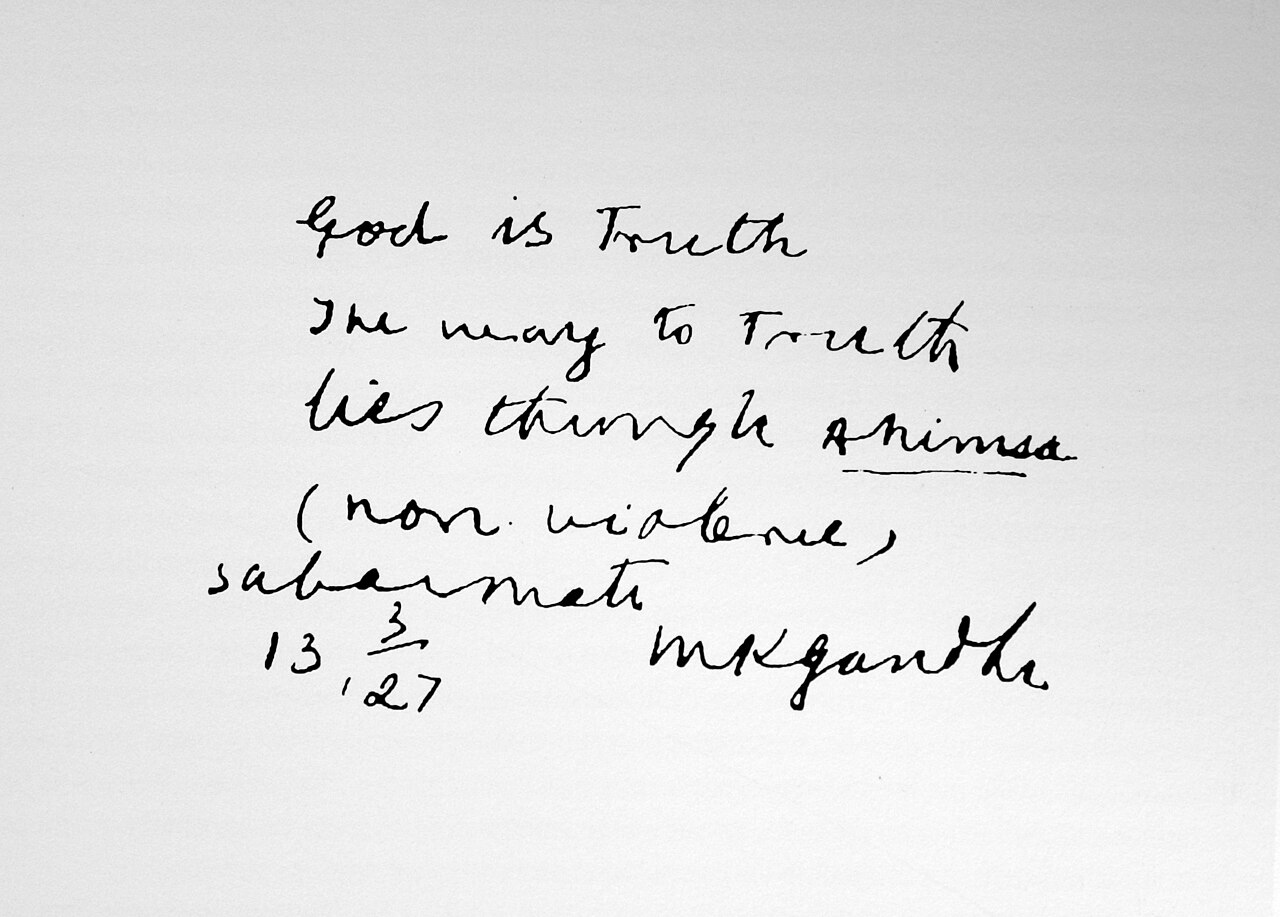
Handwritten manuscript in black ink on white paper reading: 'God is Truth / The way to Truth lies through Ahimsa (non-violence), Sabarmati, 13 3/27', signed 'M.K. Gandhi' in cursive at lower right.Document

Primary source

God is Truth

Mahatma Gandhi · 13 March 1927

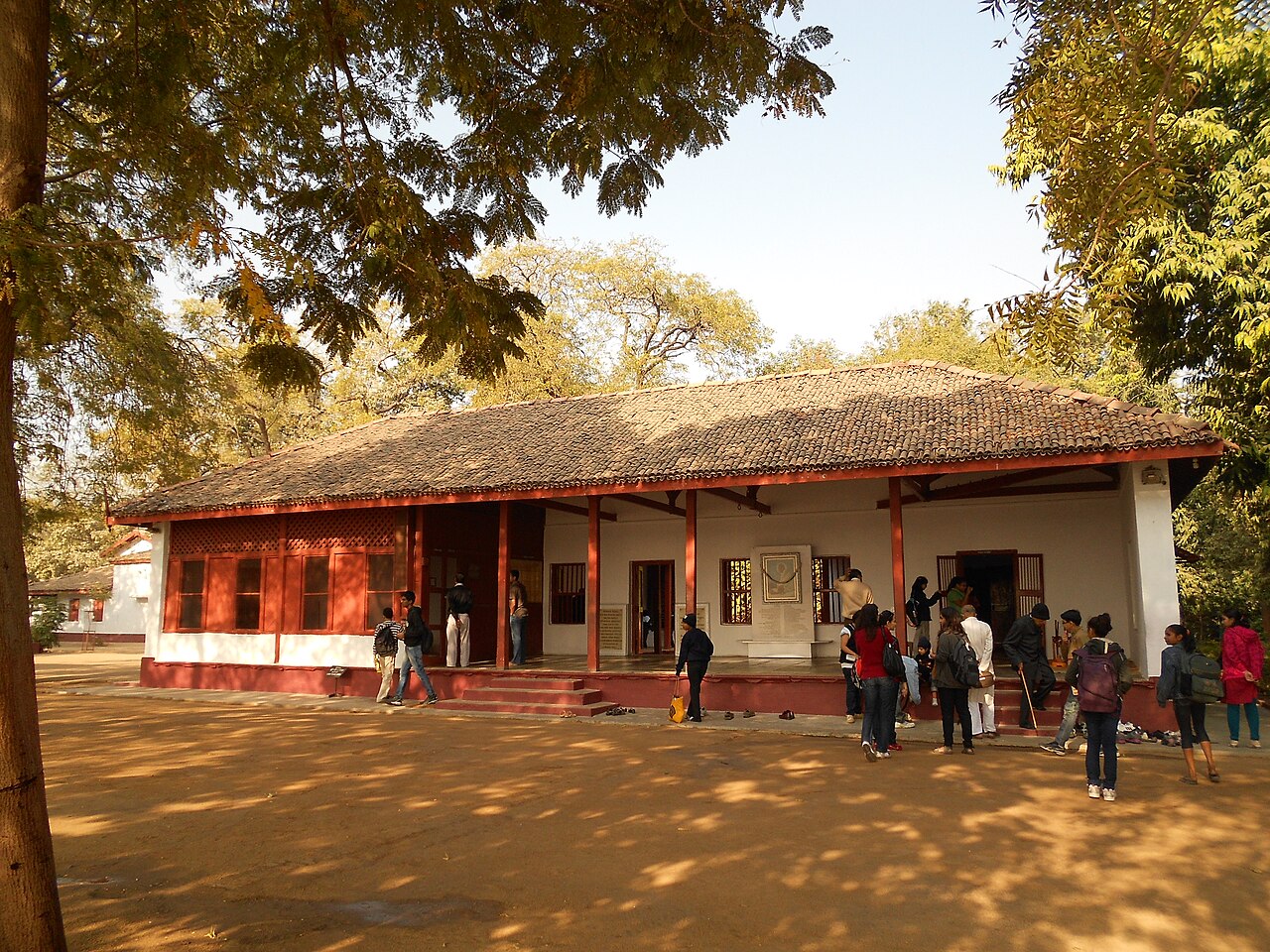
A single-storey white building with a red-trimmed veranda and a tiled roof, set in a shaded dirt courtyard. Several visitors stand and walk around the entrance and steps.Artifact

Primary source

Sabarmati Ashram

1915

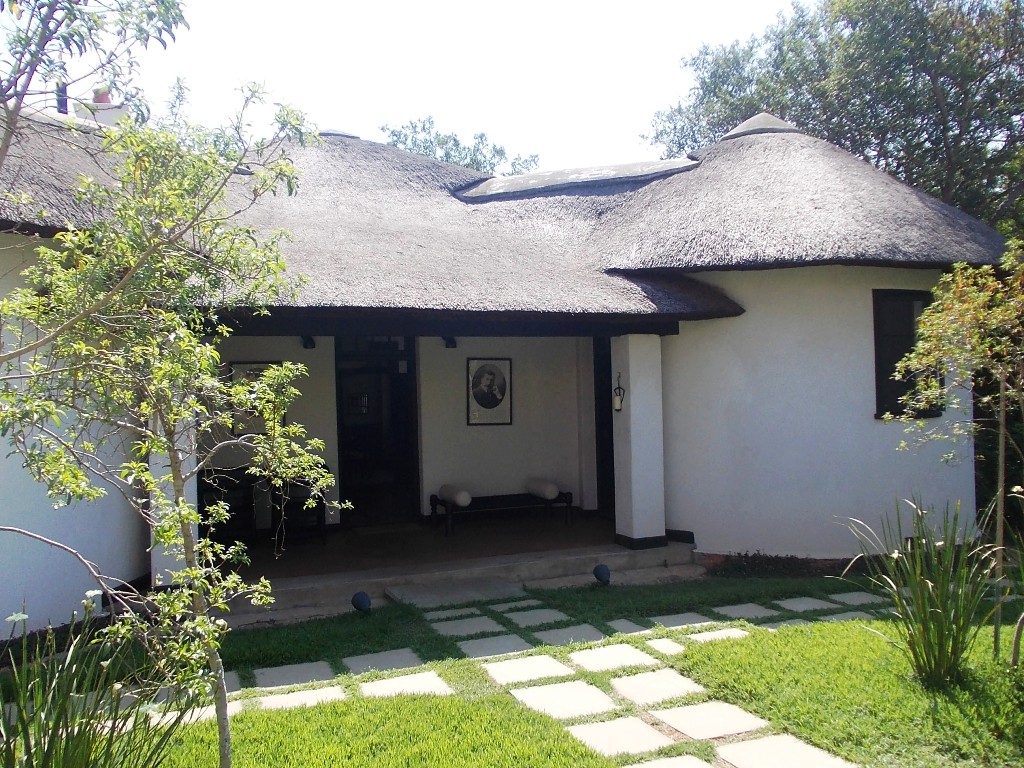
Front view of a white-walled, single-storey house with a thatched roof and dark wooden eaves, set behind a lawn with a stepping-stone path. A framed portrait hangs on the inner wall of the veranda.Artifact

Primary source

Satyagraha House

Hermann Kallenbach · 1907-1909

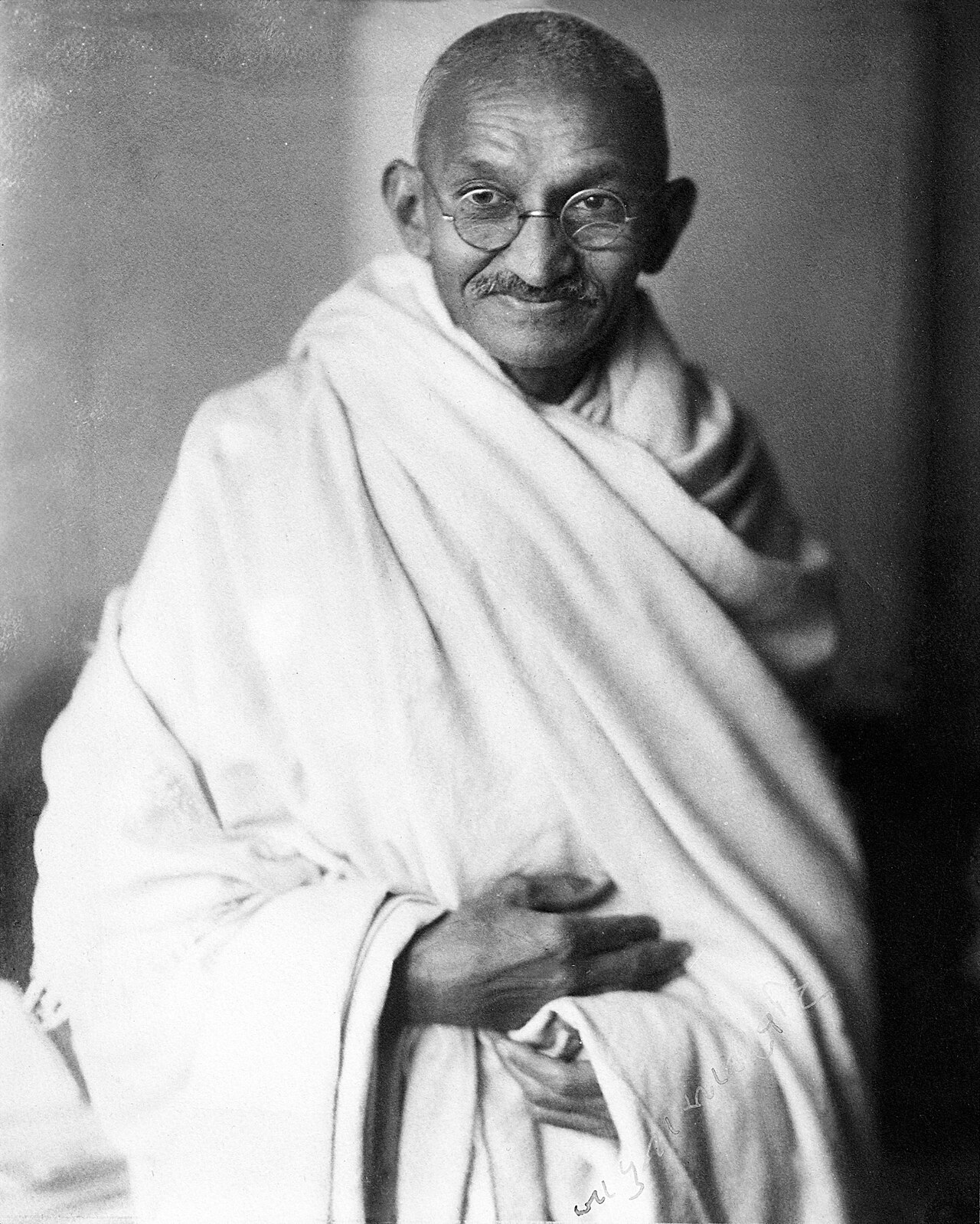
Black-and-white studio portrait of an elderly bald man with round wire-rimmed glasses and a moustache, smiling slightly, wrapped in a white draped shawl, with one hand resting on his chest. Handwritten signature in the lower right.Photograph

Primary source

Portrait of Mahatma Gandhi

1931

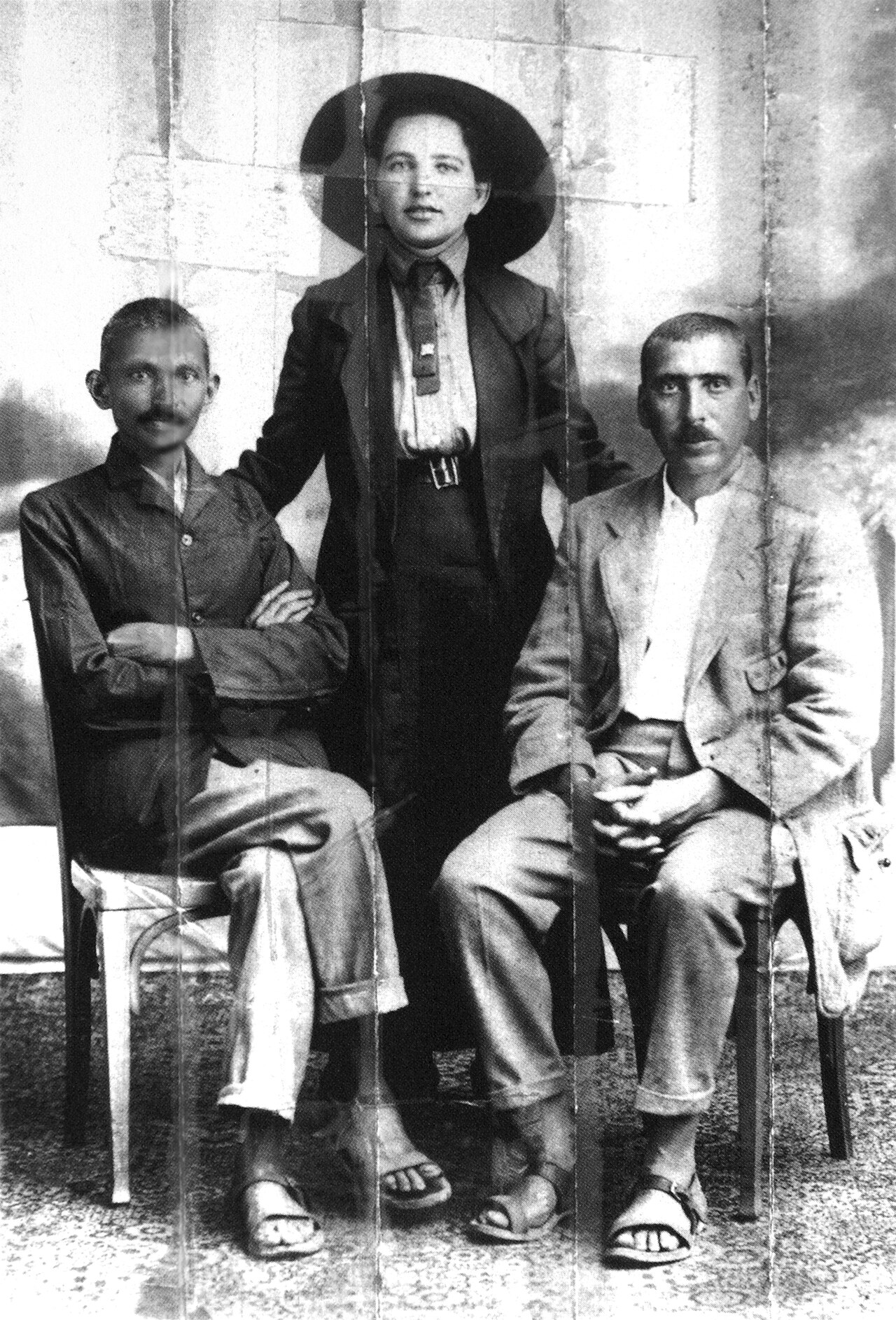
Black and white group portrait of three people seated or standing against a studio backdrop. On the left, a seated man with a mustache and folded arms wears a dark jacket. In the center, a standing woman wears a wide-brimmed hat, a jacket, a shirt with a tie, and a belt. On the right, a seated man with a mustache wears a light jacket with hands clasped. All wear sandals or open footwear on a patterned floor. The photo shows visible vertical creases.Photograph

Primary source

Gandhi, Schlesin and Kallenbach, 1913

1913

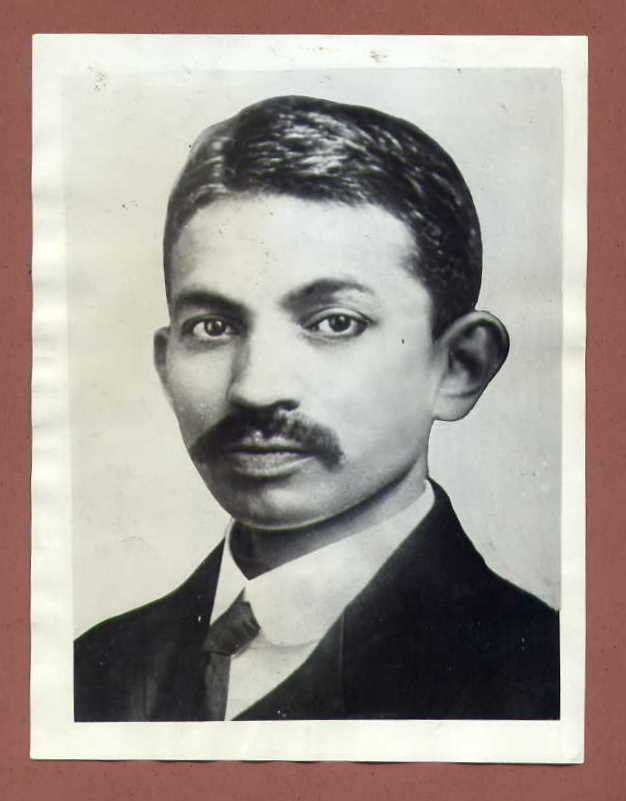
Black-and-white studio portrait of a man with short dark hair and a thick mustache, wearing a dark suit jacket, white collar and dark tie, photographed against a pale backdrop. The print has a white border on a red-brown background.Photograph

Primary source

Photograph of Gandhi as a Barrister in South Africa

c. 1905

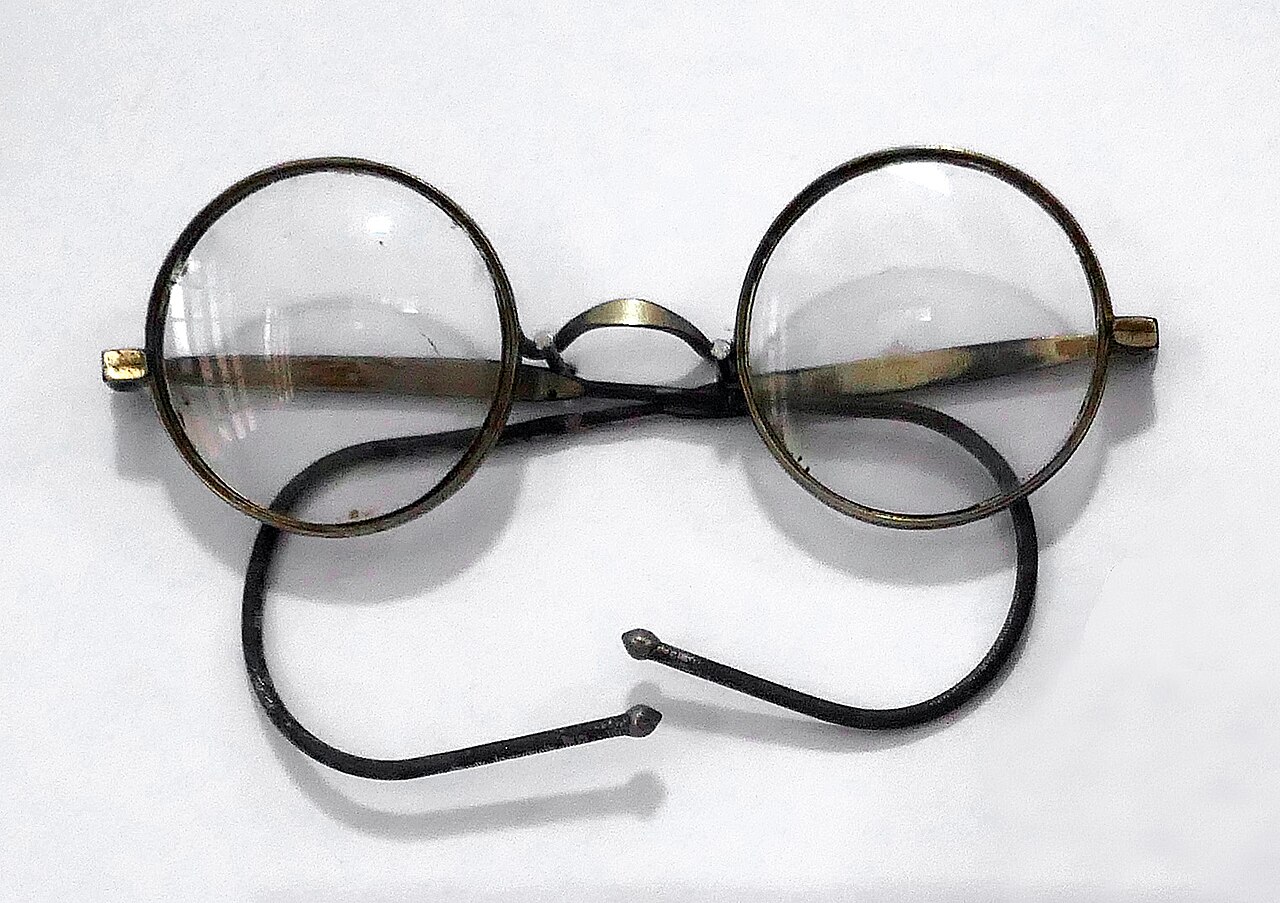
A pair of round wire-rimmed eyeglasses with thin metal frames and dark temple arms, shown folded open on a plain white background. The left arm has a gold-colored end cap; the bridge is a curved metal piece.Artifact

Primary source

Gandhi's Spectacles

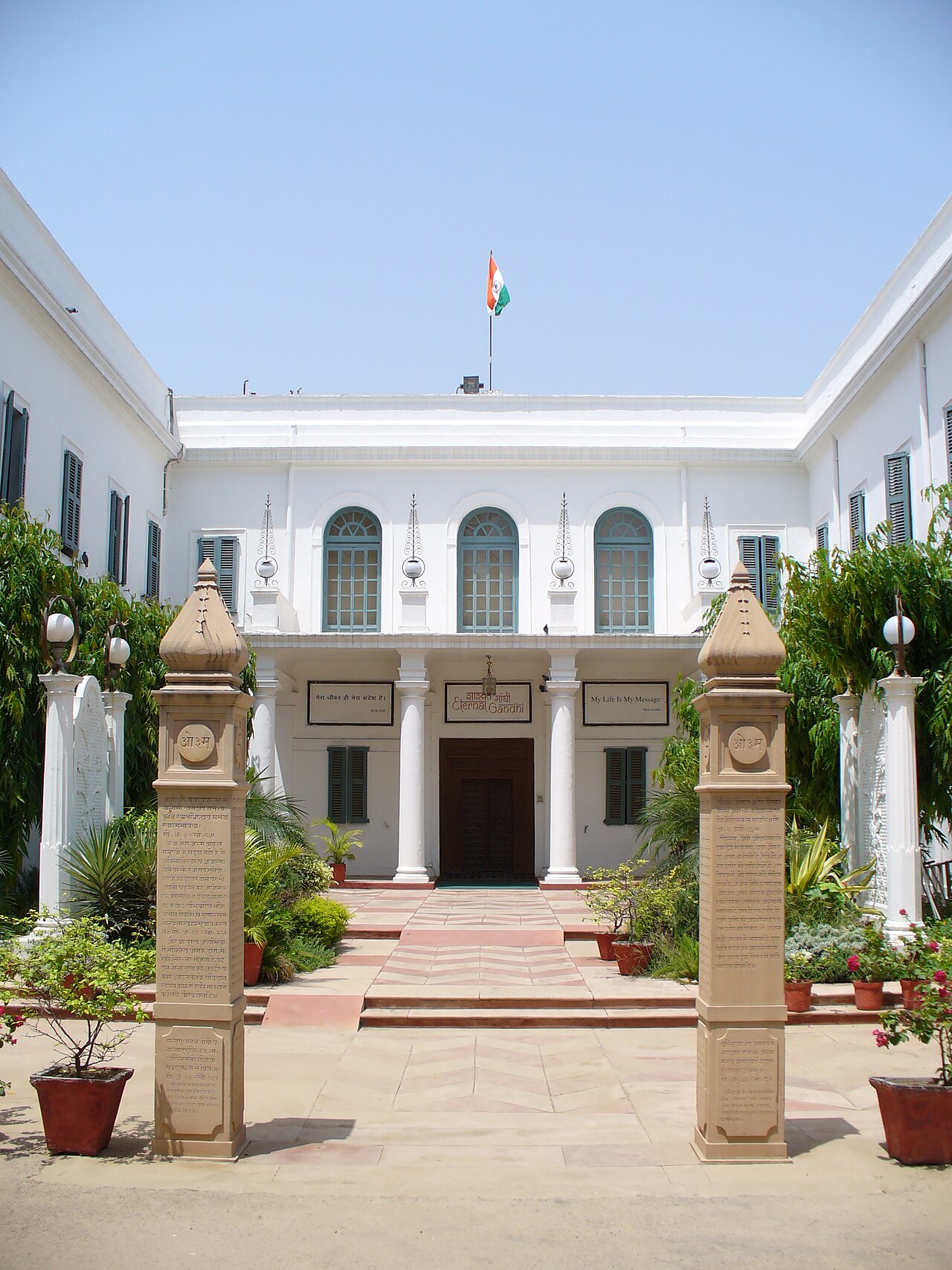
Front view of the white two-story colonial-style building Gandhi Smriti, with arched windows, white columns, a dark wooden entrance door, and an Indian flag on the roof. Two tall sandstone pillars with inscriptions stand in the foreground, flanked by green trees and potted plants under a clear blue sky.Artifact

Secondary source

Gandhi Smriti

1928; museum opened 1973

Book

Secondary source

M. K. Gandhi: Indian Patriot in South Africa

Joseph John Doke · 1909

Book

Secondary source

Mahatma Gandhi

Romain Rolland · 1930

Letter

Primary source

A Letter to a Hindu

Leo Tolstoy · 14 December 1908

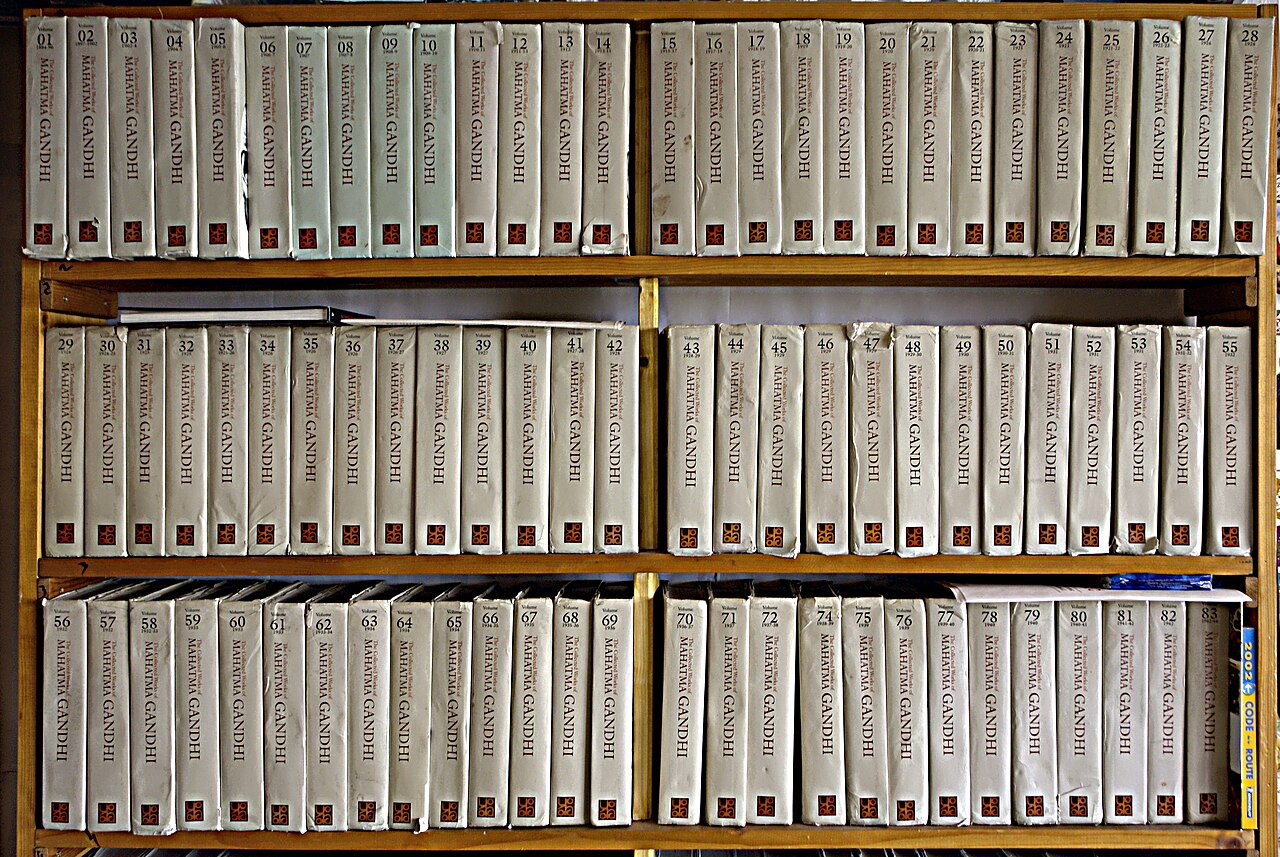
Rows of white-spined bound volumes on wooden shelves, numbered 01 to 82 visible, each labeled MAHATMA GANDHI with red square emblems at the bottom. Shelves hold a numbered multi-volume set.Book

Primary source

The Collected Works of Mahatma Gandhi

Mahatma Gandhi · 1958

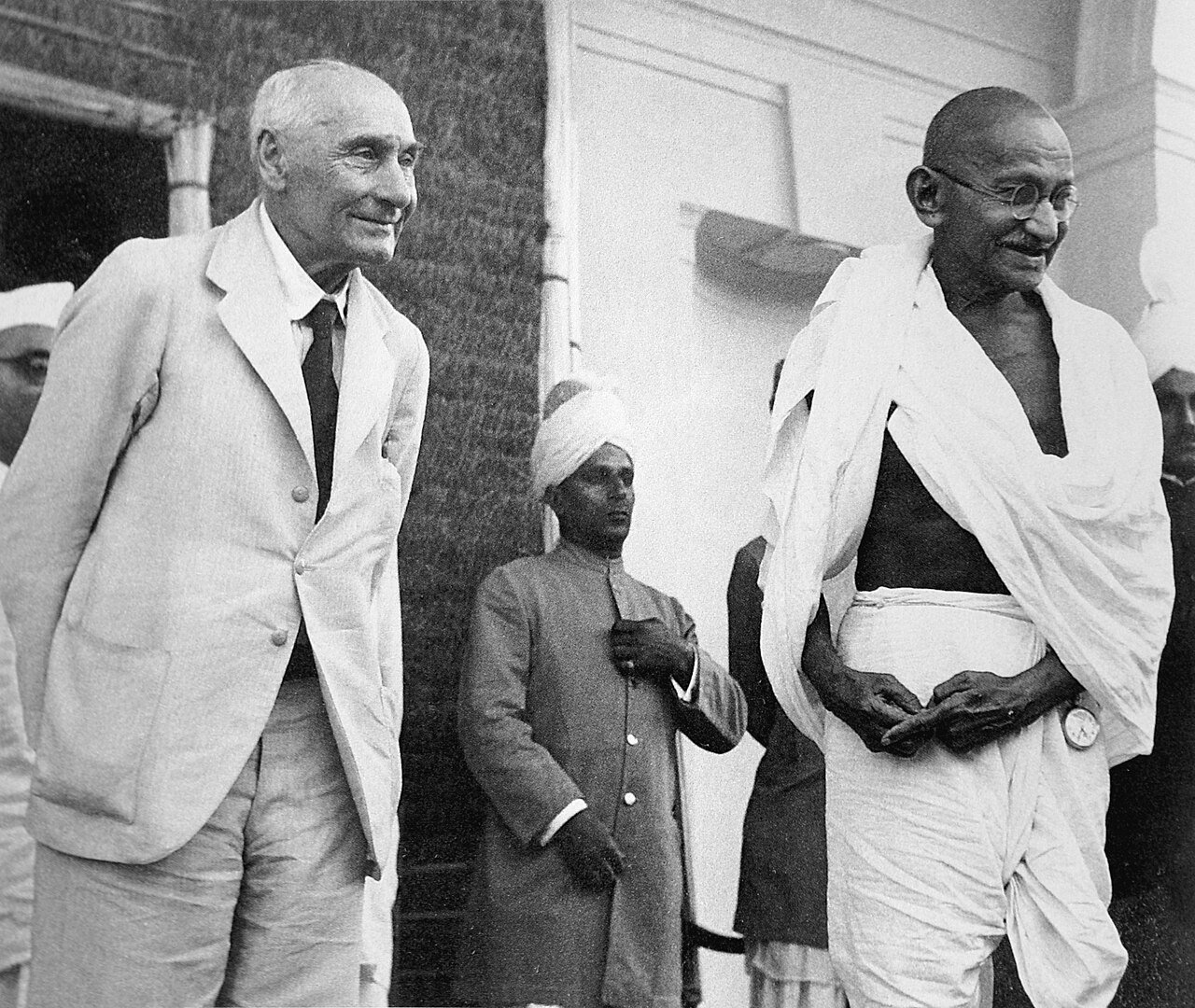
Black-and-white photograph of two men walking outdoors beside a plastered wall. On the left, an older white-haired man in a light suit and dark tie, smiling, hands behind his back. On the right, a bald man in round wire-rimmed glasses, wearing a white shawl over bare shoulders and a white dhoti, hands clasped, with a wristwatch, smiling. A man in a turban and long coat stands between them, and partial figures appear at the edges.Photograph

Primary source

Lord Pethick-Lawrence and Mahatma Gandhi

18 April 1946

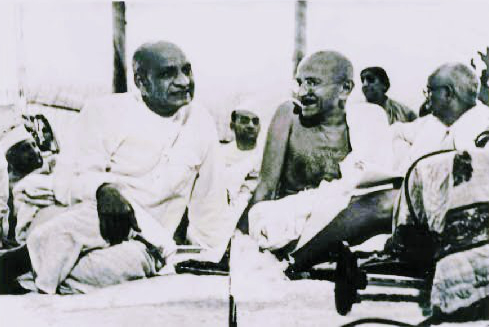
Black-and-white photograph of several men seated outdoors. On the left, a man in a white kurta sits with one hand resting on his knee. In the centre, a bald man in a light shawl sits close beside him. On the right, an older man in glasses and white clothes sits, and other men are in the background.Photograph

Primary source

Mahatma Gandhi with Sardar Vallabhbhai Patel

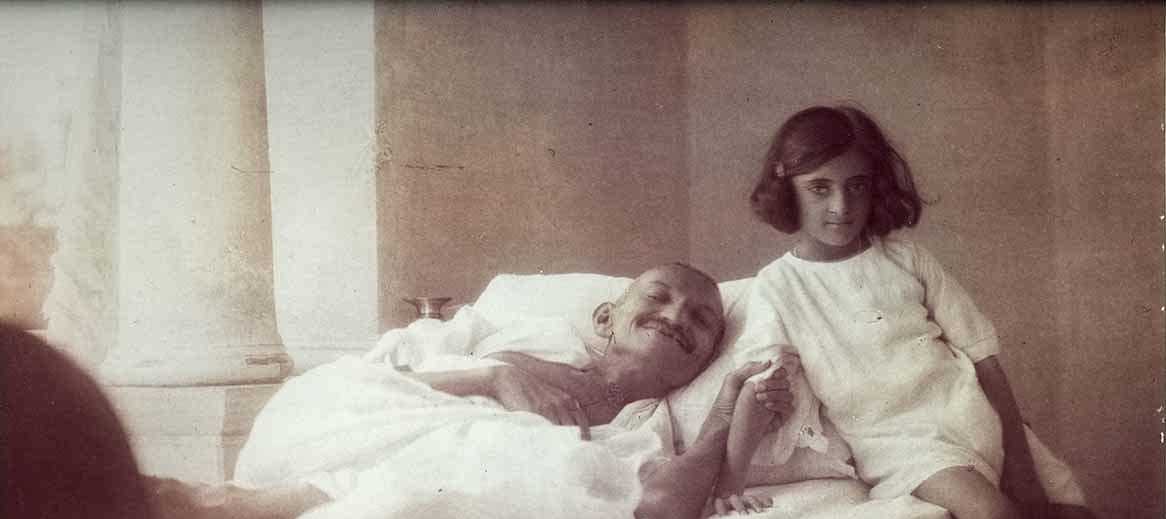
Sepia photograph of an elderly bald man lying in bed under white sheets, smiling, with a young girl with bobbed hair in a light dress sitting beside him, holding his hand. A curtain and wall are behind them.Photograph

Primary source

Mahatma Gandhi and Indira Gandhi in 1924

Unknown photographer · 1924

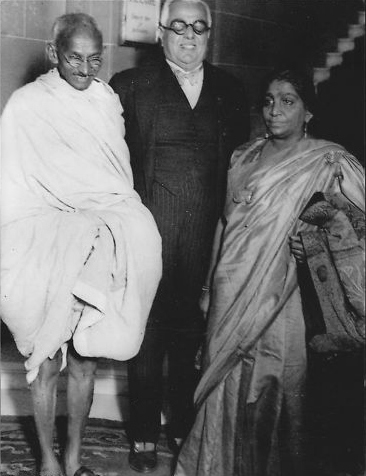
Black-and-white photograph of three people standing close together indoors near a staircase. On the left, an older man with round glasses wears a draped white shawl. In the center, a man in a dark suit and round glasses stands behind them. On the right, a woman in a light patterned sari holds a dark shawl over her arm.Photograph

Primary source

Gandhi with Aga Khan and Sarojini Naidu

Unknown author

News clip

Primary source

Photograph of Gandhi with Lancashire mill workers at Darwen

Unknown press photographer · 26 September 1931

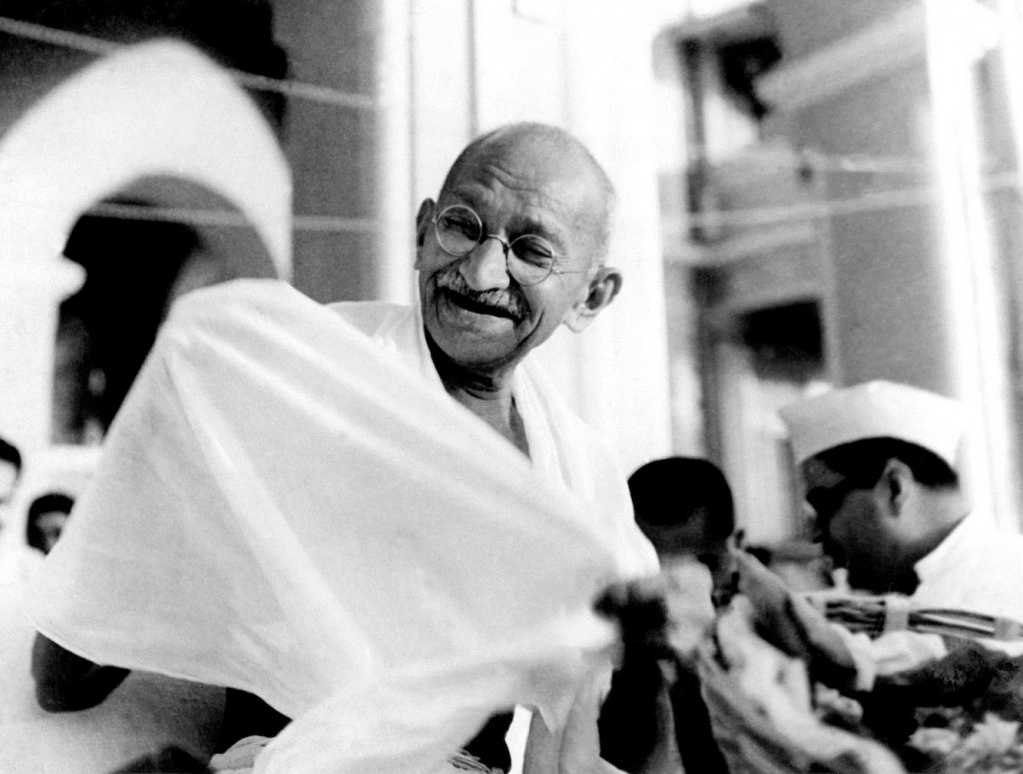
Black-and-white photograph of a smiling bald older man with round wire-rimmed glasses and a mustache, wrapped in a white shawl, laughing. Other people are blurred in the background, including a man in a white cap.Photograph

Primary source

Mahatma Gandhi laughing

Unknown author

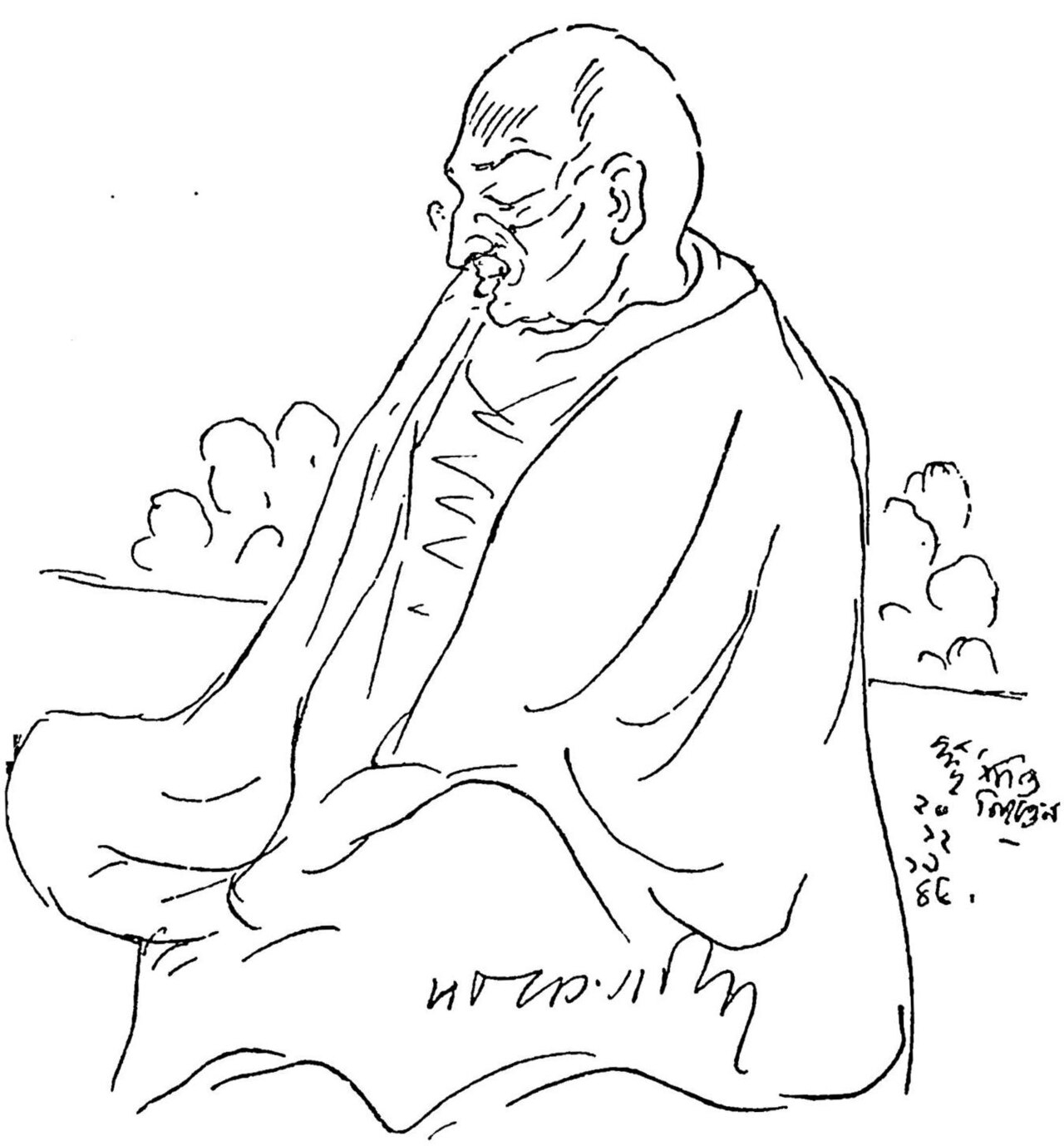
Pen-and-ink line drawing of a bald, elderly man seated cross-legged in a loose wrapped garment, eyes closed and head bowed, with his hand raised near his face. Clouds and a horizon line appear behind him. Bengali script is written in the lower right and lower center.Painting

Primary source

Gandhiji praying

Nandalal Bose · 1945

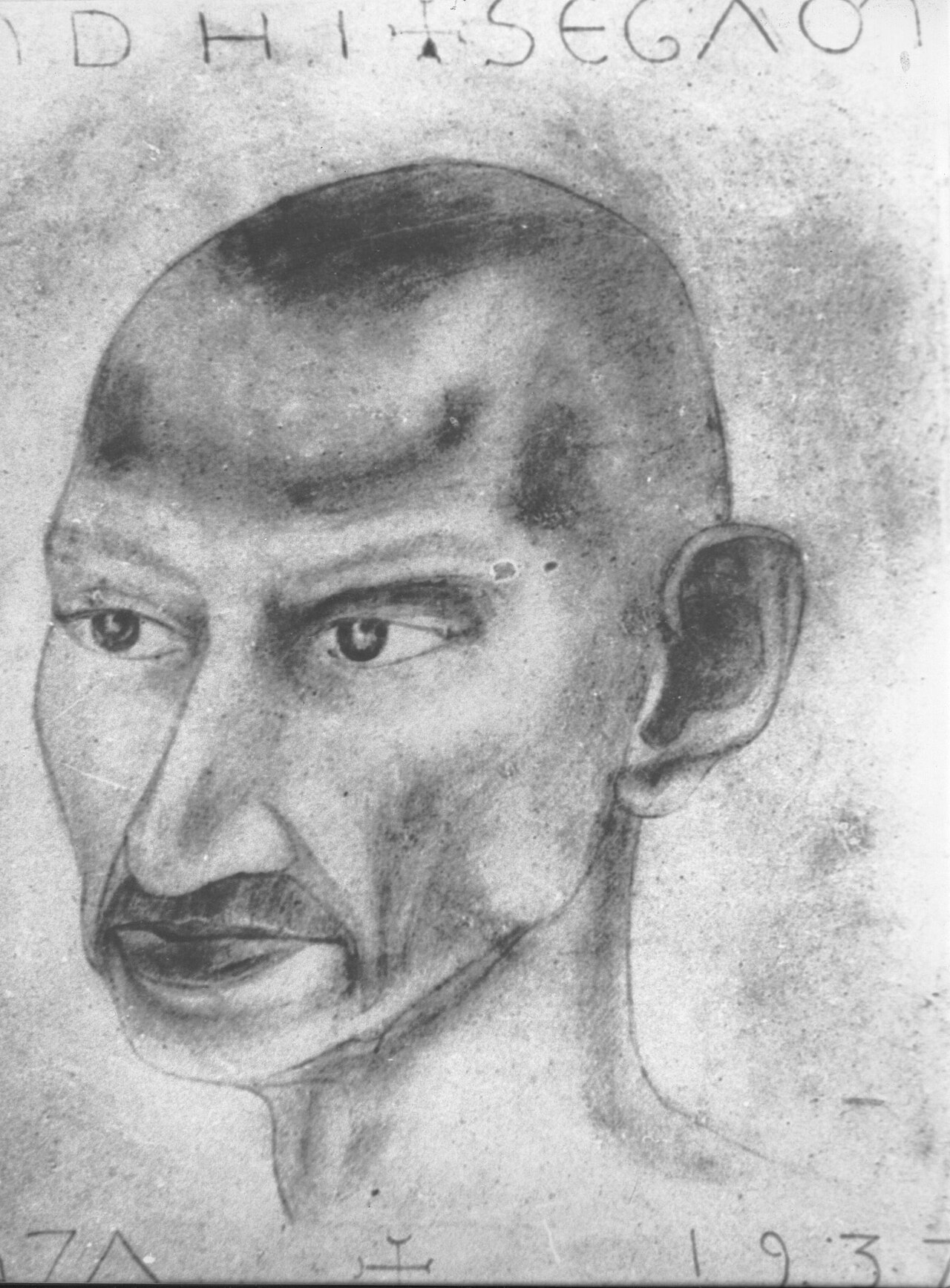
Black and white photograph of a pencil or charcoal drawing of a bald man's head in three-quarter profile, looking to the side, with a thin mustache and prominent ears. Handwritten-style letters above and a date, 1937, below.Painting

Primary source

Drawing of Gandhi by Lanza del Vasto

Lanza del Vasto · 1937

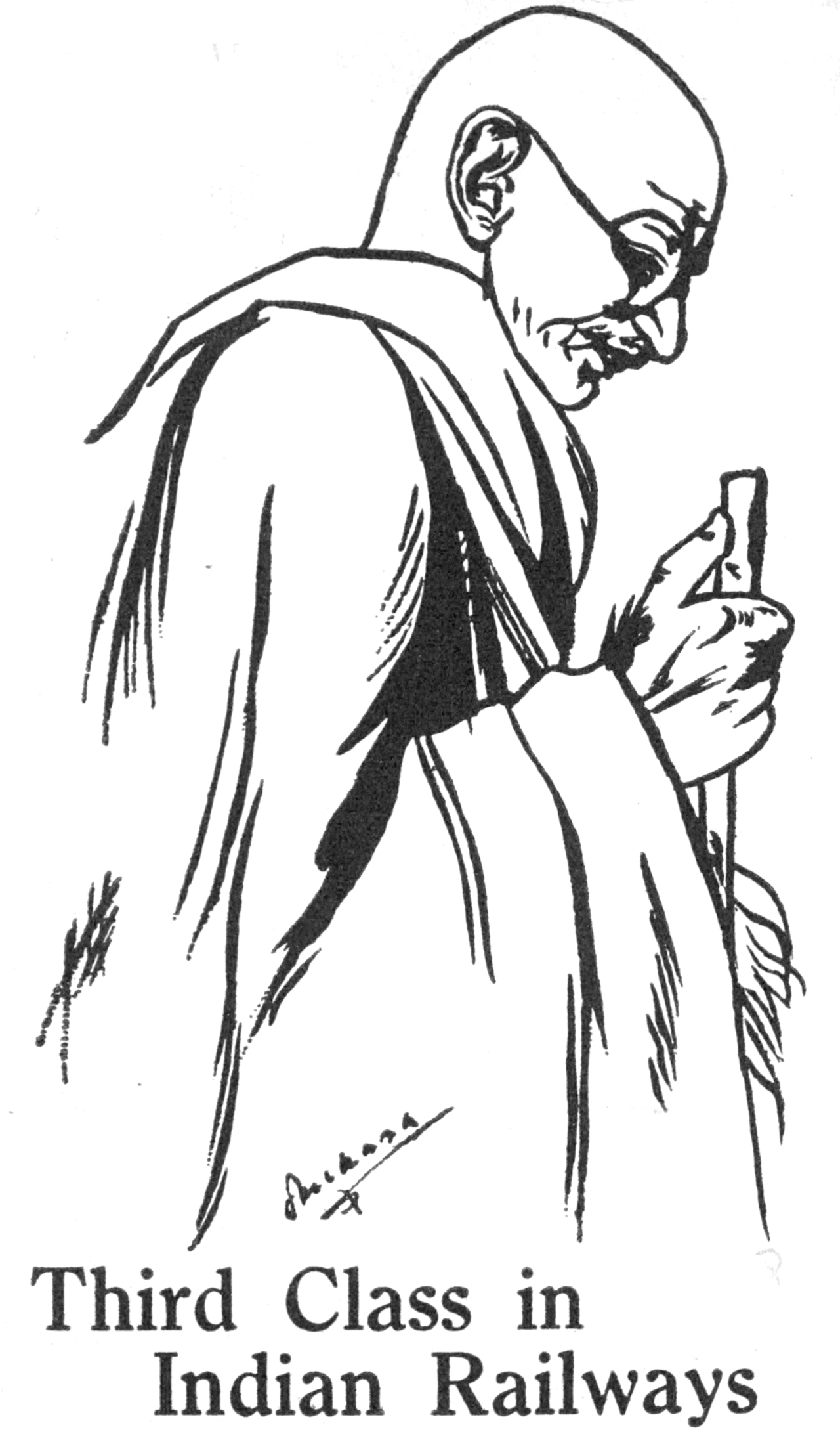
Black-and-white ink drawing of a bald, older man in a loose wrapped garment leaning on a long staff, looking downward, with the title 'Third Class in Indian Railways' printed beneath. A signature appears near his feet.Document

Primary source

Third Class in Indian Railways

Mahatma Gandhi · 1917

Book

Primary source

A Guide to Health

Mahatma Gandhi · 1921

Book

Secondary source

Mahatma Gandhi, his life, writings and speeches

1917

Document

Tertiary source

Encyclopædia Britannica Entry on Gandhi (1922)

1922

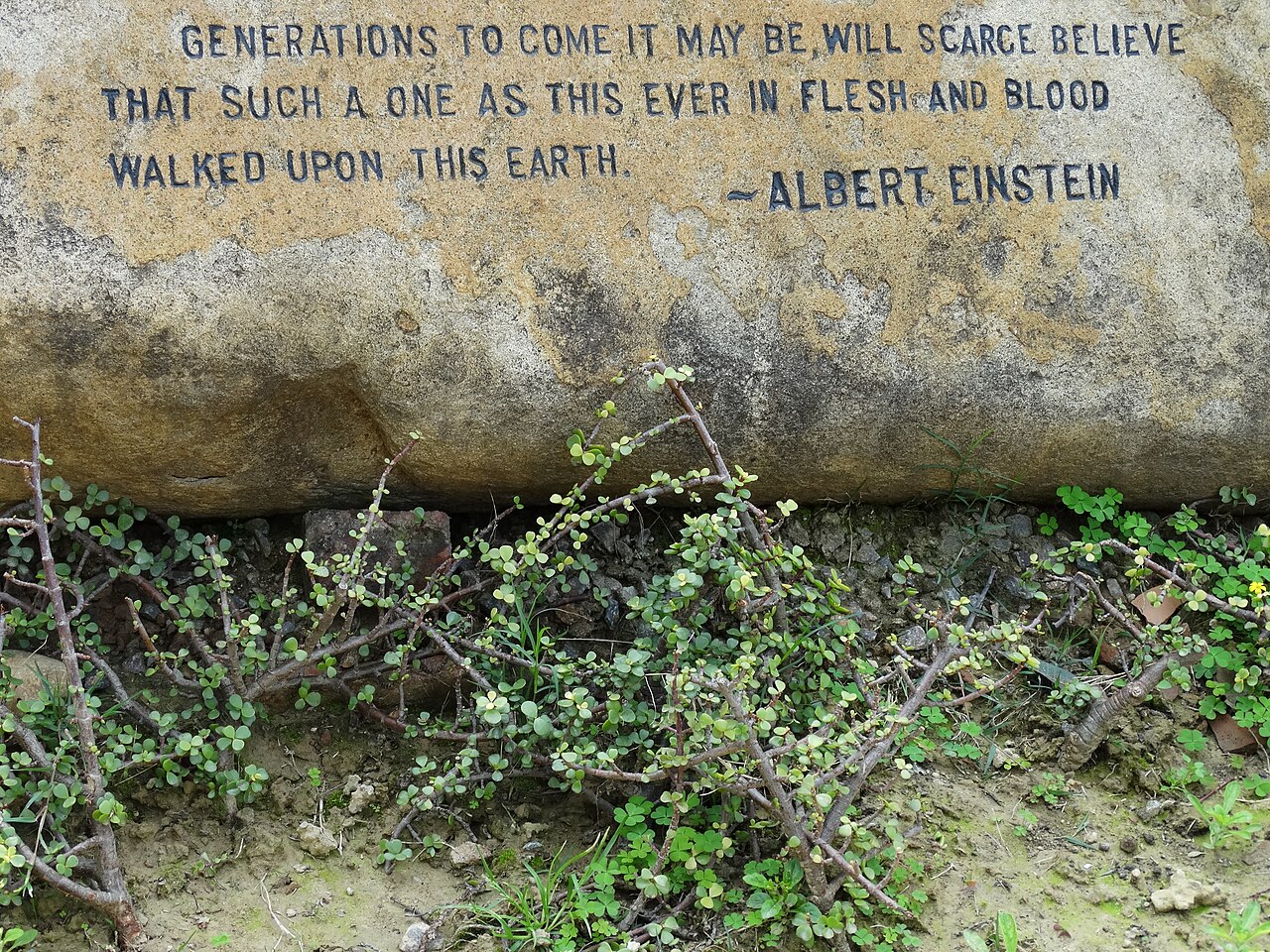
A weathered stone slab with Einstein's words carved in dark letters: "Generations to come it may be, will scarce believe that such a one as this ever in flesh and blood walked upon this earth. ~Albert Einstein". Green creeping plants with small leaves grow at its base.Artifact

Secondary source

Einstein's Tribute to Gandhi

Albert Einstein · 1944

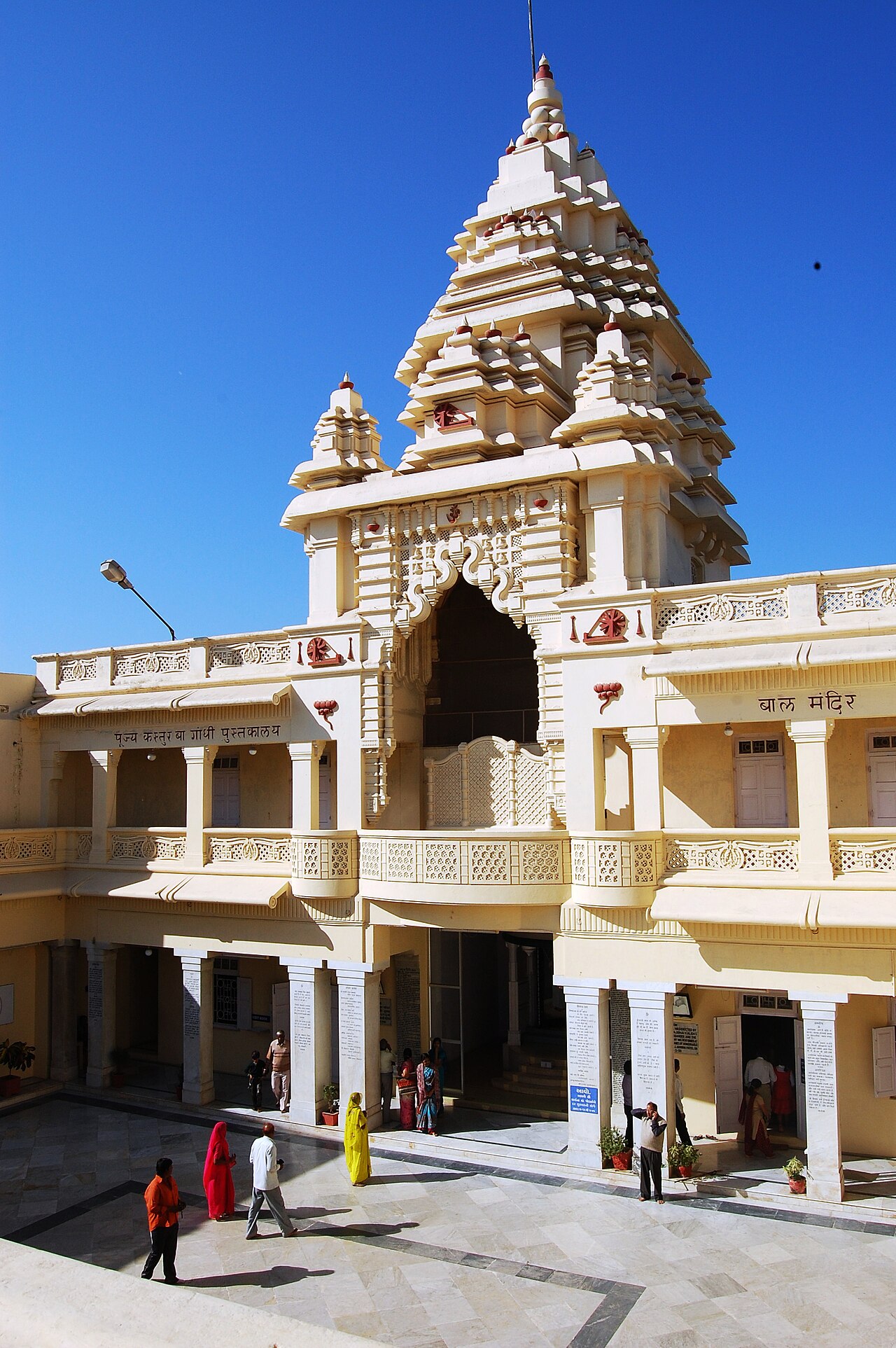
Photo of a cream-colored Indian temple-style building with a tall tiered spire topped by a finial, under a clear blue sky. The two-story facade has carved balconies, latticed screens, and an arched entrance. Visitors stand on a marble courtyard in front, and Hindi signage reads Pujya Kasturba Gandhi Pustakalaya and Bal Mandir.Artifact

Secondary source

Kirti Mandir, Porbandar

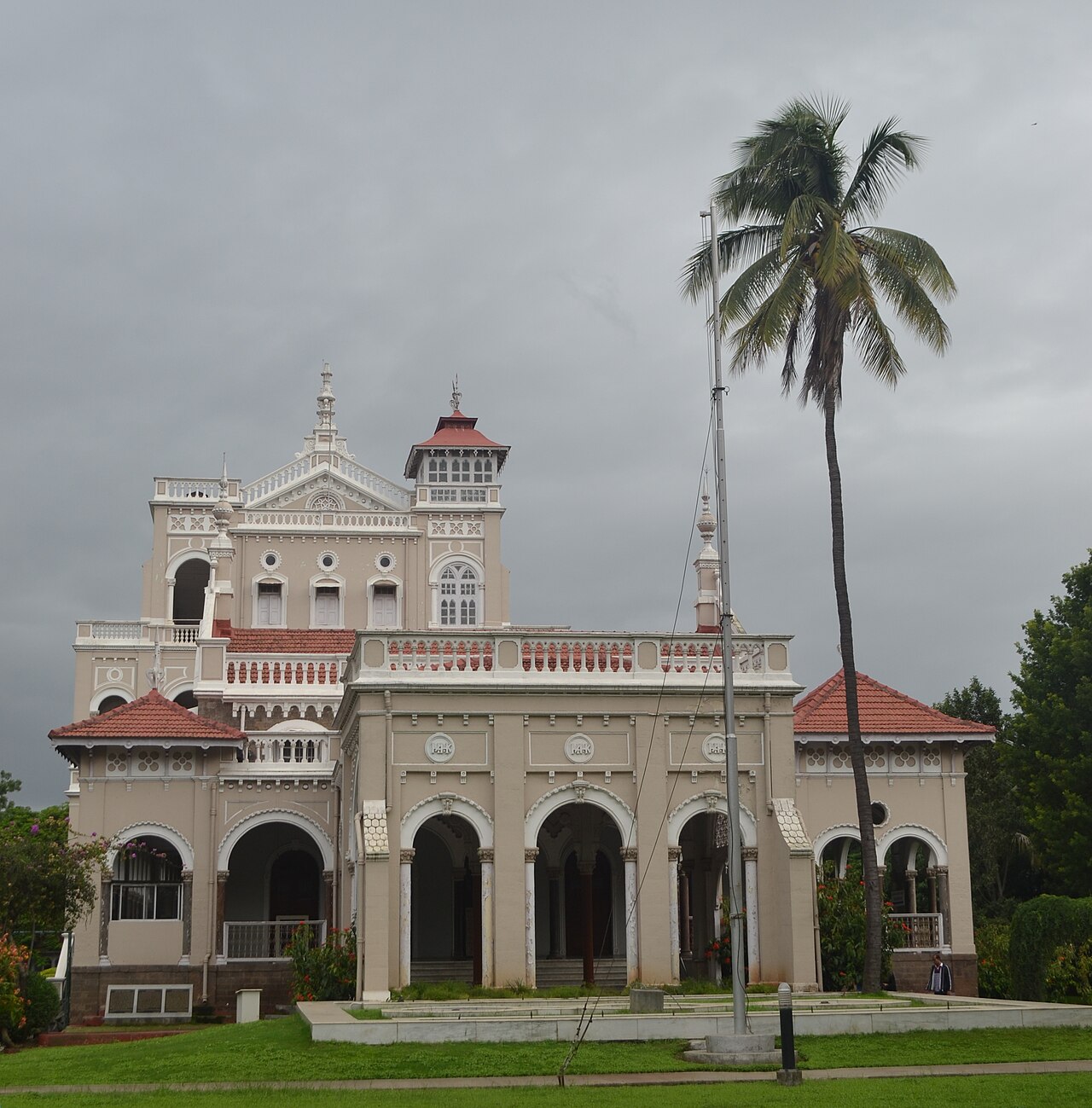
Front view of the Aga Khan Palace, a cream-colored two-story building with ornate arches, balconies, and red-tiled roofs under a cloudy sky, with a tall palm tree and flagpole beside it and a lawn in front.Artifact

Secondary source

Aga Khan Palace

1892

Book

Primary source

Hind Swaraj

Mahatma Gandhi · 1909

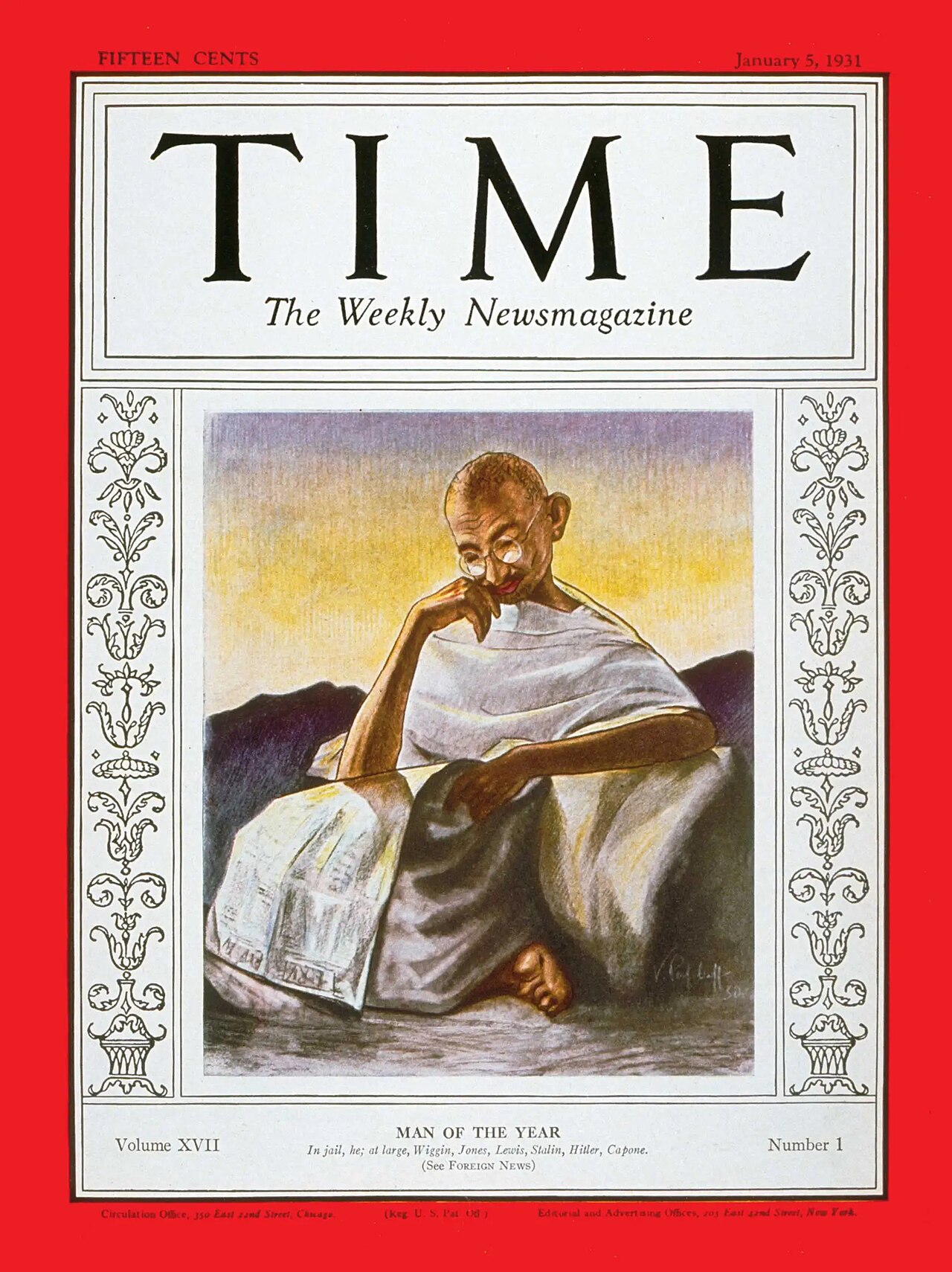
Front cover of Time, The Weekly Newsmagazine, dated January 5, 1931, Fifteen Cents. A painted portrait shows a bald, bespectacled man in a plain wrap, reading a newspaper with his hand at his chin, against a yellow sunset sky. Caption reads Man of the Year.Newspaper article

Primary source

Time Magazine Cover with Mahatma Gandhi, January 1931

Time Magazine · 5 January 1931

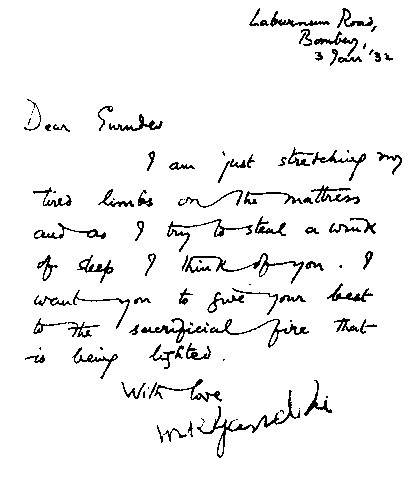
Handwritten letter in cursive ink from Laburnum Road, Bombay, dated 3 January 1932, addressed 'Dear Gurudev', beginning 'I am just stretching my tired limbs on the mattress...' and signed 'With love' with a signature below.Letter

Primary source

Letter from Gandhi to Rabindranath Tagore

Mohandas K. Gandhi · 3 January 1932

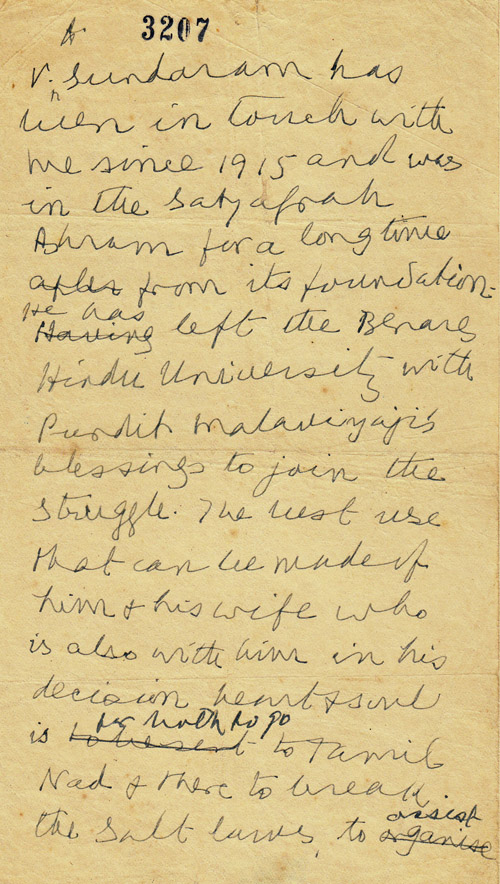
Handwritten page on aged yellowed paper in cursive ink, numbered 3207 at top. The text begins 'V. Sundaram has been in touch with me since 1915 and was in the Satyagraha Ashram for a long time...' and continues about his leaving Benares Hindu University with Pandit Malaviya's blessings to join the struggle, with interlineated corrections and crossed-out words near the bottom.Document

Primary source

Gandhi's Certificate for V. A. Sundaram

Mohandas K. Gandhi · May 1930

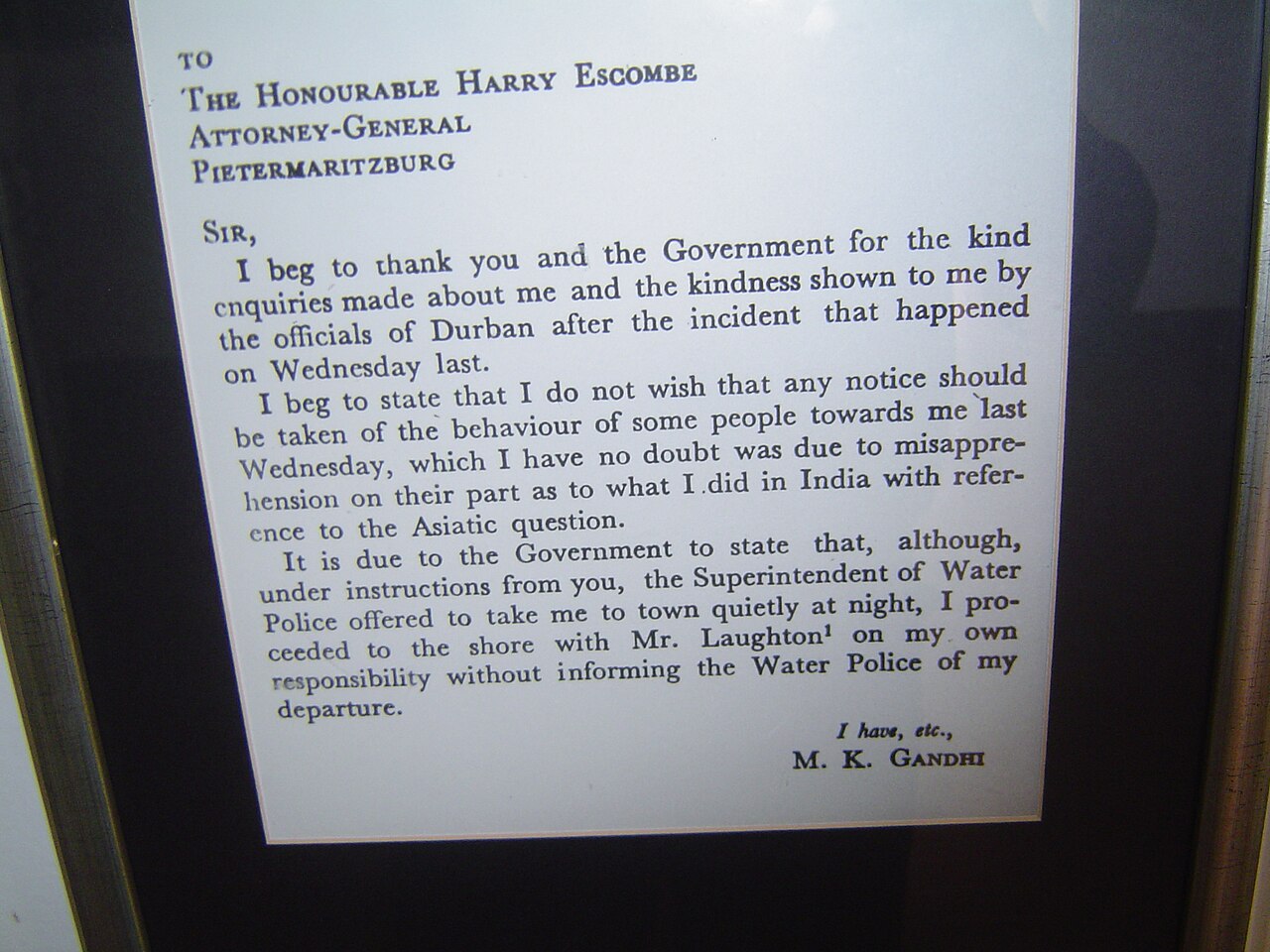
Photo of a framed typed letter addressed to The Honourable Harry Escombe, Attorney-General, Pietermaritzburg, signed M. K. Gandhi, thanking the government for enquiries after an incident in Durban.Letter

Primary source

Letter from Gandhi to the Pietermaritzburg Authorities

Mohandas K. Gandhi

Book

Primary source

Paraphrase of Ruskin's Unto This Last

Mahatma Gandhi · 1908

Book

Primary source

The Pilgrims' March

Mahatma Gandhi · 1921

Speech

Primary source

Benaras Hindu University Speech

Mahatma Gandhi · 4 February 1916

Letter

Primary source

Letter from Gandhi to Leo Tolstoy

Mahatma Gandhi · 10 November 1909

Letter

Primary source

Letter from M. K. Gandhi to President Franklin D. Roosevelt and reply

Mahatma Gandhi · 1 July 1942

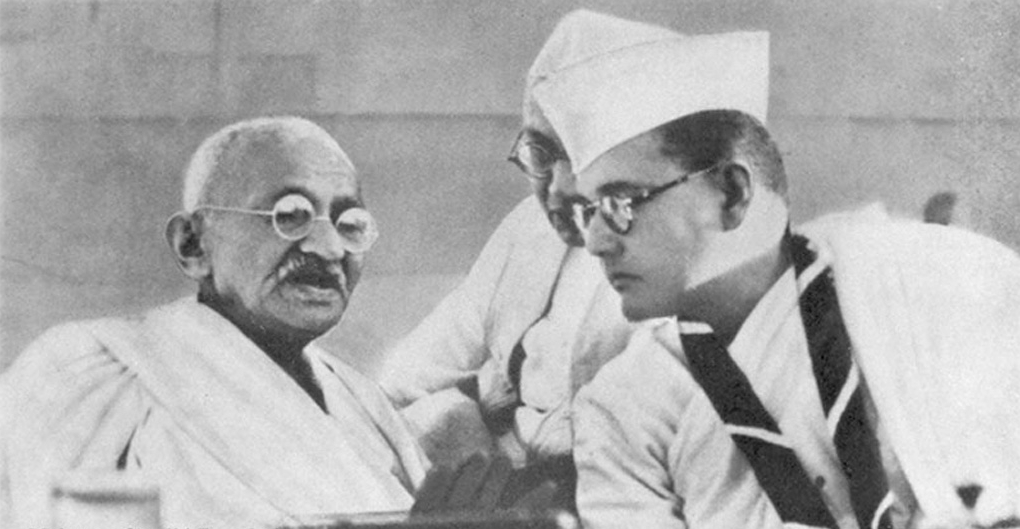
Black and white photograph of two men seated closely together. The man on the left, with a bald head, round wire-rimmed glasses and a moustache, wears a white shawl. The man on the right wears a white cap, glasses and a dark-striped tie, and leans in to look down. A third figure stands partly behind them.Photograph

Primary source

Gandhi with Subhas Chandra Bose at Haripura Congress

Unknown author · 1938

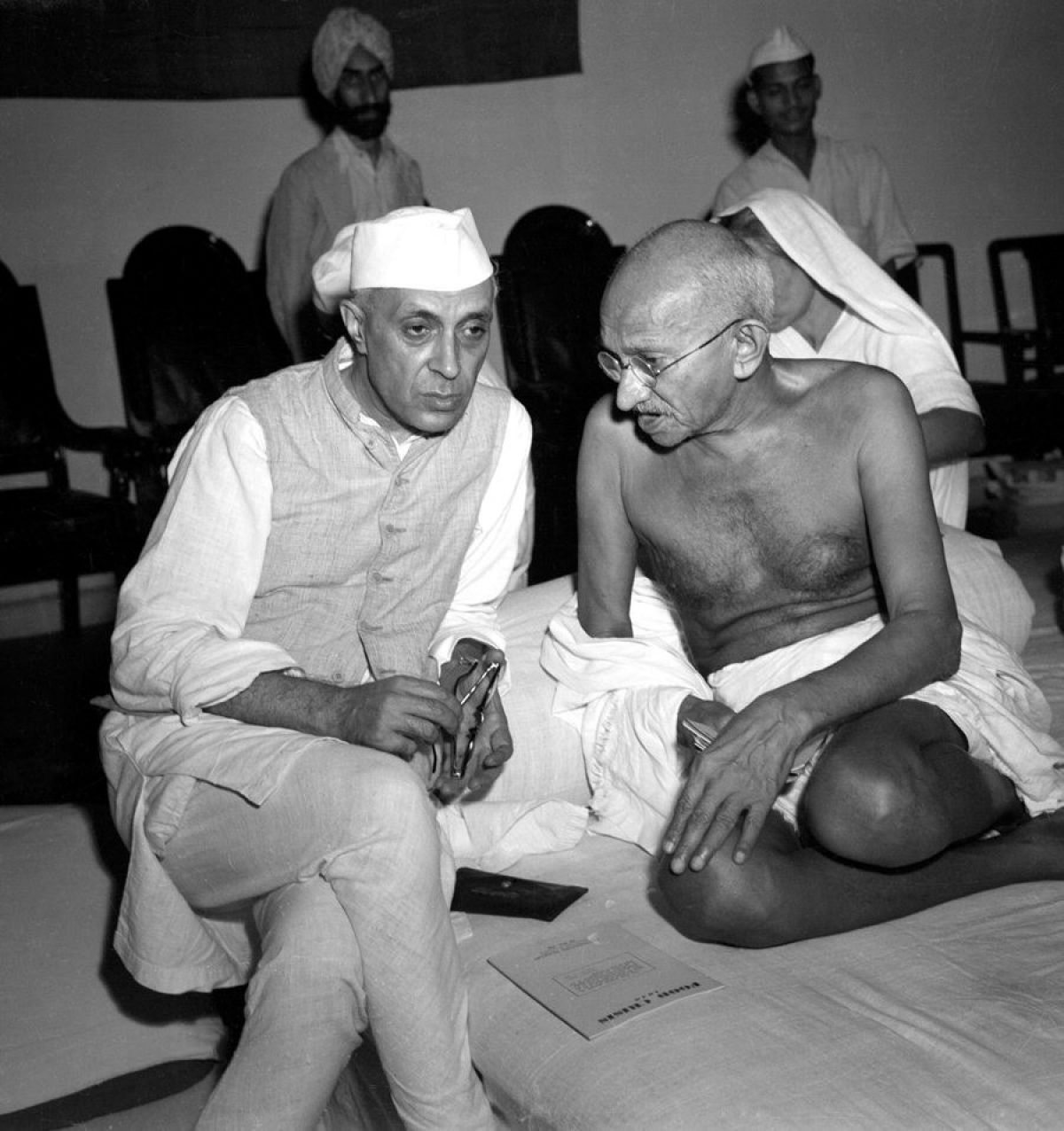
Black and white photograph of two men sitting on a cot or bed. On the left, a man in a white cap, white kurta and a light sleeveless waistcoat holds spectacles and looks down. On the right, a bald, bespectacled elderly man, bare-chested and wearing a white dhoti, leans forward and gestures. Two men in turbans and white clothing stand in the background near chairs.Photograph

Primary source

Gandhi with Jawaharlal Nehru at Congress Meeting, Bombay

Max Desfor · 6 July 1946

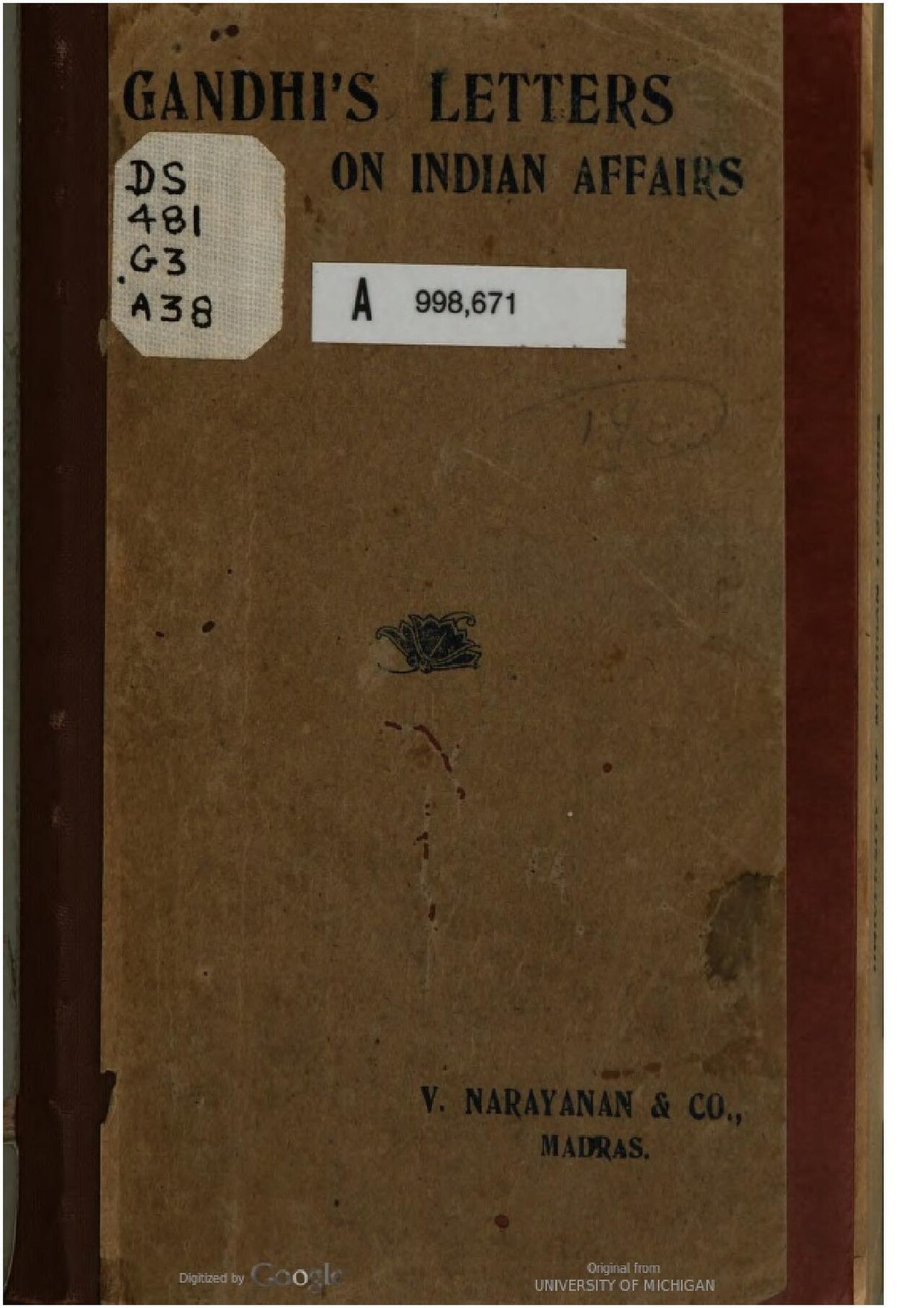
Front cover of a brown book titled 'Gandhi's Letters on Indian Affairs', with a library call number label, a white accession label reading 998,671, and the publisher 'V. Narayanan & Co., Madras' printed near the bottom.Book

Primary source

Letters on Indian Affairs

Mahatma Gandhi · 1923

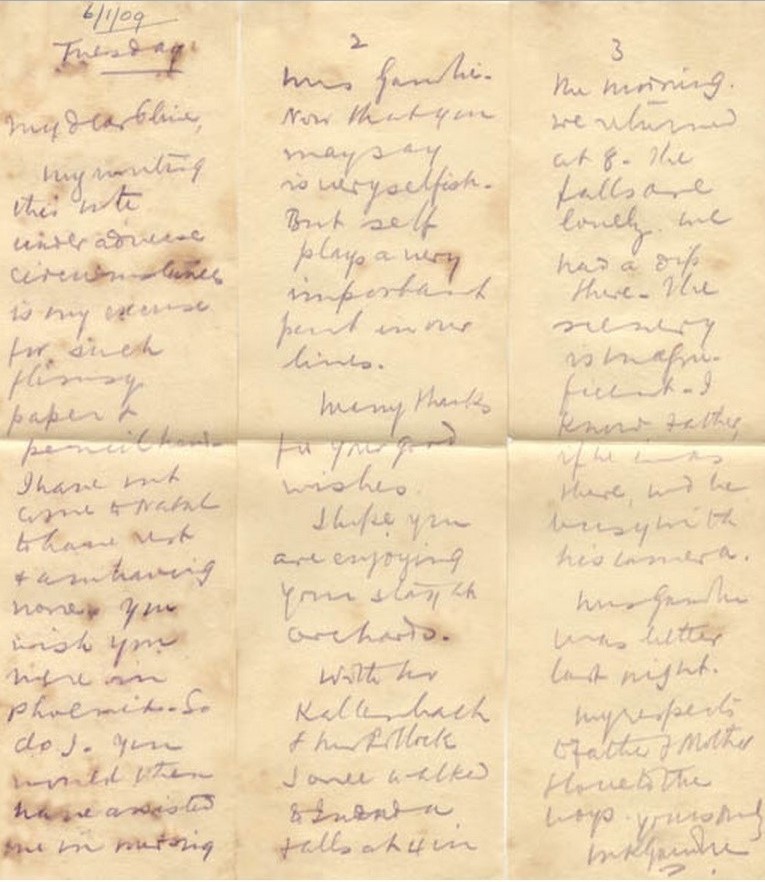
Handwritten letter in pencil on yellowed paper, dated 6/1/09 Tuesday, addressed 'My dear Olive', in three columns. Text discusses paper and pencil shortage, Mrs Gandhi's letter, falls, and greetings. Signed M. K. Gandhi.Letter

Primary source

Letter from Gandhi to Olive Doke

Mohandas Karamchand Gandhi · 6 January 1909

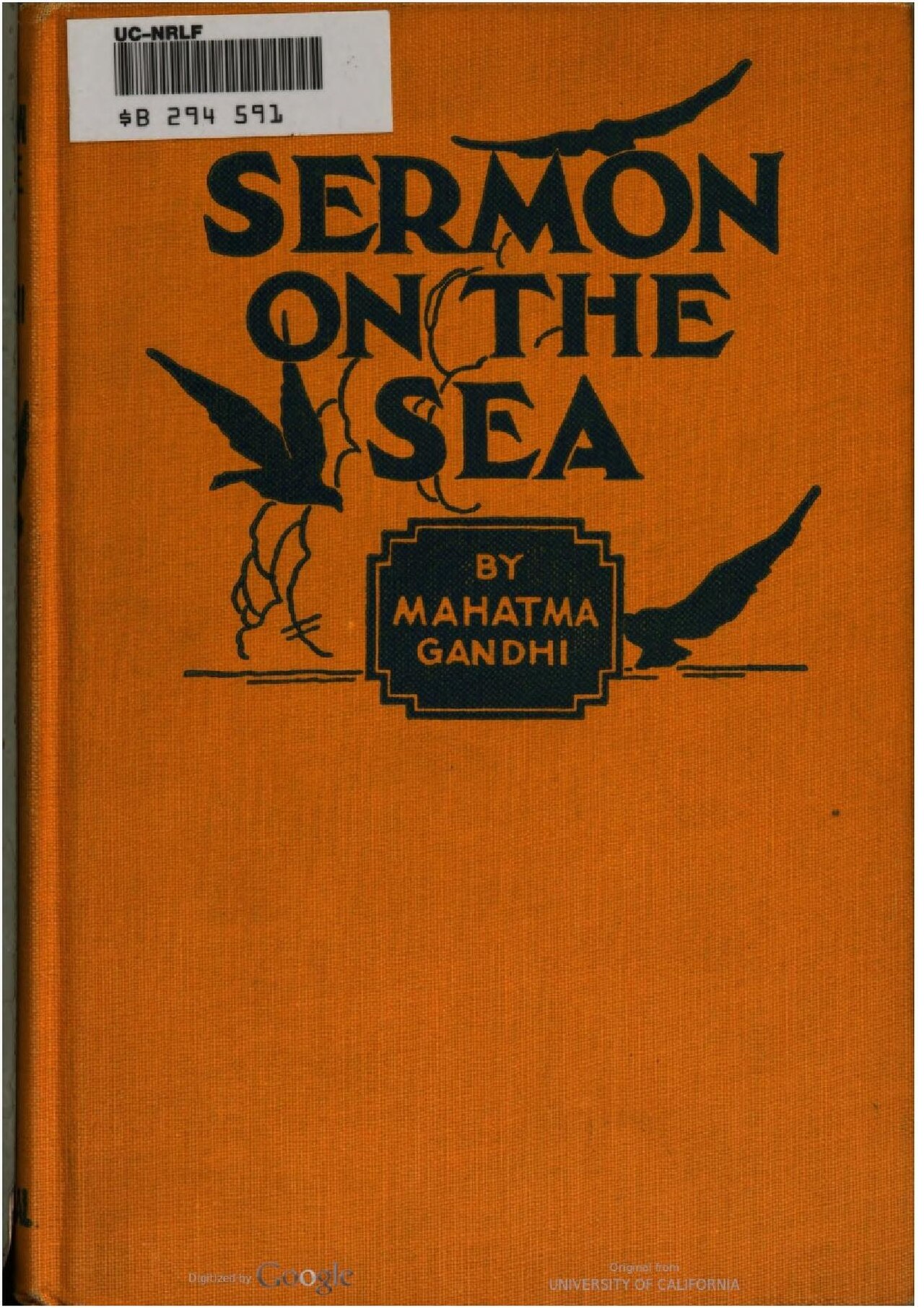
Front cover of an orange hardcover book titled 'Sermon on the Sea' in large dark letters, with decorative bird and wave illustrations and a dark box reading 'By Mahatma Gandhi'. A library barcode label reading 'UC-NRLF' is affixed at the top left.Book

Primary source

Sermon on the Sea

Mahatma Gandhi · 1924

Speech

Primary source

Speech at the Inter-Asian Relations Conference

Mohandas K. Gandhi · 1947

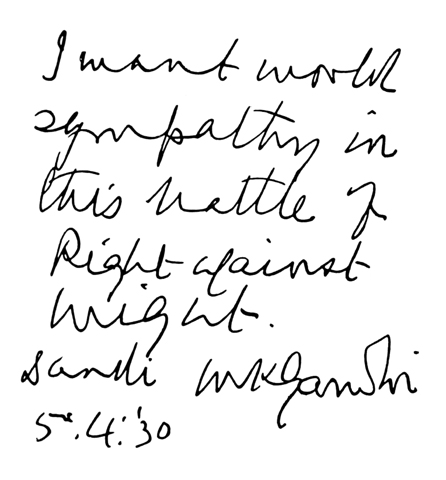
Handwritten note in black ink reading 'I want world sympathy in this battle of right against might.' Signed 'Gandhi' with a dated line '5.4.30' below the signature, on a white background.Document

Primary source

Dandi Statement: Right Against Might

Mohandas K. Gandhi · 5 April 1930

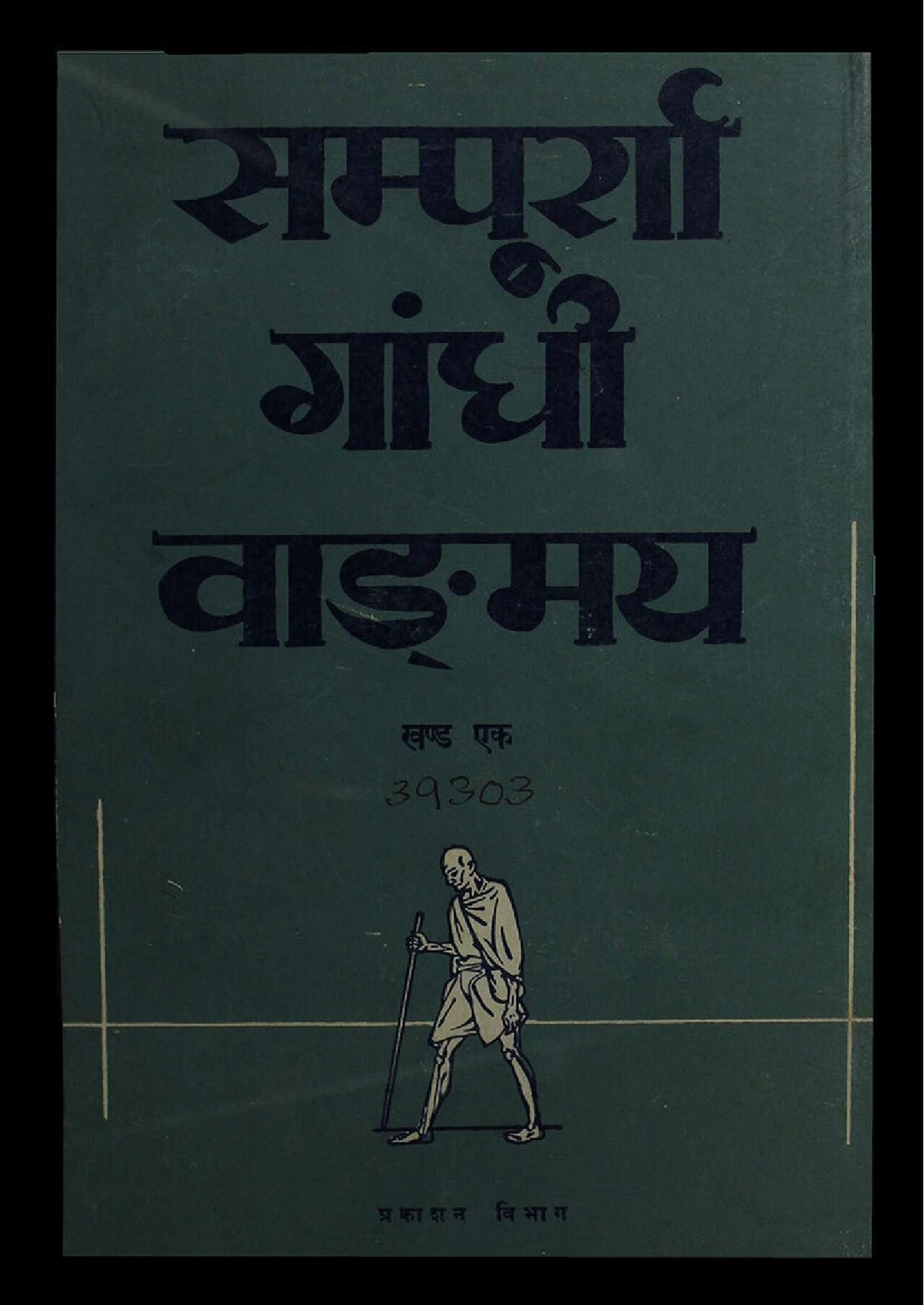
Cover of a dark green book titled in large dark Devanagari letters 'सम्पूर्ण गांधी वाङ्मय' with 'खण्ड एक' below, a handwritten number 39303, and a line drawing of a bald, thin man in a wrapped shawl walking with a staff, and publisher text 'प्रकाशन विभाग' at the bottom.Book

Primary source

Sampurna Gandhi Vol. 1 (Hindi Collected Works)

Mahatma Gandhi · 1888–1896 (published 1896)

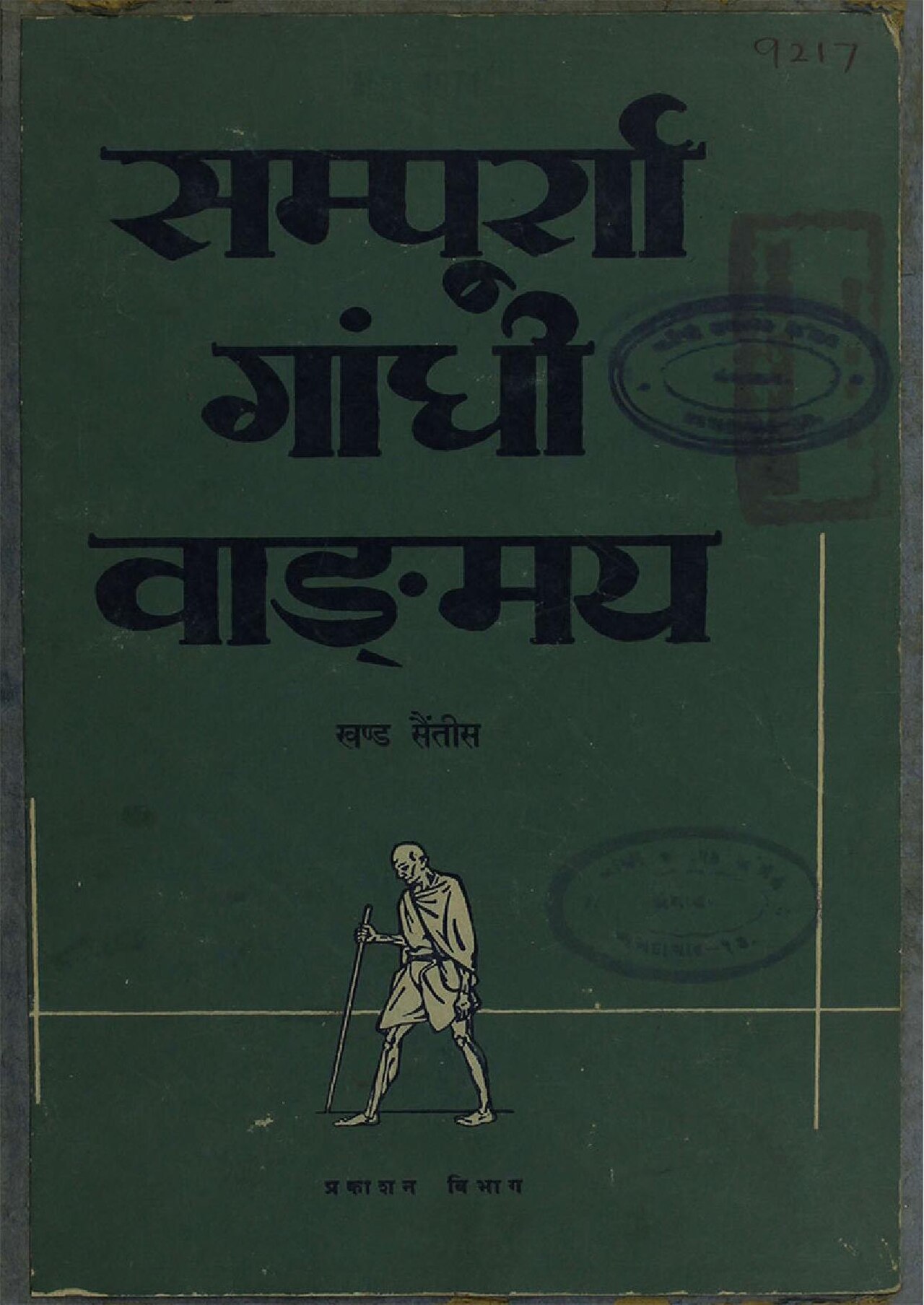
Front cover of a green book titled in large dark Devanagari letters 'सम्पूर्ण गांधी वाङ्मय' (Sampurna Gandhi Vangmay), with 'खण्ड सैंतीस' (Volume thirty-seven) below. A line drawing of Mahatma Gandhi walking with a staff sits near the bottom, above the publisher text 'प्रकाशन विभाग'. Library stamps and a handwritten number 9217 appear at the top right.Book

Primary source

Sampurna Gandhi Vangmay Vol. 37

Mahatma Gandhi · 1 July – 31 October 1928

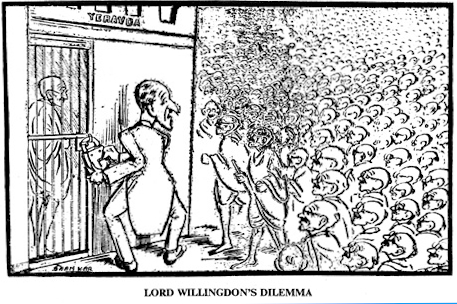
Black-and-white cartoon titled "Lord Willingdon's Dilemma." A man in a suit and hat walks toward a barred jail doorway marked "VERANDA," with a faint figure inside a cell. Outside to the right, a large dense crowd of faces in caps and turbans presses forward.Painting

Primary source

Lord Willingdon's Dilemma

Unknown · between 1930 and 1932

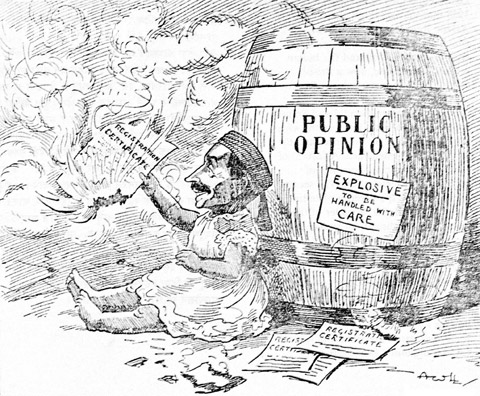
Black-and-white caricature drawing of a seated man in a turban and long robe, with a large hooked nose and mustache, holding a burning paper labeled 'Registration Certificate' next to a large barrel labeled 'Public Opinion' with a sign reading 'Explosive, Handled with Care'. Another paper labeled 'Registration Certificate' lies on the ground.Painting

Primary source

Caricature of Gandhi: Public Opinion

Unknown · 1908

Mahatma Gandhi: A StudyBook

Secondary source

Mahatma Gandhi: A Study

Harish Chandra Kaila · early 20th century

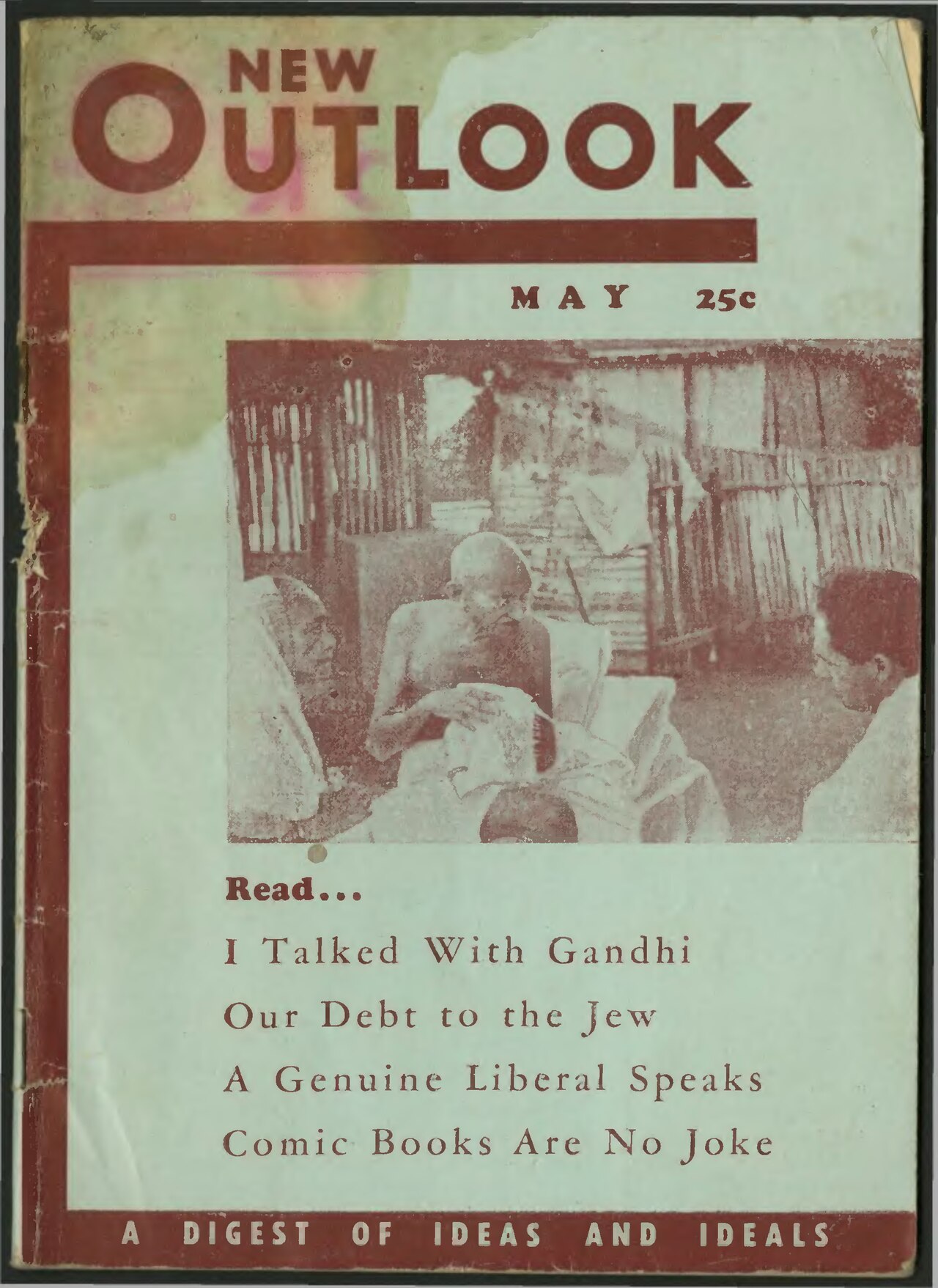
Cover of the May 1949 issue of New Outlook magazine, priced 25c, with the cover line 'Read...' listing 'I Talked With Gandhi', 'Our Debt to the Jew', 'A Genuine Liberal Speaks', and 'Comic Books Are No Joke'. A sepia photo shows a bald, bare-chested elderly man seated in a rustic room with bamboo walls, with two other people beside him.Interview

Secondary source

I Talked with Gandhi

Louis Fischer · May 1949

Speech

Primary source

Reception Speech in Madras

Mahatma Gandhi · 21 April 1915

Front cover of a book in tan cloth binding with an ornate decorative border. Title reads 'Gandhi & Anarchy' and 'By Sir C. Sankaran Nair'. A blue library label on the left reads 'University of Southern ... Library', and a barcode label reads 'UC Southern Regional Library Facility'. A small decorative monogram appears in the lower right corner.Book

Secondary source

Gandhi and Anarchy

C. Sankaran Nair

Document

Secondary source

Mahatma Gandhi, A Memorial Service

1948

Document

Secondary source

Report on the Memorial Meeting for Mahatma Gandhi, New York

1948

Document

Secondary source

The Terrible Meek: An Appreciation of Mohandas K. Gandhi

1948

Interview

Secondary source

I Talked with Gandhi

Louis Fischer · 1949

Front cover of the book Gandhi's Story, an orange cloth-bound volume with the title in large dark teal capital letters at upper right. Small Google digitization and University of Michigan credit lines appear at the bottom.Book

Secondary source

Gandhi's Story

Shakuntala Masani · 1950

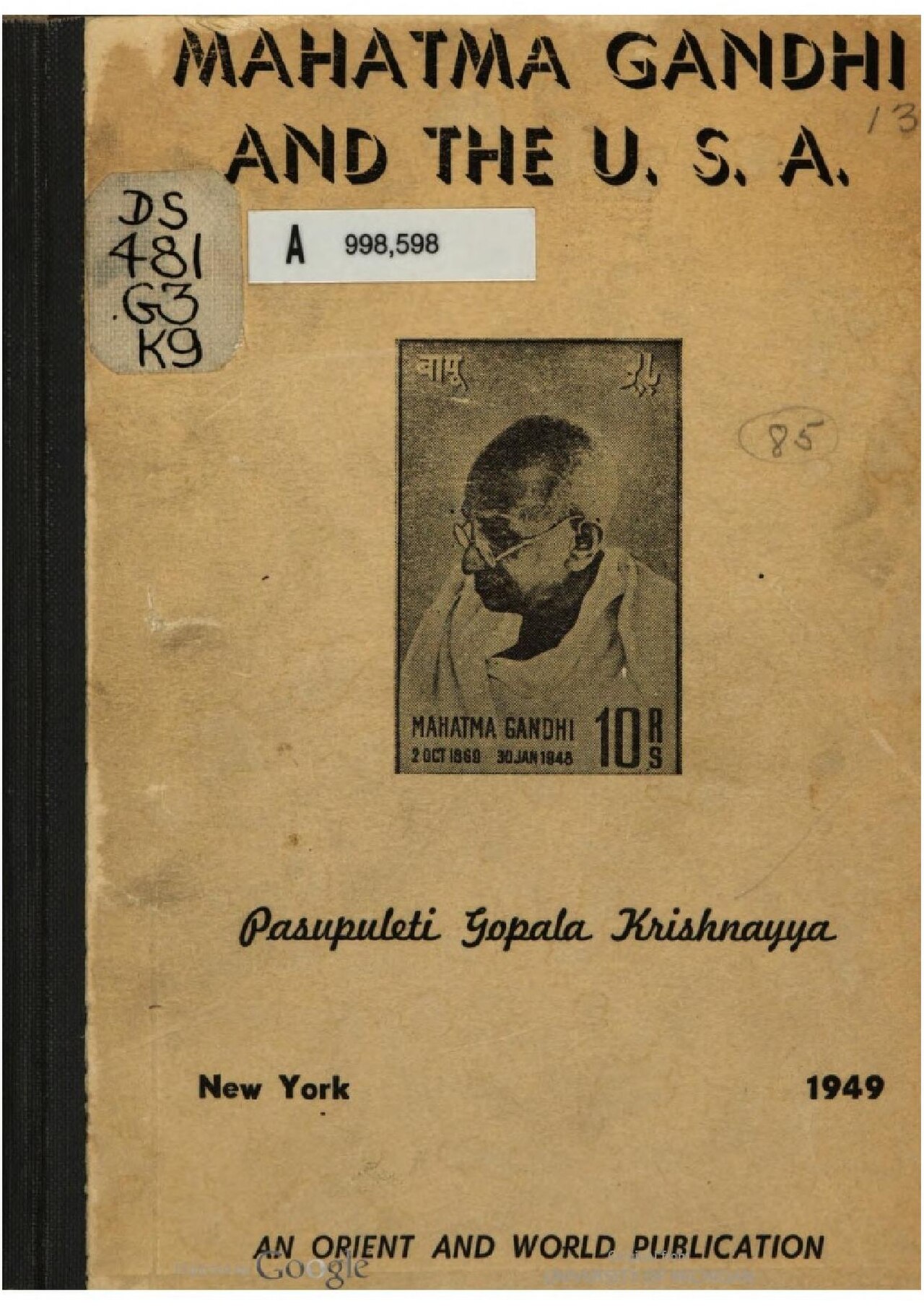
Cover of a book titled 'Mahatma Gandhi and the U.S.A.' with a library call number label reading DS 481 G3 K9 and a postage-stamp-style portrait of Gandhi with the text 'Mahatma Gandhi 2 Oct 1869 30 Jan 1948, 10 Rs.' Author Pasupuleti Gopala Krishnayya, New York, 1949, An Orient and World Publication.Book

Secondary source

Mahatma Gandhi and the USA

Pasupuleti Gopala Krishnayya · 1949

Want the full shelf? Chat with Mahatma Gandhi in the app and open the Sources panel — every quote links back to the original.

Trusted by educators worldwide

Conversations
375,000+
Real exchanges between students and historical figures
Messages exchanged
4,142,000+
Across every figure, classroom and language
Historical figures
100,000+
Each informed by a curated biography and selected sources
Languages supported
50+
From English and Spanish to Arabic and Korean

Paying customers

Used by 98 schools and universities

Partner school logo
Tecnológico de Monterrey logo
Hyper Island logo
Partner school logo
Chambersburg Area School District logo
Broward County Public Schools logo
Nebo School District logo
National Louis University logo
South Florida PBS logo
Punahou School logo
University of Wisconsin–River Falls logo
Partner school logo
Partner school logo
Archbishop Mitty High School logo
Kingsburg High School logo
Norwalk Public Schools logo
Partner school logo
Connections logo
Partner school logo
Moore Public Schools logo
Partner school logo
Partner school logo
Partner school logo
Partner school logo
Robbinsville Public Schools logo
Partner school logo
Partner school logo
Partner school logo
Tecnológico de Monterrey logo
Hyper Island logo
Partner school logo
Chambersburg Area School District logo
Broward County Public Schools logo
Nebo School District logo
National Louis University logo
South Florida PBS logo
Punahou School logo
University of Wisconsin–River Falls logo
Partner school logo
Partner school logo
Archbishop Mitty High School logo
Kingsburg High School logo
Norwalk Public Schools logo
Partner school logo
Connections logo
Partner school logo
Moore Public Schools logo
Partner school logo
Partner school logo
Partner school logo
Partner school logo
Robbinsville Public Schools logo
Partner school logo
Partner school logo

What educators are saying

“We enjoyed the program last year and used it frequently.”
“My students say it’s a welcome change of pace. I’m not a fan of the “sage on the stage” model, so I try to incorporate research-oriented and self-paced activities. With Humy, students have to take charge of their learning. They’ve become more adept at critical thinking, forming better questions, and improving their reading comprehension. The interview feature has been my go-to tool. I create assignments where students must ask historical figures a set number of questions, then summarize the responses to ensure they’re truly absorbing the material. This approach lets them actively explore the past rather than passively consuming information.”
“Humy has helped me bring historical figures, sometimes long past, to life. When my students interact with these figures in real-time, it eliminates some of the perceived “ancient” characteristics of my curriculum. This has shifted my students’ thinking away from viewing history as abstract or irrelevant. Real-time interactions make historical figures relatable, even allowing students to ask off-topic questions that help put historical lives in a more relevant context for 13-year-olds. The feature I use the most is the interview feature. After teaching a topic, most recently Gandhi and Joan of Arc, I have the students ask pointed, focused questions. We practice good conversation techniques beforehand, teaching them to listen (or read) carefully and formulate thoughtful follow-up questions rather than just interrogating. It helps students practice effective conversation skills.”

FAQ

Frequently asked questions

Who is Mahatma Gandhi?
Leader of the Indian independence movement through nonviolent civil disobedience. On Humy.ai you can chat with an AI version of Mahatma Gandhi that draws on a short biography and 71 historical sources during the conversation — by text or voice, in 42 languages.
Is Mahatma Gandhi AI free?
Yes. Mahatma Gandhi is in Humy's free library: a free account includes 20 messages a month with Mahatma Gandhi and the other free figures, by text or voice. No credit card is needed.
What sources does the Mahatma Gandhi AI use?
It draws on a short biography and 71 historical sources (books, documents and photographs), including “Hind Swaraj”, “Quit India speech” and “Great Trial of 1922”. Each source has its own page on Humy.ai.
How historically accurate is the AI version of Mahatma Gandhi?
Each figure uses a short biography and a small set of selected historical sources as context (retrieval-augmented generation), so answers stay closer to known material than the model's general knowledge alone. It isn't a citation-grade research tool — like any LLM, the AI can get details wrong or extrapolate. Treat it as a strong starting point for inquiry and cross-reference important claims.
Can I talk to Mahatma Gandhi by voice?
Yes. In addition to text chat, you can call Mahatma Gandhi and hear their voice respond in real time — useful for auditory learners, interview practice and Socratic dialogue.
Is Humy.ai safe and compliant for schools?
Yes. Humy.ai is used by more than 100 schools, universities and organisations. The platform is FERPA- and GDPR-aligned, supports SSO, and offers an IT-approval pack tailored for school procurement teams.

Ready when you are

Start chatting with Mahatma Gandhi now.

20 messages free · No credit card · Available in 50+ languages.