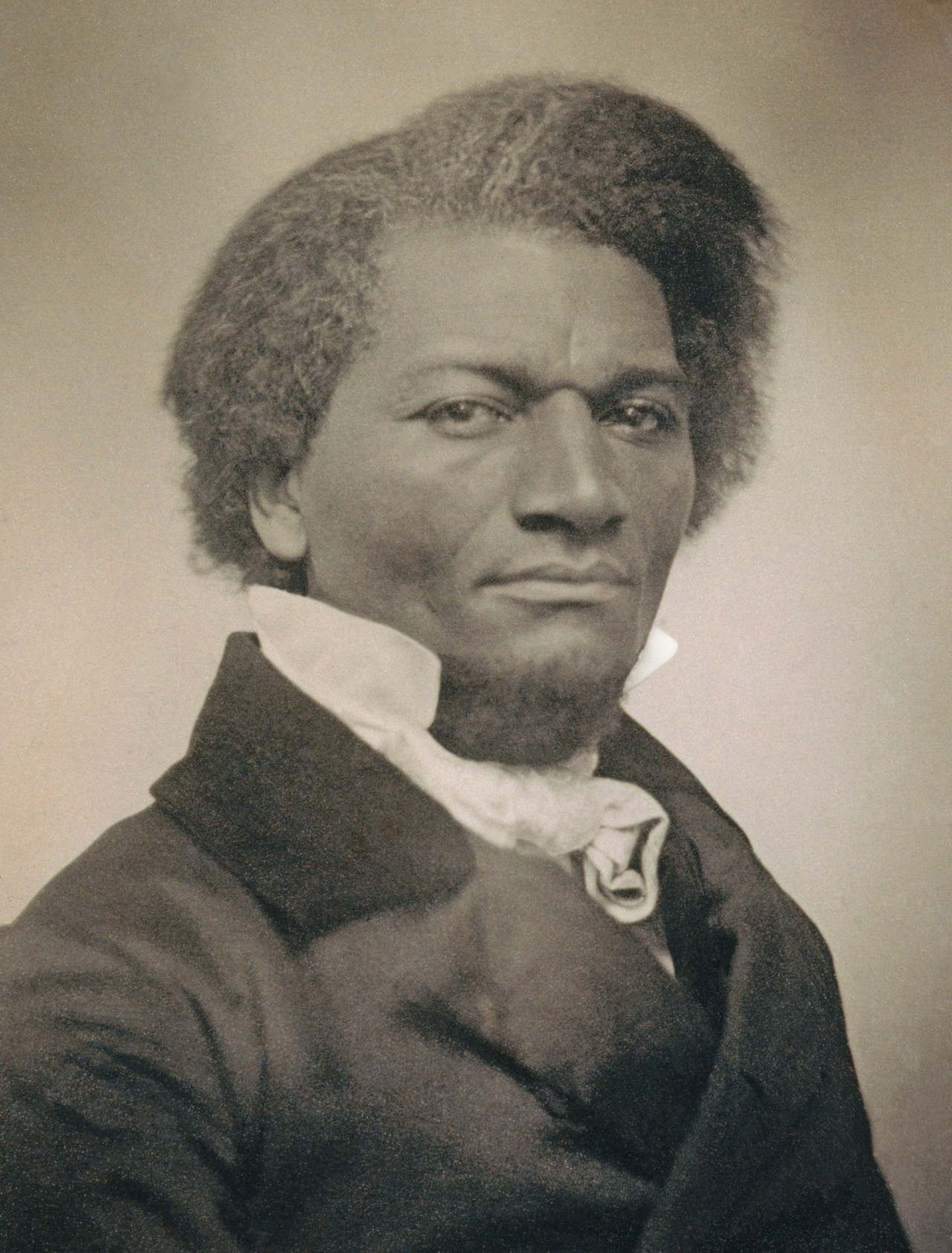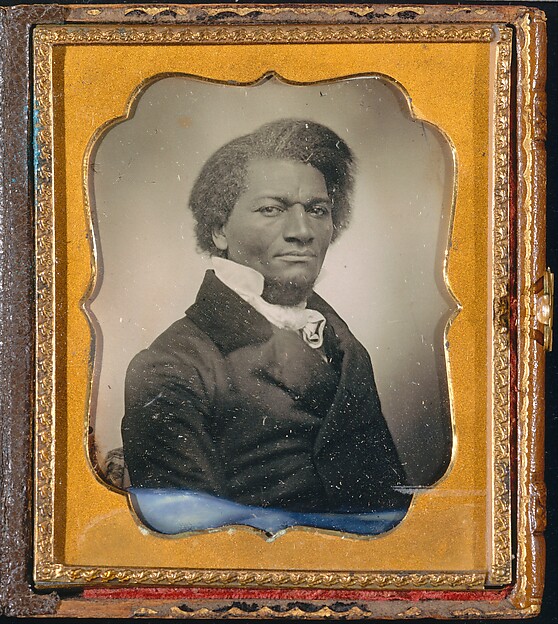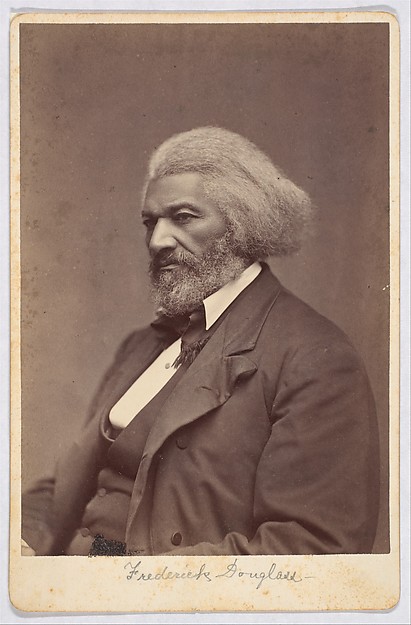
Portrait of Frederick Douglass

AI Historical Figure

Frederick Douglass

Prominent abolitionist and writer.

Chat with Frederick Douglass via text or voice — in 42 languages, drawing on a curated biography and 79 historical sources. Available 24/7.

Start chatting with Frederick Douglass20 messages free · No credit card
Lived
1818–1895
From
United States
Known for
Politics & governmentLiterature & writing
Frederick Douglass

Frederick Douglass

Online · responds in seconds

Hello — I'm Frederick Douglass. Prominent abolitionist and writer. What would you like to ask me?

20 messages free · No credit card · Powered by Humy.ai

Live preview · Switch between 42 languages above · Send a message to continue in the app

Multilingual

Talk to Frederick Douglass in 42 languages

Ask Frederick Douglass questions in any language below, and the rest of Humy's app speaks it too. Pick yours to open the chat in that language.

Also in German (Austria), German (Switzerland), English (UK), English (Australia), English (Canada).

The sources behind this AI

79 sources · 20 books · 15 speeches · 13 documents · 11 photographs · 8 paintings · 7 newspaper articles · 2 letters · 1 artifact · 1 sculpture · 1 documentary

Frederick Douglass doesn’t improvise from thin air. The AI is grounded in 79 curated historical sources students can inspect. Open any of them to see what informs the conversation.

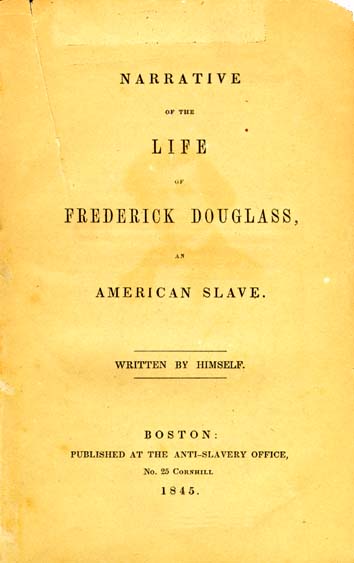
Yellowed title page of the 1845 Narrative of the Life of Frederick Douglass, an American Slave. Text reads 'Narrative of the Life of Frederick Douglass, an American Slave, Written by Himself', 'Boston: Published at the Anti-Slavery Office, No. 25 Cornhill, 1845'.Book

Primary source

Narrative of the Life of Frederick Douglass, an American Slave

Frederick Douglass · 1845

Speech

Primary source

What to the Slave Is the Fourth of July?

Frederick Douglass · 5 July 1852

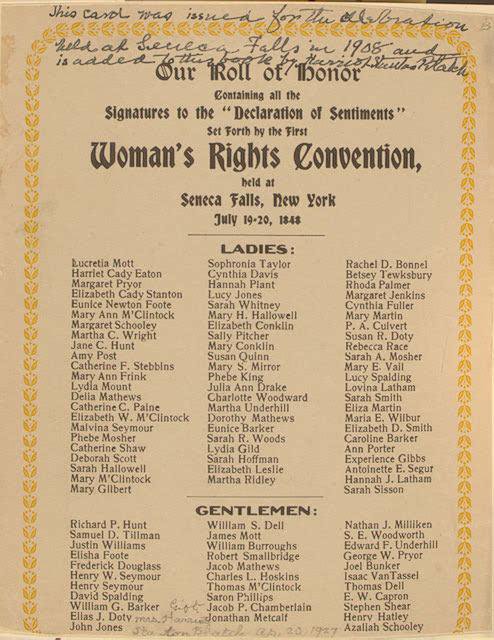
Printed broadside titled "Our Roll of Honor" listing the signatories to the Declaration of Sentiments from the 1848 Woman's Rights Convention at Seneca Falls, New York. Names are arranged in columns under headings Ladies and Gentlemen, with handwritten notes across the top and bottom margins.Document

Primary source

Declaration of Sentiments

Elizabeth Cady Stanton · 1848

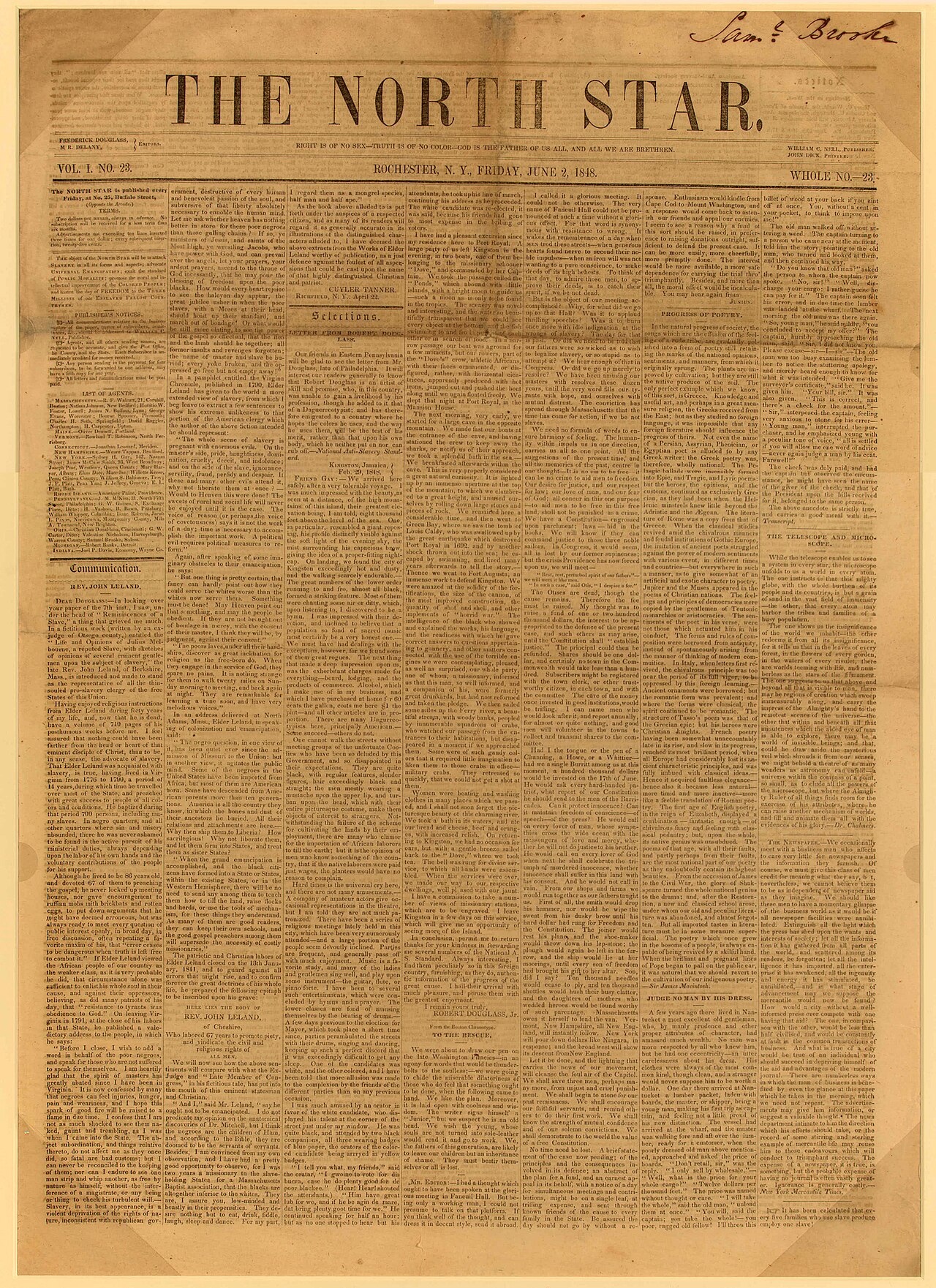
Front page of The North Star newspaper, Rochester, N.Y., Friday, June 2, 1848, Vol. I, No. 29. Masthead reads 'The North Star' in large letters, with Frederick Douglass and N.P. Dellany named as editors. Dense columns of small printed text fill the page, with a handwritten signature in the upper right corner.Newspaper article

Primary source

The North Star

Frederick Douglass · 1847

Book

Primary source

My Bondage and My Freedom

Frederick Douglass · 1855

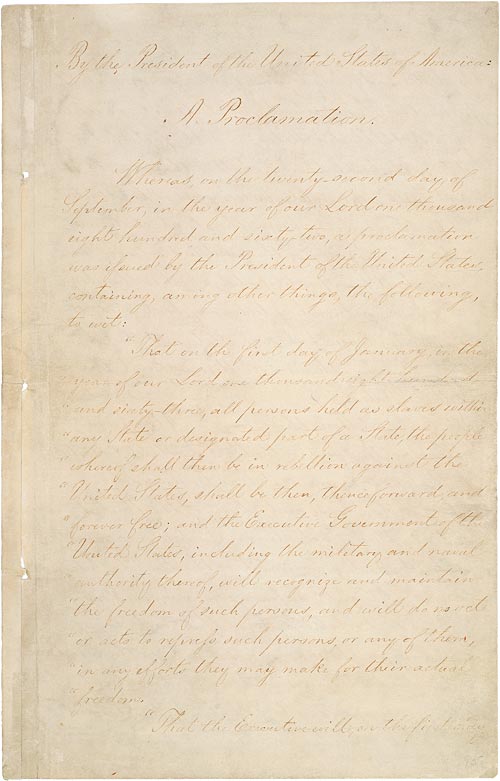
Handwritten manuscript page of the Emancipation Proclamation, headed 'By the President of the United States of America: A Proclamation,' in cursive script on aged cream paper, with the text beginning 'Whereas on the twenty-second day of September...'Document

Primary source

Emancipation Proclamation

Abraham Lincoln · 1 January 1863

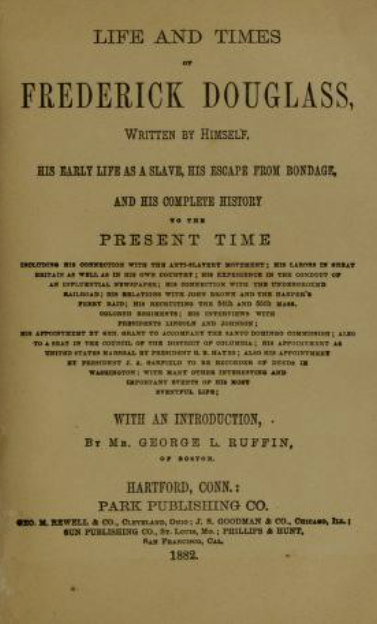
Title page of 'Life and Times of Frederick Douglass, Written by Himself' (1882), published in Hartford, Conn. by Park Publishing Co., with subtitle text and publisher listings in small print.Book

Primary source

Life and Times of Frederick Douglass

Frederick Douglass · 1881, revised 1892

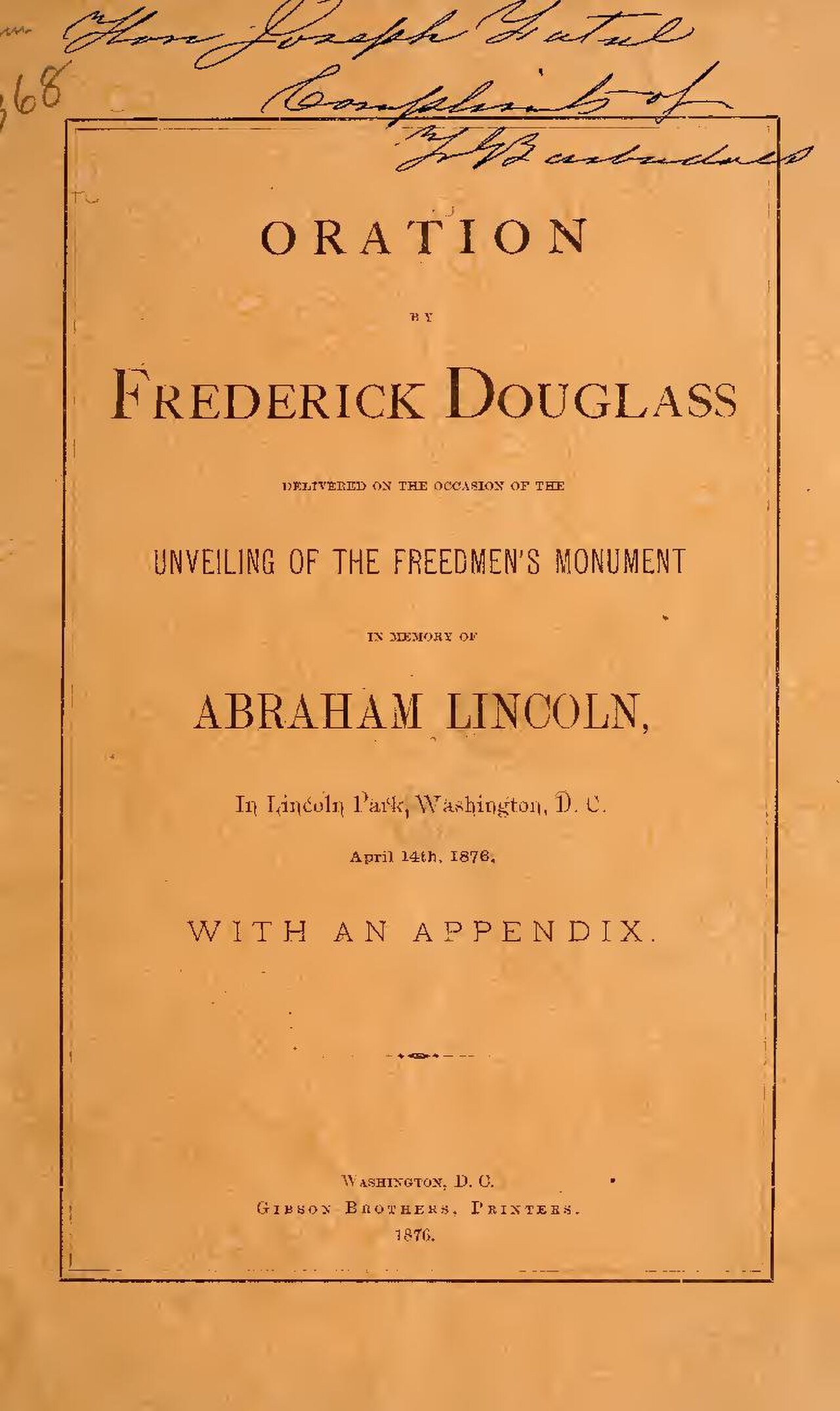
Cover of a printed pamphlet with a title page and handwritten inscription in ink.Speech

Primary source

Oration in Memory of Abraham Lincoln

Frederick Douglass · 1876

Newspaper article

Primary source

Reconstruction

Frederick Douglass · 1866

Document

Primary source

An Appeal to Congress for Impartial Suffrage

Frederick Douglass · 1867

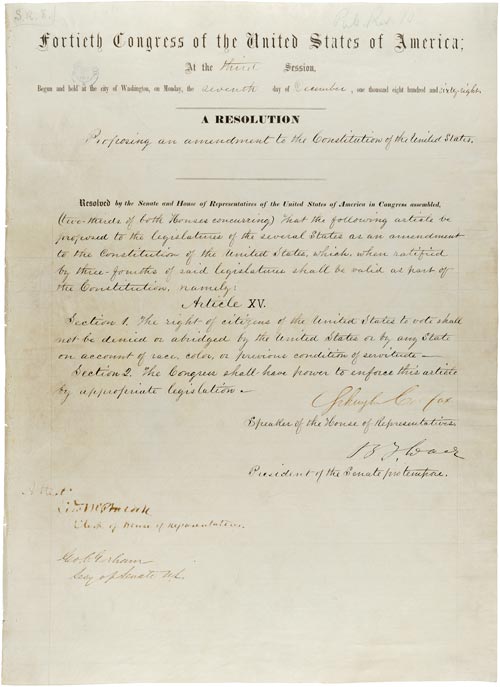
Scanned page of the 1868 joint resolution of the Fortieth Congress proposing the 15th Amendment, with Article XV text, Speaker and Vice President signature lines, and clerk and secretary attestations.Document

Primary source

15th Amendment to the U.S. Constitution: Voting Rights

United States Congress · 1870

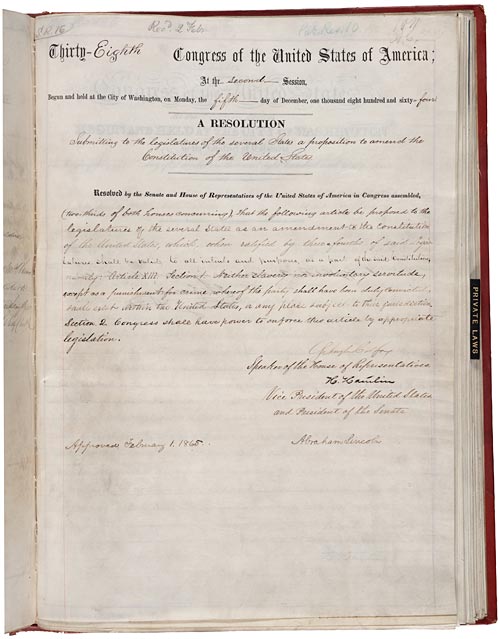
Scanned page of the 1865 joint resolution of the Thirty-Eighth Congress proposing the 13th Amendment, with the heading 'A Resolution Submitting to the Legislatures of the several States a proposition to amend the Constitution of the United States,' handwritten text, signatures of the Speaker and Vice President, and 'Approved February 1, 1865' at lower left.Document

Primary source

13th Amendment to the U.S. Constitution

1865

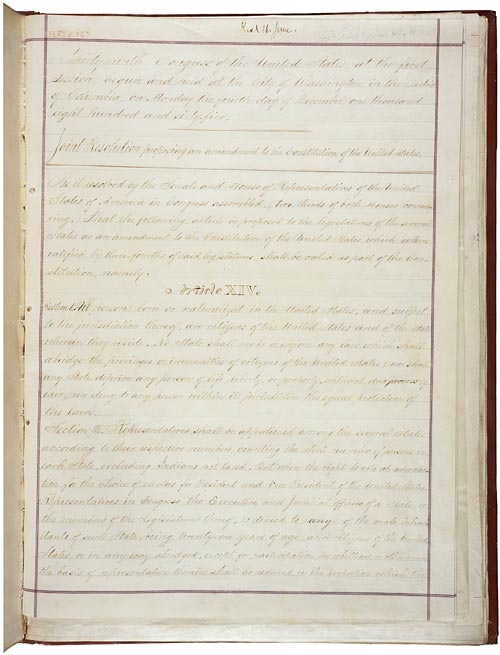
Handwritten manuscript page of the Joint Resolution proposing an amendment to the Constitution, with the heading 'Joint Resolution proposing an amendment to the Constitution of the United States' and the text of Section 1 of the 14th Amendment, including 'Article XIV.' Ruled border lines frame the text.Document

Primary source

14th Amendment to the U.S. Constitution: Civil Rights

United States Congress · 1868

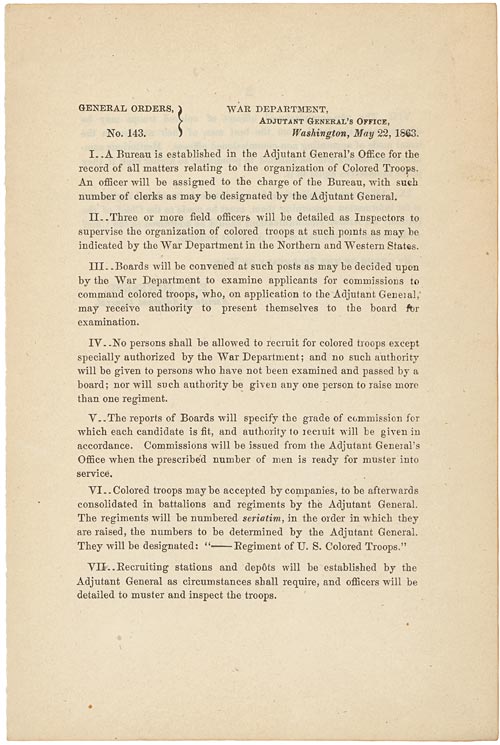
Scanned page of War Department General Orders No. 143, dated Washington, May 22, 1863, with seven numbered paragraphs establishing a Bureau for colored troops in the Adjutant General's Office and related recruiting rules.Document

Primary source

War Department General Order 143: Creation of the U.S. Colored Troops

22 May 1863

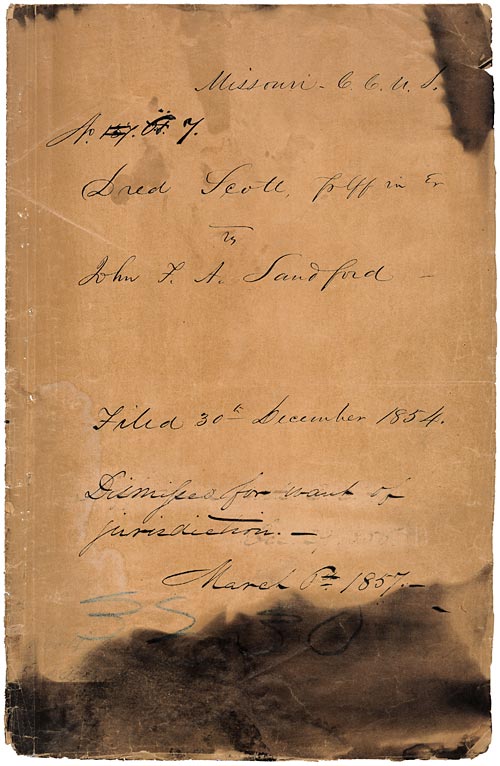
Handwritten cover sheet of the court record for Dred Scott v. Sandford. Top reads 'Missouri C.C.U.S.' with a case number, then 'Dred Scott, Plaintiff in Error, v. John F. A. Sandford', 'Filed 30th December 1854', 'Dismissed for want of jurisdiction', and 'March 6th 1857'. Scorched and darkened edges, with a blue pencil mark at lower left.Document

Primary source

Dred Scott v. Sandford

Roger B. Taney · 6 March 1857

Speech

Primary source

Lessons of the Hour

Frederick Douglass · 1894

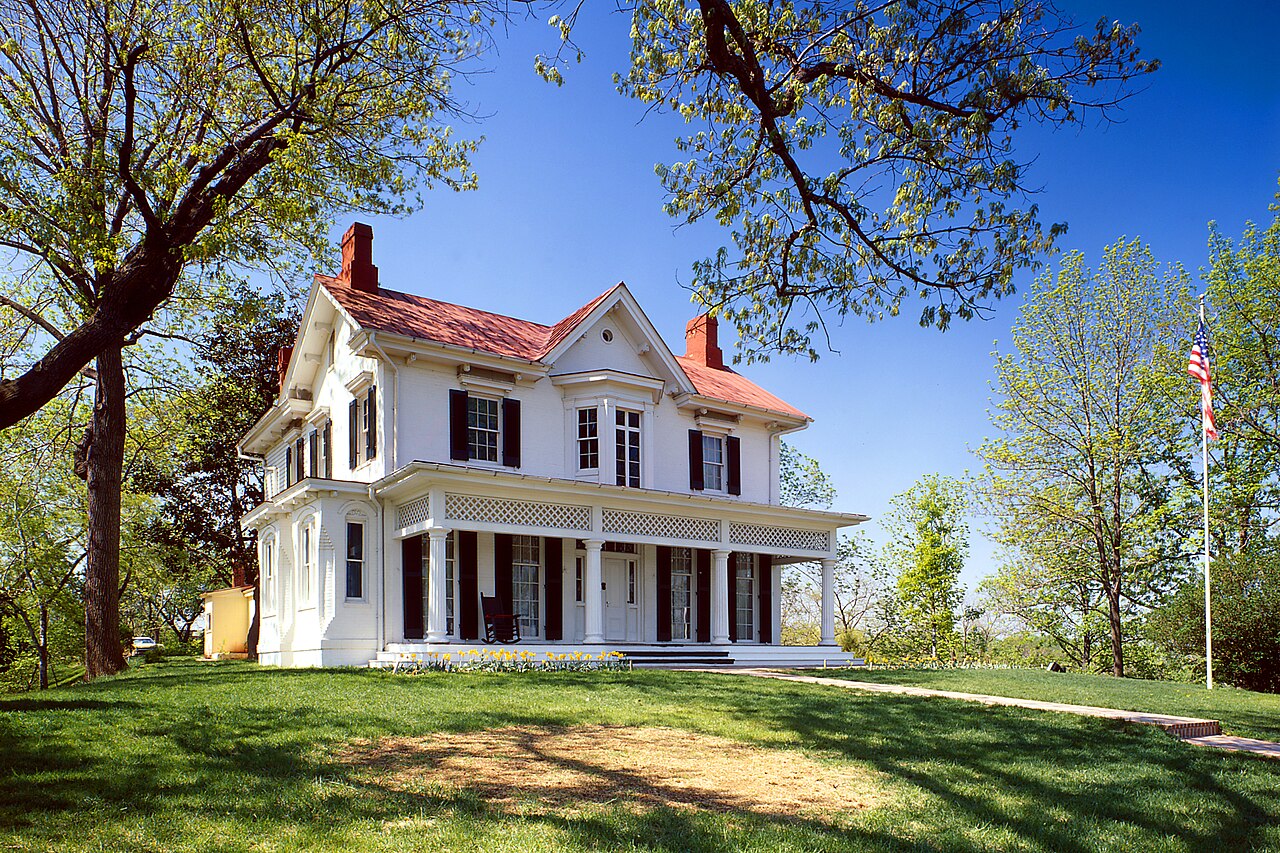
A two-story white wooden house with dark shutters, a red-tiled roof, two brick chimneys, and a front porch with lattice railing. An American flag flies on a pole to the right, on a grassy lawn under trees and blue sky.Artifact

Primary source

Frederick Douglass National Historic Site

1877-1895 (Douglass's residence)

Speech

Primary source

John Brown

Frederick Douglass · 30 May 1881

Speech

Primary source

Lecture on Haiti

Frederick Douglass · 2 January 1893

Book

Secondary source

Frederick Douglass

Paul Laurence Dunbar · 1895

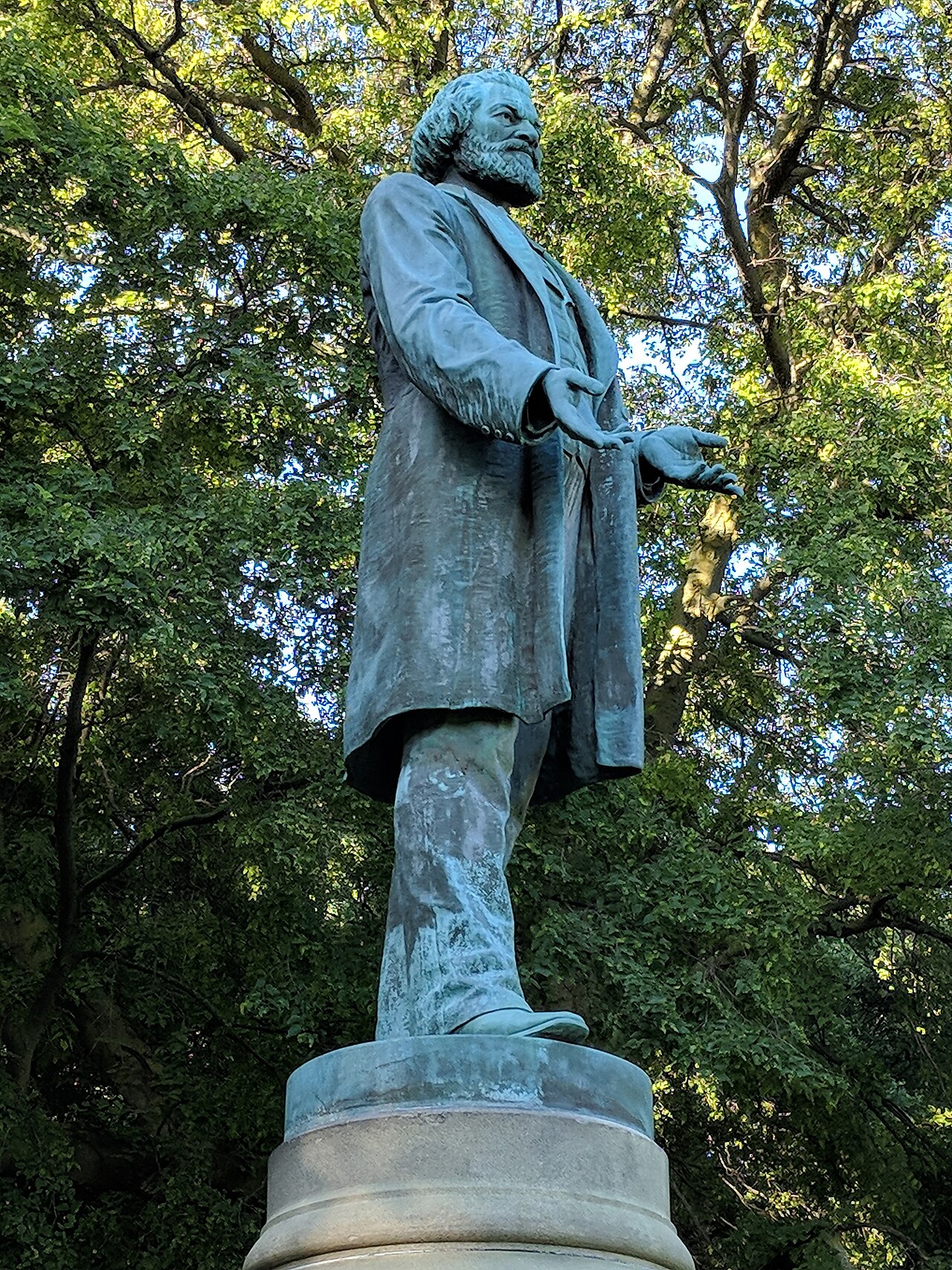
Bronze statue of a bearded man in a long overcoat, standing on a tall stone pedestal with arms outstretched, set against green summer trees. Weathered green patina covers the bronze.Sculpture

Secondary source

Statue of Frederick Douglass

Stanley W. Edwards · 1898

Speech

Primary source

West India Emancipation

Frederick Douglass · 1857

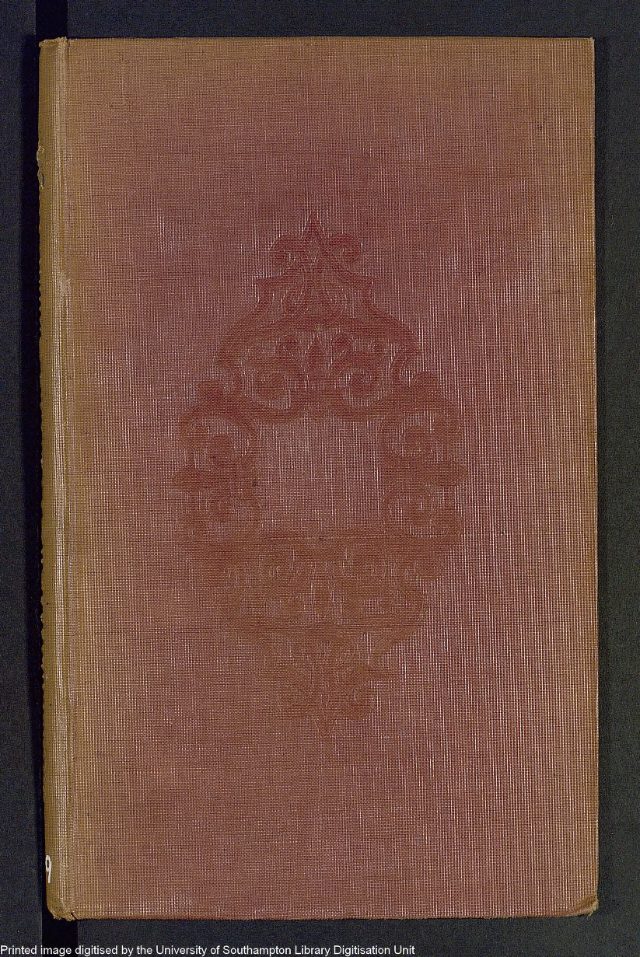
Narrative of the Life of Frederick Douglass, British EditionBook

Primary source

Narrative of the Life of Frederick Douglass, British Edition

Frederick Douglass · 1846

Book

Secondary source

Frederick Douglass: The Colored Orator

Frederic May Holland · 1891

Frederick Douglass (Booker T. Washington biography)Book

Secondary source

Frederick Douglass (Booker T. Washington biography)

Booker T. Washington · 1907

Frederick Douglass (Chesnutt biography)Book

Secondary source

Frederick Douglass (Chesnutt biography)

Charles W. Chesnutt · 1899

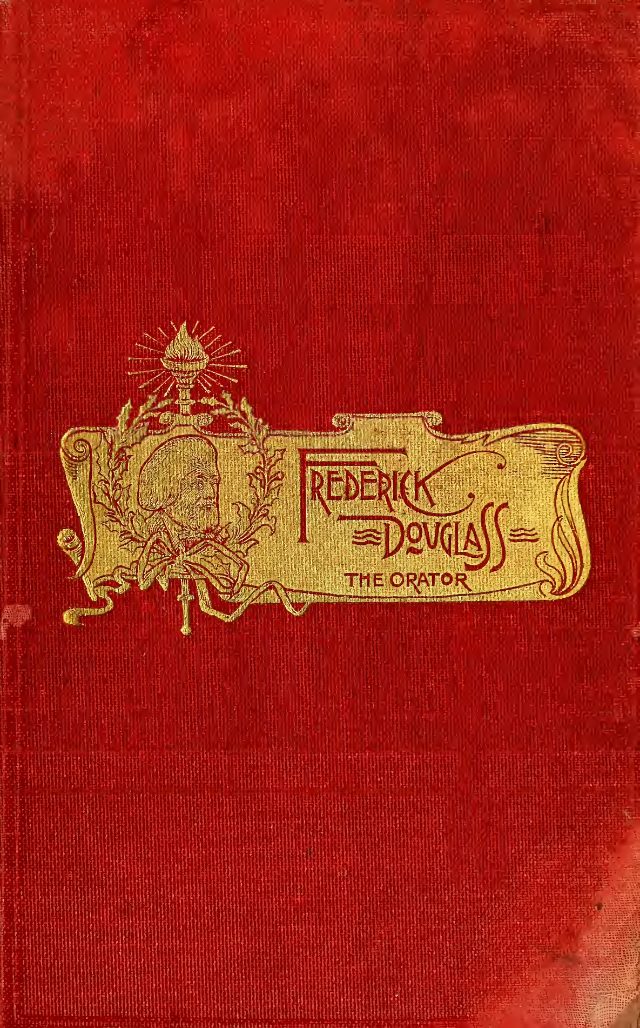
Frederick Douglass the OratorBook

Secondary source

Frederick Douglass the Orator

James Monroe Gregory · 1893

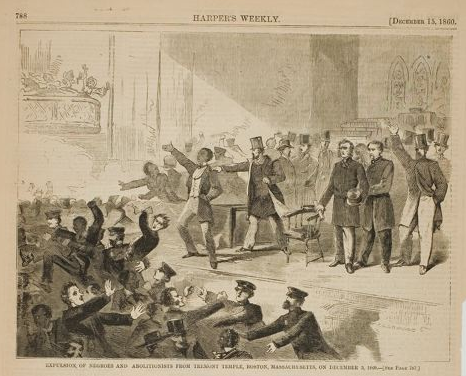
Wood engraving from Harper's Weekly, December 15, 1860, showing men being forced out of Tremont Temple in Boston. Crowded figures, some Black, are pushed and pulled toward a doorway while men in top hats and frock coats look on.Newspaper article

Primary source

Expulsion of Negroes and Abolitionists from Tremont Temple

Winslow Homer · 3 December 1860 (published 15 December 1860)

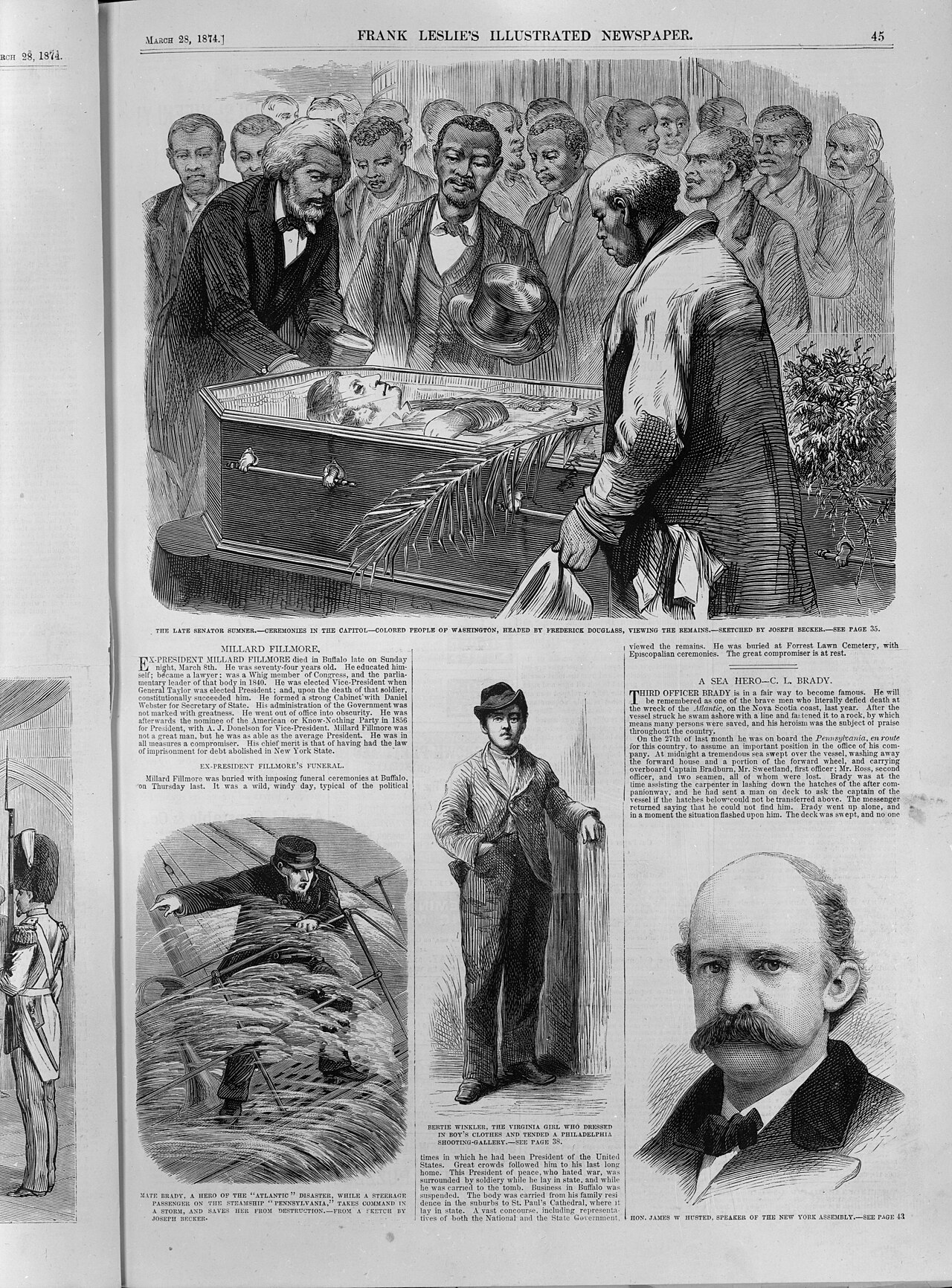
Printed newspaper page from Frank Leslie's Illustrated Newspaper, March 28, 1874, page 45. The top engraving shows a crowd of men in a Capitol room viewing a casket, with Frederick Douglass leaning over it. Below are several smaller illustrations and columns of text.Newspaper article

Primary source

Senator Sumner Lying in State, with Douglass Leading Mourners

Joseph Becker · 28 March 1874

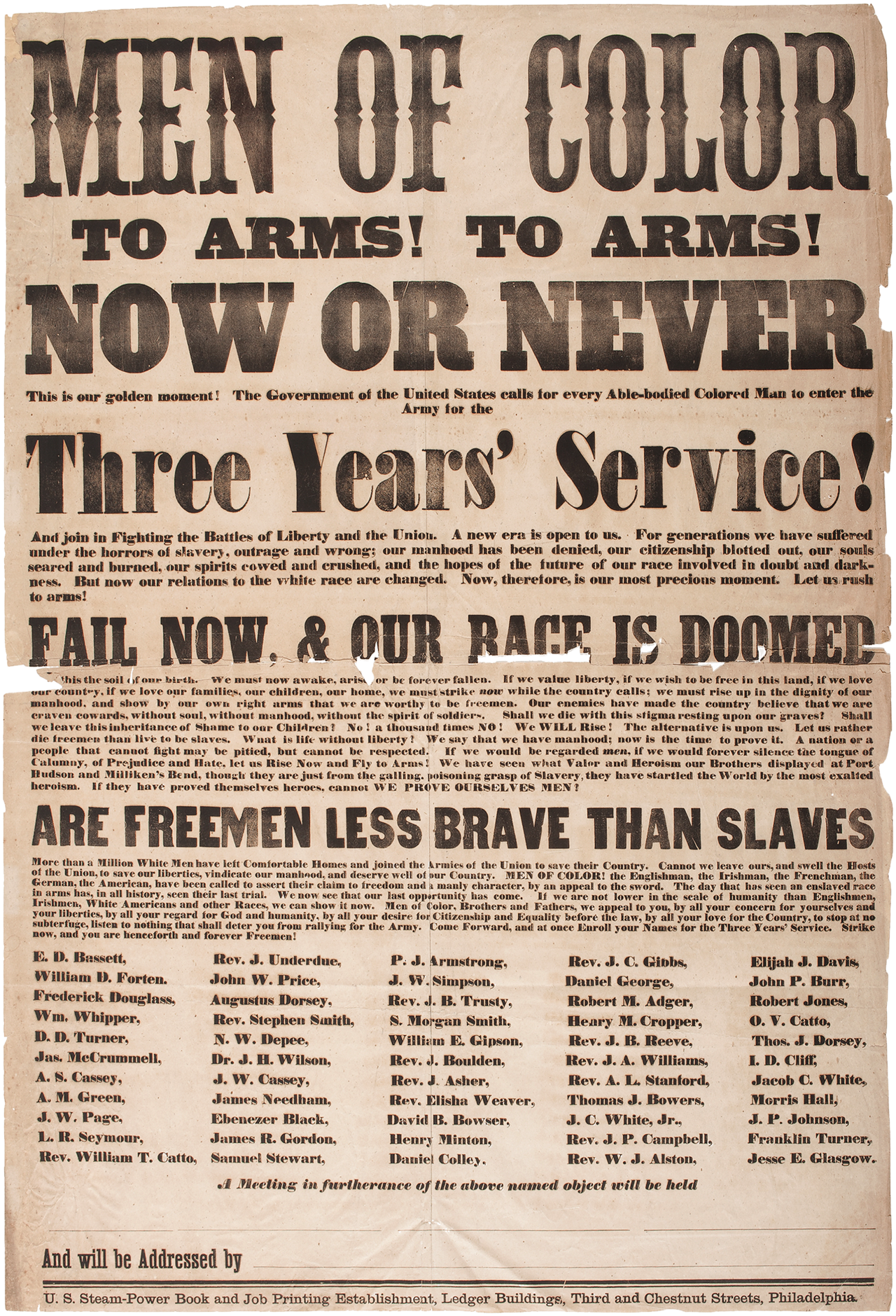
Scan of a 1863 printed recruitment broadside headed MEN OF COLOR, TO ARMS! TO ARMS! NOW OR NEVER, with columns of signatures listed below and a Philadelphia printer's credit at the bottom.Document

Primary source

Men of Color Civil War Recruitment Broadside

Frederick Douglass · 1863

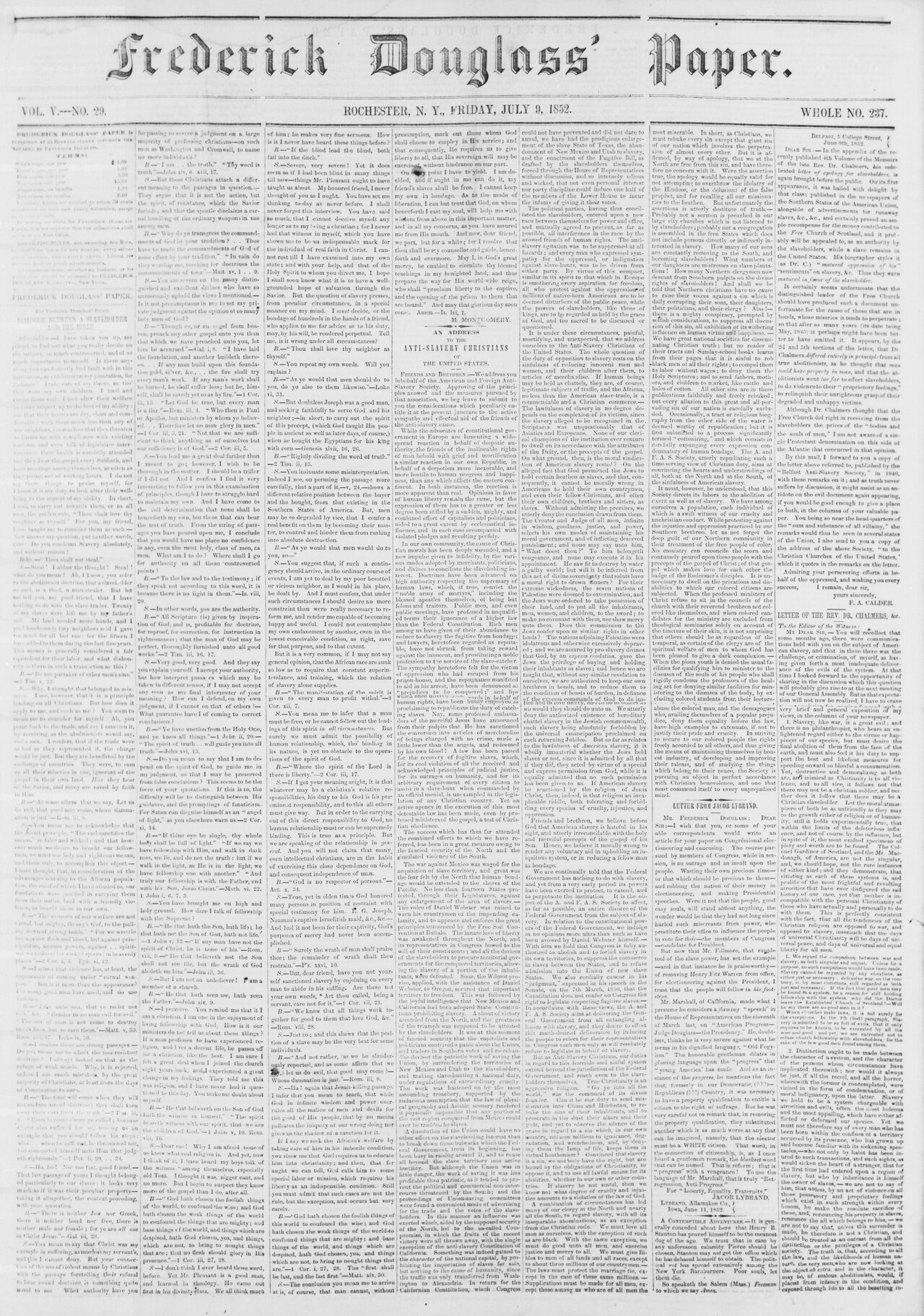
Scanned front page of Frederick Douglass' Paper, Rochester N.Y., Friday July 9, 1852, Vol. V, No. 29, Whole No. 237. Dense multi-column printed text with the masthead title at top.Newspaper article

Primary source

Frederick Douglass' Paper, Volume 5, Issue 29

Frederick Douglass · 9 July 1852

Book

Primary source

The Heroic Slave

Frederick Douglass · 1853

Speech

Primary source

The American Constitution and the Slave

Frederick Douglass · 26 March 1860

Book

Primary source

My Escape from Slavery

Frederick Douglass · 1881

Speech

Primary source

Address on the 21st Anniversary of Emancipation in the District of Columbia

Frederick Douglass · 1883

Letter

Primary source

Letter to Thomas Auld

Frederick Douglass · 3 September 1848

Book

Primary source

The Black Man: Chapter on Frederick Douglass

William Wells Brown · 1863

Book

Primary source

Collected Articles of Frederick Douglass

Frederick Douglass

Speech

Primary source

Abolition Fanaticism in New York: Speech of a Runaway Slave

Frederick Douglass · 11 May 1847

Speech

Primary source

Why Is the Negro Lynched?

Frederick Douglass · 1895

Speech

Primary source

Three Addresses on the Relations Between White and Colored People

Frederick Douglass · 1886

Speech

Primary source

Oration at the Unveiling of the Freedmen's Monument

Frederick Douglass · 14 April 1876

Book

Secondary source

There Was Once a Slave: The Heroic Story of Frederick Douglass

Shirley Graham · 1947

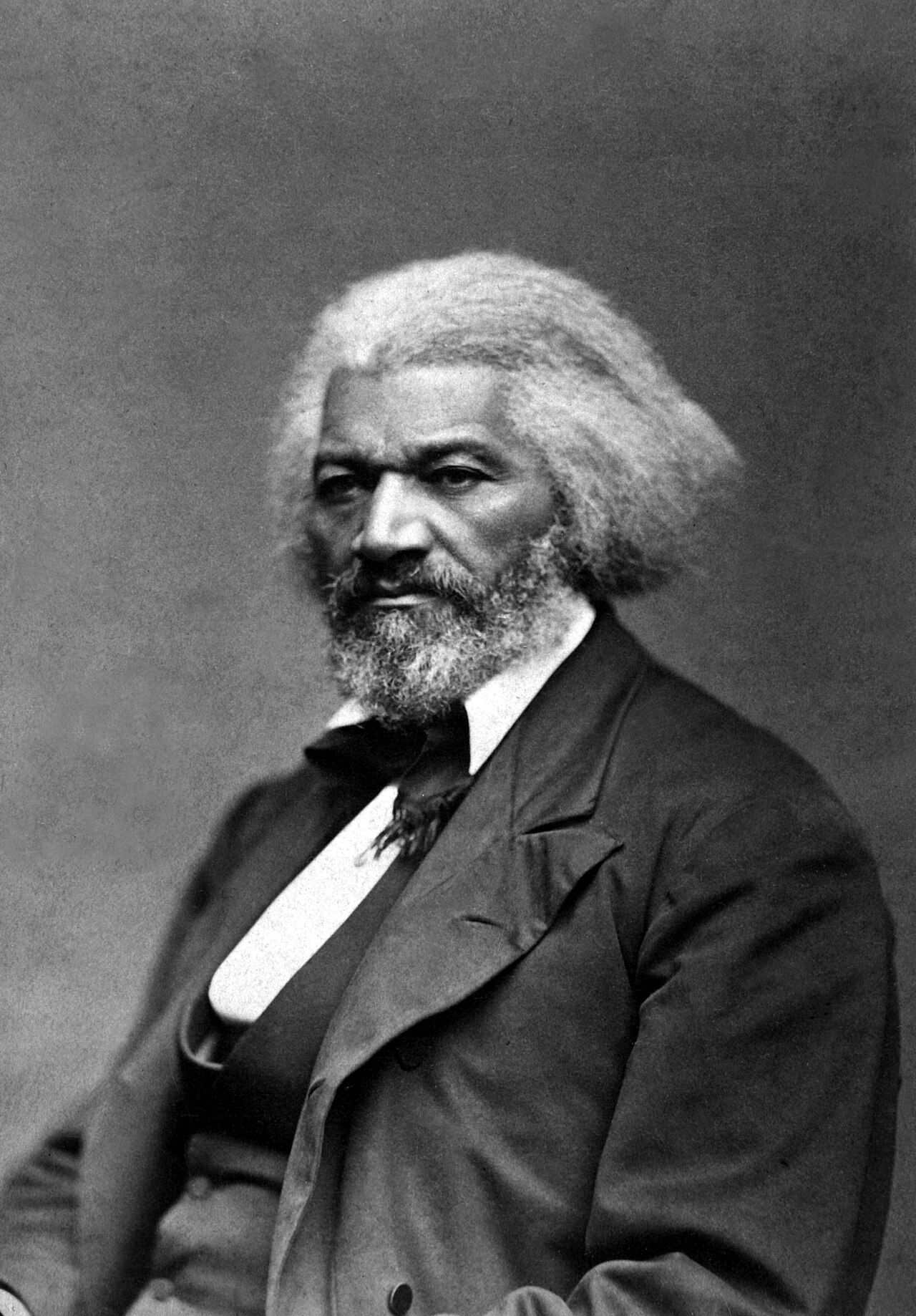
Black-and-white studio portrait of an older man with voluminous white hair and a full white beard, wearing a dark coat, white shirt, and dark cravat, seated and turned slightly to the left, looking toward the viewer against a gray backdrop.Photograph

Primary source

Frederick Douglass Photograph by George Kendall Warren

George Kendall Warren · c. 1879

Sepia-toned engraved portrait of a man with curly hair and a short beard, wearing a dark double-breasted jacket, a high white collar, and a striped cravat, with his hands resting on a table. He looks directly at the viewer.Painting

Primary source

Portrait of Frederick Douglass as a Young Man

J.C. Buttre · 1855

Book

Secondary source

Frederick Douglass: A Biography by Booker T. Washington

Booker T. Washington

Book

Secondary source

Frederick Douglass: A Biography by Charles W. Chesnutt

Charles Waddell Chesnutt · 1899

The Equality of All Men Before the LawSpeech

Primary source

The Equality of All Men Before the Law

William D. Kelley · 1865

Addresses at the National Hall Mass Meeting for Colored EnlistmentsSpeech

Primary source

Addresses at the National Hall Mass Meeting for Colored Enlistments

William D. Kelley · 6 July 1863

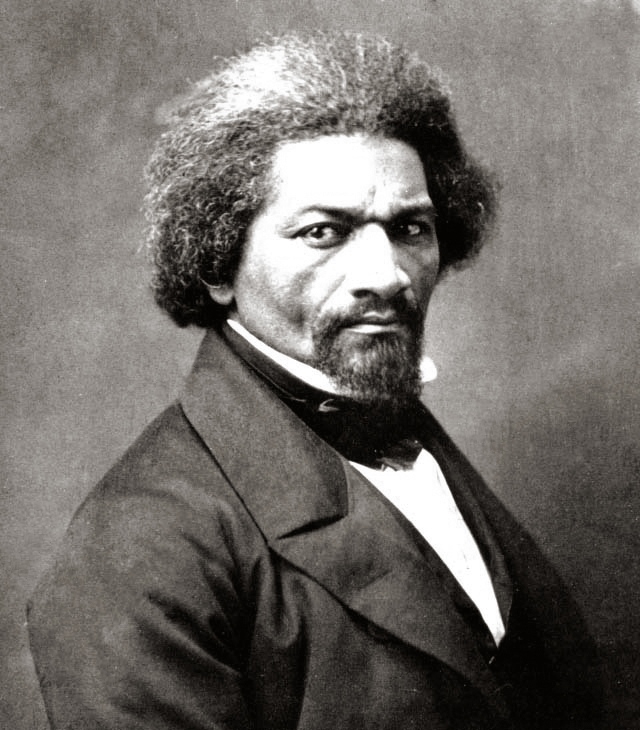
Black and white studio portrait of a man with voluminous curly hair, a full beard, and a dark coat over a white shirt with a high collar. He turns his head toward the viewer with a serious expression against a dim backdrop.Photograph

Primary source

Frederick Douglass Photograph, c. 1866

c. 1866

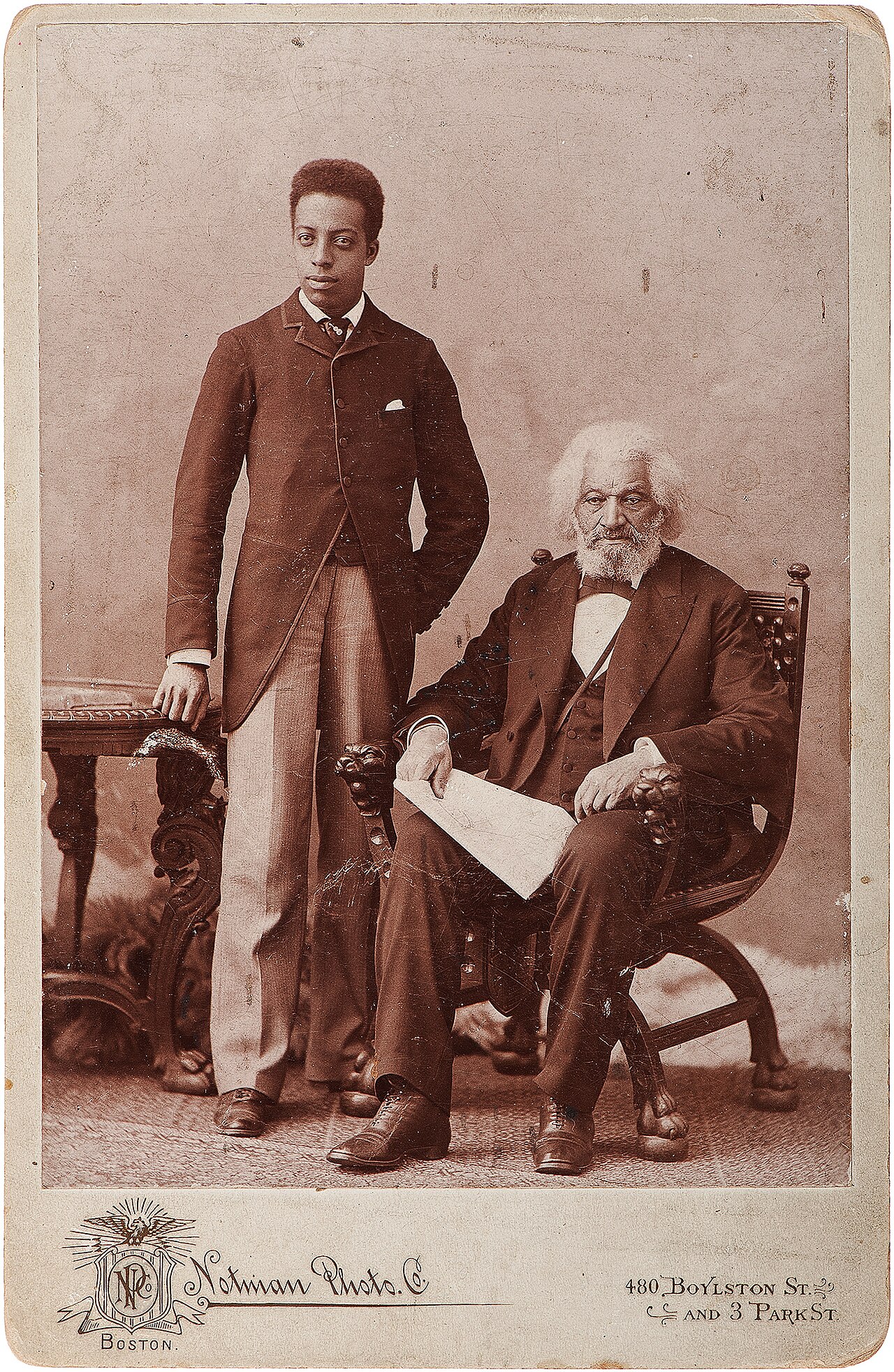
Sepia studio photograph of two Black men. An older man with white hair and beard sits in a carved wooden armchair holding a folded paper. A younger man in a dark suit stands beside him, one hand on a carved table. Mount printed with Notman Photo Co., Boston.Photograph

Primary source

Frederick Douglass with Grandson Joseph

Notman Photo Co. · 1890s

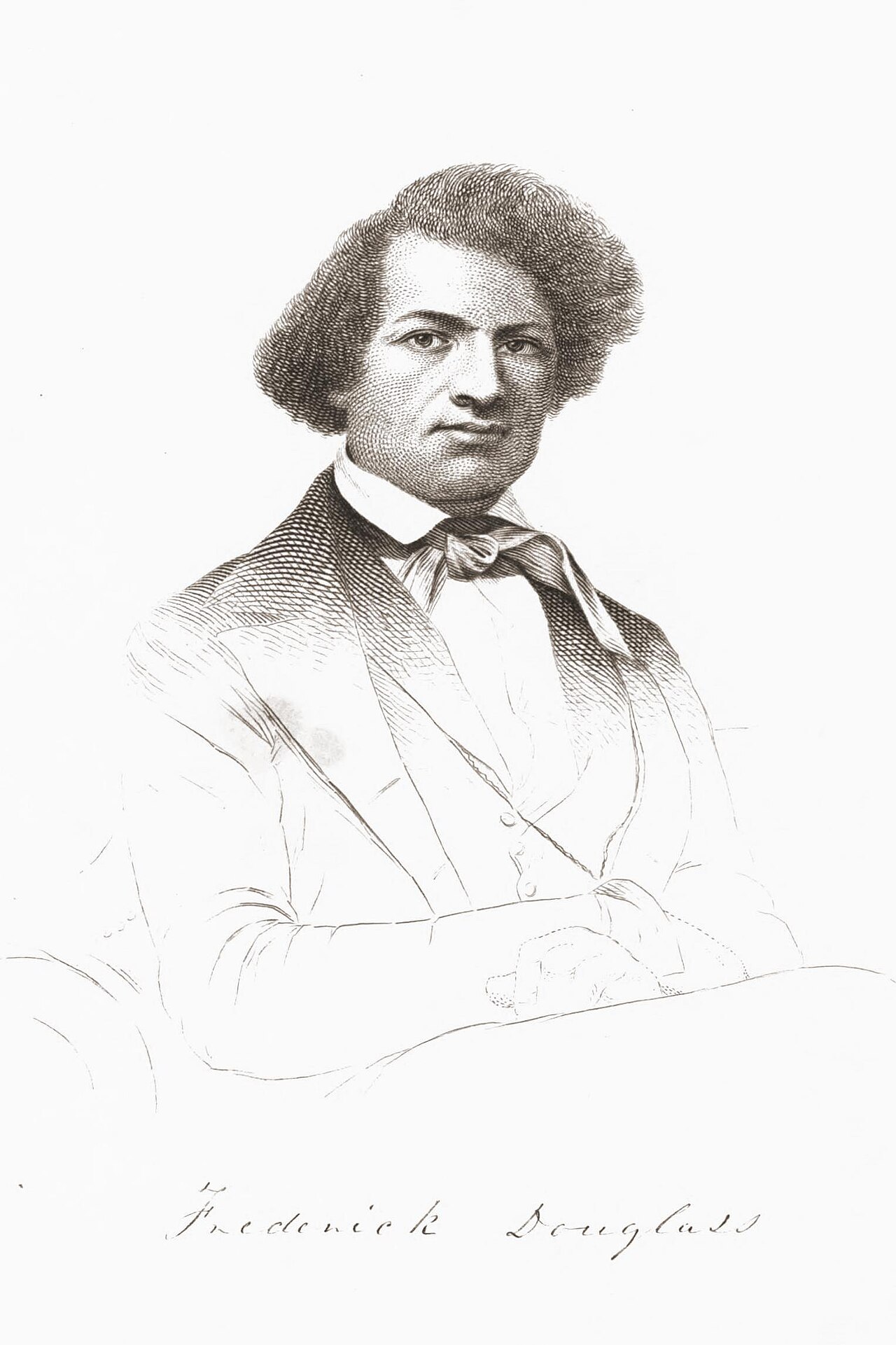
Engraved frontispiece portrait of a man with short, curly hair, wearing a dark jacket, light waistcoat, and a loosely tied bow at the collar, seated with arms folded. Handwritten-style signature reads 'Frederick Douglass' at the bottom.Painting

Primary source

Frontispiece Portrait, Narrative of the Life of Frederick Douglass

Frederick Douglass · 1845

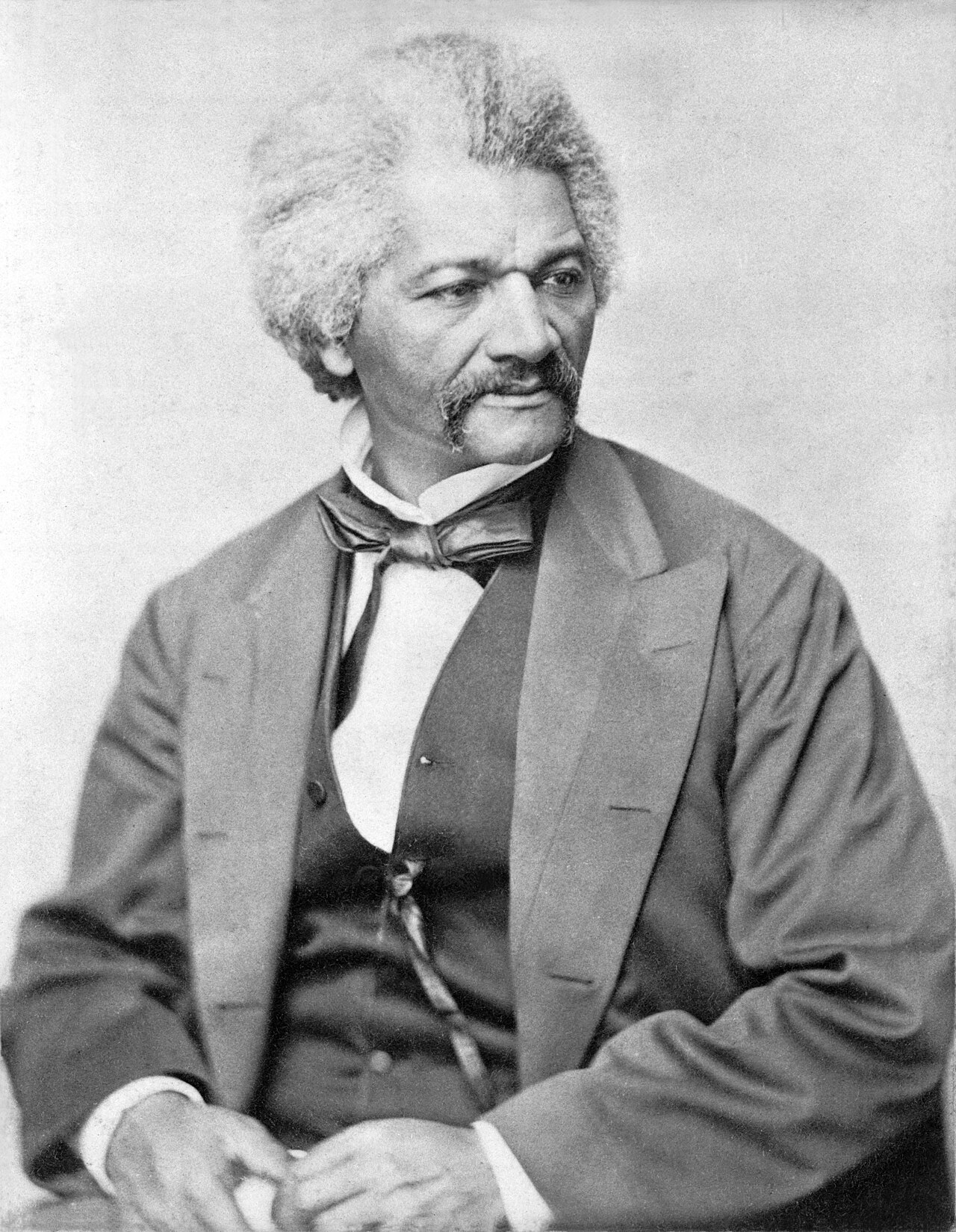
Black-and-white head-and-shoulders photographic portrait of an older man with white, curly hair and a full mustache, facing right. He wears a dark suit, waistcoat, white shirt, and a dark bow tie, with hands folded at the bottom of the frame.Photograph

Primary source

Frederick Douglass Head-and-Shoulders Portrait, Library of Congress

c. 1850-1860

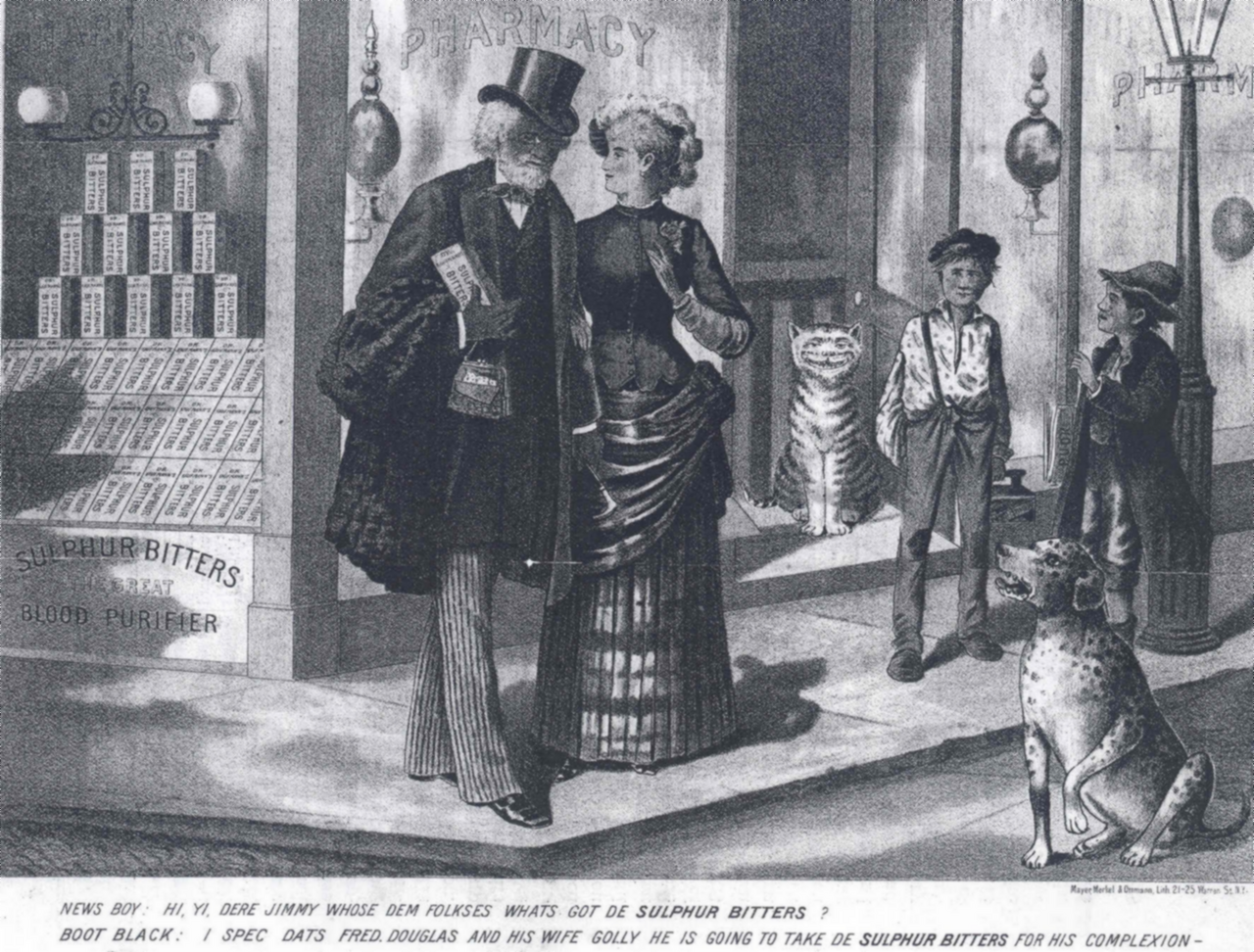
Lithograph cartoon of a pharmacy storefront with a well-dressed elderly man in a top hat and a woman in a bustled dress walking past, a cat sitting by the door, two boys and a spotted dog watching. Caption text below contains racist dialect.Painting

Primary source

Racist Cartoon Attacking Frederick Douglass's Marriage to Helen Pitts

Meyer Merkel & Ottmann · c. 1884

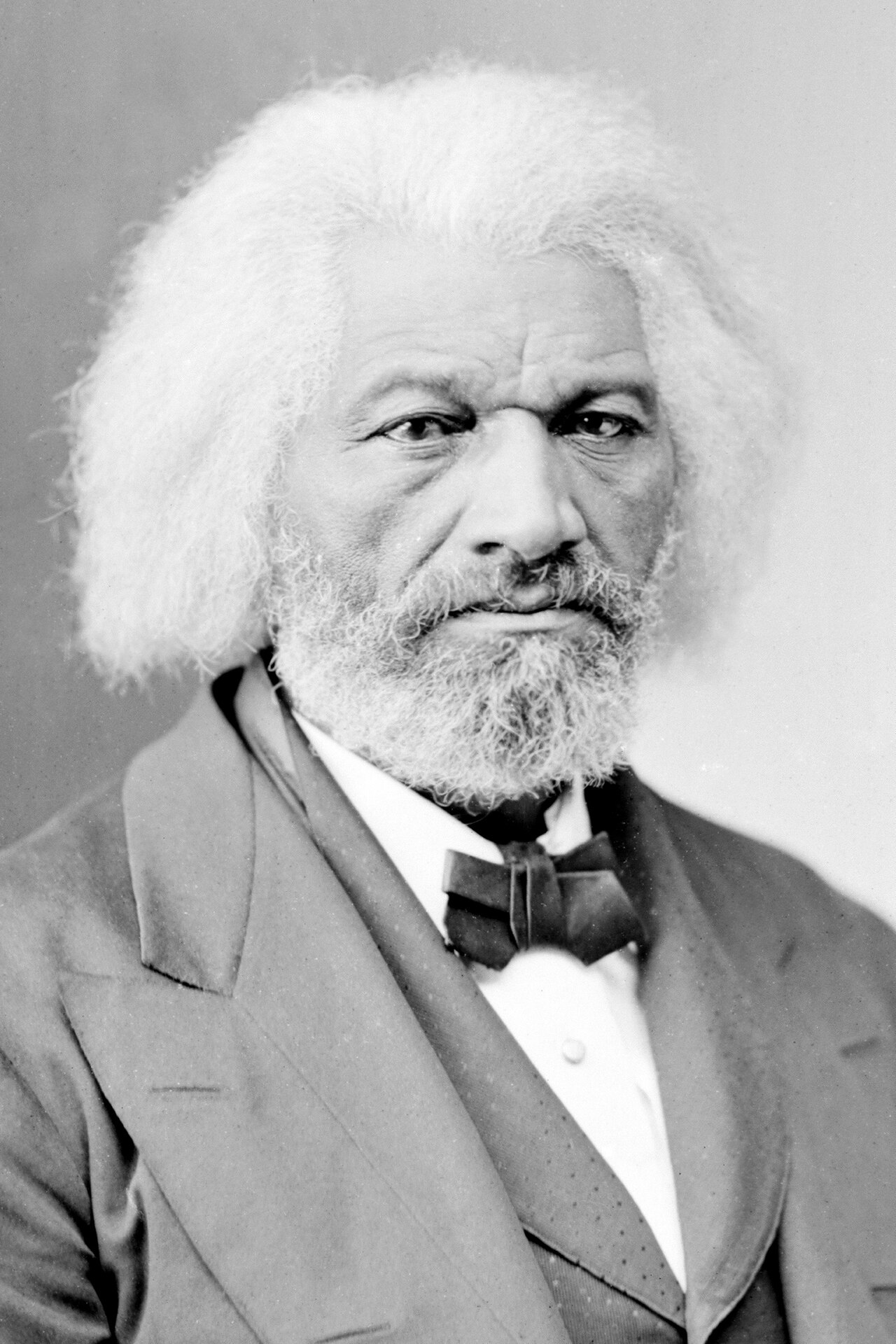
Black-and-white studio portrait of an elderly man with a large, voluminous white hair and a full white beard and mustache. He wears a dark suit jacket, a white collared shirt, and a dark bow tie, and looks directly at the camera with a serious expression.Photograph

Primary source

Frederick Douglass Portrait by Brady-Handy

Brady-Handy studio · c. 1865-1880

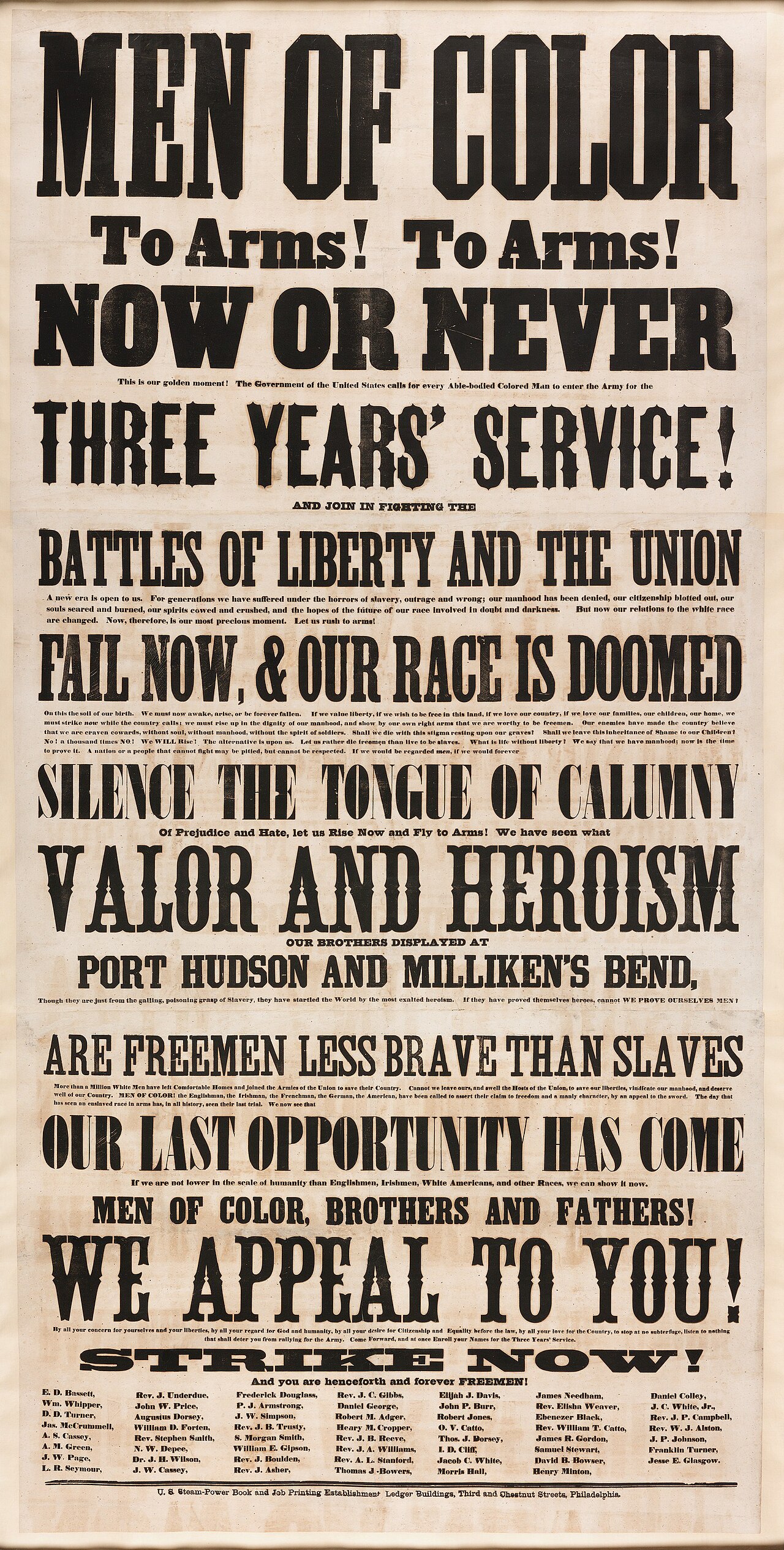
Large printed broadside titled 'MEN OF COLOR, To Arms! To Arms! NOW OR NEVER', urging Black men to enlist for three years' service. Lists names of recruiting figures at the bottom, including Frederick Douglass, and a printer's credit.Document

Primary source

Men of Color, To Arms! To Arms! Recruitment Broadside

Frederick Douglass · 1863

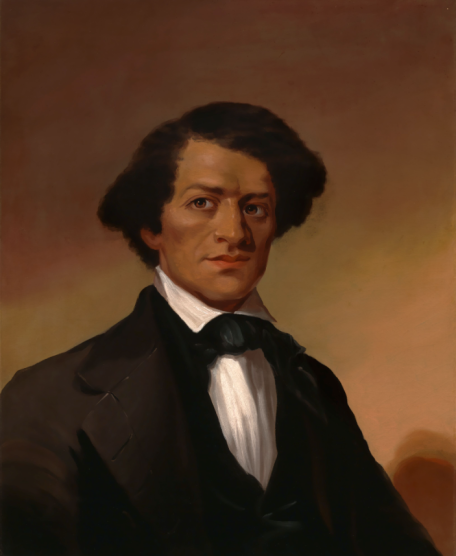
Oil portrait of a man with dark wavy hair, wearing a dark jacket, white shirt, and dark bow tie, gazing toward the viewer against a warm reddish-brown background. Painted in a realistic style.Painting

Primary source

Frederick Douglass Portrait, c. 1844-1845

Formerly attributed to Elisha Livermore Hammond · c. 1844-1845

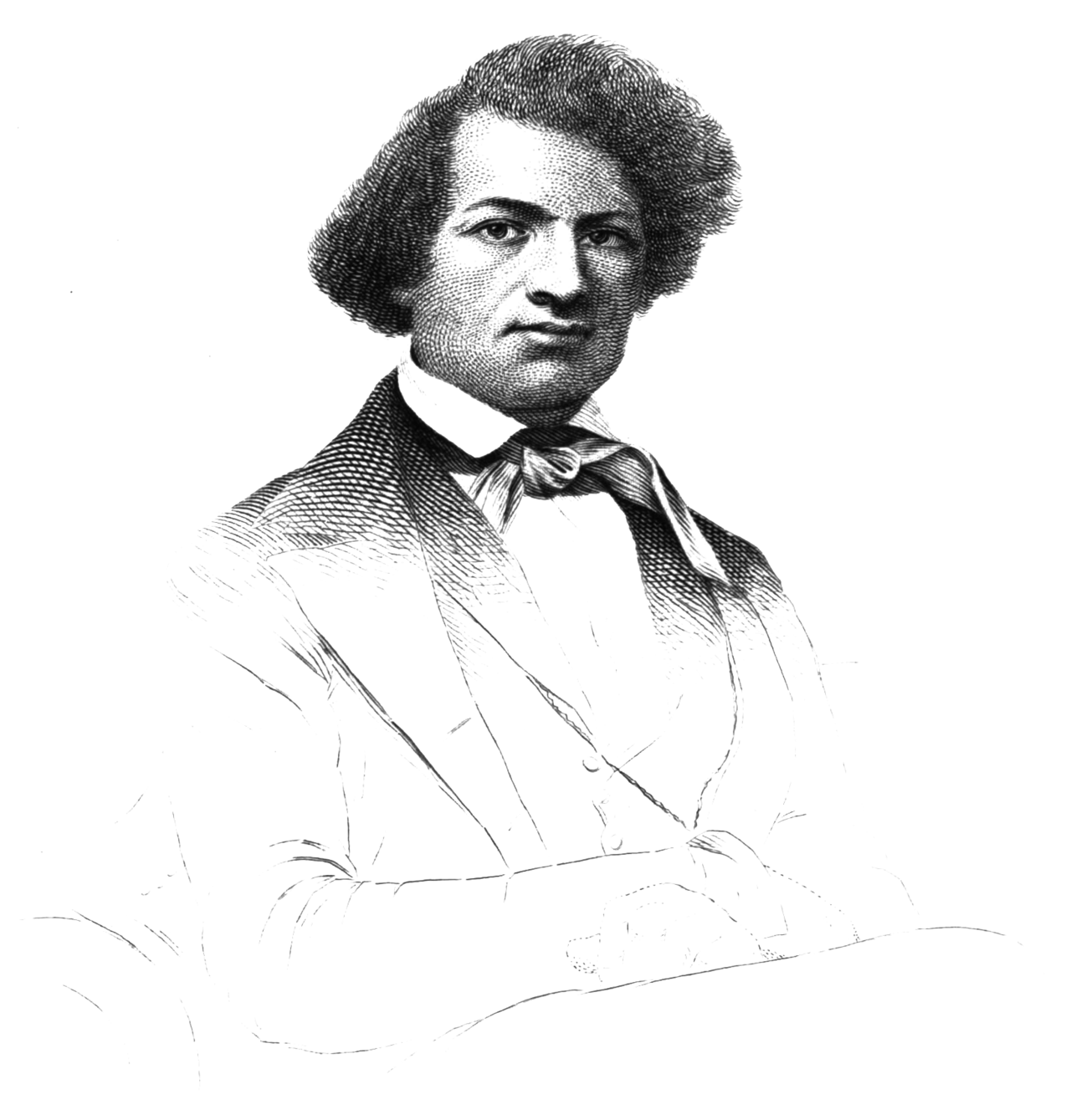
Black-and-white engraved portrait of a man with voluminous curly hair, wearing a high white collar, a loosely tied bow tie, and a dark jacket, shown from the chest up on a white background, with his head turned slightly to the side.Painting

Primary source

Frontispiece Portrait, Narrative of the Life of Frederick Douglass

1849

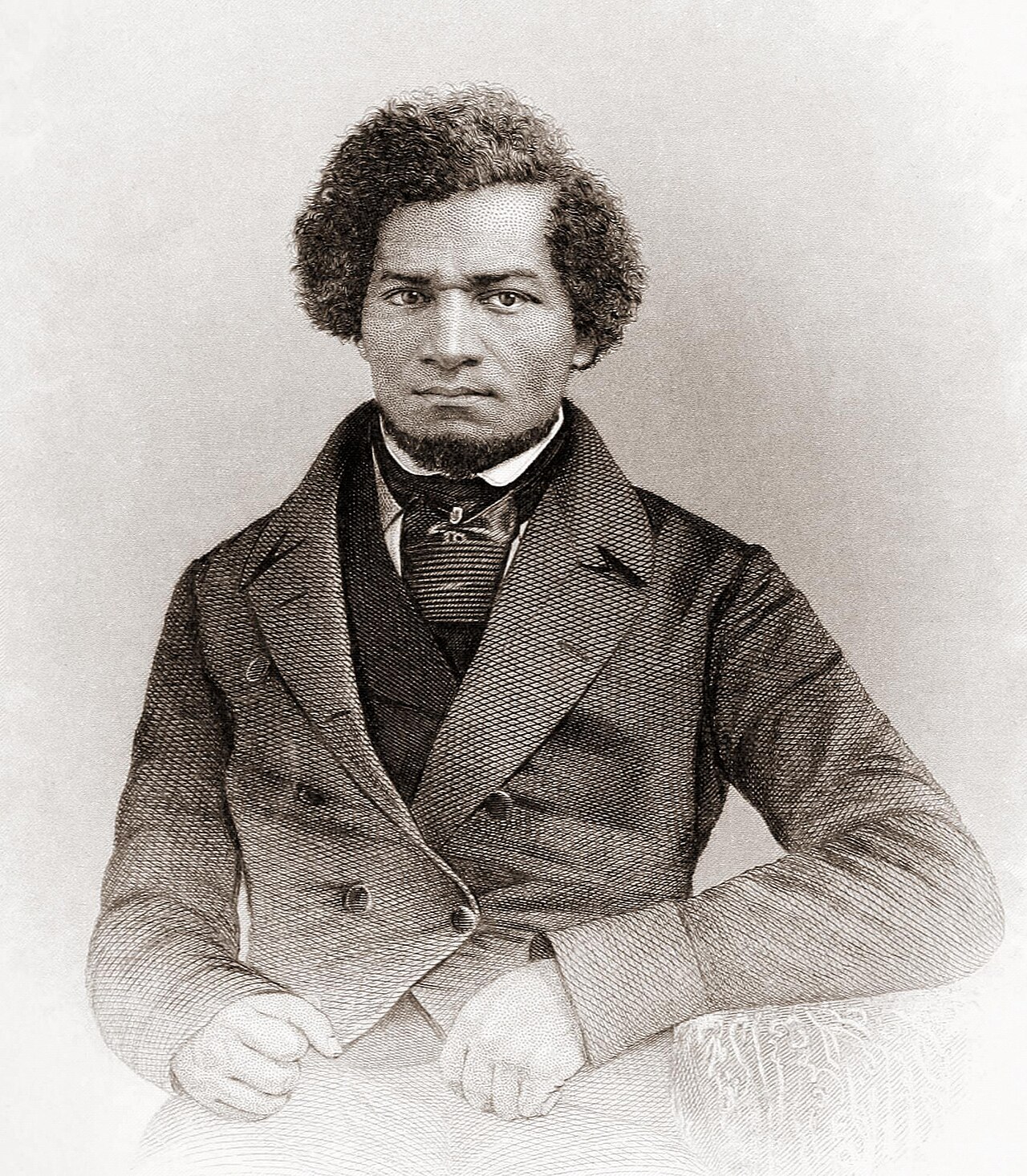
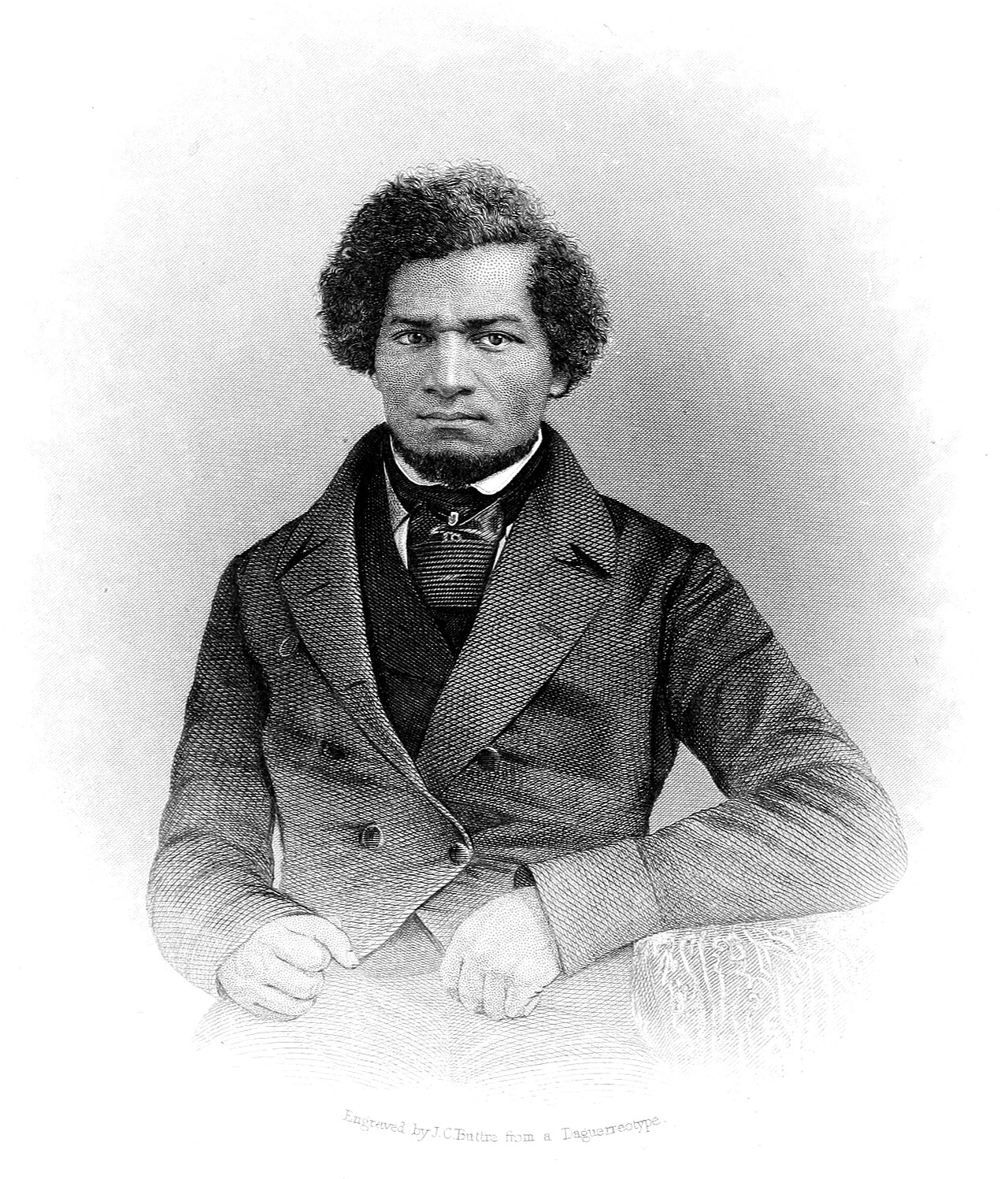
Black-and-white engraved portrait of a man with curly hair, wearing a double-breasted coat and a striped cravat, with his hands resting together at the bottom. He looks directly at the viewer. Small caption at the bottom reads 'Engraved by J C Buttre from a Daguerreotype.'Painting

Primary source

Engraving of Frederick Douglass by John Chester Buttre

John Chester Buttre · 1855

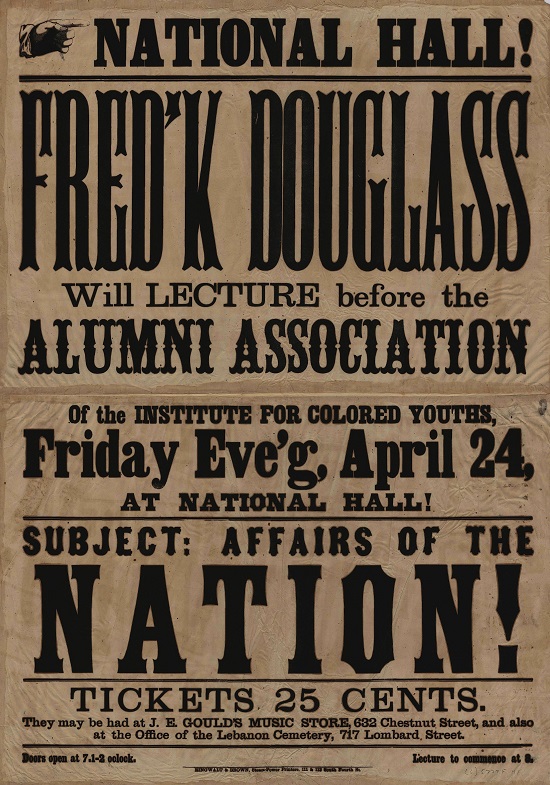
Scan of a tan broadside poster headed 'NATIONAL HALL!' announcing 'FRED'K DOUGLASS Will LECTURE before the ALUMNI ASSOCIATION' of the Institute for Colored Youths, Friday Eve'g, April 24, at National Hall, subject 'Affairs of the Nation!', tickets 25 cents.Document

Primary source

Poster Announcing a Lecture by Frederick Douglass, 1863

Frederick Douglass · 24 April 1863

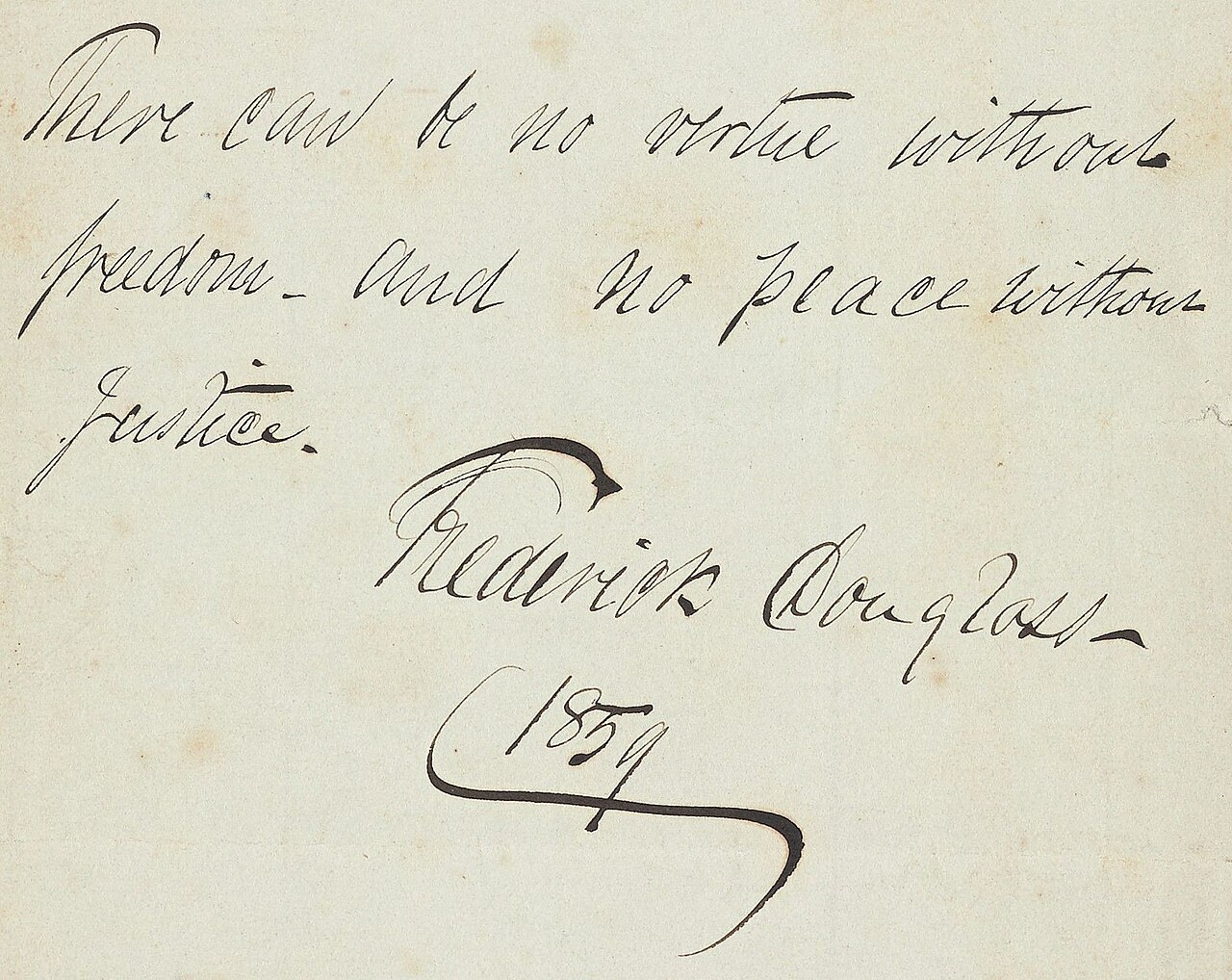
Handwritten ink manuscript on cream paper reading: "There can be no virtue without freedom, and no peace without justice." Signed "Frederick Douglass" and dated "1859" below.Letter

Primary source

Autograph Note: No Peace Without Justice

Frederick Douglass · 1859

Sepia-toned studio portrait of a man with thick, curly hair, looking toward the viewer with a steady expression. He wears a dark coat and a white high collar with a cravat.Photograph

Primary source

Portrait of Frederick Douglass as Minister to Haiti (Retouched)

Metropolitan Museum of Art (original); retouched by Wikimedia contributor · 19th century (retouched 2021)

Frederick Douglass: A NarrativeBook

Secondary source

Frederick Douglass: A Narrative

Leila Amos Pendleton · 1921

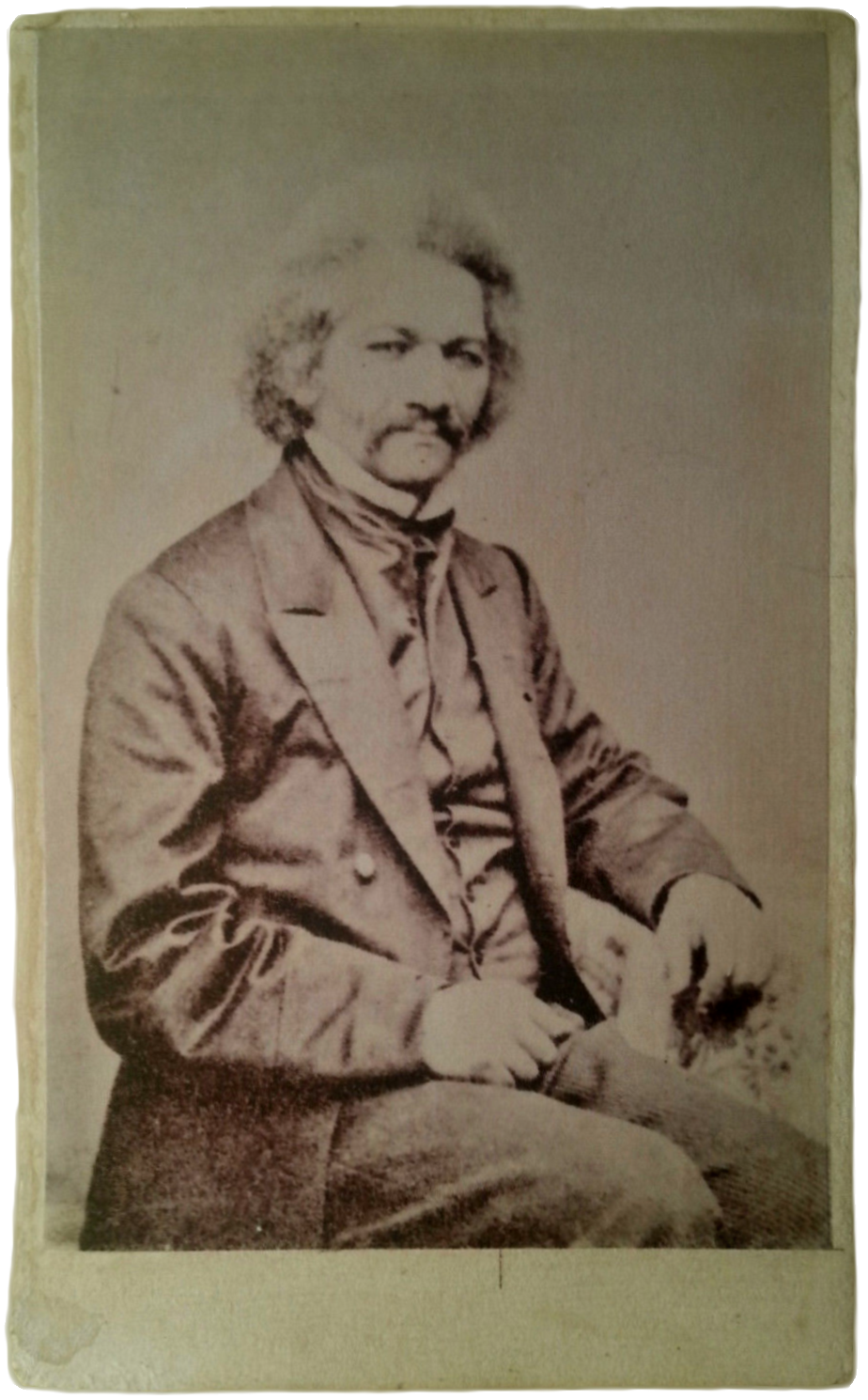
Sepia-toned carte de visite portrait of a seated middle-aged man with curly hair and a mustache, wearing a dark jacket, cravat, and waistcoat, with one hand resting on his knee and the other on his lap, against a plain backdrop.Photograph

Primary source

Carte de Visite Portrait of Frederick Douglass, 1870s

1870s

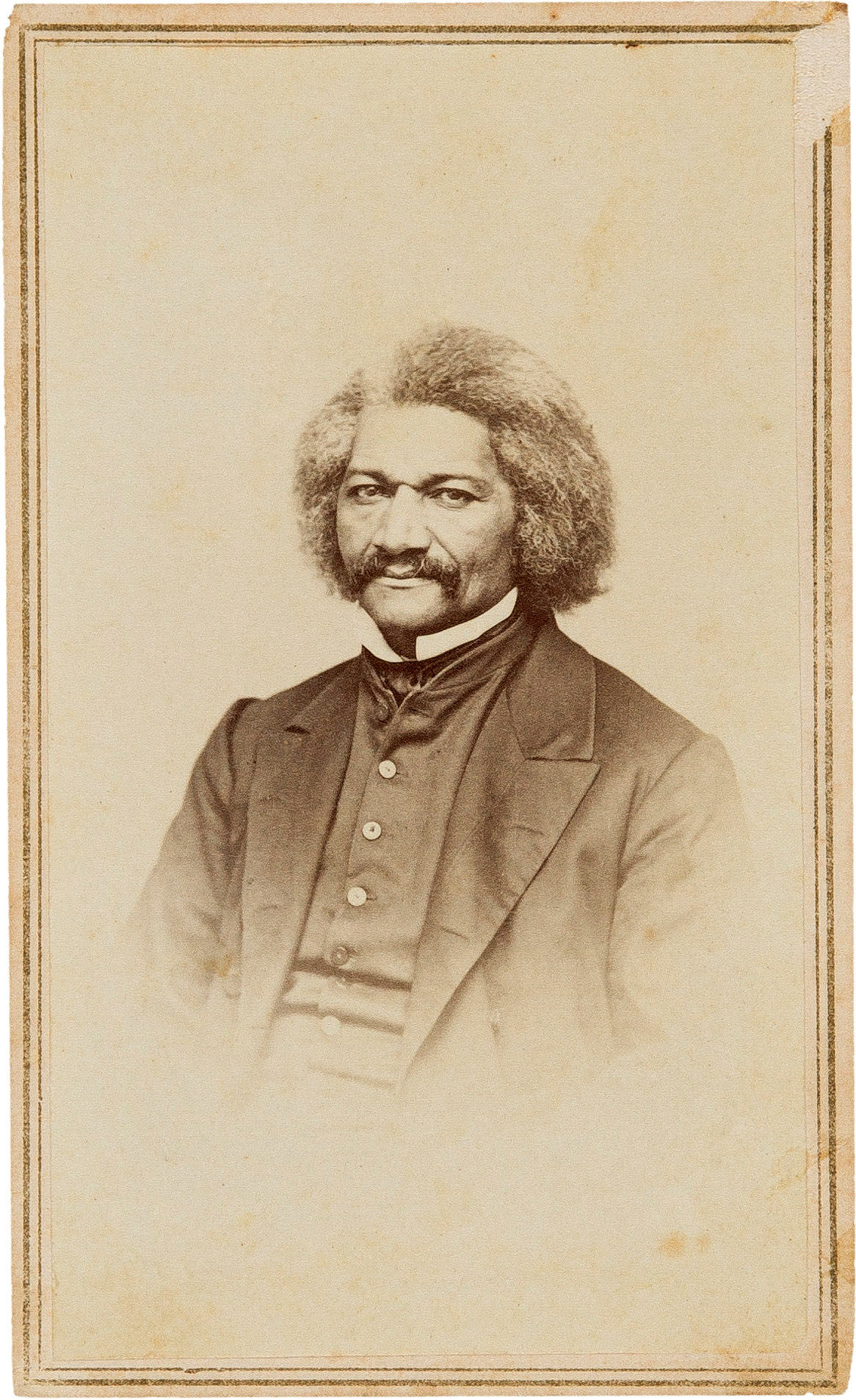
Sepia-toned carte de visite portrait of a man with voluminous curly hair, a full mustache, and a dark jacket over a buttoned waistcoat with a white collar, set against a pale mount with a thin decorative border.Photograph

Primary source

Carte de Visite Portrait of Frederick Douglass by Merrill & Crosby

Merrill & Crosby · 1860s

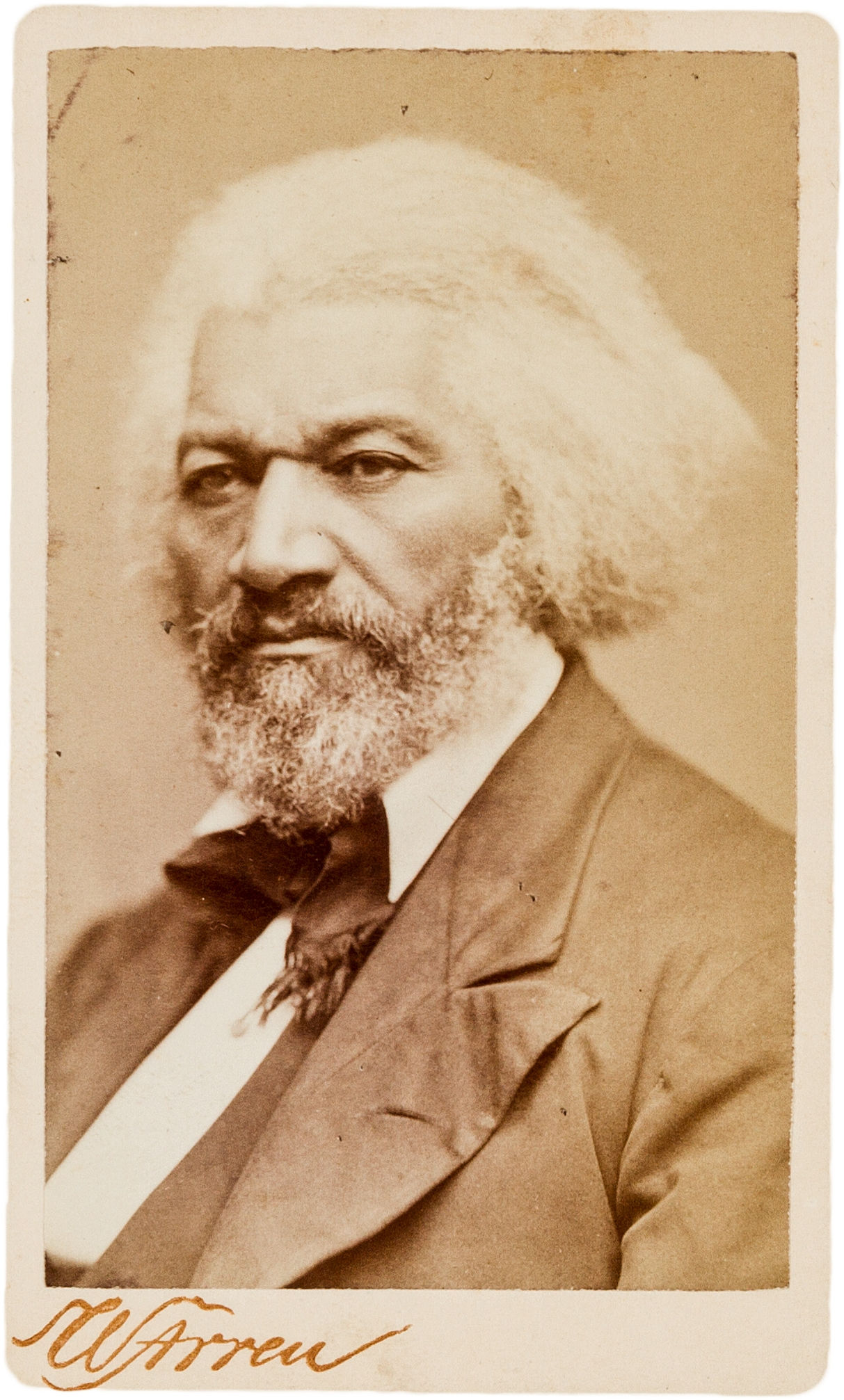
Sepia-toned studio portrait of an older man with white hair and a full white beard, wearing a dark suit jacket, white collar, and dark cravat, turned slightly to his left. A handwritten signature appears in orange ink at the bottom of the card.Photograph

Primary source

Photograph of Frederick Douglass by George Kendall Warren

George Kendall Warren · c. 1879

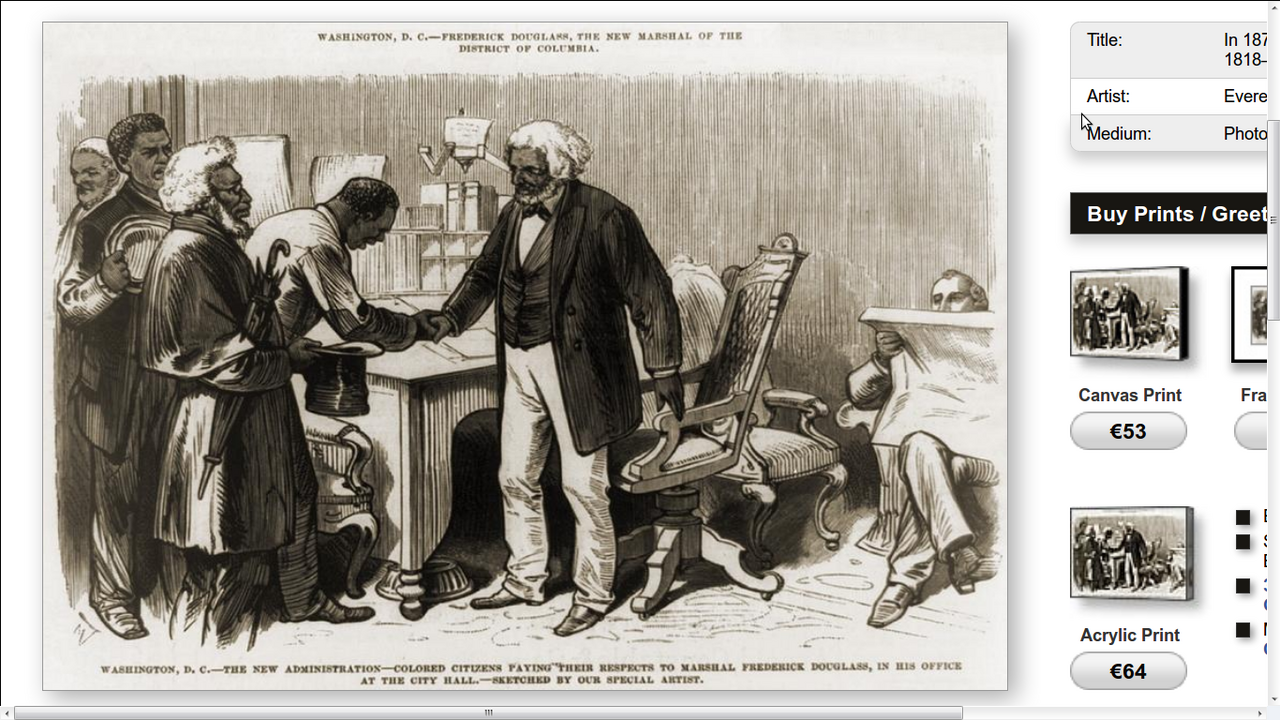
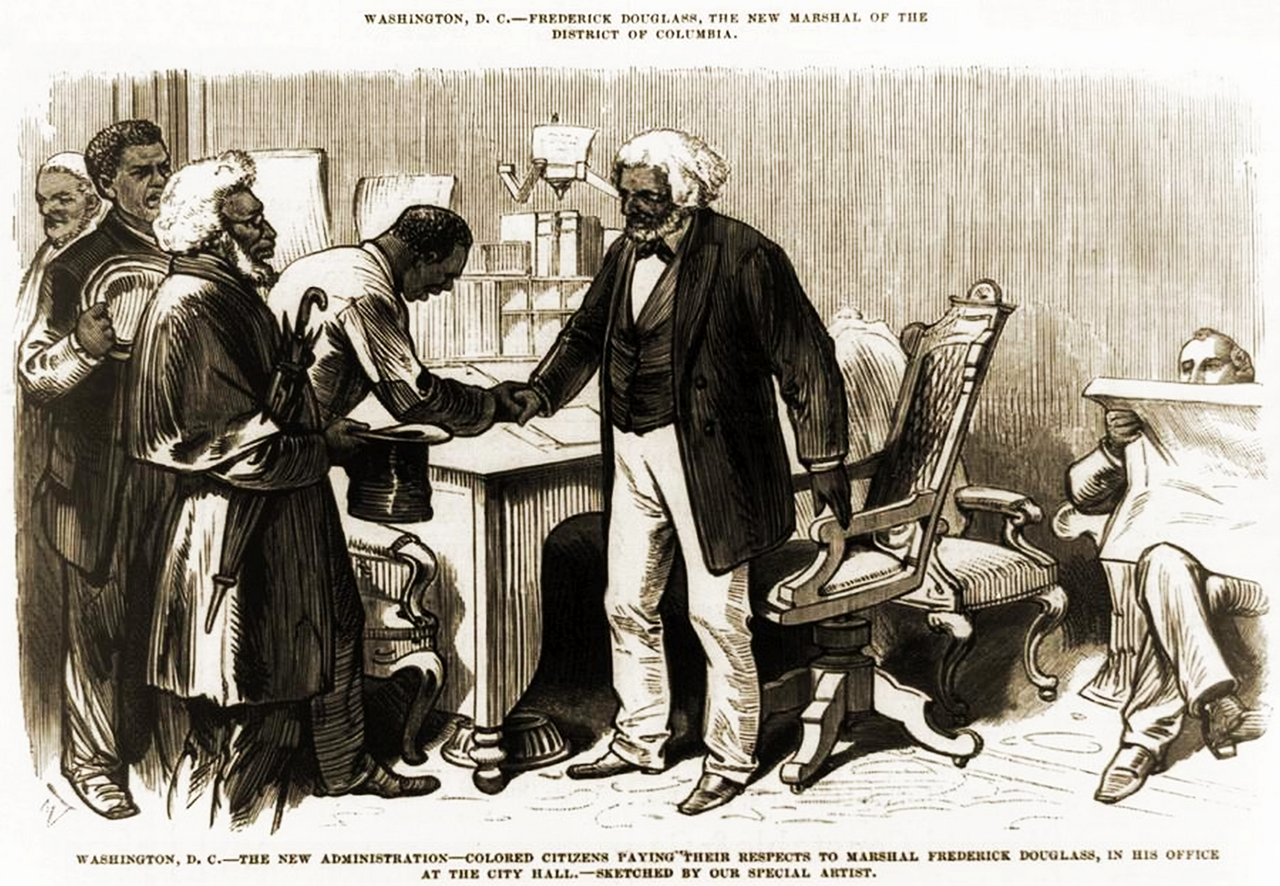
Engraved newspaper illustration titled 'Washington, D.C.—Frederick Douglass, the new Marshal of the District of Columbia.' Douglass, in a dark suit, shakes hands with a man at a desk while several Black citizens wait and watch in an office with bookshelves and a large chair.Newspaper article

Primary source

Frederick Douglass Greeting Citizens as U.S. Marshal, 1877

Unknown · 1877

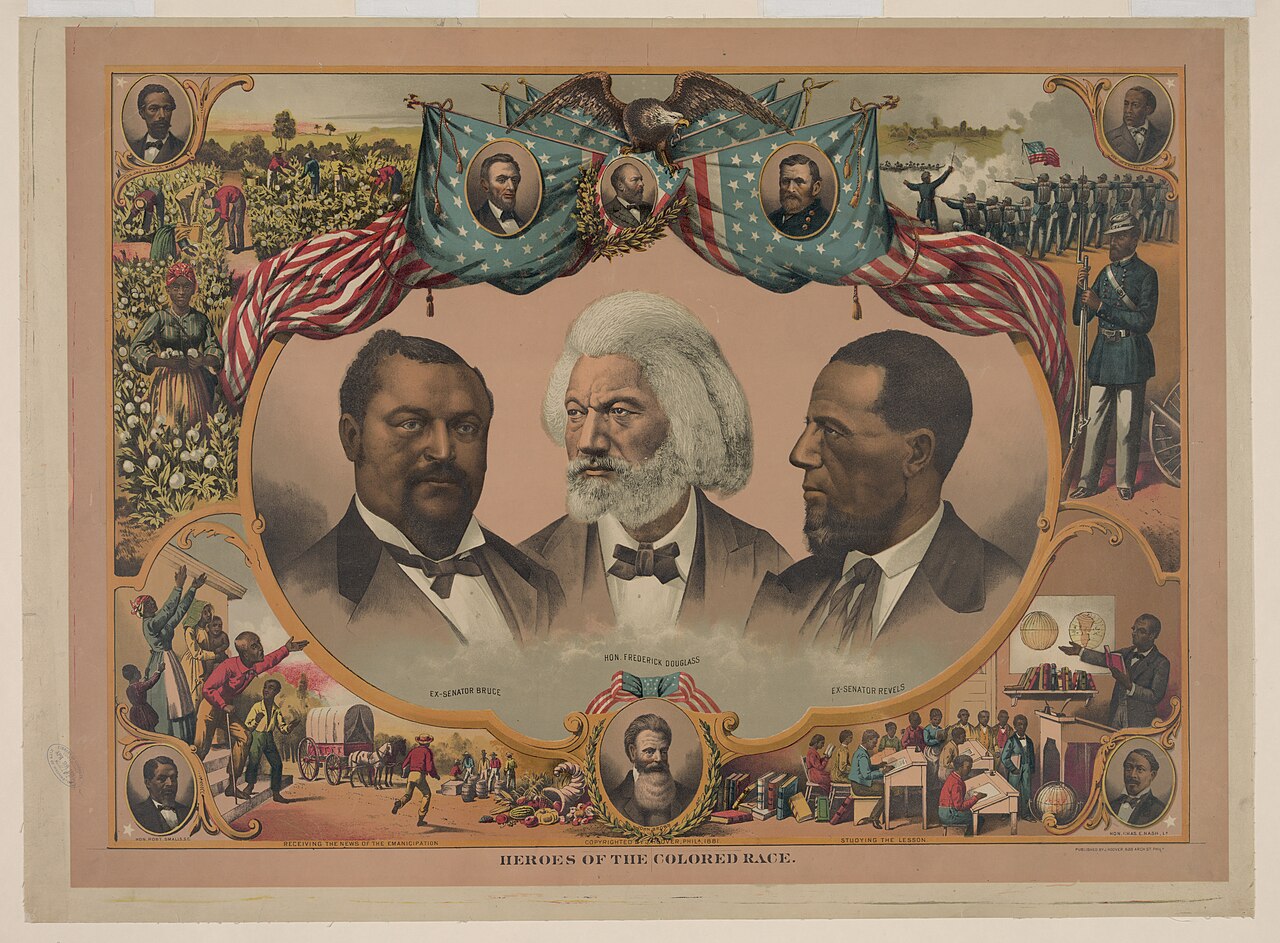
Lithographic print titled 'Heroes of the Colored Race' with an oval central frame showing three men in suits: Blanche Bruce on left, Frederick Douglass with white hair and beard in center, Hiram Revels on right. Above, portraits of Lincoln, Garfield, and Grant on flags with an eagle. Border scenes show cotton field work, a Black soldier, a marching regiment, and a classroom.Painting

Primary source

Heroes of the Colored Race

Popular Graphic Arts · 1881

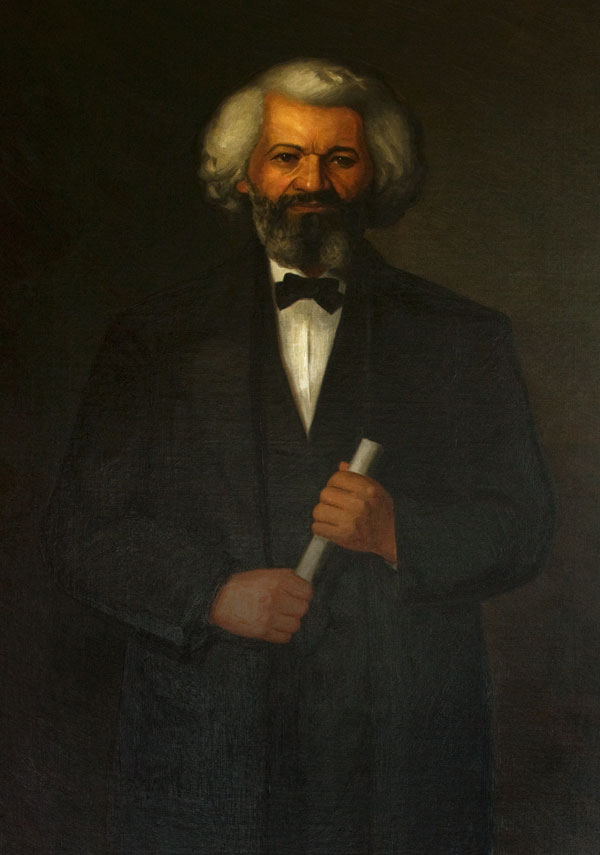
Oil painting portrait of an elderly man with white hair and a gray beard, wearing a dark suit, white shirt, and black bow tie. He holds a rolled white paper in his right hand against a dark background.Painting

Primary source

Portrait of Frederick Douglass by Sarah J. Eddy

Sarah J. Eddy · 1883

Sepia-toned daguerreotype portrait in a gilt-edged case of a man with short curly hair, dark jacket, and white collar, seated in three-quarter view with his gaze directed at the camera.Photograph

Primary source

Daguerreotype Portrait of Frederick Douglass, c. 1855

Unknown · c. 1855

Sepia cabinet card portrait of an older man with white hair and a full white beard, seen in three-quarter view looking to his left, wearing a dark suit jacket, vest, and white collar with a dark tie. Handwritten signature along the bottom of the card reads Frederick Douglass.Photograph

Primary source

Cabinet Card Portrait of Frederick Douglass by George Kendall Warren, 1876

George Kendall Warren · 1876

Speech

Primary source

The Soul of the Nation

Frederick Douglass · 1885

Book

Primary source

The Future of the Colored Race

Frederick Douglass · 1886

Book

Primary source

Frederick Douglass, poem by Paul Laurence Dunbar

Paul Laurence Dunbar · 1895

Document

Secondary source

Douglass, Frederick, entry in The American Cyclopaedia

1879

Document

Secondary source

Douglass, Frederick, entry in Appletons' Cyclopaedia of American Biography

1892

Documentary

Secondary source

Community Reading of 'What to the Slave is the Fourth of July'

seveneightfive · 5 July 2022

Wood engraving from an 1877 illustrated newspaper. A white-haired man in a dark suit and white trousers shakes hands with a Black man at a desk in an office. Several other Black men wait behind, one holding a top hat. A seated white man is partly visible at right.Newspaper article

Primary source

Frederick Douglass as New Marshal of the District of Columbia

1877

Book

Primary source

Masterpieces of Negro Eloquence

Alice Dunbar-Nelson · 1914

Want the full shelf? Chat with Frederick Douglass in the app and open the Sources panel — every quote links back to the original.

Use Frederick Douglass in class

1 collection

A ready-made collection from the Humy team that features Frederick Douglass. Preview it, then try it free.

Trusted by educators worldwide

Conversations
375,000+
Real exchanges between students and historical figures
Messages exchanged
4,142,000+
Across every figure, classroom and language
Historical figures
100,000+
Each informed by a curated biography and selected sources
Languages supported
50+
From English and Spanish to Arabic and Korean

Paying customers

Used by 98 schools and universities

Partner school logo
Tecnológico de Monterrey logo
Hyper Island logo
Partner school logo
Chambersburg Area School District logo
Broward County Public Schools logo
Nebo School District logo
National Louis University logo
South Florida PBS logo
Punahou School logo
University of Wisconsin–River Falls logo
Partner school logo
Partner school logo
Archbishop Mitty High School logo
Kingsburg High School logo
Norwalk Public Schools logo
Partner school logo
Connections logo
Partner school logo
Moore Public Schools logo
Partner school logo
Partner school logo
Partner school logo
Partner school logo
Robbinsville Public Schools logo
Partner school logo
Partner school logo
Partner school logo
Tecnológico de Monterrey logo
Hyper Island logo
Partner school logo
Chambersburg Area School District logo
Broward County Public Schools logo
Nebo School District logo
National Louis University logo
South Florida PBS logo
Punahou School logo
University of Wisconsin–River Falls logo
Partner school logo
Partner school logo
Archbishop Mitty High School logo
Kingsburg High School logo
Norwalk Public Schools logo
Partner school logo
Connections logo
Partner school logo
Moore Public Schools logo
Partner school logo
Partner school logo
Partner school logo
Partner school logo
Robbinsville Public Schools logo
Partner school logo
Partner school logo

What educators are saying

“We enjoyed the program last year and used it frequently.”
“My students say it’s a welcome change of pace. I’m not a fan of the “sage on the stage” model, so I try to incorporate research-oriented and self-paced activities. With Humy, students have to take charge of their learning. They’ve become more adept at critical thinking, forming better questions, and improving their reading comprehension. The interview feature has been my go-to tool. I create assignments where students must ask historical figures a set number of questions, then summarize the responses to ensure they’re truly absorbing the material. This approach lets them actively explore the past rather than passively consuming information.”
“Humy has helped me bring historical figures, sometimes long past, to life. When my students interact with these figures in real-time, it eliminates some of the perceived “ancient” characteristics of my curriculum. This has shifted my students’ thinking away from viewing history as abstract or irrelevant. Real-time interactions make historical figures relatable, even allowing students to ask off-topic questions that help put historical lives in a more relevant context for 13-year-olds. The feature I use the most is the interview feature. After teaching a topic, most recently Gandhi and Joan of Arc, I have the students ask pointed, focused questions. We practice good conversation techniques beforehand, teaching them to listen (or read) carefully and formulate thoughtful follow-up questions rather than just interrogating. It helps students practice effective conversation skills.”

FAQ

Frequently asked questions

Who is Frederick Douglass?
Prominent abolitionist and writer. On Humy.ai you can chat with an AI version of Frederick Douglass that draws on a short biography and 79 historical sources during the conversation — by text or voice, in 42 languages.
Is Frederick Douglass AI free?
Yes. Frederick Douglass is in Humy's free library: a free account includes 20 messages a month with Frederick Douglass and the other free figures, by text or voice. No credit card is needed.
What sources does the Frederick Douglass AI use?
It draws on a short biography and 79 historical sources (books, speeches and documents), including “Narrative of the Life of Frederick Douglass, an American Slave”, “What to the Slave Is the Fourth of July?” and “Declaration of Sentiments”. Each source has its own page on Humy.ai.
How historically accurate is the AI version of Frederick Douglass?
Each figure uses a short biography and a small set of selected historical sources as context (retrieval-augmented generation), so answers stay closer to known material than the model's general knowledge alone. It isn't a citation-grade research tool — like any LLM, the AI can get details wrong or extrapolate. Treat it as a strong starting point for inquiry and cross-reference important claims.
Can I talk to Frederick Douglass by voice?
Yes. In addition to text chat, you can call Frederick Douglass and hear their voice respond in real time — useful for auditory learners, interview practice and Socratic dialogue.
Is Humy.ai safe and compliant for schools?
Yes. Humy.ai is used by more than 100 schools, universities and organisations. The platform is FERPA- and GDPR-aligned, supports SSO, and offers an IT-approval pack tailored for school procurement teams.

Cross-reference Frederick Douglass

Like any LLM, the AI version of Frederick Douglass can get details wrong. Open one of these sources in a new tab to verify what you’ve read.

Ready when you are

Start chatting with Frederick Douglass now.

20 messages free · No credit card · Available in 50+ languages.