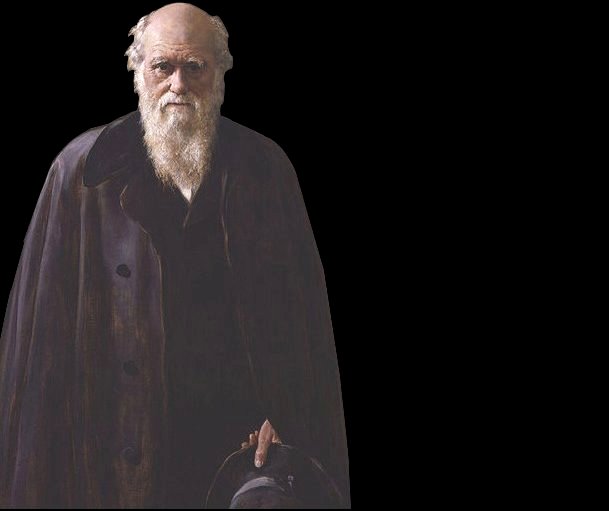
Portrait of Charles Darwin

AI Historical Figure

Charles Darwin

Naturalist and biologist known for his theory of evolution by natural selection.

Chat with Charles Darwin via text or voice — in 42 languages, drawing on a curated biography and 75 historical sources. Available 24/7.

Start chatting with Charles Darwin20 messages free · No credit card
Lived
1809–1882
From
United Kingdom
Known for
Science & medicineExploration
Charles Darwin

Charles Darwin

Online · responds in seconds

Hello — I'm Charles Darwin. Naturalist and biologist known for his theory of evolution by natural selection. What would you like to ask me?

20 messages free · No credit card · Powered by Humy.ai

Live preview · Switch between 42 languages above · Send a message to continue in the app

Multilingual

Talk to Charles Darwin in 42 languages

Ask Charles Darwin questions in any language below, and the rest of Humy's app speaks it too. Pick yours to open the chat in that language.

Also in German (Austria), German (Switzerland), English (UK), English (Australia), English (Canada).

The sources behind this AI

75 sources · 24 books · 13 paintings · 9 photographs · 8 letters · 7 newspaper articles · 6 documents · 3 artifacts · 2 diary entries · 2 sculptures · 1 speech

Charles Darwin doesn’t improvise from thin air. The AI is grounded in 75 curated historical sources students can inspect. Open any of them to see what informs the conversation.

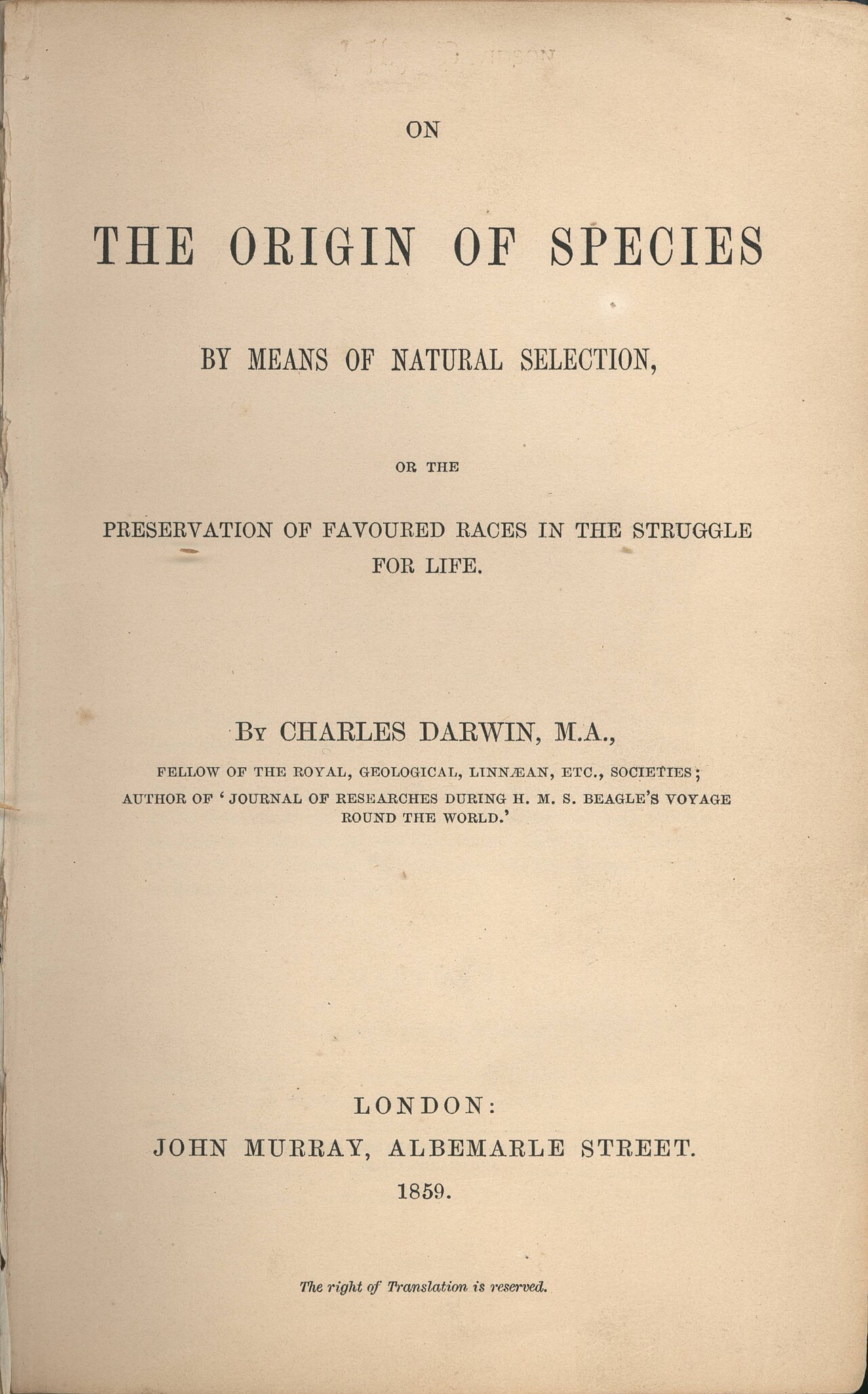
Title page of the 1859 John Murray first edition of 'On the Origin of Species by Means of Natural Selection' by Charles Darwin. Cream paper with black serif type, London: John Murray, Albemarle Street, 1859.Book

Primary source

On the Origin of Species

Charles Darwin · 1859

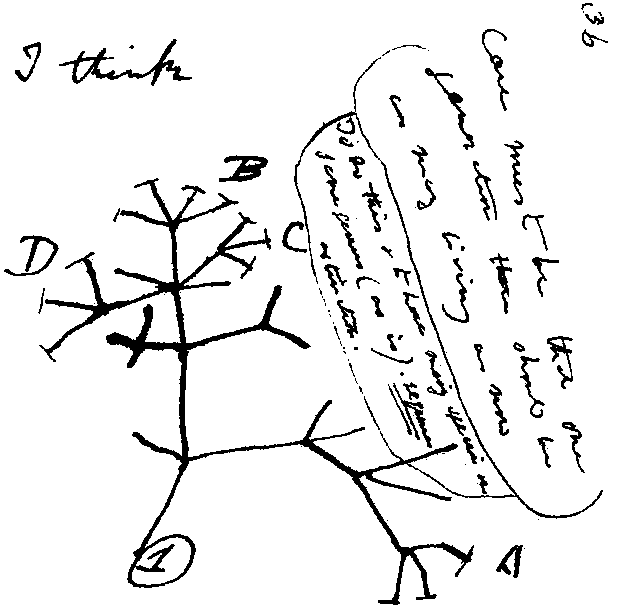
Handwritten pen sketch by Charles Darwin labeled 'I think' with a branching tree diagram marked with letters A, B, C, D and circled 1, beside a page of cursive handwriting in a curved column, dated 1837 in the top corner.Diary entry

Primary source

Notebook B 'I think' Tree of Life Sketch

Charles Darwin · c. July 1837

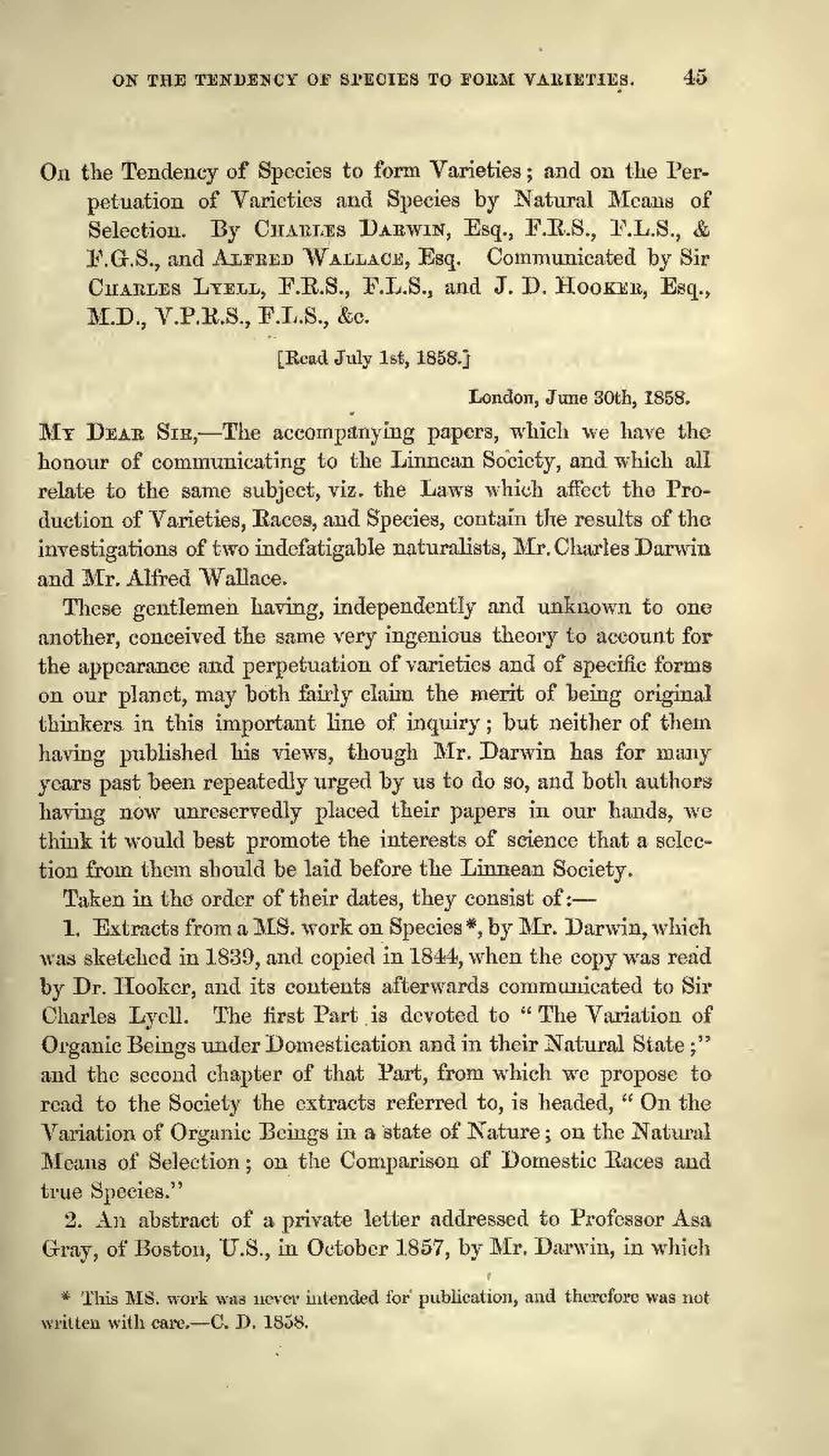
Printed page 45 of the 1858 Linnean Society paper 'On the Tendency of Species to form Varieties' by Darwin and Wallace, with a covering letter from Lyell and Hooker dated London, June 30th, 1858. Text is in serif type.Document

Primary source

On the Tendency of Species to Form Varieties

Charles Darwin / Alfred Russel Wallace · 1858

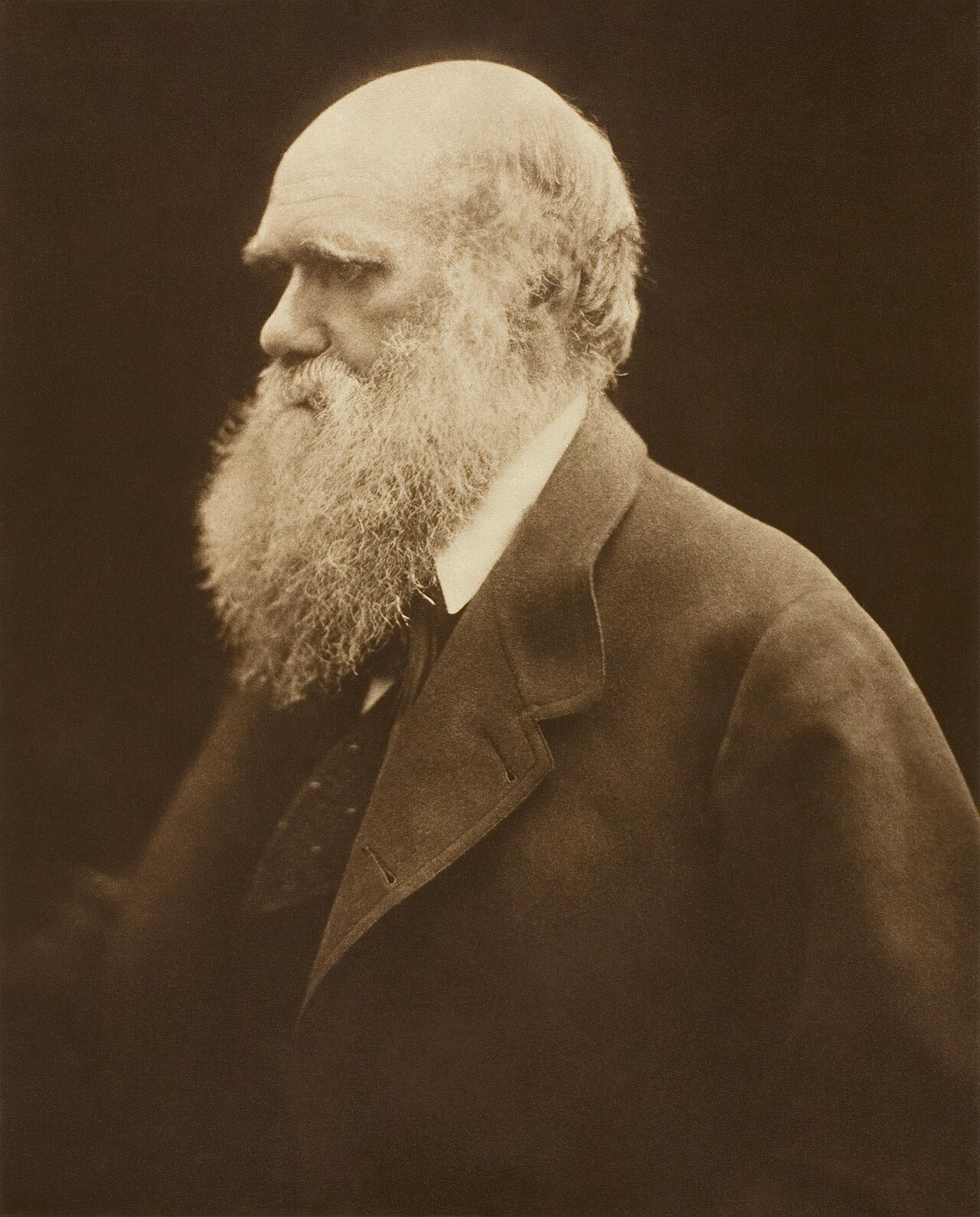
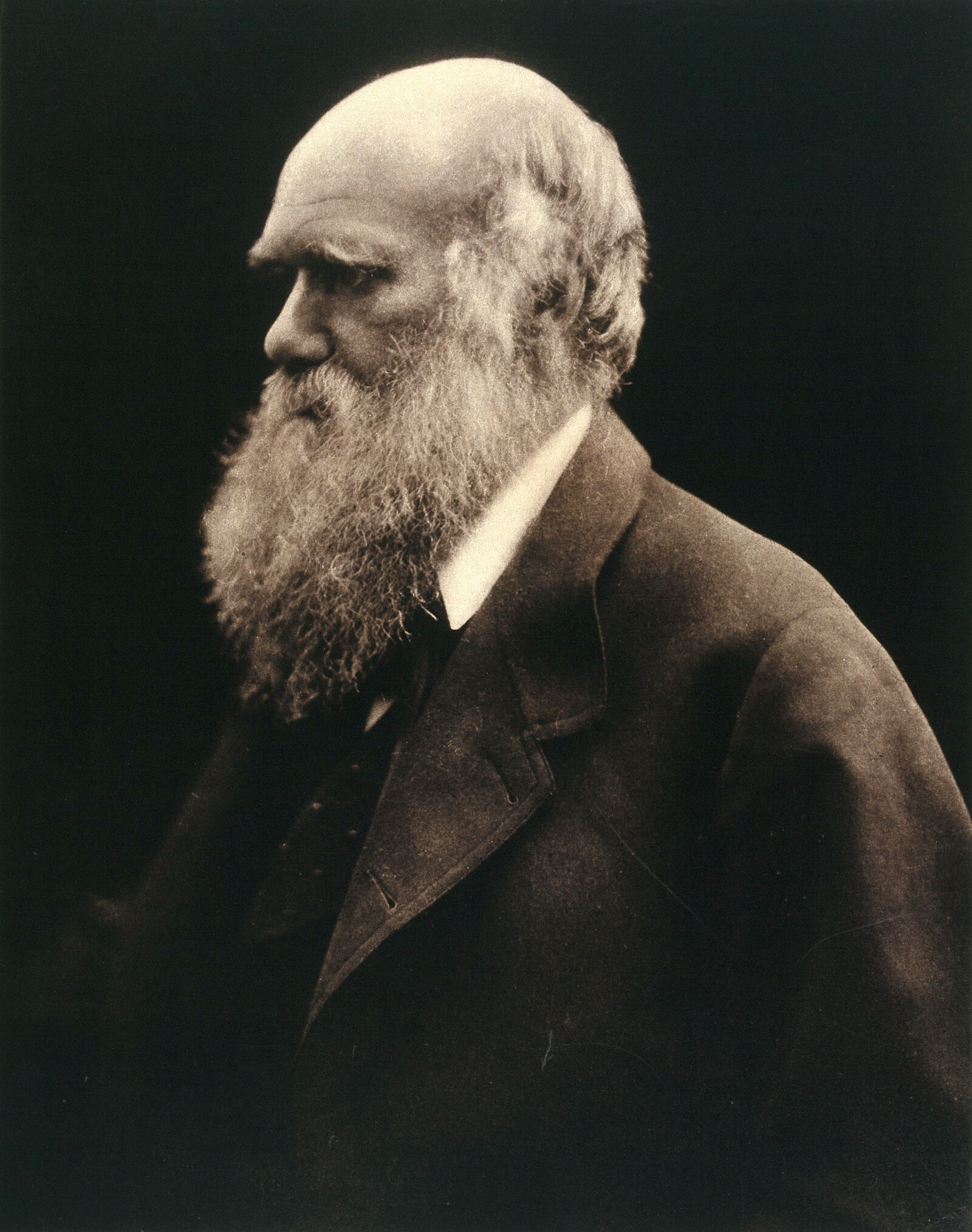
Sepia-toned portrait of an elderly bearded man with a bald crown, seen in left profile against a dark background. He wears a dark jacket, white collar, and dark tie, and his gaze is directed to the left.Photograph

Primary source

Charles Darwin by Julia Margaret Cameron

Julia Margaret Cameron · c. 1868

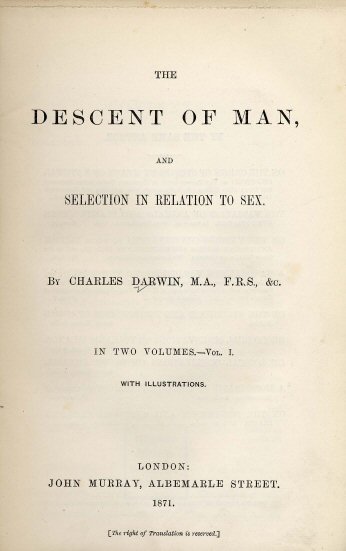
Title page of Charles Darwin's book 'The Descent of Man, and Selection in Relation to Sex', 1871. Text reads: by Charles Darwin, M.A., F.R.S., &c.; in two volumes, Vol. I; with illustrations; London: John Murray, Albemarle Street, 1871.Book

Primary source

The Descent of Man, and Selection in Relation to Sex

Charles Darwin · 1871

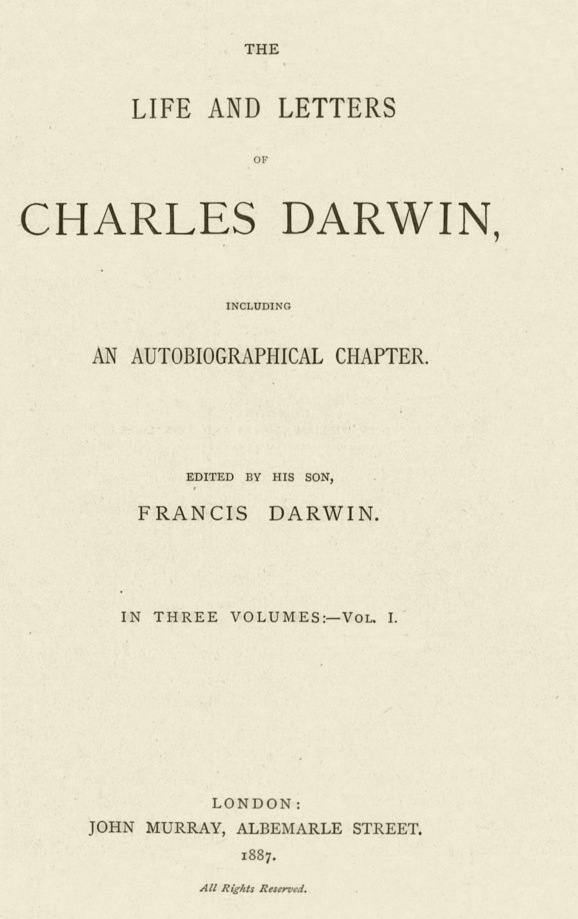
Title page of 'The Life and Letters of Charles Darwin, including an Autobiographical Chapter', edited by his son Francis Darwin, In Three Volumes, Vol. I, London, John Murray, Albemarle Street, 1887. All rights reserved.Book

Primary source

The Autobiography of Charles Darwin

Charles Darwin · written 1876, first published 1887

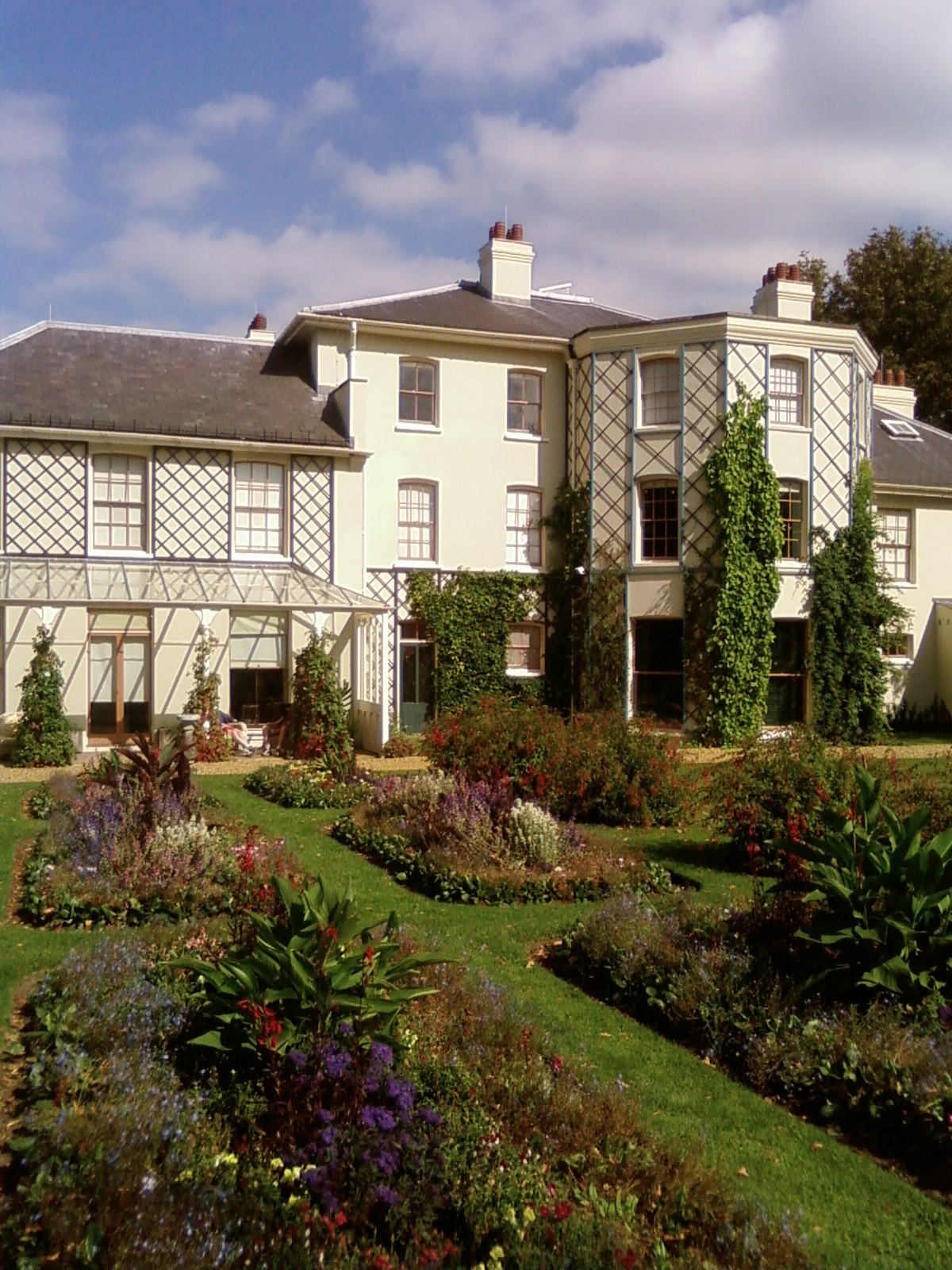
Exterior of a two-storey cream-coloured country house with sash windows, a slate roof, and tall brick chimneys, seen from a garden with flower beds and lawns under a blue sky with clouds. Ivy climbs parts of the walls.Artifact

Primary source

Down House

occupied 1842-1882

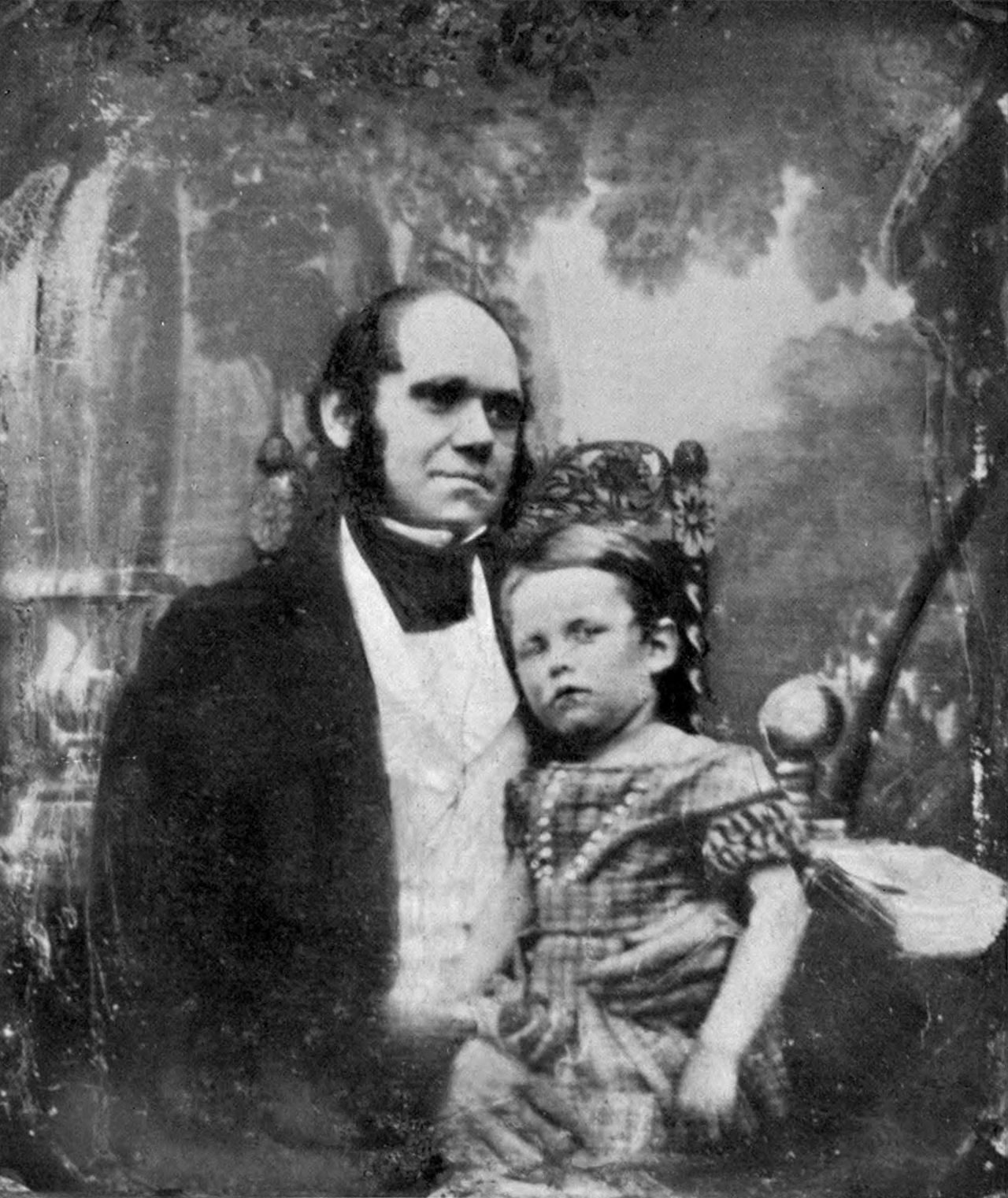
Black and white daguerreotype-style photograph of a seated man in dark jacket, white vest and high dark collar, with a young child in a plaid dress sitting on his lap in front of a painted backdrop with a chair.Photograph

Primary source

Charles Darwin and William Darwin, 1842

Antoine Claudet (attributed) · 1842

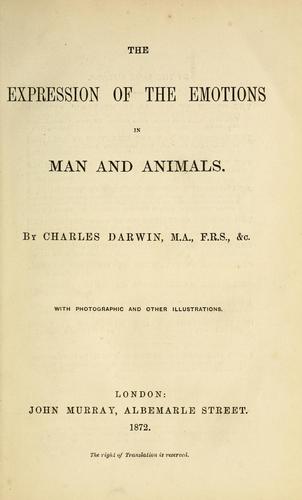
Title page of 'The Expression of the Emotions in Man and Animals' by Charles Darwin, M.A., F.R.S., &c. Text reads: with photographic and other illustrations; London: John Murray, Albemarle Street, 1872; The right of Translation is reserved.Book

Primary source

The Expression of the Emotions in Man and Animals

Charles Darwin · 1872

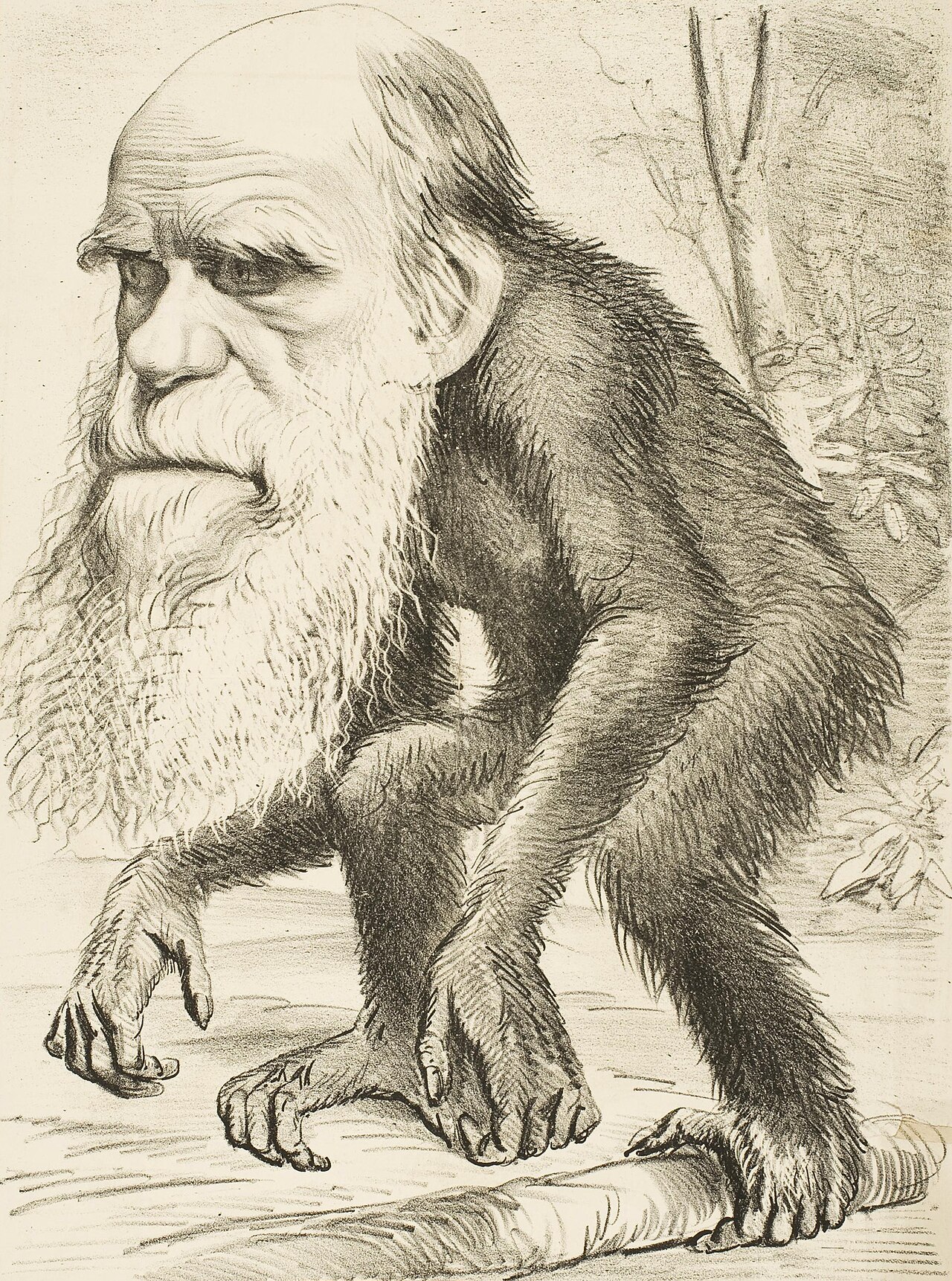
Sepia-toned drawing of an elderly, bald man with a long white beard and heavy brow, whose body is covered in dark fur. He walks on his hands and feet, bent forward, in a leafy outdoor setting with a fallen branch.Painting

Primary source

'A Venerable Orang-outang' caricature

Unknown artist, The Hornet · 22 March 1871

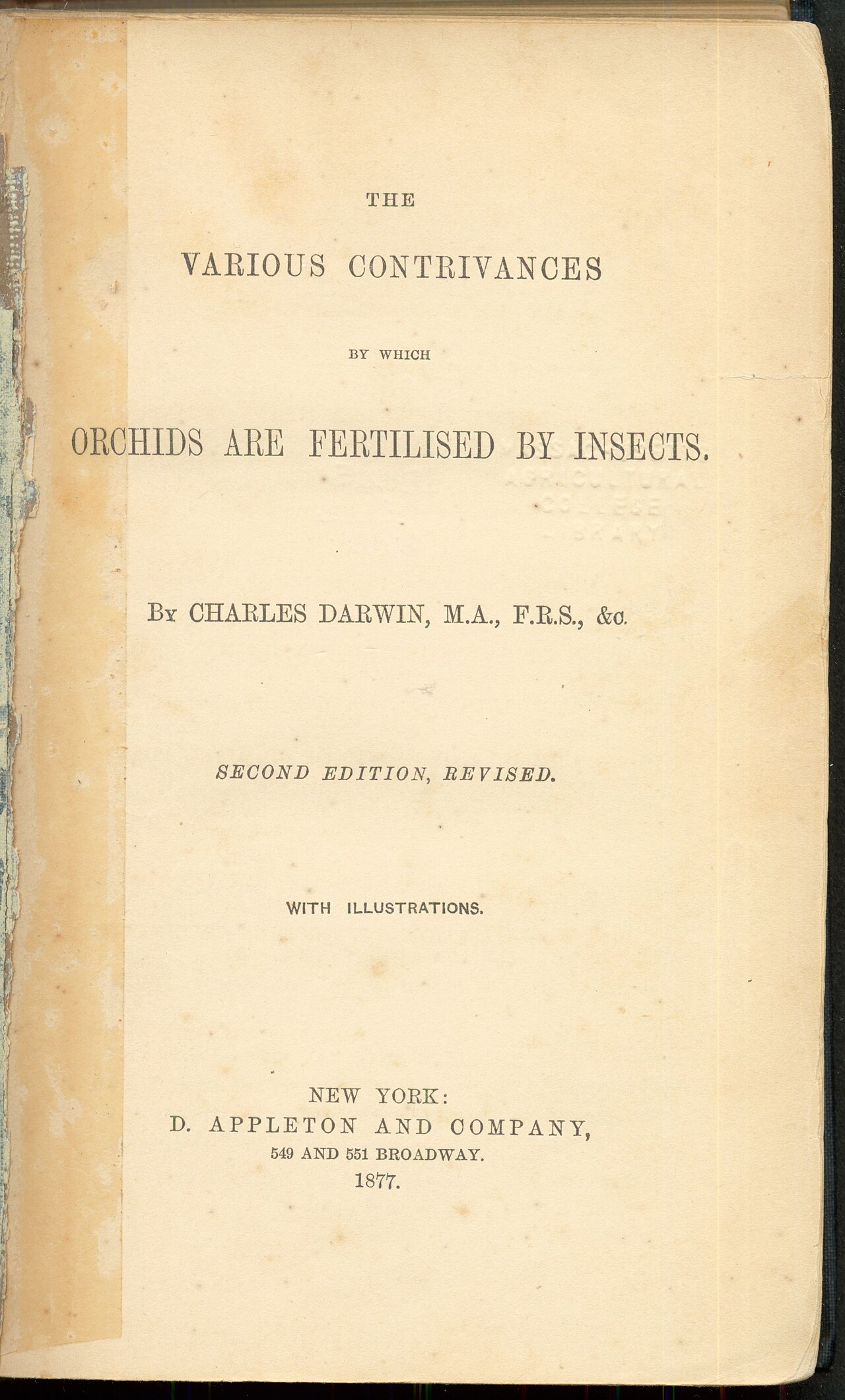
Title page of the 1877 second revised edition of 'The Various Contrivances by which Orchids are Fertilised by Insects' by Charles Darwin, published by D. Appleton and Company, New York, 549 and 551 Broadway. Aged cream paper with a tan edge on the left.Book

Primary source

Fertilisation of Orchids

Charles Darwin · 1862; this edition 1877

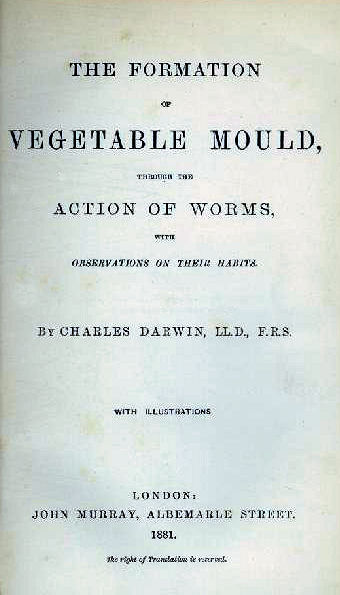
Title page of an 1881 book. Large capitals read 'THE FORMATION OF VEGETABLE MOULD, THROUGH THE ACTION OF WORMS, WITH OBSERVATIONS ON THEIR HABITS. BY CHARLES DARWIN, LL.D., F.R.S. WITH ILLUSTRATIONS. LONDON: JOHN MURRAY, ALBEMARLE STREET, 1881.' Small print notes the right of translation is reserved.Book

Primary source

The Formation of Vegetable Mould through the Action of Worms

Charles Darwin · 1881

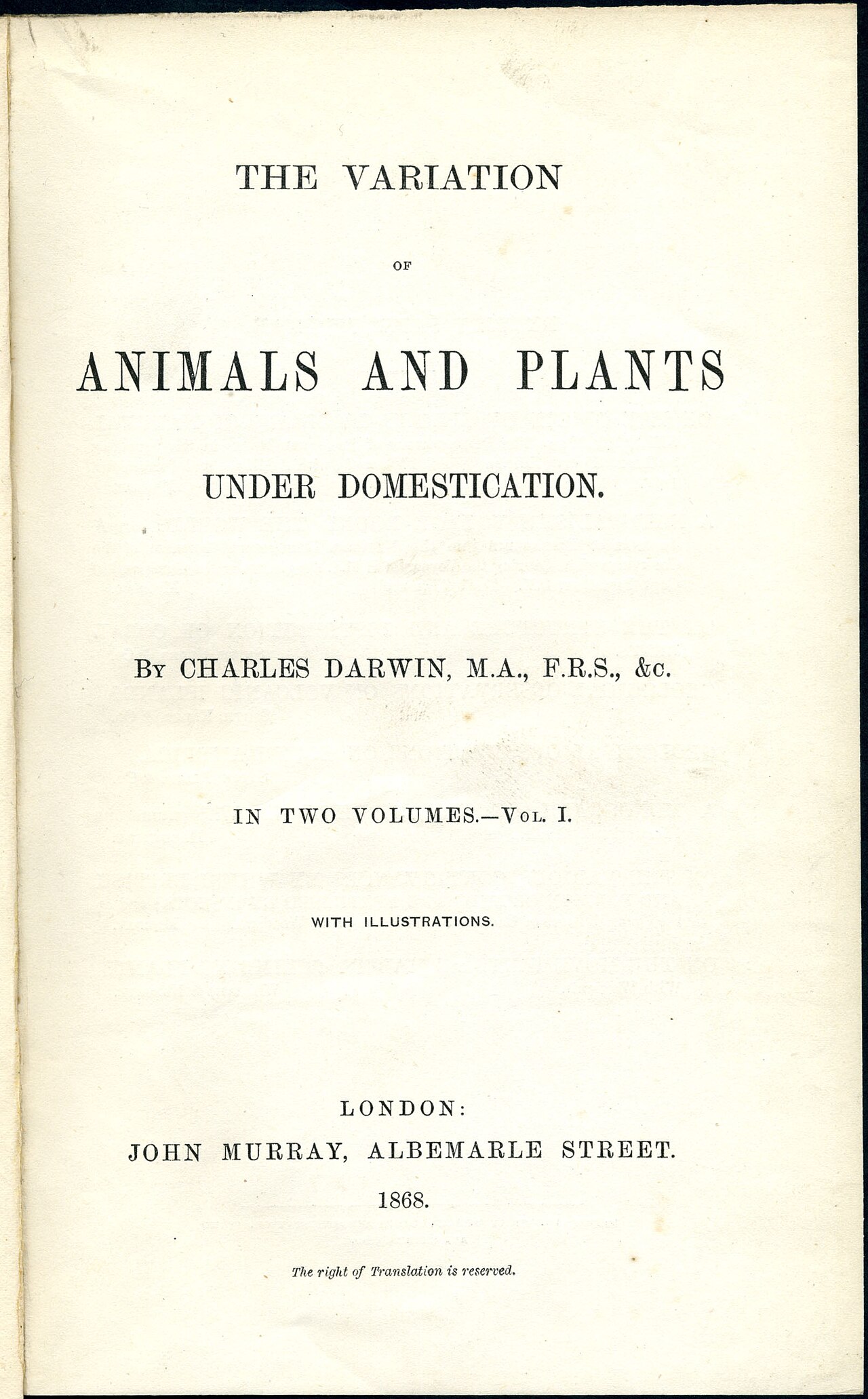
Scan of the title page of 'The Variation of Animals and Plants under Domestication', by Charles Darwin, M.A., F.R.S., &c. In two volumes, Vol. I, with illustrations. London: John Murray, Albemarle Street, 1868. Printed text on cream paper.Book

Primary source

The Variation of Animals and Plants under Domestication

Charles Darwin · 1868

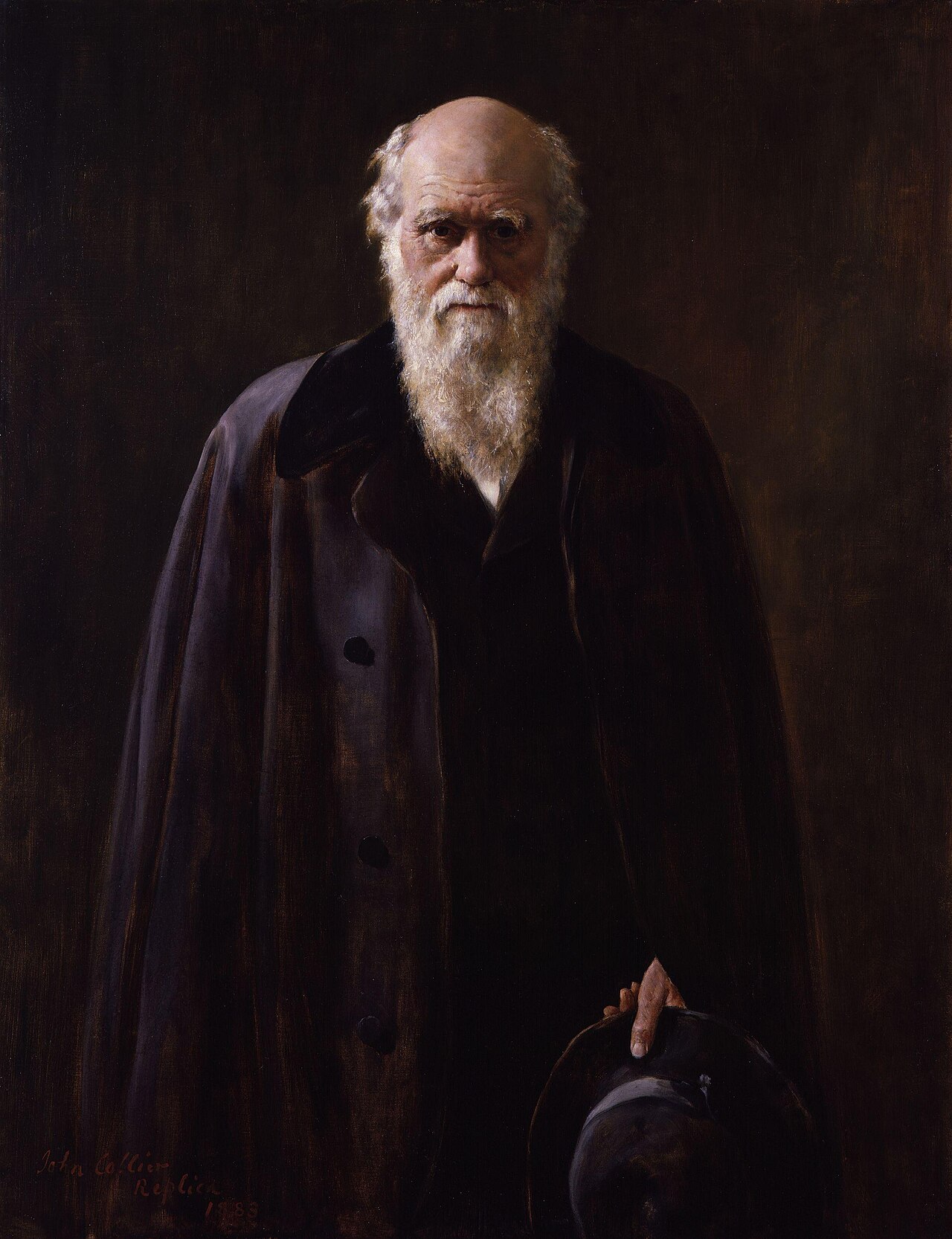
Half-length to full-length oil portrait of an elderly bald man with a white beard, dark brown coat and dark background, holding a dark hat at his right side. Signed lower left 'John Collier Replica 1883'.Painting

Primary source

Charles Darwin

John Collier · 1883

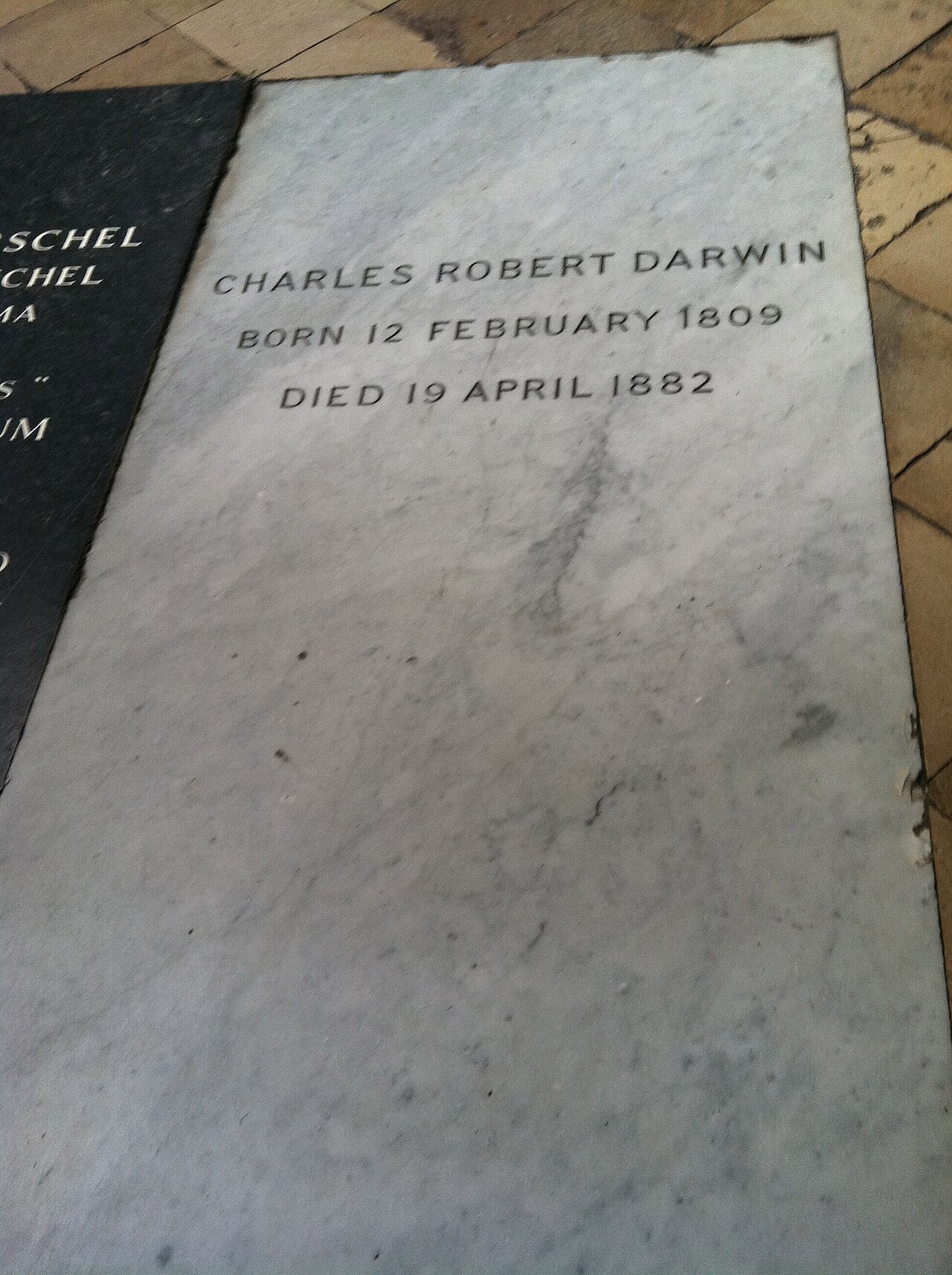
A light grey marble floor slab inscribed in capital letters: CHARLES ROBERT DARWIN, BORN 12 FEBRUARY 1809, DIED 19 APRIL 1882. A dark slab with partial lettering, including SCHEL, sits to the left on a tiled floor.Artifact

Primary source

Grave of Charles Darwin, Westminster Abbey

1882

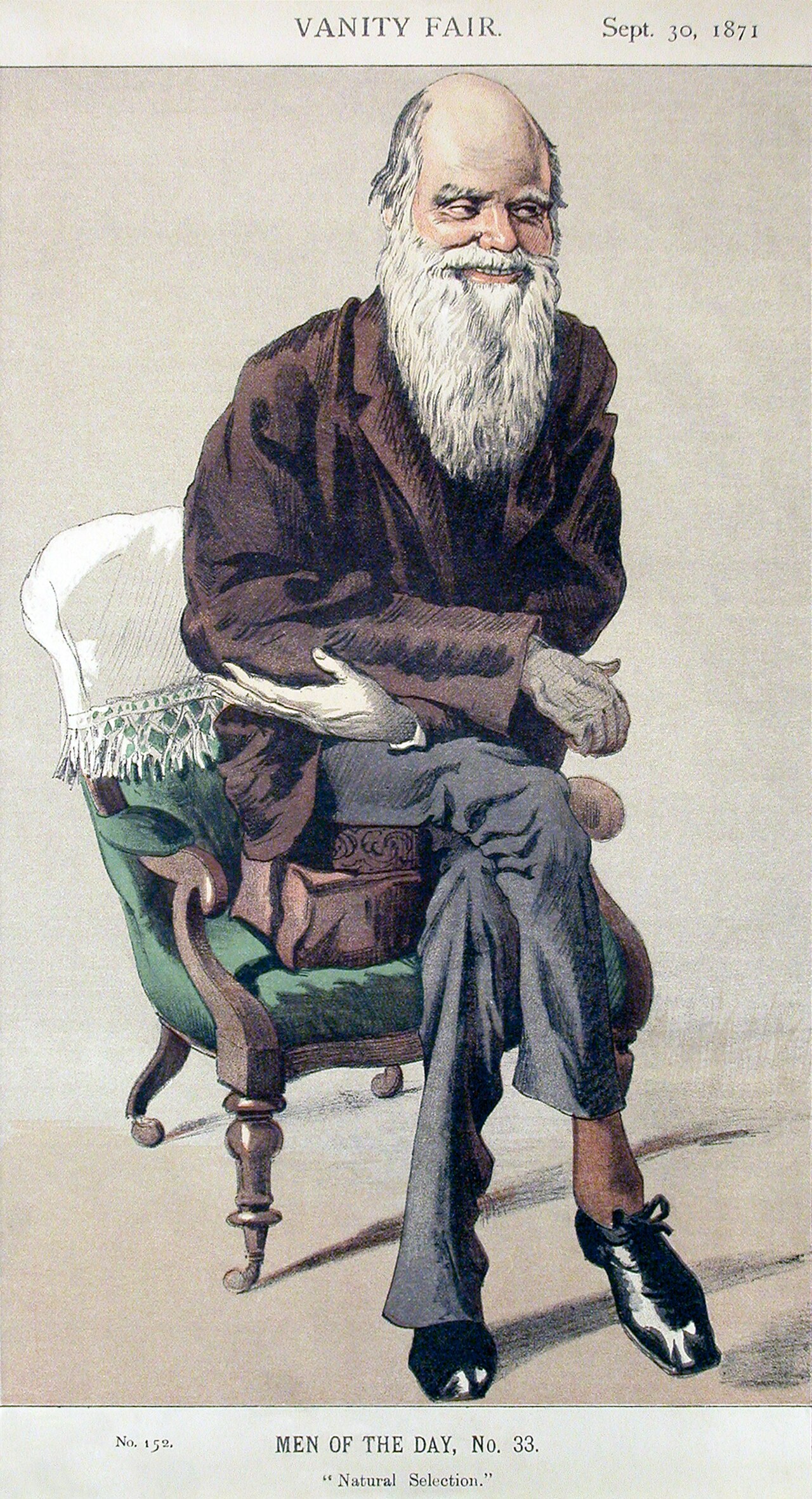
Colour caricature of a bald, white-bearded elderly man seated in a green upholstered armchair with white lace antimacassar, wearing a brown jacket and grey trousers, legs crossed, gloved hands resting on his lap. Printed Vanity Fair header reads Sept. 30, 1871; footer reads Men of the Day, No. 33, Natural Selection.Painting

Primary source

Natural Selection

James Tissot · 30 September 1871

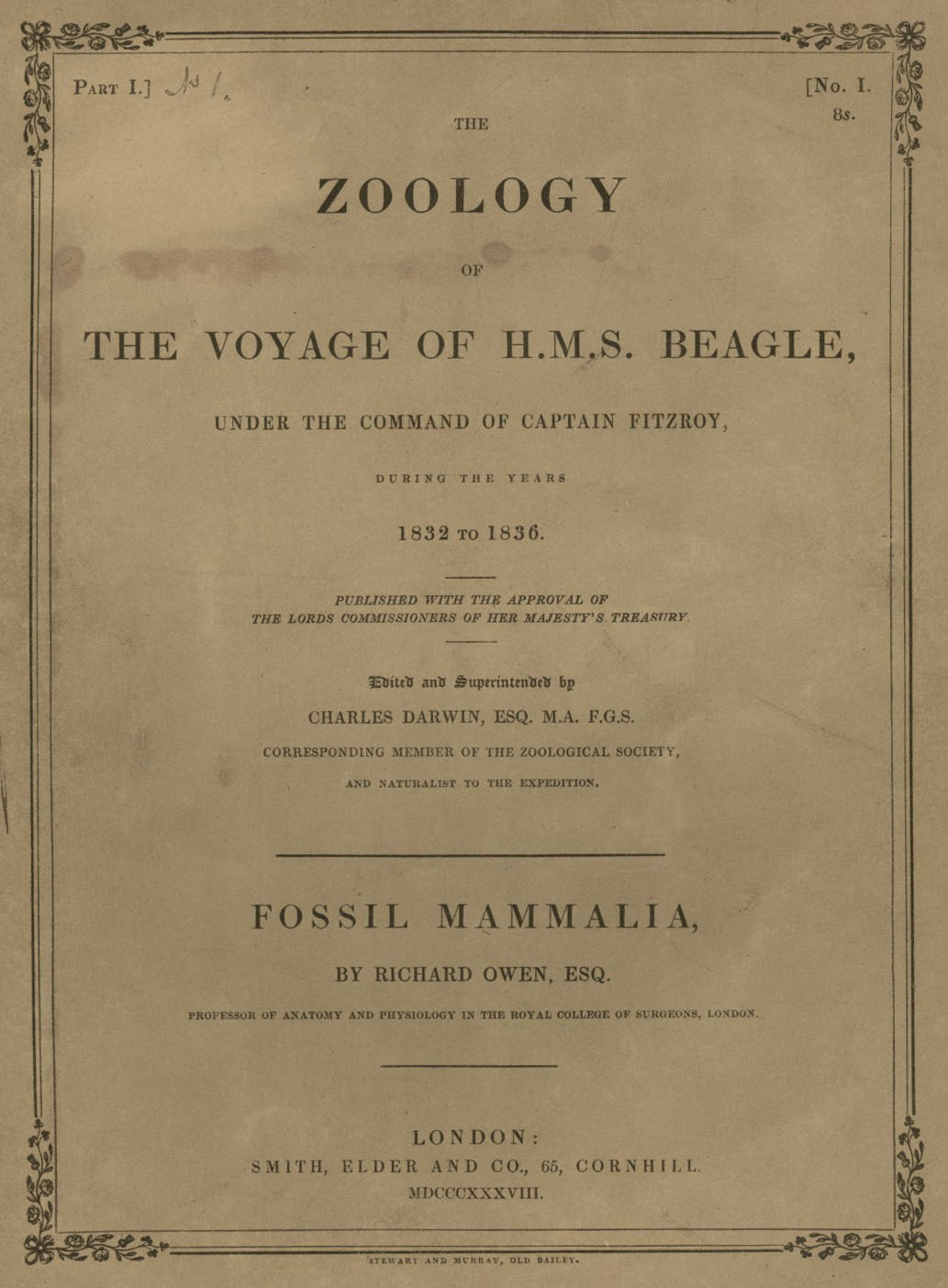
Title page of Zoology of the Voyage of H.M.S. Beagle, Part I, No. I, price 8s. Text reads 'The Zoology of the Voyage of H.M.S. Beagle, under the command of Captain Fitzroy, during the years 1832 to 1836', edited by Charles Darwin, with 'Fossil Mammalia, by Richard Owen', London, Smith, Elder and Co., 1838.Book

Primary source

Zoology of the Voyage of H.M.S. Beagle

Charles Darwin (editor) · 1838–1843

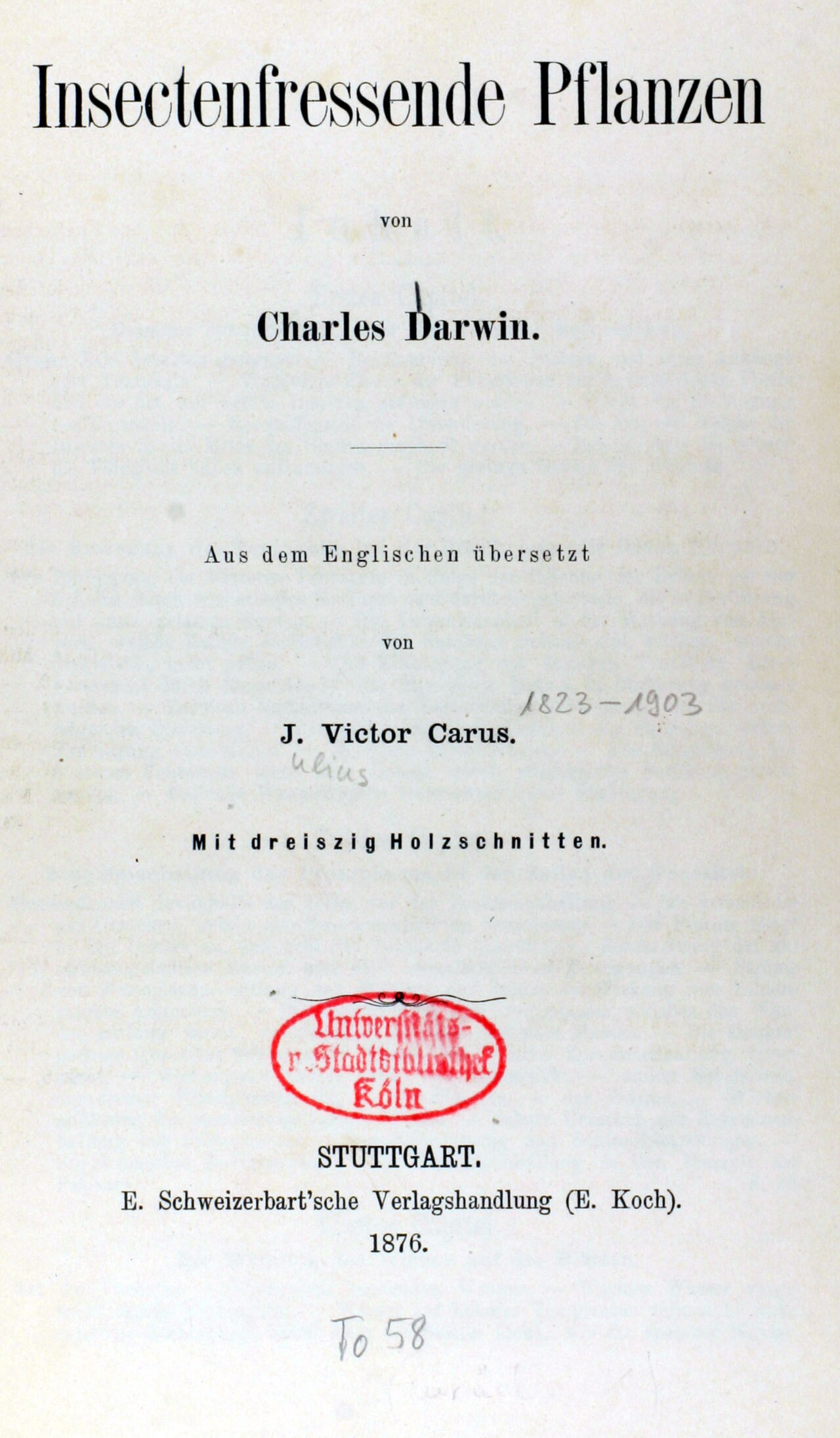
Title page of the German translation 'Insectenfressende Pflanzen' by Charles Darwin, translated by J. Victor Carus, Stuttgart, 1876. Includes a red library stamp reading Universitäts- und Stadtbibliothek Köln and handwritten dates 1823-1903 and a shelf mark.Book

Primary source

Insectivorous Plants

Charles Darwin · 2 July 1875

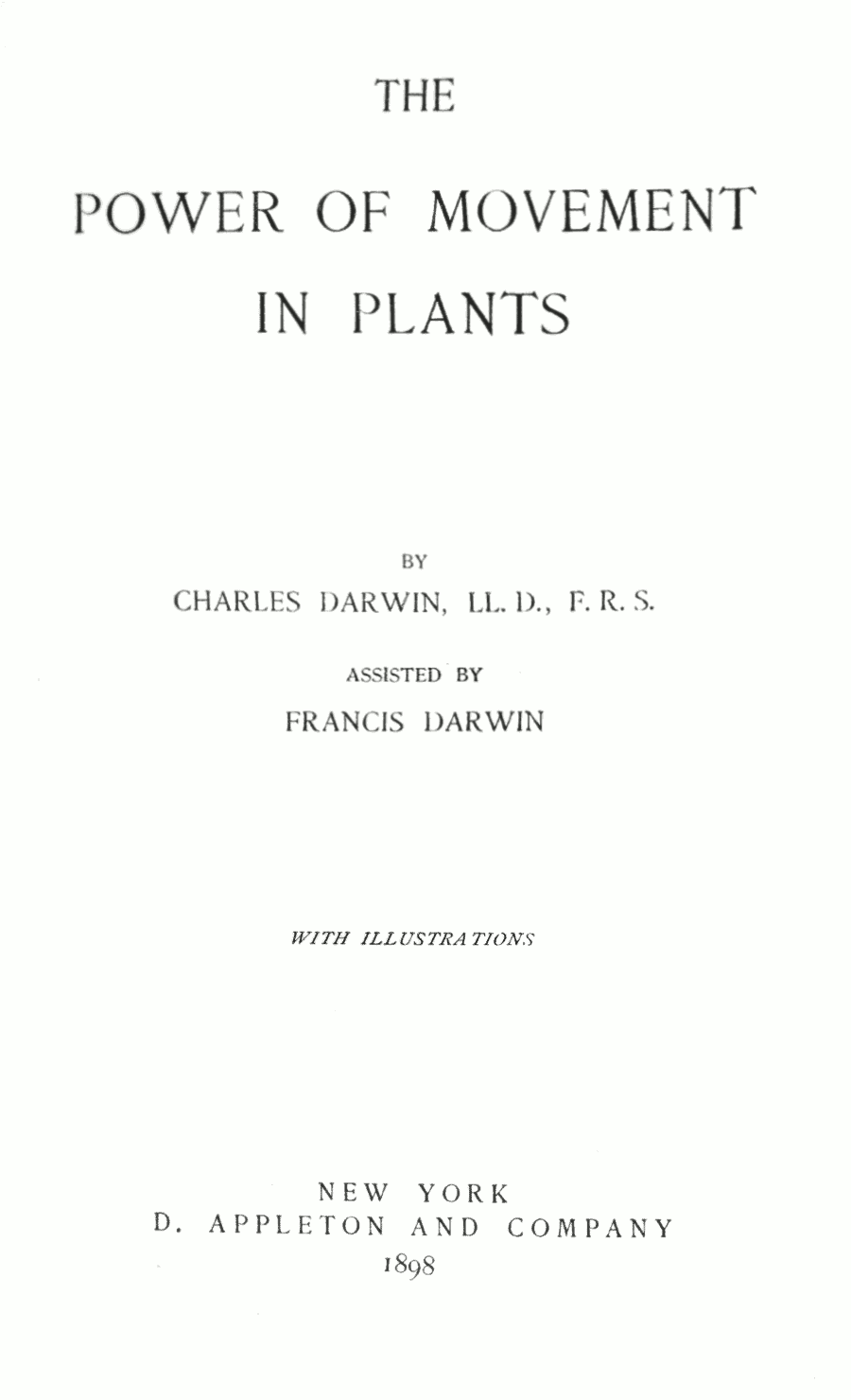
Title page of The Power of Movement in Plants by Charles Darwin, assisted by Francis Darwin, with illustrations, published by D. Appleton and Company, New York, 1898.Book

Primary source

The Power of Movement in Plants

Charles Darwin, with Francis Darwin · 6 November 1880

Book

Primary source

The Effects of Cross and Self Fertilisation in the Vegetable Kingdom

Charles Darwin · 1876

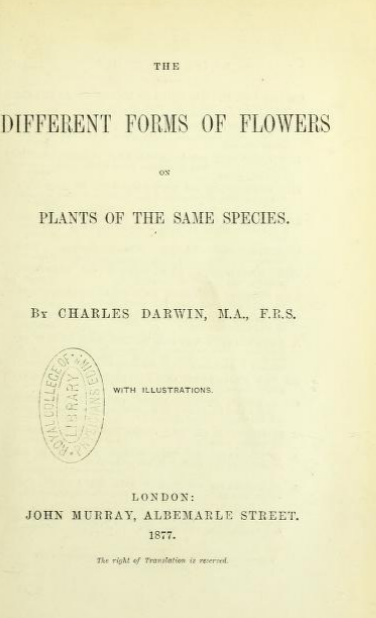
Title page of 'The Different Forms of Flowers on Plants of the Same Species' by Charles Darwin, M.A., F.R.S., with illustrations. Imprint: London, John Murray, Albemarle Street, 1877. A library stamp reads Royal College of Surgeons Library. Small note: The right of Translation is reserved.Book

Primary source

The Different Forms of Flowers on Plants of the Same Species

Charles Darwin · 1877

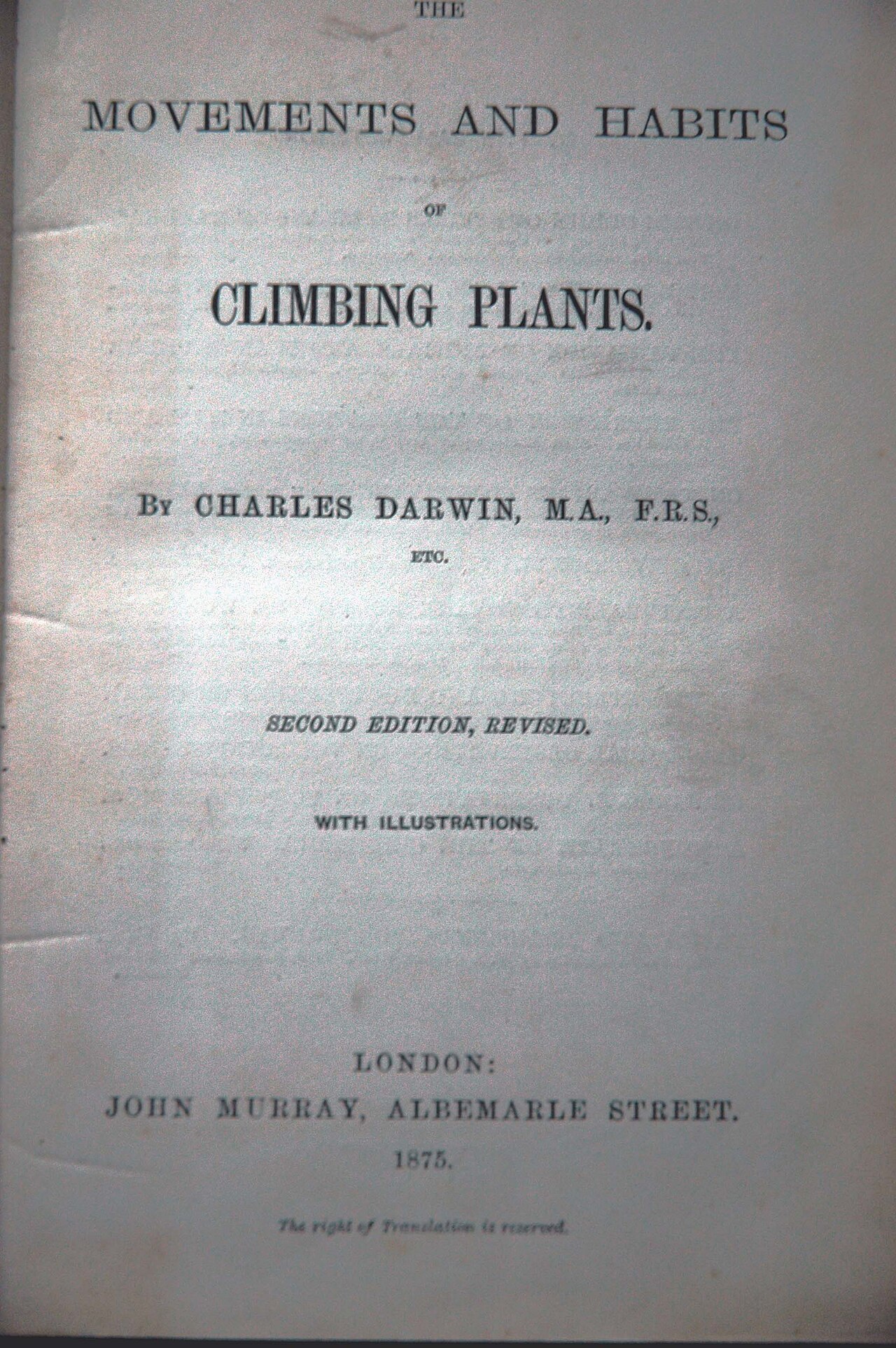
Title page of Charles Darwin's book The Movements and Habits of Climbing Plants, showing the title, author line 'By Charles Darwin, M.A., F.R.S., etc.', 'Second Edition, Revised', 'With Illustrations', and the imprint London: John Murray, Albemarle Street, 1875.Book

Primary source

Movement and Habits of Climbing Plants

Charles Darwin · 1875

Document

Primary source

A Biographical Sketch of an Infant

Charles Darwin · 1877

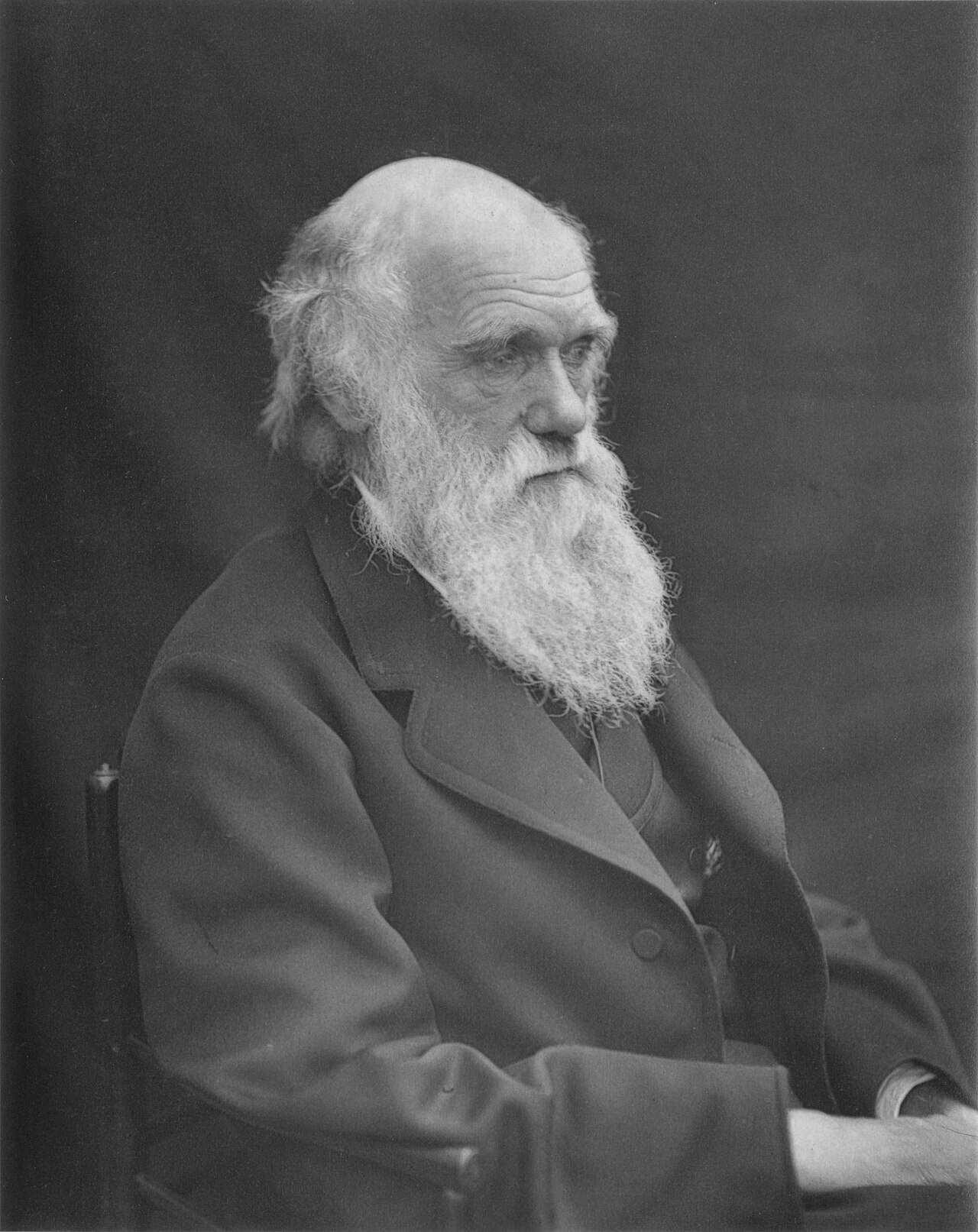
Black-and-white studio portrait of an elderly bald man with a long white beard, seated in a dark jacket, turned to his left against a dark background, with his hands resting in his lap.Photograph

Primary source

Photograph of Charles Darwin by Leonard Darwin

Leonard Darwin · c. 1874

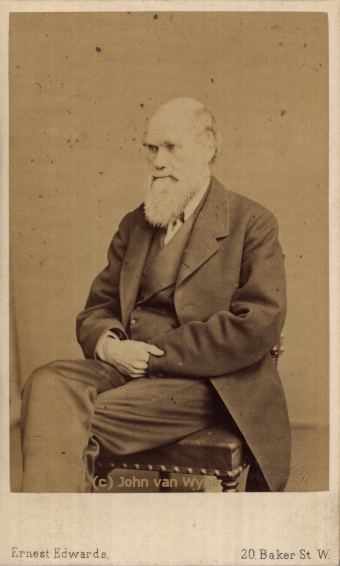
Sepia carte de visite photograph of an elderly bald man with a full white beard, seated on a wooden stool in a dark suit and waistcoat, hands clasped on his knee. Printed caption at bottom reads Ernest Edwards, 20 Baker St. W.Photograph

Primary source

Carte de visite photograph of Charles Darwin

Ernest Edwards · 1867

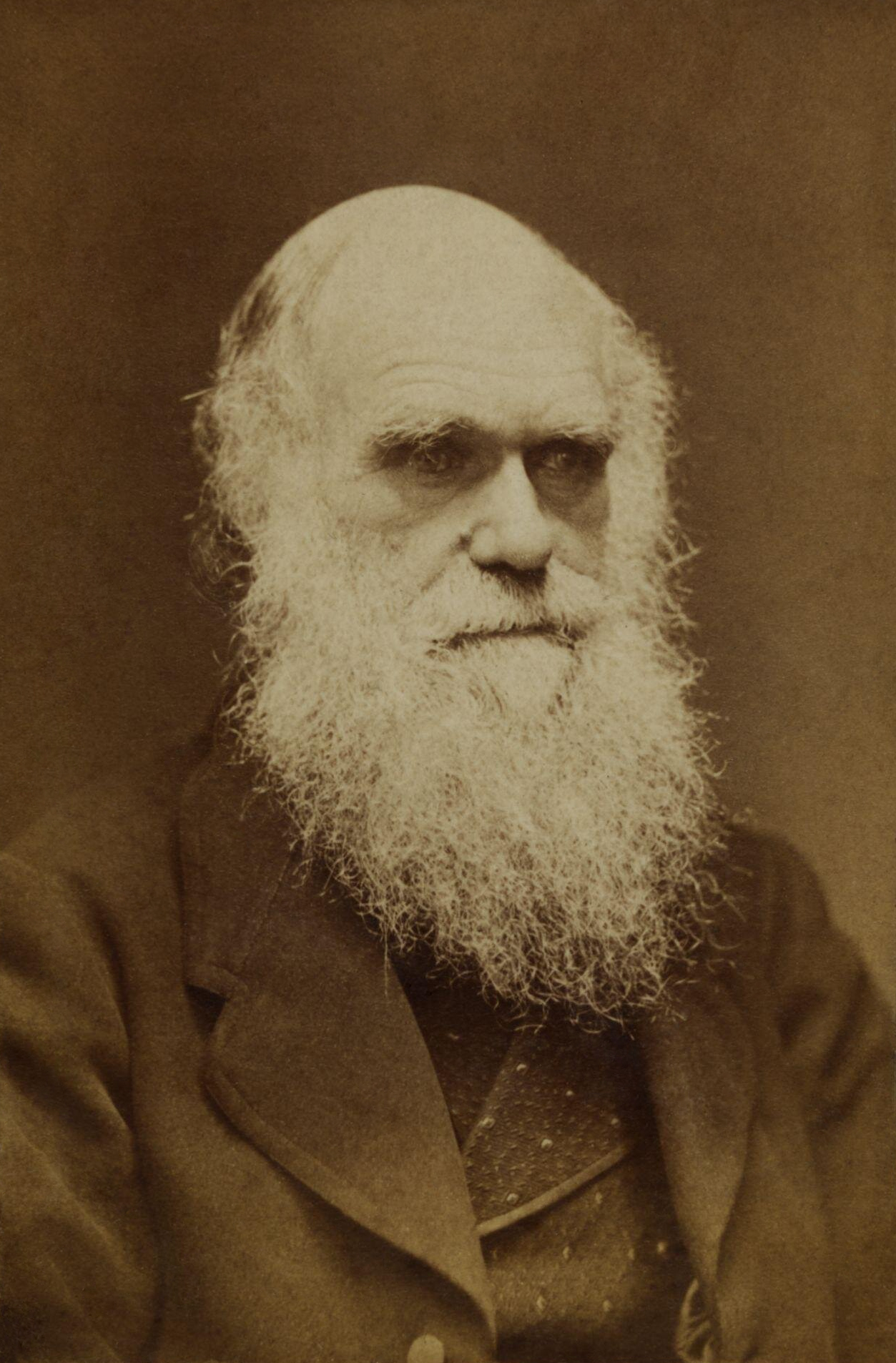
Sepia-toned studio portrait of an elderly bald man with a long, full white beard, wearing a dark jacket and a textured waistcoat, looking toward the camera with a serious expression against a plain brown background.Photograph

Primary source

Charles Darwin by Elliott & Fry

Elliott & Fry · between 1862 and 1882

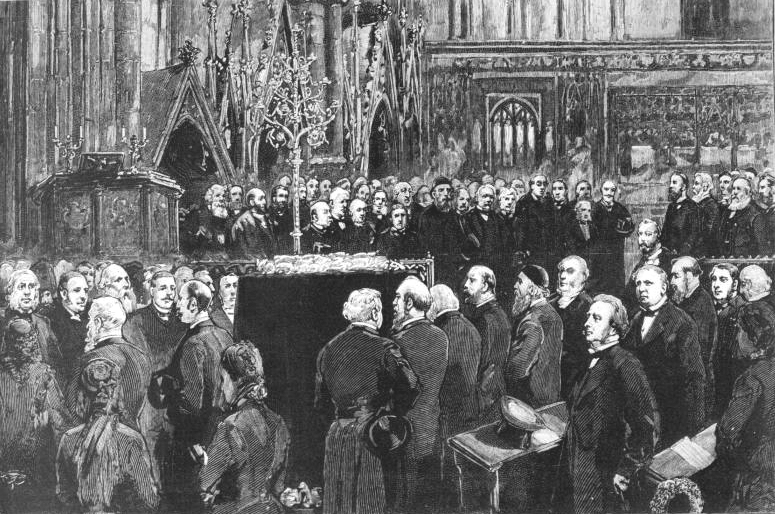
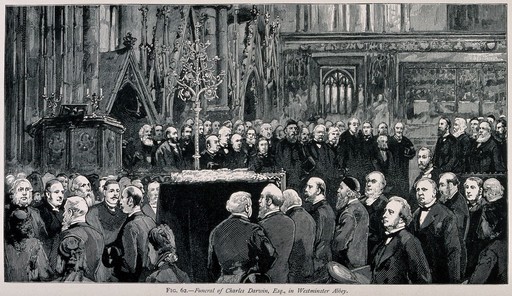
Black and white engraving of a crowded cathedral interior during Charles Darwin's funeral in 1882. Mourners in dark clothing stand around a draped coffin near a tall candelabra, with a Gothic arch and carved screen behind.Newspaper article

Primary source

Darwin's Funeral - The Graphic

6 May 1882

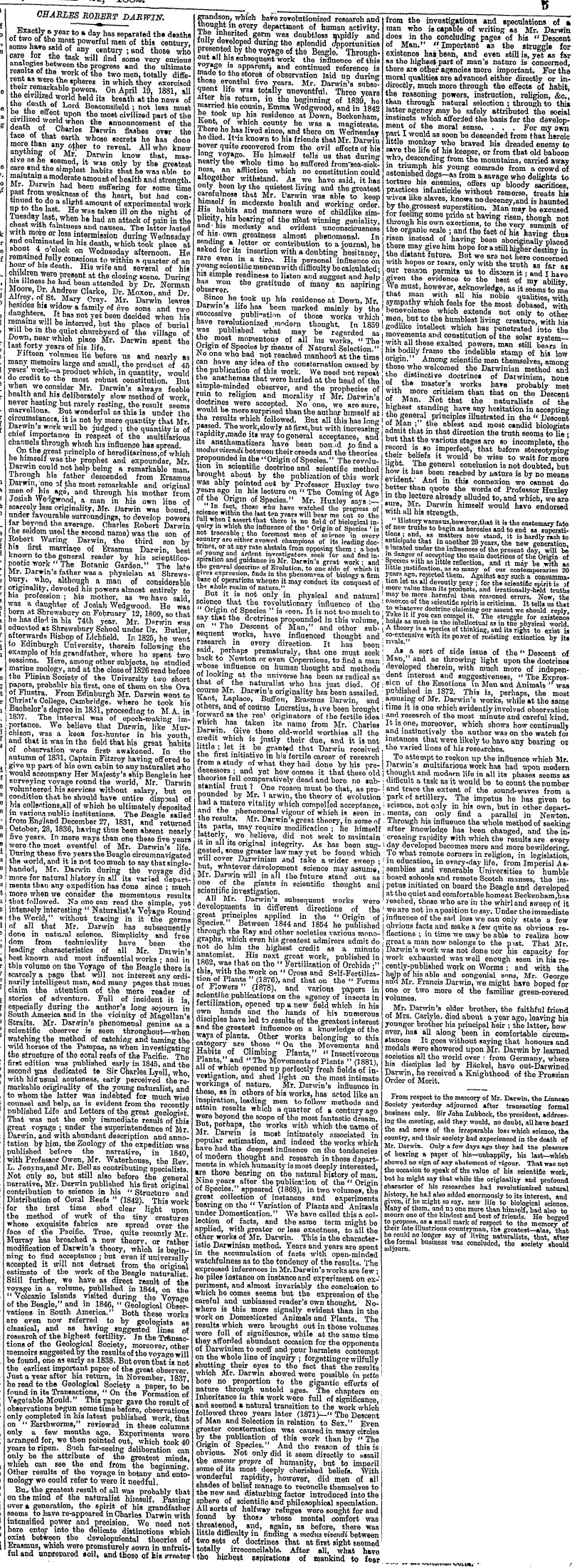
Scanned newspaper page, dense multi-column printed text under the headline 'CHARLES ROBERT DARWIN' at top. The page is a newspaper obituary of Charles Darwin, with columns of small black text and a page number at top right.Newspaper article

Primary source

Charles Darwin Obituary

April 1882

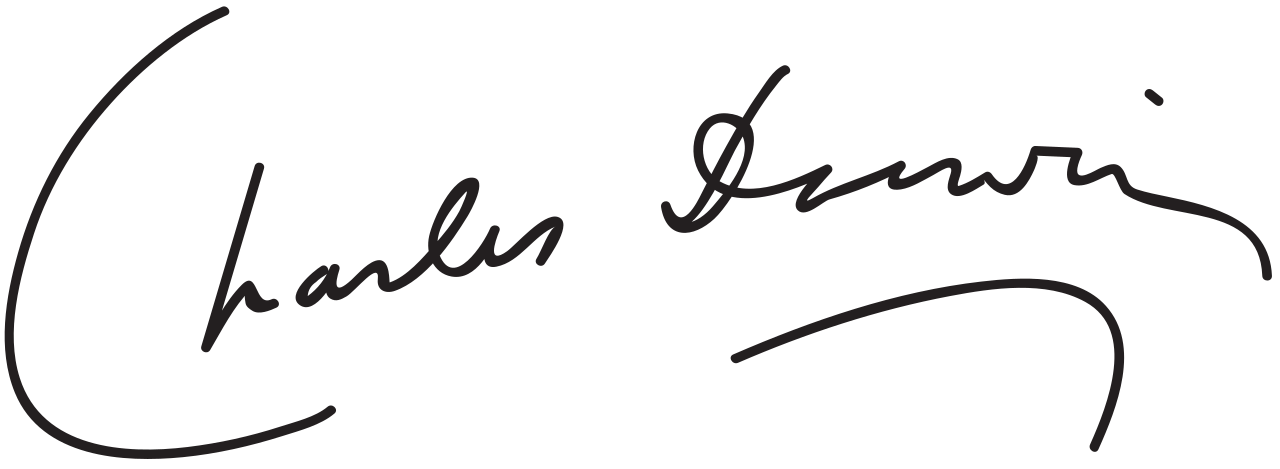
Handwritten black ink signature reading 'Charles Darwin' in cursive script on a white background, with a large flourish curving beneath the name.Document

Primary source

Signature of Charles Darwin

Charles Darwin

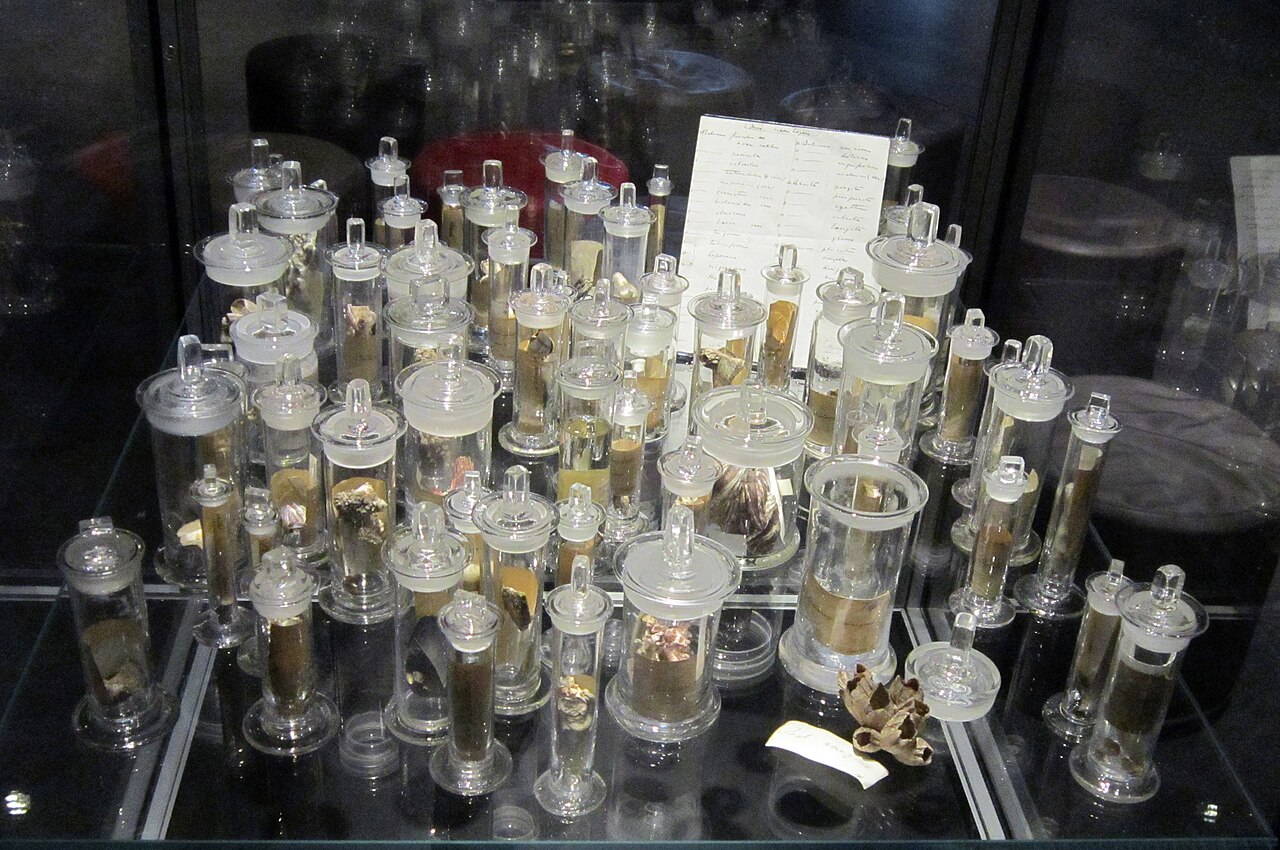
Rows of small glass jars with lids, many containing dried barnacle specimens, displayed in a glass case. A handwritten paper list with specimen notes is at the top center.Artifact

Primary source

Darwin's Barnacles

1854

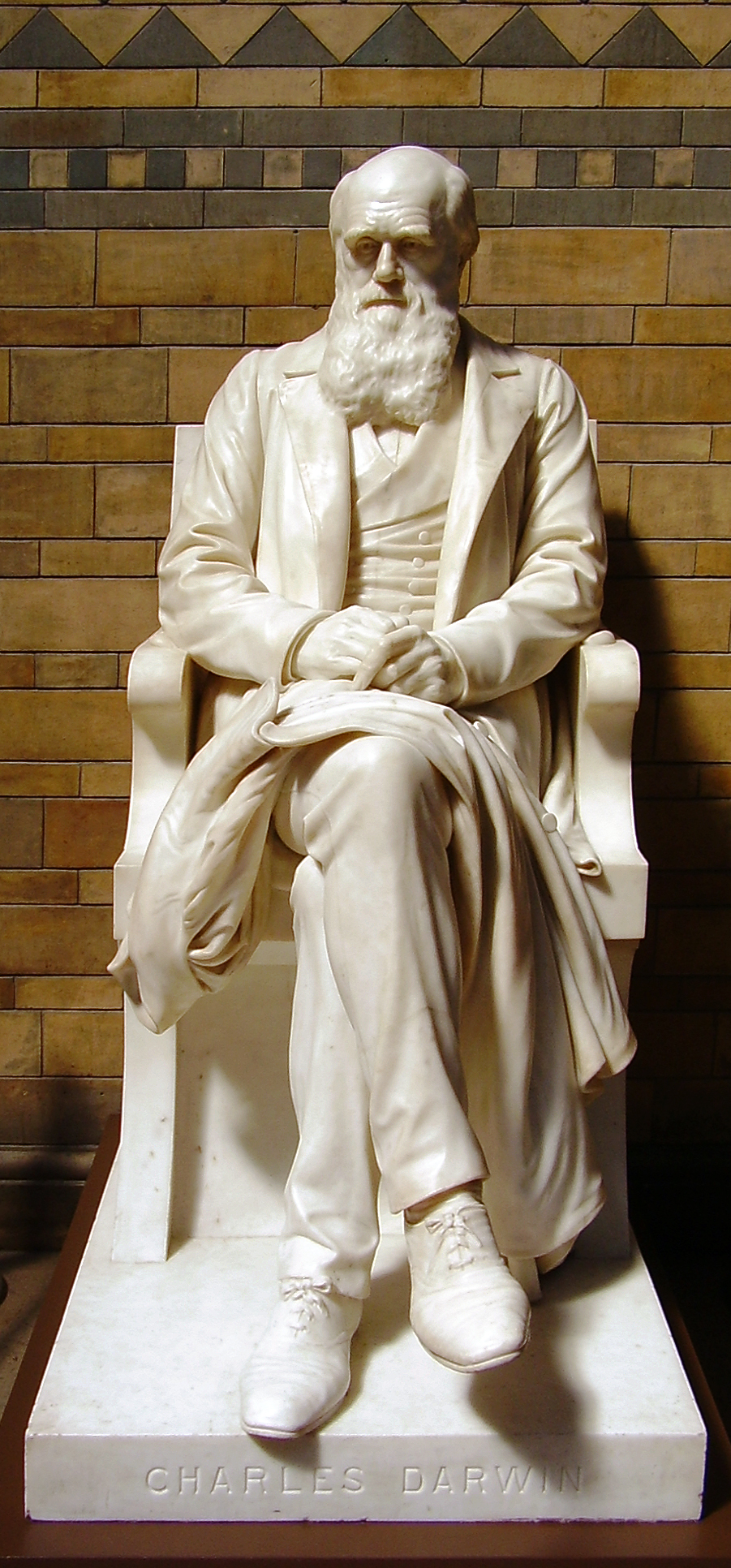
White marble seated statue of Charles Darwin in a chair, hands clasped over one knee, wearing a coat, waistcoat and trousers, set against a tiled wall. The plinth reads CHARLES DARWIN.Sculpture

Secondary source

Statue of Charles Darwin by Joseph Edgar Boehm

Joseph Edgar Boehm · 1885

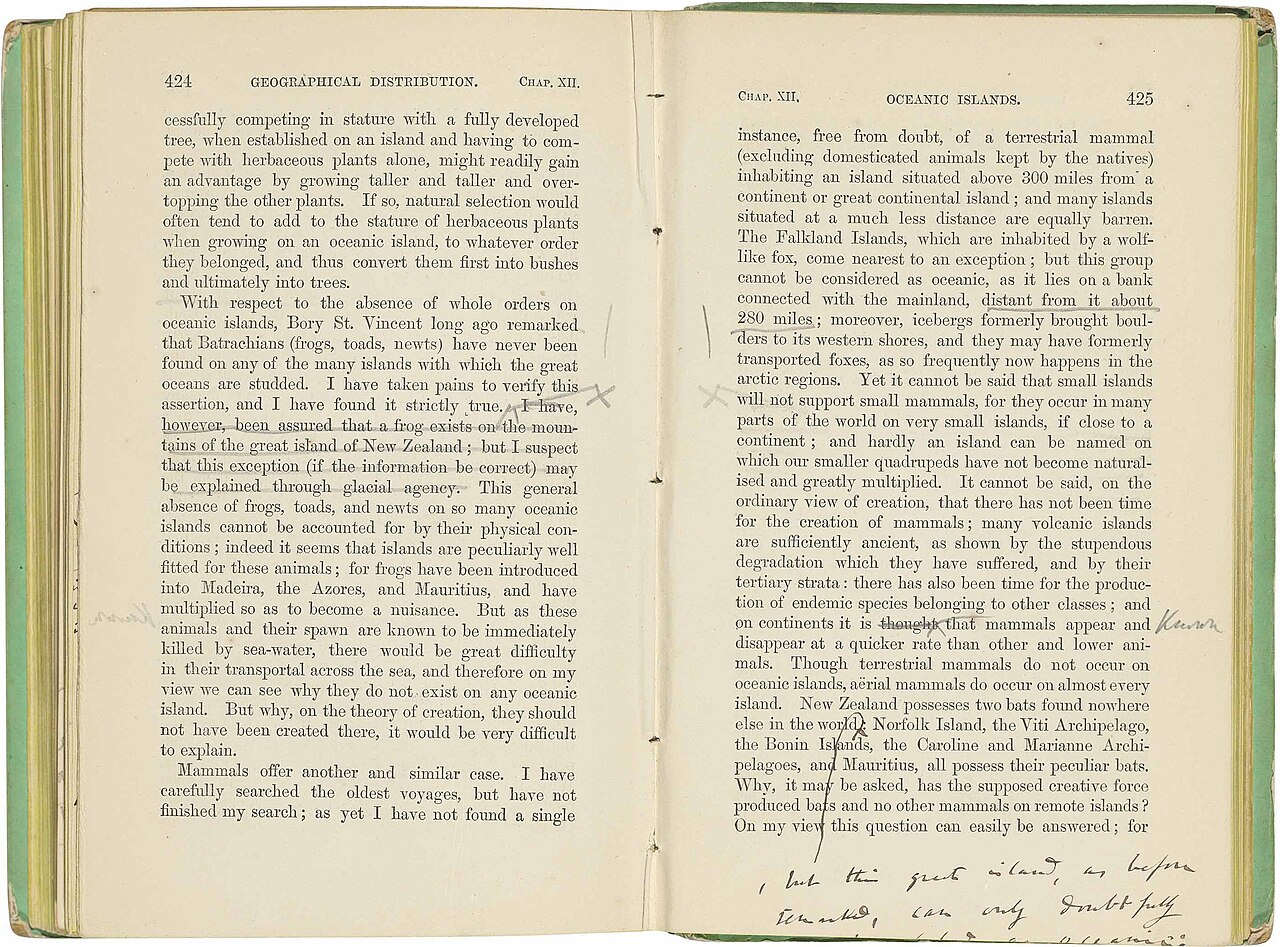
Open book showing two pages of printed text from Darwin's Origin of Species, pages 424 and 425, with handwritten annotations, underlines, and marginal notes in pencil and ink. Page 424 is headed Geographical Distribution, Chap. XII; page 425 is headed Oceanic Islands.Document

Primary source

Darwin's Annotated Copy of On the Origin of Species

Charles Darwin

Title page of 'The Life and Letters of Charles Darwin, including an Autobiographical Chapter', edited by his son Francis Darwin, In Three Volumes, Vol. I, London: John Murray, Albemarle Street, 1887. Cream paper with dark serif text.Book

Secondary source

The Life and Letters of Charles Darwin

Francis Darwin · 1887

Letter

Primary source

Life and Letters of Charles Darwin, Volume II

Charles Darwin

Document

Primary source

Note on the Resemblances and Differences in the Brain of Man and Apes

Thomas Henry Huxley

Front cover of a dark red leather-bound book with a decorative blind-tooled border of leaf and flower motifs along the edges and corners, and a plain central panel with a few faint stains.Book

Primary source

Charles Darwin, His Life Told in an Autobiographical Chapter and Letters

Charles Darwin

Letter

Primary source

More Letters of Charles Darwin

Charles Darwin · 1903

Book

Secondary source

Charles Darwin

Grant Allen · 1885

Newspaper article

Primary source

Obituary: Charles Robert Darwin

1882

Newspaper article

Primary source

Editorial: Death of Charles Darwin

1882

Newspaper article

Primary source

Editorial: Burial of Charles Darwin

1882

Diary entry

Primary source

Charles Darwin in the Falklands, 1833

Charles Darwin · 1833

Book

Primary source

Darwinism Stated by Darwin Himself

Charles Darwin · 1884

Book

Primary source

On the Origin of Species

Charles Darwin · 1859

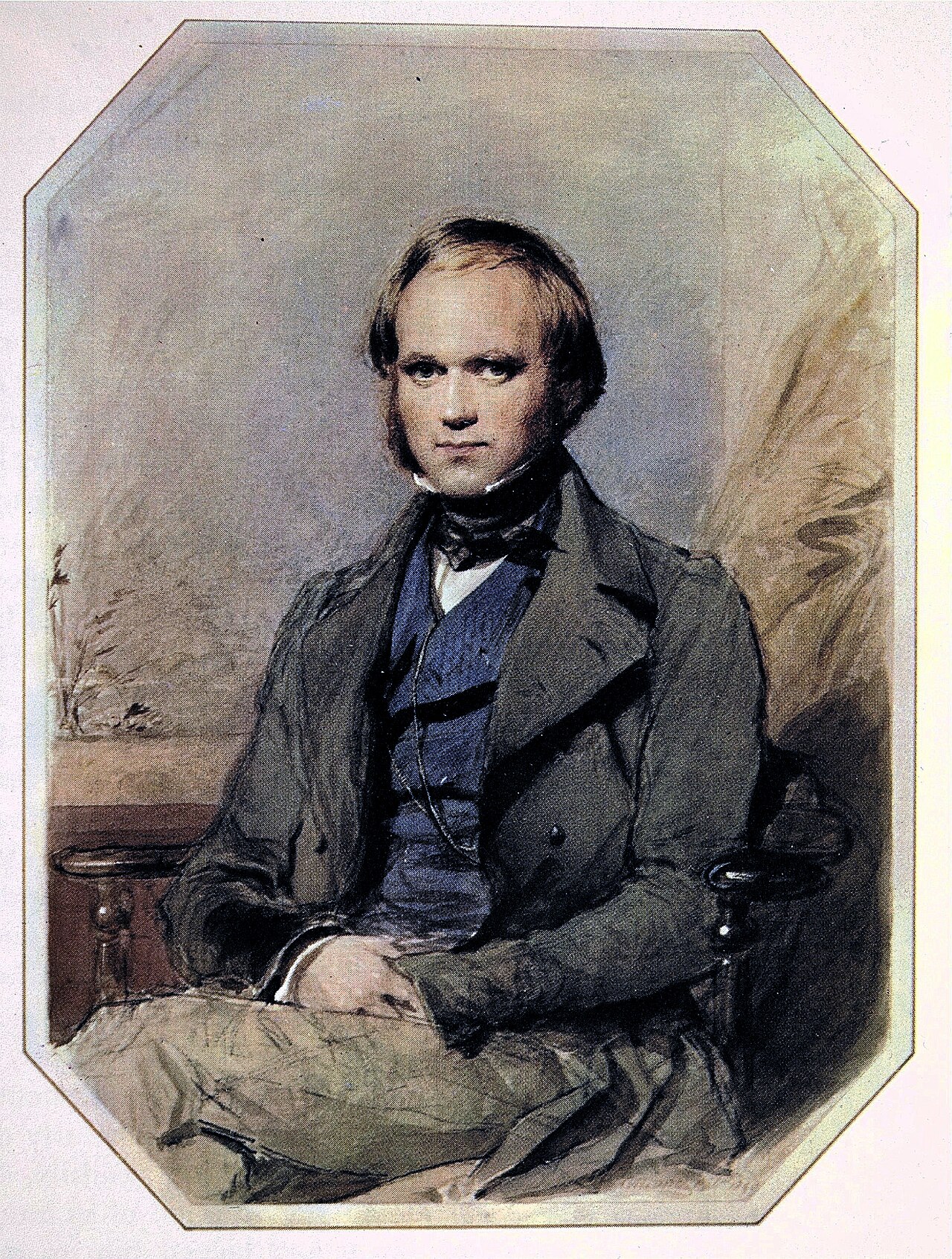
Hand-colored portrait of a young man with light reddish-brown hair seated in a wooden armchair, wearing a dark grey coat, blue waistcoat, and dark cravat. He sits with legs crossed and hands clasped, set against a pale muted background with an octagonal border.Painting

Primary source

Portrait of Charles Darwin by George Richmond

George Richmond · 1840

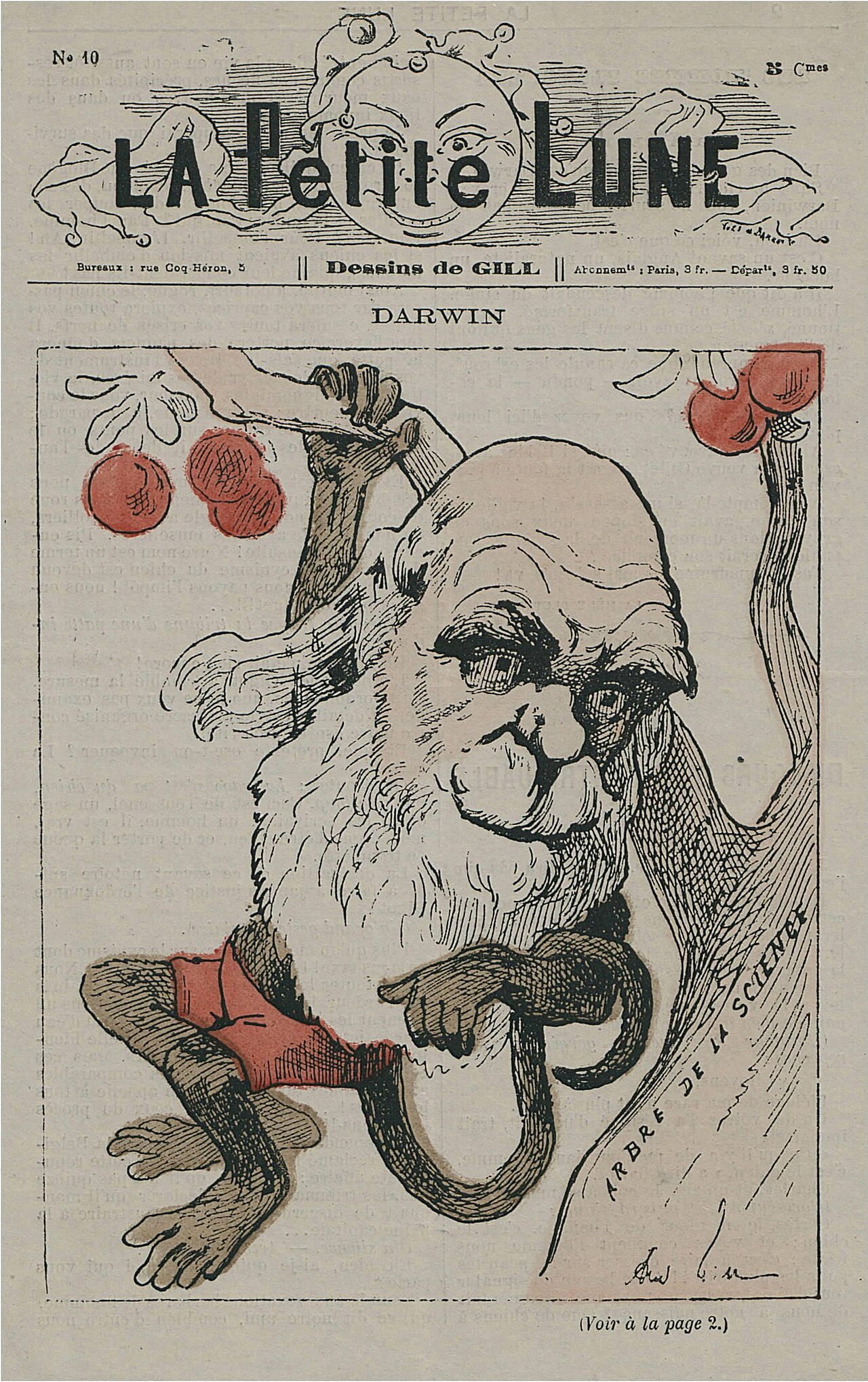
Cover of the French satirical magazine La Petite Lune, number 10, titled DARWIN. A hand-colored caricature shows Charles Darwin's bearded head on a monkey's body, perched in a tree with red fruit and a caption reading ARBRE DE LA SCIENCE.Painting

Primary source

Caricature of Darwin as a Monkey, La Petite Lune

André Gill · August 1878

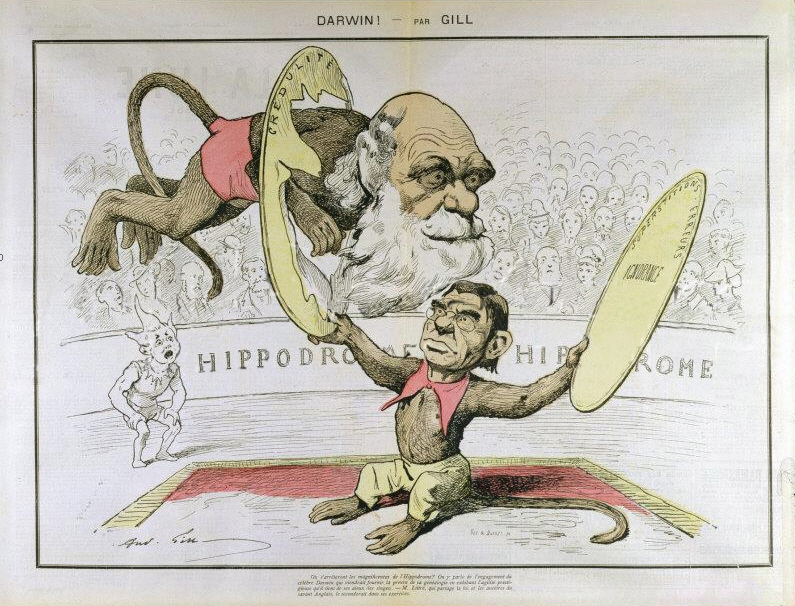
Color-tinted satirical lithograph titled 'DARWIN! - par GILL'. A large-headed caricature of Charles Darwin with white beard, as a monkey in red loincloth, leaps through a hoop labeled 'CREDULITE'. Below, a smaller monkey-like figure in spectacles, Émile Littré, holds an oval sign labeled 'POSITIVISME'. Circus crowd and 'HIPPODROME' banner behind; a small figure cowers at left.Painting

Primary source

Caricature of Darwin and Émile Littré as Performing Monkeys

André Gill · 18 August 1878

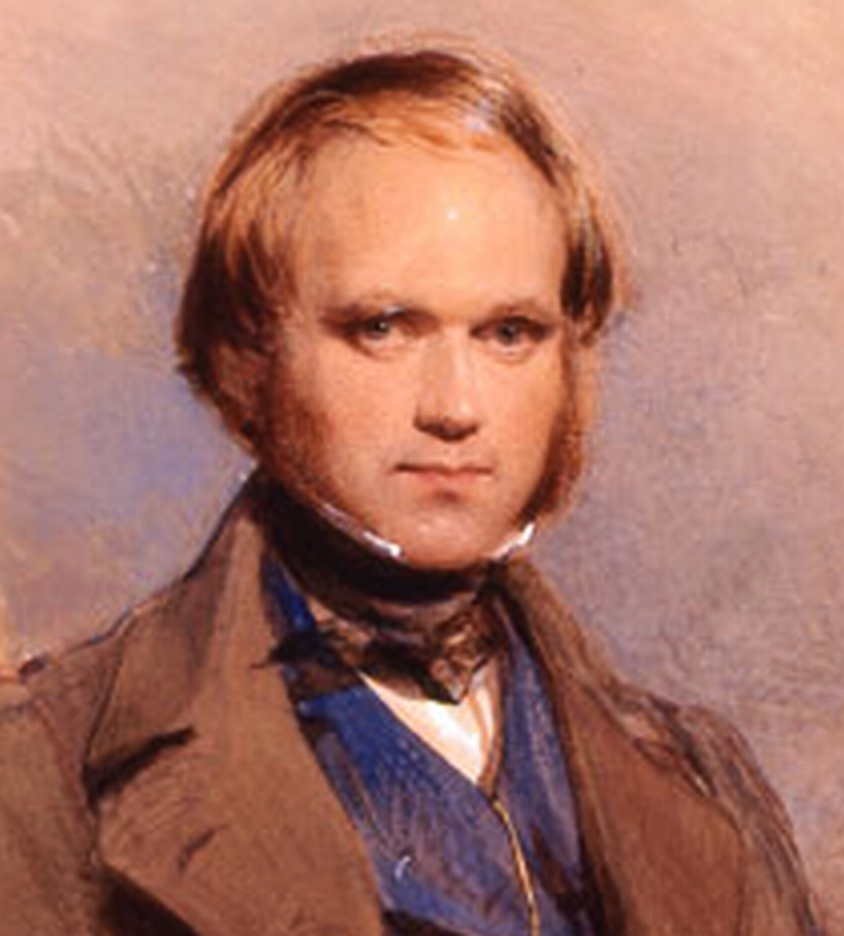
Painted portrait of a young man with reddish-brown hair, blue eyes, and a light reddish-brown beard along the jaw. He wears a brown coat, a dark cravat, and a blue waistcoat over a white shirt against a pinkish background.Painting

Primary source

Portrait of 31-year-old Charles Darwin

George Richmond · 1840

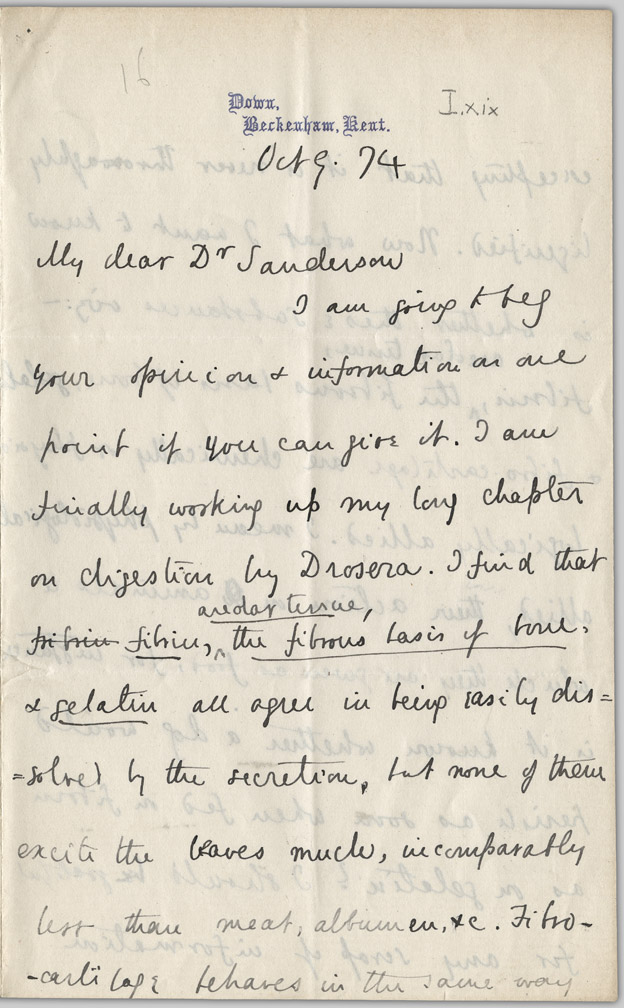
Handwritten letter on aged cream paper headed 'Down, Beckenham, Kent' and dated 'Octr 9 74', addressed 'My dear Dr Sanderson'. The handwritten text discusses digestion by Drosera and tissues dissolved by secretion.Letter

Primary source

Letter from Charles Darwin to John Burdon-Sanderson

Charles Darwin · 9 October 1874

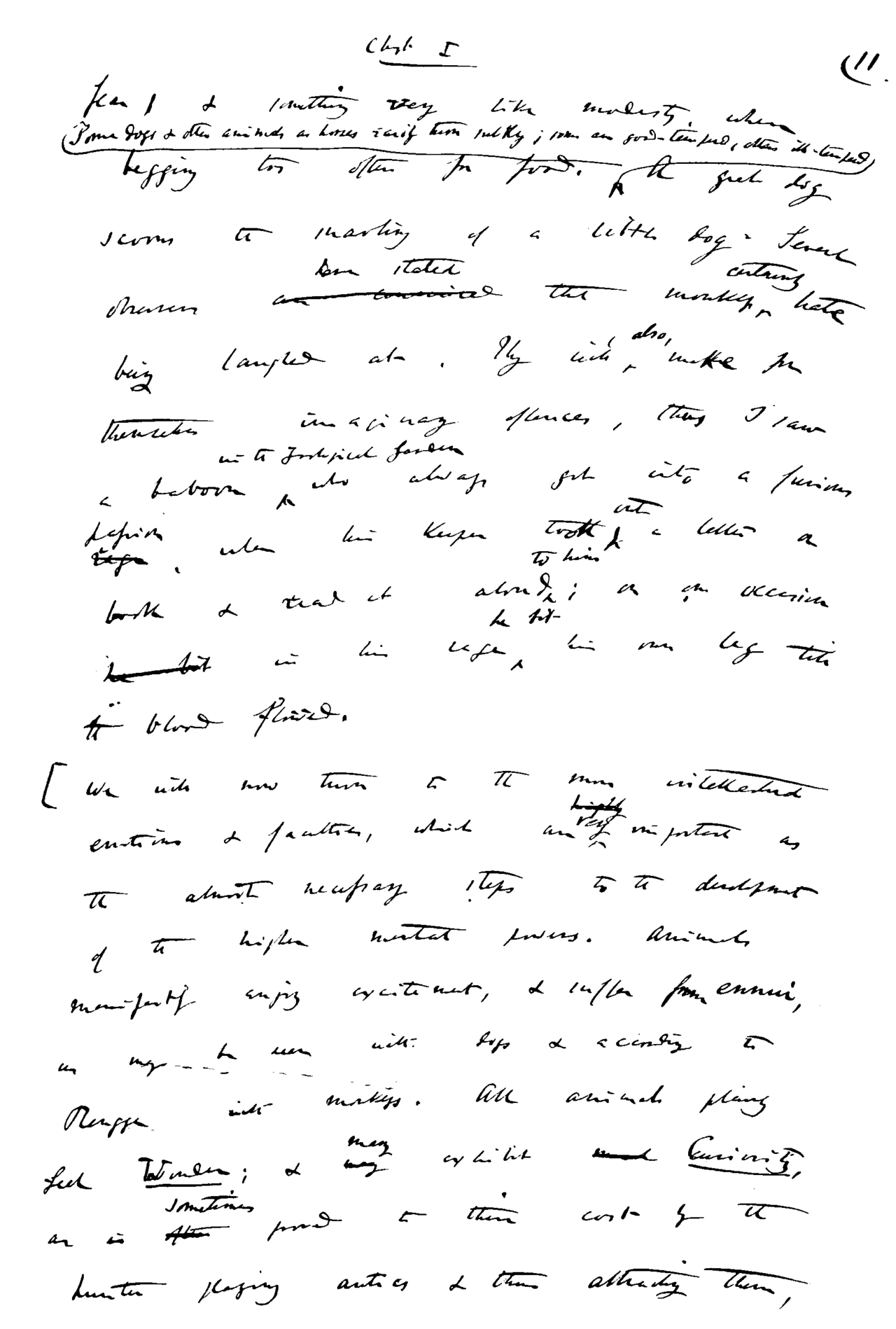
Handwritten manuscript page headed 'Chap I' with page number 11 in the top right. Cursive text in ink, with underlines and interlineated corrections. The passage describes animal behavior, including dogs and other animals and a monkey, and includes a bracketed paragraph beginning 'We... intellectual faculties.'Letter

Primary source

Darwin Letter to Charles Lyell (Manuscript Page, Chapter I, p.11)

Charles Darwin · 1909 (reproducing earlier Darwin manuscript)

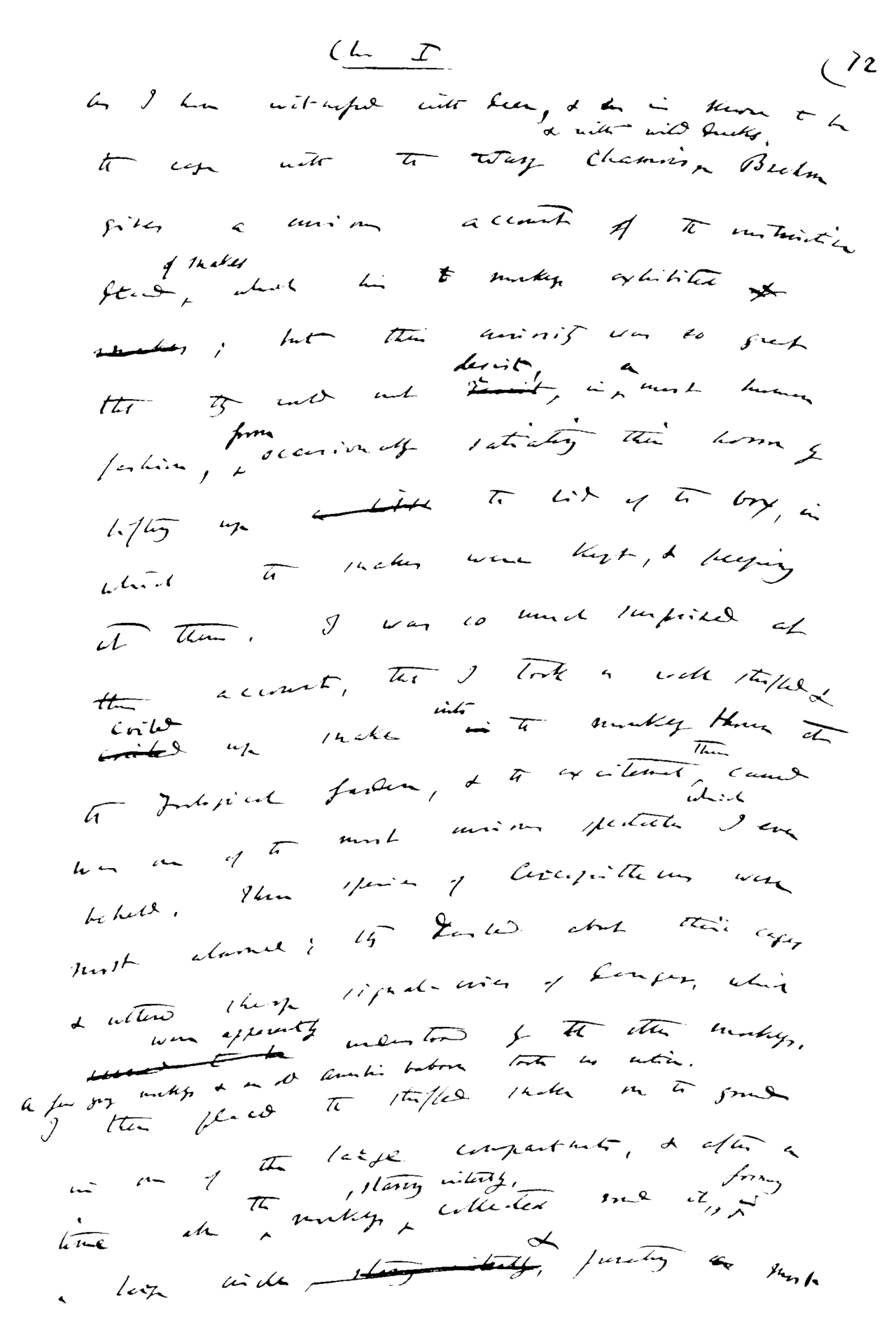
Handwritten manuscript page headed 'Ch. I' with page number 72, in cursive ink with crossings-out and interlinear insertions, apparently a draft of Darwin's writing about monkeys and experiments.Letter

Primary source

Darwin Letter to Charles Lyell (Manuscript Page, Chapter I, p.72)

Charles Darwin · 1909 (reproducing earlier Darwin manuscript)

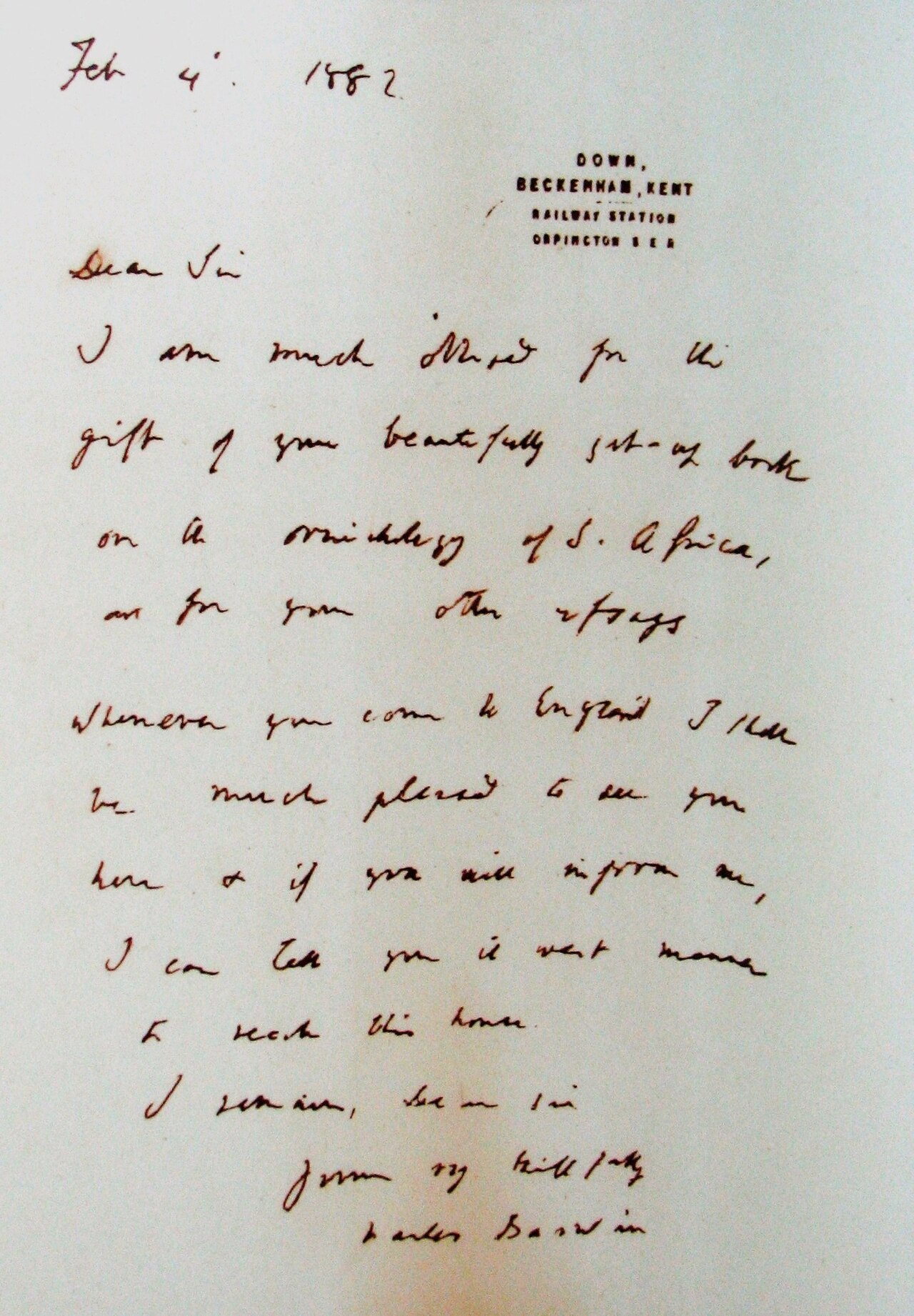
Handwritten letter in brown ink dated Feb 4 1882 on pale paper, with a printed postmark reading Down, Beckenham, Kent, Railway Station, Orpington S E R. The letter thanks the recipient for a book on the ornithology of South Africa and invites a visit to Down. It is signed Charles Darwin.Letter

Primary source

Letter from Charles Darwin to Emil Holub

Charles Darwin · February 1882

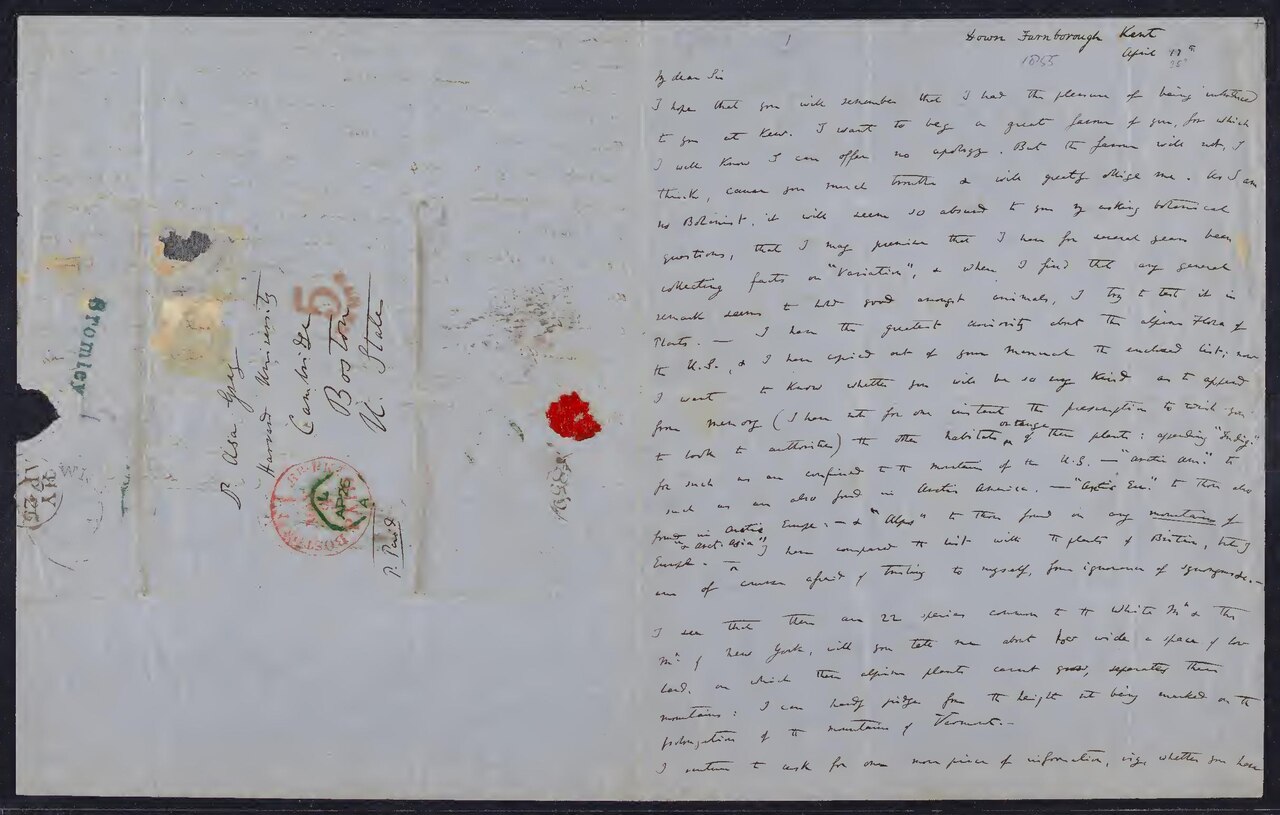
Scan of a handwritten letter from Down, Farnborough, Kent, dated April 1855 (partly legible), written in cursive ink on pale paper with a folded cover sheet on the left showing a red postal stamp, a 'Boston' marking, and addressee writing. The letter discusses plants and specimens.Letter

Primary source

Charles Darwin Letters to Asa Gray

Charles Darwin · April 1855 (part of correspondence 1855-1881)

Sepia-toned black-and-white portrait photograph of an elderly bald man with a full, bushy white beard, shown in profile facing left, wearing a dark jacket and white collar against a black background.Photograph

Primary source

Charles Robert Darwin, Photograph by Julia Margaret Cameron

Julia Margaret Cameron · 1868

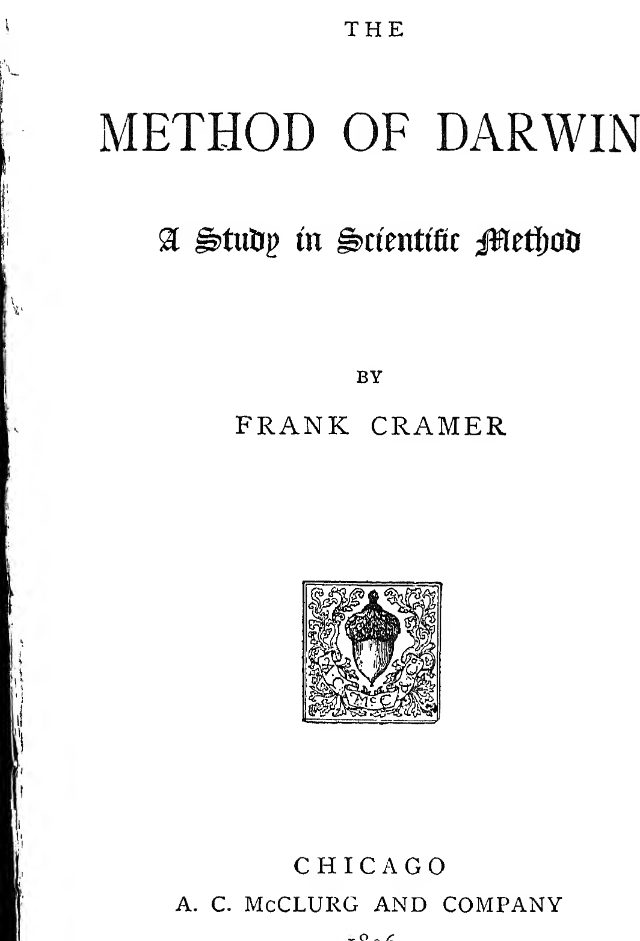
The Method of DarwinBook

Secondary source

The Method of Darwin

Frank Cramer · 1896

Das Weltbild von Darwin und LamarckSpeech

Secondary source

Das Weltbild von Darwin und Lamarck

Ernst Haeckel · 12 February 1909

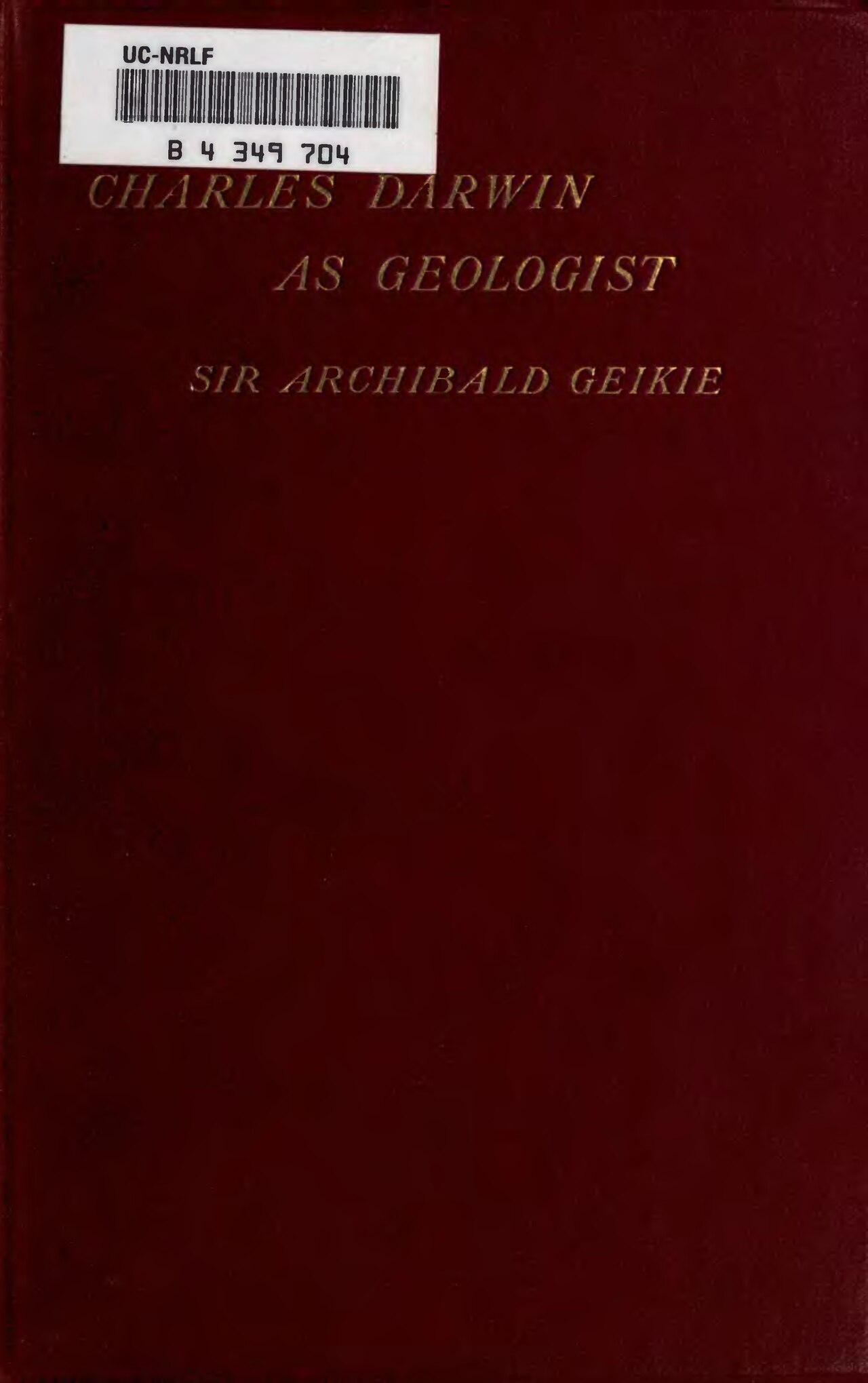
Front cover of a dark red book. A white library label at top reads UC-NRLF with a barcode and the number B 4 349 704. Gold italic title reads 'Charles Darwin as Geologist' and below it 'Sir Archibald Geikie'.Book

Secondary source

Charles Darwin as Geologist

Archibald Geikie

Painted portrait of an elderly bald man with a white beard wearing a dark long coat with buttons, holding a dark hat at his side, set against a black background.Painting

Secondary source

Charles Darwin

John Maler Collier · after 1882

Book

Tertiary source

Encyclopaedia Britannica entry on Charles Darwin

1911

Book

Tertiary source

Dictionary of National Biography entry on Charles Darwin

1885-1900

Book

Secondary source

Darwin's Life, by George Edward Woodberry

George Edward Woodberry · 1890

Book

Secondary source

Darwin's Voyage of the Beagle, by George Howard Parker

George Howard Parker · 1914

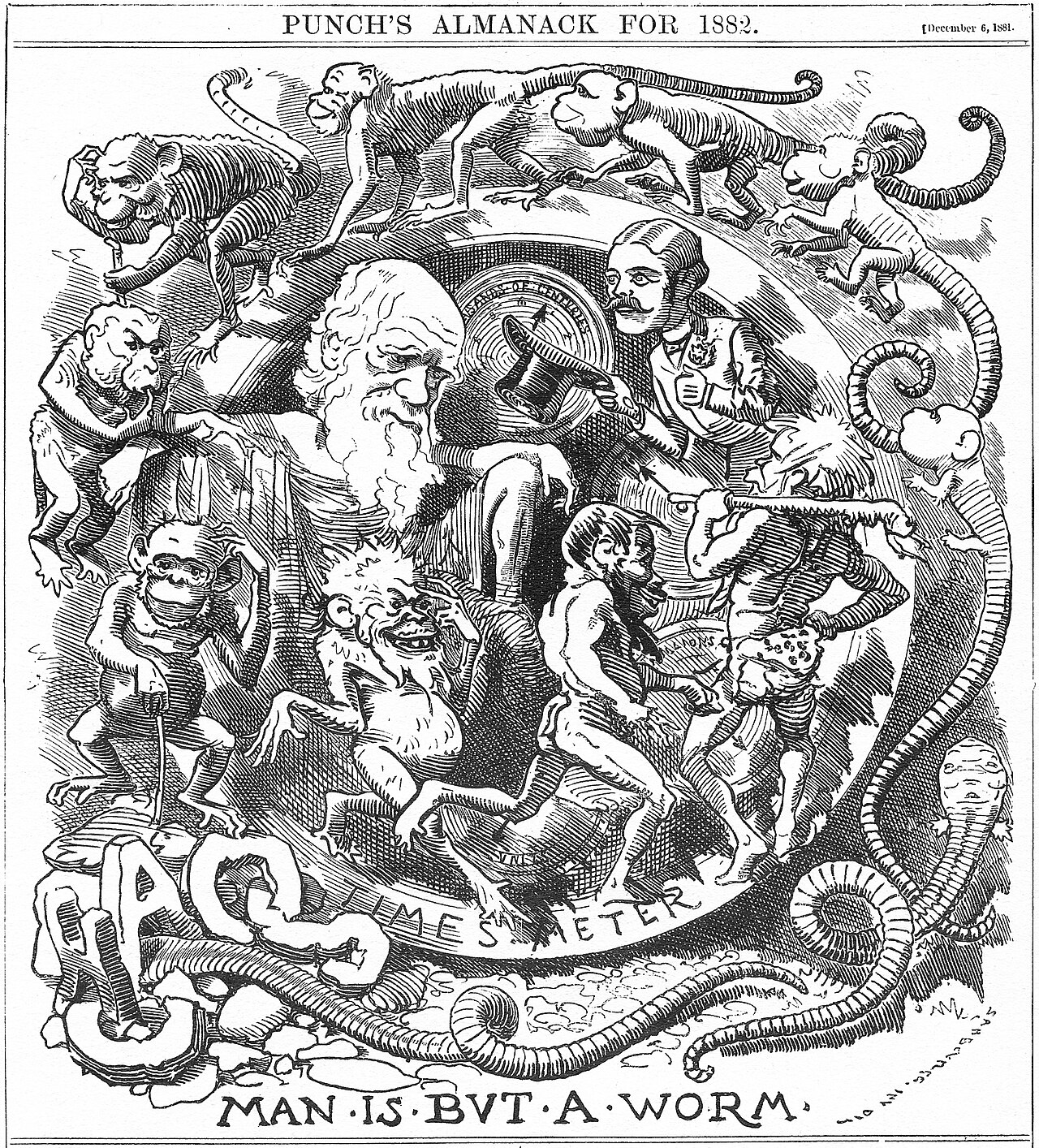
Engraved Punch almanac caricature titled 'Man is But a Worm'. Darwin, with a long white beard, sits at center on a dais, and monkeys and ape-like figures surround him. A top-hatted man in a suit sits at right, and worms coil along the bottom border. Text reads 'PUNCH'S ALMANACK FOR 1882' at top.Painting

Primary source

Man is But a Worm

c. 1881-82

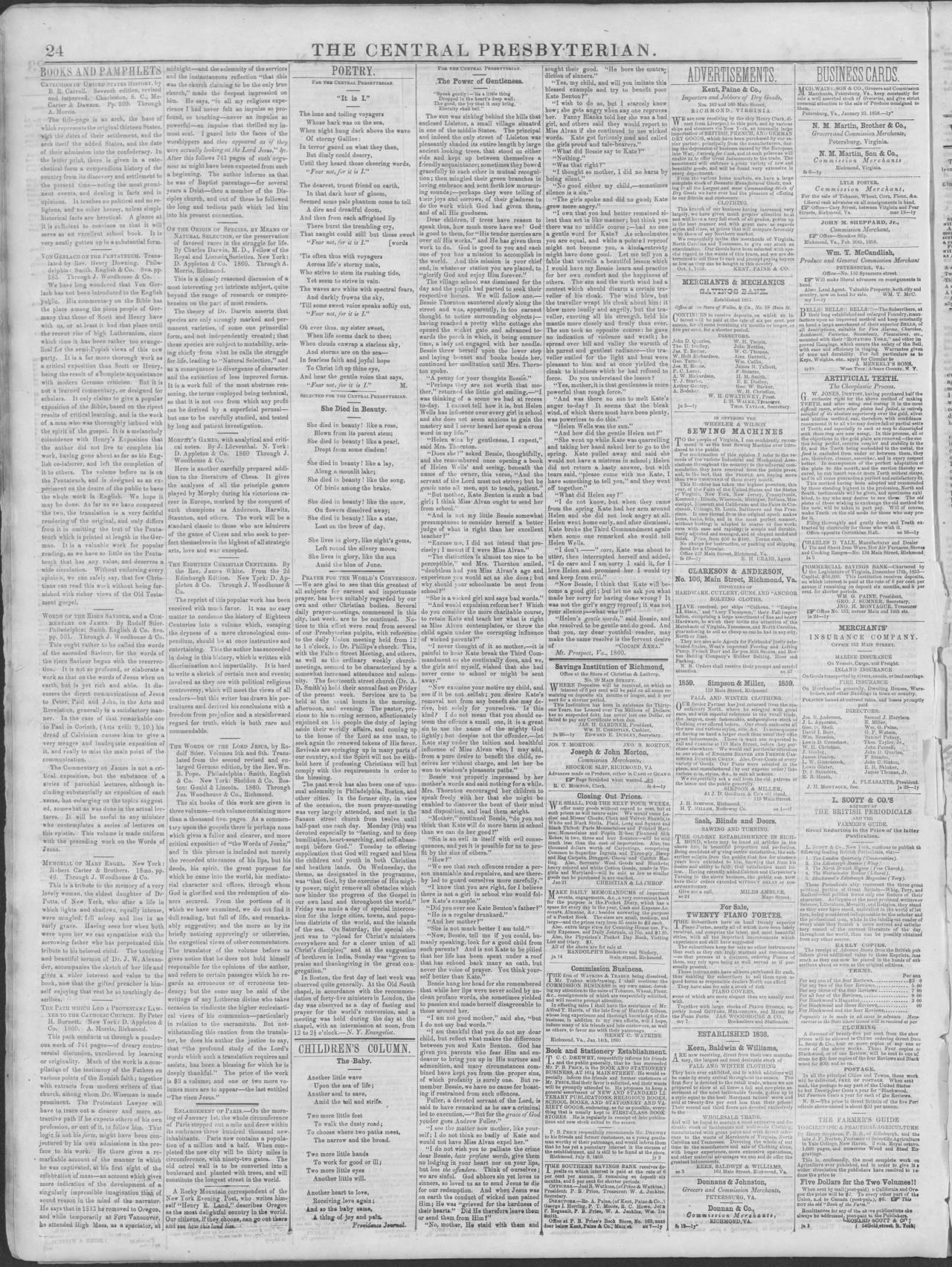
Scanned newspaper page 24 of The Central Presbyterian, 1860, with multiple columns of text under headings such as Books and Pamphlets, Poetry, The Power of Gentleness, Advertisements, and Business Cards. The review of On the Origin of Species appears in the left-center column.Newspaper article

Primary source

Review of On the Origin of Species, Central Presbyterian

1860-02-11

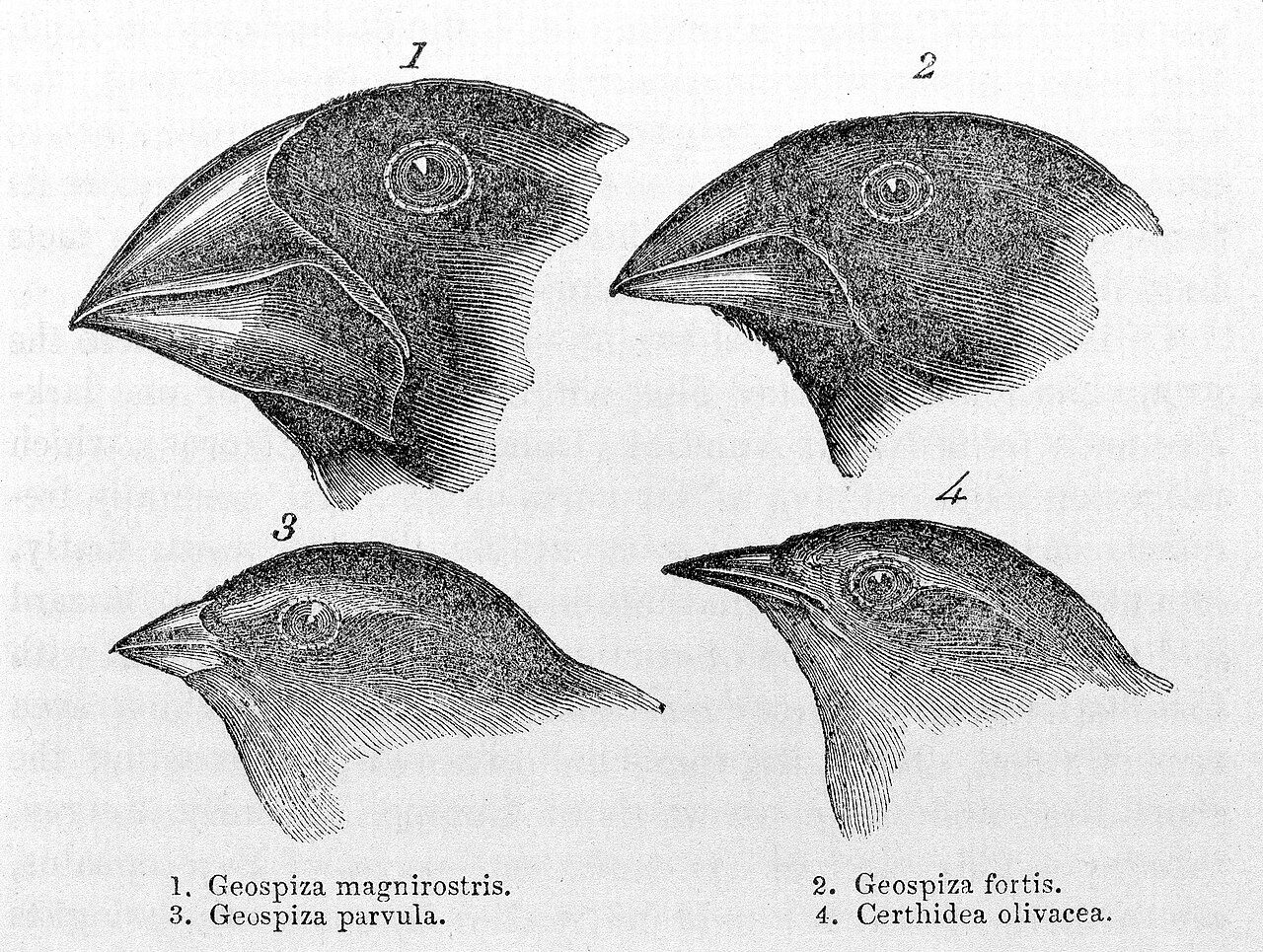
Engraved plate showing four bird heads in profile, numbered 1 to 4, each with a different beak shape. Labels below read Geospiza magnirostris, Geospiza fortis, Geospiza parvula, and Certhidea olivacea.Painting

Primary source

Plate of four Galápagos finches from Darwin's Journal of Researches

Charles Darwin

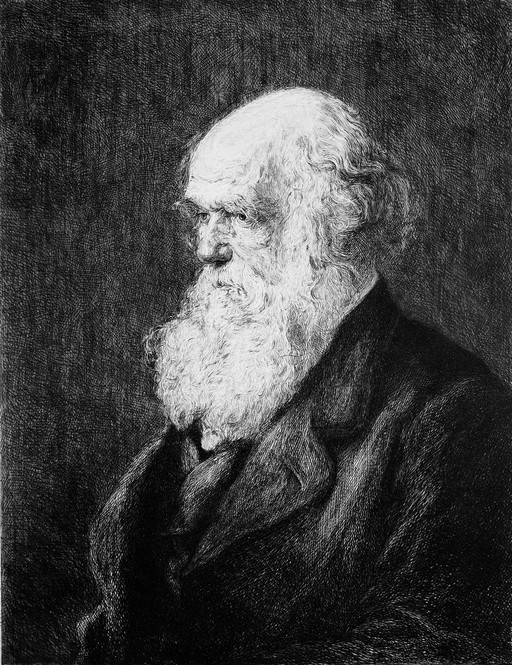
Black and white etching of an elderly man in profile facing left, with a white beard, balding white hair, and a dark coat with a high collar against a dark, hatched background.Painting

Primary source

Portrait of Charles Darwin by Paul Adolph Rajon

Paul Adolph Rajon

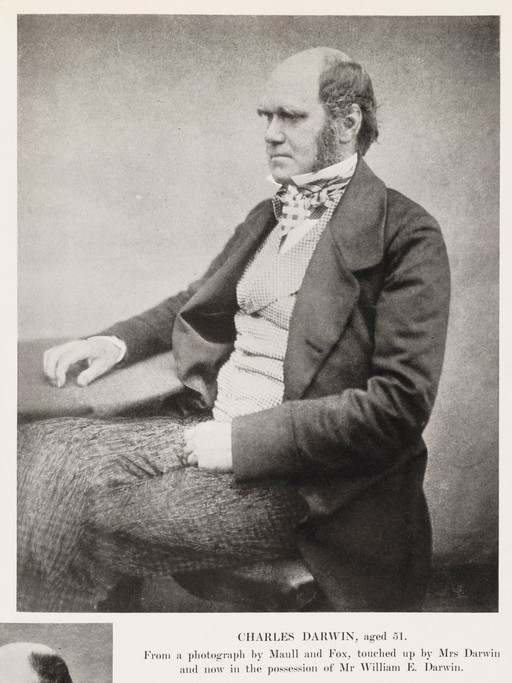
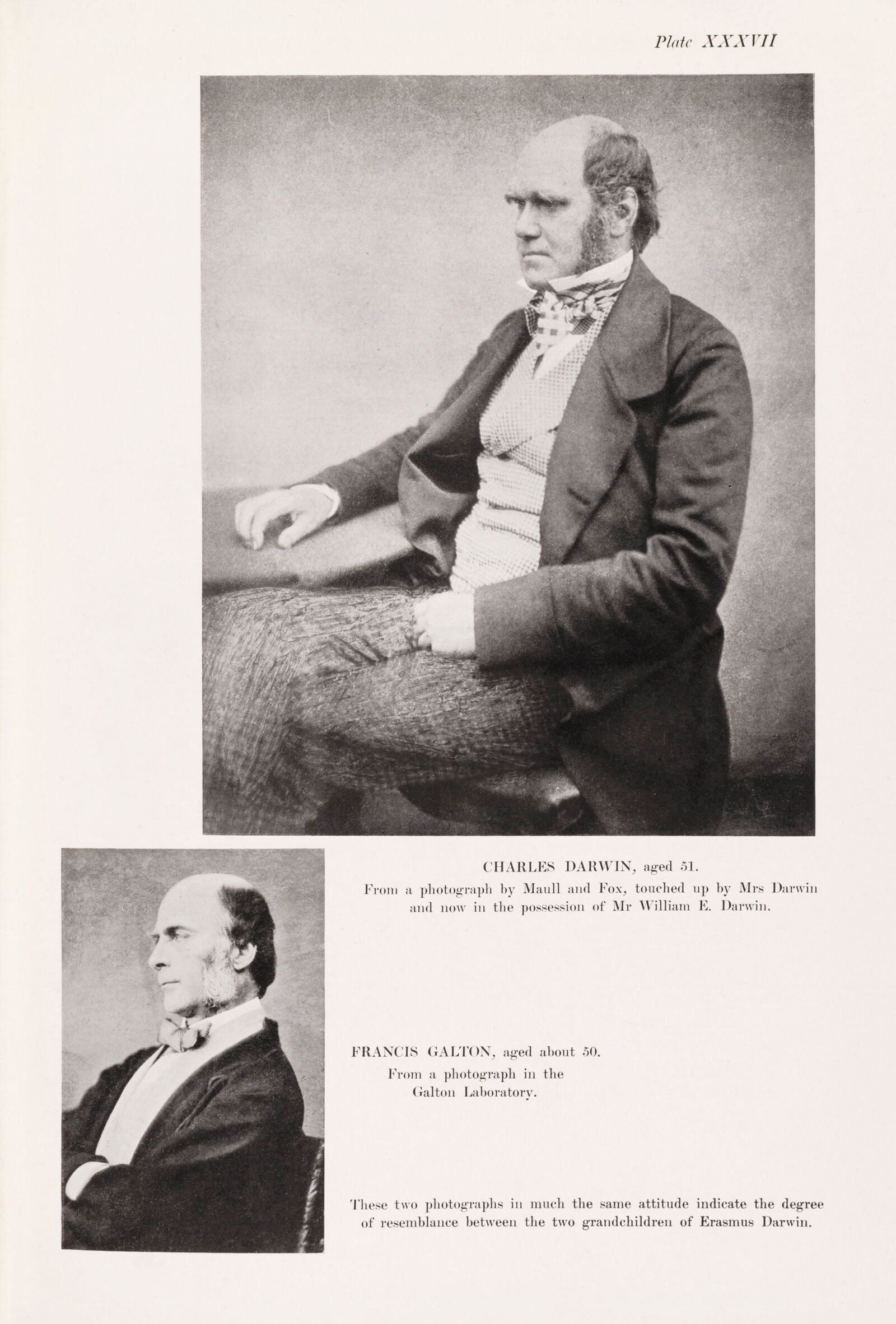
Black and white photograph of a bald, bearded older man seated in a dark coat and checked waistcoat, with a patterned cravat, one arm resting on a chair back. Caption below reads: Charles Darwin, aged 51.Photograph

Primary source

Charles Darwin, aged 51

c. 1860

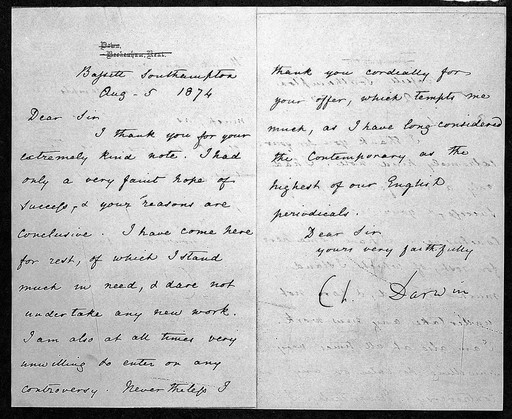
Black and white scan of a handwritten letter on two pages, dated Aug 5 1874 from Bassett, Southampton, signed by Charles Darwin. The text thanks the recipient for an offer to contribute to a periodical and declines new work due to poor health.Letter

Primary source

Letter by Charles Darwin

Charles Robert Darwin · 5 August 1874

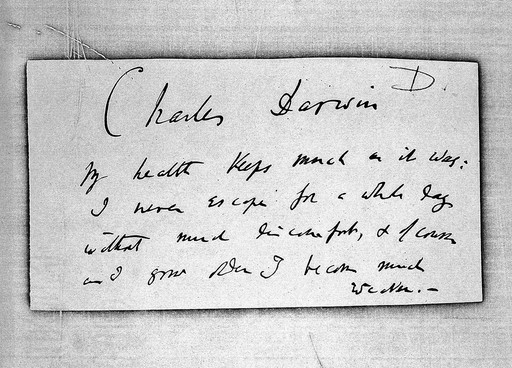
Handwritten note on a card signed 'Charles Darwin' with a 'D' flourish. The text reads: 'My health keeps much as it was; I wrote escape for a short day without much discomfort, I have ... and gone ... I have been much ... Darwin.' Dark ink on a light grey background.Document

Primary source

Note by Charles Darwin

Charles Robert Darwin

Black and white wood engraving of the funeral of Charles Darwin in Westminster Abbey. A dense crowd of mourners in dark formal clothing stands around a draped coffin in the nave, under Gothic arches and a tall candelabrum. Caption reads: Funeral of Charles Darwin, Esq., in Westminster Abbey.Painting

Primary source

Funeral of Charles Darwin, Westminster Abbey, 1882 engraving

26 April 1882

Plate XXXVII page from a book showing two black-and-white photographic portraits. The large upper portrait shows a seated bald-crowned man with a full beard, dark jacket and checked waistcoat, resting one arm on a chair. The smaller lower portrait shows a man in profile wearing a dark jacket and bow tie. Printed captions name Charles Darwin, aged 51, and Francis Galton, aged about 50, with a note about resemblance.Photograph

Primary source

Portraits of Charles Darwin and Francis Galton

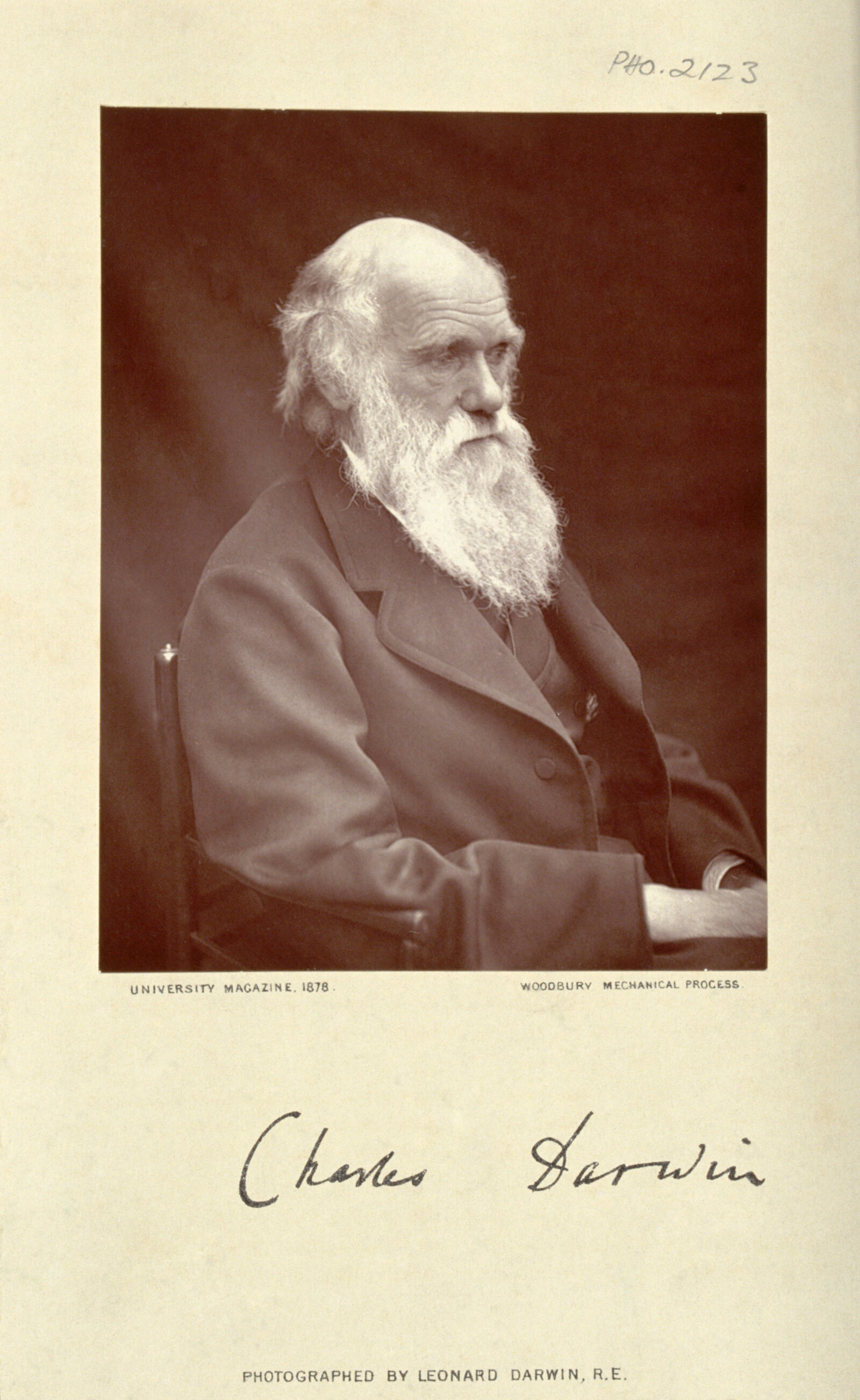
Sepia-toned photographic portrait of an elderly bald man with a long white beard, seated in profile in a dark jacket against a dark backdrop. Printed caption below reads 'Charles Darwin' with 'Photographed by Leonard Darwin, R.E.' and 'University Magazine, 1878' with 'Woodbury Mechanical Process' credits.Photograph

Primary source

Charles Robert Darwin, photograph by Leonard Darwin

Leonard Darwin · 1878 (printed in University Magazine)

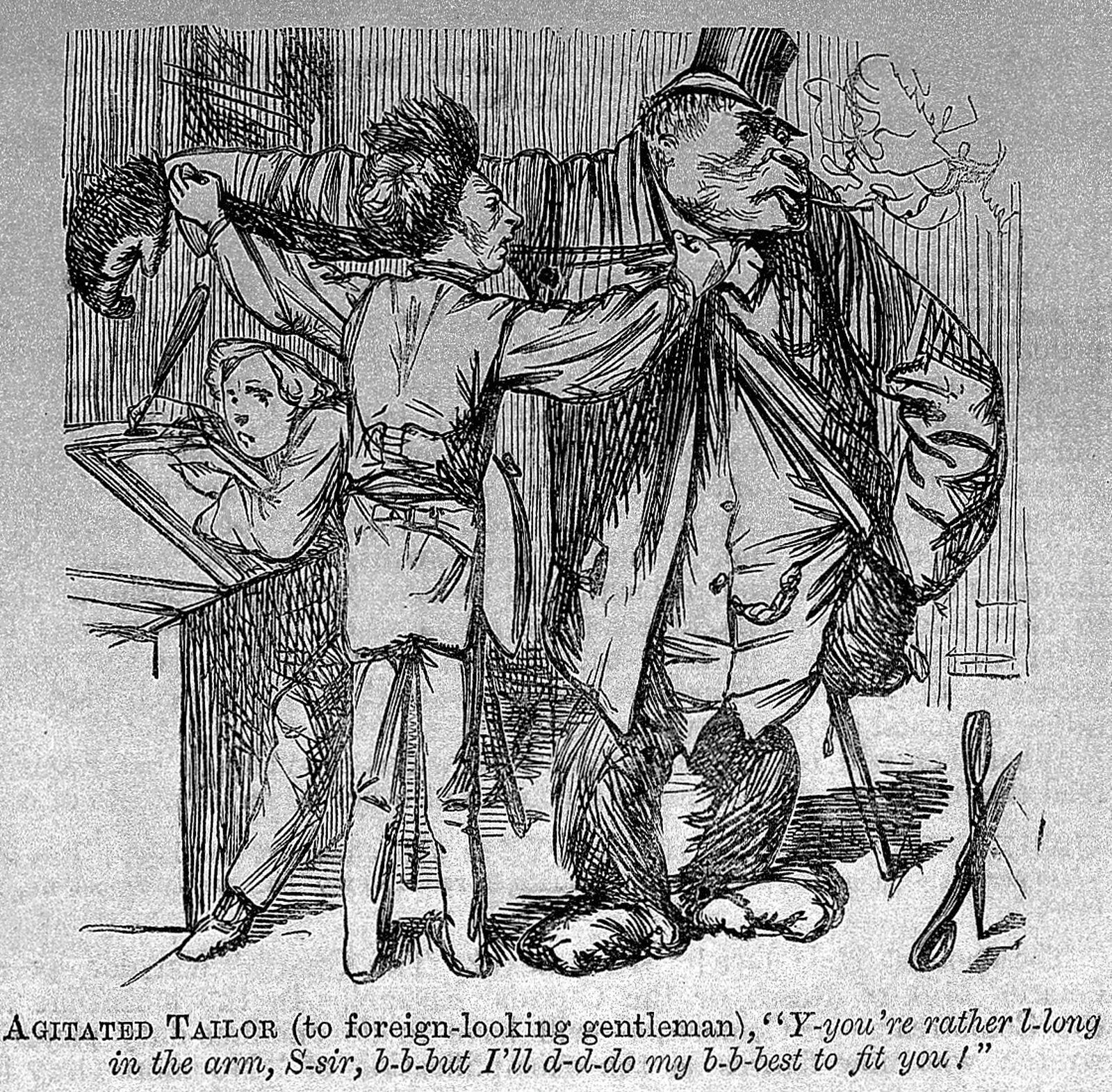
Black and white engraved cartoon from Punch. A flustered tailor with a tape measure around his neck stands measuring the arm of a tall, stout gentleman in a top hat and long coat, who has a long cord-like arm extended. A small boy with a pencil sits at a high desk watching. Caption below reads: Agitated Tailor (to foreign-looking gentleman), Y-you're rather l-long in the arm, S-sir, b-b-but I'll d-d-do my b-b-best to fit you!Painting

Primary source

Agitated Tailor

28 December 1861

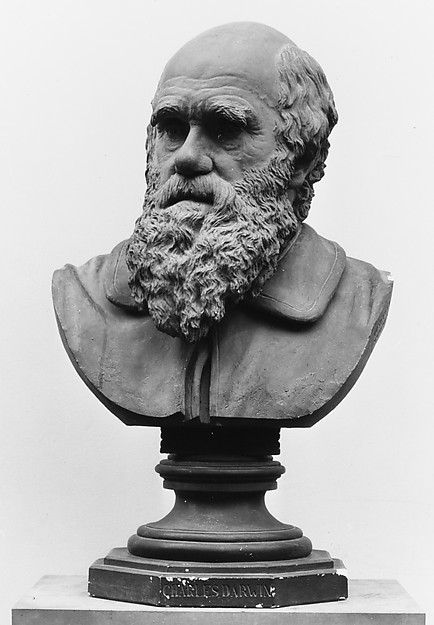
Black and white photograph of a bronze-toned bust of an elderly bald man with a full beard and deep-set eyes, mounted on a tall stepped pedestal. The plinth bears the inscription 'CHARLES DARWIN'.Sculpture

Secondary source

Bust of Charles Darwin

Joseph Echteler · 1883-84

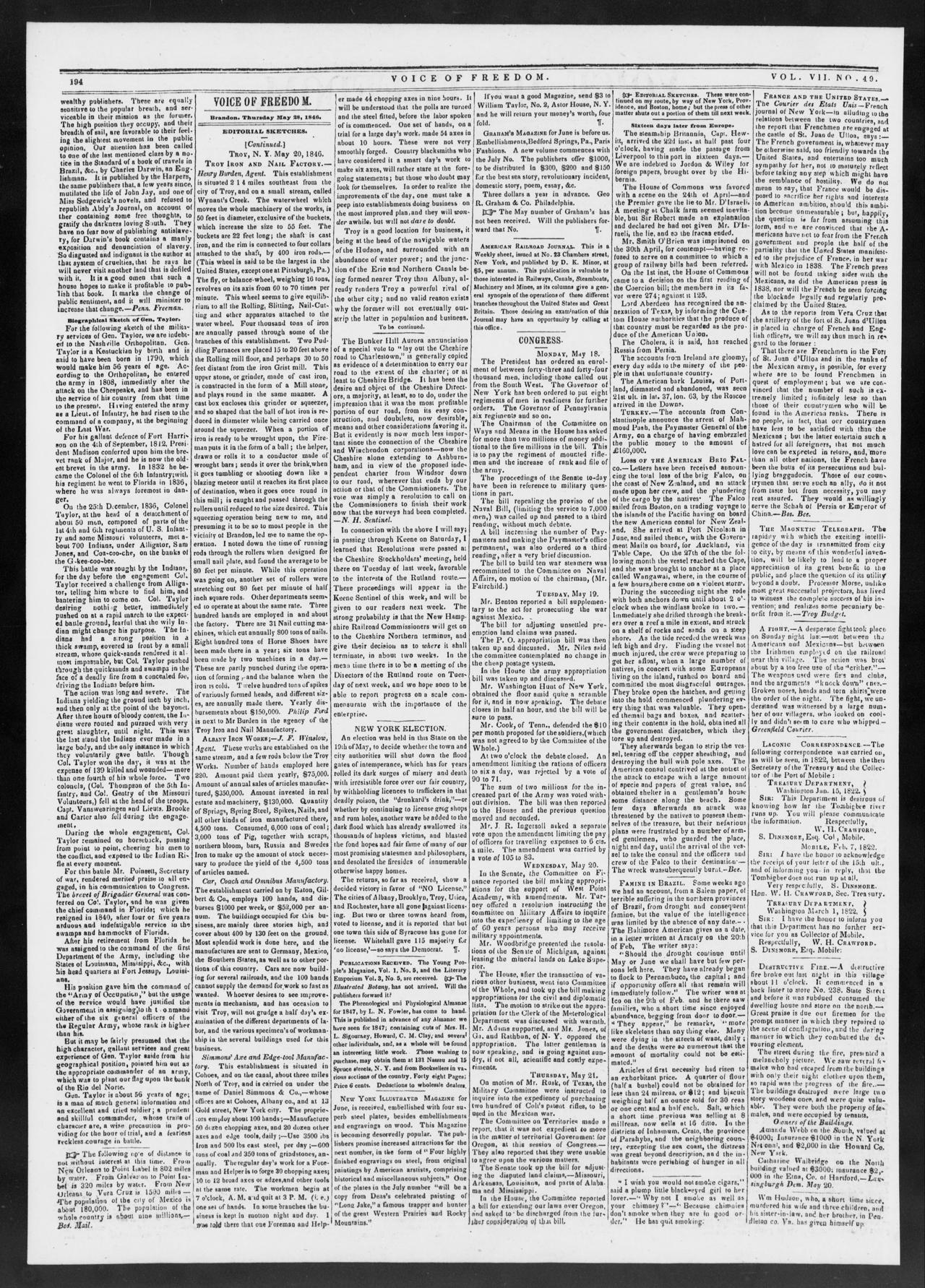
Scanned newspaper page from The Voice of Freedom, Vol. VII, No. 49, dated May 28, 1846, with dense multi-column text, headings including Editorial Sketches, Congress, and New York Election, and a masthead reading Voice of Freedom.Newspaper article

Primary source

Review of Darwin's Brazil travel book in The Voice of Freedom

28 May 1846

Want the full shelf? Chat with Charles Darwin in the app and open the Sources panel — every quote links back to the original.

Use Charles Darwin in class

2 collections

Ready-made collections from the Humy team that feature Charles Darwin. Preview any of them, then try it free.

Trusted by educators worldwide

Conversations
375,000+
Real exchanges between students and historical figures
Messages exchanged
4,142,000+
Across every figure, classroom and language
Historical figures
100,000+
Each informed by a curated biography and selected sources
Languages supported
50+
From English and Spanish to Arabic and Korean

Paying customers

Used by 98 schools and universities

Partner school logo
Tecnológico de Monterrey logo
Hyper Island logo
Partner school logo
Chambersburg Area School District logo
Broward County Public Schools logo
Nebo School District logo
National Louis University logo
South Florida PBS logo
Punahou School logo
University of Wisconsin–River Falls logo
Partner school logo
Partner school logo
Archbishop Mitty High School logo
Kingsburg High School logo
Norwalk Public Schools logo
Partner school logo
Connections logo
Partner school logo
Moore Public Schools logo
Partner school logo
Partner school logo
Partner school logo
Partner school logo
Robbinsville Public Schools logo
Partner school logo
Partner school logo
Partner school logo
Tecnológico de Monterrey logo
Hyper Island logo
Partner school logo
Chambersburg Area School District logo
Broward County Public Schools logo
Nebo School District logo
National Louis University logo
South Florida PBS logo
Punahou School logo
University of Wisconsin–River Falls logo
Partner school logo
Partner school logo
Archbishop Mitty High School logo
Kingsburg High School logo
Norwalk Public Schools logo
Partner school logo
Connections logo
Partner school logo
Moore Public Schools logo
Partner school logo
Partner school logo
Partner school logo
Partner school logo
Robbinsville Public Schools logo
Partner school logo
Partner school logo

What educators are saying

“We enjoyed the program last year and used it frequently.”
“My students say it’s a welcome change of pace. I’m not a fan of the “sage on the stage” model, so I try to incorporate research-oriented and self-paced activities. With Humy, students have to take charge of their learning. They’ve become more adept at critical thinking, forming better questions, and improving their reading comprehension. The interview feature has been my go-to tool. I create assignments where students must ask historical figures a set number of questions, then summarize the responses to ensure they’re truly absorbing the material. This approach lets them actively explore the past rather than passively consuming information.”
“Humy has helped me bring historical figures, sometimes long past, to life. When my students interact with these figures in real-time, it eliminates some of the perceived “ancient” characteristics of my curriculum. This has shifted my students’ thinking away from viewing history as abstract or irrelevant. Real-time interactions make historical figures relatable, even allowing students to ask off-topic questions that help put historical lives in a more relevant context for 13-year-olds. The feature I use the most is the interview feature. After teaching a topic, most recently Gandhi and Joan of Arc, I have the students ask pointed, focused questions. We practice good conversation techniques beforehand, teaching them to listen (or read) carefully and formulate thoughtful follow-up questions rather than just interrogating. It helps students practice effective conversation skills.”

FAQ

Frequently asked questions

Who is Charles Darwin?
Naturalist and biologist known for his theory of evolution by natural selection. On Humy.ai you can chat with an AI version of Charles Darwin that draws on a short biography and 75 historical sources during the conversation — by text or voice, in 42 languages.
Is Charles Darwin AI free?
Charles Darwin is part of Humy's full library of more than 100,000 figures, which comes with a paid plan. A free account (no credit card) includes 20 AI messages a month with the free library's figures, so you can try how the conversations work first. The free plan's 20 AI messages a month are shared by you and your students: enough to try Humy yourself; a whole class needs Plus.
What sources does the Charles Darwin AI use?
It draws on a short biography and 75 historical sources (books, paintings and photographs), including “On the Origin of Species”, “Notebook B 'I think' Tree of Life Sketch” and “On the Tendency of Species to Form Varieties”. Each source has its own page on Humy.ai.
How historically accurate is the AI version of Charles Darwin?
Each figure uses a short biography and a small set of selected historical sources as context (retrieval-augmented generation), so answers stay closer to known material than the model's general knowledge alone. It isn't a citation-grade research tool — like any LLM, the AI can get details wrong or extrapolate. Treat it as a strong starting point for inquiry and cross-reference important claims.
Can I talk to Charles Darwin by voice?
Yes. In addition to text chat, you can call Charles Darwin and hear their voice respond in real time — useful for auditory learners, interview practice and Socratic dialogue.
Is Humy.ai safe and compliant for schools?
Yes. Humy.ai is used by more than 100 schools, universities and organisations. The platform is FERPA- and GDPR-aligned, supports SSO, and offers an IT-approval pack tailored for school procurement teams.

Ready when you are

Start chatting with Charles Darwin now.

20 messages free · No credit card · Available in 50+ languages.