Portrait of Antonio Gaudí

AI Historical Figure

Antonio Gaudí

Renowned Catalan architect known for his distinctive and highly imaginative style, best exemplified in the Sagrada Família in Barcelona.

Chat with Antonio Gaudí via text or voice — in 42 languages, drawing on a curated biography and 78 historical sources. Available 24/7.

Start chatting with Antonio Gaudí20 messages free · No credit card
Lived
1852–1926
From
Spain
Known for
Visual arts & architecture
Antonio Gaudí

Antonio Gaudí

Online · responds in seconds

Hello — I'm Antonio Gaudí. Renowned Catalan architect known for his distinctive and highly imaginative style, best exemplified in the Sagrada Família in Barcelona. What would you like to ask me?

20 messages free · No credit card · Powered by Humy.ai

Live preview · Switch between 42 languages above · Send a message to continue in the app

Multilingual

Talk to Antonio Gaudí in 42 languages

Ask Antonio Gaudí questions in any language below, and the rest of Humy's app speaks it too. Pick yours to open the chat in that language.

Also in German (Austria), German (Switzerland), English (UK), English (Australia), English (Canada).

The sources behind this AI

78 sources · 36 artifacts · 12 documents · 12 paintings · 9 photographs · 6 sculptures · 2 newspaper articles · 1 letter

Antonio Gaudí doesn’t improvise from thin air. The AI is grounded in 78 curated historical sources students can inspect. Open any of them to see what informs the conversation.

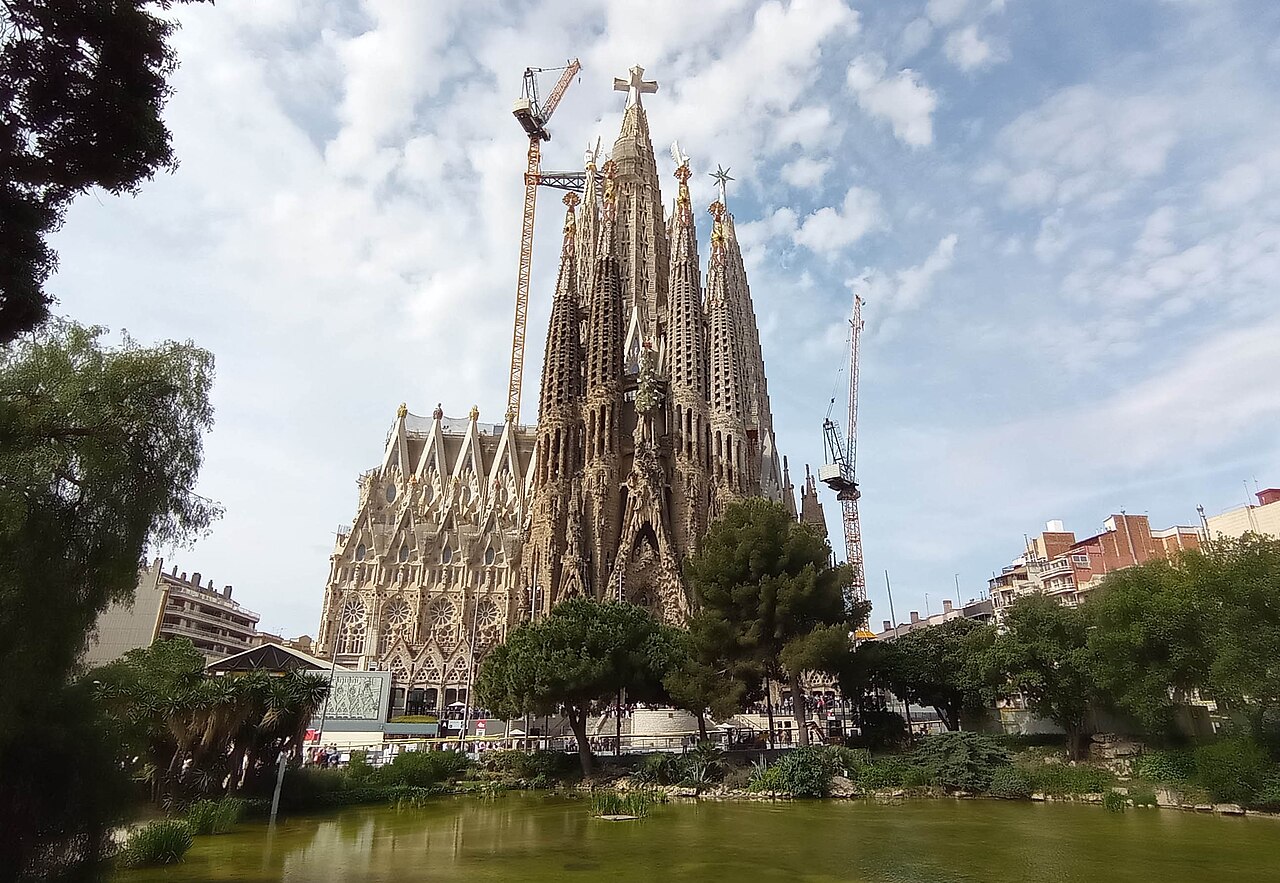
View of the Sagrada Família basilica in Barcelona from across a green pond. Tall, spired towers with ornate stone carvings rise above a facade with pointed gables. Cranes stand beside the towers, and trees and apartment buildings surround the site under a partly cloudy blue sky.Artifact

Primary source

Sagrada Família

Antoni Gaudí · begun 1882, redesigned by Gaudí from 1883, still under construction

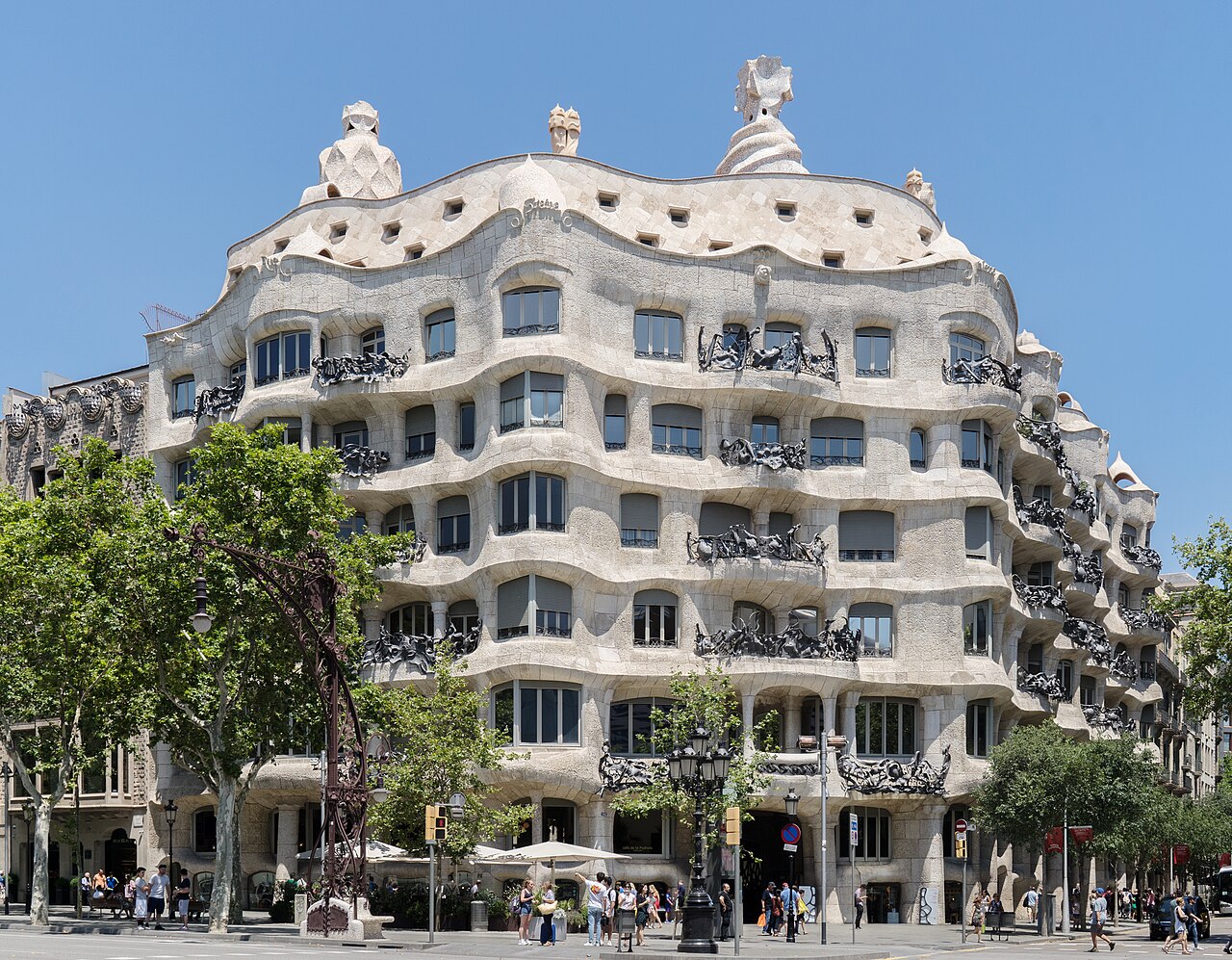
Wide view of Casa Milà, a wavy, undulating stone apartment building with many irregular window openings, wrought-iron balconies, and sculpted rooftop chimneys under a clear blue sky. Street trees and pedestrians stand in front.Artifact

Primary source

Casa Milà

Antoni Gaudí · 1906-1912

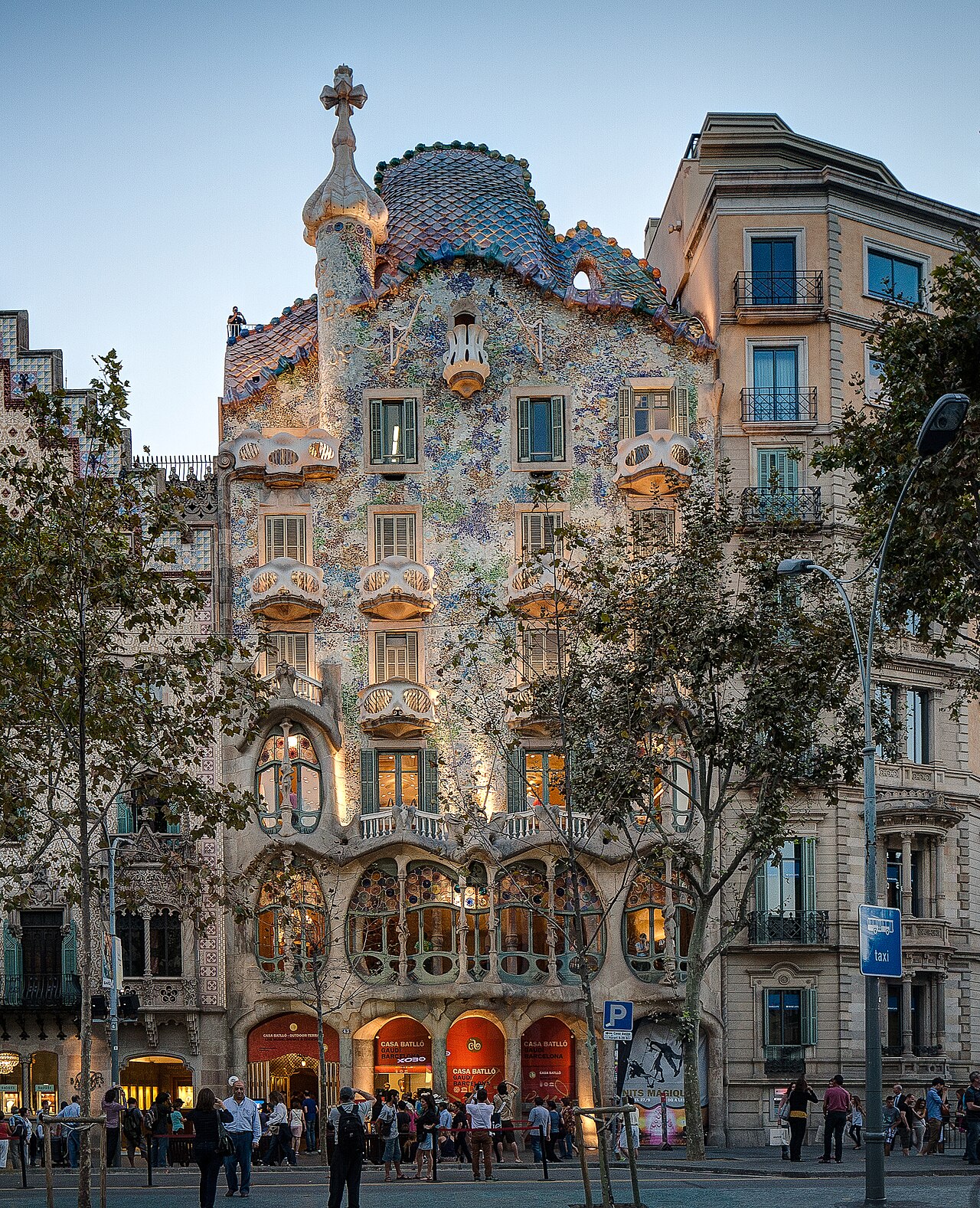
Evening view of Casa Batlló in Barcelona, a building with a wavy, mosaic-covered facade in blues and greens, a bone-like balcony structure, and a tiled roof topped by a cross. Pedestrians and trees stand in the street below.Artifact

Primary source

Casa Batlló

Antoni Gaudí · remodelled 1904-1906

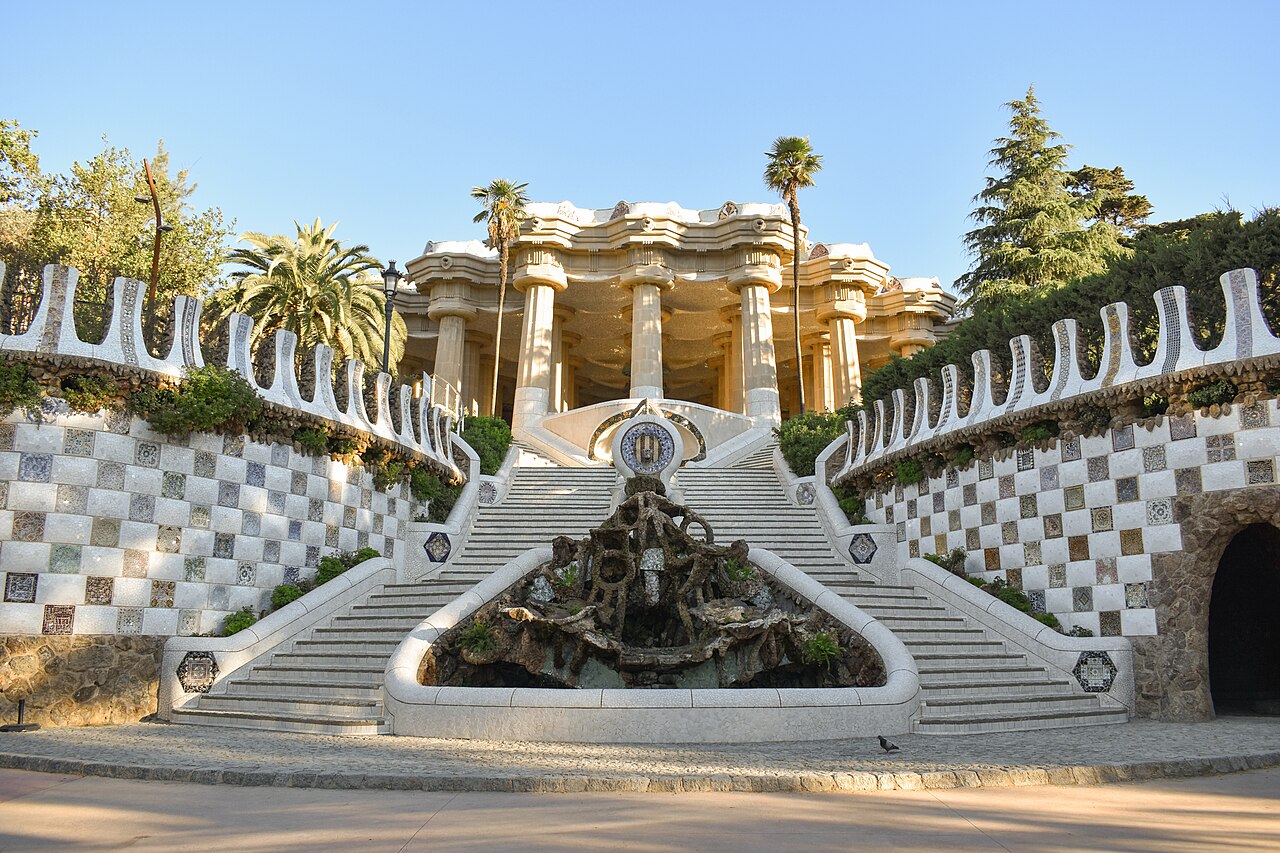
Monumental staircase with a central dragon-like mosaic fountain at Park Güell in Barcelona, flanked by tiled, wave-crested walls, with a colonnaded hall with tall columns behind, palm trees and blue sky.Artifact

Primary source

Park Güell

Antoni Gaudí · 1900-1914, opened 1926

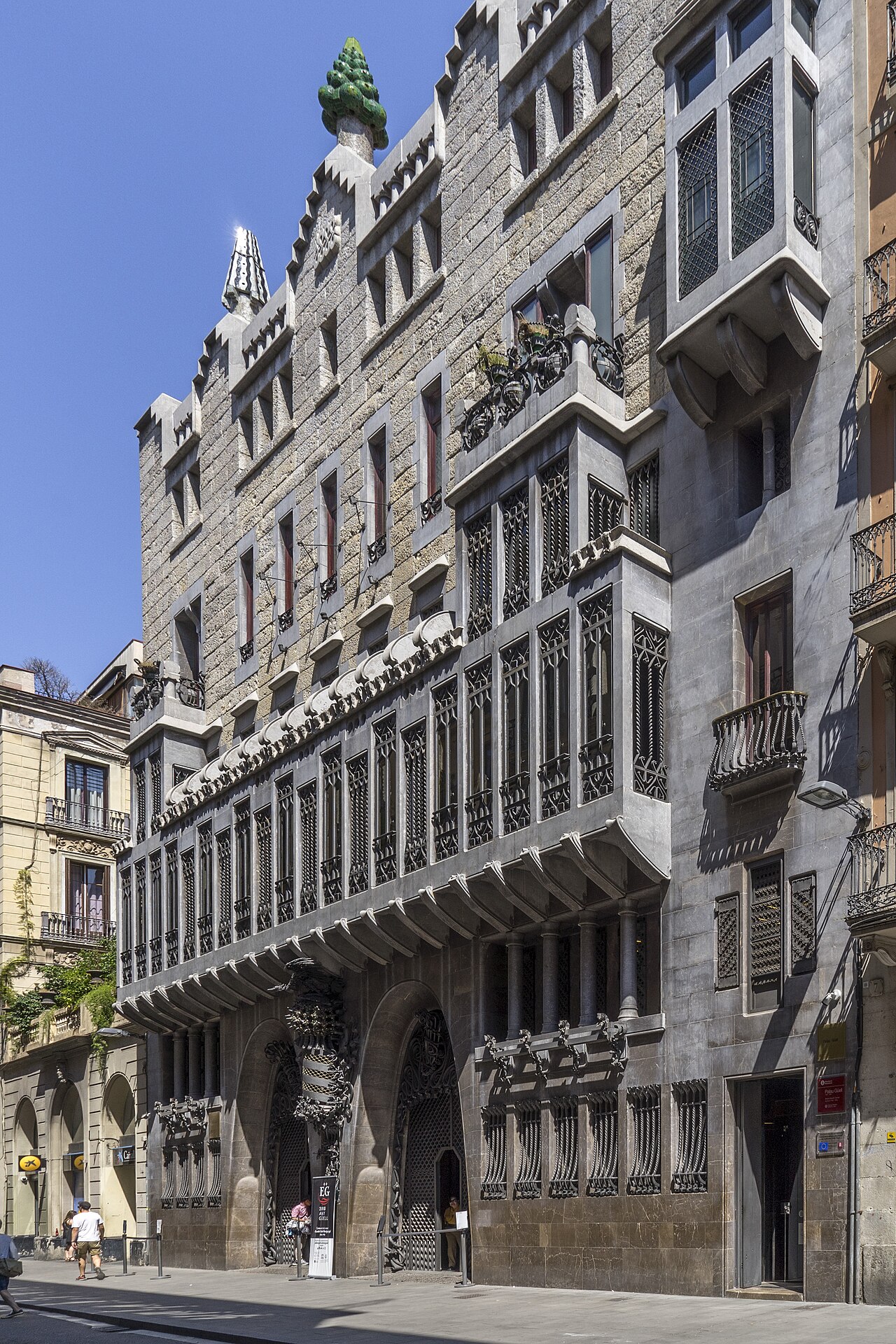
Street-level view of the stone facade of the Palau Güell in Barcelona, with a green cypress-like finial on the roof, ornate wrought-iron balconies and window grilles, and a large arched entrance on the ground floor. Pedestrians walk on the sidewalk in front.Artifact

Primary source

Palau Güell

Antoni Gaudí · 1886-1888

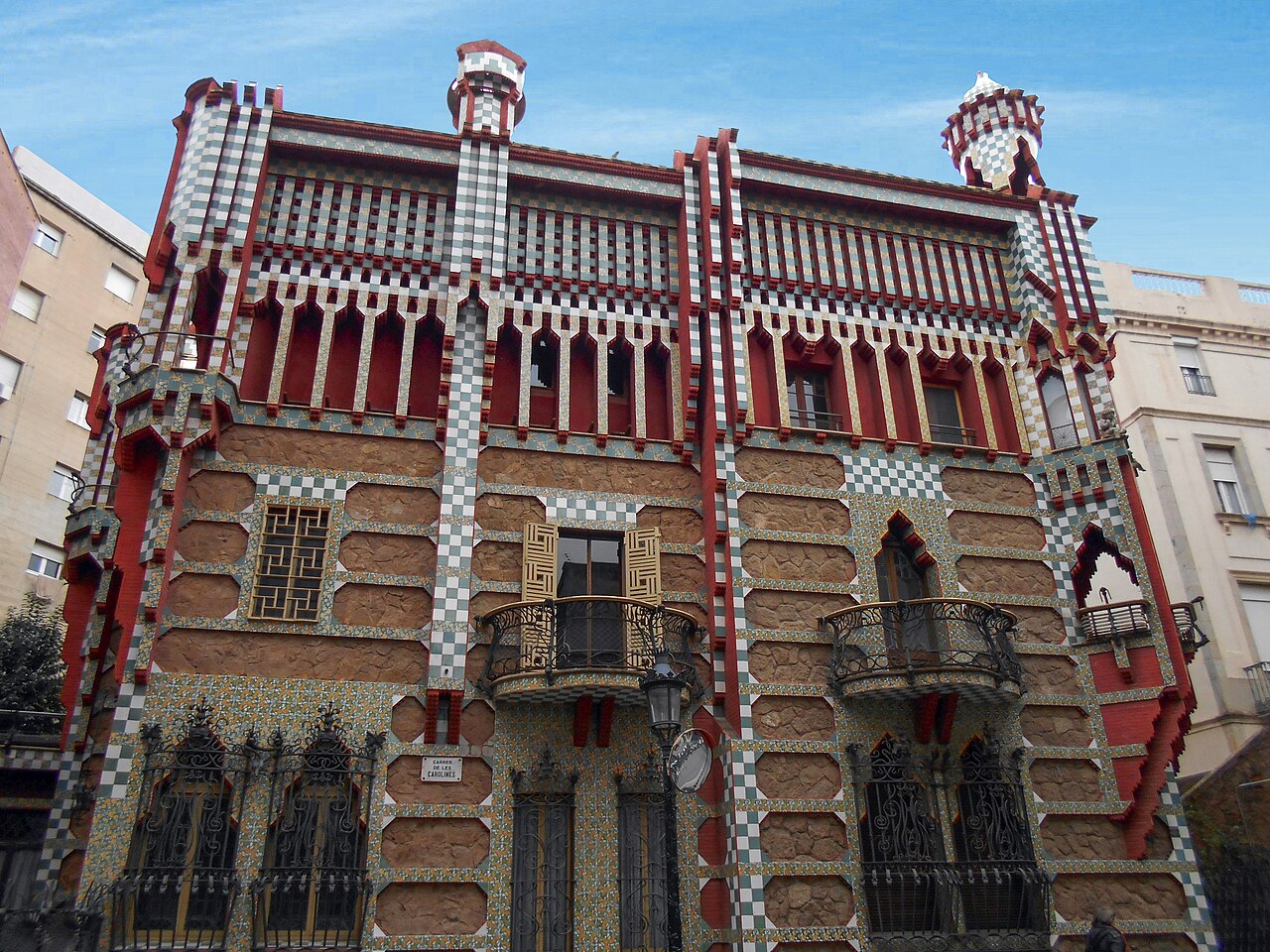
Front facade of Casa Vicens, a colorful brick and tile house in Barcelona with striped checkered towers, red and white banding, brown stone-like panels, ornate wrought-iron balconies, and a blue sky above.Artifact

Primary source

Casa Vicens

Antoni Gaudí · 1883-1885

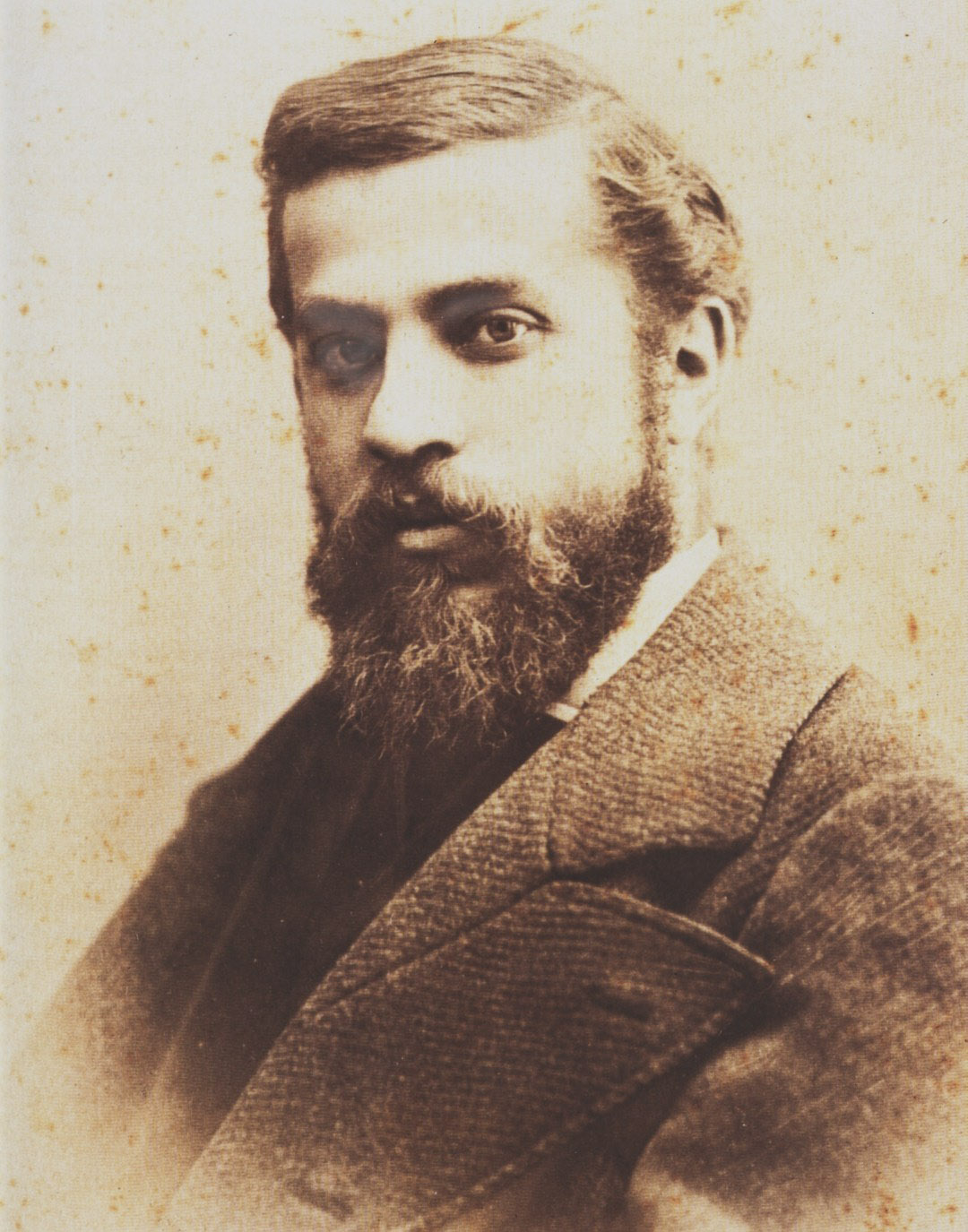
Sepia-toned studio portrait of a bearded man with swept-back dark hair, wearing a tweed jacket and white collar, turned three-quarters toward the viewer. Light spotting marks the paper background.Photograph

Primary source

Portrait of Antoni Gaudí

Pau Audouard · 1878

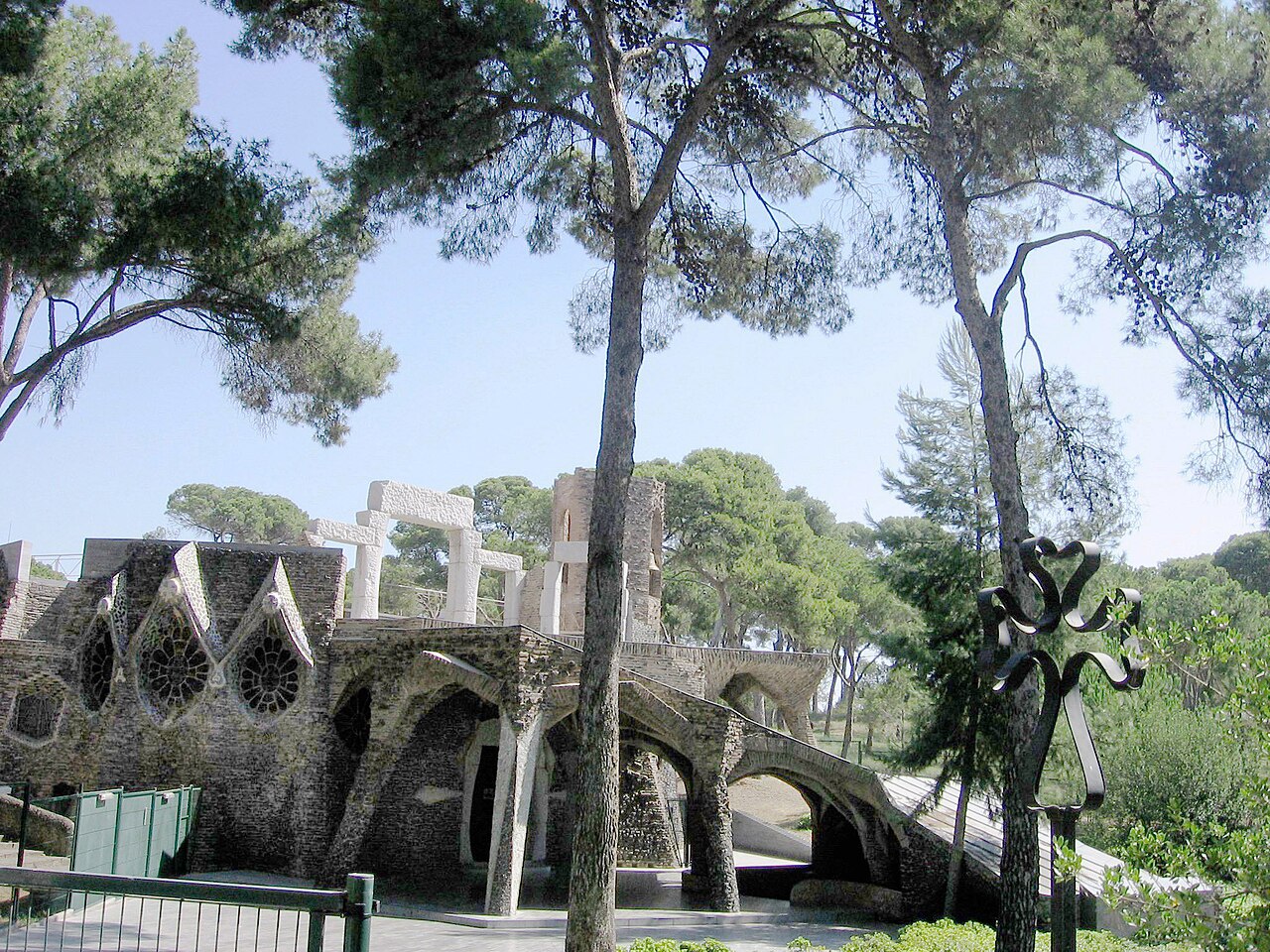
Stone building with irregular rough masonry walls, pointed window openings, arched bridge-like supports and a cluster of cross-shaped stone forms on the roof, set among tall pine trees under a clear blue sky.Artifact

Primary source

Church of Colònia Güell

Antoni Gaudí · 1914

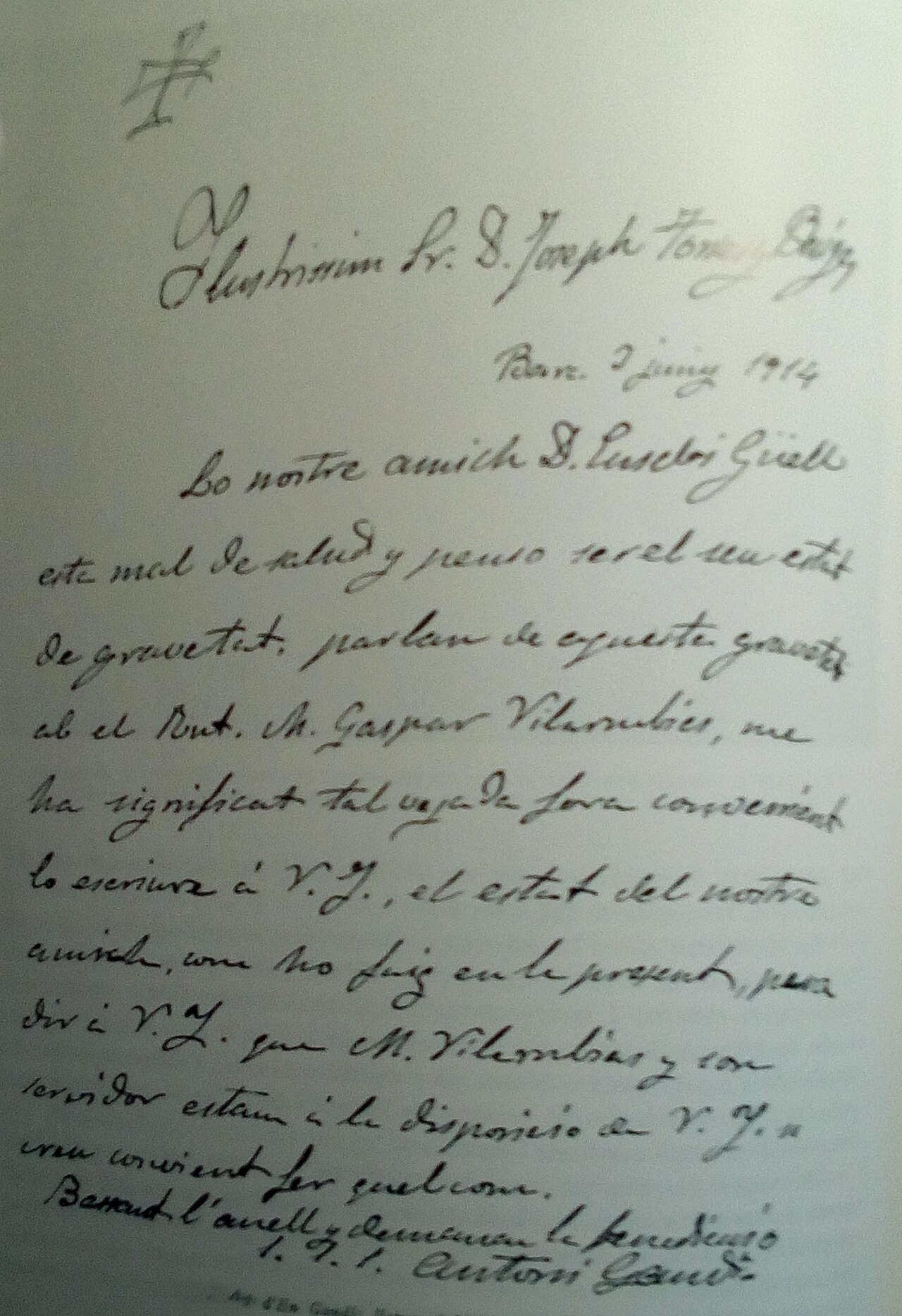
Photograph of a handwritten letter in Catalan on cream paper, dated Barcelona 2 June 1914, addressed to Joseph Torras i Bages, with a cross-like symbol at top left and a signature at the bottom reading Antoni Gaudí.Letter

Primary source

Letter from Gaudí to Josep Torras i Bages

Antoni Gaudí · 2 June 1914

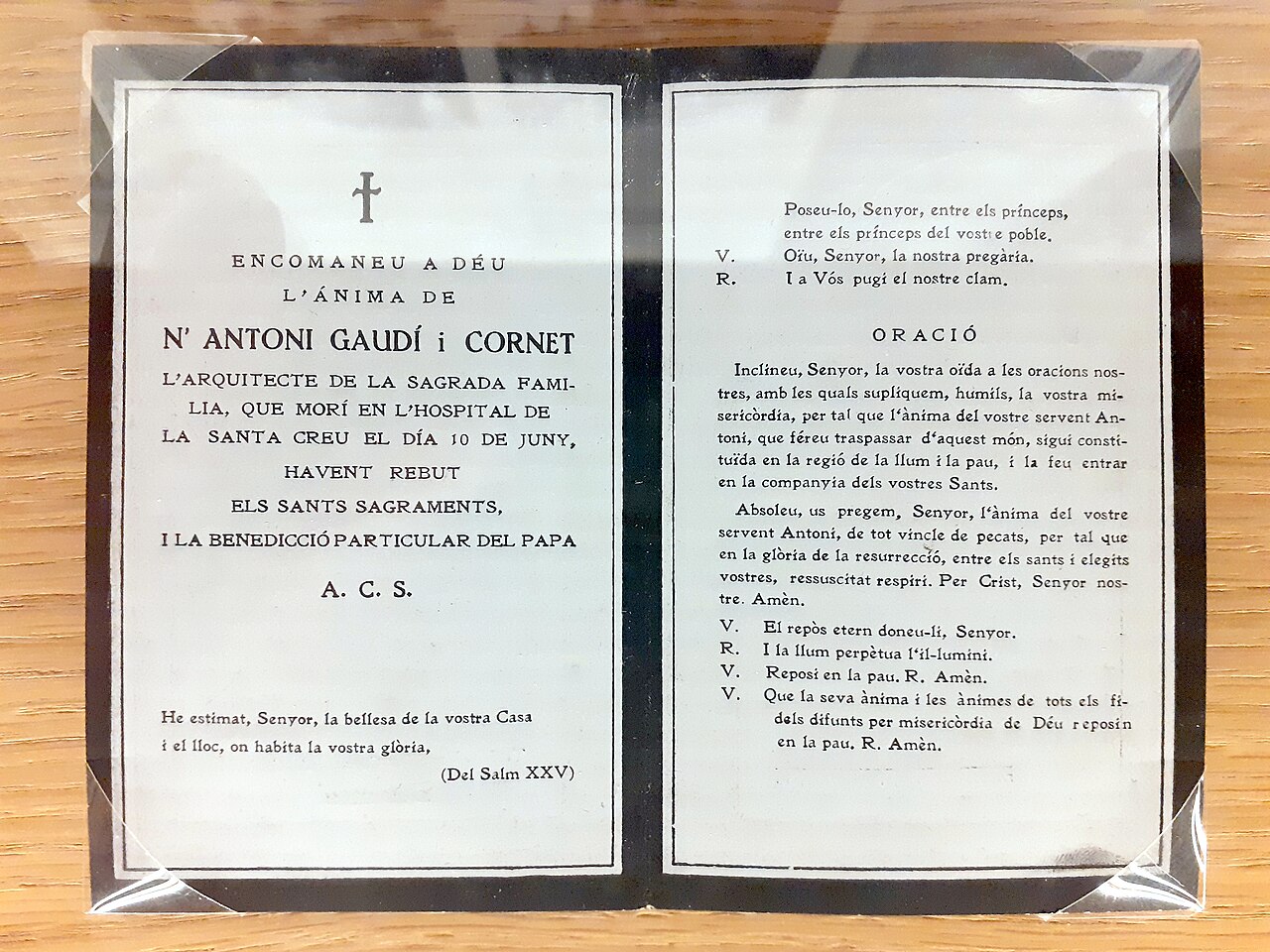
Photo of a framed printed funeral card (esquela) for Antoni Gaudí, open to two pages, on a wooden surface behind glass. Left page, in Catalan, reads 'Encomaneu a Déu l'ànima de N' Antoni Gaudí i Cornet, l'arquitecte de la Sagrada Família', with a cross above and initials A.C.S. Right page has a prayer headed 'Oració'.Document

Primary source

Death Notice of Antoni Gaudí

1926

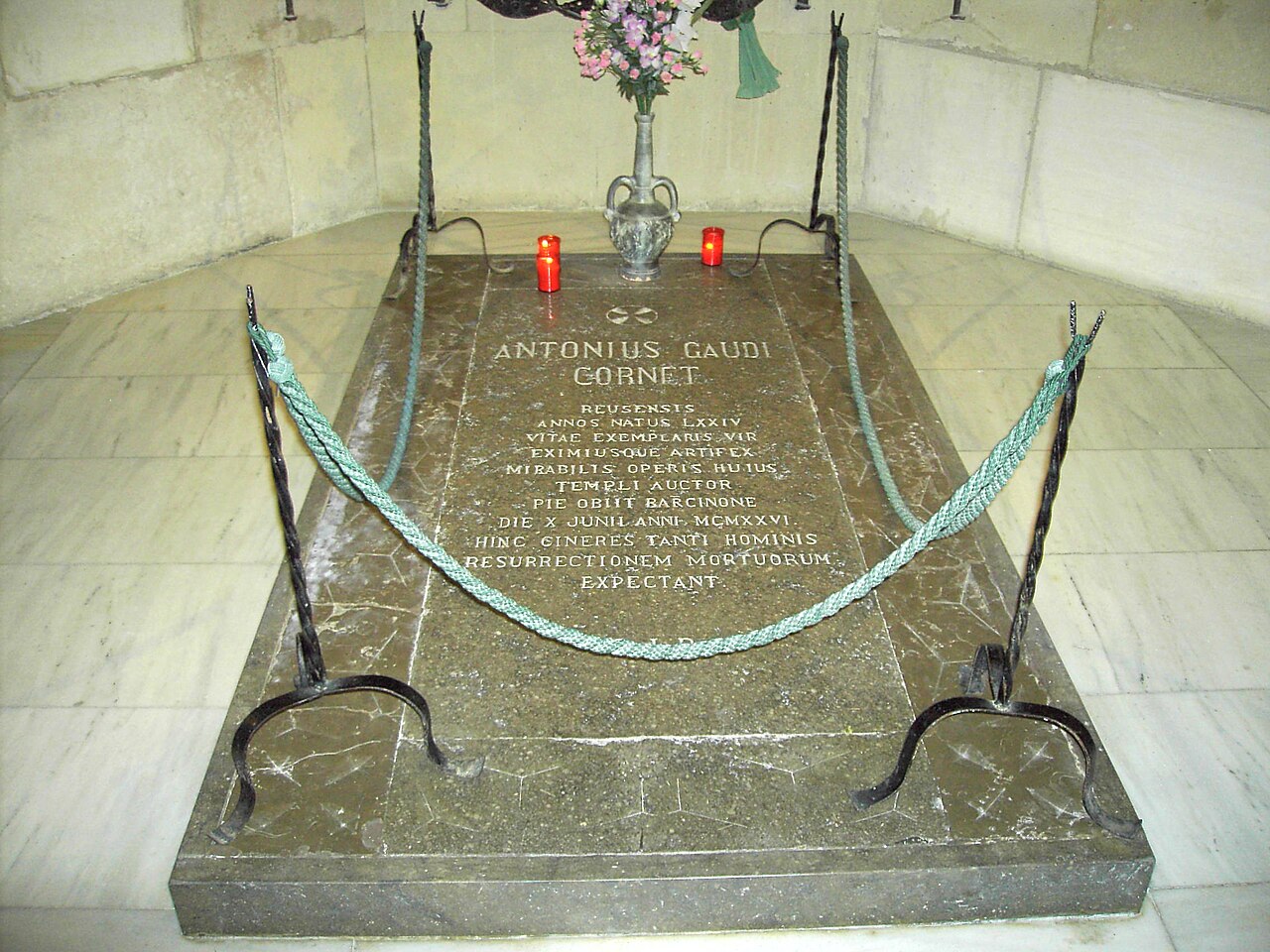
Stone tomb slab in a church crypt with the inscription 'ANTONIUS GAUDI CORNET' and Latin text below, edged by green rope and iron stands, with red candles and a metal urn with flowers behind.Artifact

Primary source

Grave of Antoni Gaudí

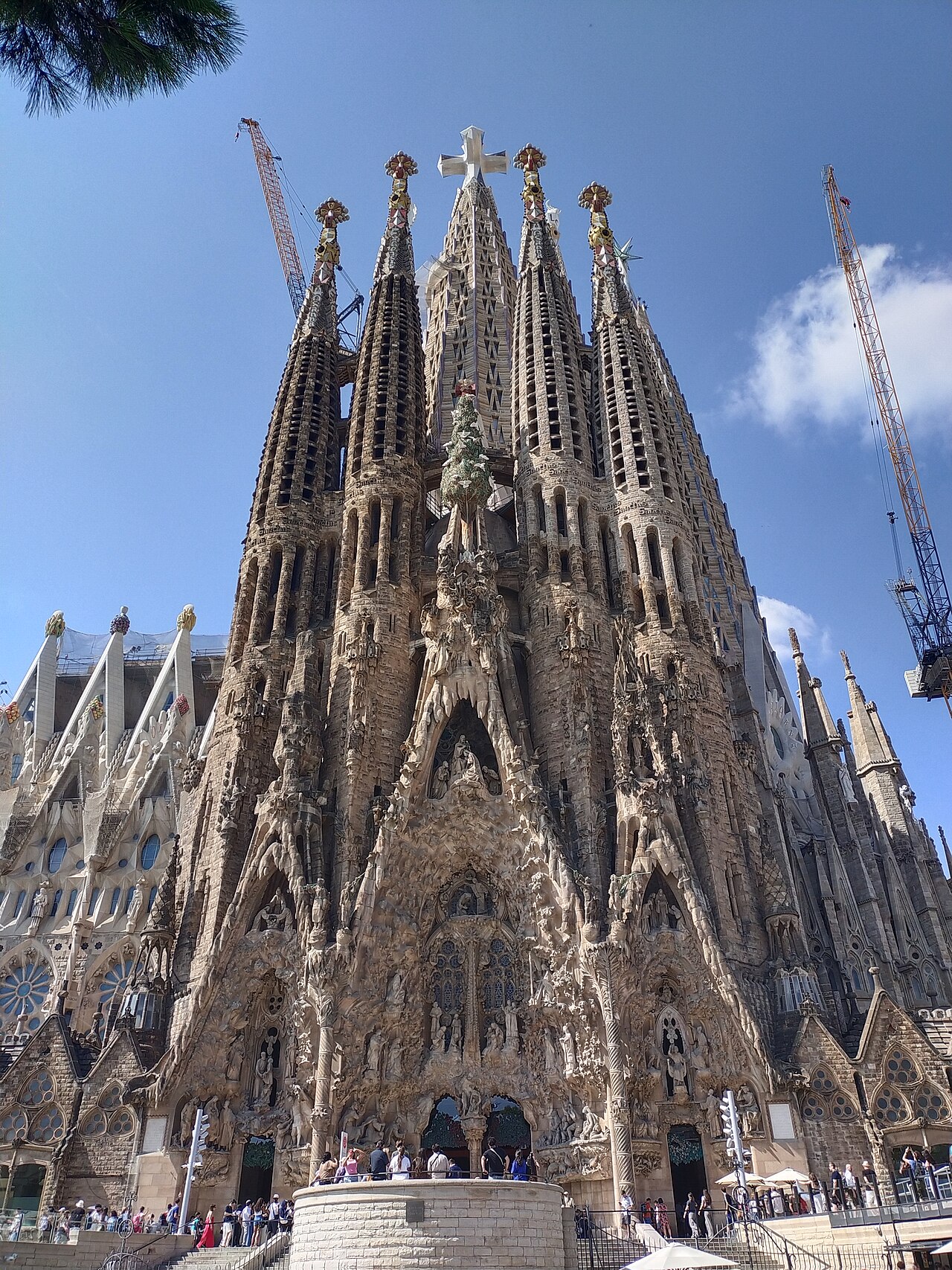
Photo from a low angle of the Nativity facade of the Sagrada Família in Barcelona: tall, pointed stone towers with ornate carvings, a white cross on the central spire, cranes above, and tourists gathered at the entrance below under a blue sky.Artifact

Primary source

Nativity Façade of the Sagrada Família

Antoni Gaudí

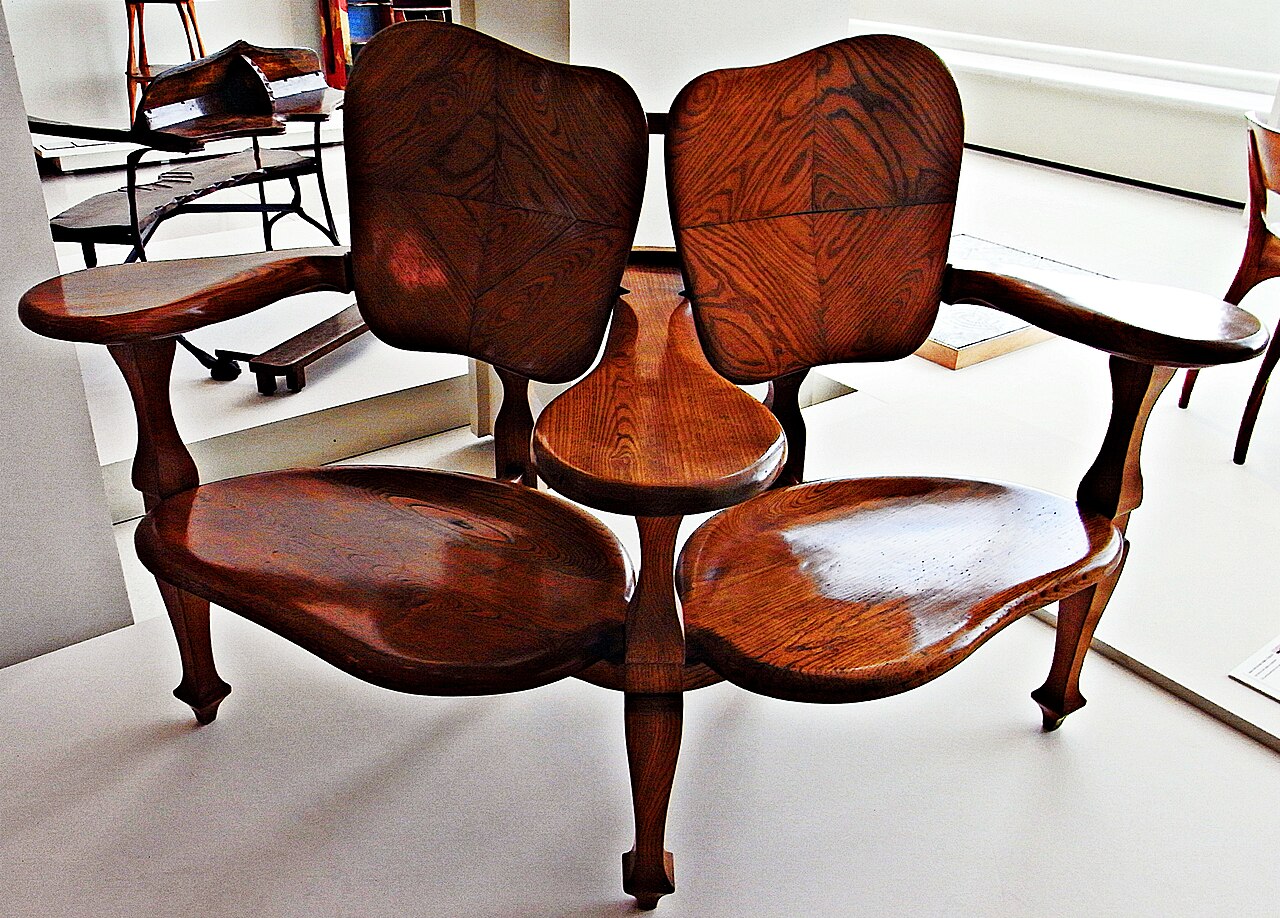
A dark wooden double seat with two backrests, two curved armrests and a shared central backrest-divider, with organic, sculpted legs. The wood has a rich reddish-brown grain and a glossy finish. It stands on a light gallery floor with other furniture in the background.Artifact

Primary source

Confidant from the Batlló House

Antoni Gaudí · c. 1904

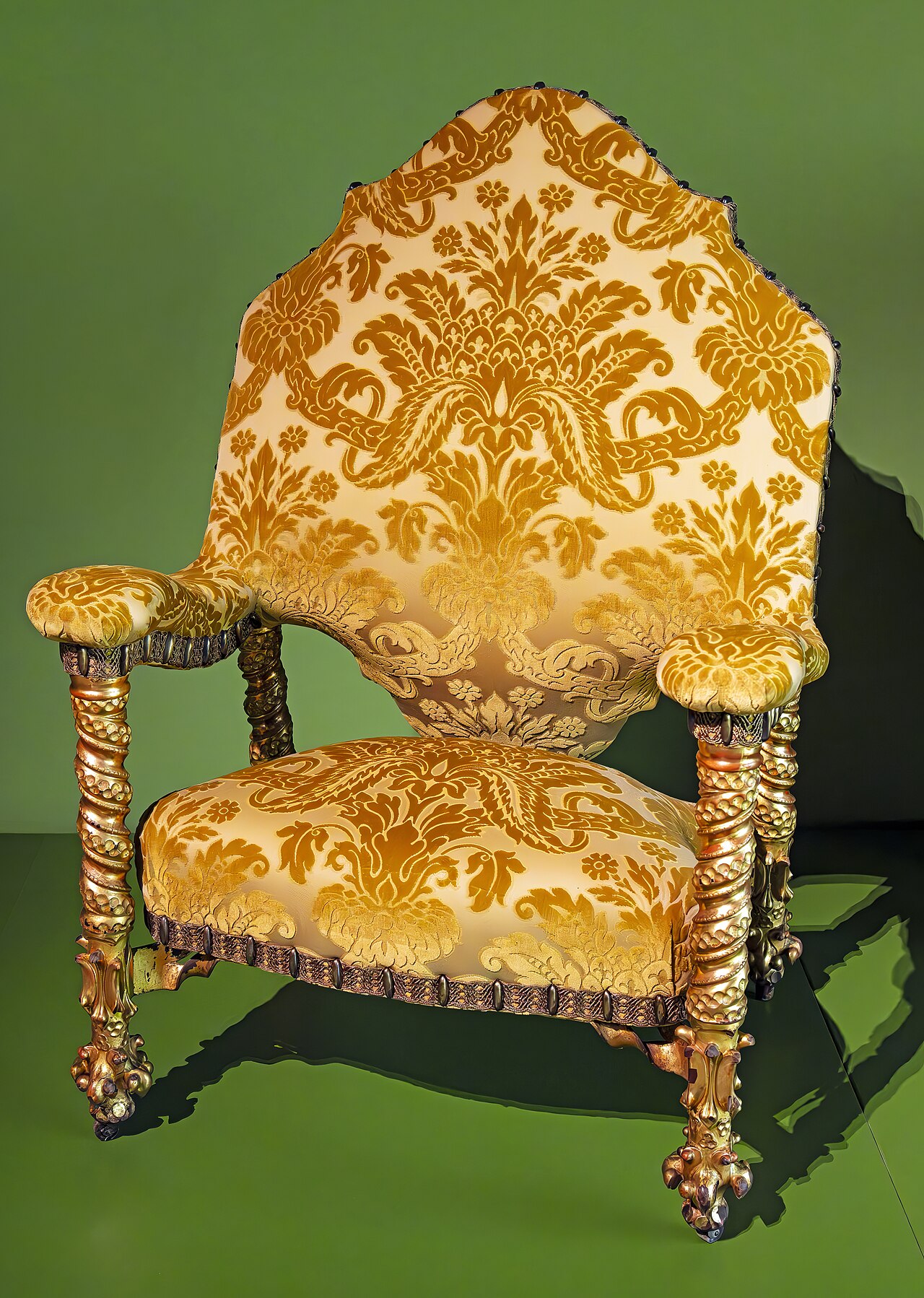
A gilded armchair with an upholstered back, seat, and armrests in gold and cream damask fabric with large floral and scroll motifs. Its carved wooden legs are spiral-turned with lion-paw feet, set against a green background.Artifact

Primary source

Armchair from Casa Calvet

Antoni Gaudí · c. 1902

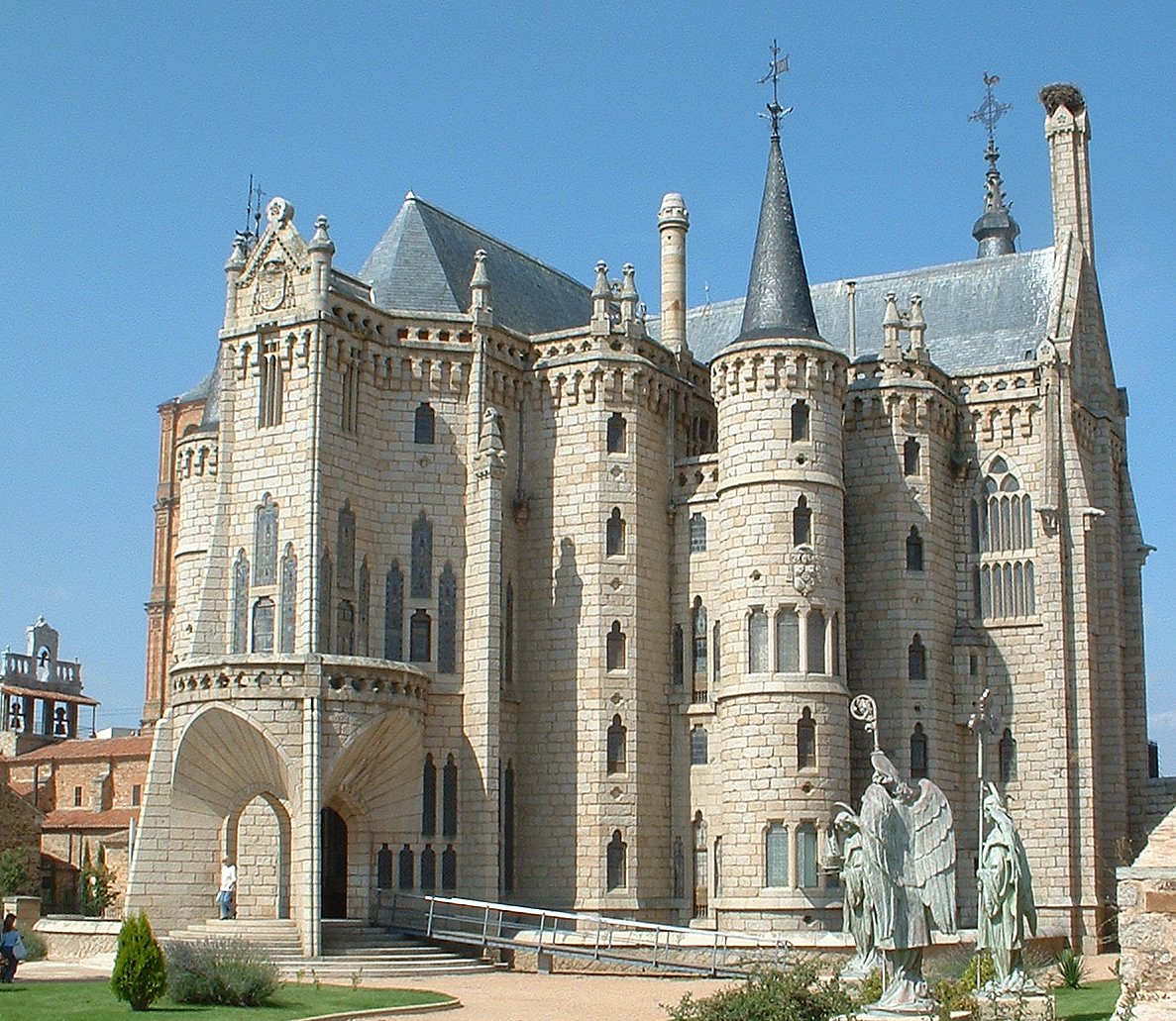
Exterior view of a stone Gothic-style palace with pointed towers, spires, arched doorways and tall narrow windows under a clear blue sky. Statues stand on the right, and a railed ramp leads to the entrance.Artifact

Primary source

Palacio Episcopal de Astorga

Antoni Gaudí · 1889-1913

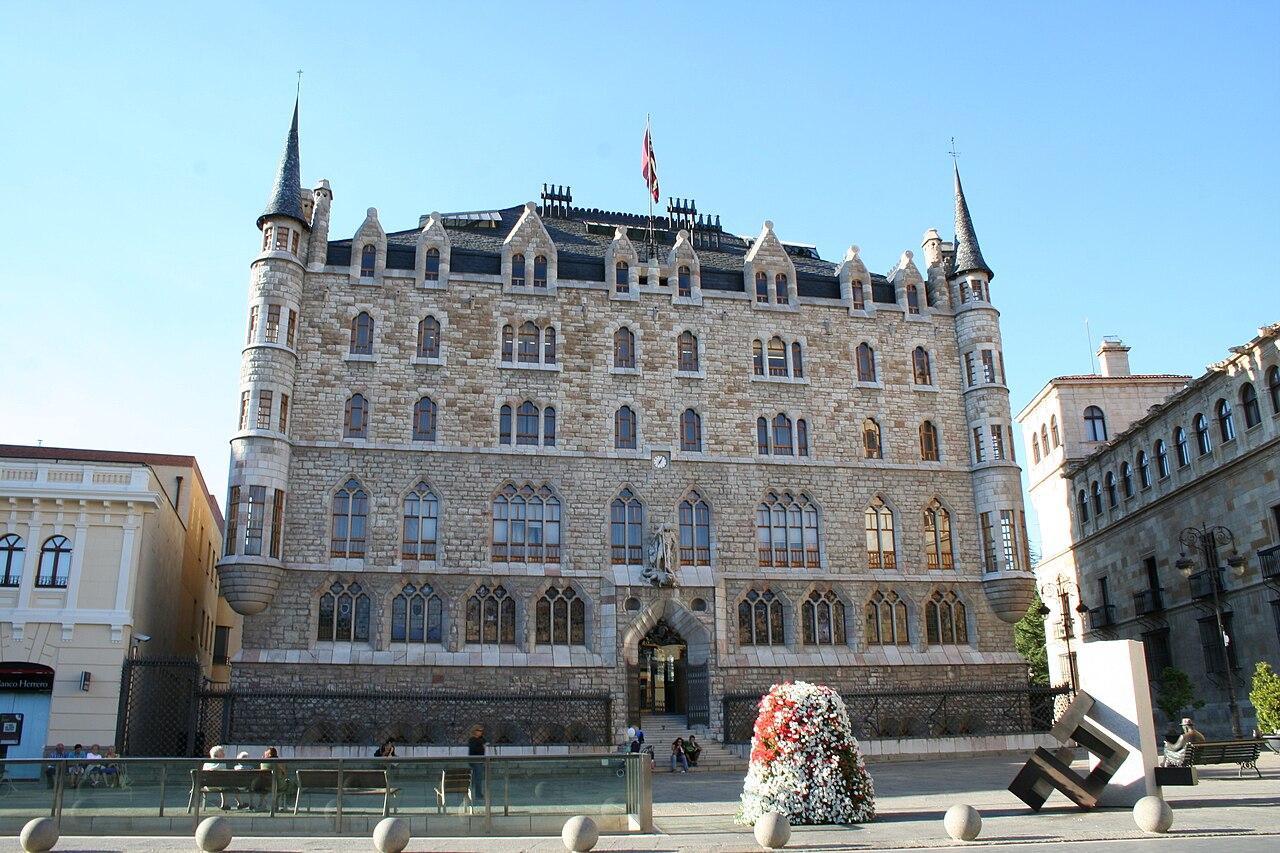
Exterior of a stone building with turrets, pointed-arch windows, and a central arched entrance, under a clear blue sky. A flag flies from the roof. Flower display and street sculpture in the foreground.Artifact

Primary source

Casa de los Botines

Antoni Gaudí · 1891-1892

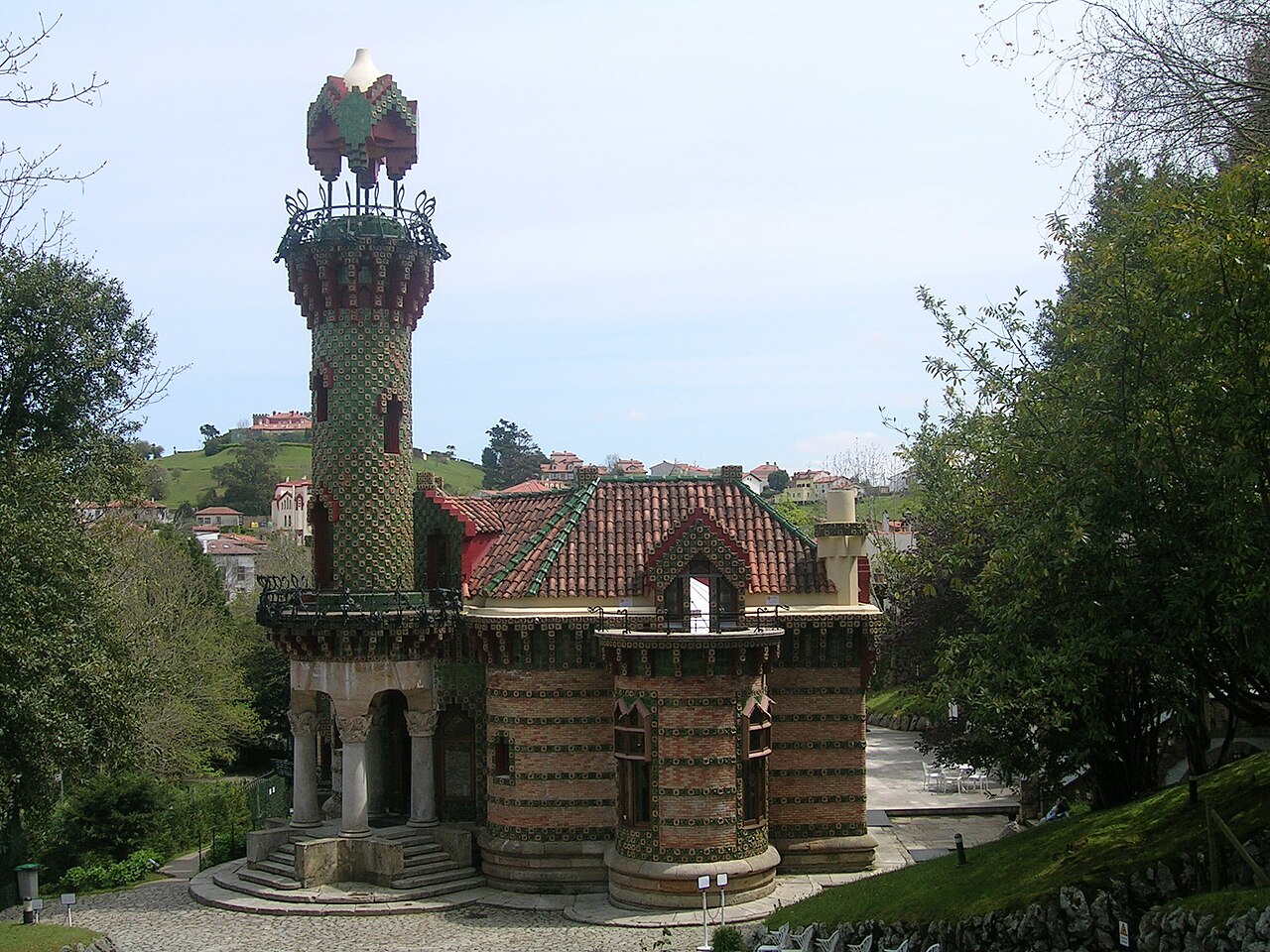
Photograph of El Capricho, a whimsical brick and ceramic-tiled building with a tall tower covered in green and red tile mosaic, a terracotta-tiled roof, arched windows, and a stone-columned entrance, set among trees and grass in Comillas.Artifact

Primary source

El Capricho

Antoni Gaudí · 1883-1885

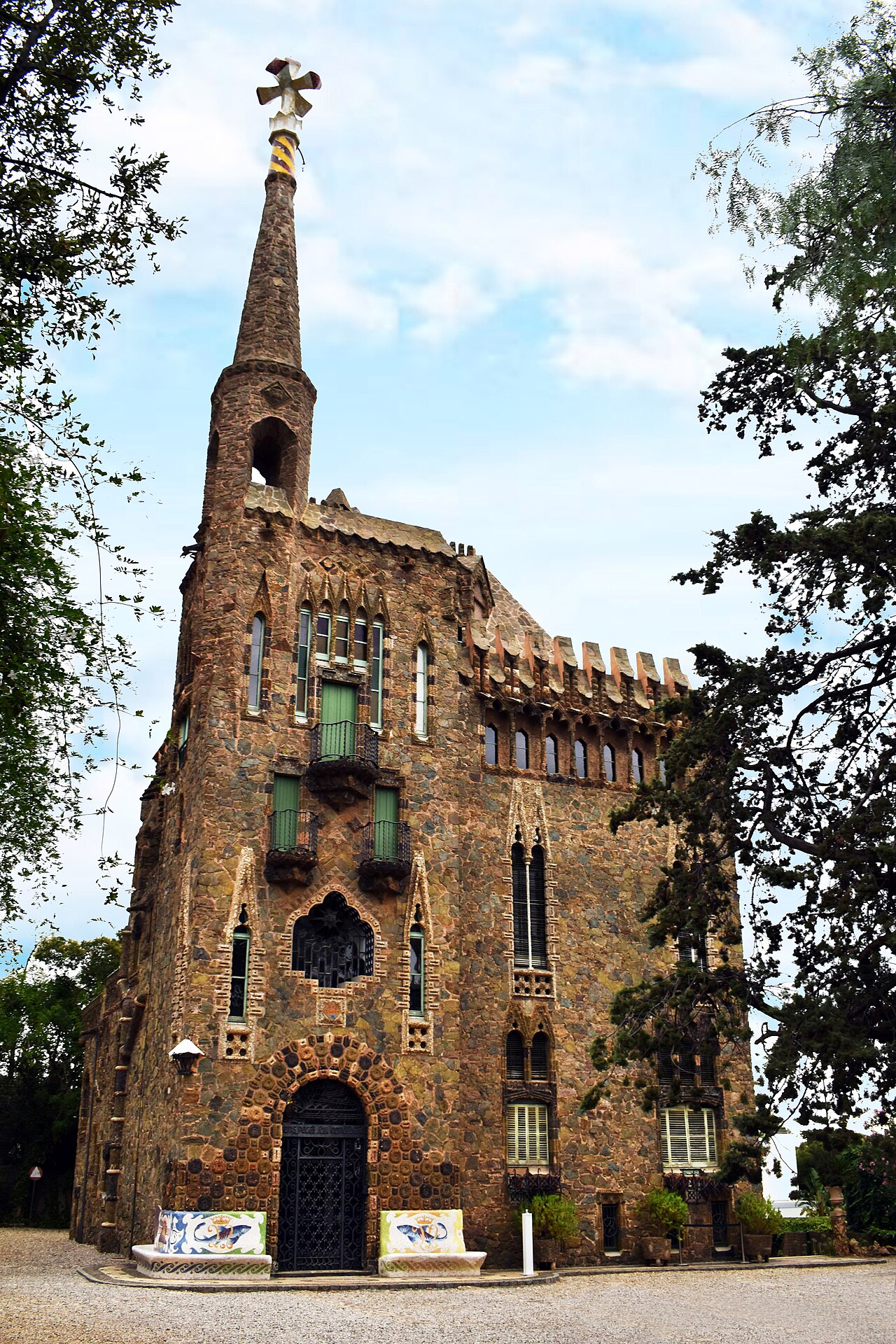
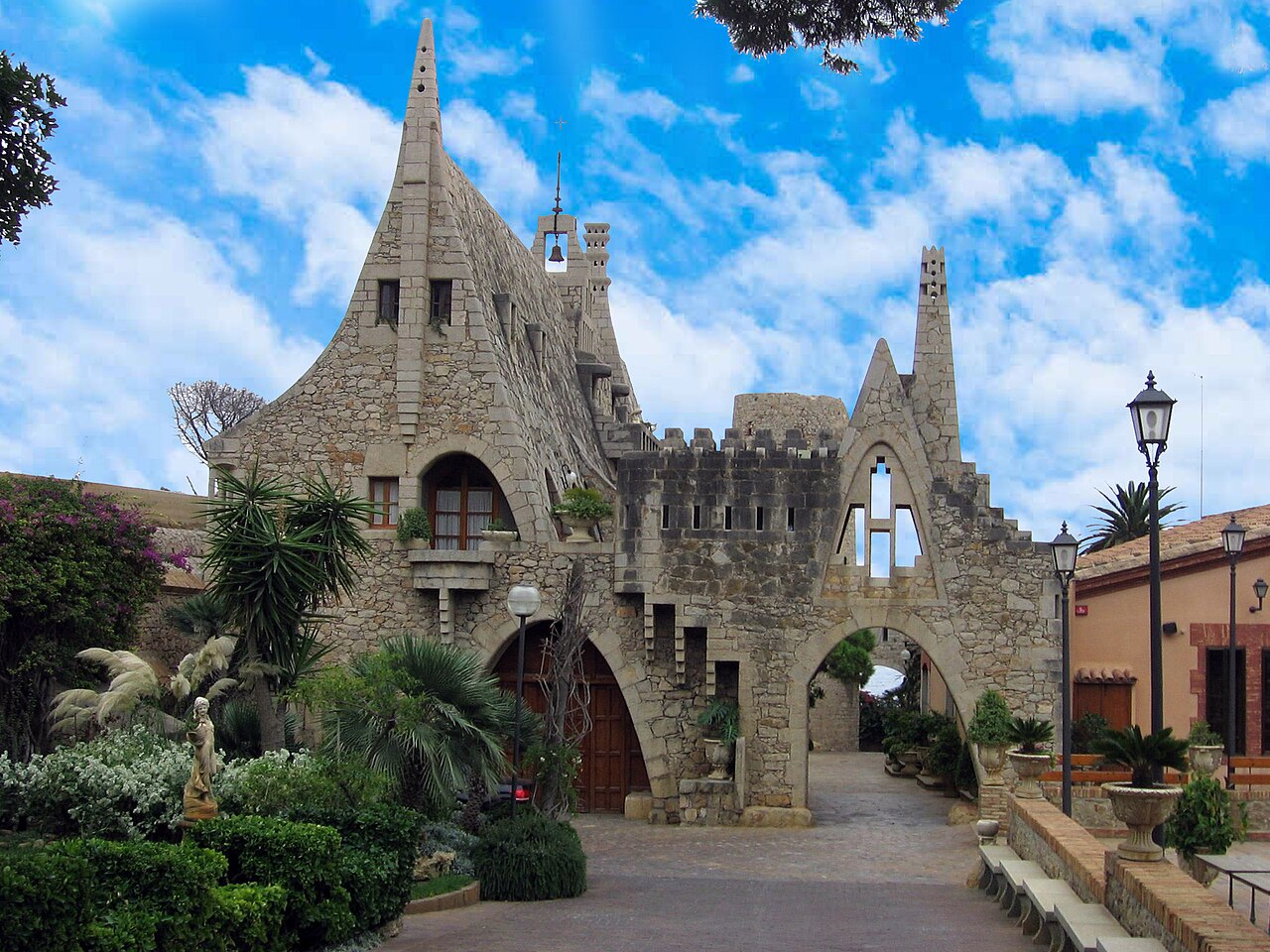
Front view of the Bellesguard tower, a stone building with a tall spire topped by a cross, a tiled arched doorway with a dark metal gate, green shutters, and tiled benches in front on a gravel path, with trees on both sides.Artifact

Primary source

Bellesguard

Antoni Gaudí · 1900-1909

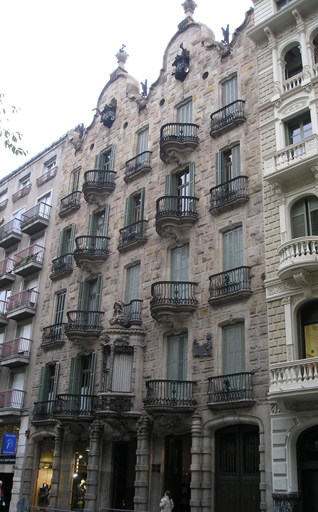
Street view of a stone building facade with wavy, undulating balconies with dark wrought-iron railings, tall green-shuttered windows, and a rounded top with small ornamental figures. Neighboring buildings are visible on both sides.Artifact

Primary source

Casa Calvet

Antoni Gaudí · 1898–1900

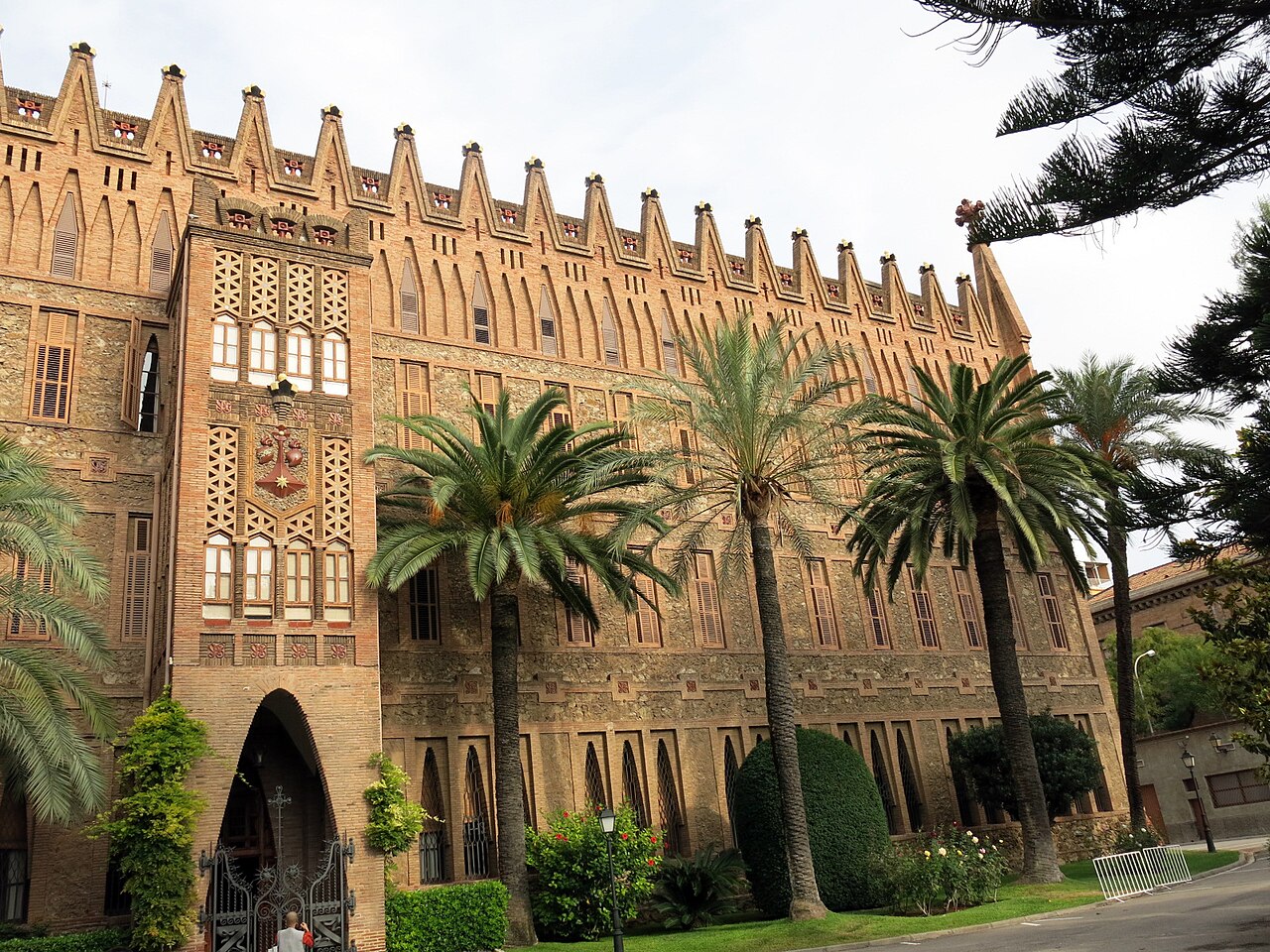
Exterior of a brick building with a crenellated, stepped roofline of pointed gables and many arched windows. Tall palm trees stand in front, a gated arched entrance is at lower left, and a clipped hedge and flowering shrubs grow on the lawn.Artifact

Primary source

Collegio Teresiano

Antoni Gaudí · 1888–1889

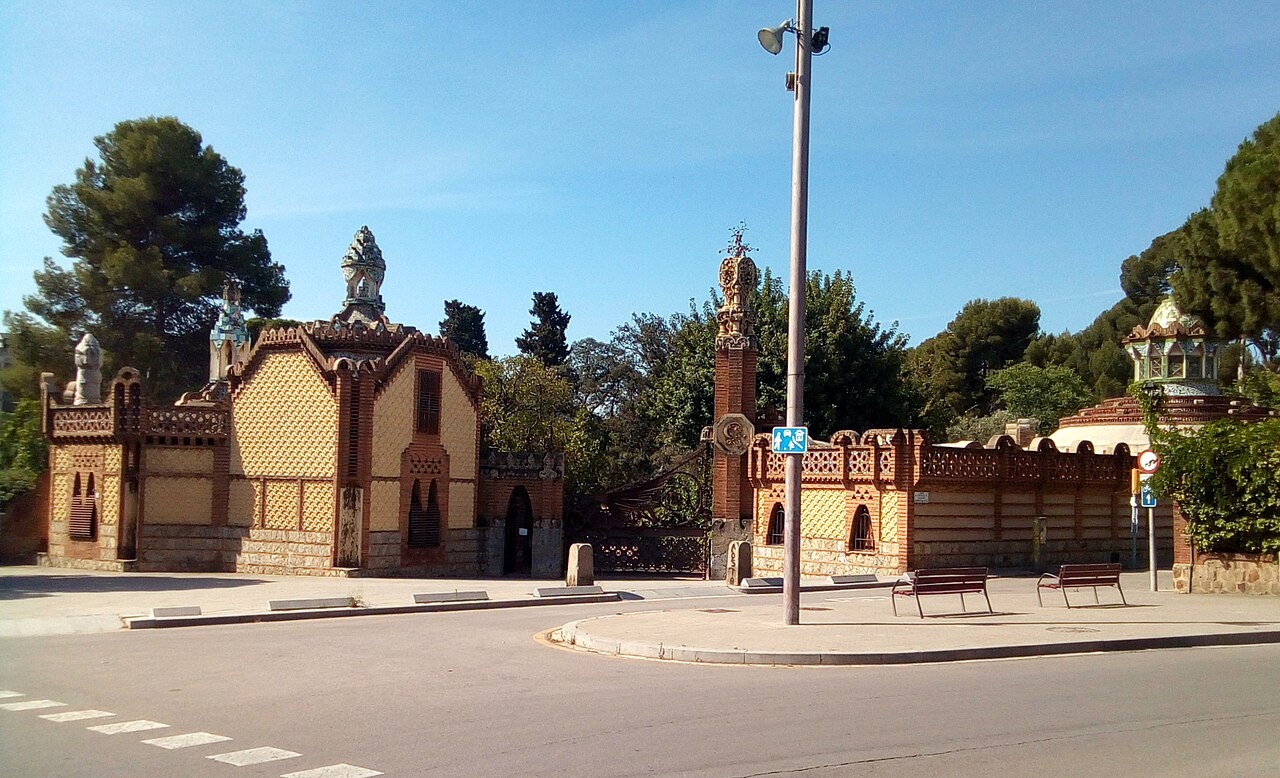
Street view of the Güell Pavilions: ornate gatehouses with mosaic-tiled roofs, brick towers, and a wall, under a clear blue sky with trees and benches on the pavement.Artifact

Primary source

Güell Pavilions

Antoni Gaudí · 1884–1887

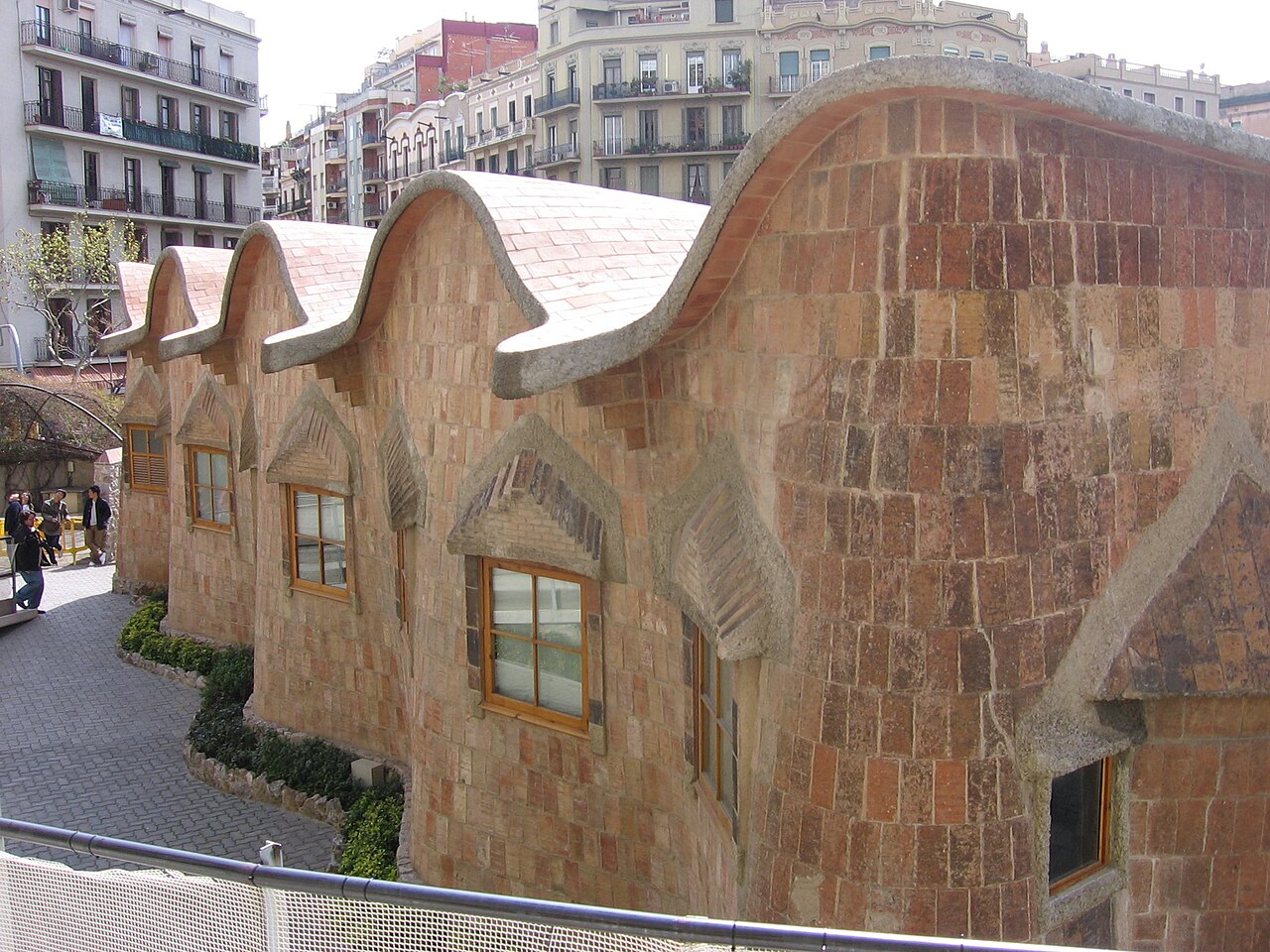
Exterior of a brick-and-stone building with undulating, wave-like rooflines and small dormer windows with wooden frames, set along a paved pedestrian walkway beside a hedge. Tall apartment buildings rise behind it under a pale sky.Artifact

Primary source

Sagrada Família schools

Antoni Gaudí · 1909

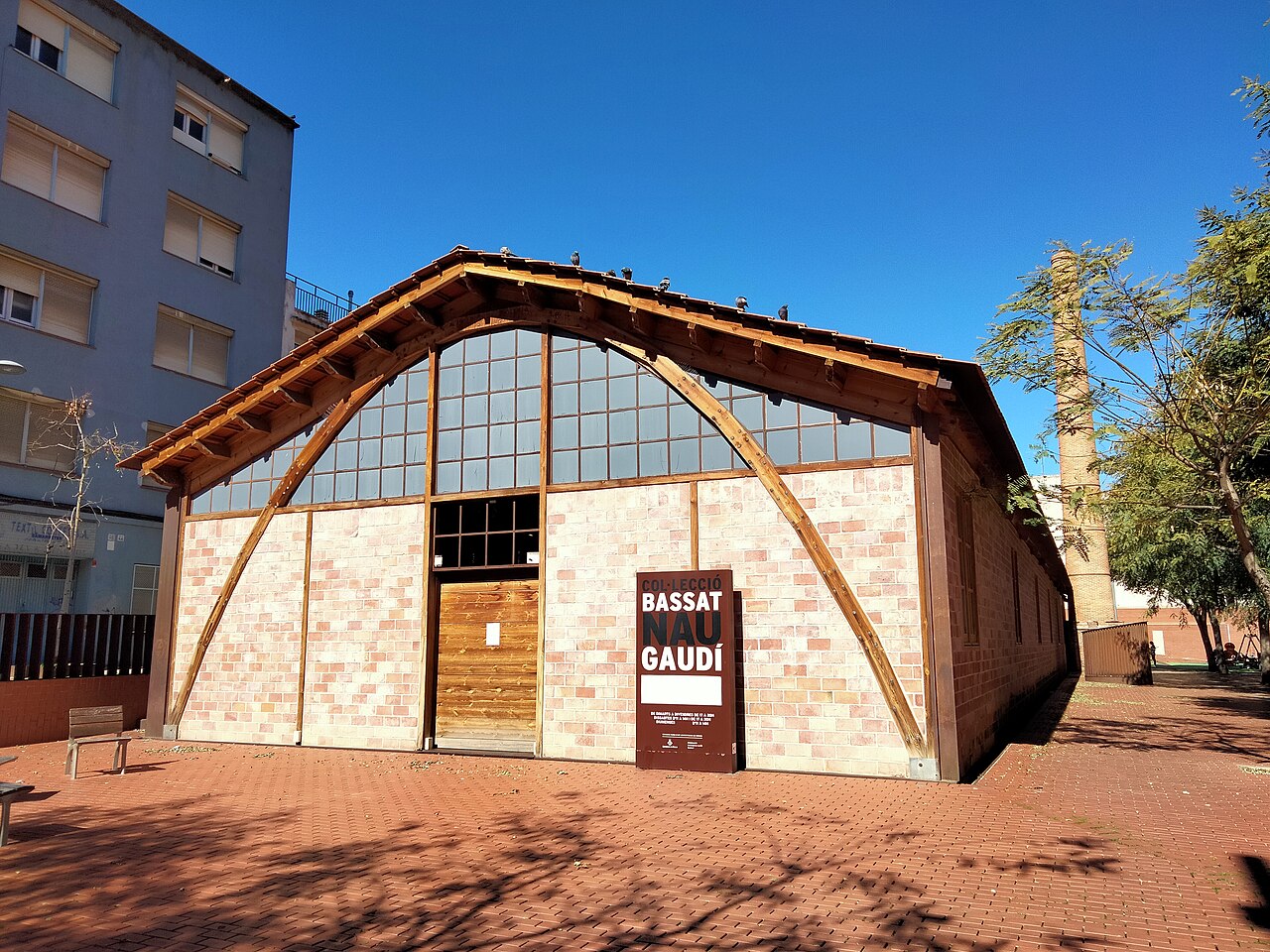
South facade of the Nau Gaudí building in Mataró, a brick and timber-arched hall with a large glazed upper wall and a wooden door. A brown sign reads Col·lecció Bassat Nau Gaudí. Blue sky and a brick-paved plaza.Artifact

Primary source

Nau Gaudí

Antoni Gaudí

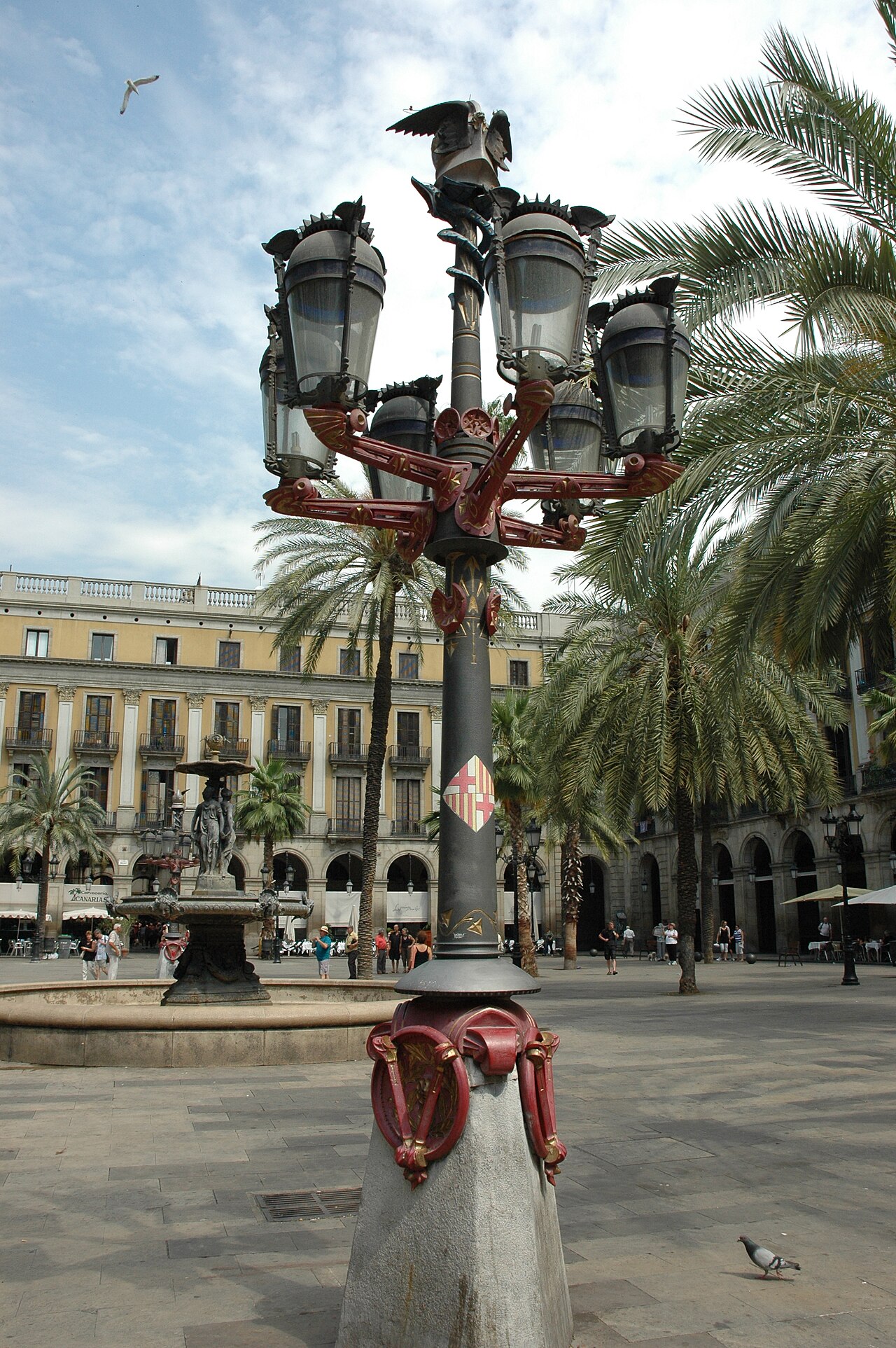
Ornate dark grey iron street lamp with red decorative brackets and multiple glass lanterns, topped by a winged dragon-like figure, standing on a stone base in a paved plaza with palm trees, a fountain, and a yellow building behind.Artifact

Primary source

Lampposts of Plaça Reial

Antoni Gaudí · 1878–1879

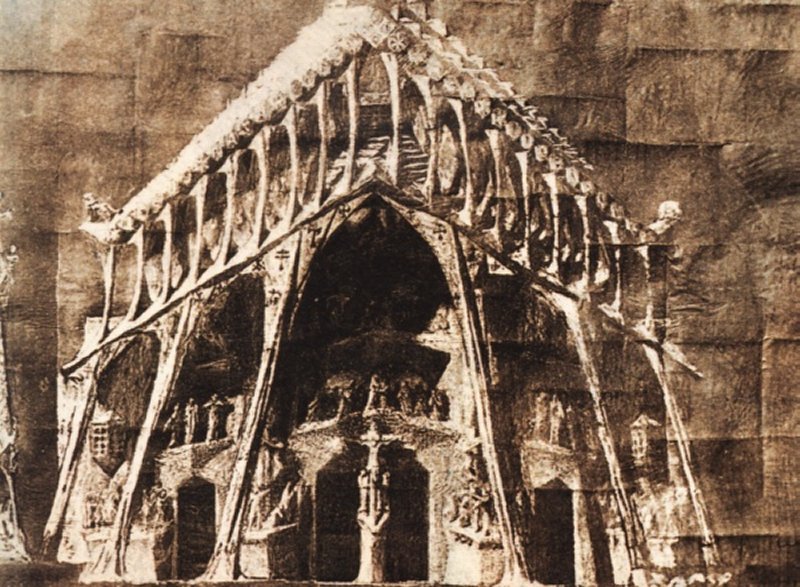
Sepia-toned photographic reproduction of Gaudí's drawing of the Passion façade of the Sagrada Família. A tall gabled structure with a pointed central portal, sloping ribbed arches, and carved figures is shown, with hanging chain-like forms above; the drawing's wall background has a tiled texture.Painting

Primary source

Drawing of the Passion Façade of the Sagrada Família

Antoni Gaudí · 1911–1917

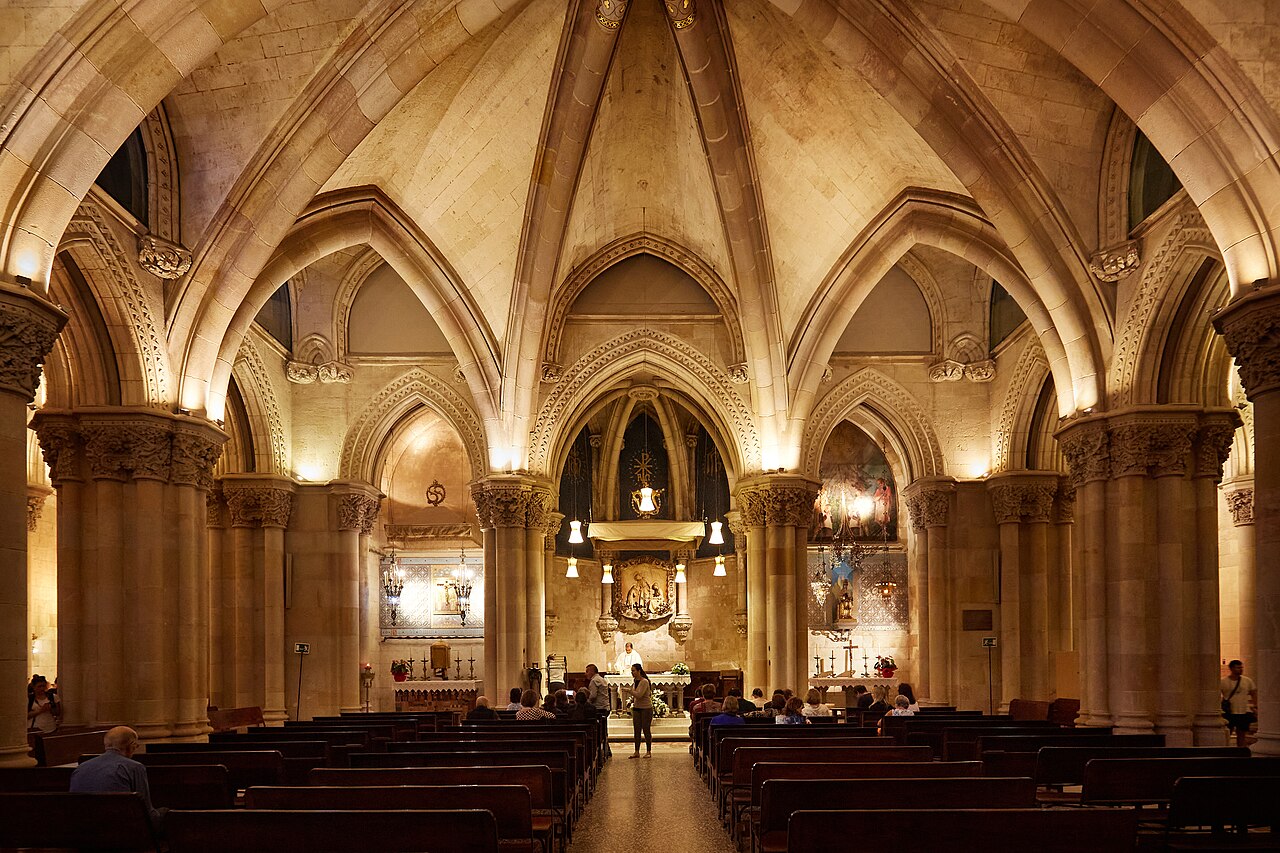
Interior of a stone crypt with pointed Gothic-style vaulted ceilings and ribbed arches supported by clustered columns. Rows of wooden pews fill the nave, leading toward an altar at the far end. Several people sit and stand among the pews.Artifact

Primary source

Crypt of the Sagrada Família

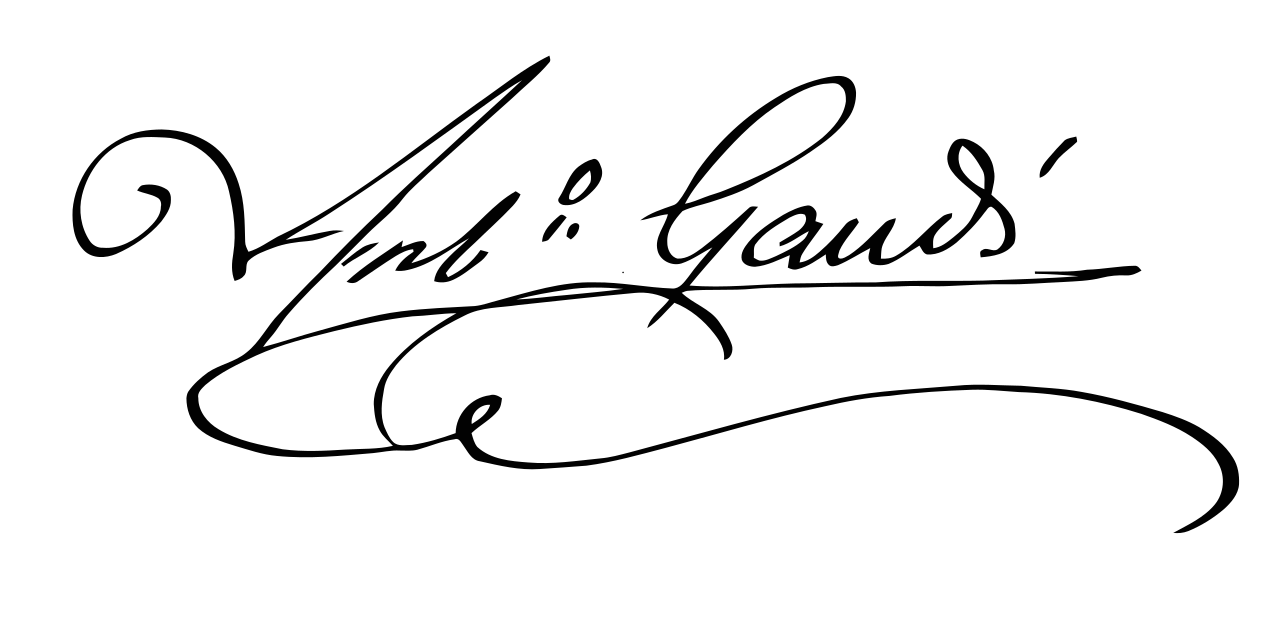
Black ink handwritten signature on white background, a flourished cursive script reading 'Antoni Gaudí' with a long underline swash extending to the right.Document

Primary source

Signature of Antoni Gaudí

Antoni Gaudí

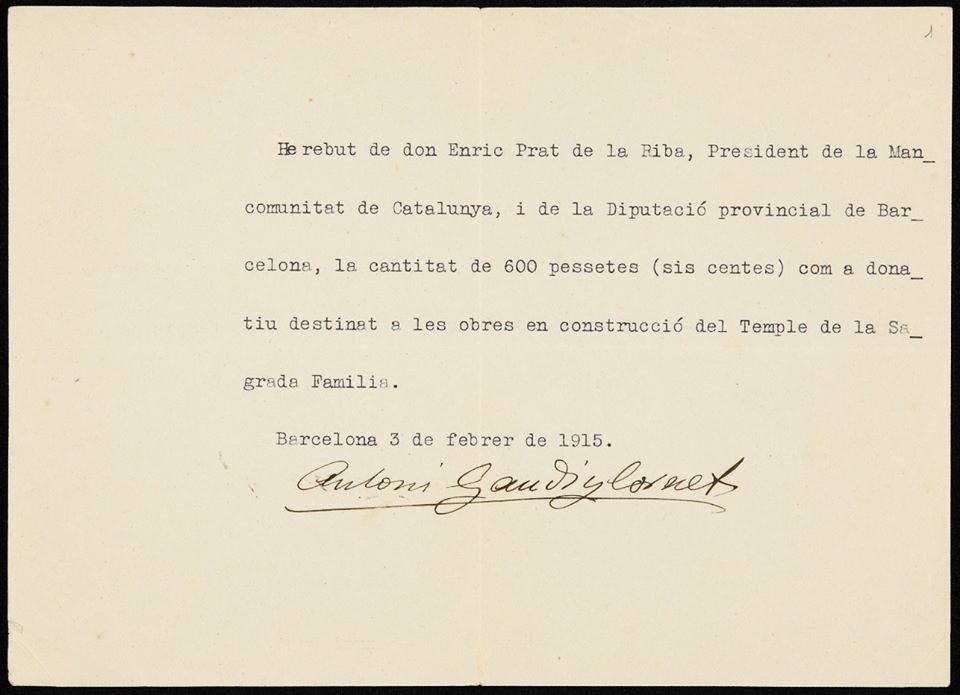
Scanned typed receipt in Catalan on aged cream paper, acknowledging 600 pesetas donated by Enric Prat de la Riba for the Sagrada Familia works, dated Barcelona 3 February 1915, signed by Antoni Gaudí in cursive.Document

Primary source

Donation Receipt from Enric Prat de la Riba, 3 February 1915

Antoni Gaudí · 3 February 1915

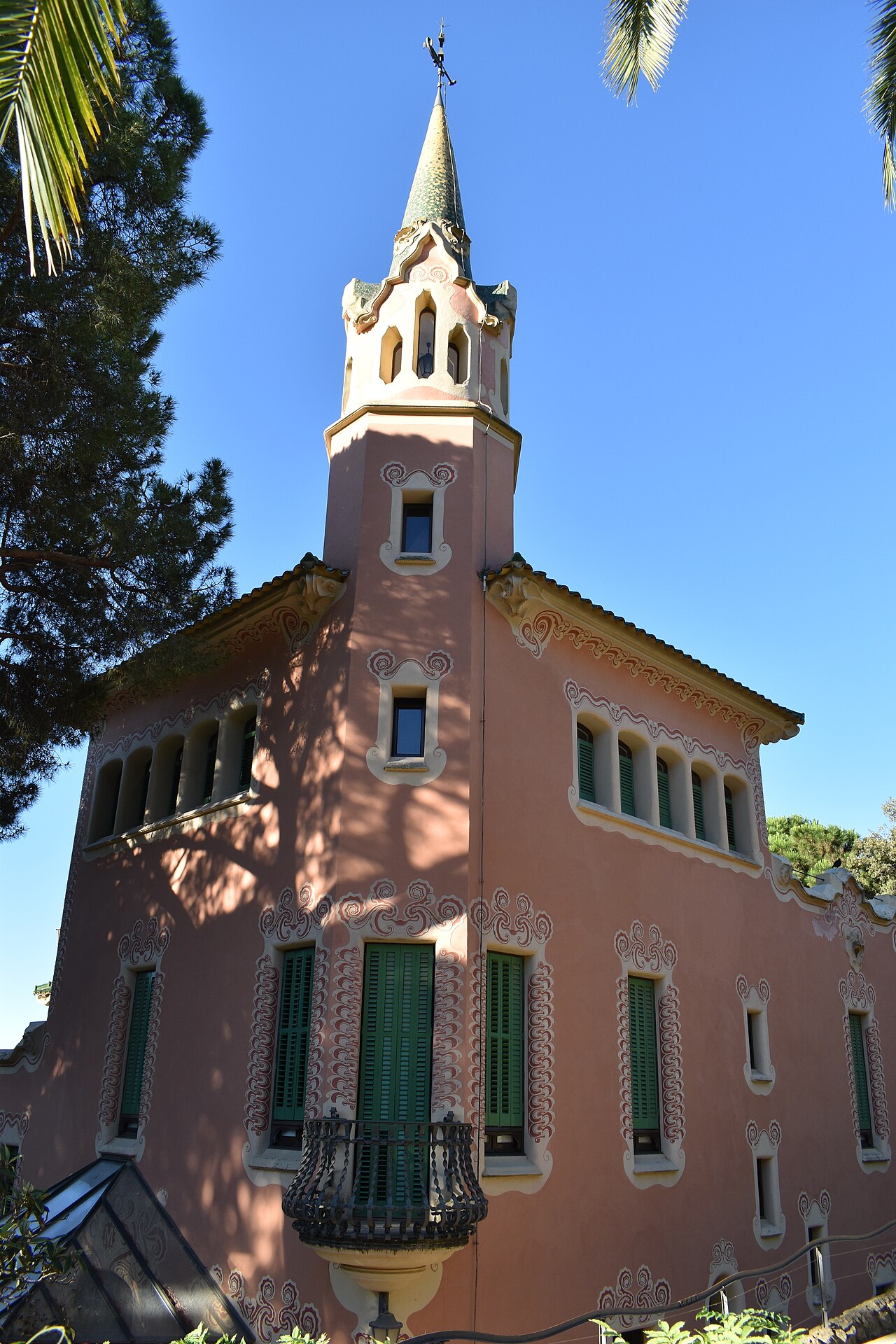
Pink stucco house with a tall tower and pointed green-gray spire topped by a weathervane, green shutters, ornate white-and-pink window frames, and a wrought-iron balcony, under a clear blue sky with palm and pine trees.Artifact

Primary source

Gaudí House Museum

Francesc Berenguer i Mestres · 1905

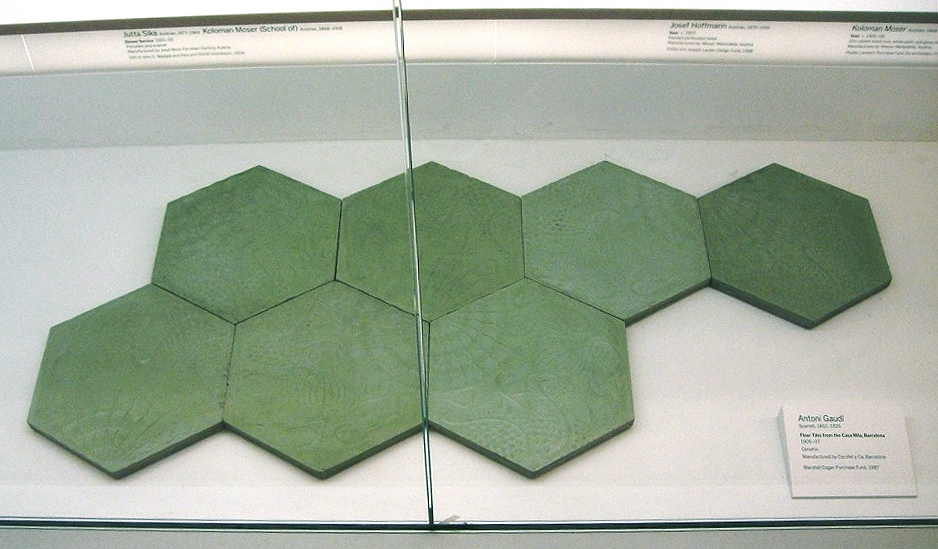
Six green hexagonal ceramic tiles with embossed patterns displayed in a glass museum case, arranged in an irregular cluster. Museum labels are visible above and beside them.Artifact

Primary source

Hexagonal Tiles of Passeig de Gràcia

Antoni Gaudí · 1904

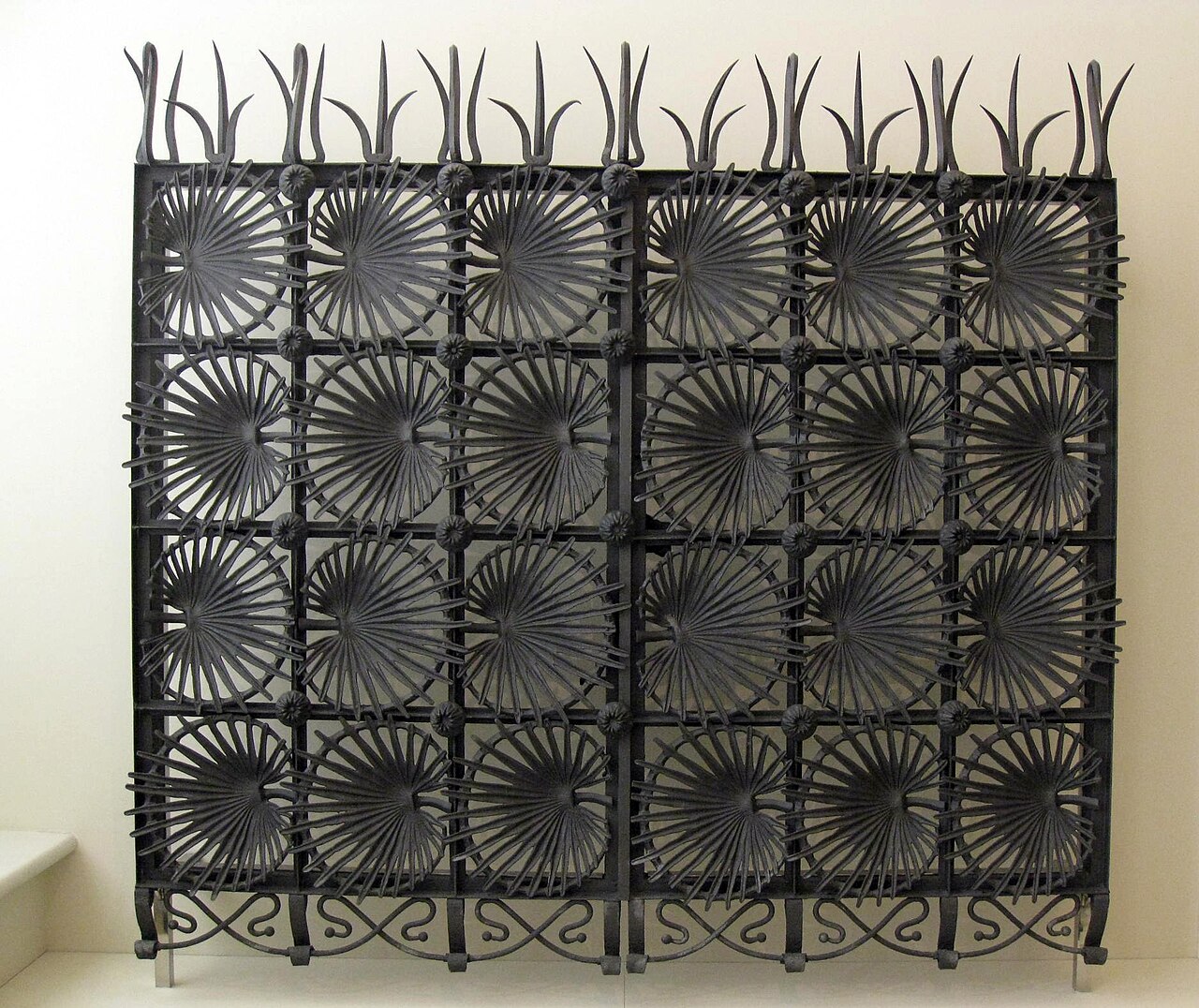
A black wrought-iron double gate panel with a grid of frames containing radiating fan-shaped palm-like motifs, topped with spiky tendril finials and a scrolled base. Set against a plain white wall.Artifact

Primary source

Gate from Casa Vicens

Antoni Gaudí

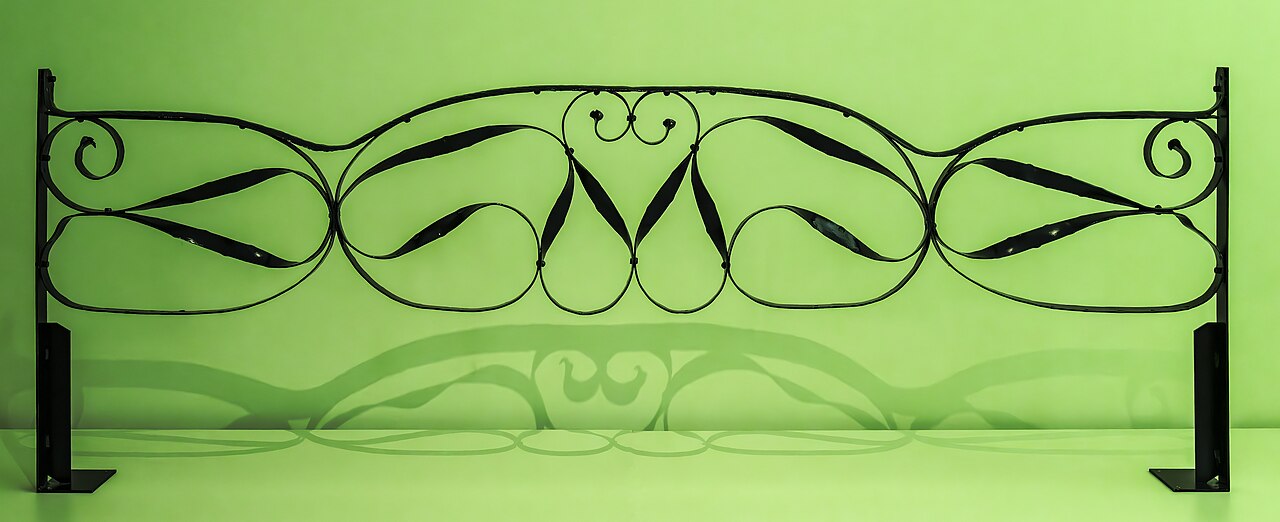
A black wrought-iron railing with scrolling spiral and leaf-shaped ornaments, mounted on two upright posts against a bright green wall. Its shadow falls on the floor below.Artifact

Primary source

Handrail from Casa Milà

Antoni Gaudí

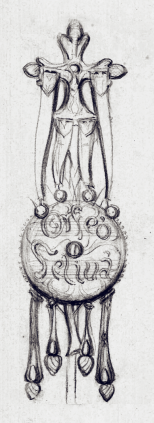
Pencil or ink drawing of an ornate ornamental pendant or standard. A round medallion with a decorative inscription and a monogram sits in the lower center, topped by a cross-like finial with curled arms, and hung with teardrop-shaped pendants along its bottom edge. The background is a pale grey.Painting

Primary source

Guild Banner Design for the Locksmiths

Antoni Gaudí

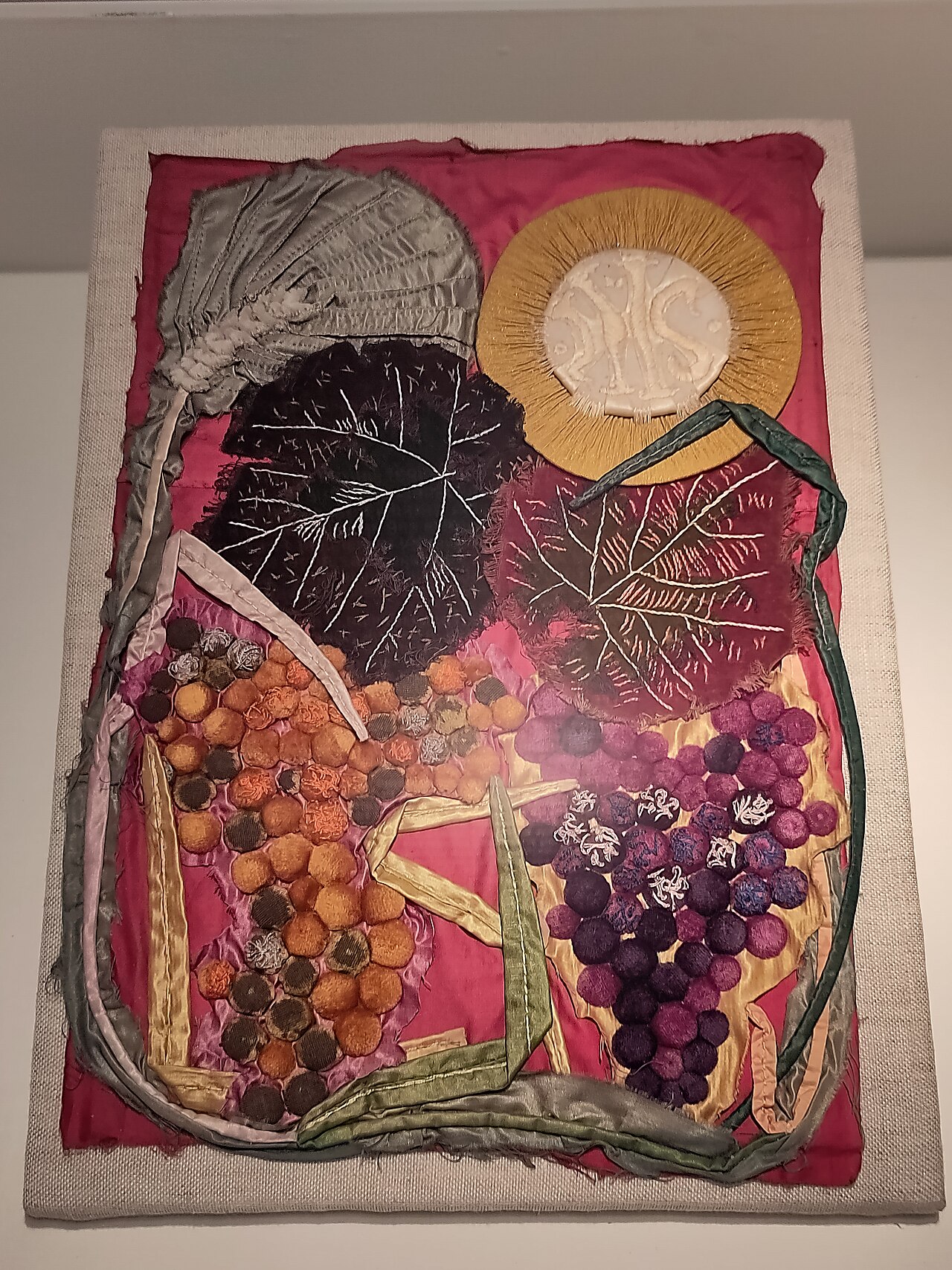
Mixed-technique textile panel on a pale linen mount. Pink background with a gold-rimmed circular medallion bearing a white embroidered monogram, dark embroidered leaves, grape clusters of orange, purple and dark pom-like threads, and grey and green ribbons.Artifact

Primary source

Embroidered Panel for the Quaranta Hores Monument

Antoni Gaudí

Stone building with tall pointed spires, arched doorways, and crenellated walls under a blue sky with clouds. Palm trees, shrubs, a stone statue, and street lamps stand in the foreground.Artifact

Primary source

Bodegas Güell

Antoni Gaudí · 1901

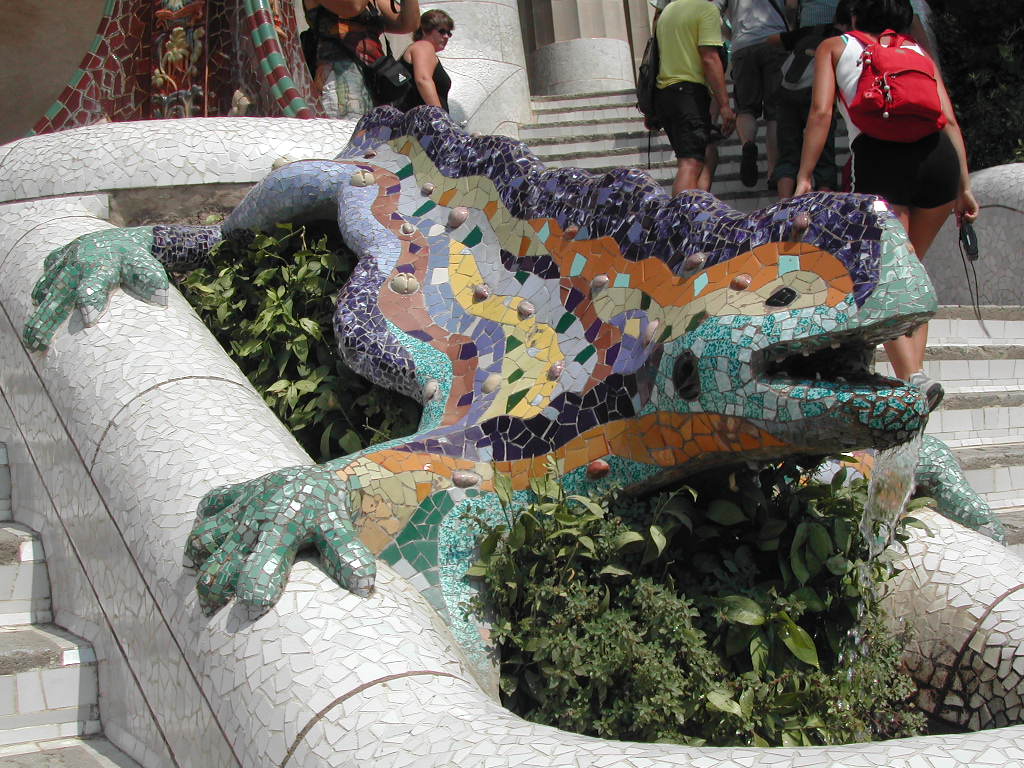
A colorful mosaic sculpture of a salamander-like dragon with a turquoise and multicolored tile body, clawed green feet, and an open mouth spouting water into a planted basin. White tiled stairs and tourists, including a person in a red backpack, are visible in the background.Sculpture

Primary source

El Drac (The Dragon of Park Güell)

Antoni Gaudí

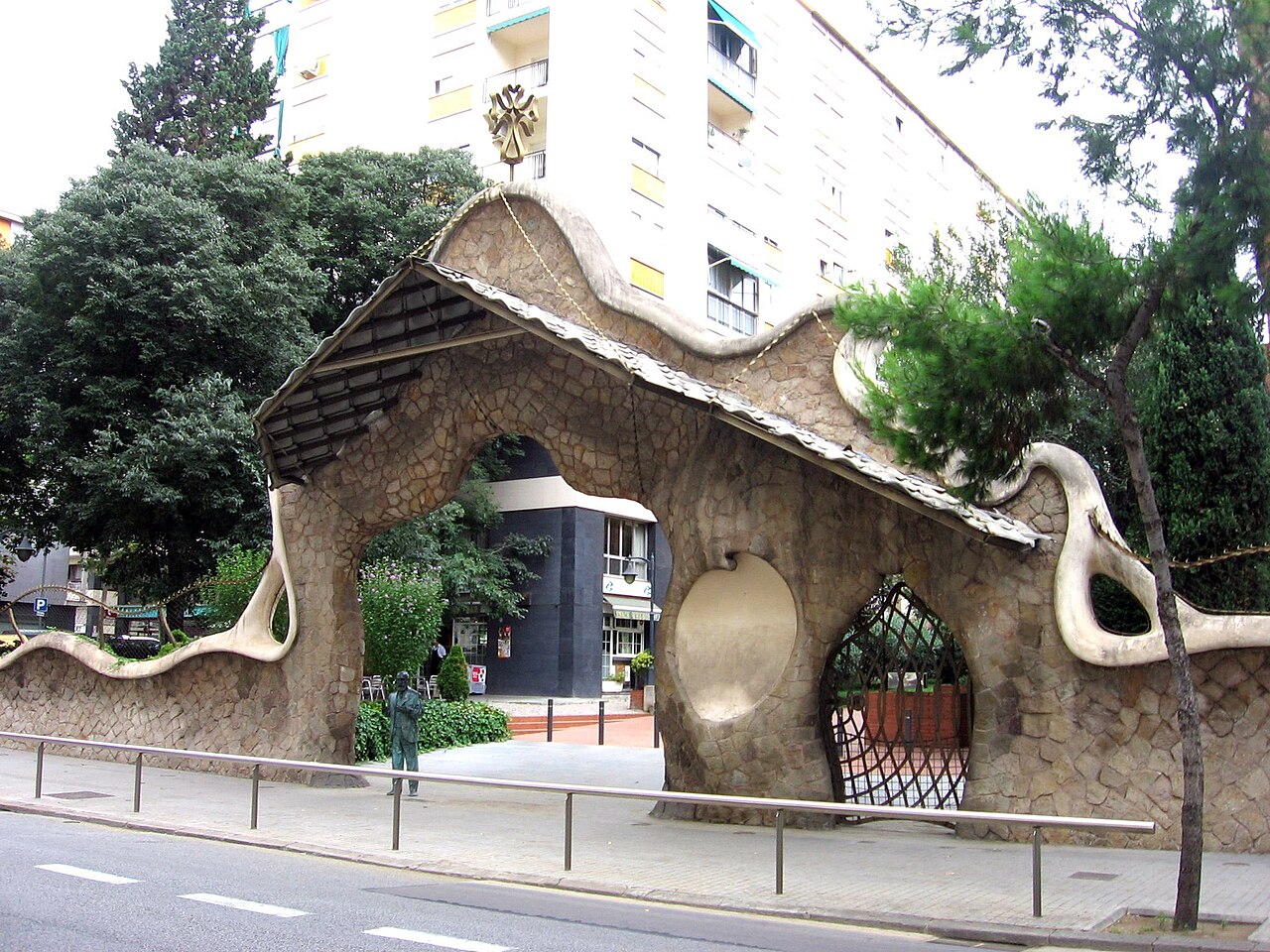
A stone gateway with a wavy, organic roofline covered by a tiled canopy, supported by a rough stone arch. A small arched iron gate sits in the right pillar, and a bronze statue stands near the left side. A tall apartment block and trees are behind it, with a street and pavement in front.Artifact

Primary source

Portal Miralles

Antoni Gaudí · 1901

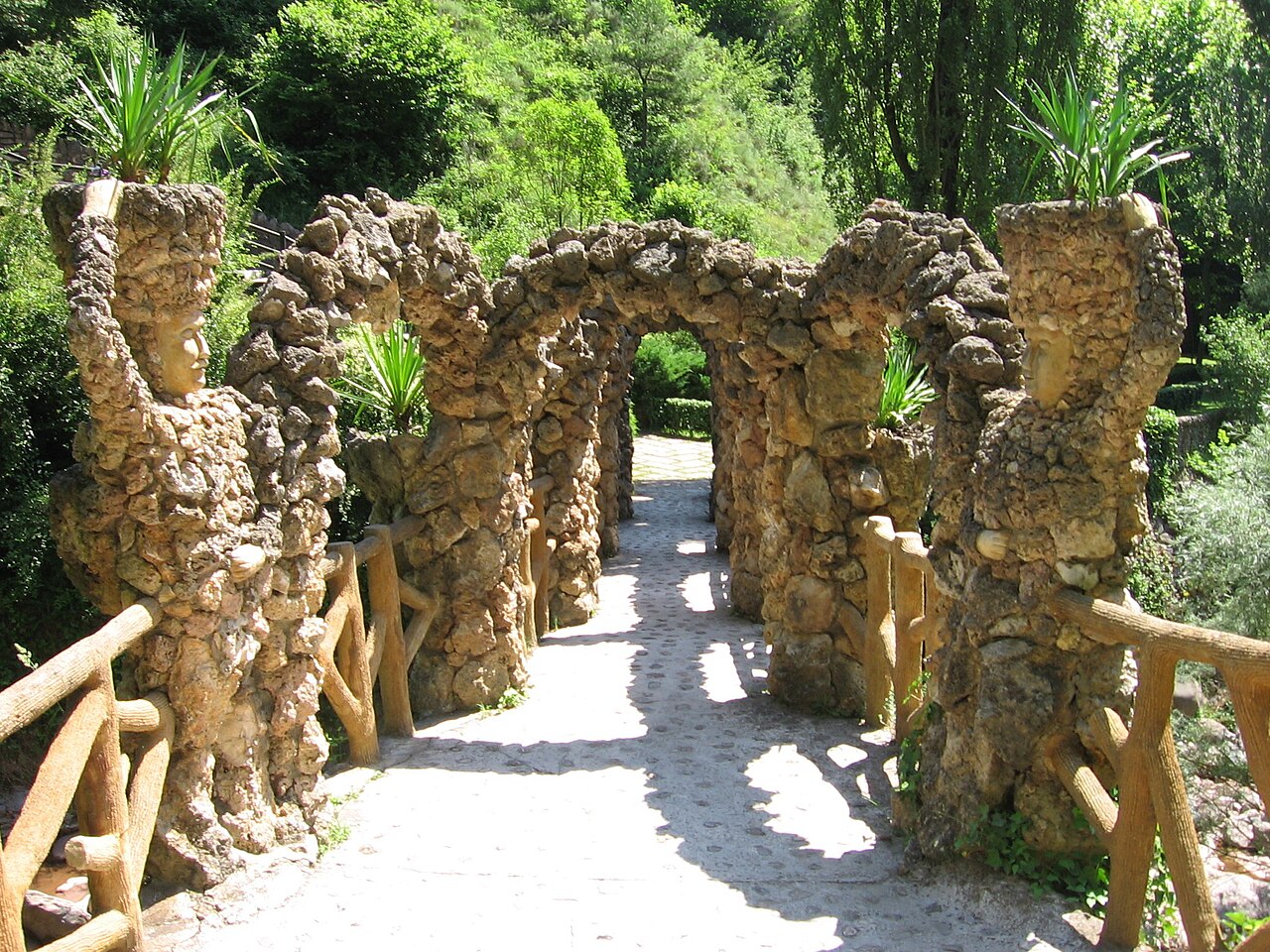
A shaded stone garden path lined with rough, rock-encrusted arches and columns. Two tall pillars have carved human faces partly visible. Wooden railings border the path, and green trees and agave-like plants surround it.Artifact

Primary source

Artigas Gardens

Antoni Gaudí · 1905-1906

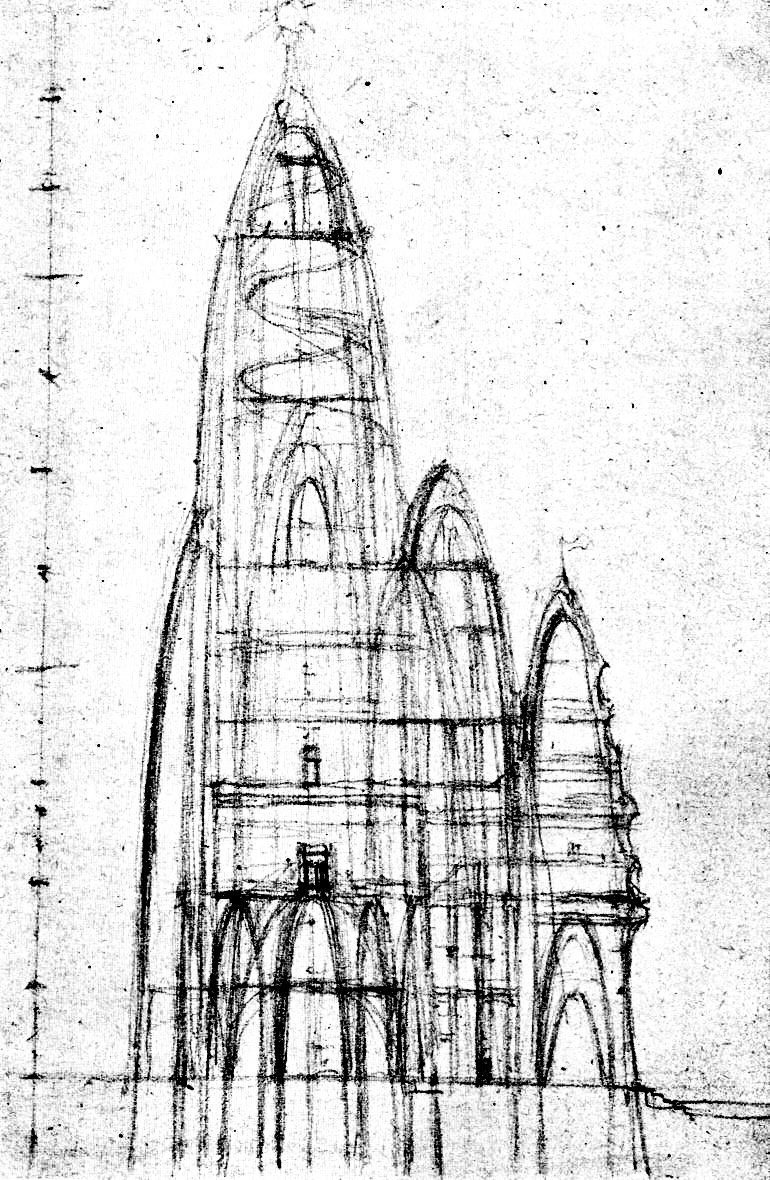
Pencil sketch on greyed paper of a tall, pointed Gothic-style cathedral-like structure in section, with a tall central spire flanked by two smaller spires, arched openings at the base, and a vertical measuring scale along the left edge.Painting

Secondary source

Hotel Attraction

1908 (proposed); drawing published 1956

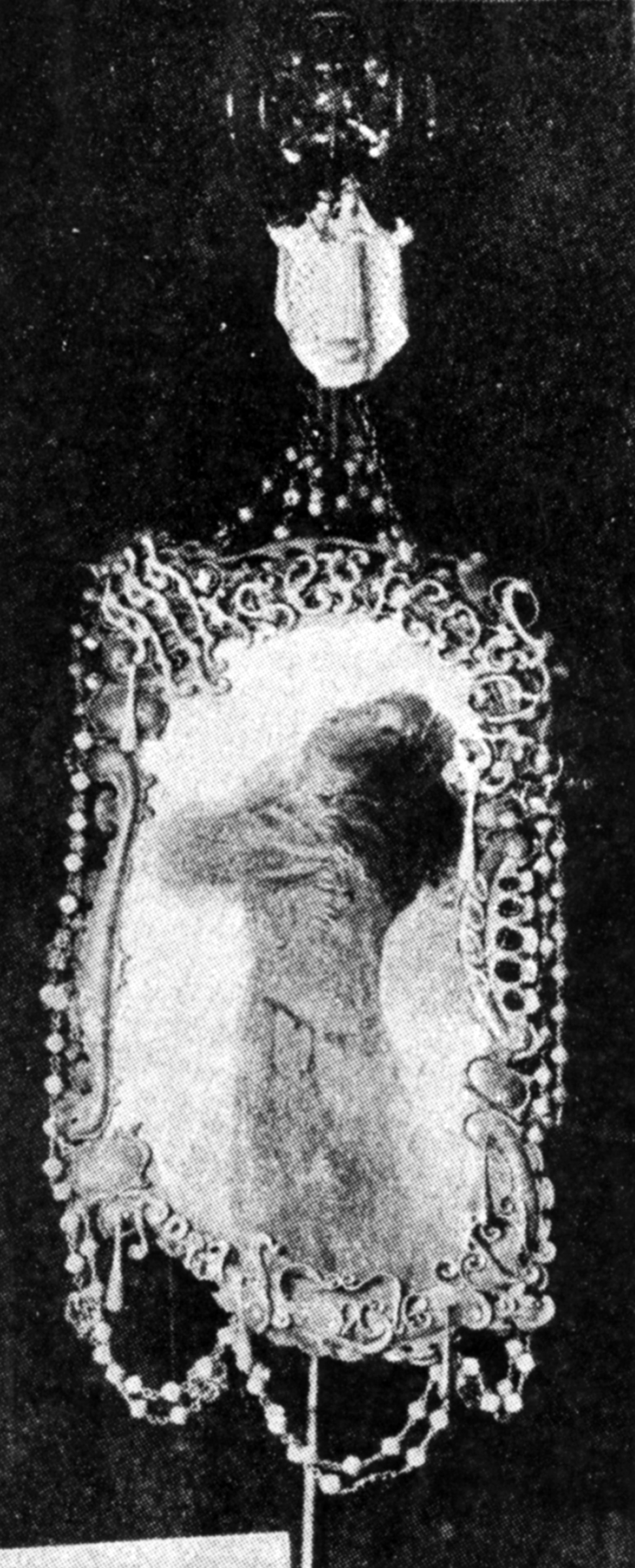
Black and white photograph of an ornate hanging banner. Its central field shows a faded image of a dark-haired figure, framed by a scrolled, beaded border with fringe and tassels. A pole or staff runs through the top, with a decorative finial above.Photograph

Primary source

Banner of the Virgin of Mercy

J. M. Constantí · 21 July 1900

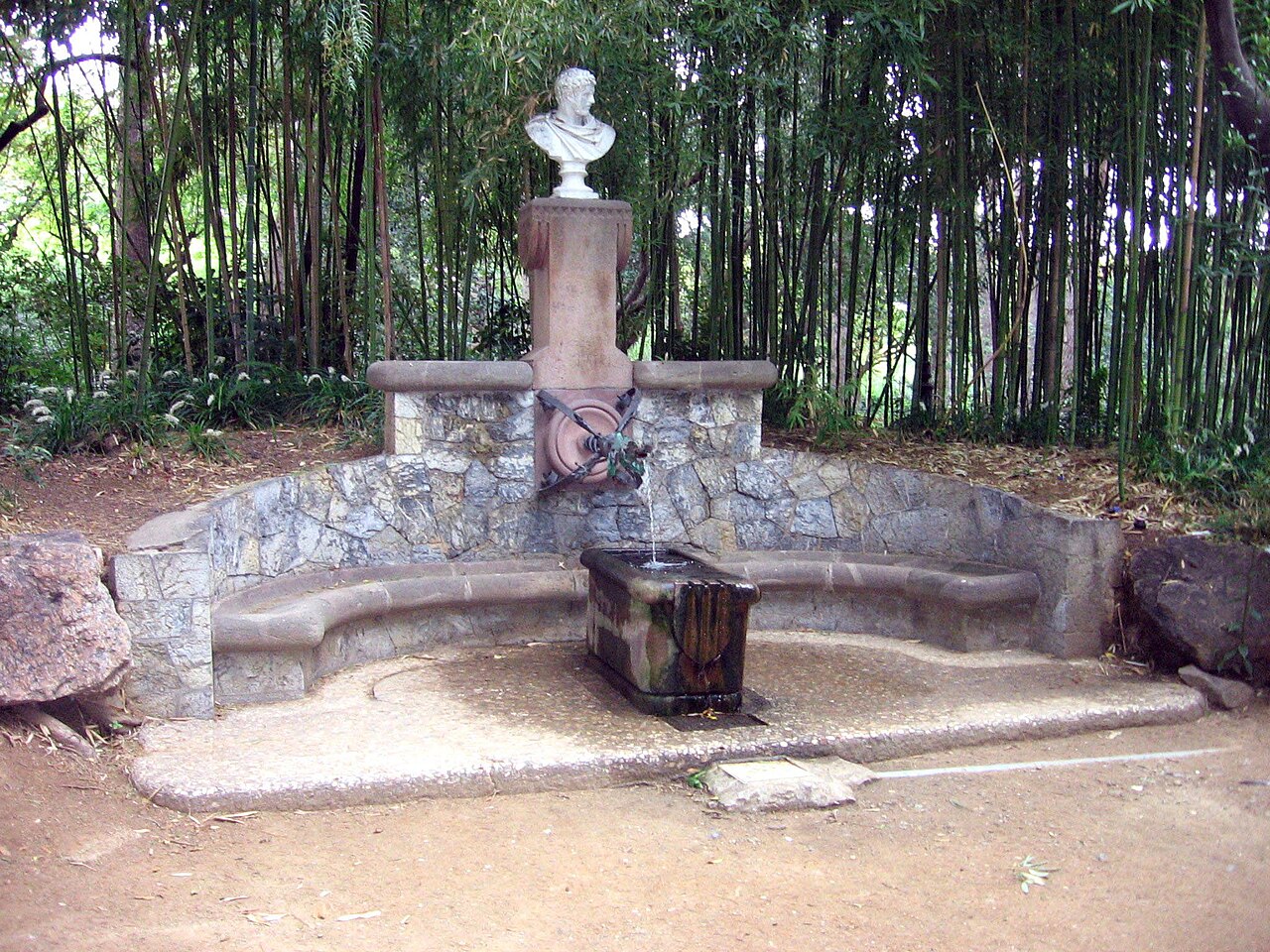
A garden fountain in a bamboo grove: a white marble bust on a tall reddish pedestal rises above a curved stone bench and a small stone basin with a spout, set on a paved base.Sculpture

Primary source

Font d'Hèrcules

Antoni Gaudí · 1884

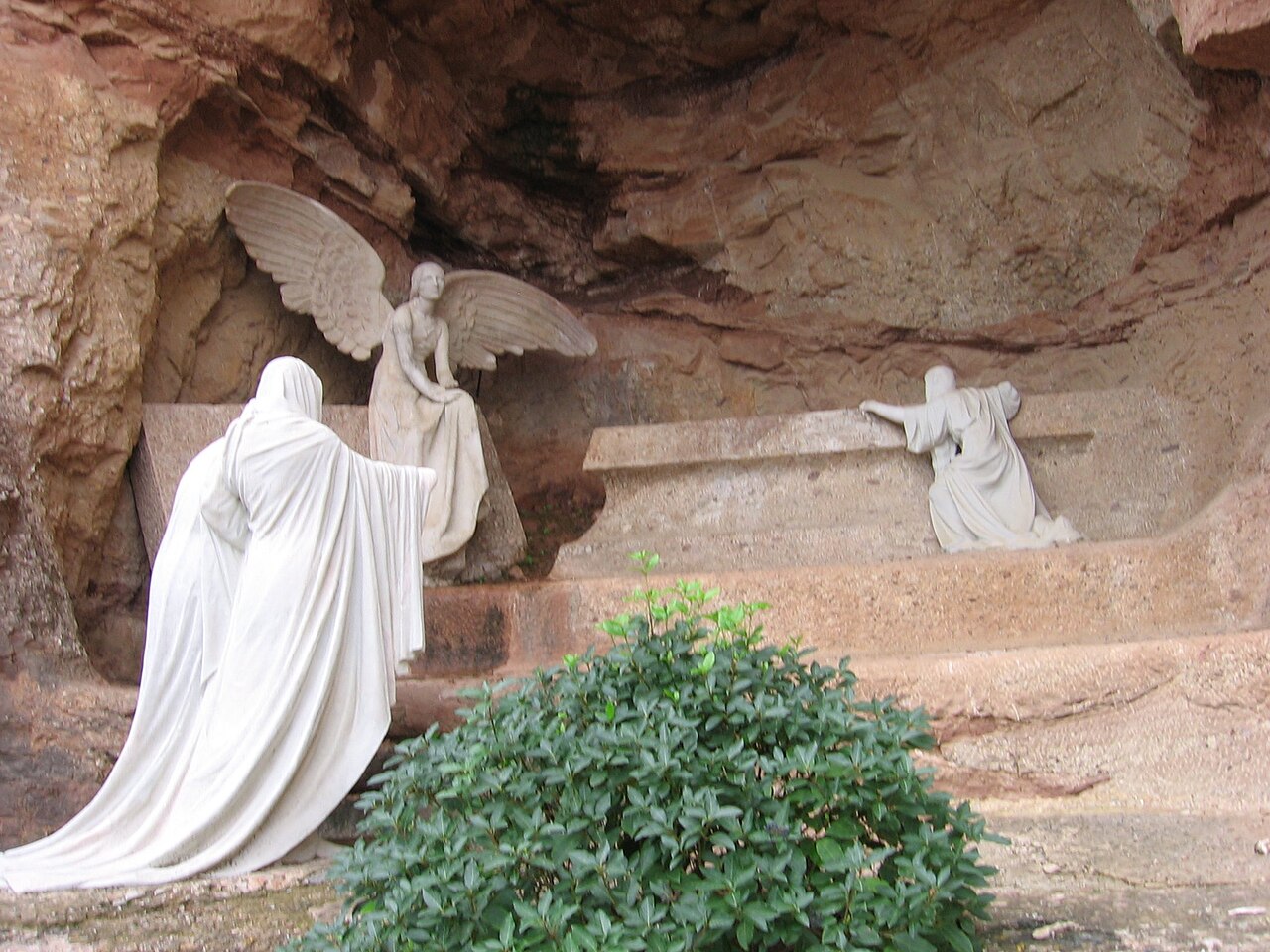
White marble sculptures set against a reddish rock grotto. A veiled figure in long robes stands at left, a winged angel sits on a stone tomb-like ledge in the center, and a kneeling draped figure leans on the ledge at right. A green shrub is in the foreground.Sculpture

Primary source

Primer Misteri de Glòria

Antoni Gaudí · 1916

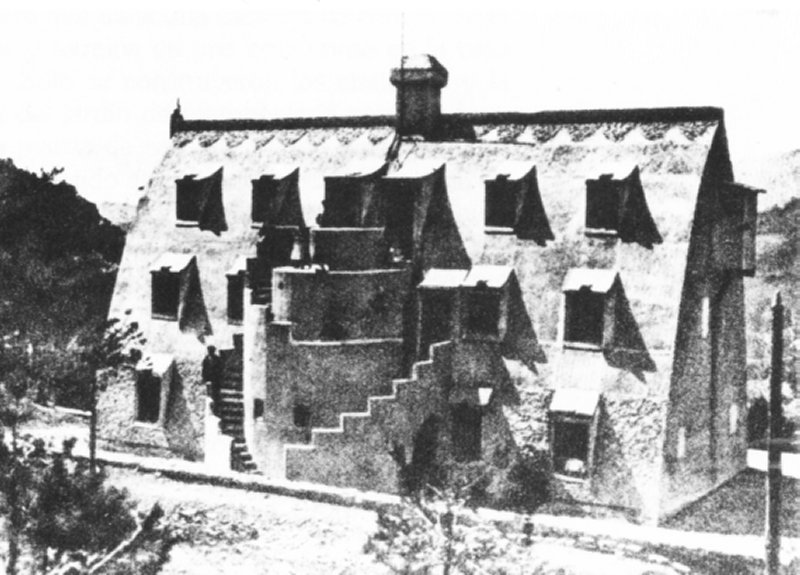
Black-and-white photograph of the Xalet del Catllaràs, a two-storey building with steep, curved roofs, dormer windows with flared tops, a tall chimney tower, and an exterior stone staircase leading up the front. Trees and a dirt road are in the foreground.Artifact

Primary source

Xalet del Catllaràs

Antoni Gaudí · 1902

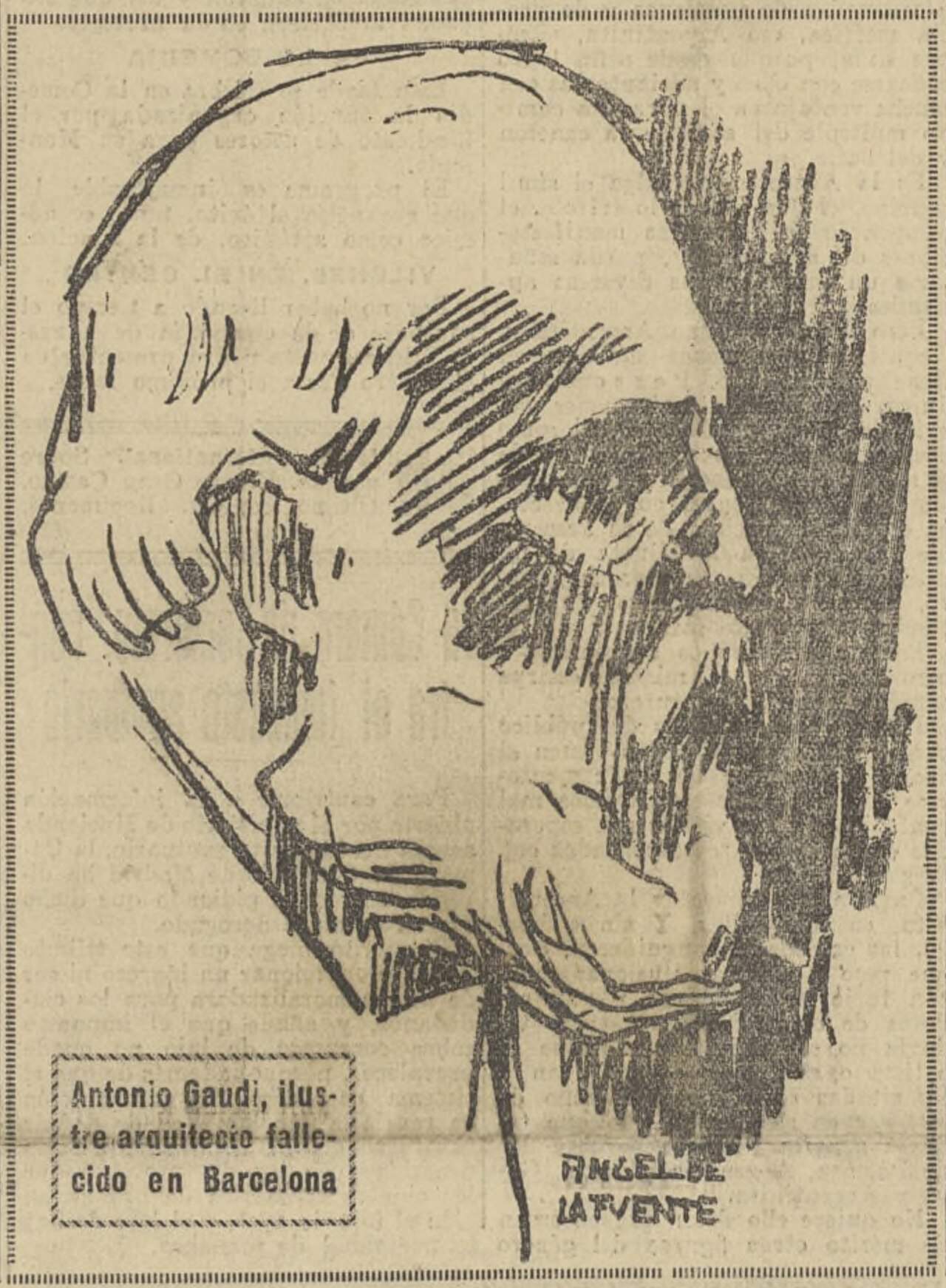
Ink drawing in a newspaper of a man's head in profile facing left, with heavy hatched shading on the right side and hair. A caption box reads 'Antonio Gaudí, ilustre arquitecto fallecido en Barcelona' and the signature 'Ángel de la Fuente' appears below.Newspaper article

Primary source

El Liberal obituary of Antoni Gaudí

Ángel de la Fuente · 12 June 1926

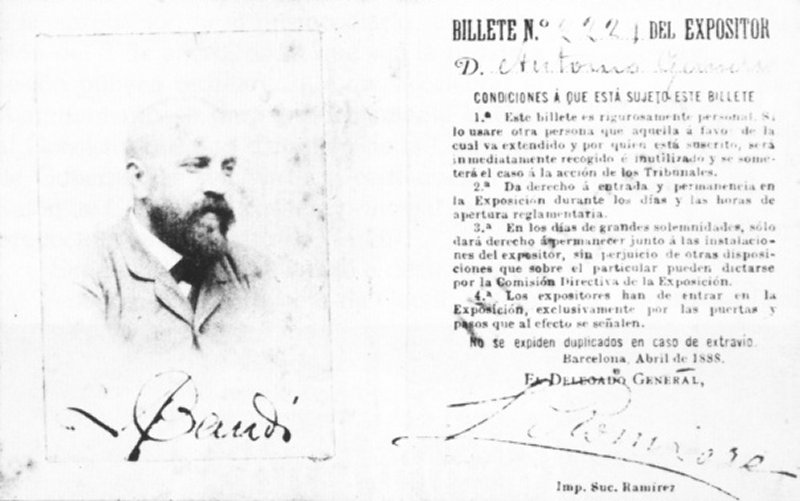
Black-and-white scan of an 1888 exhibitor's pass issued to Antoni Gaudí for the Barcelona Universal Exposition. On the left is a portrait photo of a bearded man in a suit and tie, with a handwritten signature below. The right side has printed Spanish conditions of entry, the date Barcelona, Abril de 1888, and a signature of the Delegado General. Printed at bottom: Imp. Suc. Ramirez.Document

Primary source

Gaudí's exhibitor card for the 1888 Barcelona Universal Exposition

1888

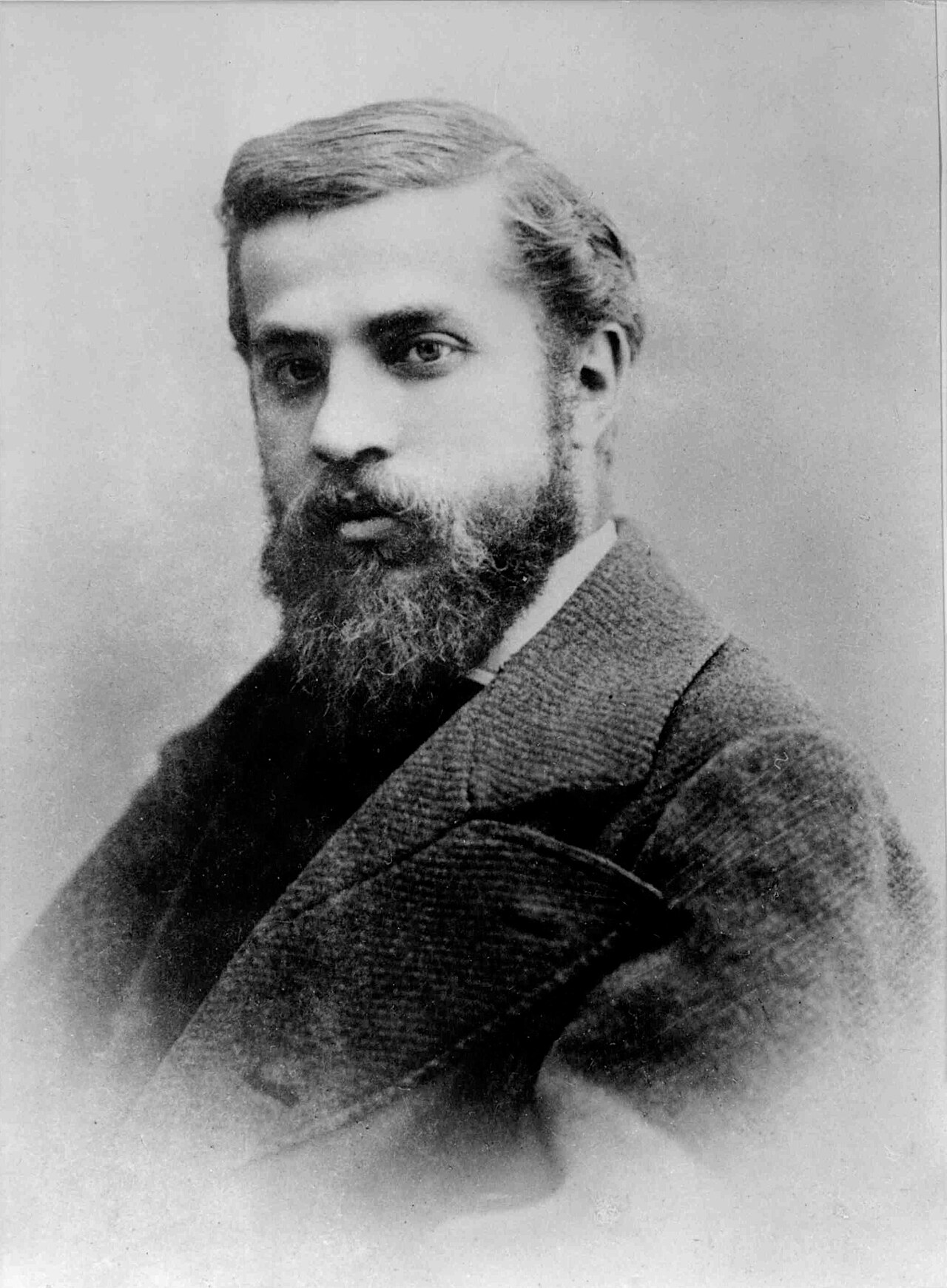
Black-and-white studio portrait of a bearded man with short combed-back hair, wearing a tweed-textured jacket over a light collar, turned three-quarters toward the viewer with a serious expression against a pale backdrop.Photograph

Primary source

Portrait photograph of Antoni Gaudí, 1878

Pau Audouard Deglaire · 15 March 1878

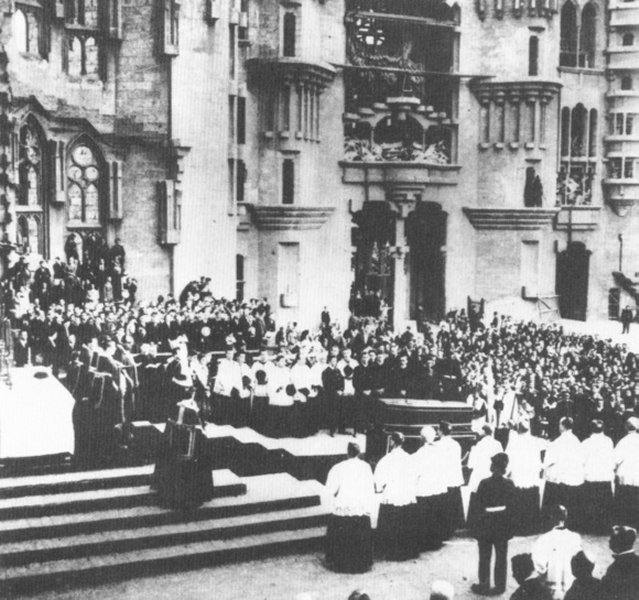
Black and white photograph of a large crowd gathered outside an ornate stone building with Gothic-style windows and balconies, where clergy in white vestments and dark robes stand on steps around a draped platform during a funeral procession.Photograph

Primary source

Funeral of Antoni Gaudí

12 June 1926

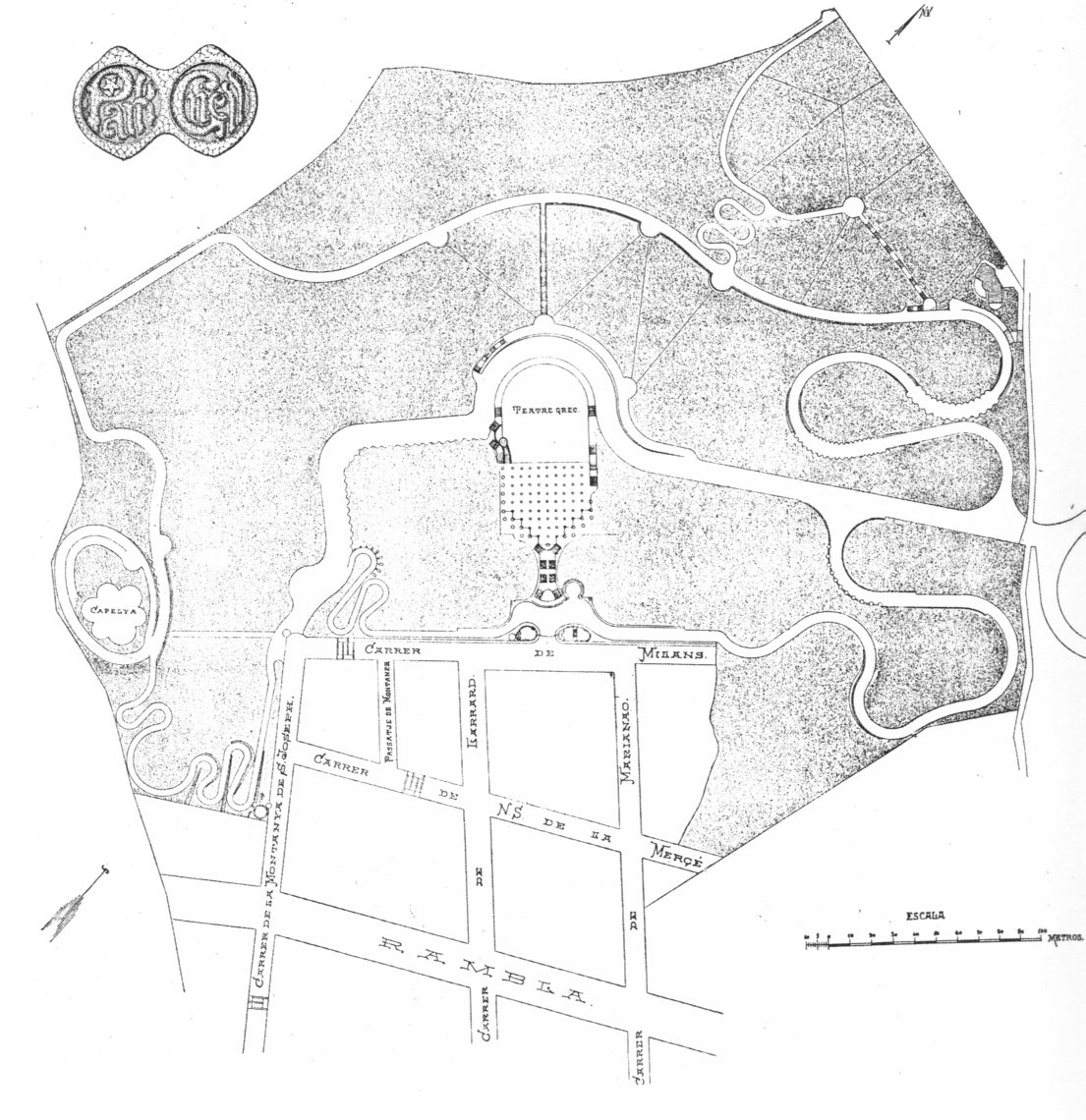
Black and white line drawing of a site plan with stippled shading. It shows the park's winding paths, a central Teatre Grec amphitheatre with seating rows, a chapel labelled Capelya on the left, and a grid of city streets along the bottom labelled Rambla and Carrer de Mirans. A scale bar appears bottom right and a north arrow top right.Document

Primary source

Plan of Park Güell by Gaudí

Antoni Gaudí · 1903

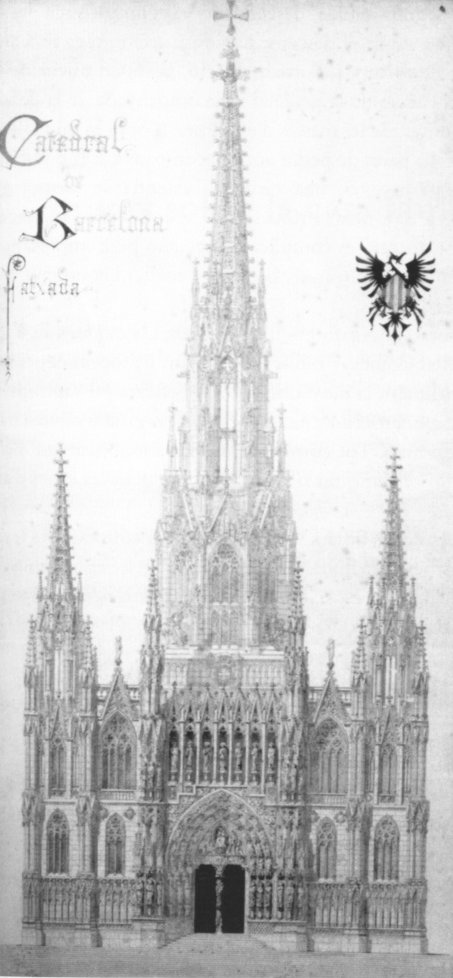
Black-and-white architectural drawing of a Gothic cathedral facade with a tall central spire, two flanking towers with spires, a large pointed portal with doors, and rows of statues. Title in gothic lettering reads 'Catedral de Barcelona' with 'fachada' below, and a double-headed eagle emblem sits at upper right.Painting

Primary source

Facade Project for Barcelona Cathedral

Antoni Gaudí · 1887

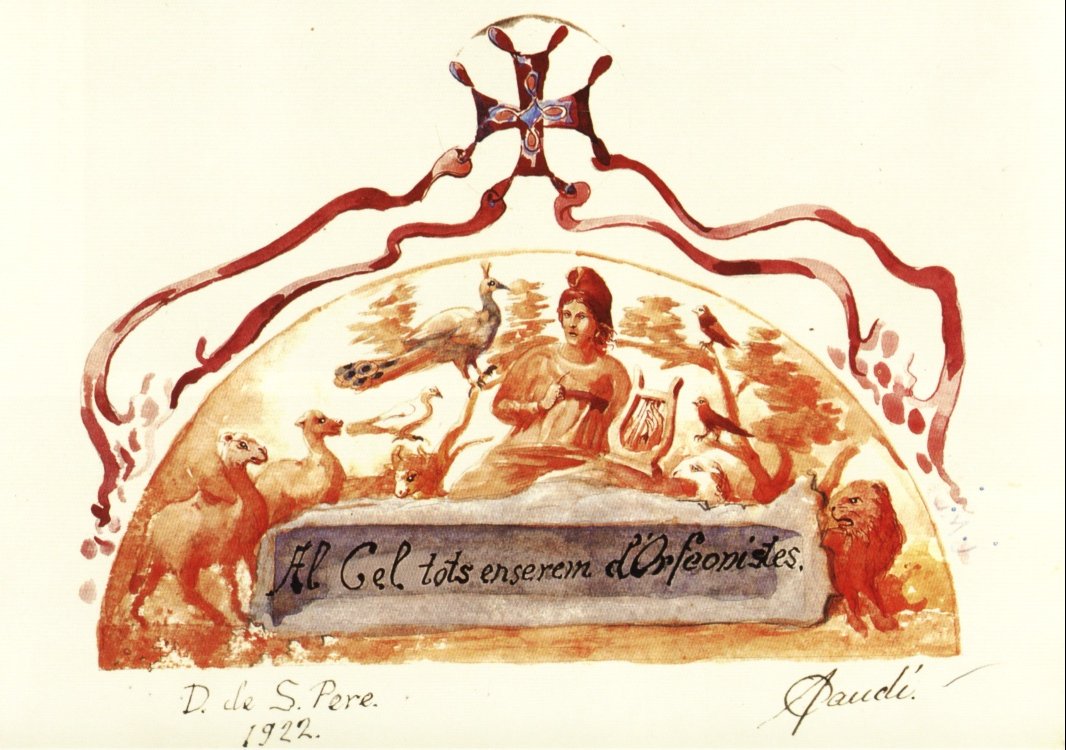
Watercolor drawing in a semicircular arch with a red and blue ornamental crest at top, featuring a seated female figure with a lyre, a peacock, a camel, a lion, and birds in a landscape. A banner inscription reads 'Al Cel tots ensemem d'Orfeonistes'. Signed 'Gaudí' at bottom right and 'D. de S. Pere 1922' at bottom left.Document

Primary source

Dedication to the Orfeó Català

Antoni Gaudí · 1922

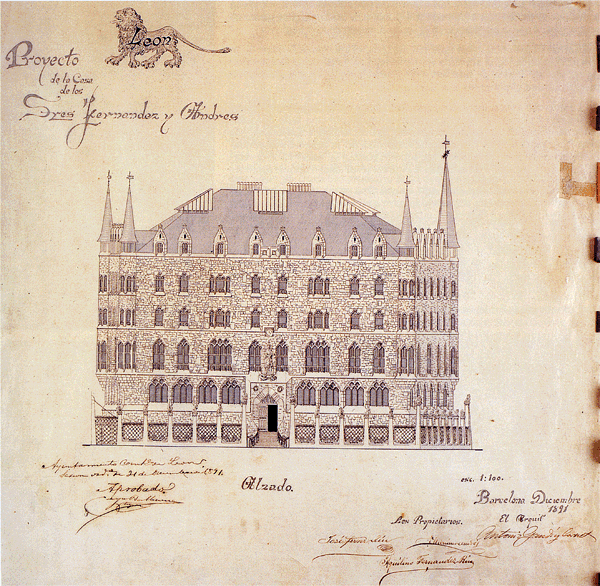
Ink and wash architectural elevation drawing titled 'Proyecto de la Casa de los Sres Hernandez y Andres' showing a gothic-style stone building facade with pointed arched windows, spires, a central entrance, and handwritten Spanish annotations including 'Barcelona Diciembre 1891' and 'Gaudí' signatures.Painting

Primary source

Original Plan of Casa Botines

Antoni Gaudí · December 1891

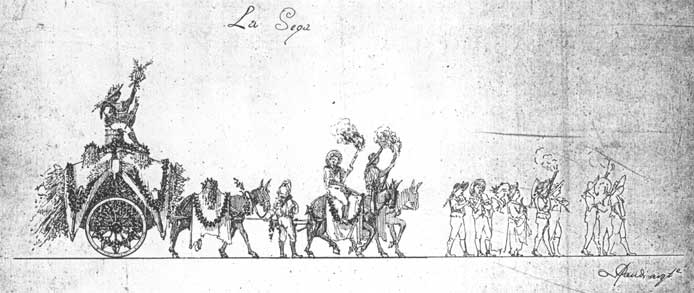
Pen-and-ink drawing titled 'La Sega' showing a horse-drawn cart with a figure in a decorated headdress on top, and a procession of horses with riders and walking figures in a line, drawn in a sketchy style on a light background.Painting

Primary source

Vallfogona Procession Design: The Harvest

Antoni Gaudí · 1879

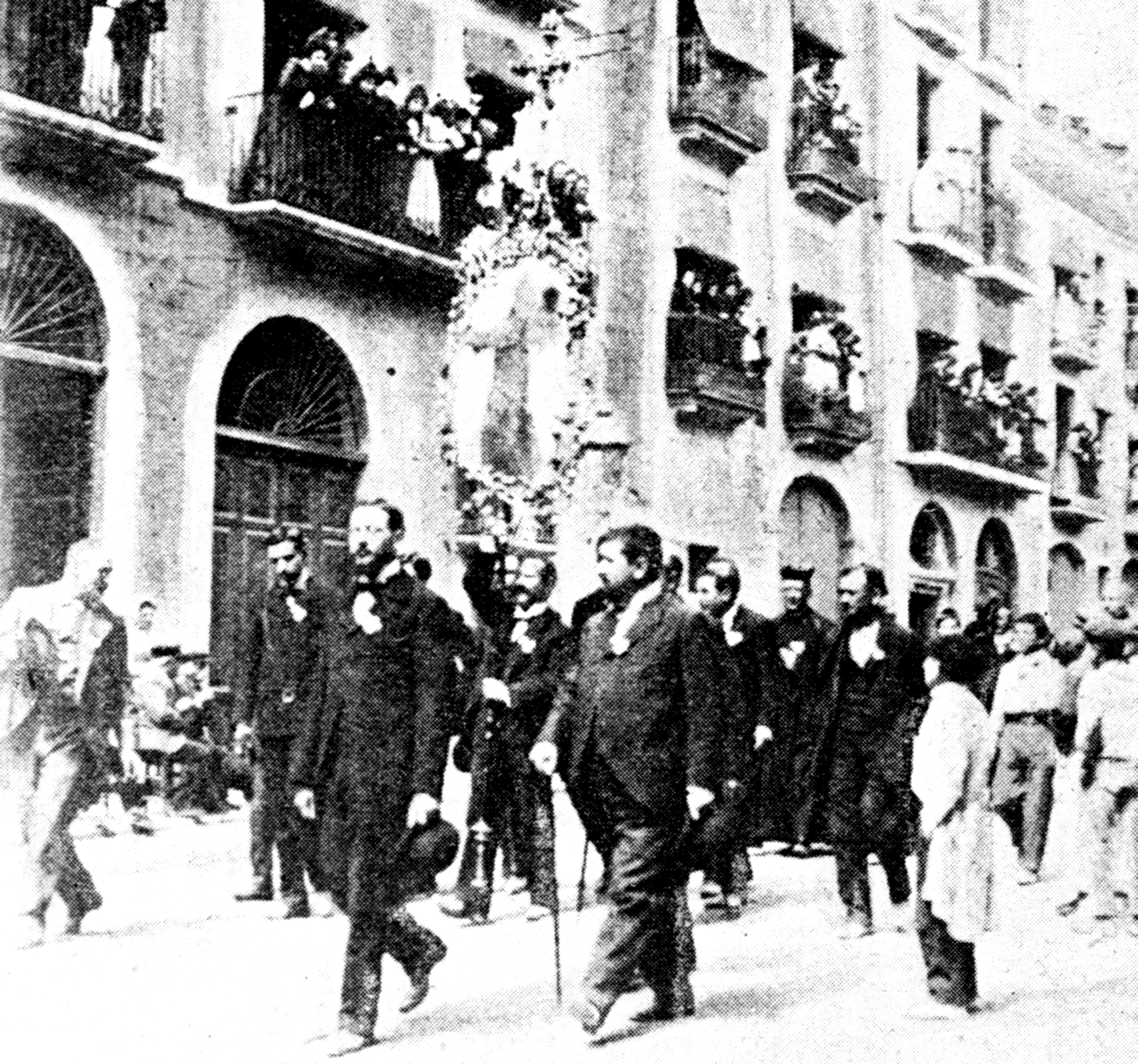
Black-and-white photograph of a religious procession on a city street. Men in dark coats and hats walk in the foreground. A tall floral-decorated float or banner with a figure rises above them. Crowds watch from balconies and arched doorways of stone buildings.Photograph

Primary source

Reus Pilgrimage Procession in Barcelona

A. Anguera · 21 April 1900

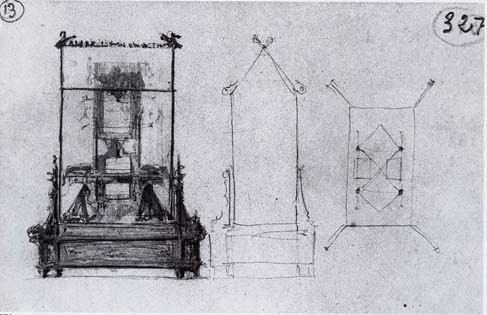
Pencil and ink sketch on paper with three drawings of a display case: on the left a front elevation of an ornate case with a canopy and a figure inside, in the center a side elevation, and on the right a plan view with a diamond-shaped grid pattern. A label reads 327 in the upper right corner.Artifact

Primary source

Sketch of the Comella Display Case

Antoni Gaudí · 1878

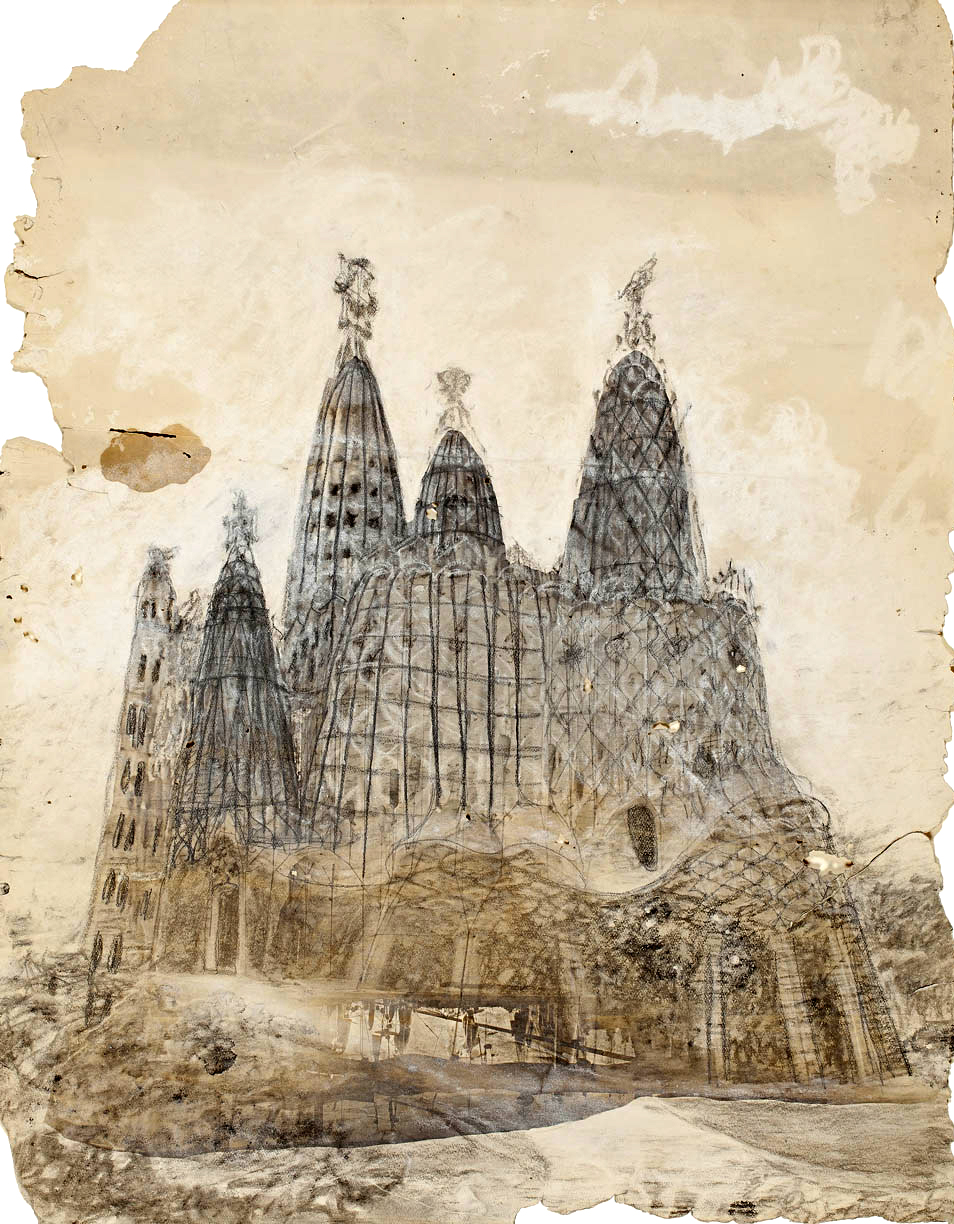
Pencil and charcoal drawing on aged, stained paper of a tall, spired church exterior with multiple pointed towers, lattice-like stone patterns, and small figures near the base. The paper edges are torn and browned.Painting

Primary source

Drawing of the Colònia Güell Church Exterior

Antoni Gaudí · between 1908 and 1915

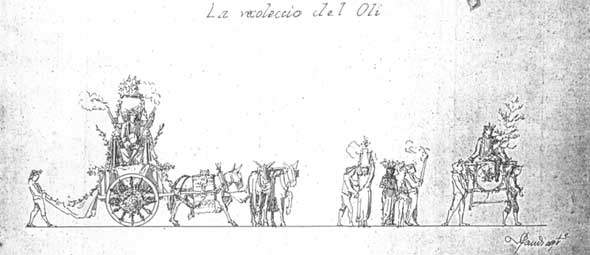
Pen drawing with handwritten title 'La recolecció del Oli' showing a procession: an ox-drawn cart with a decorated wagon carrying figures and foliage on the left, a man leading it, a group of figures in the center, and a decorated float with a tree on the right, signed in the lower right corner.Painting

Primary source

Vallfogona Festival Design: The Olive Harvest

Antoni Gaudí · 1879

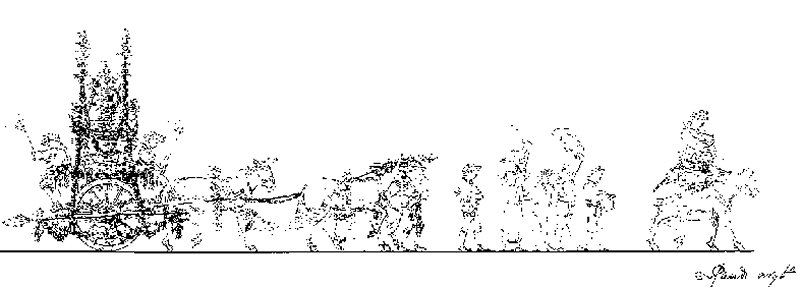
Pen-and-ink sketch of a festival procession along a horizontal ground line: a large ornate wheeled float on the left topped with tall decorative spires, pulled by horses, followed by a row of walking figures and a mounted rider on the right. Signature in the lower right corner.Painting

Primary source

Vallfogona Festival Design: The Grape Harvest

Antoni Gaudí · 1879

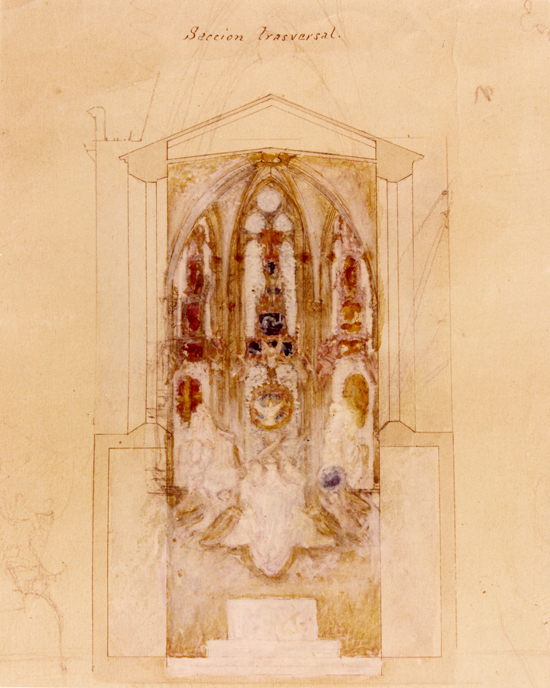
Watercolor and pencil section drawing titled 'Seccion trasversal' showing a Gothic-style chapel interior with pointed arches, stained-glass windows, and a central altar with a small step, enclosed in an architectural outline with a pitched roof.Painting

Primary source

Drawing for the Trinity Chapel, Mallorca Cathedral

Antoni Gaudí · c. 1904-1914

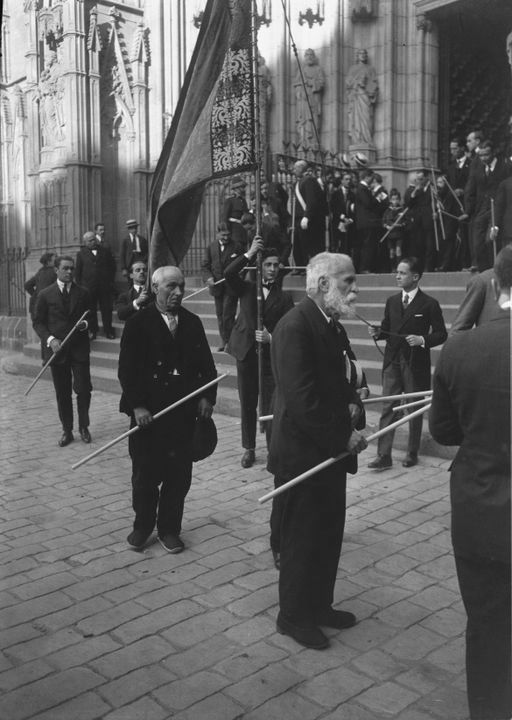
Black-and-white photograph of a crowd of men in dark suits and hats on a cobbled street in front of a Gothic cathedral facade with statues. An older bearded man in the foreground holds a pole, and a large draped banner is carried near the center. Several men hold processional poles.Photograph

Primary source

Gaudí in the Corpus Christi Procession, Barcelona, 1924

Josep Brangulí · 19 June 1924

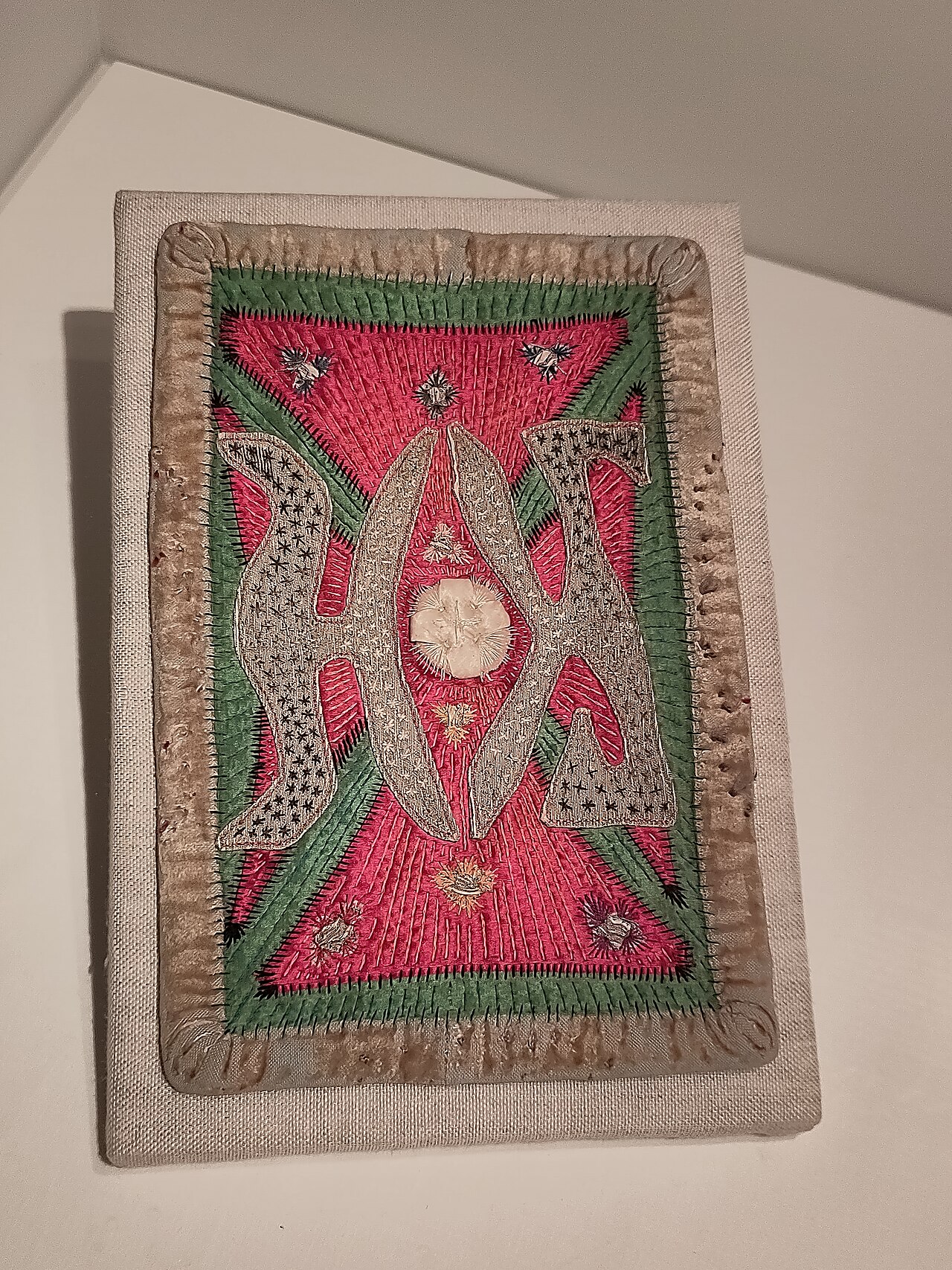
Rectangular embroidered panel mounted on a pale linen-covered board. Pink and green silk background with gold-thread lettering in a large central motif, a white rosette-like element at the centre, and small star and flower embroidered details around the edges.Artifact

Primary source

Embroidered Panel from the Forty Hours Monument, Palma

Antoni Gaudí · 1912

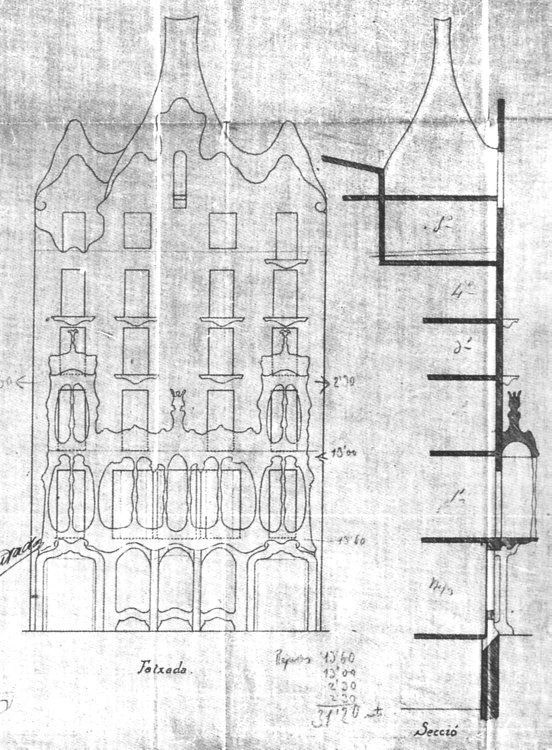
Black and white technical drawing on tracing paper: left, a tall building facade elevation with wavy roofline, windows, balconies and arches labeled Fachada; right, a vertical building section with floor levels, a tower-like chimney and lantern labeled Sección, with handwritten dimensions.Document

Primary source

Façade and Section Drawing of Casa Batlló

Antoni Gaudí · 1904

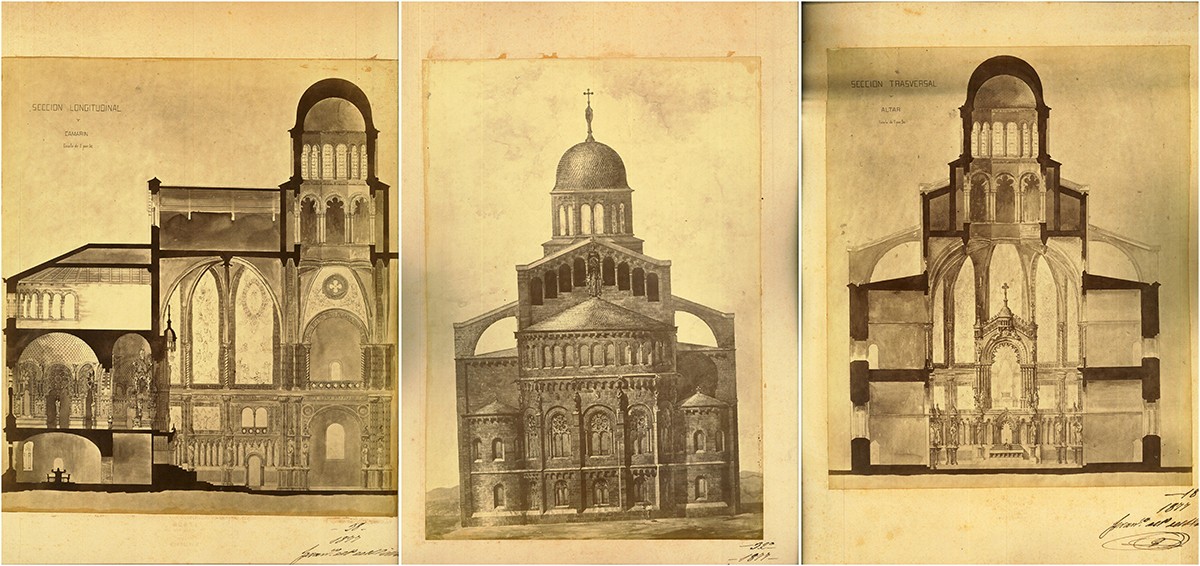
Three sepia architectural drawings side by side of a church apse. Left: longitudinal section with labeled title. Center: exterior elevation with a central dome and tower. Right: transverse section showing an altar and interior vaulting.Document

Primary source

Montserrat Abbey Apse Project Drawings

Antoni Gaudí · 1876

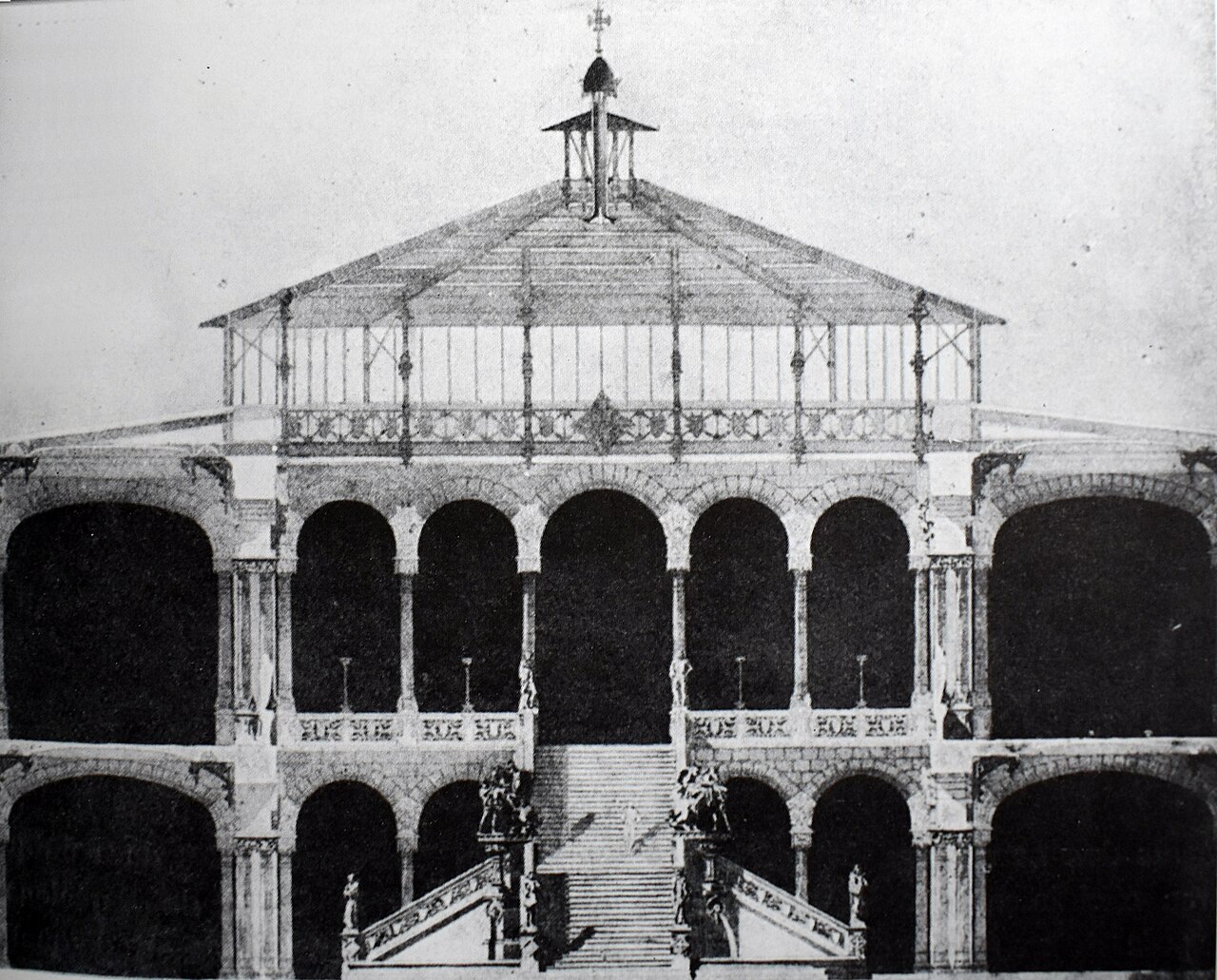
Black-and-white reproduction of an architectural drawing of a multi-story arcaded hall with a glazed central pavilion under a pitched roof and small cupola, two tiers of arches, a grand central staircase flanked by sculpted figures, and balustraded galleries.Document

Primary source

Patio Design for the Barcelona Provincial Council

Antoni Gaudí · 1876

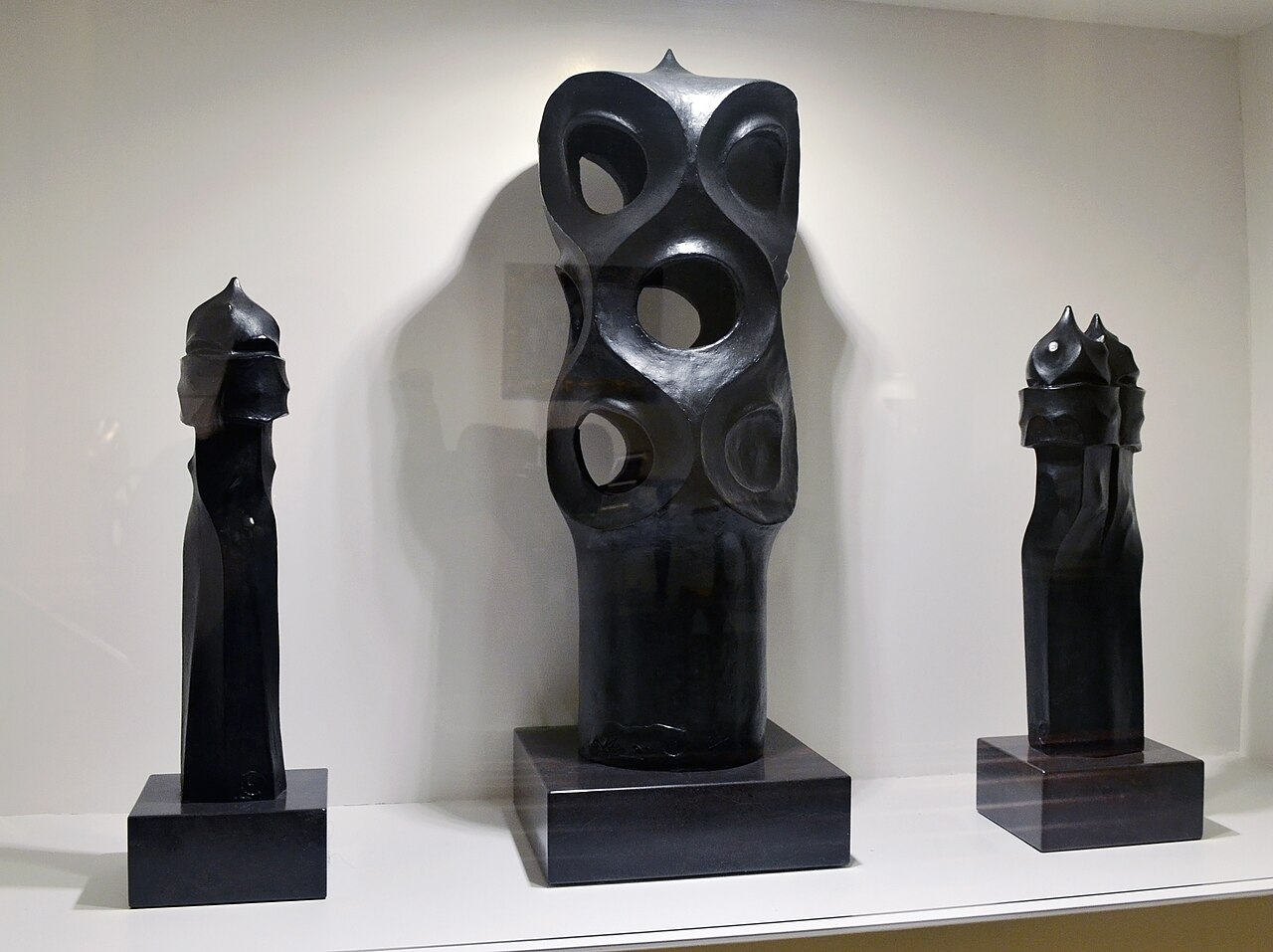
Three black bronze sculptures on separate square plinths in a museum display against a white wall. Left and right figures are slender, hooded forms with pointed tops; the central one is taller, with several large circular openings. They are the Gaudí chimney models.Sculpture

Primary source

Bronze Chimney Models for Casa Milà

Antoni Gaudí · 1909

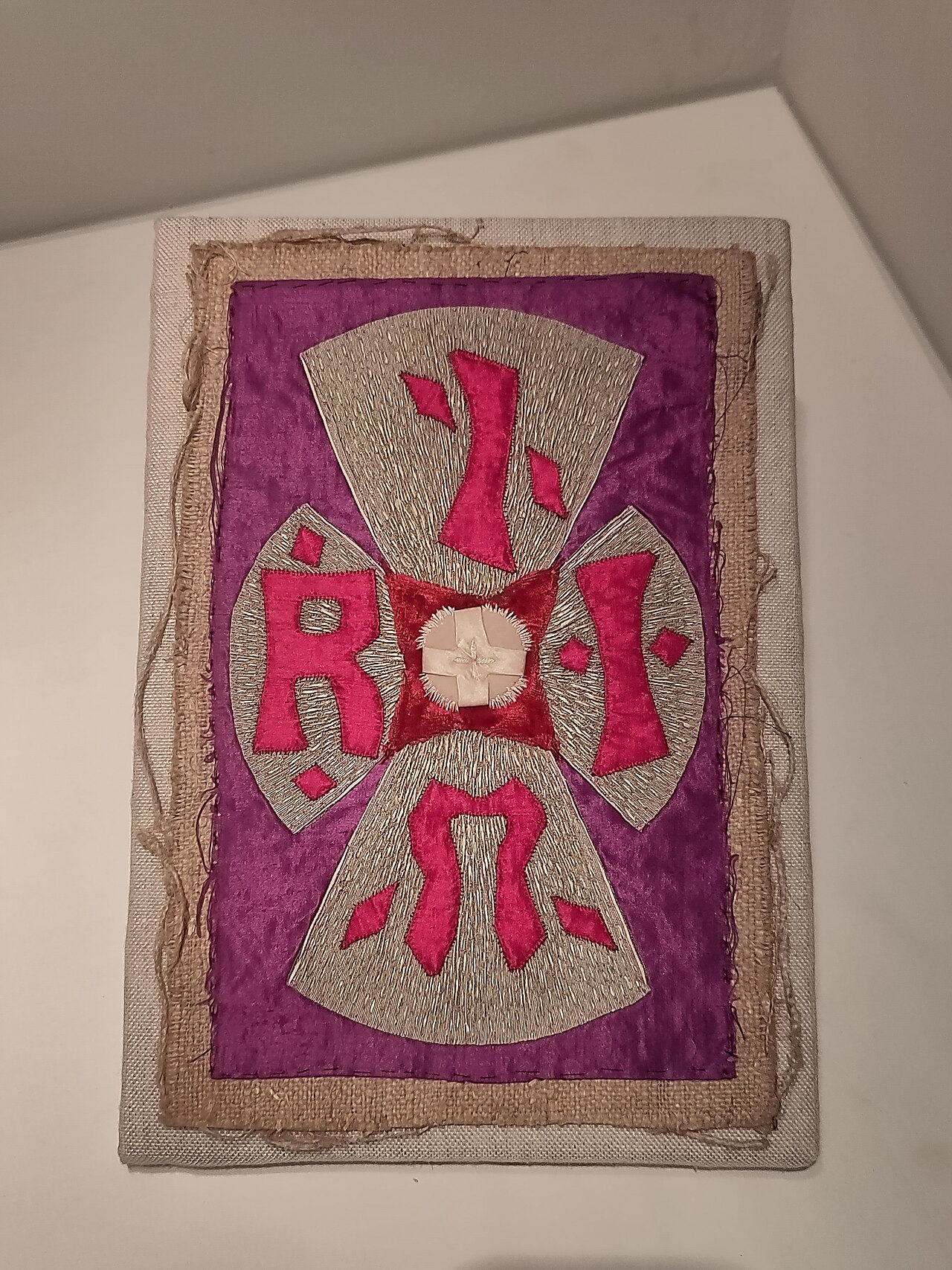
Rectangular purple embroidered panel framed by burlap, with a central cross of silver-gold metallic thread and pink velvet appliqué letters reading IHS-like monogram, a small white cross-shaped piece at the center on a red cushion.Artifact

Primary source

Embroidered Panel for the Quaranta Hores Monument

Antoni Gaudí · 1912

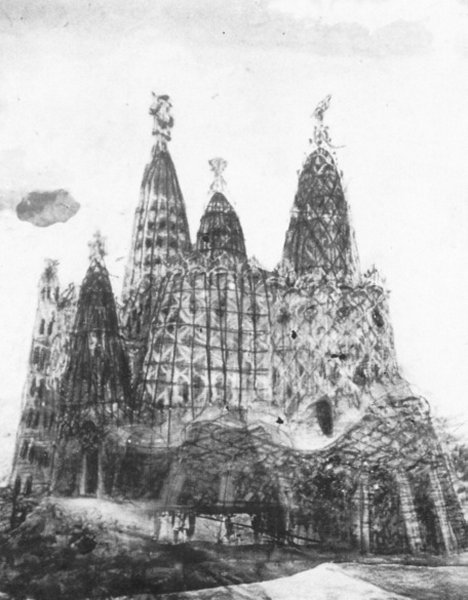
Black and white photograph of a dark, sketchy architectural drawing of a church with several tall, pointed spires topped with small sculptures, a textured lattice-like facade, and a low, sloping base with arched openings. Ground is shaded at the bottom.Painting

Primary source

Church Project Drawing for Colonia Güell

Antoni Gaudí · 1898

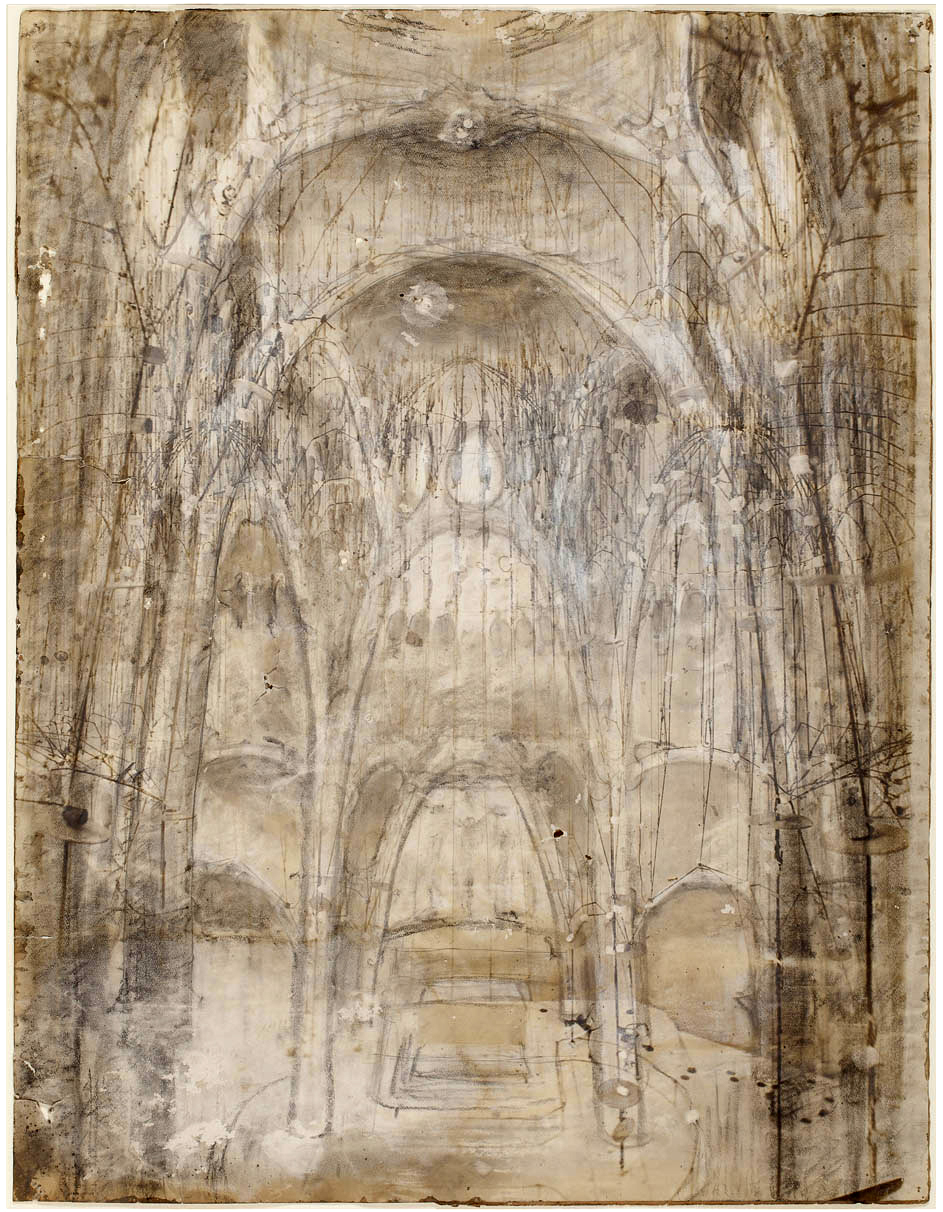
Pencil and wash drawing on aged, yellowed paper showing a symmetrical interior of a vaulted hall with converging pointed arches and ribbed columns, drawn in brown and grey tones, receding toward a central altar-like step.Painting

Primary source

Drawing of the Colònia Güell Crypt Interior

Antoni Gaudí · c. 1910

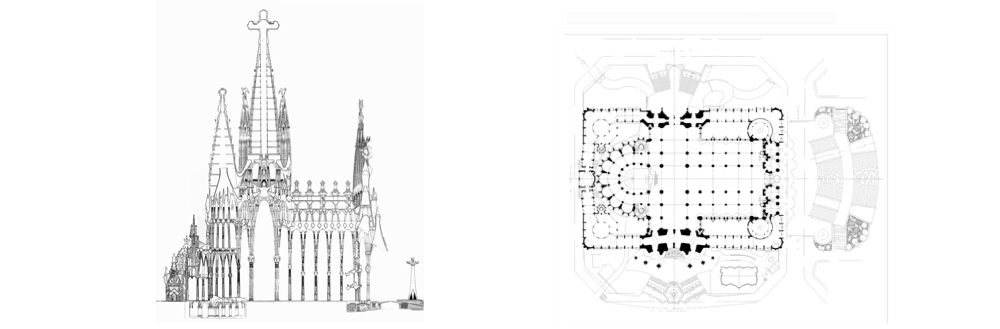
Two black-and-white line drawings on white background. Left: an elevation drawing of a tall Gothic-style church with several spires, one with a cross at top, and columns along the base. Right: a floor plan of a cruciform church with a rectangular nave, rows of columns, and an apse at the right end.Document

Primary source

Plan and Elevation of the Sagrada Família

Templo Expiatorio de la Sagrada Familia

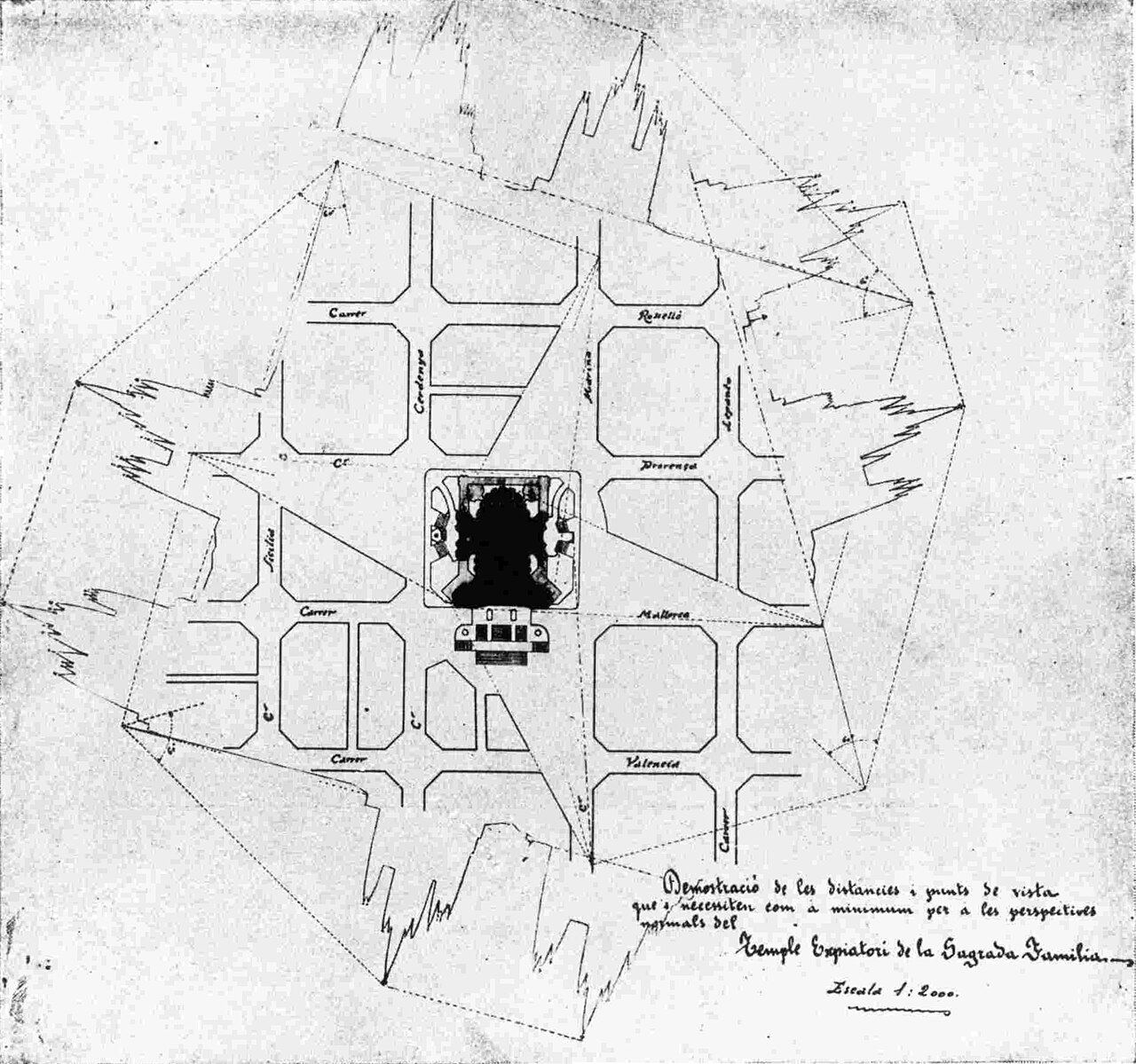
Black and white hand-drawn plan of a city grid with streets labeled in Catalan, showing the Sagrada Família church as a dark block at center, with dashed sight lines and angled lines radiating outward to the edges. Handwritten caption reads Demostració de les distàncies i punts de vista per a les perspectives del Temple Expiatori de la Sagrada Família, Escala 1:2000.Document

Primary source

Urban Study of the Sagrada Família Area

Sagrada Família (oficial) · 1916

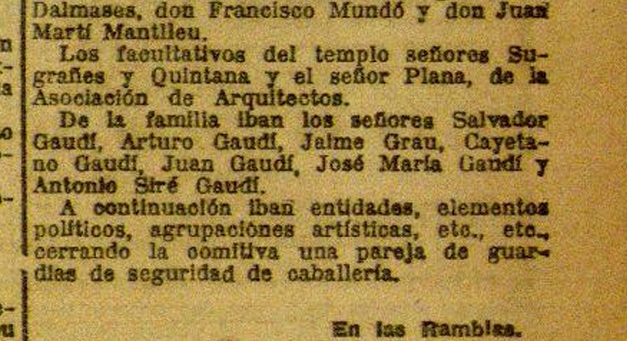
Scan of a older newspaper page showing printed Spanish text in columns, describing attendees at a funeral procession: mentions of Dalmases, Francisco Mundó, Juan Martí Manlleu, architects Sugrañes, Quintana and Plana, and members of the Gaudí family, ending with 'En las Ramblas.' Yellowed paper with some damage at the edges.Newspaper article

Primary source

Chronicle of Gaudí's Funeral

13 June 1926

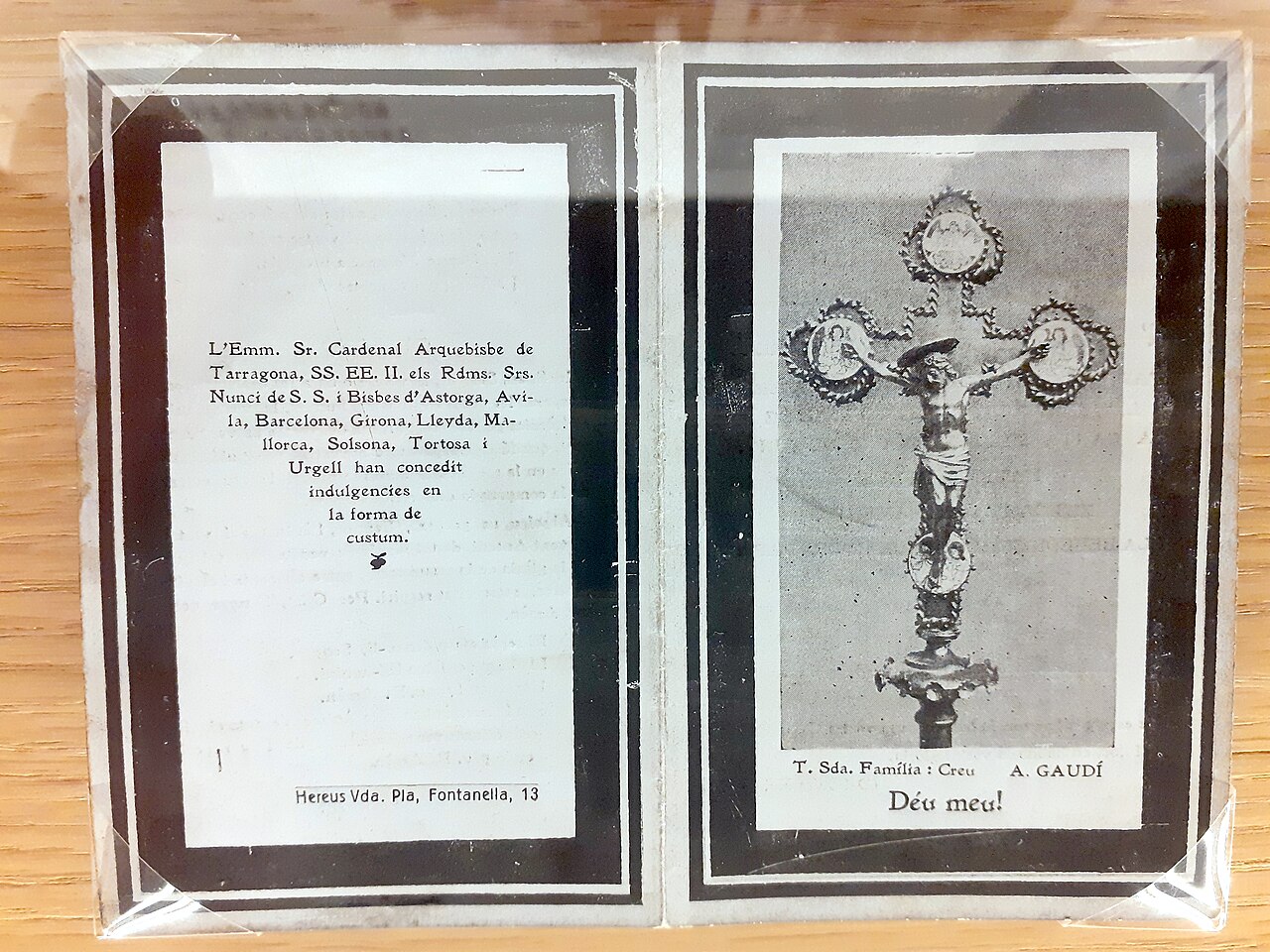
Framed black-bordered memorial card displayed under glass. Left panel: printed Catalan text about indulgences granted by a cardinal archbishop and bishops, with printer's mark 'Hereus Vda. Pla, Fontanella, 13'. Right panel: black-and-white photo of an ornate crucifix with a figure of Christ, captioned 'T. Sda. Família: Creu A. GAUDÍ' and 'Déu meu!'.Document

Primary source

Obituary Notice of Antoni Gaudí

1926

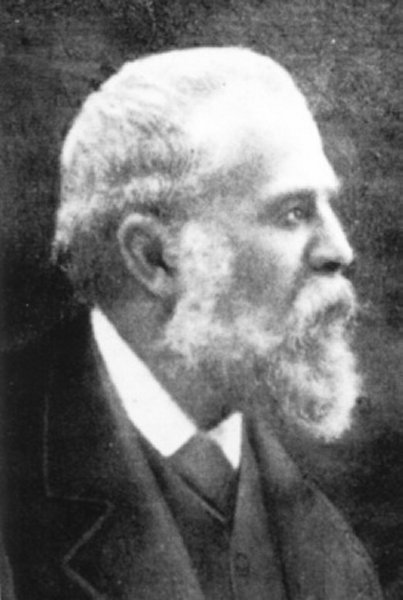
Black and white profile photograph of an elderly man with white hair, a full white beard, and a dark suit with a white collar, facing right against a dark background.Photograph

Primary source

Photograph of Antoni Gaudí, 1910

Unknown · 1910

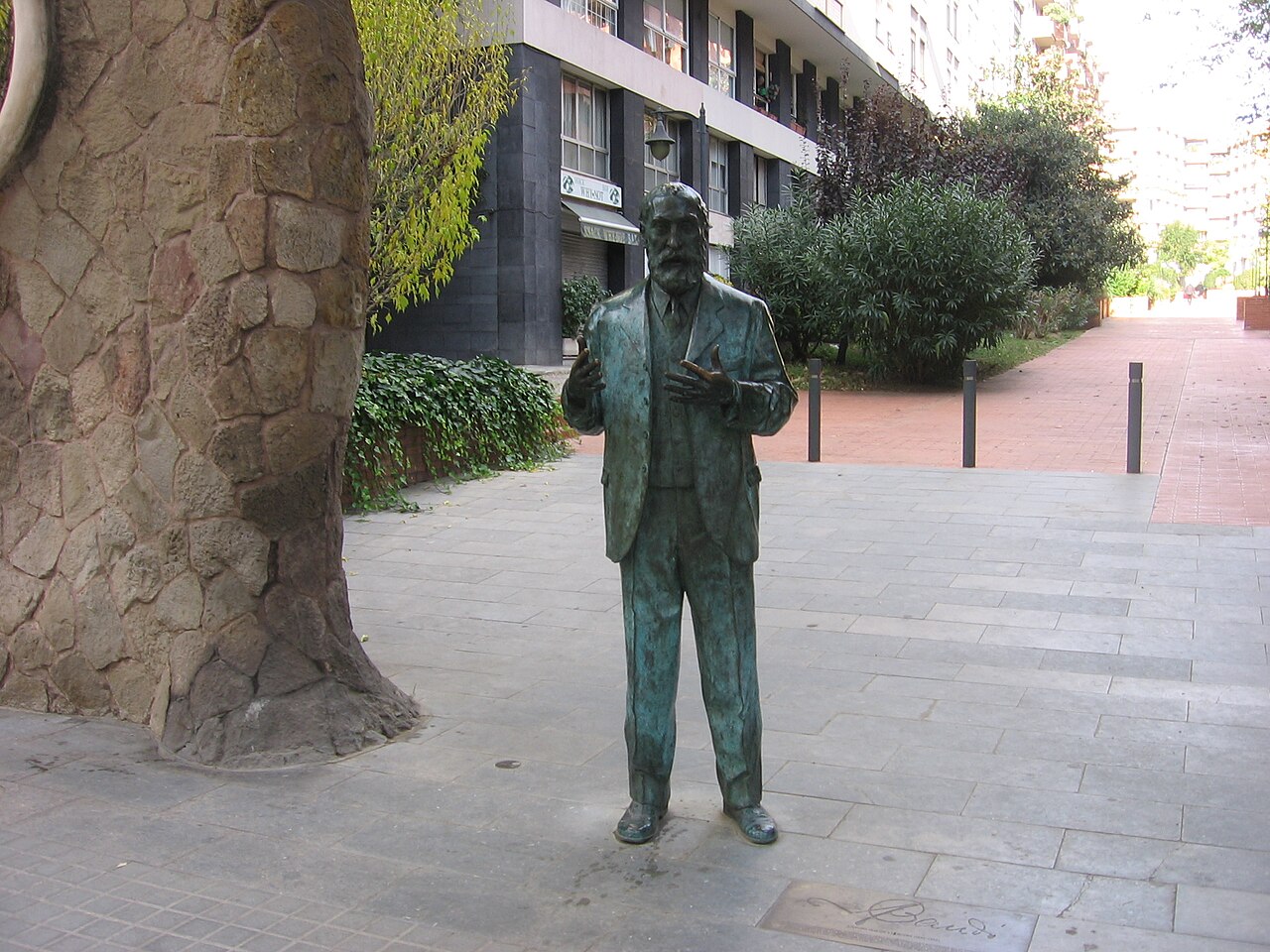
Bronze statue of a standing man in a suit and tie, with a beard, holding a small object in his left hand, on a paved plaza beside a stone tree-trunk-like pillar and a building with shrubs. Engraved name plaque reading Gaudí on the pavement.Sculpture

Secondary source

Sculpture of Antoni Gaudí by Joaquim Camps

Joaquim Camps · 2013

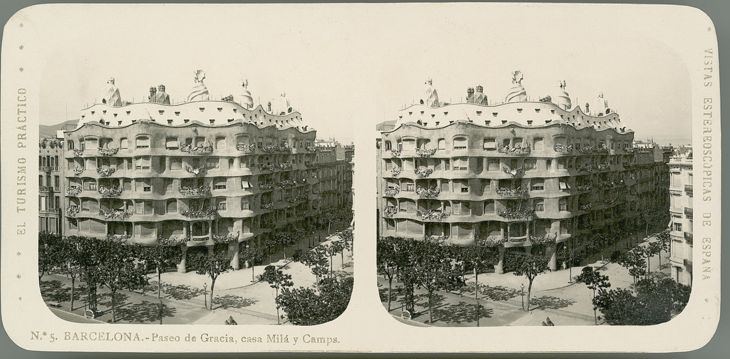
Sepia stereoscopic card showing two side-by-side views of Casa Milà on Paseo de Gràcia in Barcelona. The wavy stone facade has many balconies with iron railings and sculpted figures along the rooftop. Trees line the street in front, and the caption reads 'N.º 5. Barcelona.- Paseo de Gracia, casa Milà y Camps'. Borders read 'El turismo práctico' and 'Vistas estereoscópicas de España'.Photograph

Primary source

Stereoscopic Photo of Casa Milà on Paseo de Gràcia

Alberto Martín

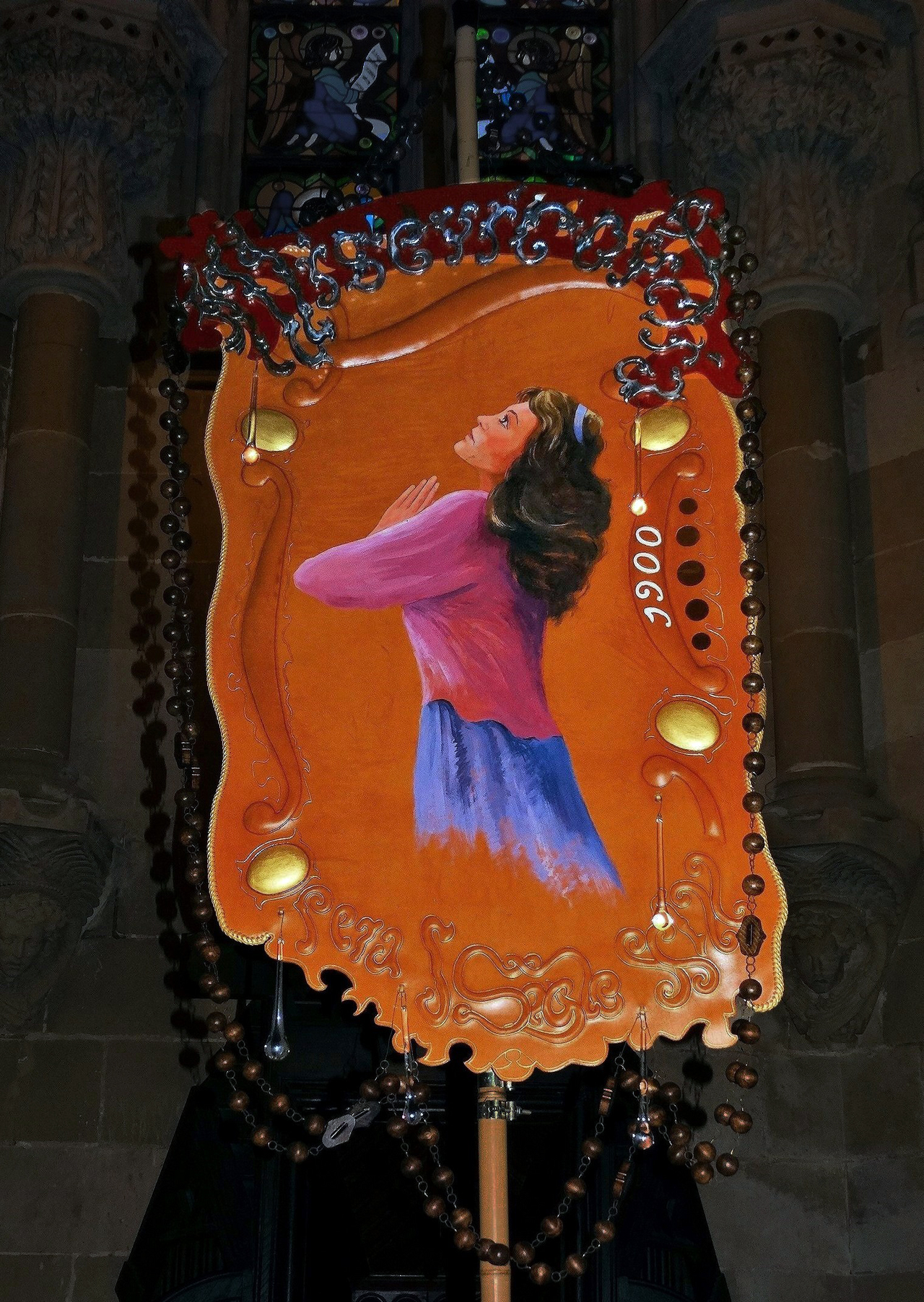
Orange banner on a wooden pole, hung in a stone church interior with stained glass behind. Painted front shows a woman in a pink top and blue-purple skirt, hands pressed together, looking upward. Decorative gold ovals and beaded cords frame it; the number 1900 is visible on the side.Artifact

Secondary source

Reconstructed Banner of the Virgin of the Misericordia

Edith Sciortino · 2015-12-02 (photograph of a 2003 reconstruction of a 1900 design)

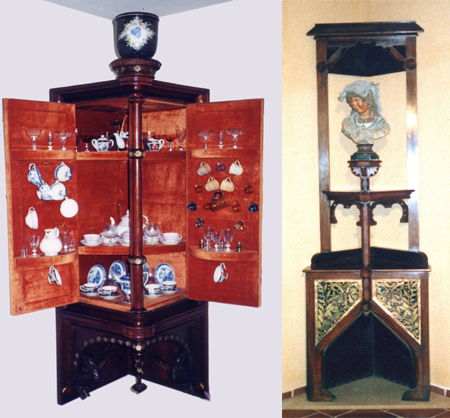
Two side-by-side photographs of corner furniture. Left: a tall dark wooden corner cabinet with open reddish-lined doors displaying porcelain teapots, cups, plates and glassware, topped by a blue and white vase. Right: a dark wood corner stand with a bust on a pedestal, tiled green panels below.Photograph

Secondary source

Furniture Designed by Gaudí for the Vicens Family House in Alella

Fundación Antonio Gaudí · August 2000 (photograph of furniture designed earlier by Gaudí)

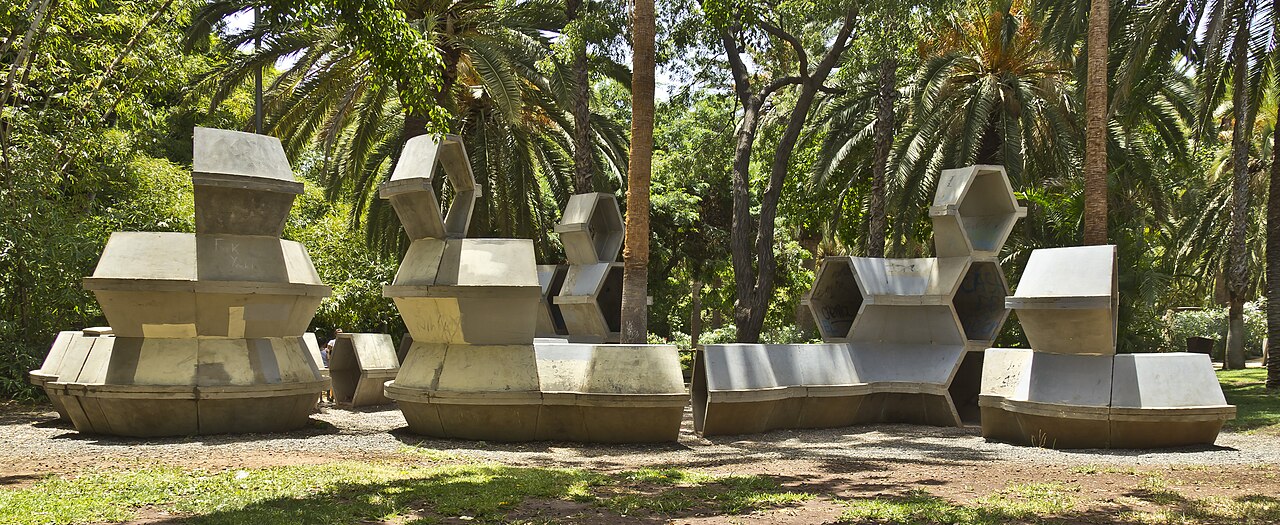
Outdoor view of a concrete sculpture made of stacked, angular, hexagonal and block-like modular forms in pale grey, set on gravel and grass among palm trees and lush green foliage in a park.Sculpture

Secondary source

Homenaje a Gaudí

Eduardo Paolozzi · 1973

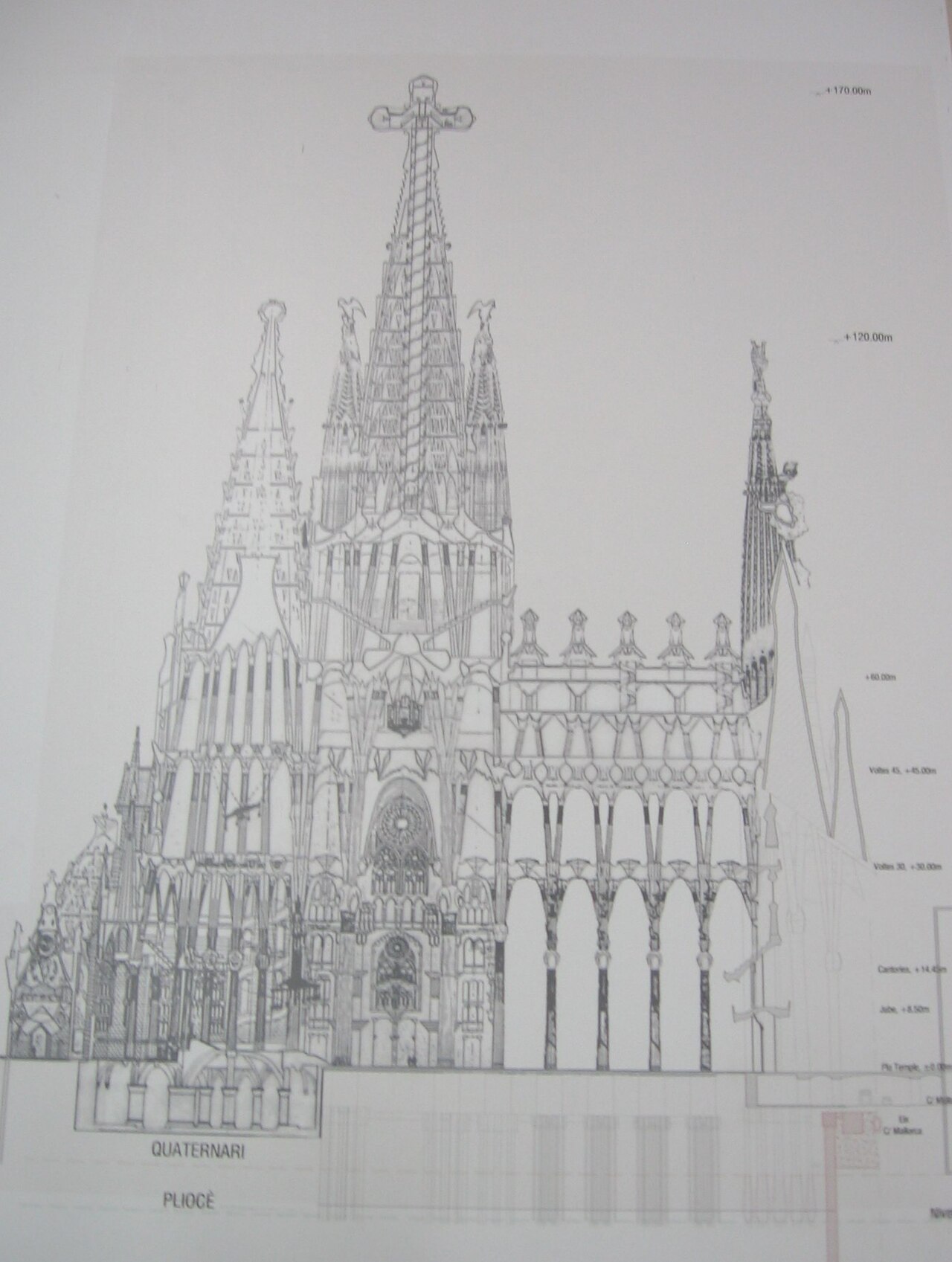
Black and white line drawing of a cross-section of the Sagrada Família church in Barcelona, showing tall spires topped with a cross, a facade with arched windows and buttresses, and elevation labels along the right side and ground-level strata labels such as Quaternari and Pliocè at the bottom.Artifact

Secondary source

Cross-section of the Sagrada Família

Canaan · 21 March 2008

Want the full shelf? Chat with Antonio Gaudí in the app and open the Sources panel — every quote links back to the original.

Use Antonio Gaudí in class

1 assignment · 1 collection

A ready-made assignment and collection from the Humy team and other teachers that feature Antonio Gaudí. Preview any of them, then try it free.

Trusted by educators worldwide

Conversations
375,000+
Real exchanges between students and historical figures
Messages exchanged
4,142,000+
Across every figure, classroom and language
Historical figures
100,000+
Each informed by a curated biography and selected sources
Languages supported
50+
From English and Spanish to Arabic and Korean

Paying customers

Used by 98 schools and universities

Partner school logo
Tecnológico de Monterrey logo
Hyper Island logo
Partner school logo
Chambersburg Area School District logo
Broward County Public Schools logo
Nebo School District logo
National Louis University logo
South Florida PBS logo
Punahou School logo
University of Wisconsin–River Falls logo
Partner school logo
Partner school logo
Archbishop Mitty High School logo
Kingsburg High School logo
Norwalk Public Schools logo
Partner school logo
Connections logo
Partner school logo
Moore Public Schools logo
Partner school logo
Partner school logo
Partner school logo
Partner school logo
Robbinsville Public Schools logo
Partner school logo
Partner school logo
Partner school logo
Tecnológico de Monterrey logo
Hyper Island logo
Partner school logo
Chambersburg Area School District logo
Broward County Public Schools logo
Nebo School District logo
National Louis University logo
South Florida PBS logo
Punahou School logo
University of Wisconsin–River Falls logo
Partner school logo
Partner school logo
Archbishop Mitty High School logo
Kingsburg High School logo
Norwalk Public Schools logo
Partner school logo
Connections logo
Partner school logo
Moore Public Schools logo
Partner school logo
Partner school logo
Partner school logo
Partner school logo
Robbinsville Public Schools logo
Partner school logo
Partner school logo

What educators are saying

“We enjoyed the program last year and used it frequently.”
“My students say it’s a welcome change of pace. I’m not a fan of the “sage on the stage” model, so I try to incorporate research-oriented and self-paced activities. With Humy, students have to take charge of their learning. They’ve become more adept at critical thinking, forming better questions, and improving their reading comprehension. The interview feature has been my go-to tool. I create assignments where students must ask historical figures a set number of questions, then summarize the responses to ensure they’re truly absorbing the material. This approach lets them actively explore the past rather than passively consuming information.”
“Humy has helped me bring historical figures, sometimes long past, to life. When my students interact with these figures in real-time, it eliminates some of the perceived “ancient” characteristics of my curriculum. This has shifted my students’ thinking away from viewing history as abstract or irrelevant. Real-time interactions make historical figures relatable, even allowing students to ask off-topic questions that help put historical lives in a more relevant context for 13-year-olds. The feature I use the most is the interview feature. After teaching a topic, most recently Gandhi and Joan of Arc, I have the students ask pointed, focused questions. We practice good conversation techniques beforehand, teaching them to listen (or read) carefully and formulate thoughtful follow-up questions rather than just interrogating. It helps students practice effective conversation skills.”

FAQ

Frequently asked questions

Who is Antonio Gaudí?
Renowned Catalan architect known for his distinctive and highly imaginative style, best exemplified in the Sagrada Família in Barcelona. On Humy.ai you can chat with an AI version of Antonio Gaudí that draws on a short biography and 78 historical sources during the conversation — by text or voice, in 42 languages.
Is Antonio Gaudí AI free?
Antonio Gaudí is part of Humy's full library of more than 100,000 figures, which comes with a paid plan. A free account (no credit card) includes 20 messages a month with the free library's figures, so you can try how the conversations work first.
What sources does the Antonio Gaudí AI use?
It draws on a short biography and 78 historical sources (artifacts, documents and paintings), including “Sagrada Família”, “Casa Milà” and “Casa Batlló”. Each source has its own page on Humy.ai.
How historically accurate is the AI version of Antonio Gaudí?
Each figure uses a short biography and a small set of selected historical sources as context (retrieval-augmented generation), so answers stay closer to known material than the model's general knowledge alone. It isn't a citation-grade research tool — like any LLM, the AI can get details wrong or extrapolate. Treat it as a strong starting point for inquiry and cross-reference important claims.
Can I talk to Antonio Gaudí by voice?
Yes. In addition to text chat, you can call Antonio Gaudí and hear their voice respond in real time — useful for auditory learners, interview practice and Socratic dialogue.
Is Humy.ai safe and compliant for schools?
Yes. Humy.ai is used by more than 100 schools, universities and organisations. The platform is FERPA- and GDPR-aligned, supports SSO, and offers an IT-approval pack tailored for school procurement teams.

Ready when you are

Start chatting with Antonio Gaudí now.

20 messages free · No credit card · Available in 50+ languages.