
Portrait of James Cook

AI Historical Figure

James Cook

British explorer and cartographer known for his voyages to the Pacific Ocean.

Chat with James Cook via text or voice — in 42 languages, drawing on a curated biography and 87 historical sources. Available 24/7.

Start chatting with James Cook20 messages free · No credit card
Lived
1728–1779
From
United KingdomNew Zealand
Known for
MilitaryExploration
James Cook

James Cook

Online · responds in seconds

Hello — I'm James Cook. British explorer and cartographer known for his voyages to the Pacific Ocean. What would you like to ask me?

20 messages free · No credit card · Powered by Humy.ai

Live preview · Switch between 42 languages above · Send a message to continue in the app

Multilingual

Talk to James Cook in 42 languages

Ask James Cook questions in any language below, and the rest of Humy's app speaks it too. Pick yours to open the chat in that language.

Also in German (Austria), German (Switzerland), English (UK), English (Australia), English (Canada).

The sources behind this AI

87 sources · 30 paintings · 24 books · 21 documents · 5 artifacts · 3 diary entries · 3 sculptures · 1 letter

James Cook doesn’t improvise from thin air. The AI is grounded in 87 curated historical sources students can inspect. Open any of them to see what informs the conversation.

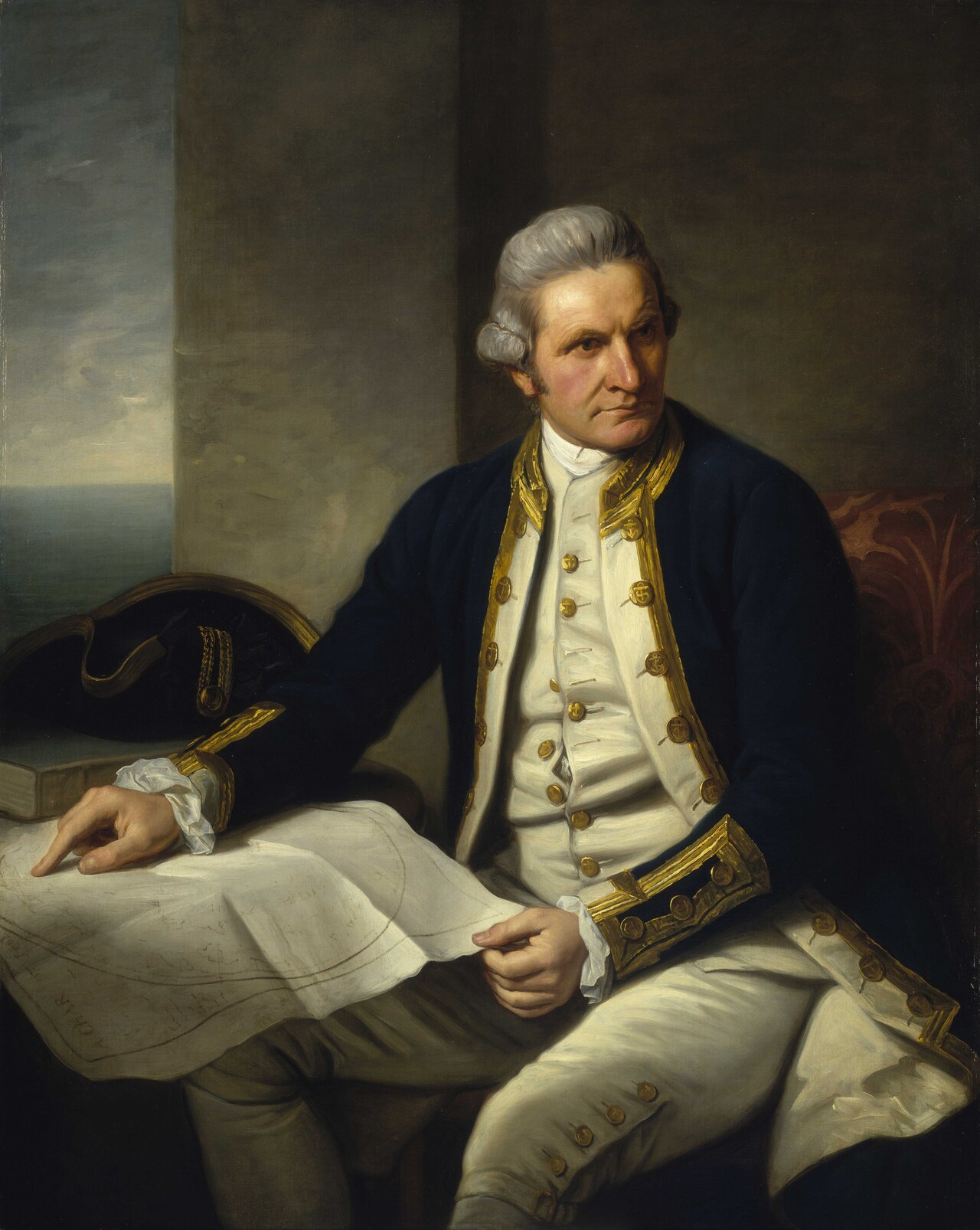
Oil painting of a seated man in a navy blue captain's uniform with gold braid and gold buttons over a white waistcoat. He has grey hair, holds a chart on his lap, and a tricorn hat rests on a table beside him, with sea visible through a window at left.Painting

Primary source

Captain James Cook, 1728-79

Nathaniel Dance-Holland · c. 1775-1776

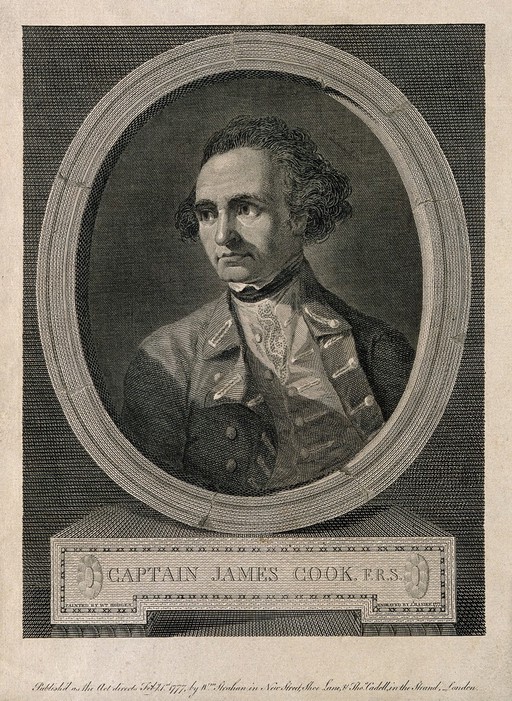
Oval engraved portrait of Captain James Cook in a naval-style uniform with a high collar and cravat, hair curled at the sides, set within a decorative oval frame. Caption below reads 'Captain James Cook, F.R.S.' with publication credits along the bottom margin.Painting

Secondary source

James Cook, line engraving by Basire after Hodges

William Hodges · 1777

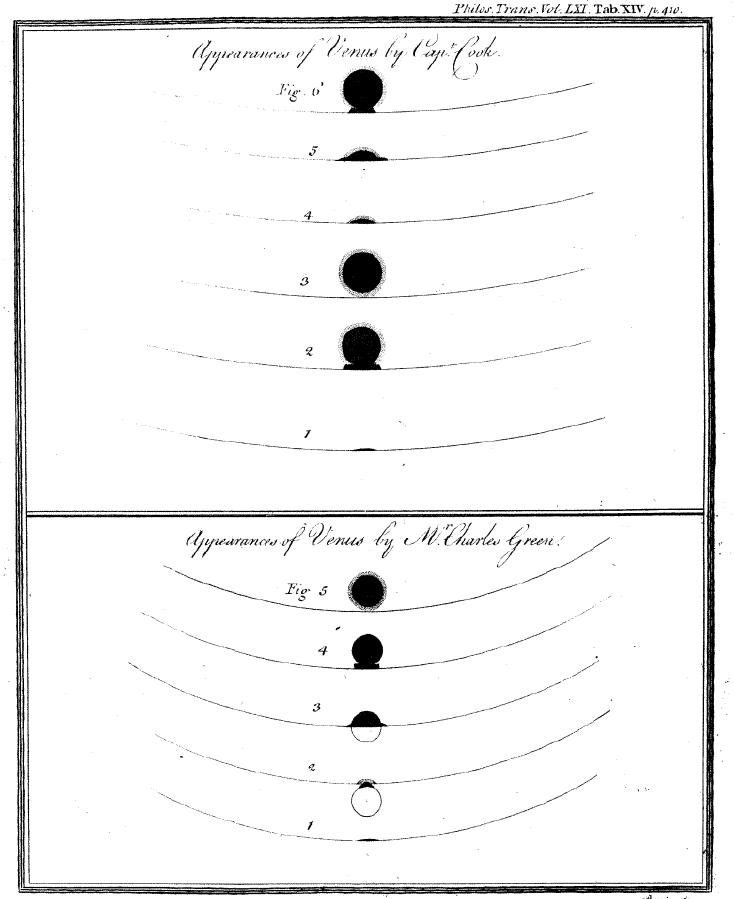
Engraved plate from Philosophical Transactions Vol. LXI, Tab. XIV, p. 410, titled 'Appearances of Venus by Capt. Cook' (top) and 'Appearances of Venus by Mr. Charles Green' (bottom). Each panel shows a series of numbered figures of Venus as a black disc crossing the Sun's curved edge, with arcs representing the Sun's limb at successive moments of the 1769 transit.Document

Primary source

Sketchings of the 1769 Venus Transit

James Cook and Charles Green · 1769

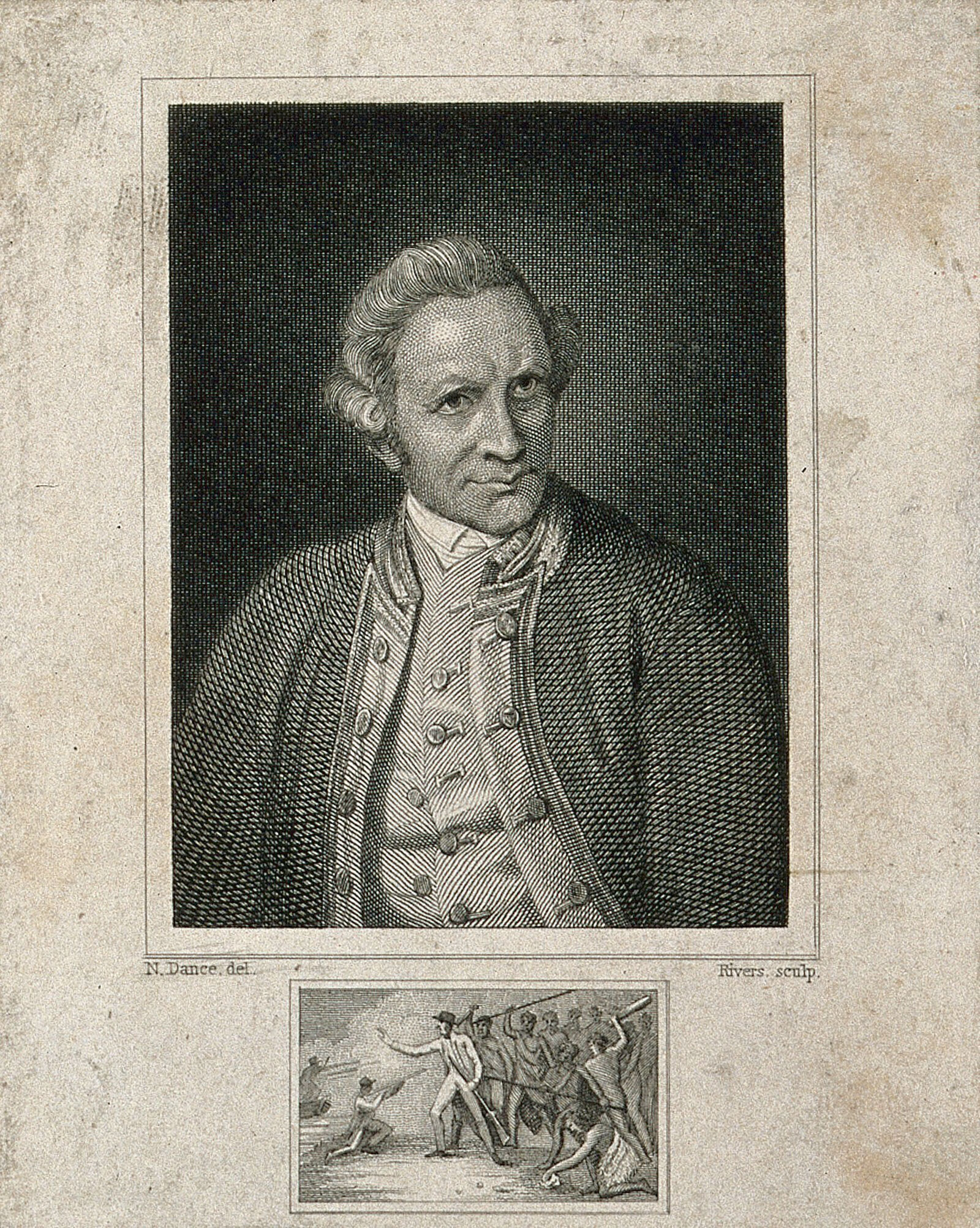
Engraved portrait of a man with white powdered hair, wearing a dark coat over a striped waistcoat and cravat, against a dark background. Below the portrait is a small scene of men in conflict on a shore, with figures wielding weapons. Inscriptions read N. Dance. del. and Rivers. sculp.Painting

Primary source

James Cook, engraving by Rivers after Dance-Holland

Nathaniel Dance-Holland · 1776

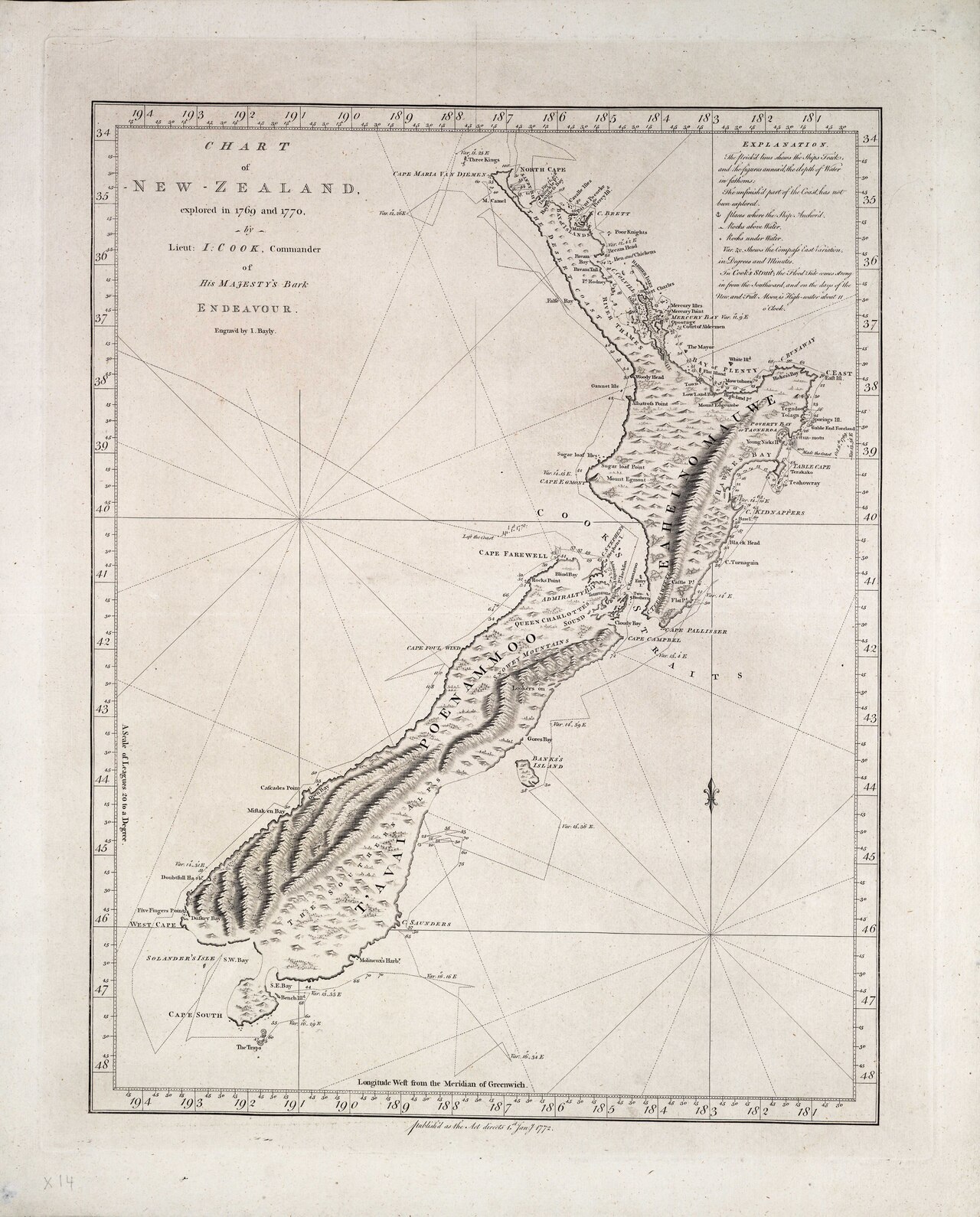
Engraved sea chart titled 'Chart of New Zealand, explored in 1769 and 1770' by Lieut. J. Cook, Commander of His Majesty's Bark Endeavour. Shows North and South Islands with coastal names, soundings, compass roses, and a rhumb-line grid. Title and an explanation box appear at top.Document

Primary source

Chart of New Zealand, explored in 1769 and 1770

James Cook · 1770

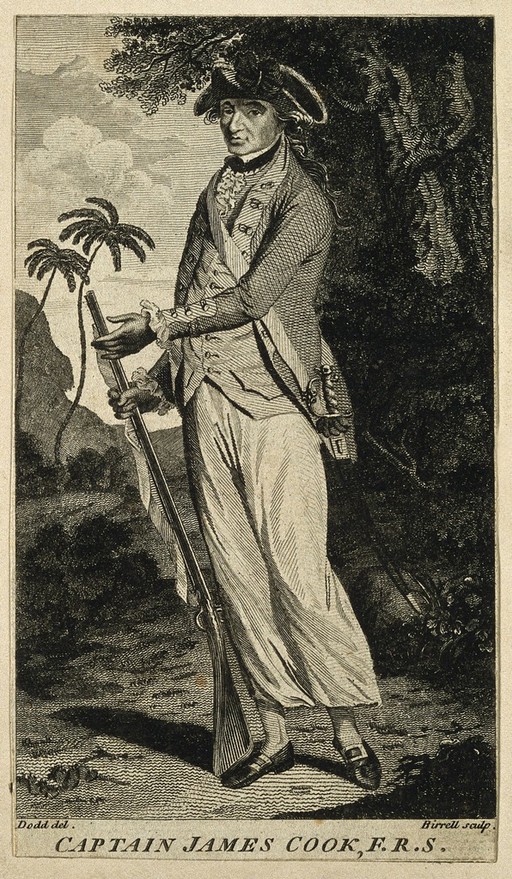
Engraved print of a standing man in a tricorn hat and long coat holding a long musket, with palm trees and a dark wooded background. Caption below reads 'Captain James Cook, F.R.S.' with 'Dodd del.' and 'Birrell sculp.' noted.Painting

Secondary source

James Cook, line engraving by Birrell after Dodd

O. Birrell · 1785

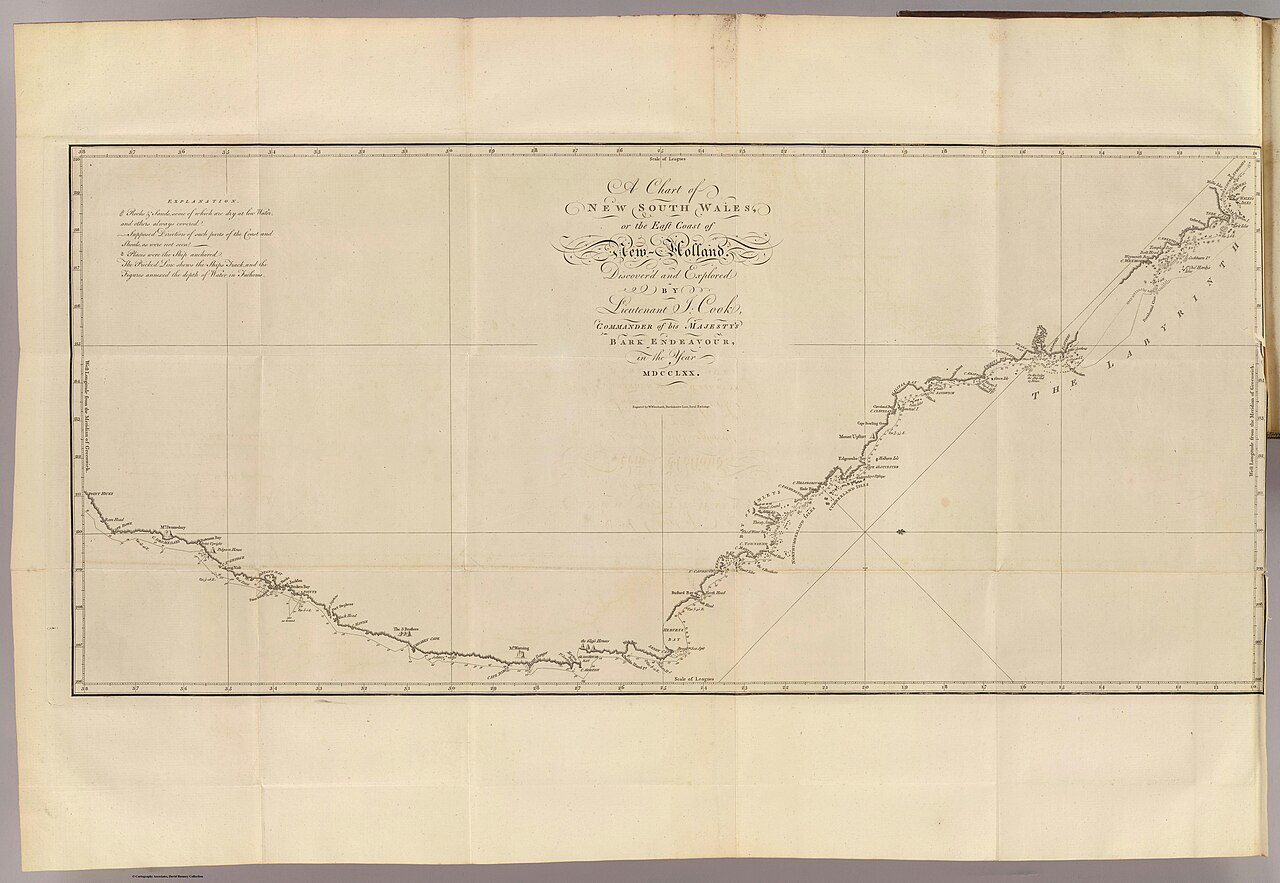
Engraved 18th-century chart titled 'A Chart of New South Wales, on the East Coast of New Holland, Discovered and Explored by Lieutenant J. Cook, Commander of his Majesty's Bark Endeavour, in the Year MDCCLXX.' The coastline runs diagonally from lower left to upper right with place names, soundings, and a compass rose; a cartouche with explanations sits at upper left on a cream sheet.Document

Primary source

Chart of part of the east coast of New Holland

James Cook · 1770

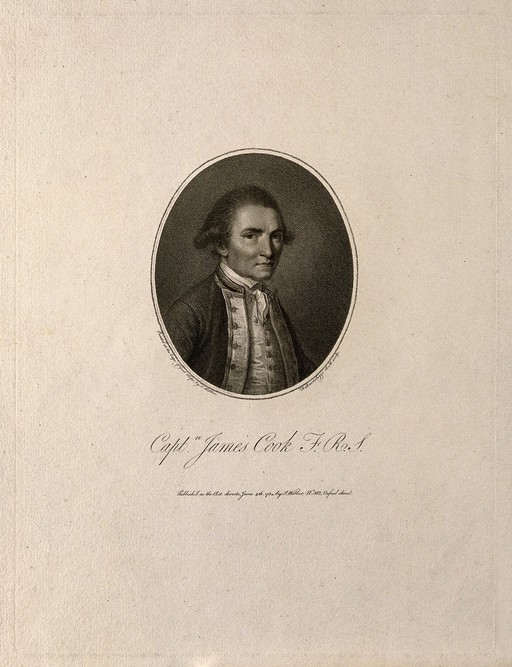
Oval stipple engraving portrait of a man with powdered hair, wearing a dark coat and a waistcoat with buttons and a cravat, turned slightly to the right. Caption below reads Capt. James Cook F.R.S.Painting

Secondary source

James Cook, stipple engraving by Bartolozzi after Webber

John Webber · 1784

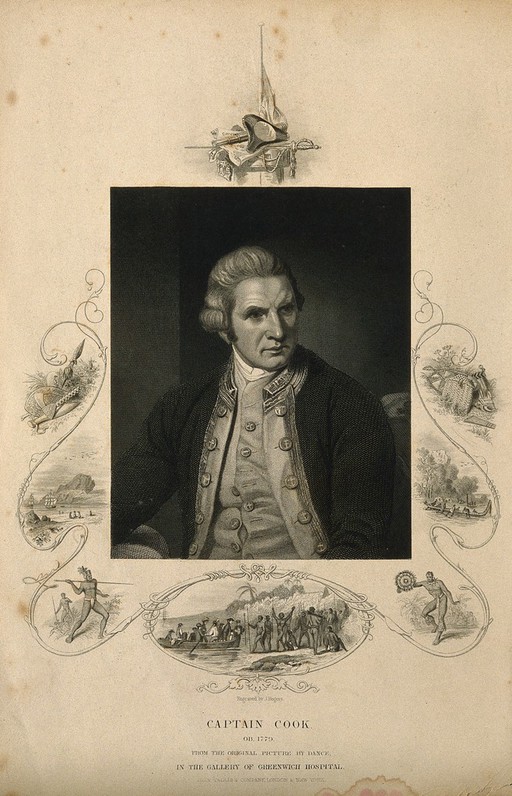
Engraved print of a man in an 18th-century style powdered wig and high-collared coat with buttoned waistcoat and cravat, shown in a dark rectangular panel. Ornamental vignettes surround the portrait: a ship and natives at top left, figures with spears at left and bottom, a canoe and people at right. Below, a crowd scene on a shore. Caption reads: Captain Cook, OB 1779, from the original picture by Dance, in the Gallery of Greenwich Hospital.Painting

Secondary source

James Cook, engraving by Rogers after Dance-Holland

Nathaniel Dance-Holland · 1776

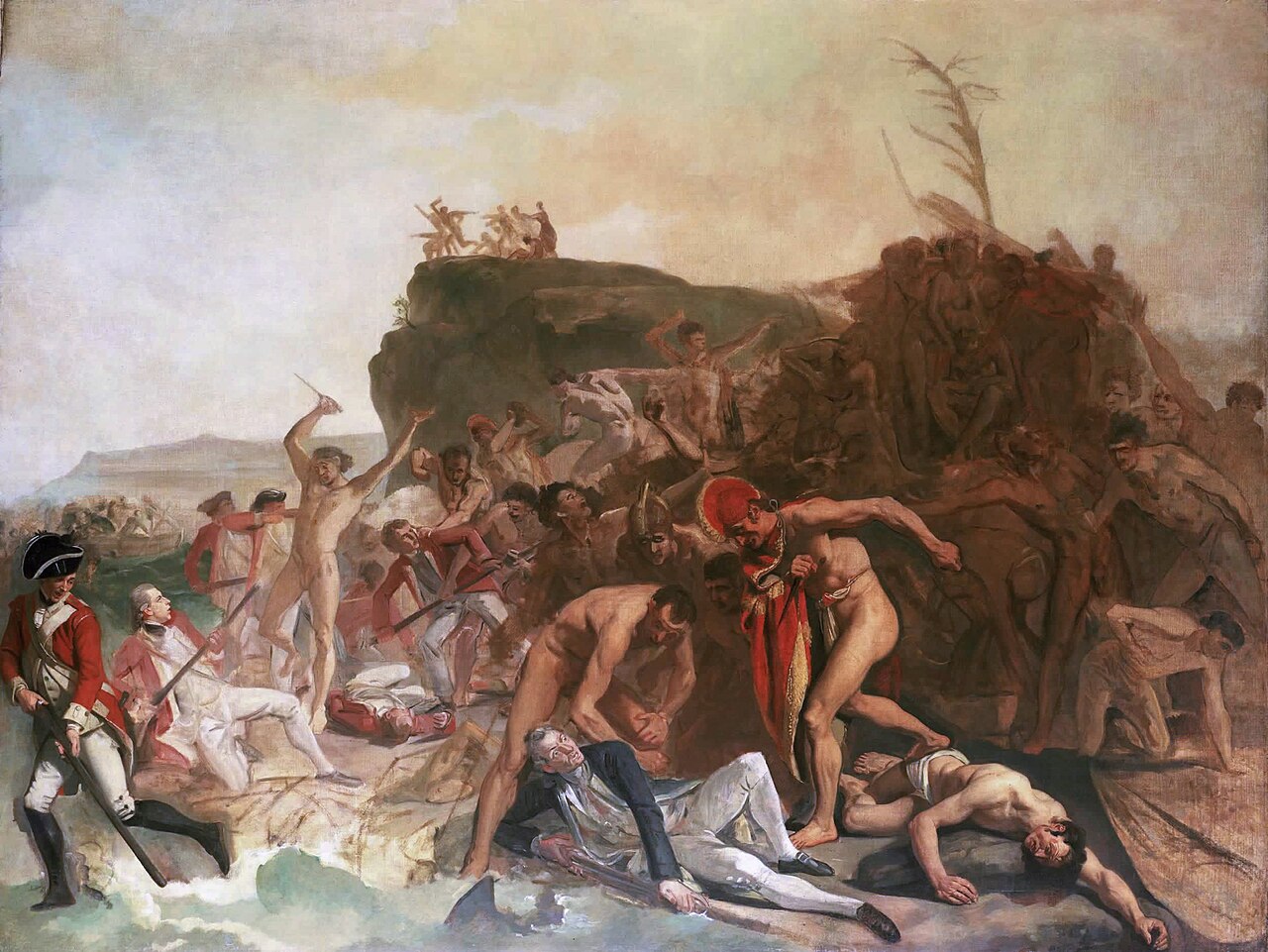
A large painting of a violent scene on a rocky shore. Naked and clothed men struggle in the foreground; a central figure in a red cloak and feathered headdress strides forward. A figure in a dark coat lies dying. British soldiers in red coats fire muskets at left, while crowds of people fill the hill behind.Painting

Secondary source

The Death of Captain James Cook

Johann Zoffany · c. 1794-1795

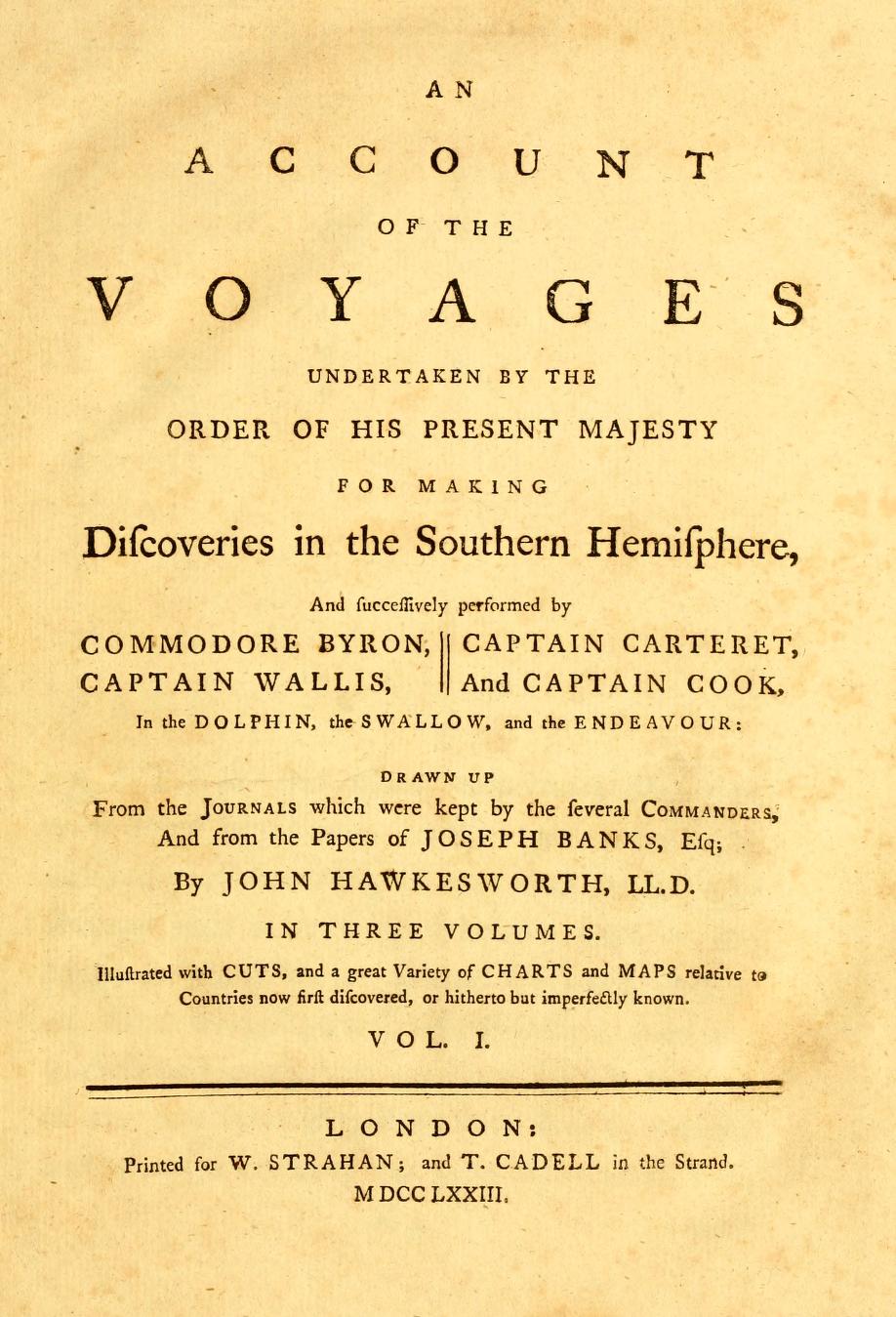
Title page of Volume I of 'An Account of the Voyages Undertaken by the Order of His Present Majesty for Making Discoveries in the Southern Hemisphere', by John Hawkesworth, London, printed for W. Strahan and T. Cadell, MDCCLXXIII. Text in black serif capitals on a yellowed page.Book

Secondary source

Account of the Voyages Undertaken in the Southern Hemisphere

John Hawkesworth · 1773

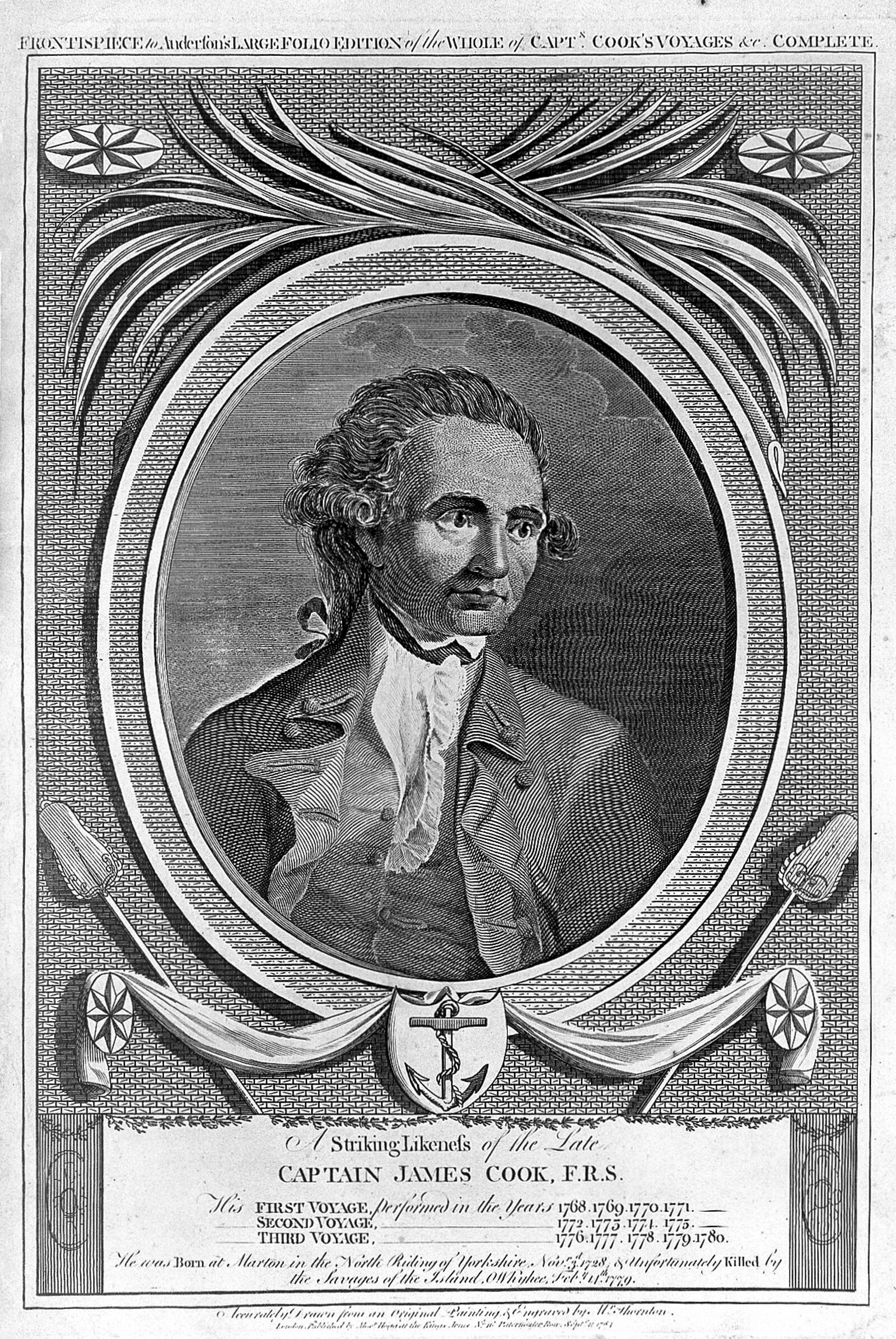
Black and white line engraving frontispiece with an oval portrait of a man with curled powdered hair, wearing a high-collared coat and cravat, within a decorative border. Title text reads 'A Striking Likeness of the Late Captain James Cook, F.R.S.' with voyage dates and a birth and death note below.Painting

Secondary source

James Cook, line engraving by Thornton after Hodges

William Hodges

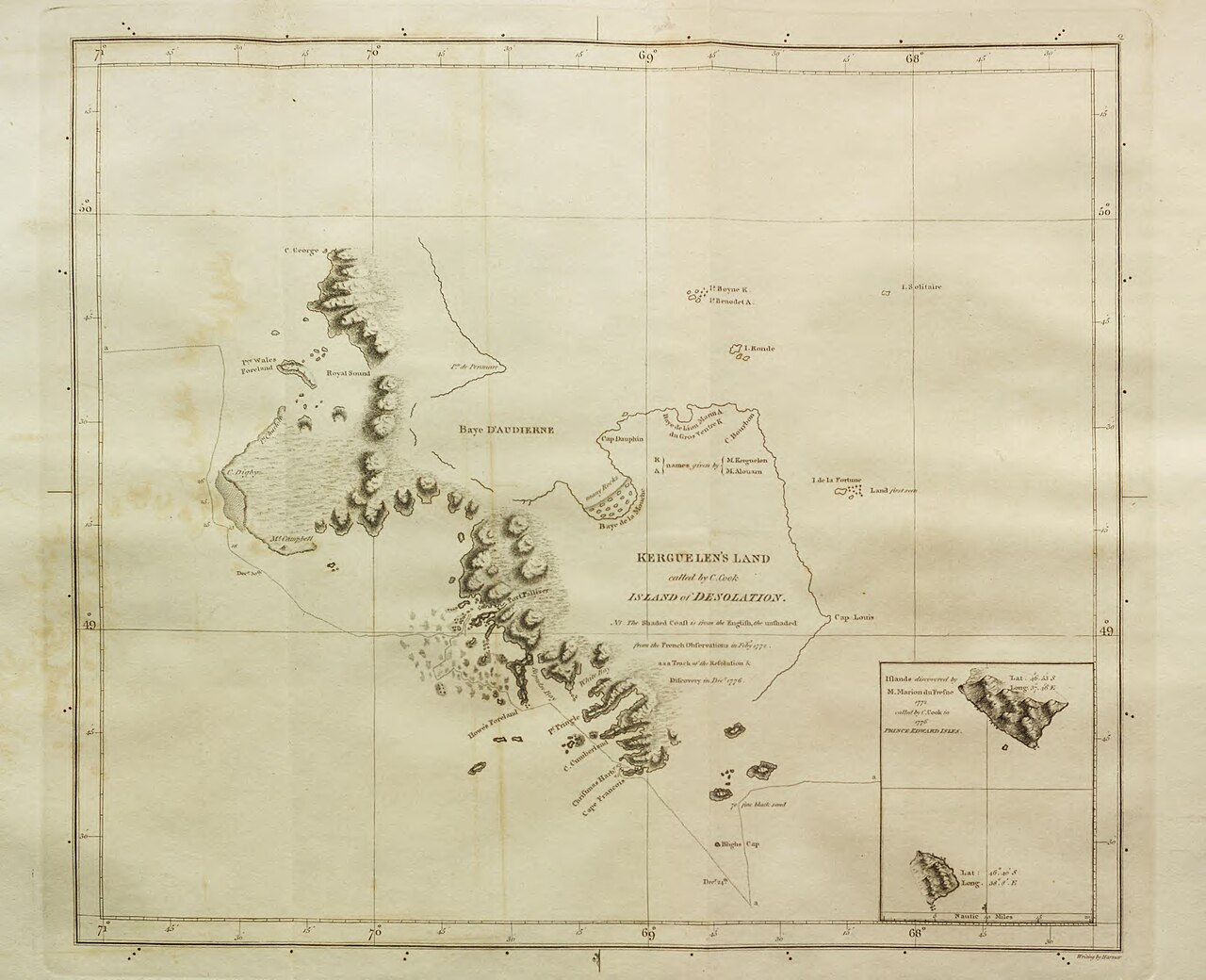
Engraved map titled Kerguelen's Land, called by Captain Cook the Island of Desolation, with a smaller inset map at lower right of the Iles discovered by M. Marion du Fresne, called by Cook Prince Edward Isles. Sepia tones, hatched coastlines, and handwritten place names.Book

Primary source

A Voyage to the Pacific Ocean

James Cook · 1784

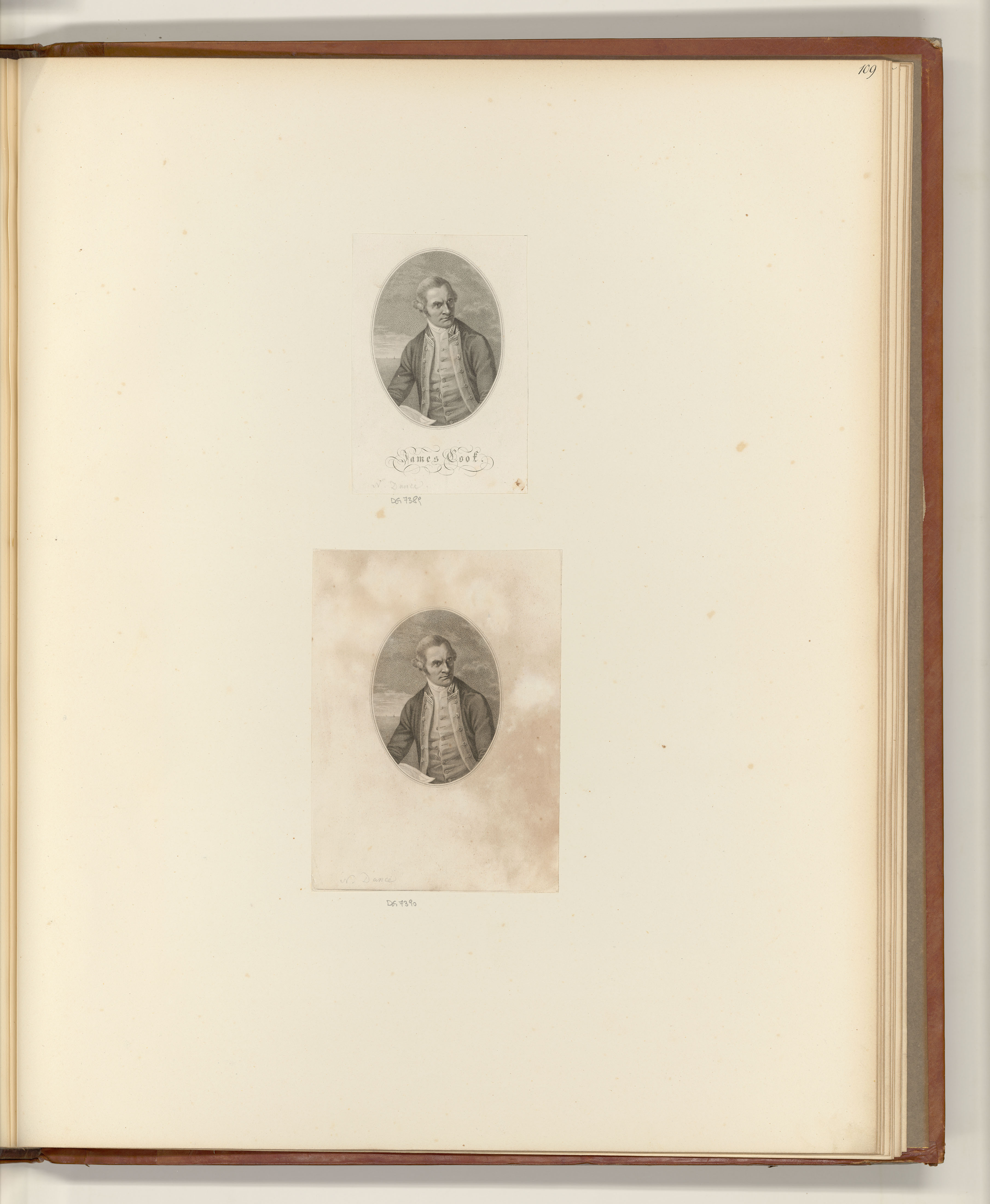
Album page numbered 109 with two engraved oval portraits of a man in 18th-century dress with powdered hair and a high-collared waistcoat. The upper print is labeled James Cook in script; the lower print is a tinted version on a cloudy background.Painting

Secondary source

Portrait of James Cook

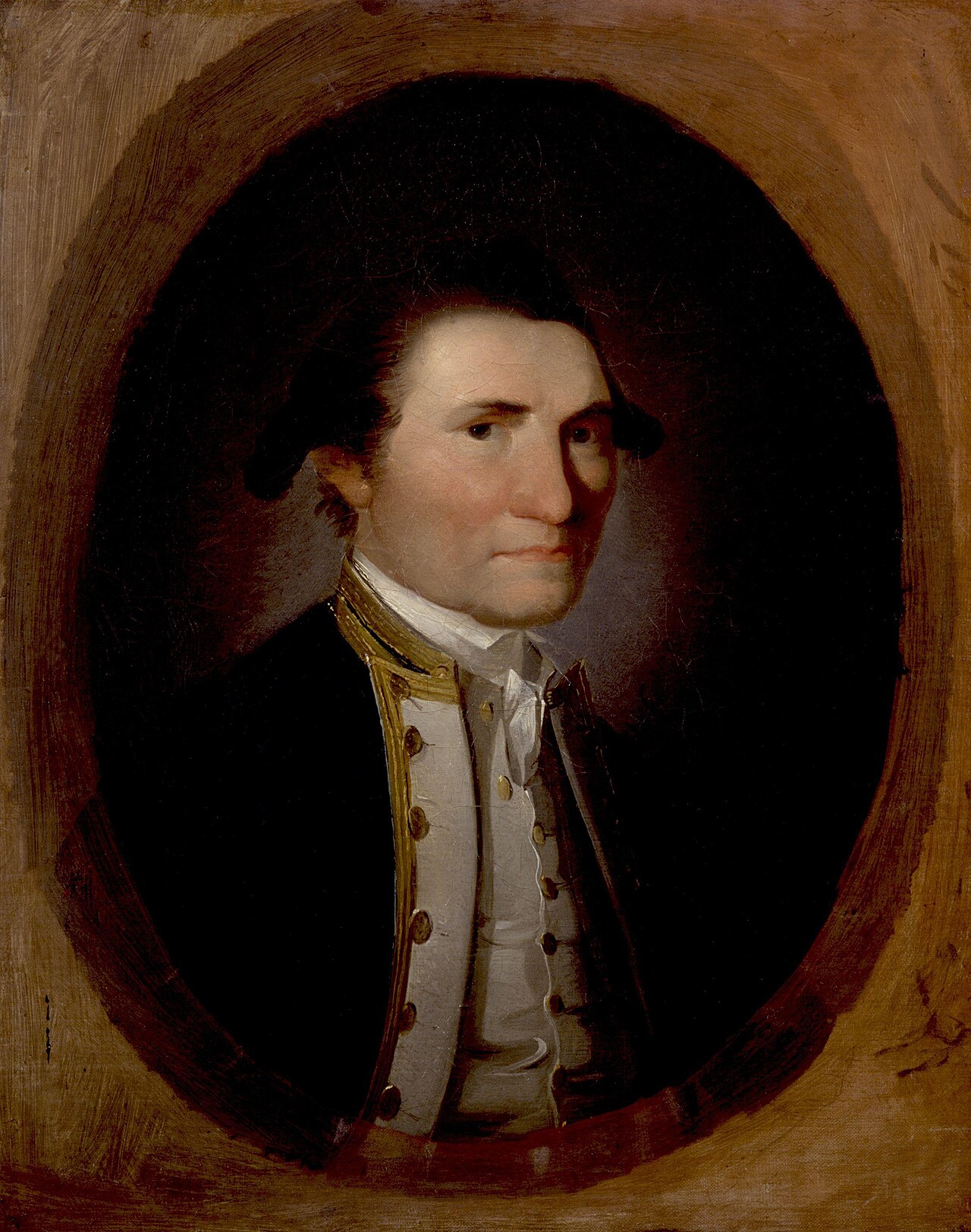
Oil painting in an oval frame of a man with dark hair tied back, wearing a dark coat with gold-trimmed collar and buttons over a light grey waistcoat and white cravat, turned slightly to the left against a dark background.Painting

Primary source

Oil Painting of James Cook

John Webber · 1776

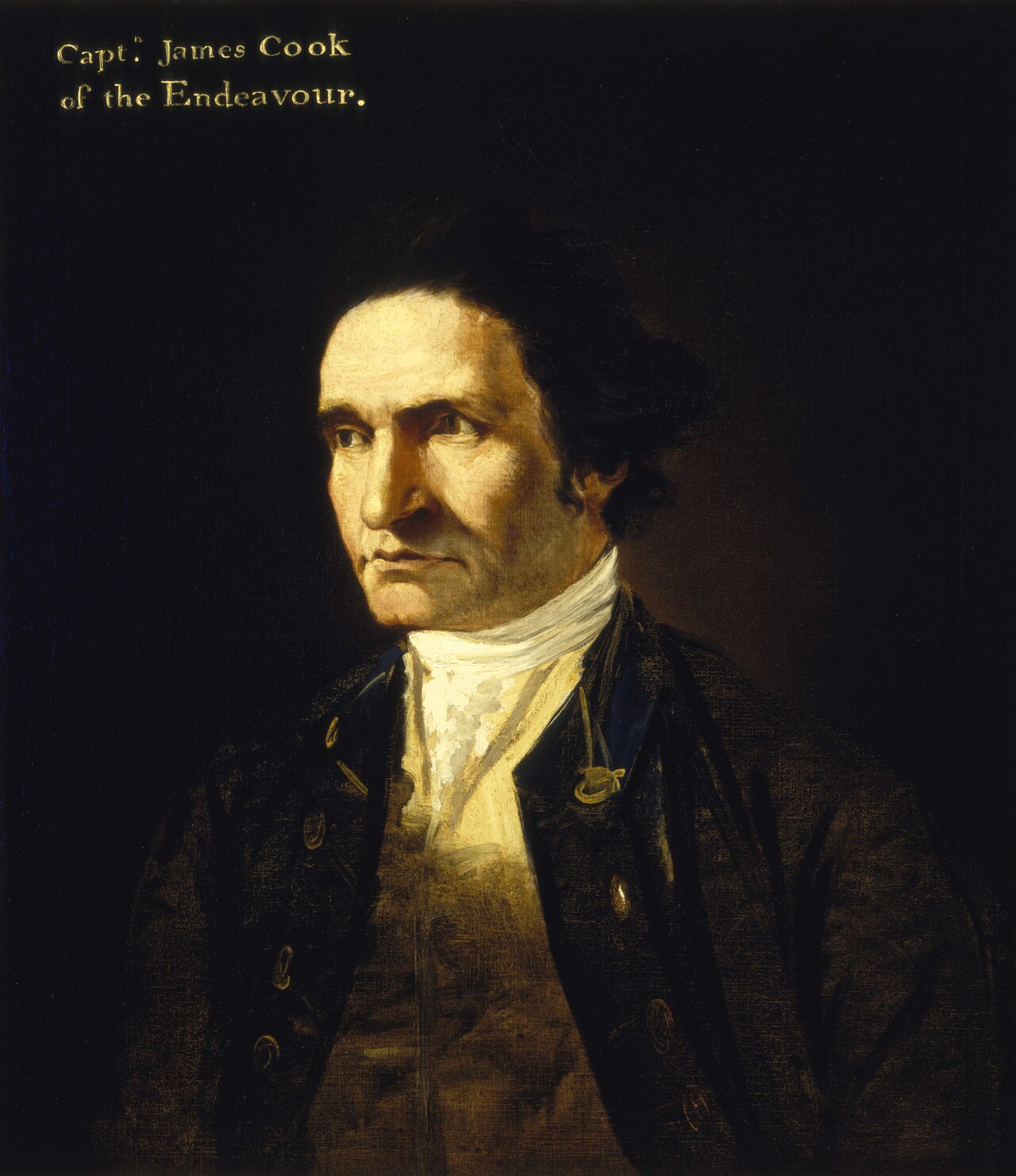
Oil painting of a man in a dark naval-style coat with a white cravat, turned to the left against a black background. Gold lettering at top reads 'Capt. James Cook of the Endeavour.'Painting

Primary source

Portrait of Captain James Cook

William Hodges · c. 1775–1776

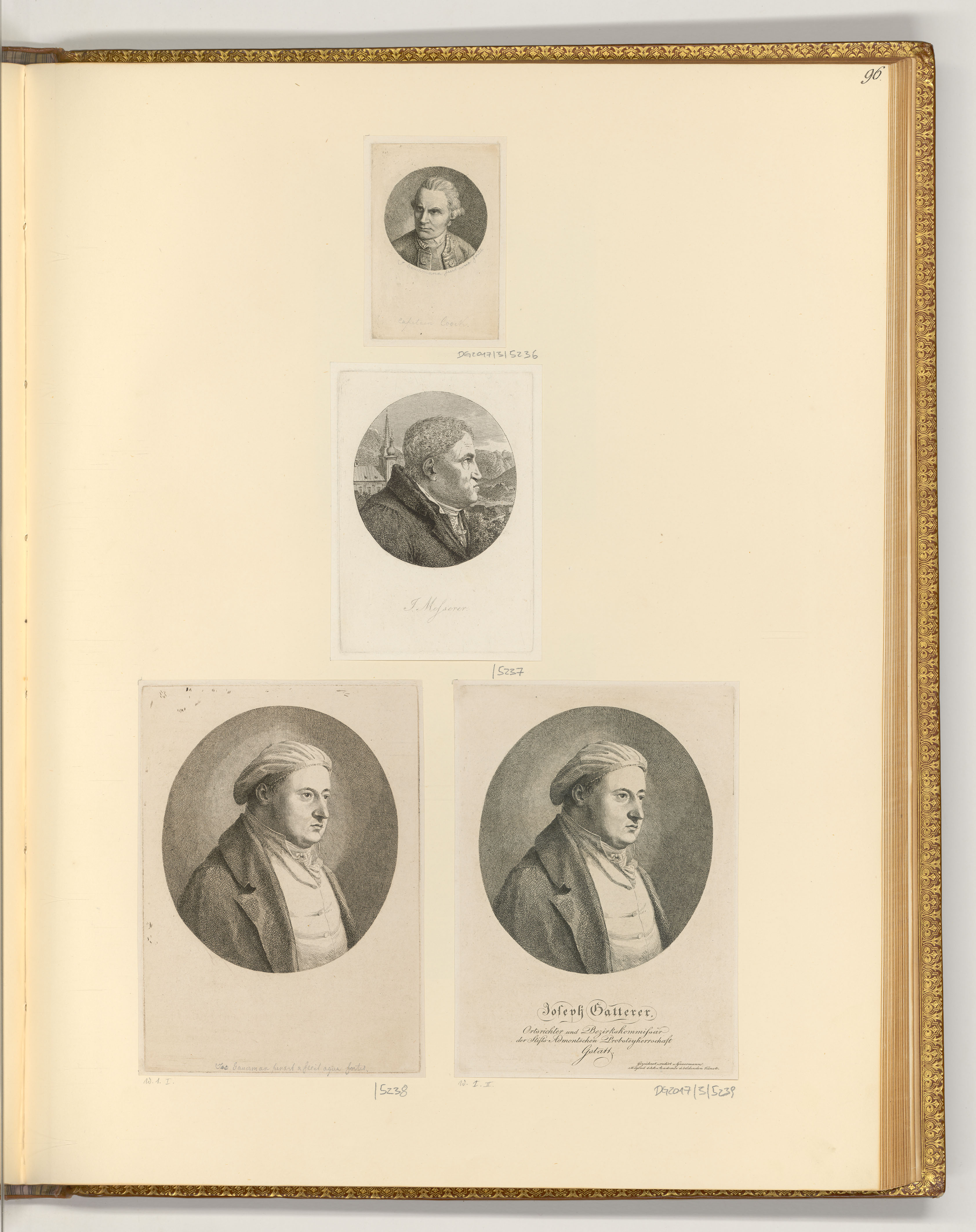
An open album page with several small engraved portraits: at top a small oval portrait labeled Captain Cook; below it an oval portrait of a man labeled J. Mosserer; at bottom two oval portraits of a man in a cap, one labeled Josef Gatterer.Painting

Secondary source

Portraits of James Cook and Josef Natterer

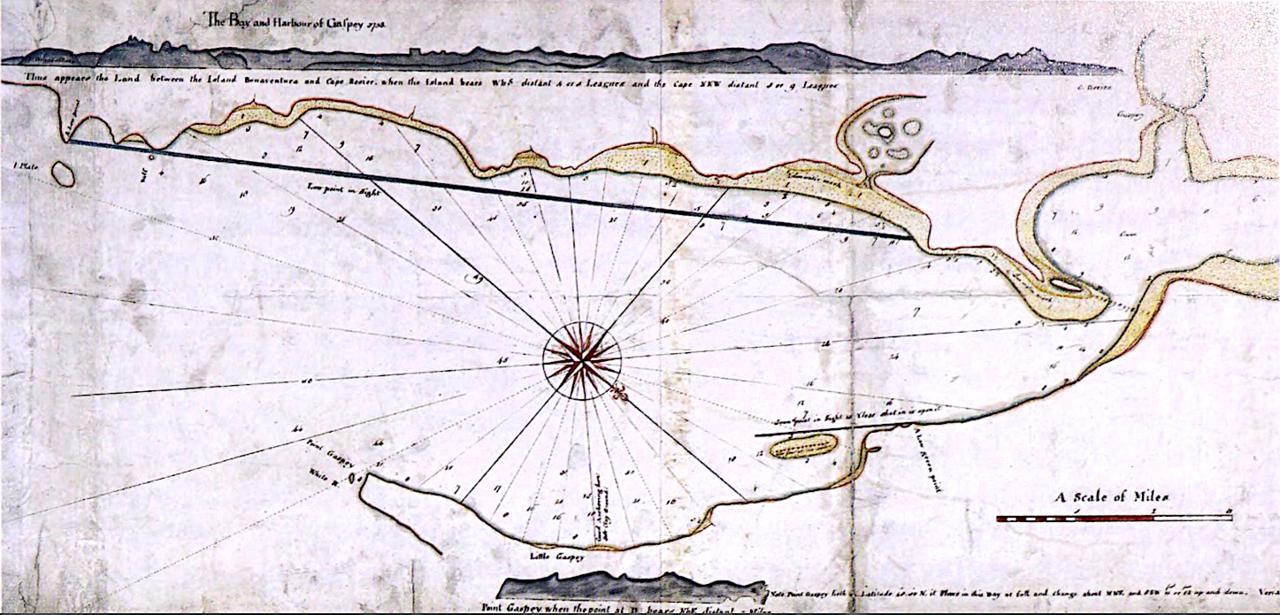
Hand-drawn 18th-century nautical chart titled 'The Bay and Harbour of Gaspey 1758'. It shows a coastline with a compass rose at center, many dotted rhumb lines radiating out, a scale of miles at lower right, and handwritten notes and soundings along the shore and shoals. Mountainous land is drawn along the top edge.Document

Primary source

The Bay and Harbour of Gaspey

James Cook · 1758

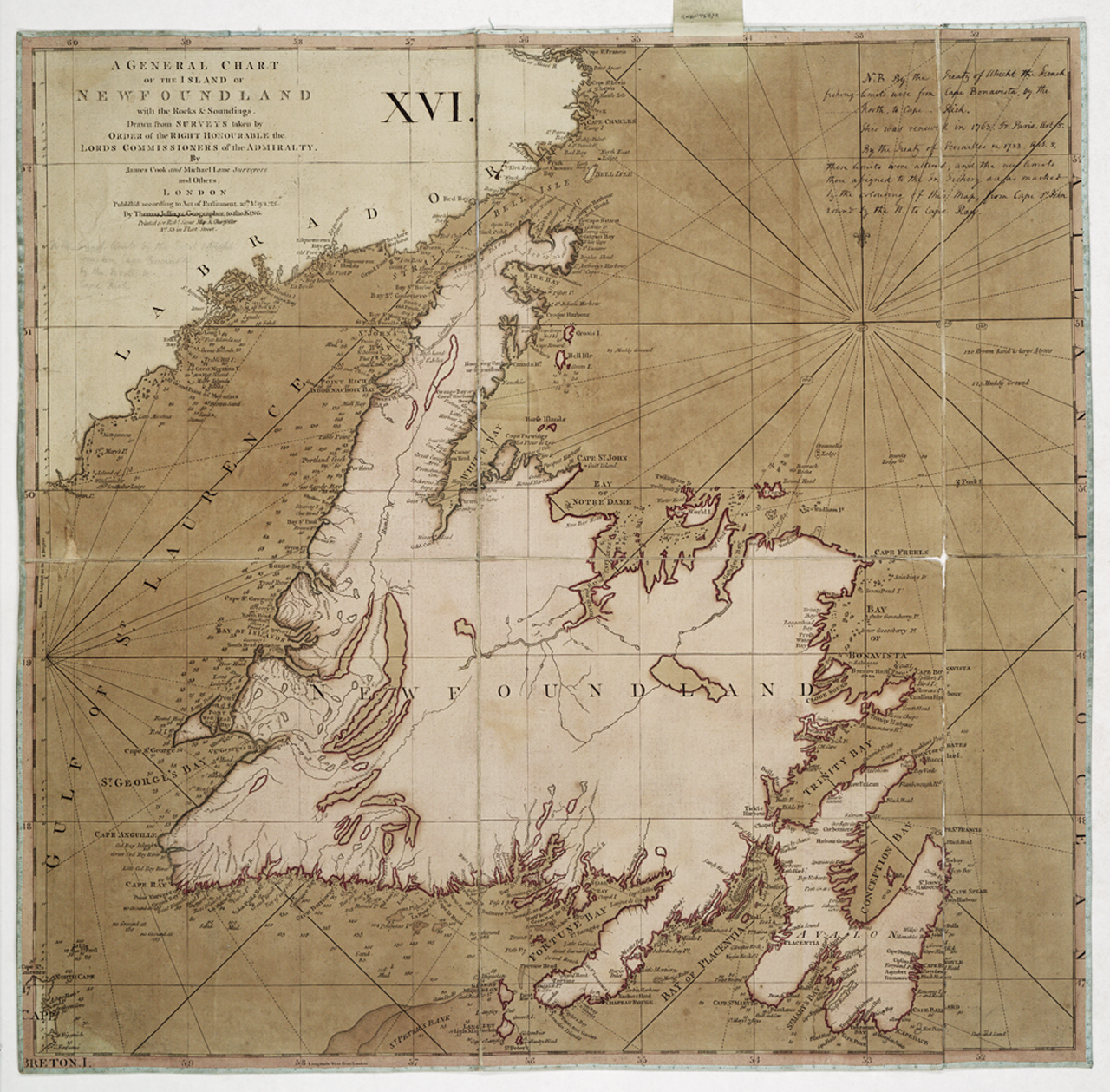
Antique brown-toned engraved chart titled 'A General Chart of the Island of Newfoundland' with rocks and soundings, showing the island's coastline, bays, capes, and labeled place names, with a compass rose and decorative rhumb lines. Cartouche text at upper left credits James Cook and Michael Lane, and a handwritten note appears at upper right.Document

Primary source

A Chart of the Island of Newfoundland

James Cook and Michael Lane · 1775

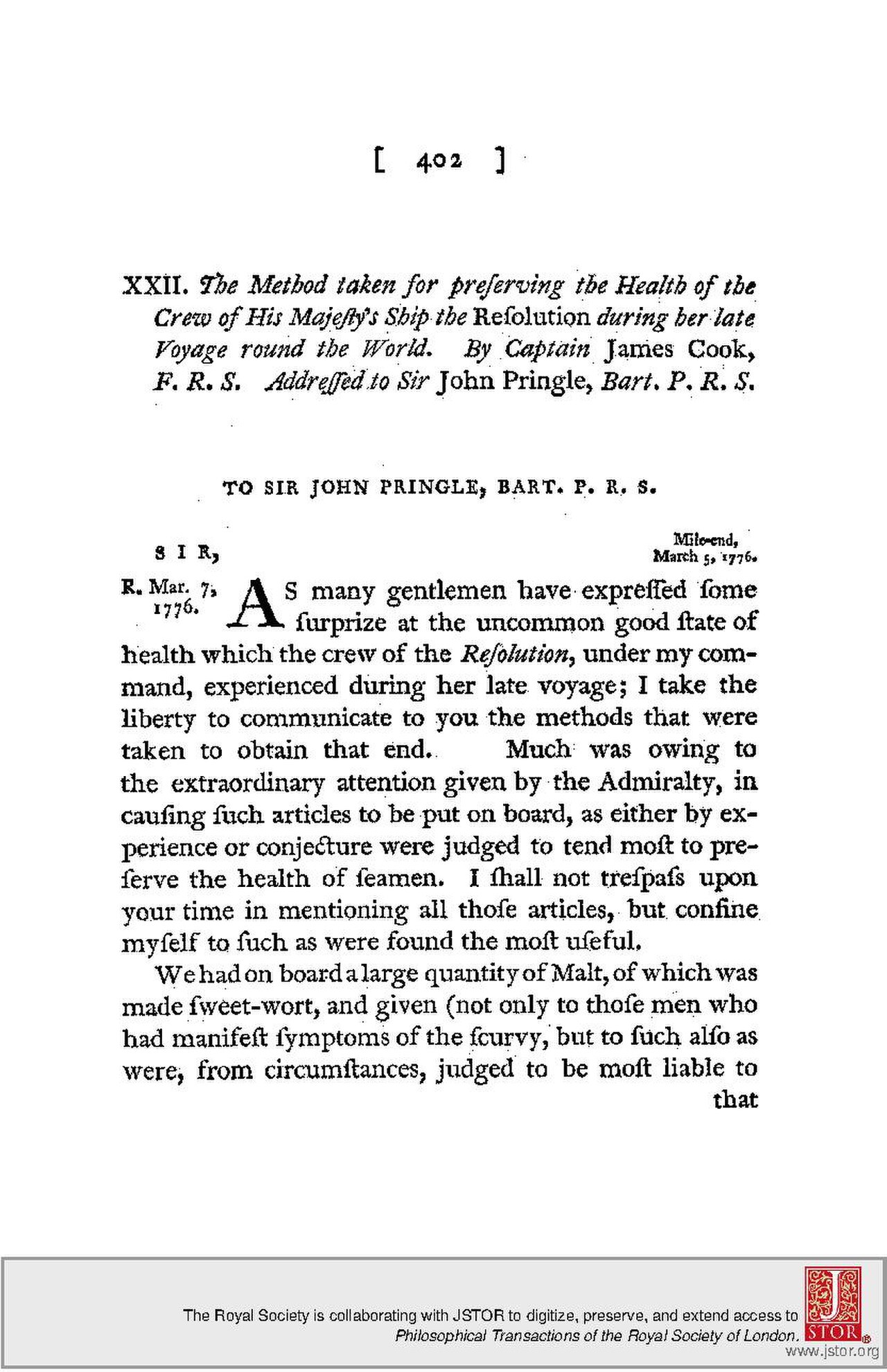
Scanned page numbered 402 of Philosophical Transactions, showing the title of Captain James Cook's article on preserving the health of the crew of HMS Resolution, addressed to Sir John Pringle, followed by the opening paragraphs of the letter in printed text. A JSTOR footer is at the bottom.Document

Primary source

The Method taken for preserving the Health of the Crew of His Majesty's Ship the Resolution

James Cook · 1776

Dark blue cloth book cover with a white University of Toronto library barcode label on the spine edge, showing barcode number 31761011692563. The cover is worn with faint light marks near the top left.Diary entry

Primary source

The Endeavour Journal of Joseph Banks

Joseph Banks · 1768–1771

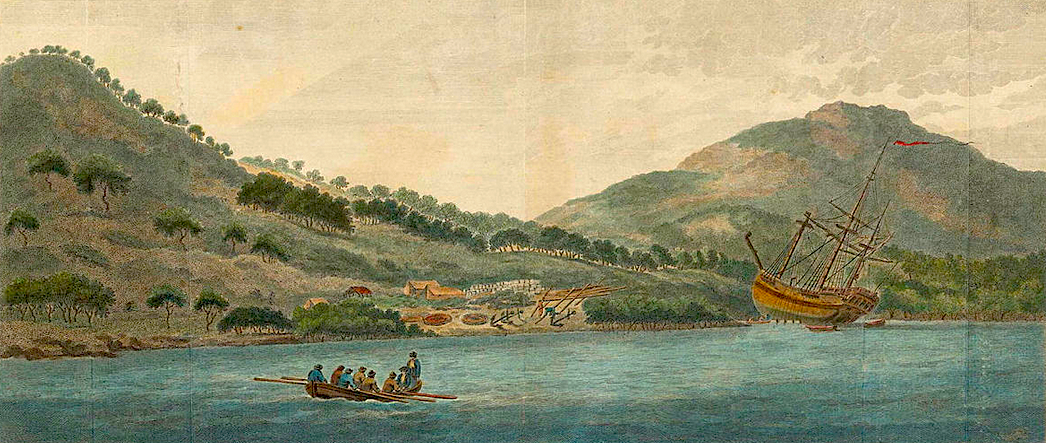
Hand-colored drawing of a wooden sailing ship tilted on its side on a beach, with masts and rigging, while a rowing boat with crew moves on the water in front. Hills and trees rise behind, with small huts and figures on the shore.Painting

Primary source

HMS Endeavour careened for repairs, 1770 Australia

Sydney Parkinson · 1770

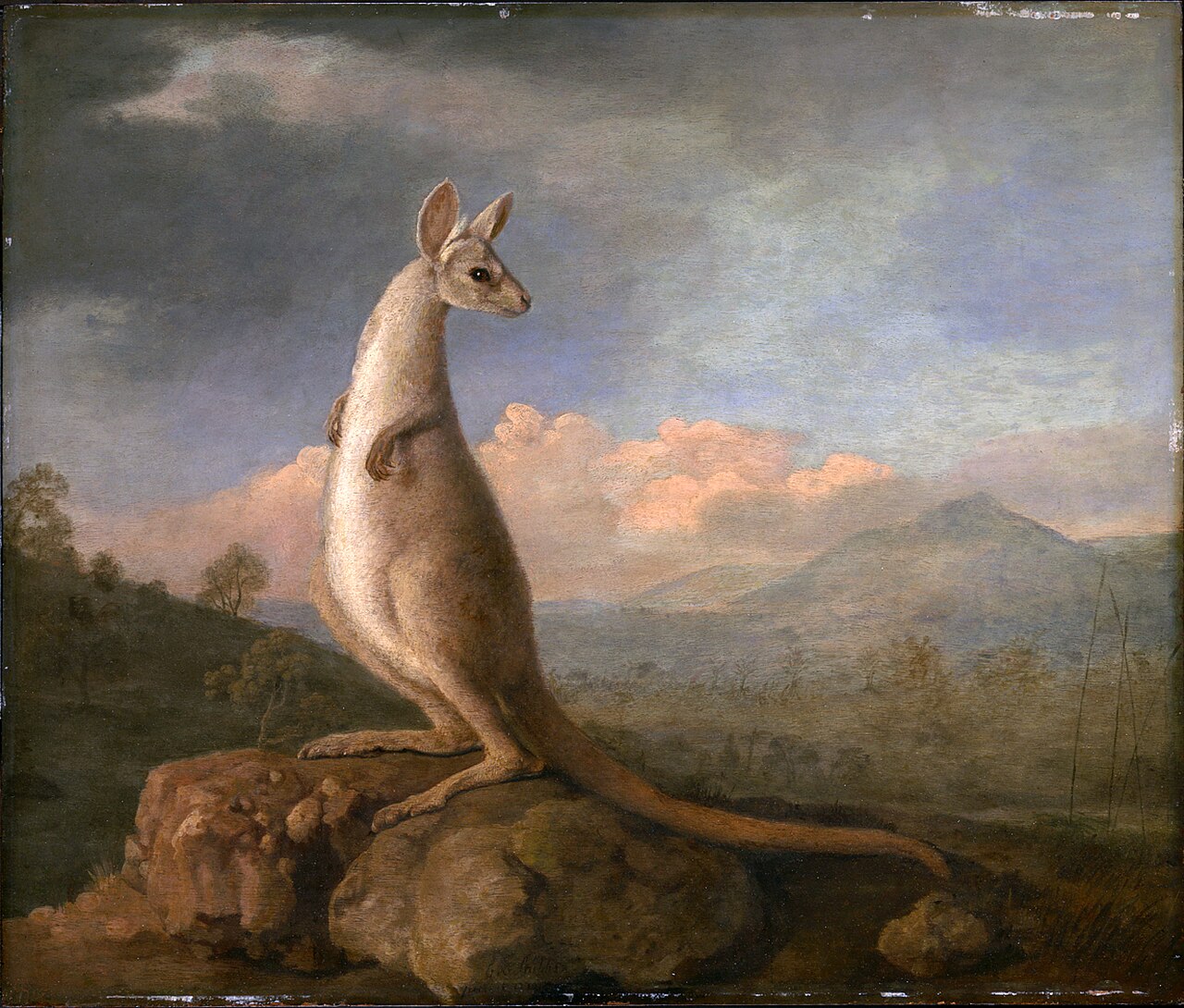
Painting of a pale kangaroo standing upright on a rock in a hazy landscape with hills and a dramatic sky with pink-tinged clouds. The animal looks to the left with its tail extended down over the rock.Painting

Secondary source

The Kongouro from New Holland

George Stubbs · 1772

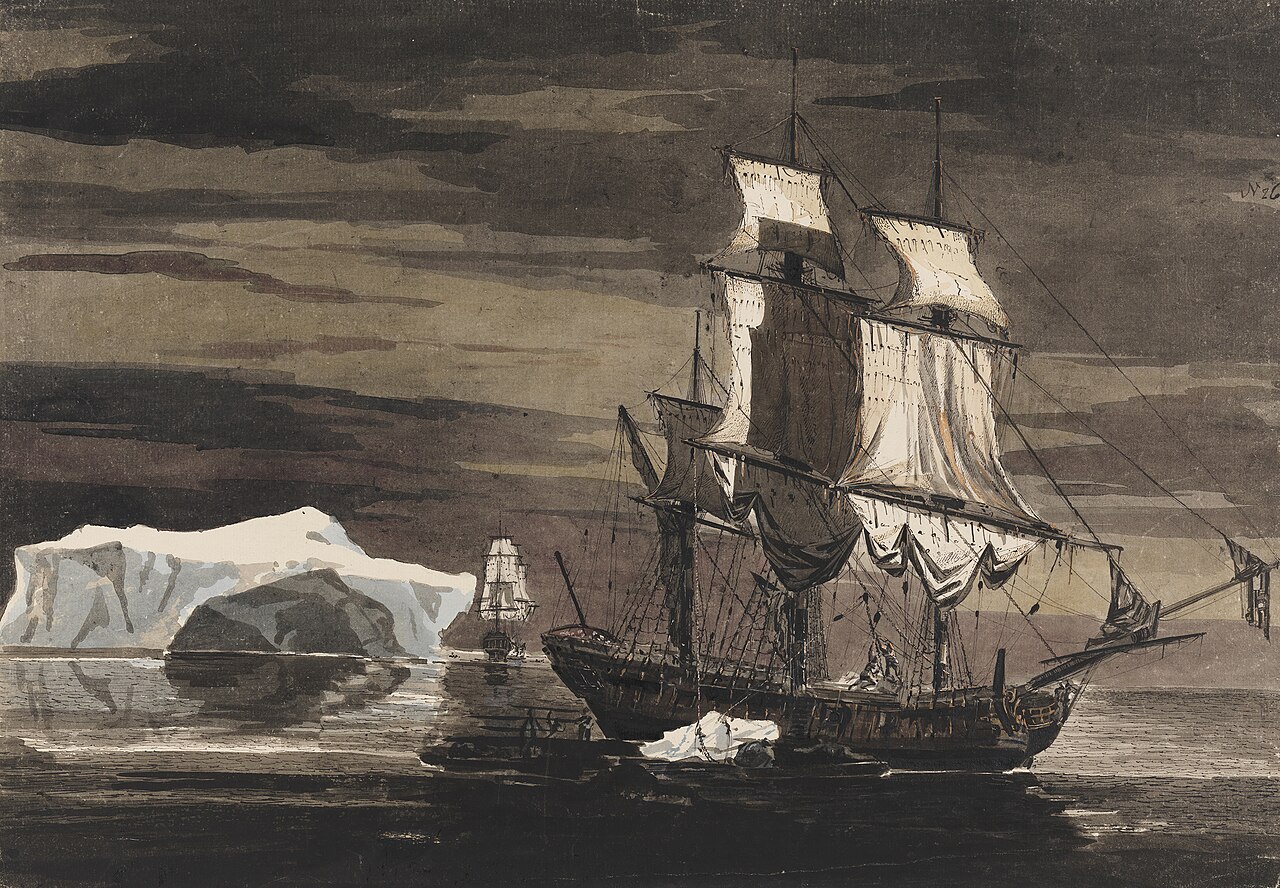
Watercolour of two sailing ships, Resolution and Adventure, near icebergs in a dark, cloudy polar sea. The large ship on the right has furled and billowing sails and sailors on its deck. A smaller ship sits in the distance on the left beside a bright iceberg, and small boats are in the water near the foreground ice.Painting

Primary source

The Resolution and Adventure, 4 Jan, 1773, taking in ice for water, lat. 61.S.

William Hodges · 4 January 1773

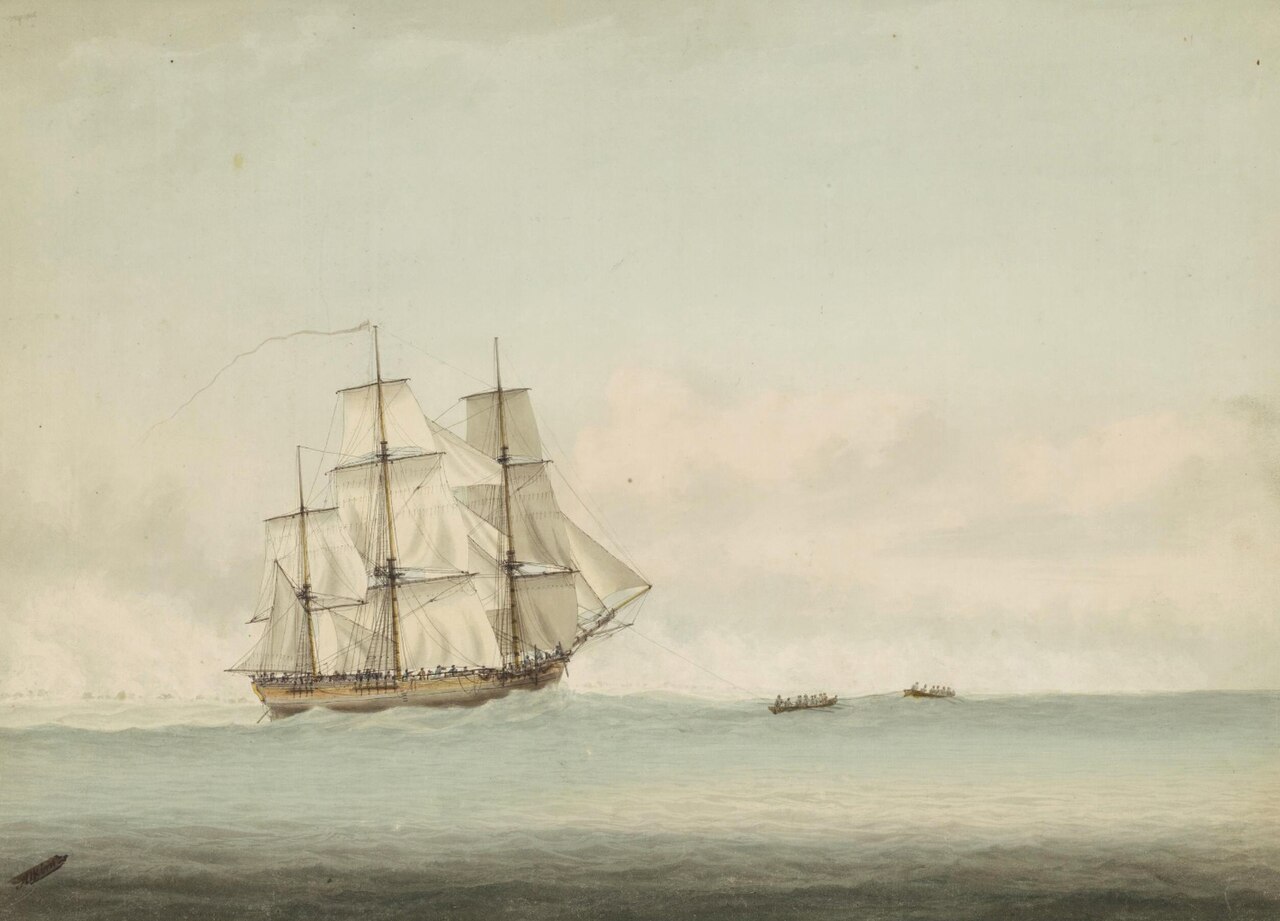
Watercolor painting of a three-masted square-rigged sailing ship under partly set sails on a calm grey-blue sea. Two small boats with crews are on the water behind it, and a small boat sits in the lower left corner.Artifact

Primary source

HMS Endeavour

Fishburn shipyard, Whitby · 1764

Plain tan cloth book cover with a white paper library call-number label in the upper left corner reading G 246 C7 S3 in black handwriting. No title or text on the cover itself.Book

Primary source

A Narrative of the Death of Captain James Cook

David Samwell · 1786

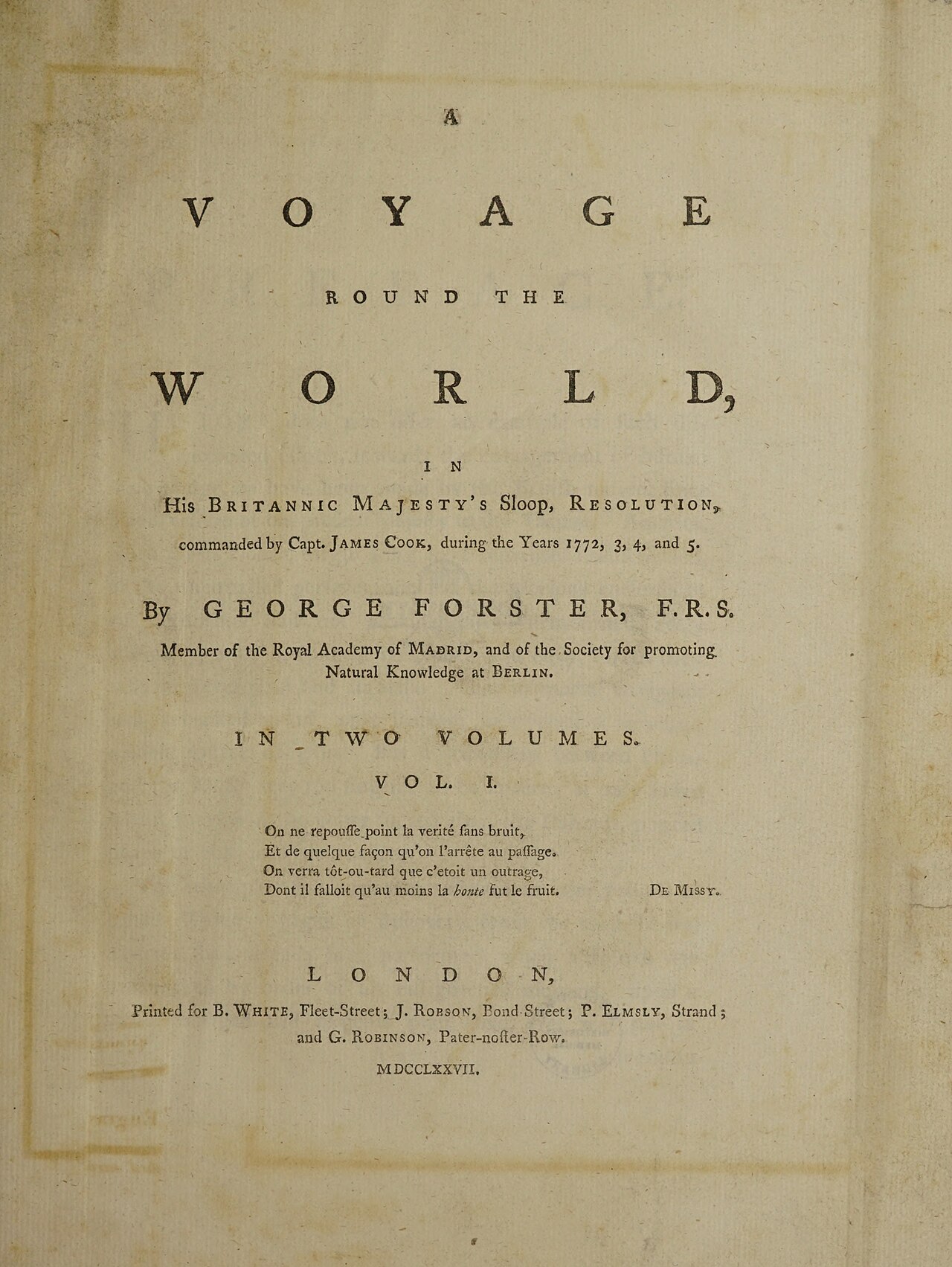
Title page of 'A Voyage Round the World' by George Forster, F.R.S., in two volumes, Vol. I, London, printed 1777. Text reads that it was written during Captain James Cook's voyage in His Britannic Majesty's Sloop Resolution during the years 1772 to 1775. Aged yellowed paper with a French epigraph.Book

Primary source

A Voyage Round the World

Georg Forster · 1777

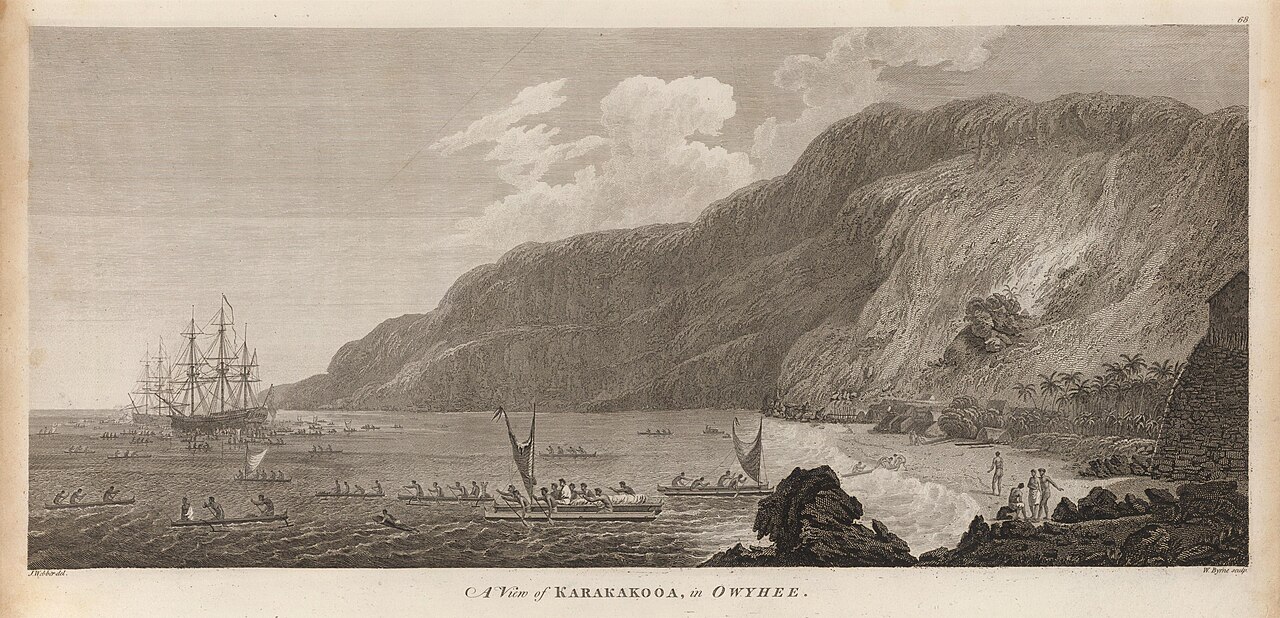
Engraved print titled 'A View of Karakakooa, in Owyhee.' A rocky cliff rises on the right above a shoreline with palm trees and a stone structure. Two sailing ships sit in the bay on the left, with many canoes on the water and small figures on the beach.Painting

Primary source

A View of Karakakooa, in Owyhee

John Webber · 1785

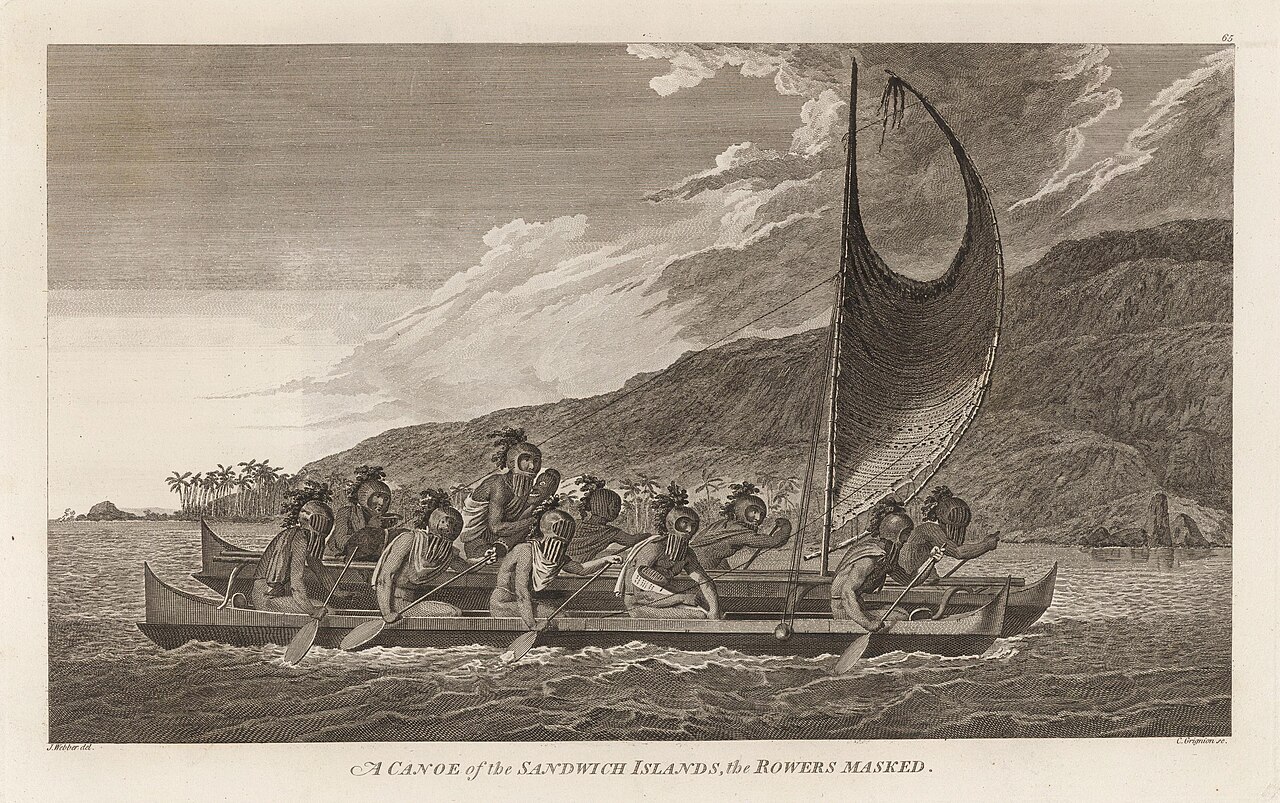
Engraving of a double-hulled Hawaiian canoe with a large curved sail on open water, carrying rowers wearing masks and headdresses. Palm trees and a hillside are visible on the shore behind them.Painting

Primary source

A Canoe of the Sandwich Islands, the Rowers Masked

John Webber

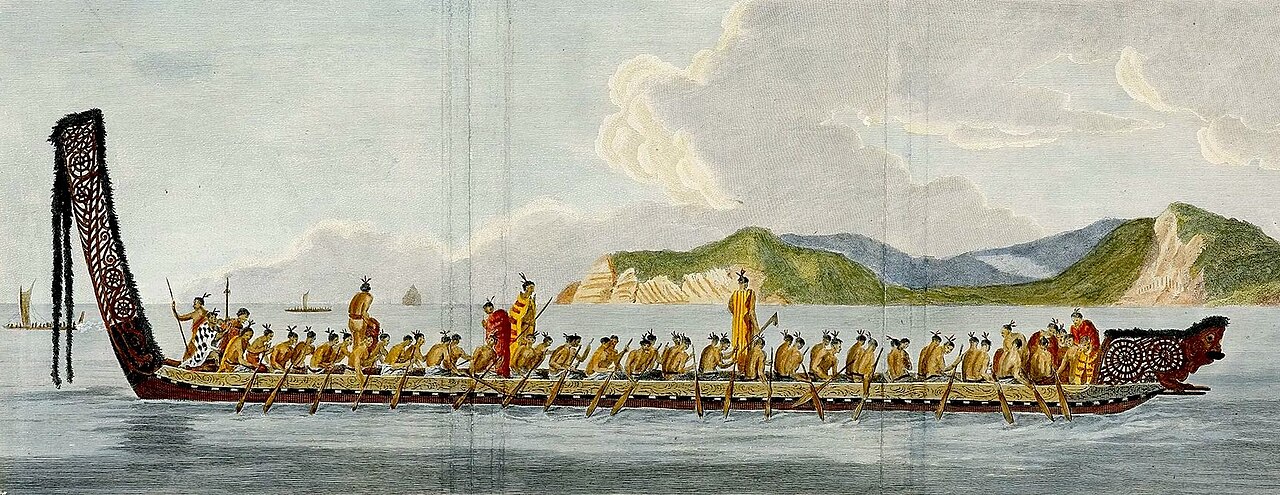
Hand-colored engraving of a Maori war canoe with a carved, ornate prow and stern, carrying dozens of paddlers in rows, several standing figures in red and yellow cloaks, and a hilly coastline with cliffs behind it.Painting

Primary source

Maori War Canoe

Sydney Parkinson · c. 1769

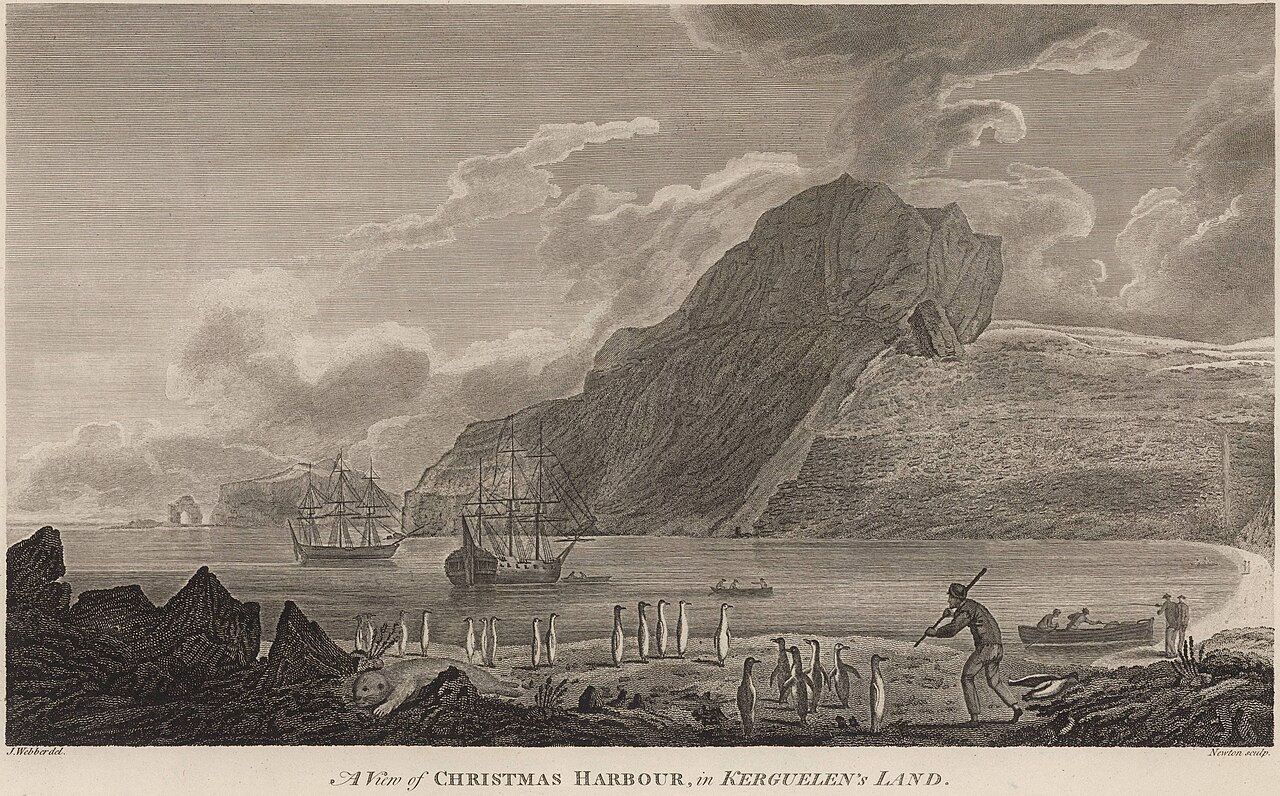
Engraved view of Christmas Harbour, Kerguelen, with two sailing ships anchored in a bay below a steep rocky headland. In the foreground, a man with a long pole stands near a row of penguins on a beach, and a small boat with figures rows near the shore. Caption reads 'A View of Christmas Harbour, in Kerguelen's Land.'Painting

Primary source

A View of Christmas Harbour, in Kerguelen's Land

John Webber · December 1776

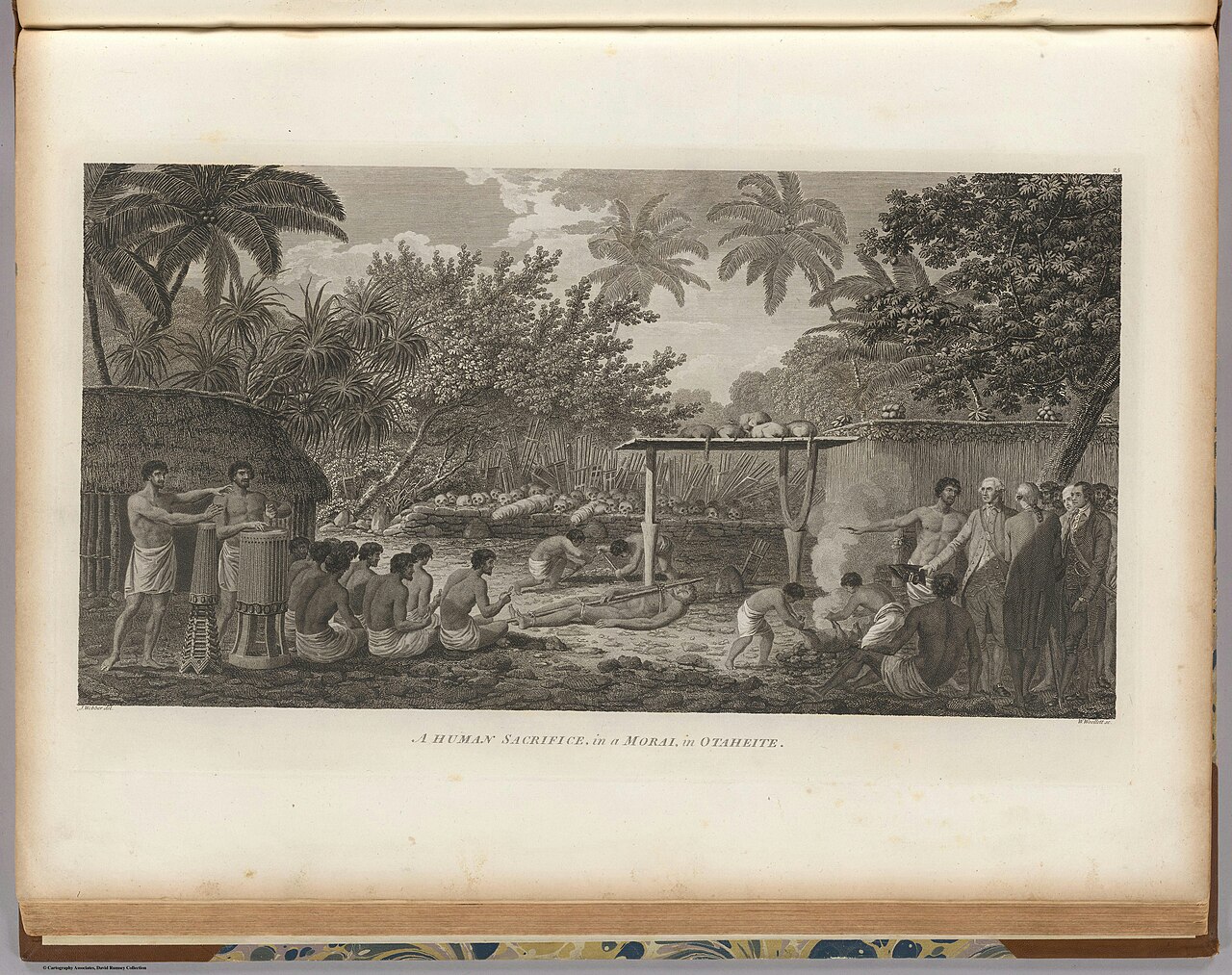
Engraved print of a scene in Tahiti titled 'A Human Sacrifice, in a Morai, in Otaheite.' Robed and bare-bodied Tahitian figures sit and stand near a thatched hut, a wooden platform with skulls, and a prone body on the ground, while European-dressed men stand at right among palm trees.Painting

Secondary source

A Human Sacrifice at Otaheite

William Woollett after John Webber · 1784

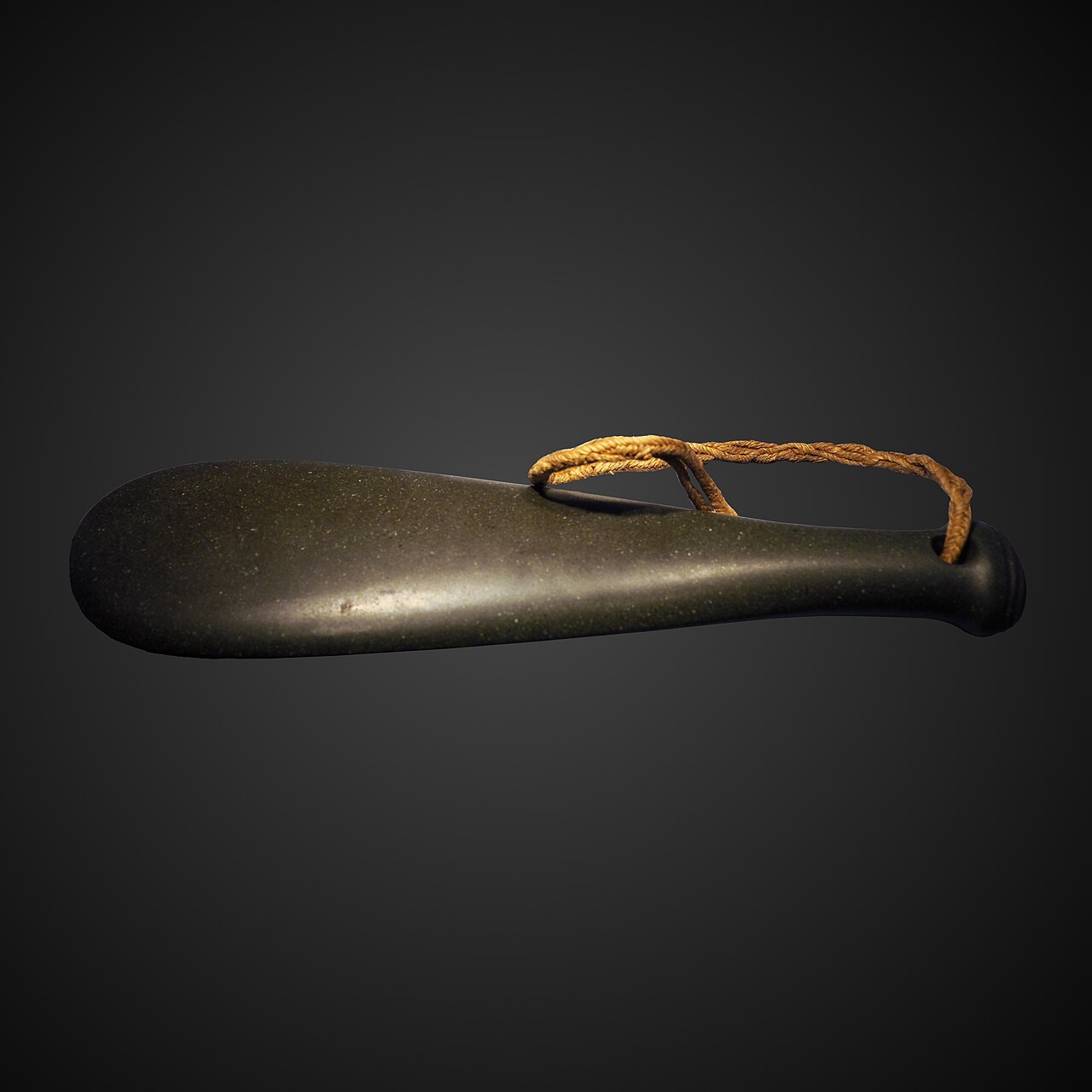
A dark green-black stone patu, a flat club-shaped Maori weapon with a rounded blade-like head tapering into a short handle. A tan braided cord loops through a hole near the handle. Photographed against a dark gradient background.Artifact

Primary source

Patu

c. 1800

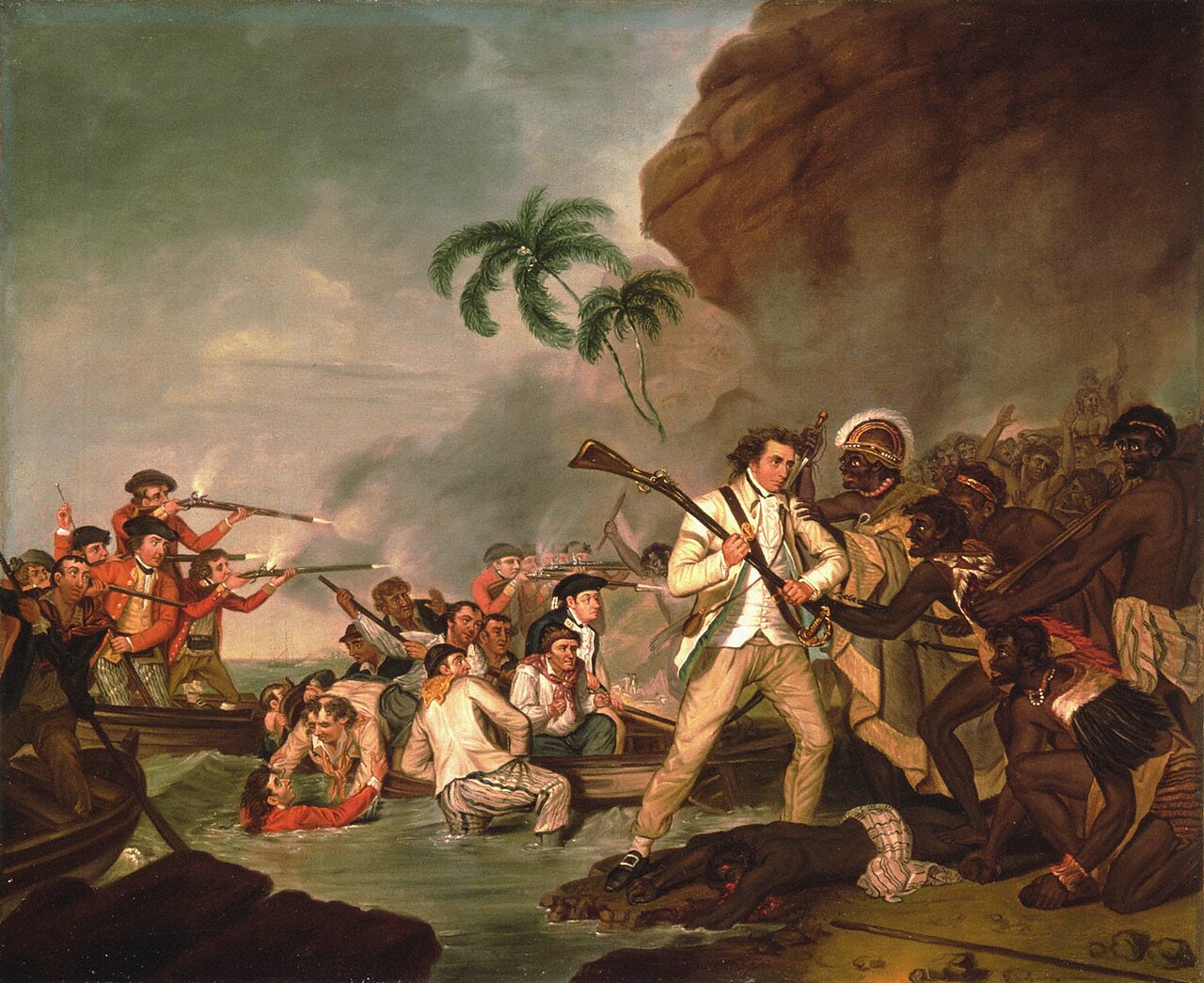
Oil painting of a violent scene on a rocky shore: a man in a white coat and breeches stands centre-right holding a musket while Hawaiian men surround him, and a dark body lies on the sand. British sailors in red coats fire muskets from boats on the left, amid palm trees and smoke.Painting

Secondary source

Death of Captain James Cook

George Carter · 1783

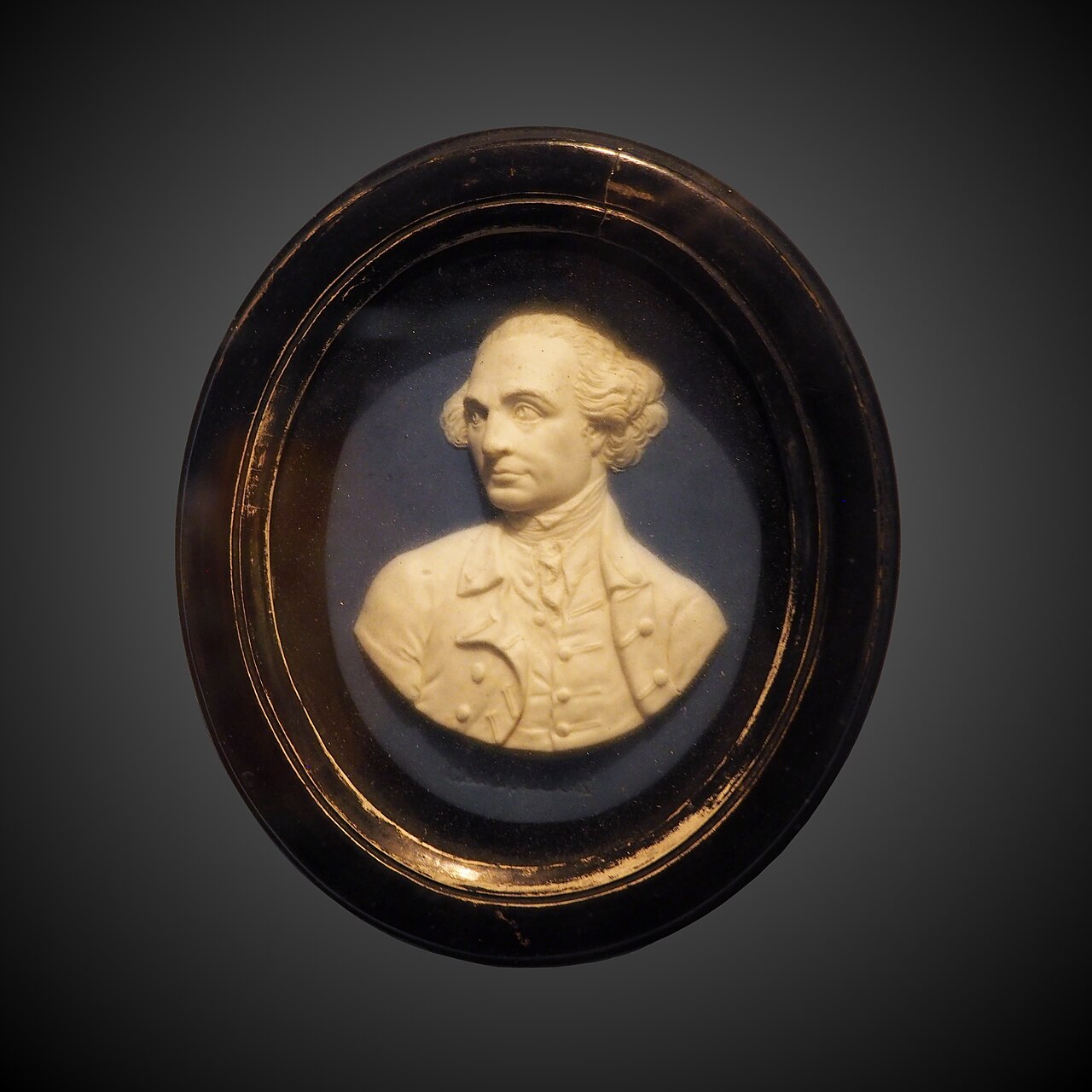
Oval black framed jasperware-style medallion showing a white relief bust portrait of a man in 18th-century dress with curled powdered hair, set against a blue background.Sculpture

Primary source

James Cook

William Hodges · 1777

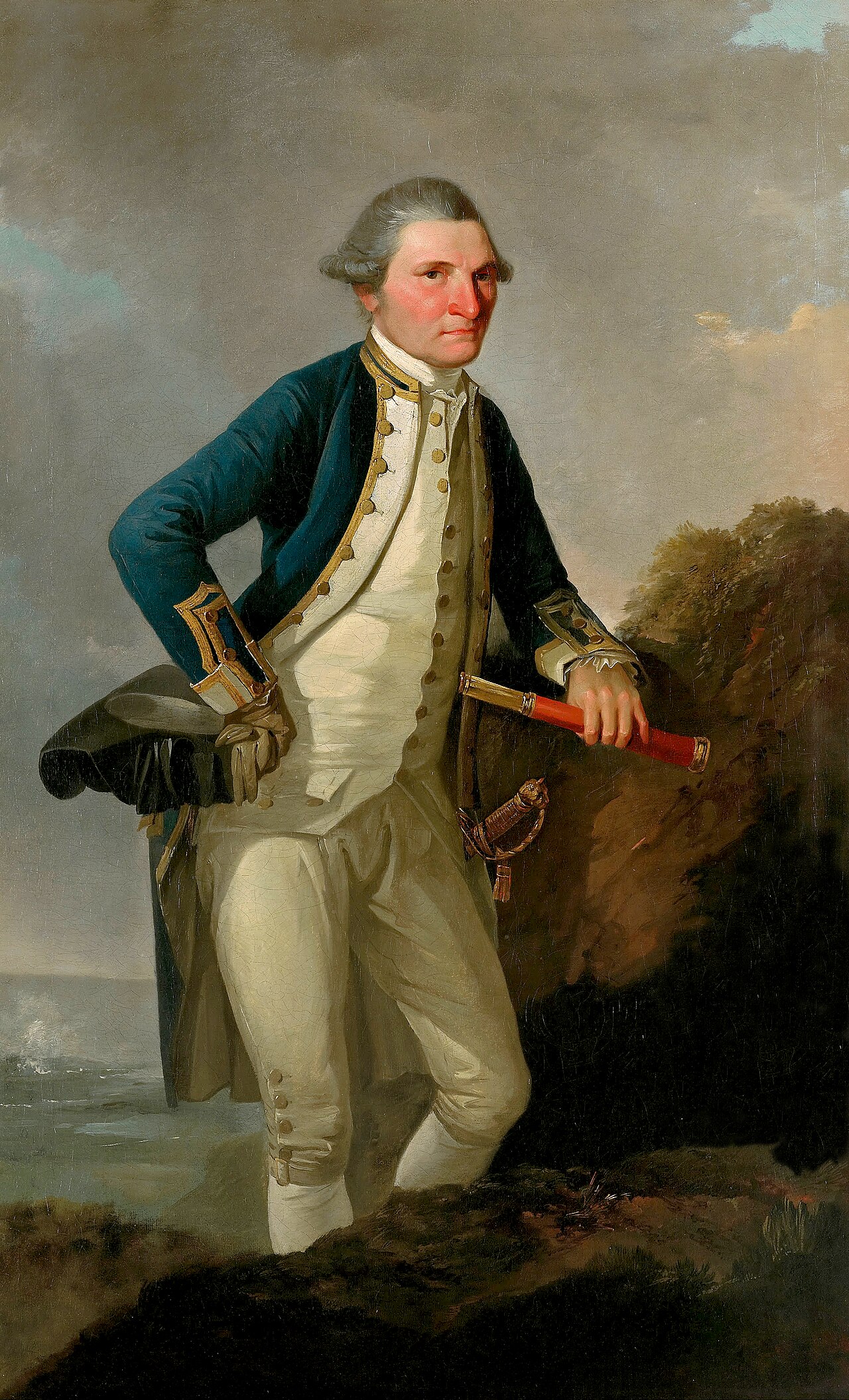
Full-length oil painting of a standing man in a blue naval-style coat with gold braid and buttons, white waistcoat and breeches, holding a black tricorn hat under one arm and a red-and-gold telescope, with a sword at his side. Grey cloudy sky and a coastline with rocks are behind him.Painting

Primary source

Portrait of Captain James Cook

John Webber · c. 1780

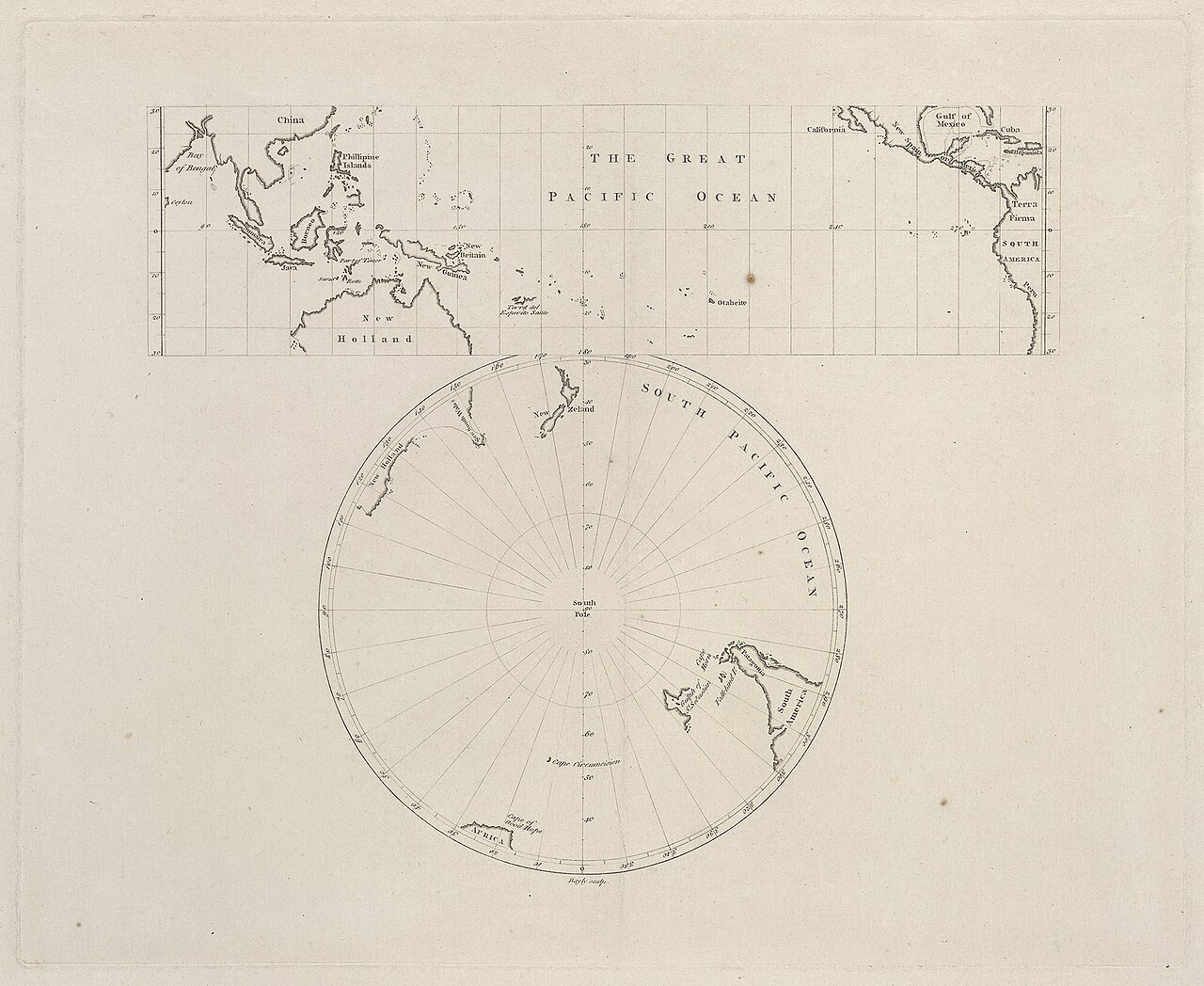
Engraved 18th-century map of the Pacific Ocean in two parts: a long rectangular projection across the top labelled 'The Great Pacific Ocean' with China, Philippines, New Holland, California, Gulf of Mexico and South America, and a circular polar projection below labelled 'South Pacific Ocean' centred on the South Pole, showing New Zealand, Africa and South America.Document

Primary source

The Great Pacific Ocean Map

John Bayly · 1772

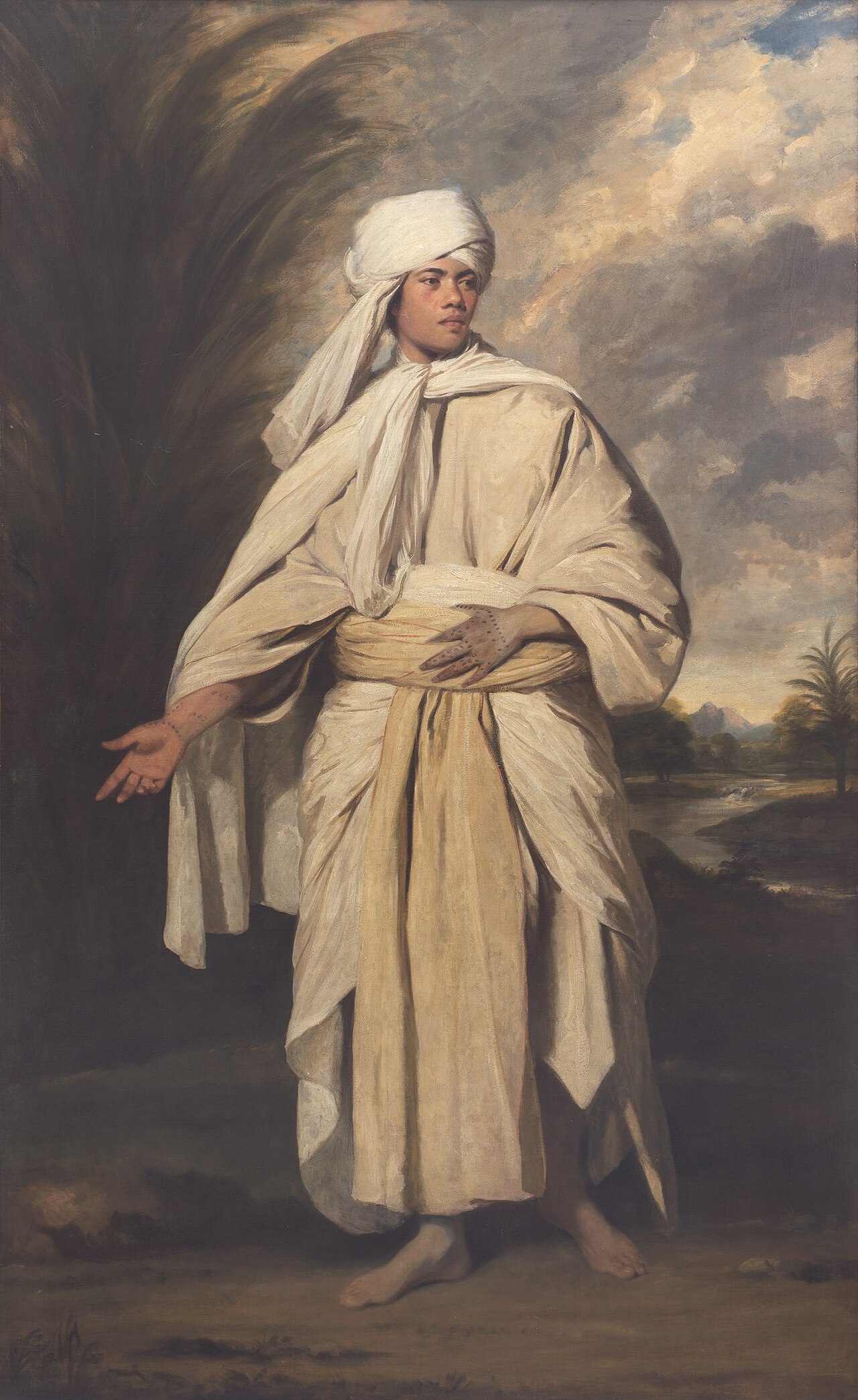
Full-length painting of a young man standing barefoot in a white turban, white robes, and a yellow sash, with tattoo-like markings on his hand and arm, gesturing outward. Dramatic cloudy sky, palm tree and river at right.Painting

Primary source

Portrait of Omai

Joshua Reynolds · c. 1776

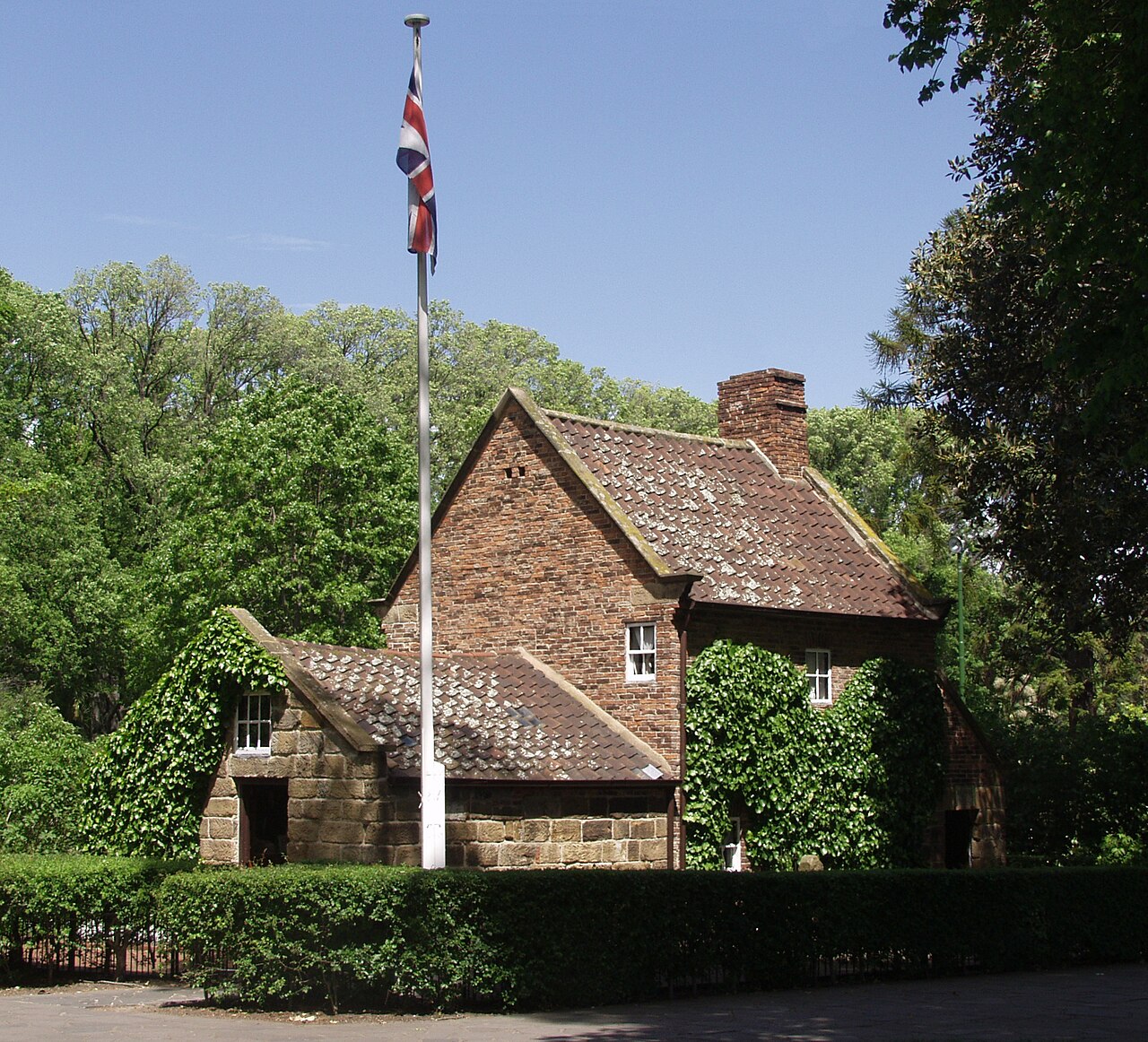
Photo of a small brick and stone cottage with a steep tiled roof, a brick chimney, and ivy on the walls, with a Union Jack flag on a tall pole beside it, set behind a clipped hedge under blue sky and trees.Artifact

Secondary source

Cooks' Cottage

1755 (built); 1934 (relocated)

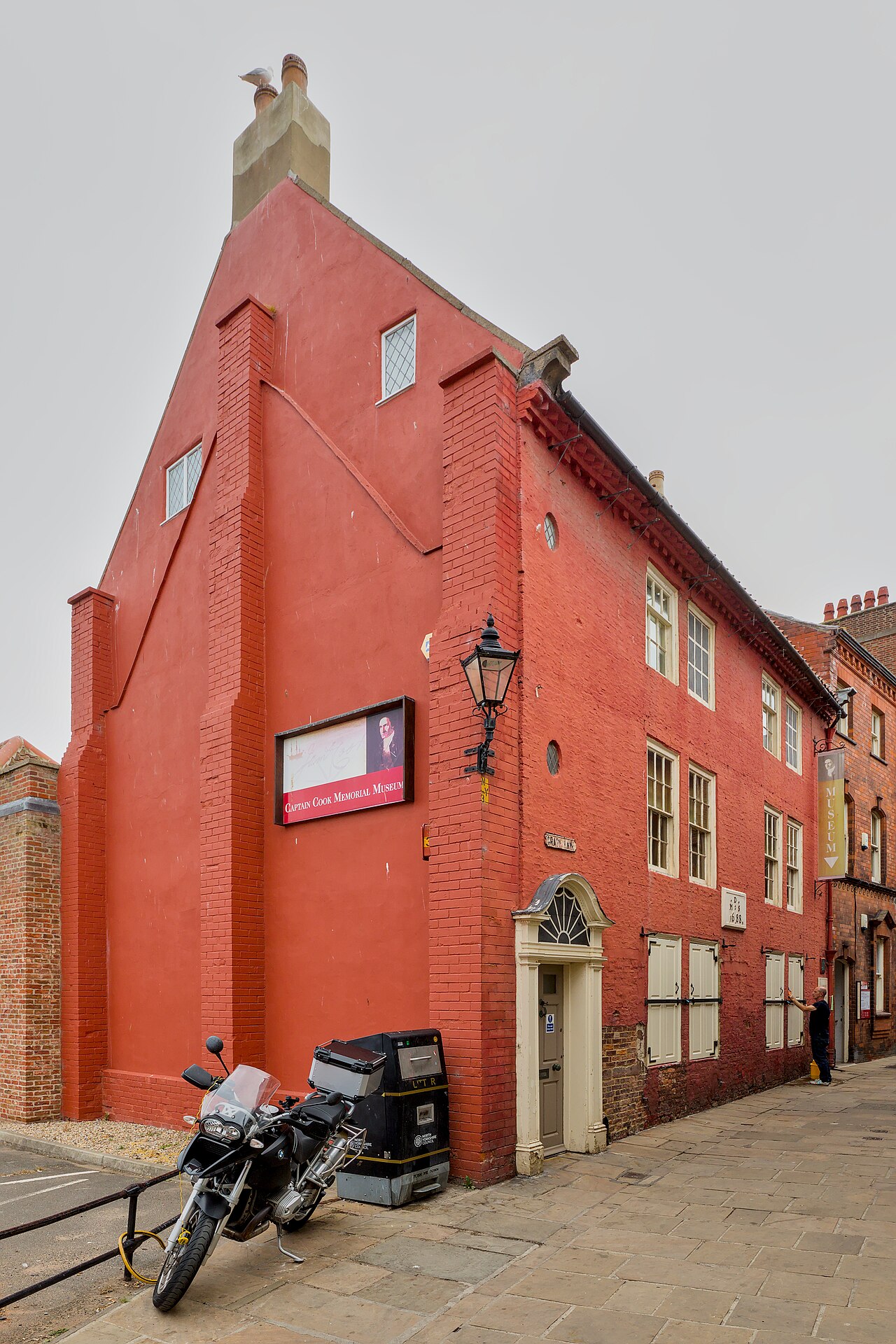
Exterior of a red-painted brick building with a steep gabled roof, tall chimneys, white-framed windows, and a white arched doorway. A sign reading Captain Cook Memorial Museum hangs on the front; a black motorcycle is parked at the lower left.Artifact

Primary source

Captain Cook Museum Whitby

built 1688; museum established 1986

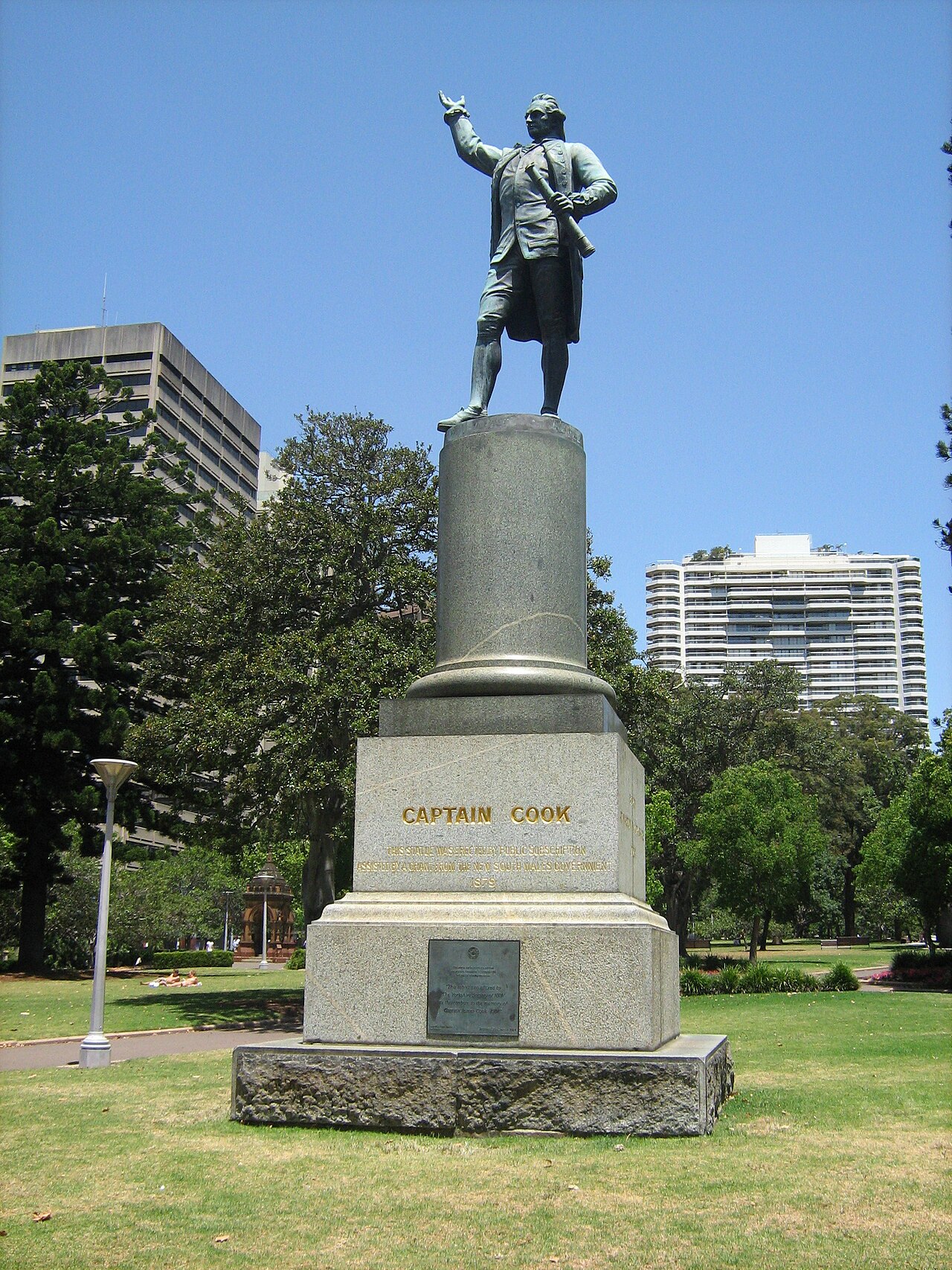
A bronze statue of Captain James Cook in a tricorn hat and coat, one arm raised pointing, mounted on a tall grey granite pedestal inscribed CAPTAIN COOK, set on grass in a city park with tall trees and high-rise buildings behind.Sculpture

Secondary source

Captain James Cook Statue, Hyde Park, Sydney

Thomas Woolner · 1879

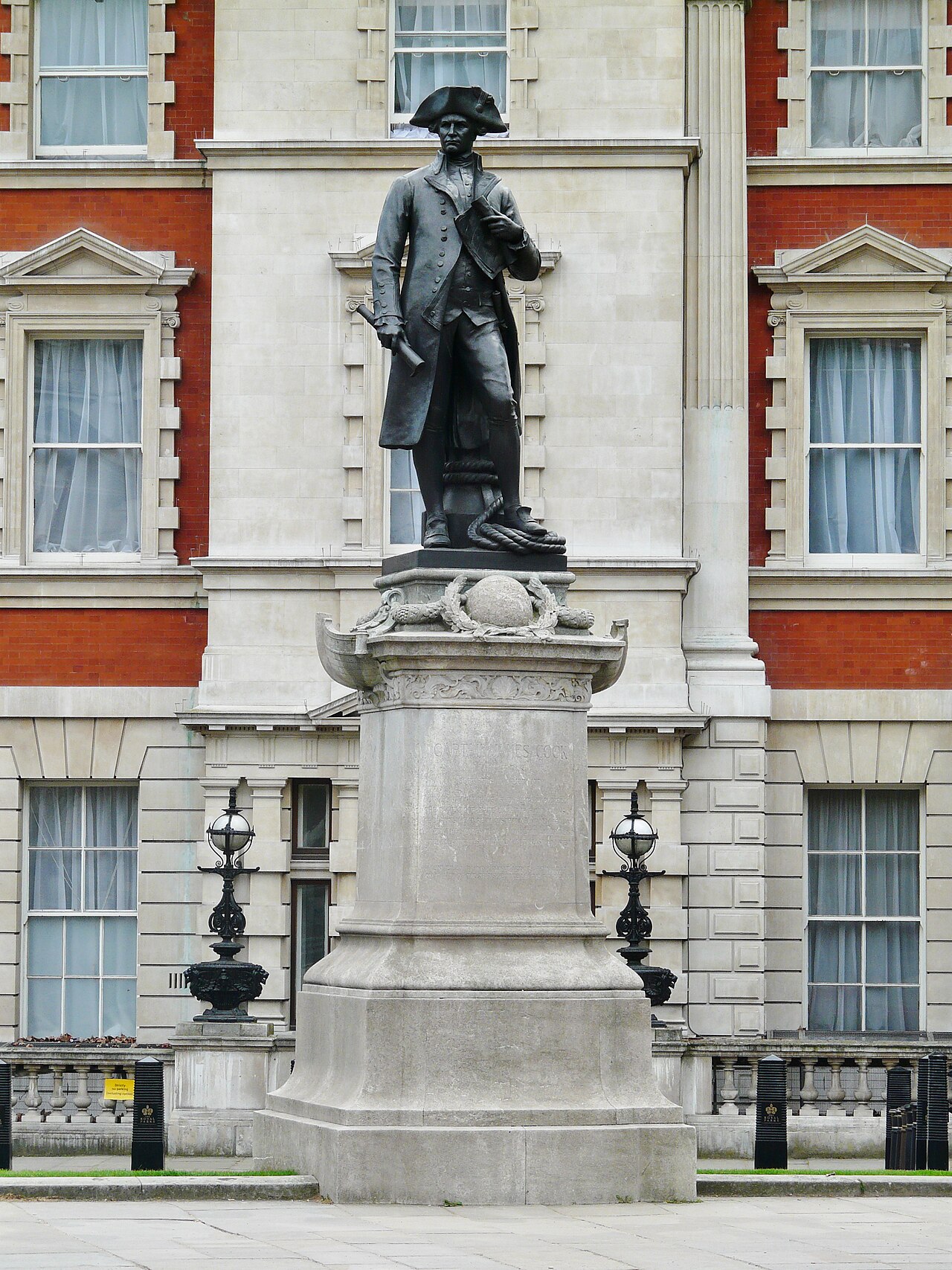
Bronze statue of a standing man in an eighteenth-century naval captain's uniform and tricorn hat, holding a rolled paper, on a tall grey stone pedestal with a ship's rope and cannonball carving, in front of a red brick and stone building.Sculpture

Secondary source

Statue of Captain James Cook, The Mall

Thomas Brock · 1914

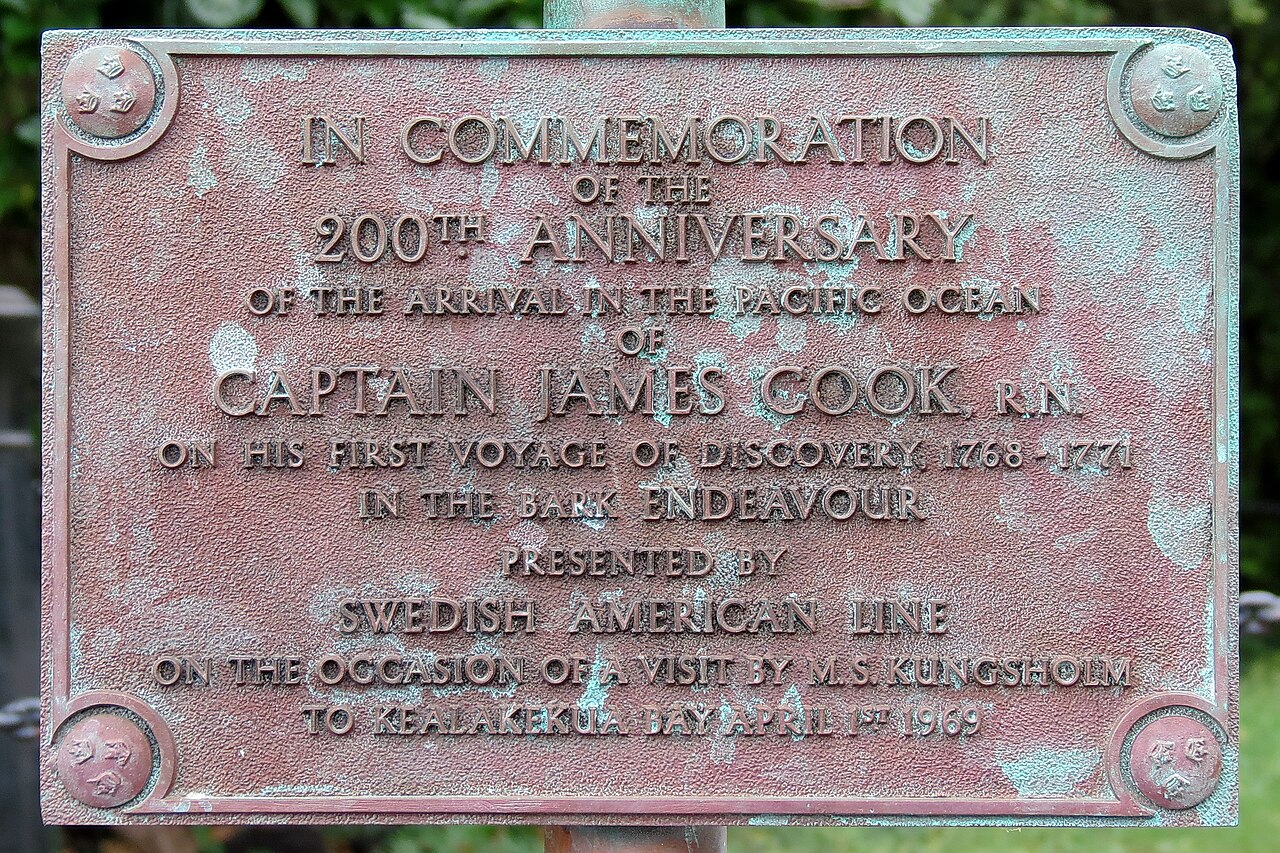
A weathered bronze commemorative plaque with green patina, reading 'In Commemoration of the 200th Anniversary of the Arrival in the Pacific Ocean of Captain James Cook R.N. on his first voyage of discovery 1768-1771 in the bark Endeavour', presented by Swedish American Line on the occasion of a visit by M.S. Kungsholm to Kealakekua Bay, April 1969.Artifact

Secondary source

Captain Cook Monument, Kealakekua Bay

1874

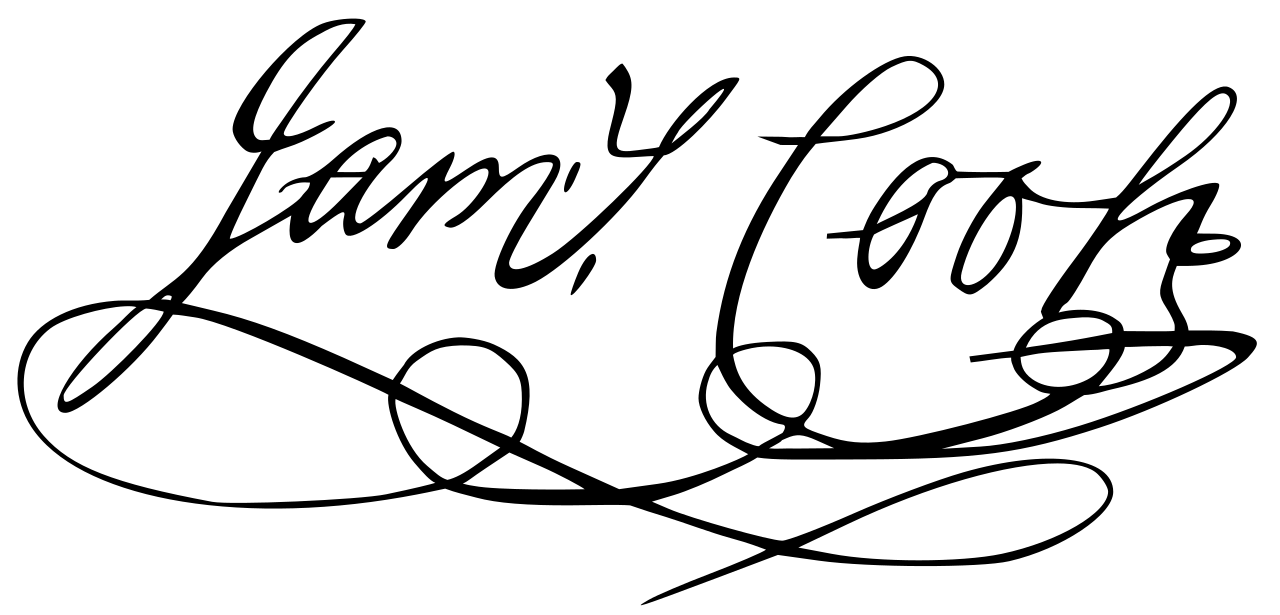
Black ink line drawing of a handwritten signature on white background, reading 'James Cook' in flowing cursive with long looping underline strokes extending beneath the name.Document

Primary source

Signature of James Cook

James Cook

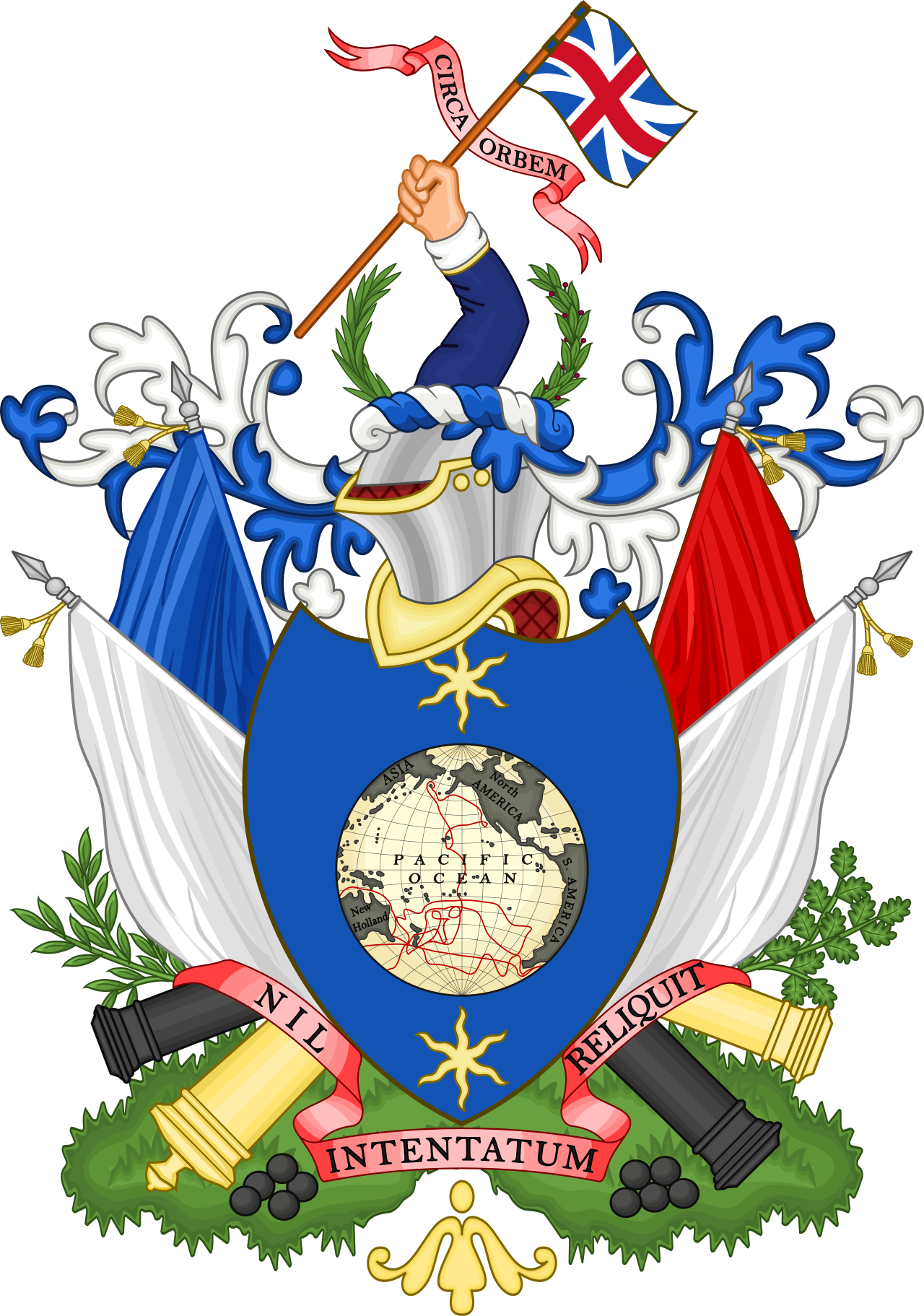
Coat of arms of James Cook: a blue shield with a central globe showing the Pacific Ocean, topped by a helmet with a crest holding a Union Jack flag, flanked by two white and blue-red mantling sides, with crossed cannons, green foliage, and the motto banners 'Nil Reliquit' and 'Intentatum' below and 'Circa Orbem' above.Document

Secondary source

Coat of Arms of James Cook

1785

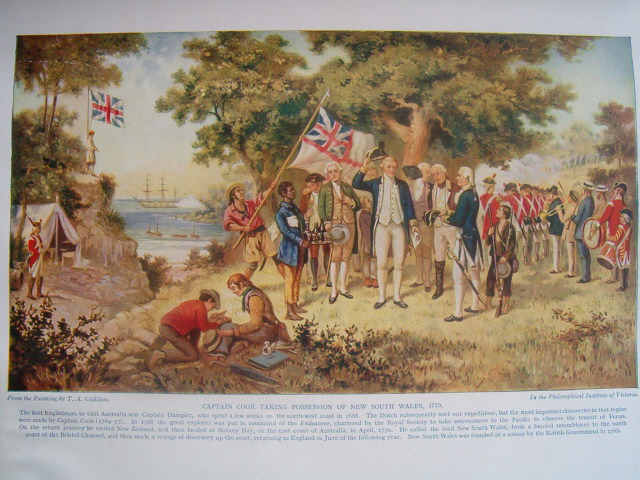
Printed reproduction of a painting showing Captain Cook taking possession of New South Wales. Cook stands center in a blue coat with officers and red-coated marines around him, holding a flag, beneath trees on a shore. Ships are visible on the water, with Aboriginal people at lower left. A caption and text block are printed below.Painting

Secondary source

Captain Cook Takes Formal Possession of New South Wales 1770

John Alexander Gilfillan · 1859

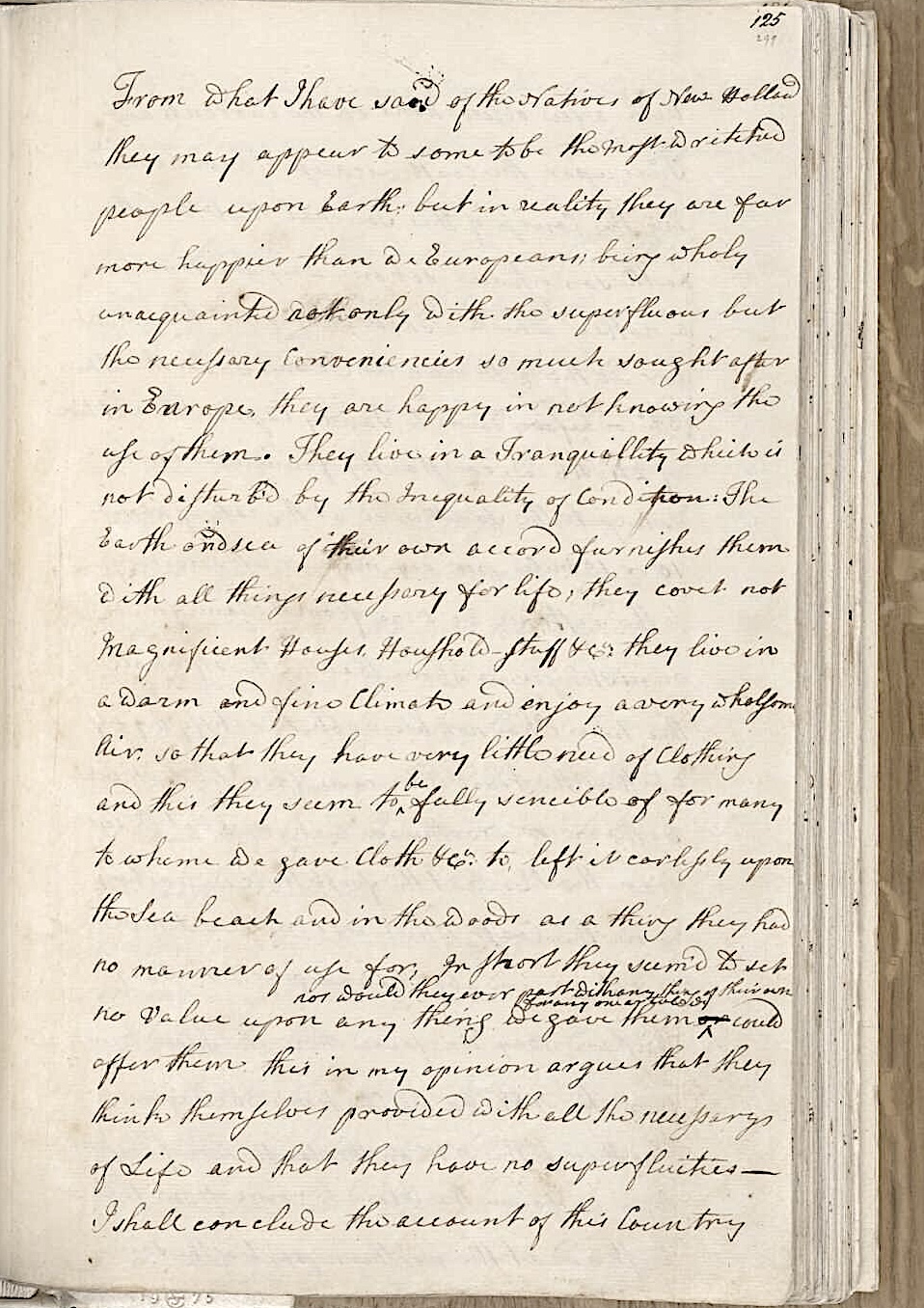
Handwritten manuscript page numbered 125 in cursive ink, the journal text reading 'From what I have said of the Natives of New Holland they may appear to some to be the most Destitute people upon earth but in reality they are far more happier than we Europeans', with interlineated corrections and crossed-out words.Diary entry

Primary source

James Cook Journal Entry, 23 August 1770

James Cook · 23 August 1770

Document

Primary source

Letter from James Cook to the Royal Society

The Royal Society · 1775-1776

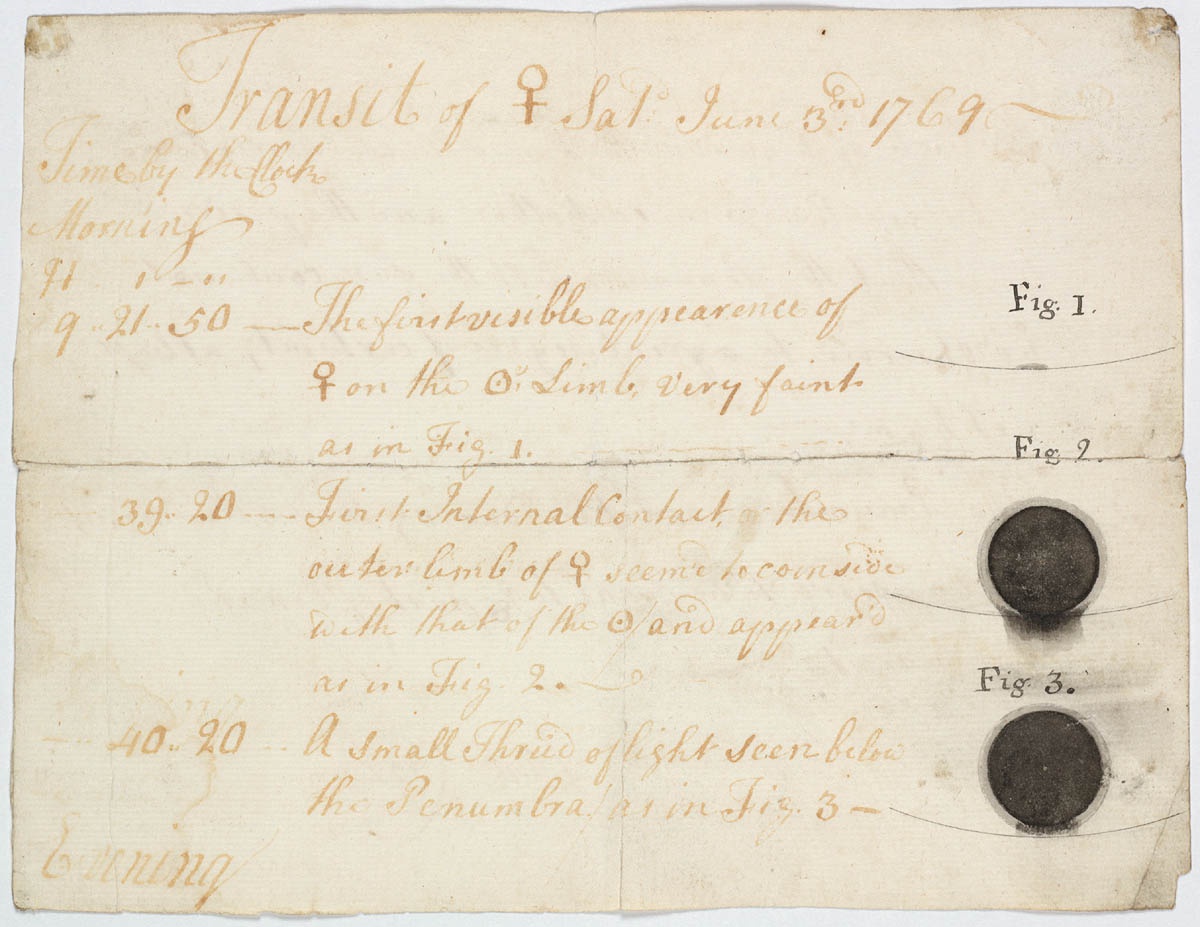
Handwritten manuscript in brown ink titled 'Transit of Venus Sat. June 3rd 1769' with timed notes on the transit and three small circular ink drawings labelled Fig. 1, Fig. 2 and Fig. 3 showing the planet's position against the sun's limb.Document

Primary source

Cook's Handwritten Observations on the 1769 Transit of Venus

James Cook · 3 June 1769

Letter

Primary source

Letter Requesting Supplies

James Cook · 8 July 1768

Document

Primary source

The Will of James Cook

James Cook

Book

Primary source

A Voyage Round the World, Book 3 Chapter 3

Georg Forster · 1774

Book

Primary source

Directions for Navigating the South Coast of Newfoundland

James Cook

Book

Secondary source

The Three Voyages of Captain Cook Round the World, Vol. VII

James King · 1821

Book

Primary source

The Third Voyage of James Cook, Volume 3

James King

Book

Secondary source

Dedication to The Life of Captain James Cook

Andrew Kippis · 1788

Book

Secondary source

Narrative of the Voyages Round the World by Captain James Cook, with his Life

Andrew Kippis · 1788

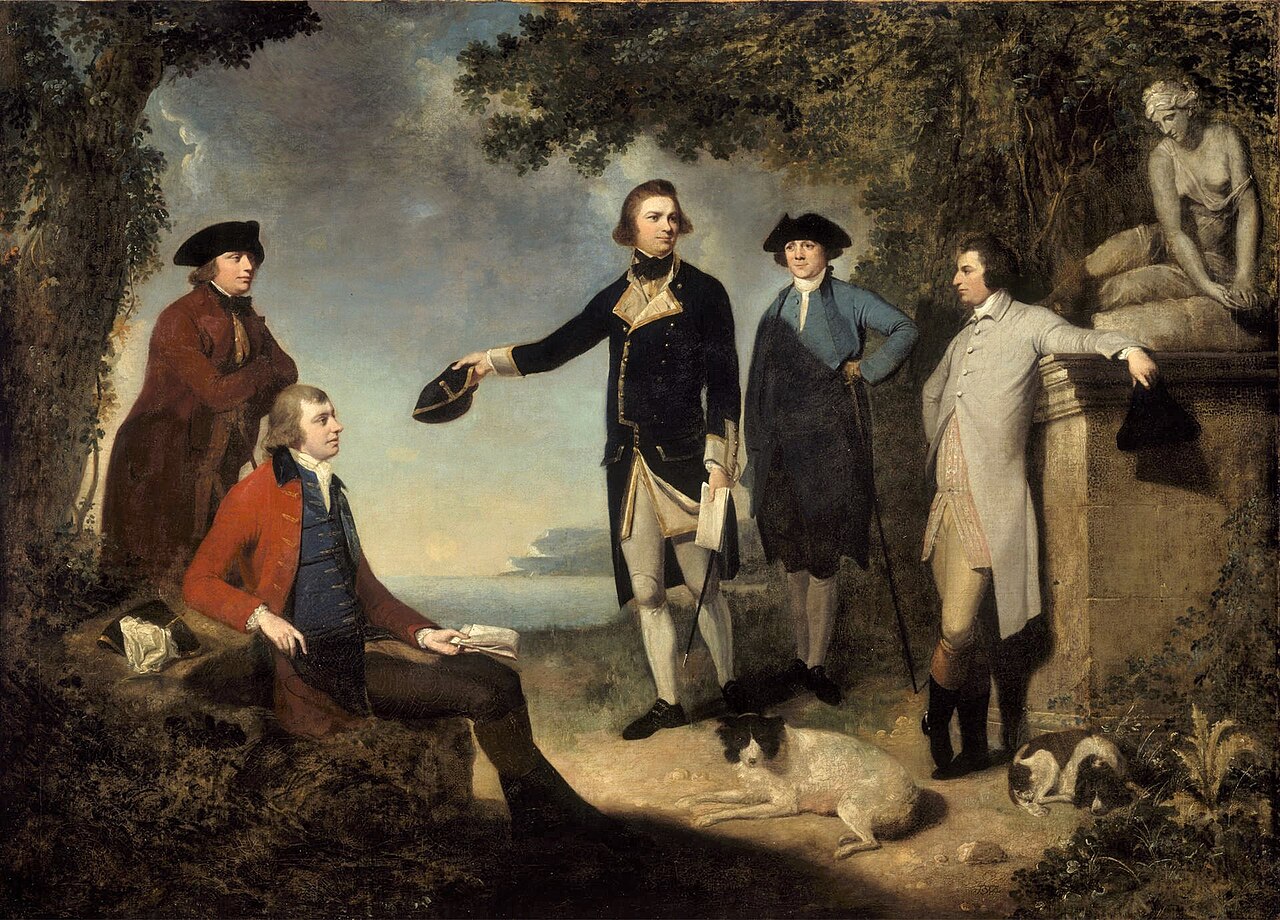
Oil painting of five men in an outdoor garden setting by a stone pedestal with a classical statue. Two men at left, one seated in red coat and one standing in brown coat. A man in a dark naval-style uniform with gold trim holds out a hat. Two men stand at right, one in a blue coat and one in a light grey coat leaning on the pedestal. A white dog lies on the ground in front, and a seascape is visible behind.Painting

Primary source

Captain James Cook, Sir Joseph Banks, Lord Sandwich, Solander and Hawkesworth

John Hamilton Mortimer · 1771

Hand-colored engraving of a violent scene on a Hawaiian shore: a European officer in a dark coat and hat stands with arm outstretched amid crowds of Hawaiian warriors with spears and clubs. Sailors in a boat fire muskets from the water; palm trees and thatched huts fill the background.Painting

Primary source

Death of Captain Cook

John Webber · 1784

Reise um die Welt, mit Capitain CookBook

Primary source

Reise um die Welt, mit Capitain Cook

Heinrich Zimmermann · 1781

Book

Secondary source

A Collection of Voyages Round the World, Volume II

G. W. Anderson · 1790

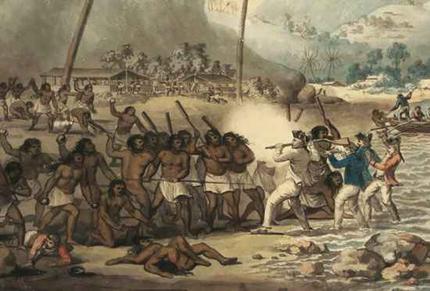
Painted scene on a sandy beach: dark-skinned men with clubs and long spears fight European sailors in white and blue coats near the water's edge. A body lies on the ground in the foreground. Wooden buildings, smoke, and hills stand in the background.Painting

Secondary source

The Death of Cook

John Cleveley the Younger · 1784

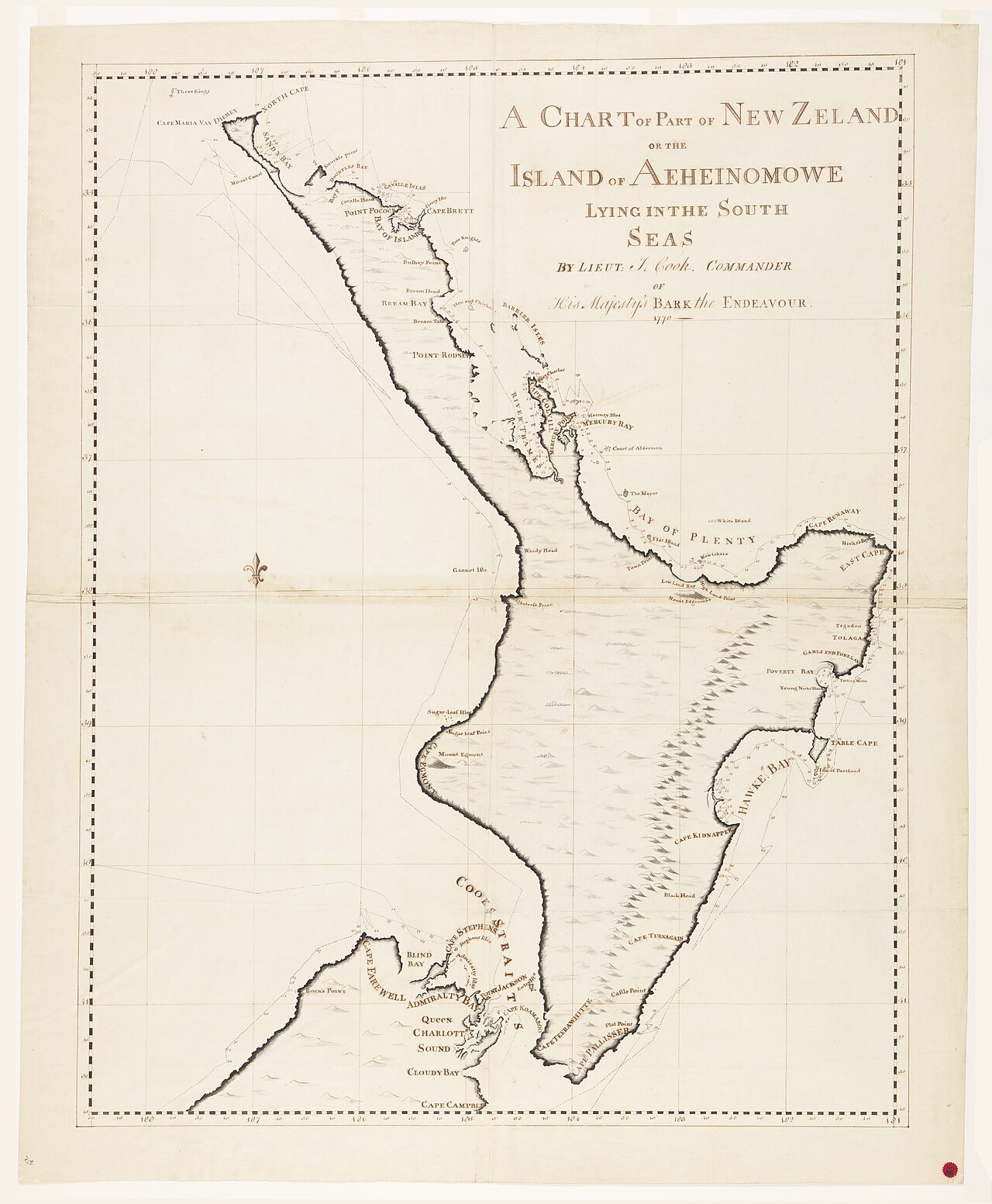
Hand-drawn manuscript chart titled 'A Chart of Part of New Zeland or the Island of Aeheinomowe lying in the South Seas' by Lieut. J. Cook, Commander of His Majesty's Bark the Endeavour. Shows the North Island coastline in ink with bays, capes, and place names, and a compass rose.Document

Primary source

Chart of the North Island of New Zealand

James Cook · 1768-1771

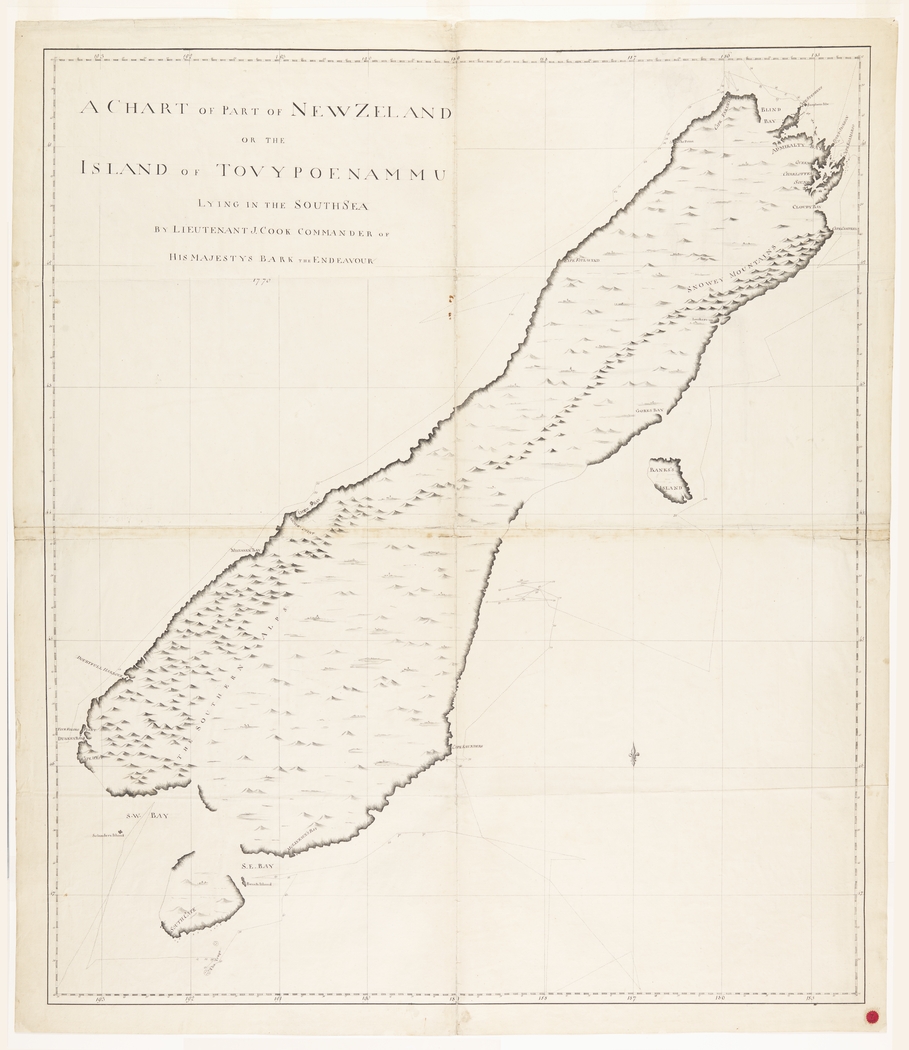
Hand-drawn manuscript chart on aged paper titled 'A Chart of Part of New Zealand or the Island of Tovy Poenammu, lying in the South Sea, by Lieutenant J. Cook, Commander of His Majesty's Bark the Endeavour, 1770'. It shows the South Island as a diagonal landmass with ink-drawn coastline, hachured mountain ranges, bay names, and a compass rose.Document

Primary source

Chart of the South Island of New Zealand

James Cook · 1770

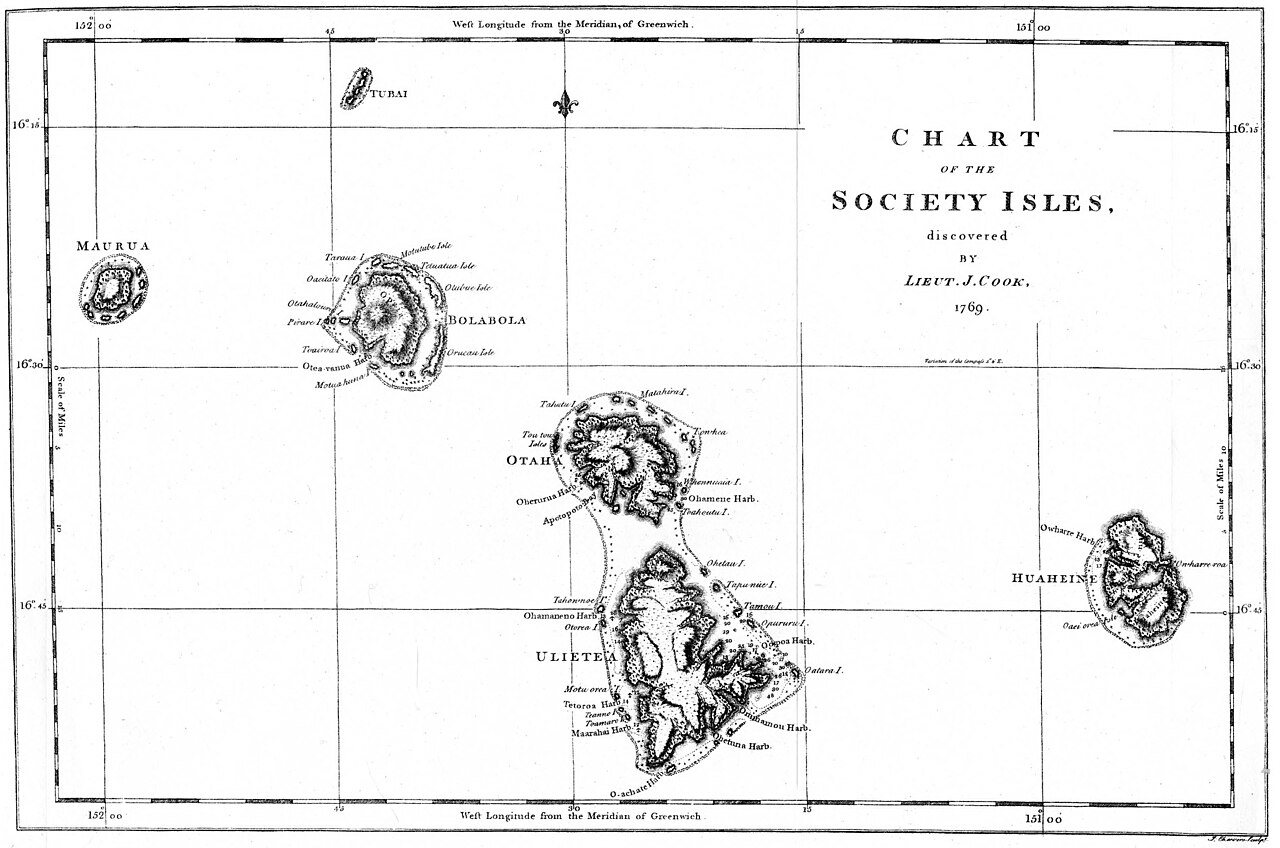
Engraved nautical chart titled 'Chart of the Society Isles, discovered by Lieut. J. Cook, 1769', showing the islands of Maurua, Tubai, Bolabola, Otaha, Ulietea and Huaheine with coastlines, harbours, place names and longitude and latitude gridlines.Document

Primary source

Chart of the Society Isles

James Cook · Original created in 1769; this facsimile published in 1893

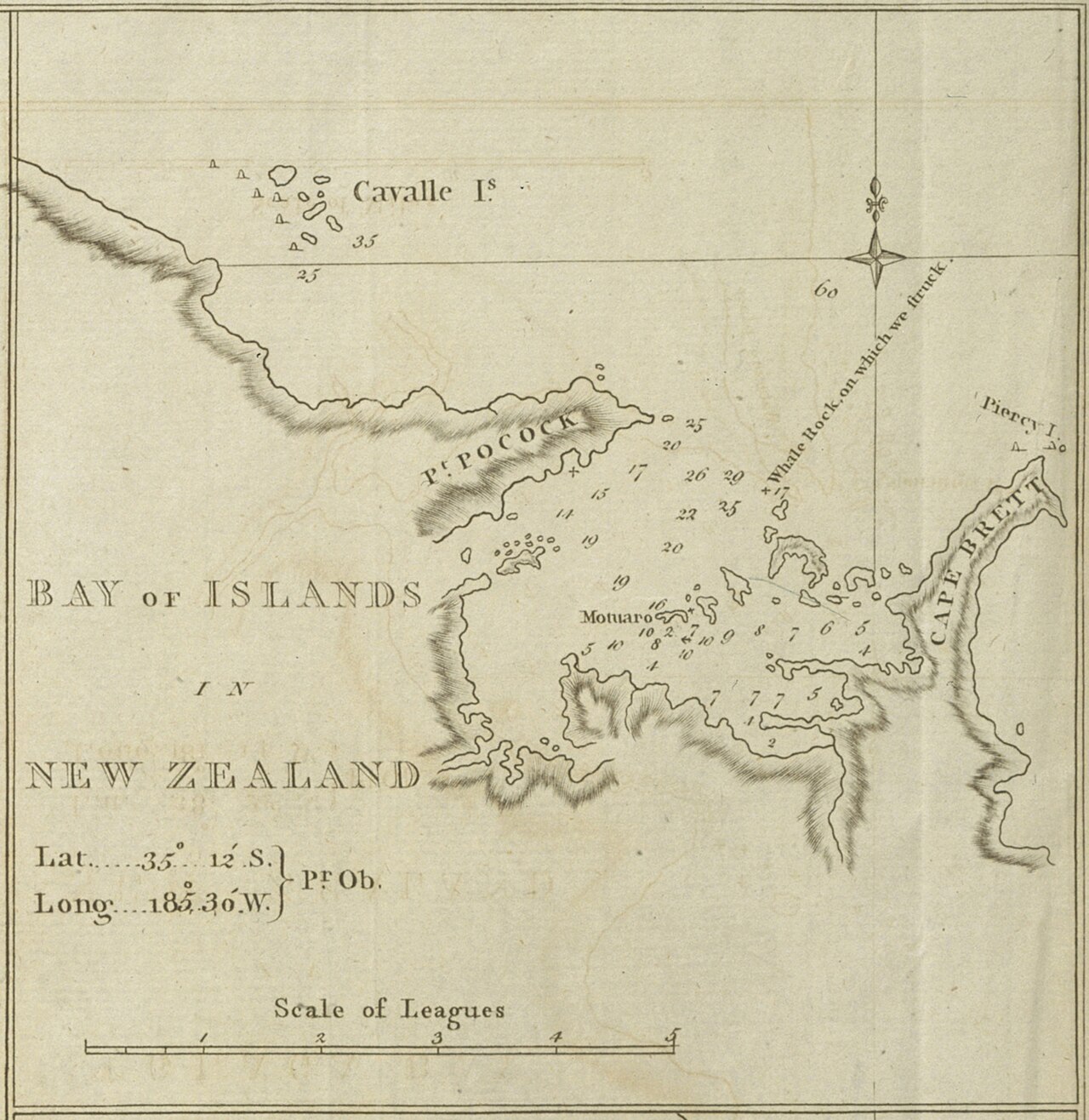
Engraved nautical chart of the Bay of Islands, New Zealand, with a compass rose, soundings in numbers, labeled islands and rocks, Cape Brett, Motuaro, Pocock, and a scale of leagues. Latitude and longitude noted at lower left.Document

Primary source

Chart of the Bay of Islands, New Zealand

James Cook · 1773

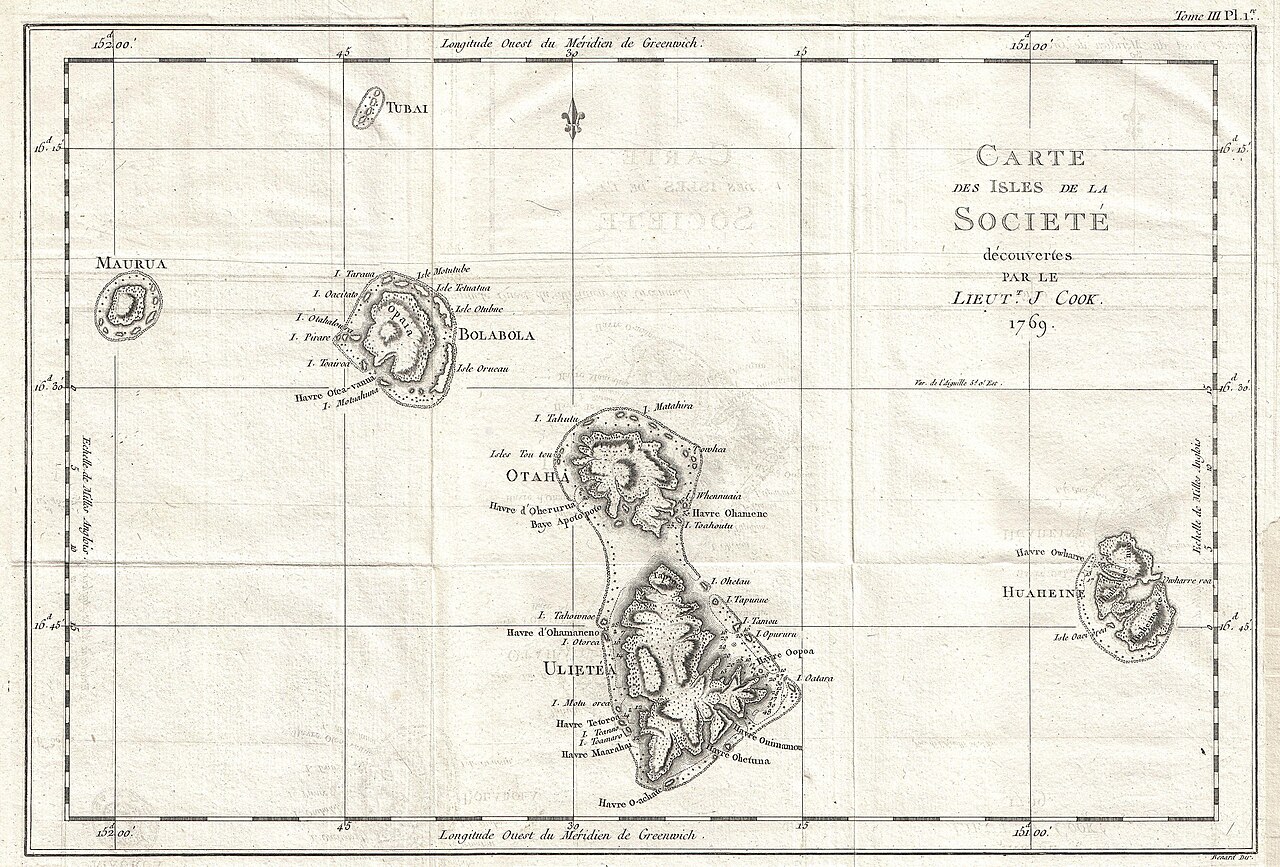
Engraved 1769 map titled 'Carte des Isles de la Société découvertes par le Lieut.t J. Cook, 1769'. Shows islands Maurua, Tubai, Bolabola, Otaha, Ulietea and Huaheine with coastal features, place names, and compass-style latitude and longitude borders.Document

Primary source

Chart of the Society Islands

James Cook · 1769

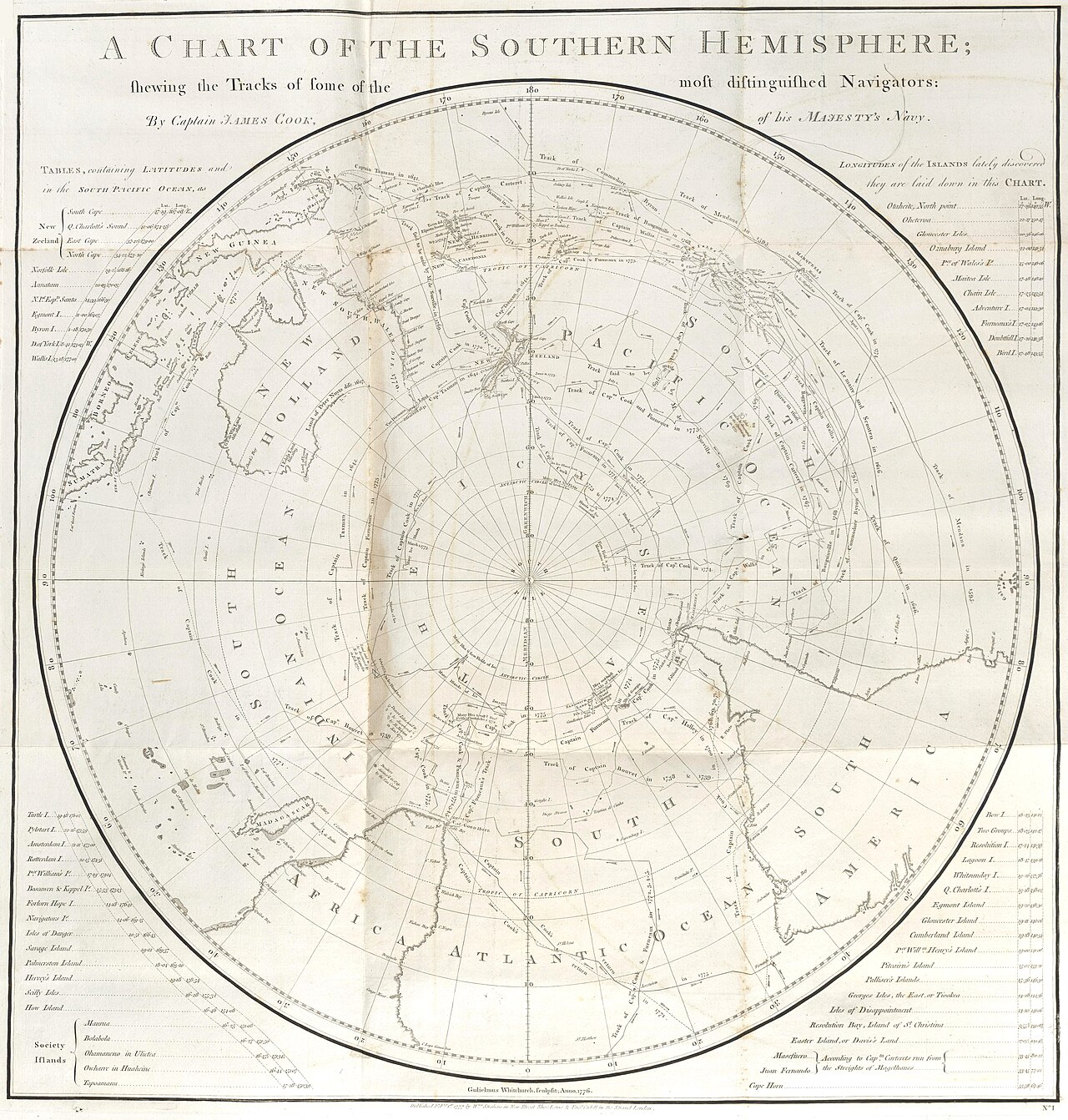
Circular map titled 'A Chart of the Southern Hemisphere' showing ocean tracks of navigators, with a polar projection centered on the South Pole. Labels include New Holland, Pacific Ocean, South America, Africa, and Atlantic Ocean. Tables of latitudes and longitudes frame the left and right margins.Document

Primary source

A Chart of the Southern Hemisphere

James Cook · 1776

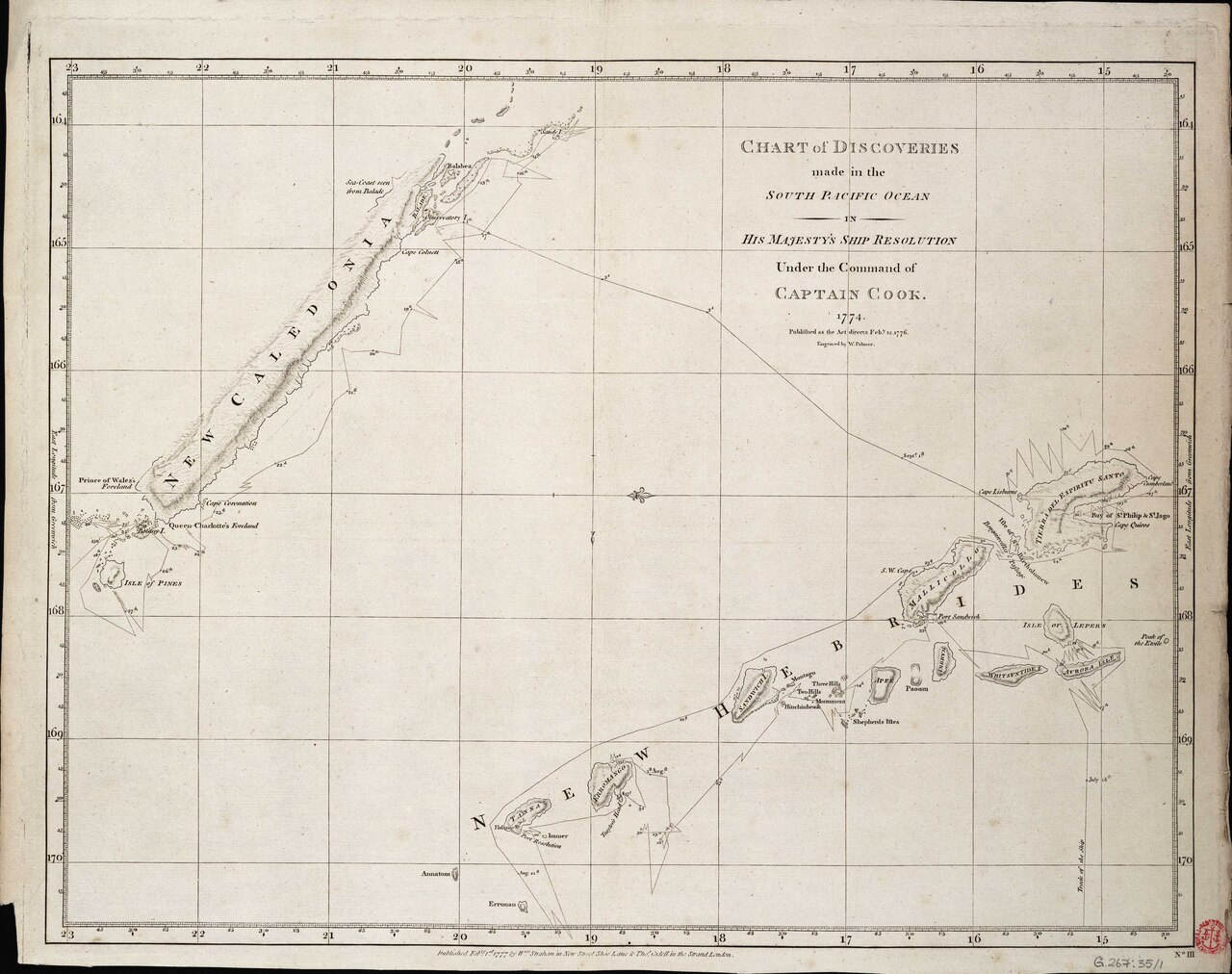
Engraved nautical chart titled Chart of Discoveries made in the South Pacific Ocean in His Majesty's Ship Resolution under Captain Cook, 1774. Shows New Caledonia, the New Hebrides, and Cook's ship track with latitude and longitude grid, dated 1774.Document

Primary source

Chart of Discoveries in the South Pacific

James Cook · 1774 (published 1776-1777)

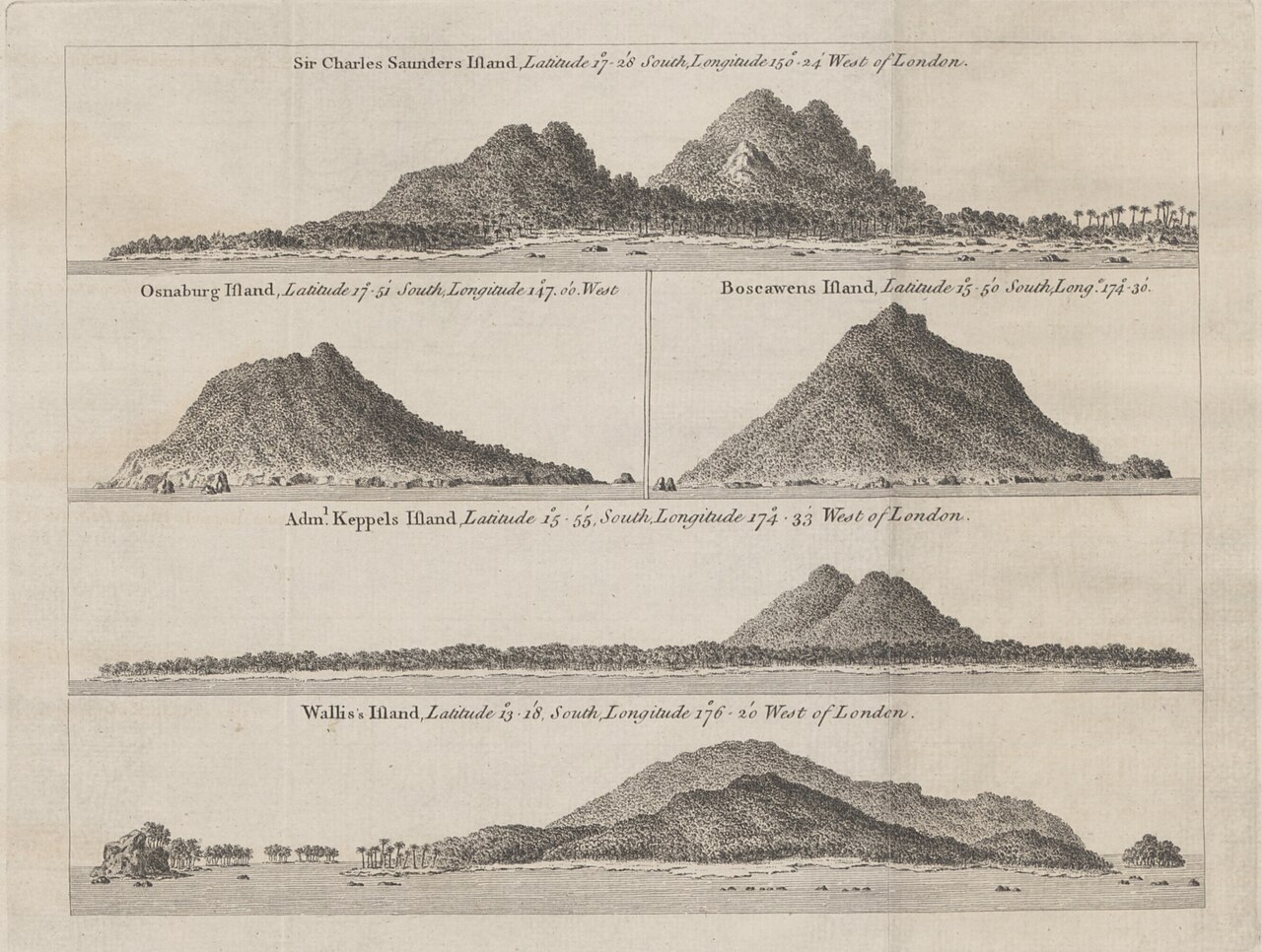
Engraved print of five coastal views of Pacific islands, labeled Sir Charles Saunders Island, Osnaburg Island, Boscawens Island, Admiral Keppel's Island and Wallis's Island, with latitude and longitude captions. Each shows dark hilly or mountainous silhouettes above a shoreline lined with trees and palms.Painting

Primary source

Coastal Views of Pacific Islands

James Cook · 1773

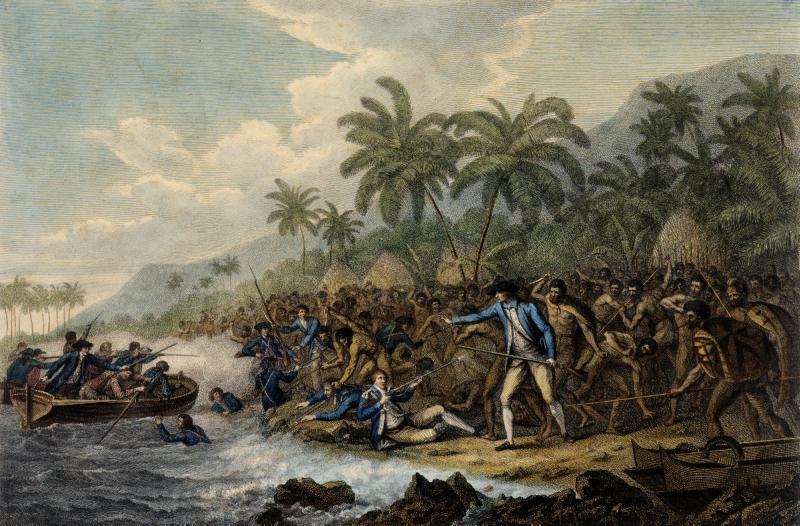
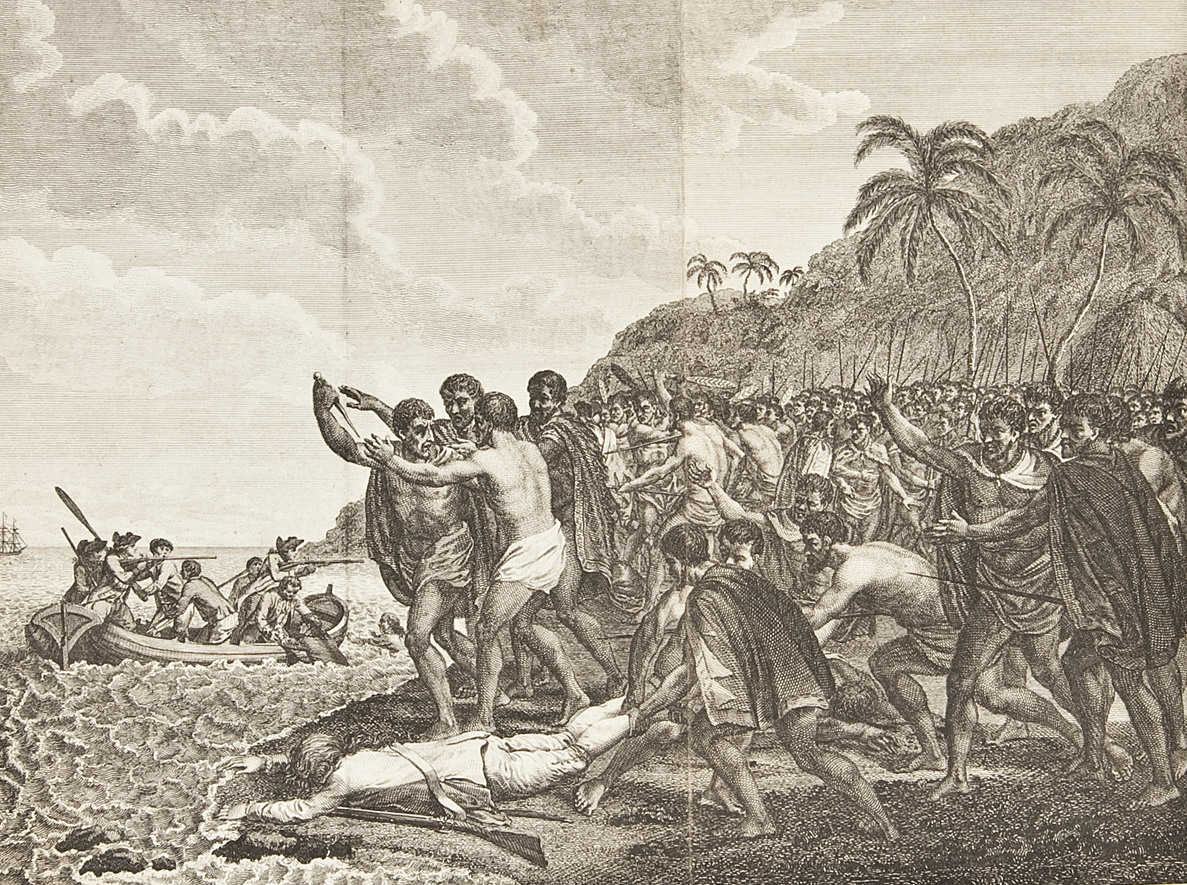
Engraving of the death of Captain James Cook on a beach at Owhyhee (Hawaii). Islanders crowd the shore with spears and clubs, some grappling with figures; a body in white lies in the foreground at the water's edge. Ship boats with armed men are at left, and palm trees line the hillside.Painting

Secondary source

The Death of Captain James Cook at Owhyhee

D. P. Dodd (drawing), T. Cook (engraving) · 20 November 1784

Book

Primary source

James Cook diaries

James Cook · 16 May 1768

Document

Primary source

Lieutenant's certificate for James Cook

James Cook · 13 May 1768

Book

Secondary source

Cook, James (1728-1779), Dictionary of National Biography

1885-1900

Book

Tertiary source

Cook, James, in Encyclopaedia Britannica, 11th edition

1911

Book

Secondary source

Explanation, Captain Cook's Journal During His First Voyage Round the World

1893

Book

Secondary source

The Life of Captain James Cook (LibriVox audio)

Arthur Octavius Kitson · 1907

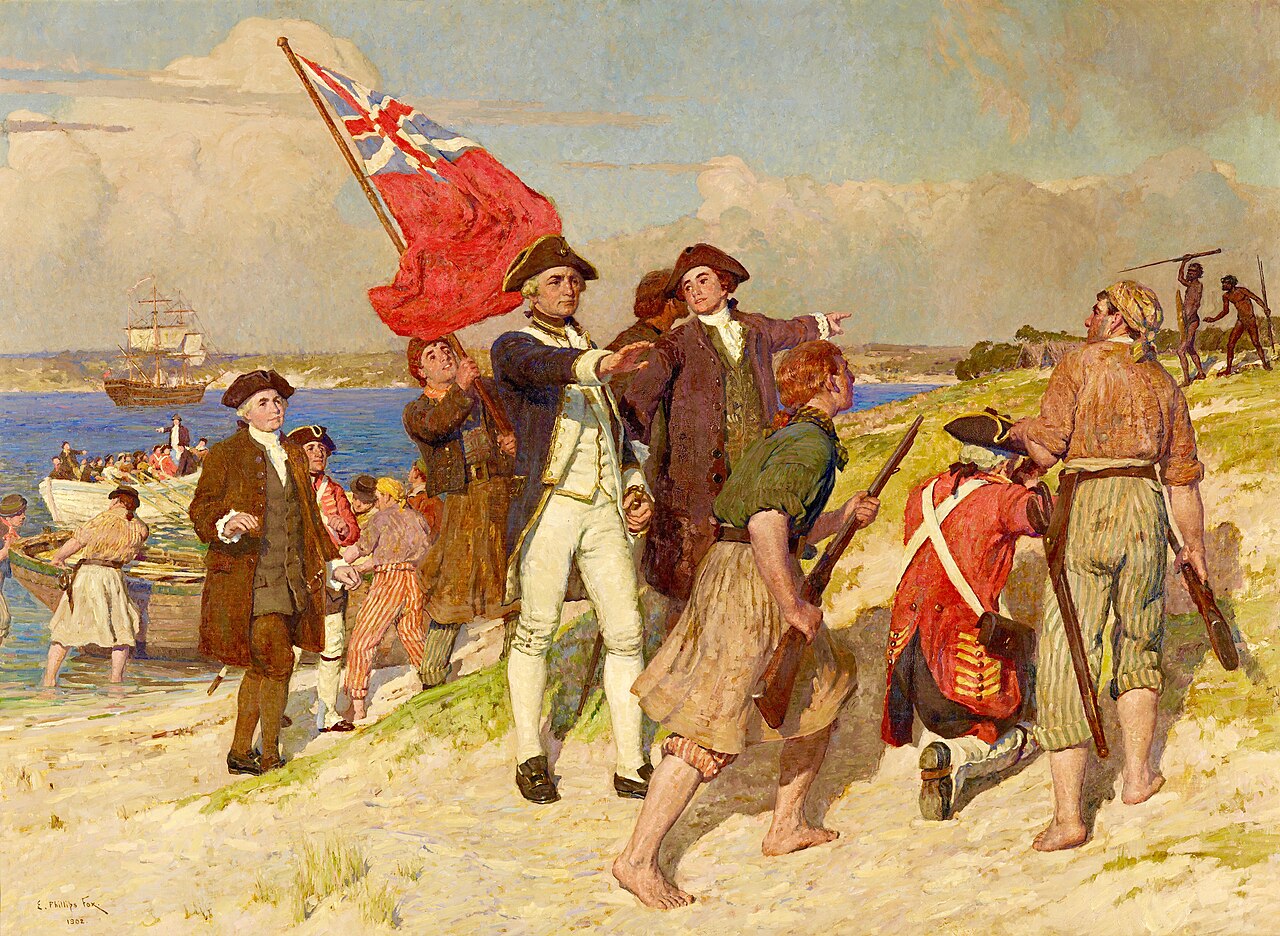
Painting of a group of men landing on a sandy beach. A man in a white naval uniform and tricorn hat holds a red British ensign flag and points inland. Beside him stands a man in a brown coat pointing. Sailors in striped trousers and a red-coated soldier with a musket are nearby. On the left, a boat and a sailing ship sit on blue water, and Aboriginal people with spears stand at the upper right.Painting

Secondary source

Landing of Lieutenant James Cook at Botany Bay

E. Phillips Fox · 1902

Book

Secondary source

Cook's Voyages of Discovery

James Cook · 1871

Book

Tertiary source

Cook, James, in Appletons' Cyclopaedia of American Biography

1891

Book

Tertiary source

Cook, James, Captain, in The New Student's Reference Work

1914

Document

Primary source

Letter suggesting Cook's membership in the Royal Society

Joseph Banks and other Fellows of the Royal Society · 1775

Book

Secondary source

The Oregon Coast in 1778 by Captain James Cook

1935

Book

Secondary source

Captain Cook in New South Wales

James Bonwick · 1901

Book

Secondary source

An Historical Account of the Circumnavigation of the Globe

1836

Book

Tertiary source

A Modern System of Universal Geography, volume I

Thomas Bankes · 1797

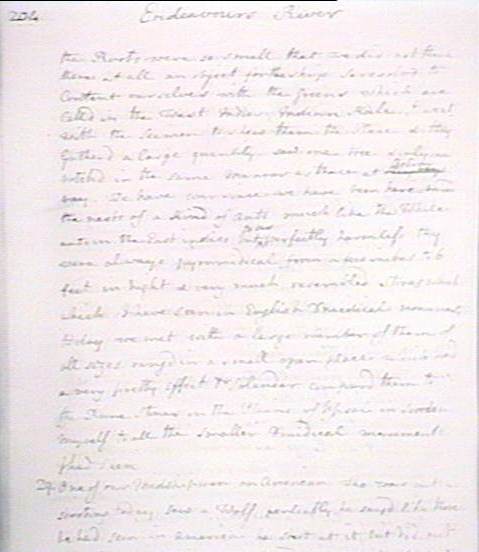
Scanned handwritten manuscript page headed 'Endeavours Voyage' with page number 204 in the top left corner. Dense cursive handwriting in brown-black ink fills the page, with some words crossed out and inserted above the lines.Diary entry

Primary source

Joseph Banks Endeavour journal, page 204

Joseph Banks · June 28 and 29, 1770

Want the full shelf? Chat with James Cook in the app and open the Sources panel — every quote links back to the original.

Use James Cook in class

2 collections

Ready-made collections from the Humy team that feature James Cook. Preview any of them, then try it free.

Trusted by educators worldwide

Conversations
375,000+
Real exchanges between students and historical figures
Messages exchanged
4,142,000+
Across every figure, classroom and language
Historical figures
100,000+
Each informed by a curated biography and selected sources
Languages supported
50+
From English and Spanish to Arabic and Korean

Paying customers

Used by 98 schools and universities

Partner school logo
Tecnológico de Monterrey logo
Hyper Island logo
Partner school logo
Chambersburg Area School District logo
Broward County Public Schools logo
Nebo School District logo
National Louis University logo
South Florida PBS logo
Punahou School logo
University of Wisconsin–River Falls logo
Partner school logo
Partner school logo
Archbishop Mitty High School logo
Kingsburg High School logo
Norwalk Public Schools logo
Partner school logo
Connections logo
Partner school logo
Moore Public Schools logo
Partner school logo
Partner school logo
Partner school logo
Partner school logo
Robbinsville Public Schools logo
Partner school logo
Partner school logo
Partner school logo
Tecnológico de Monterrey logo
Hyper Island logo
Partner school logo
Chambersburg Area School District logo
Broward County Public Schools logo
Nebo School District logo
National Louis University logo
South Florida PBS logo
Punahou School logo
University of Wisconsin–River Falls logo
Partner school logo
Partner school logo
Archbishop Mitty High School logo
Kingsburg High School logo
Norwalk Public Schools logo
Partner school logo
Connections logo
Partner school logo
Moore Public Schools logo
Partner school logo
Partner school logo
Partner school logo
Partner school logo
Robbinsville Public Schools logo
Partner school logo
Partner school logo

What educators are saying

“We enjoyed the program last year and used it frequently.”
“My students say it’s a welcome change of pace. I’m not a fan of the “sage on the stage” model, so I try to incorporate research-oriented and self-paced activities. With Humy, students have to take charge of their learning. They’ve become more adept at critical thinking, forming better questions, and improving their reading comprehension. The interview feature has been my go-to tool. I create assignments where students must ask historical figures a set number of questions, then summarize the responses to ensure they’re truly absorbing the material. This approach lets them actively explore the past rather than passively consuming information.”
“Humy has helped me bring historical figures, sometimes long past, to life. When my students interact with these figures in real-time, it eliminates some of the perceived “ancient” characteristics of my curriculum. This has shifted my students’ thinking away from viewing history as abstract or irrelevant. Real-time interactions make historical figures relatable, even allowing students to ask off-topic questions that help put historical lives in a more relevant context for 13-year-olds. The feature I use the most is the interview feature. After teaching a topic, most recently Gandhi and Joan of Arc, I have the students ask pointed, focused questions. We practice good conversation techniques beforehand, teaching them to listen (or read) carefully and formulate thoughtful follow-up questions rather than just interrogating. It helps students practice effective conversation skills.”

FAQ

Frequently asked questions

Who is James Cook?
British explorer and cartographer known for his voyages to the Pacific Ocean. On Humy.ai you can chat with an AI version of James Cook that draws on a short biography and 87 historical sources during the conversation — by text or voice, in 42 languages.
Is James Cook AI free?
James Cook is part of Humy's full library of more than 100,000 figures, which comes with a paid plan. A free account (no credit card) includes 20 messages a month with the free library's figures, so you can try how the conversations work first.
What sources does the James Cook AI use?
It draws on a short biography and 87 historical sources (paintings, books and documents), including “Captain James Cook, 1728-79”, “James Cook, line engraving by Basire after Hodges” and “Sketchings of the 1769 Venus Transit”. Each source has its own page on Humy.ai.
How historically accurate is the AI version of James Cook?
Each figure uses a short biography and a small set of selected historical sources as context (retrieval-augmented generation), so answers stay closer to known material than the model's general knowledge alone. It isn't a citation-grade research tool — like any LLM, the AI can get details wrong or extrapolate. Treat it as a strong starting point for inquiry and cross-reference important claims.
Can I talk to James Cook by voice?
Yes. In addition to text chat, you can call James Cook and hear their voice respond in real time — useful for auditory learners, interview practice and Socratic dialogue.
Is Humy.ai safe and compliant for schools?
Yes. Humy.ai is used by more than 100 schools, universities and organisations. The platform is FERPA- and GDPR-aligned, supports SSO, and offers an IT-approval pack tailored for school procurement teams.

Ready when you are

Start chatting with James Cook now.

20 messages free · No credit card · Available in 50+ languages.