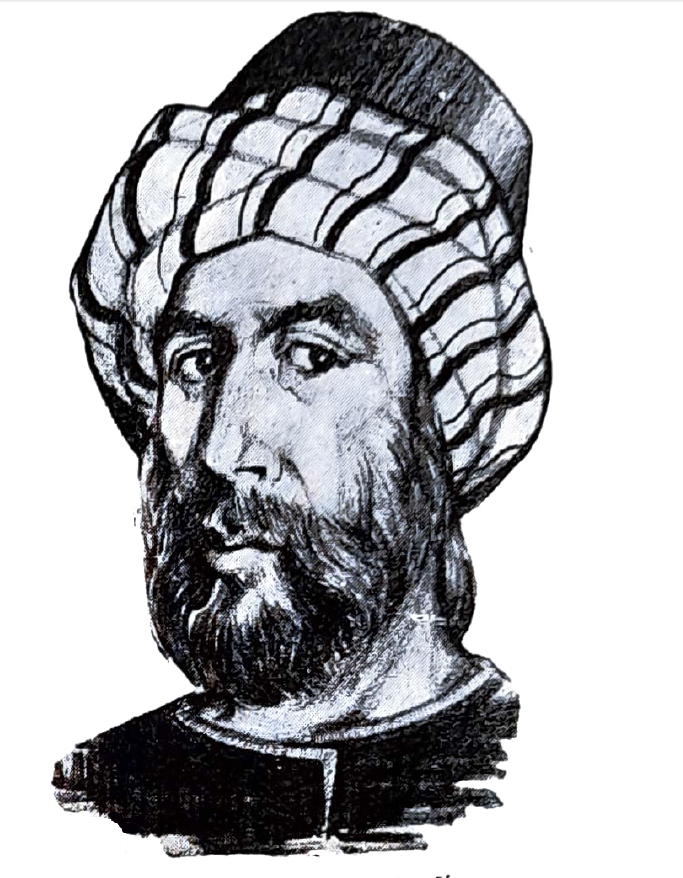
Portrait of Ibn Battuta

AI Historical Figure

Ibn Battuta

Renowned Moroccan explorer and traveler.

Chat with Ibn Battuta via text or voice — in 42 languages, drawing on a curated biography and 68 historical sources. Available 24/7.

Start chatting with Ibn Battuta20 messages free · No credit card
Lived
1304–1369
From
Morocco
Known for
Literature & writingExploration
Ibn Battuta

Ibn Battuta

Online · responds in seconds

Hello — I'm Ibn Battuta. Renowned Moroccan explorer and traveler. What would you like to ask me?

20 messages free · No credit card · Powered by Humy.ai

Live preview · Switch between 42 languages above · Send a message to continue in the app

Multilingual

Talk to Ibn Battuta in 42 languages

Ask Ibn Battuta questions in any language below, and the rest of Humy's app speaks it too. Pick yours to open the chat in that language.

Also in German (Austria), German (Switzerland), English (UK), English (Australia), English (Canada).

The sources behind this AI

68 sources · 33 artifacts · 17 books · 12 documents · 5 paintings · 1 sculpture

Ibn Battuta doesn’t improvise from thin air. The AI is grounded in 68 curated historical sources students can inspect. Open any of them to see what informs the conversation.

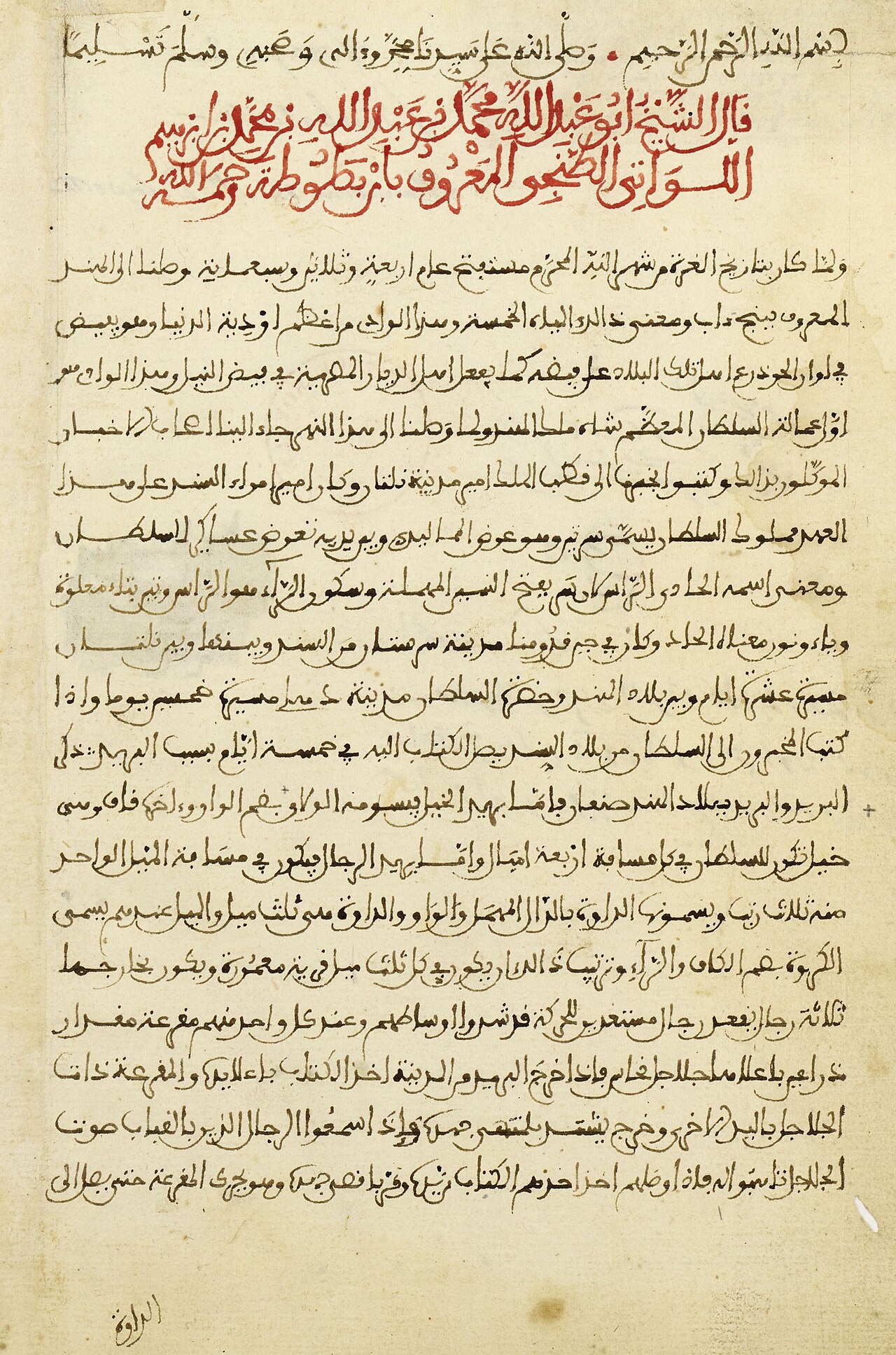
Scanned manuscript page in Arabic calligraphy on aged cream paper. The top has a line of black script with a decorative heading, and a red-ink title block in larger calligraphy reading the opening of the work. Below are about two dozen lines of brown-ink handwritten text in dense Arabic script, with a marginal note at the bottom left.Book

Primary source

The Rihla

Ibn Battuta · 1354-1356

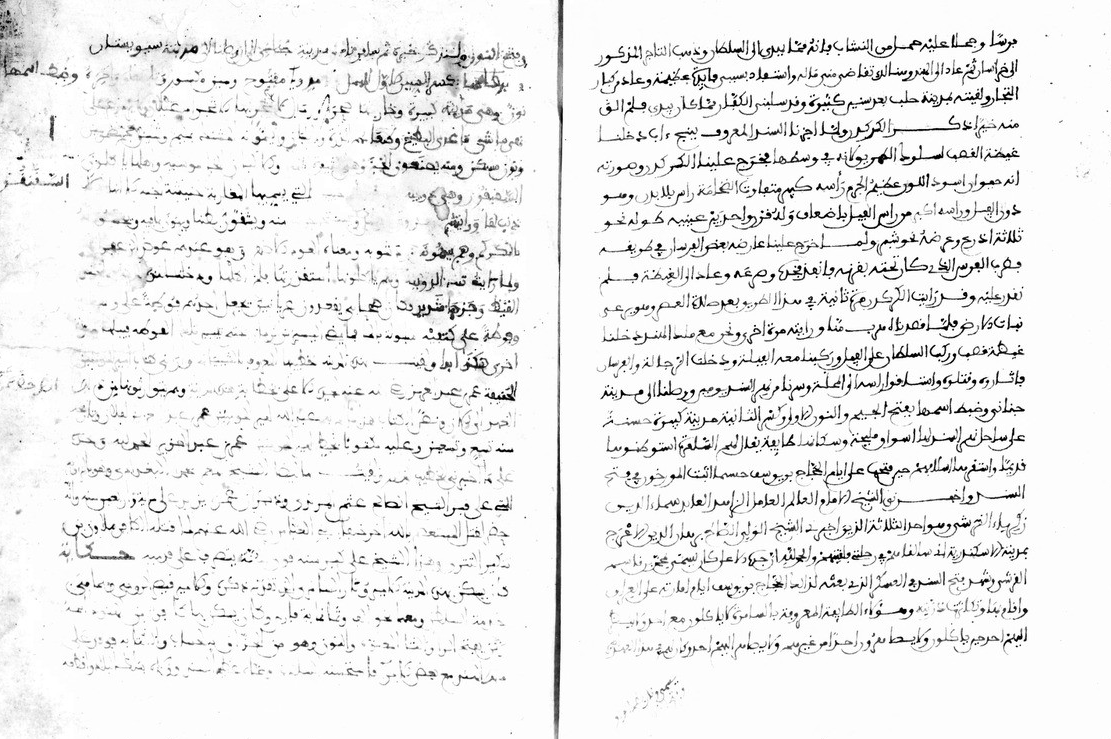
Two facing pages of a handwritten Arabic manuscript on aged paper. The right page is written in dark ink in neat, flowing script; the left page is faded and more worn, with lines of script partly obscured. The pages show the text of the travel account.Book

Primary source

Manuscript of the Rihla by Ibn Juzayy

Ibn Juzayy · 14th century

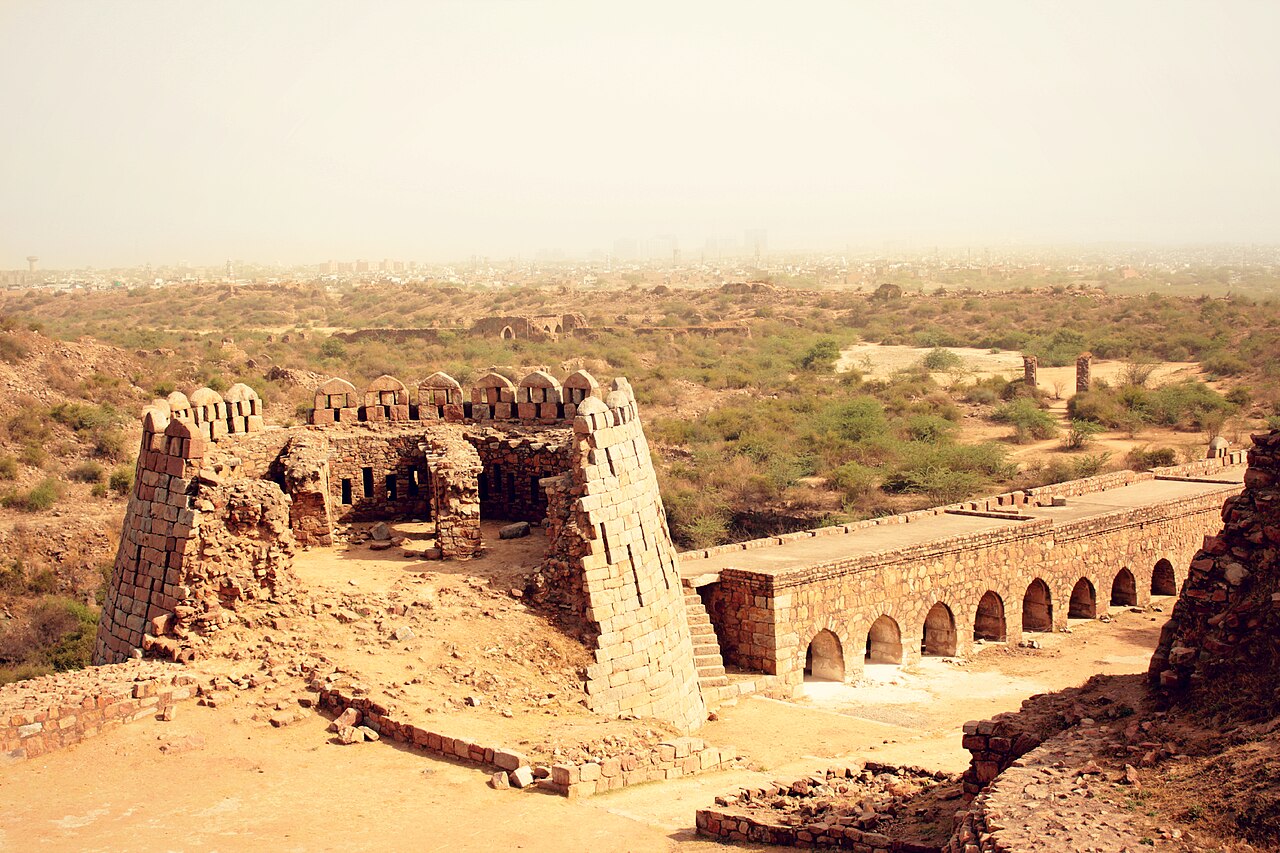
Ruins of a stone fort on a dry, hazy hillside under a pale sky. Massive sloping stone walls with crenellated battlements stand on the left, and a long arched stone gallery with a flat roof runs across the right. Scrubby bushes and dry earth surround the site, with a distant city skyline on the horizon.Artifact

Secondary source

Tughlaqabad Fort

Ghiyath al-Din Tughluq · 1321

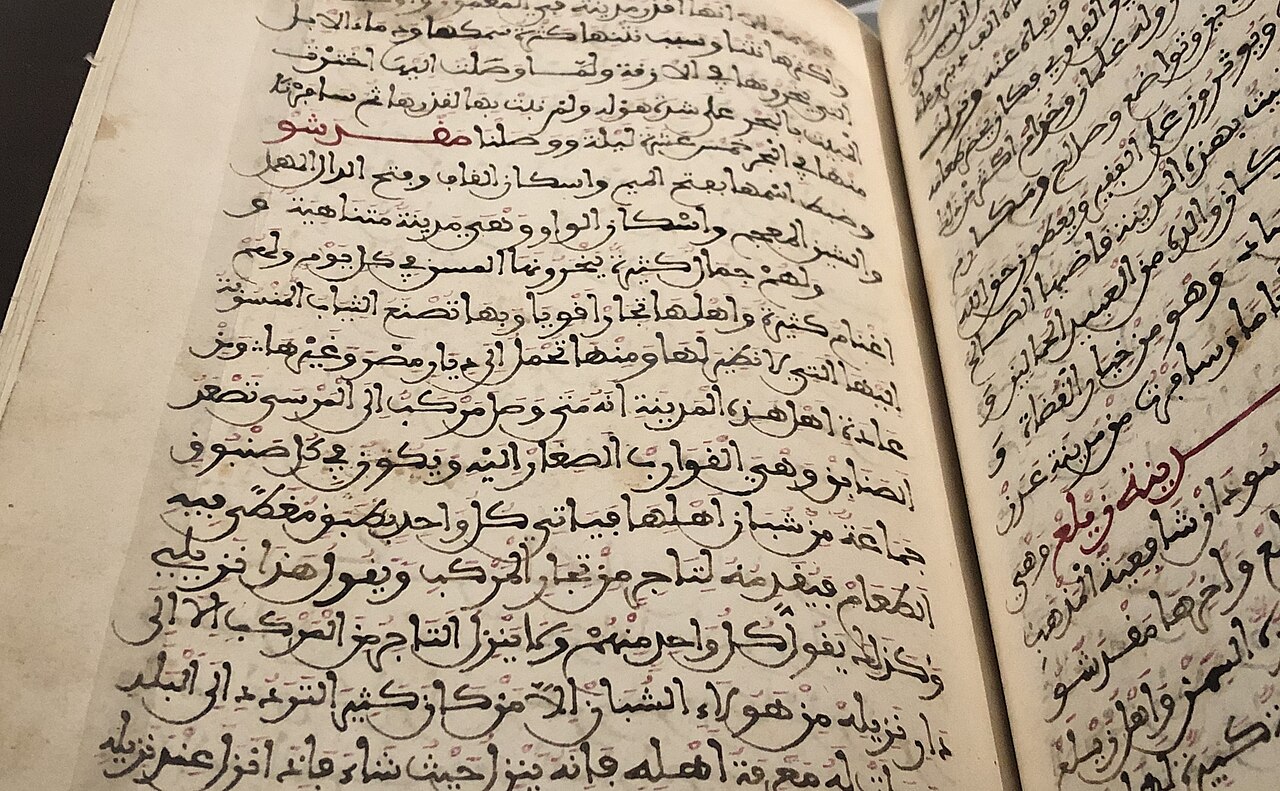
Photograph of an open handwritten Arabic manuscript with dense black ink script on cream pages, with some red-ink headings visible. The left page is in focus and the right page is angled and partly blurred.Book

Secondary source

Manuscript copy of the Rihla (1484)

Ibn Juzayy · 1484

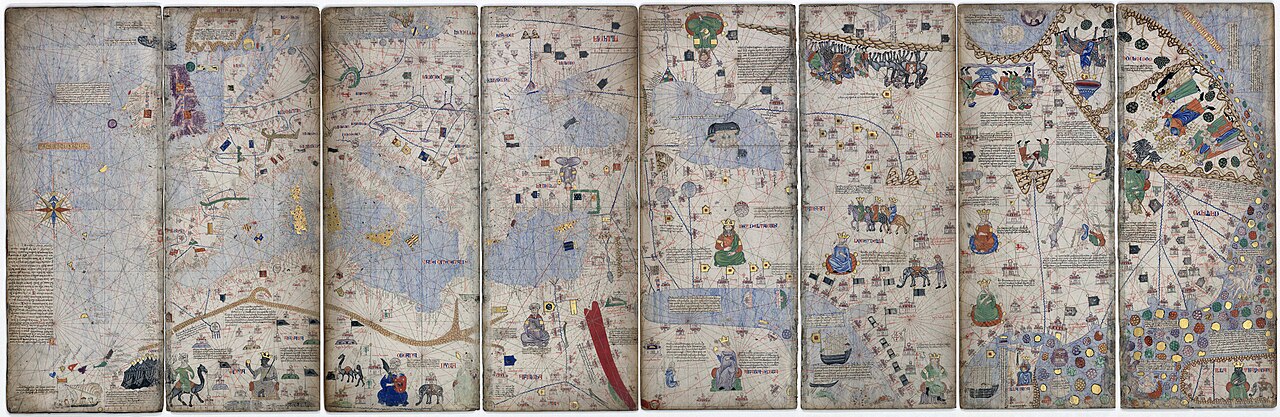
Eight vertical panels of the Catalan Atlas side by side, showing an illuminated medieval world map with colored seas, decorated landmasses, compass roses, flags, rulers on thrones, and figures and animals.Painting

Primary source

Catalan Atlas

Cresques Abraham · c. 1375

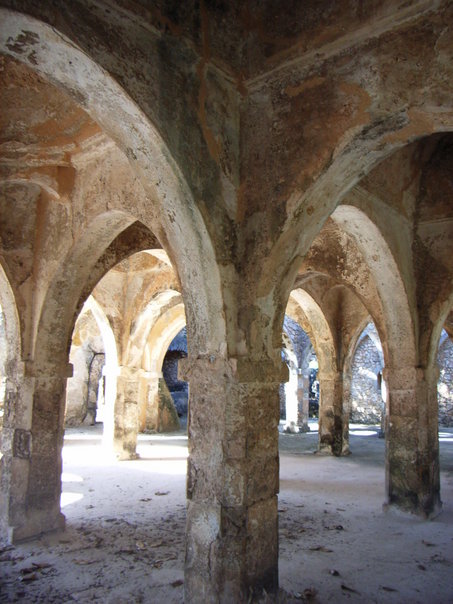
Interior of a ruined stone building with weathered pillars and pointed arches supporting vaulted ceilings. Light enters from openings, and the floor is sandy with scattered debris.Artifact

Secondary source

Great Mosque of Kilwa

11th-14th century

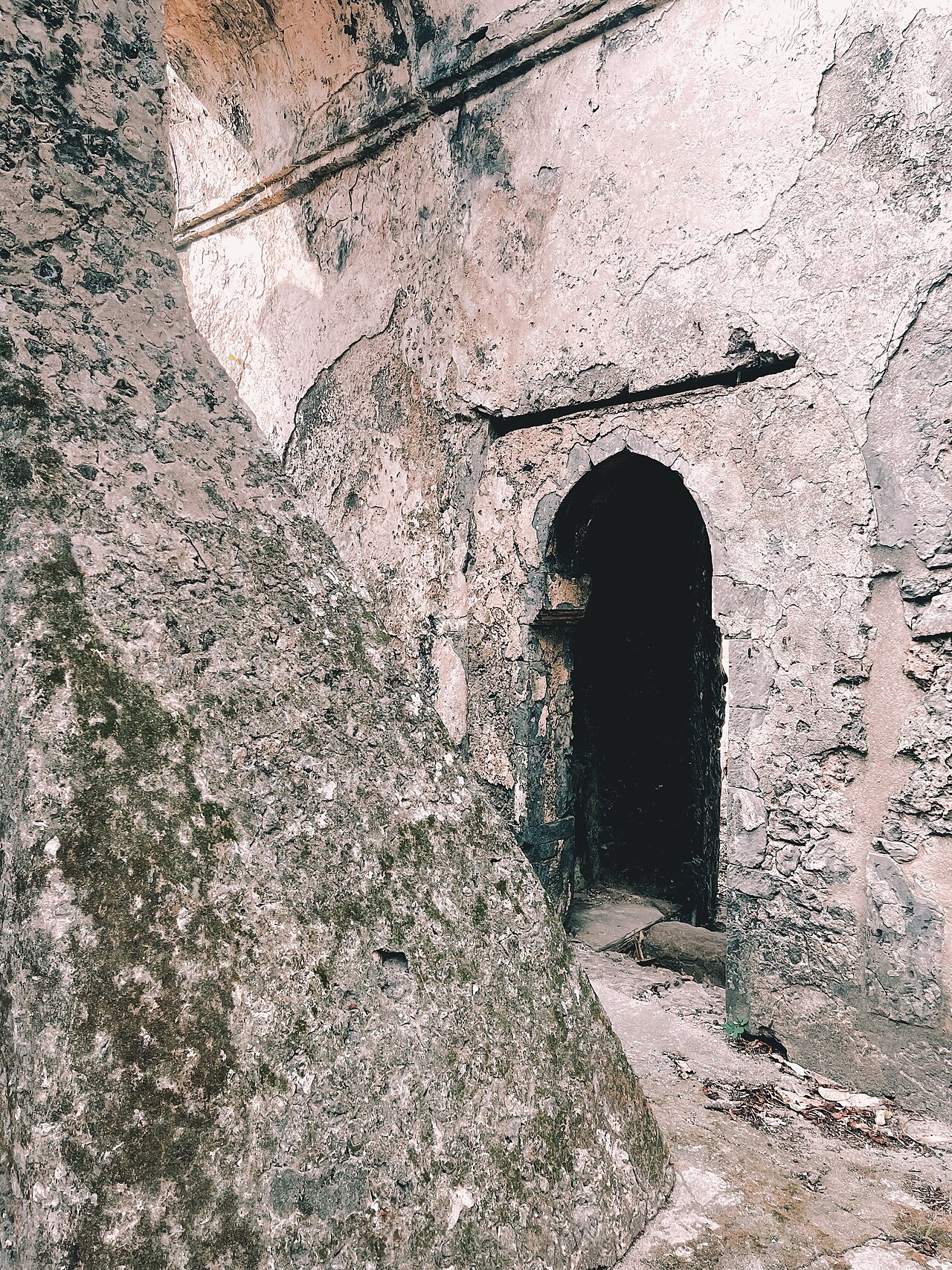
Weathered stone wall of ruined building with a dark, narrow arched doorway in the center. Moss grows on the left stone block, and plaster is peeling from the walls. A dirt path leads to the doorway.Artifact

Secondary source

Palace of Husuni Kubwa

c. 1300

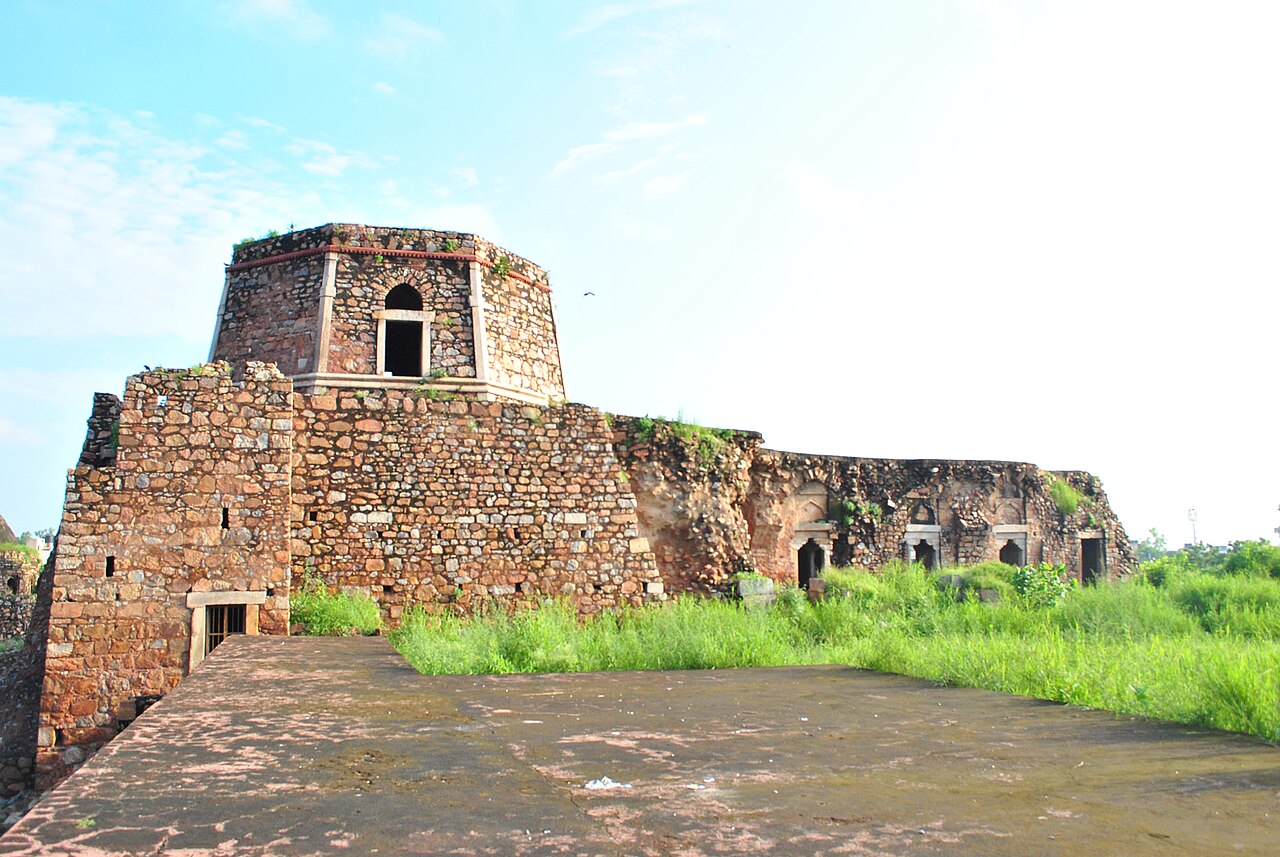
A ruined sandstone and rubble-masonry structure with a domed octagonal tower on the left, topped by a small arched window. Lower walls extend right with several arched openings. In the foreground is a flat stone platform overgrown with green grass under a pale blue sky.Artifact

Secondary source

Bijay Mandal

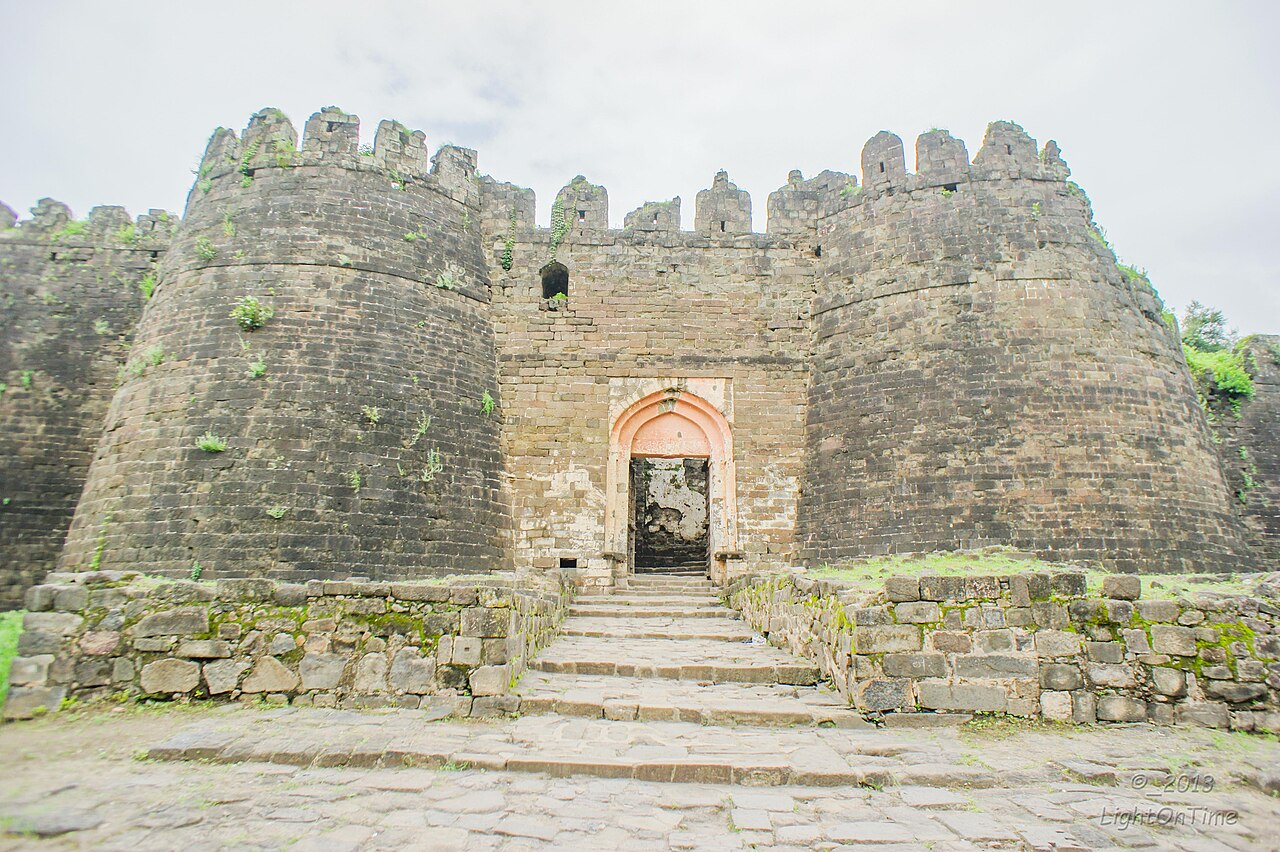
Photo of the entrance of a large stone fort with two massive round bastions topped with crenellated battlements. A pointed arched gateway with a reddish stone frame leads through a wall, up a set of stone steps paved in cobblestone. Overcast sky.Artifact

Secondary source

Daulatabad Fort

12th century; capital 1327-1334

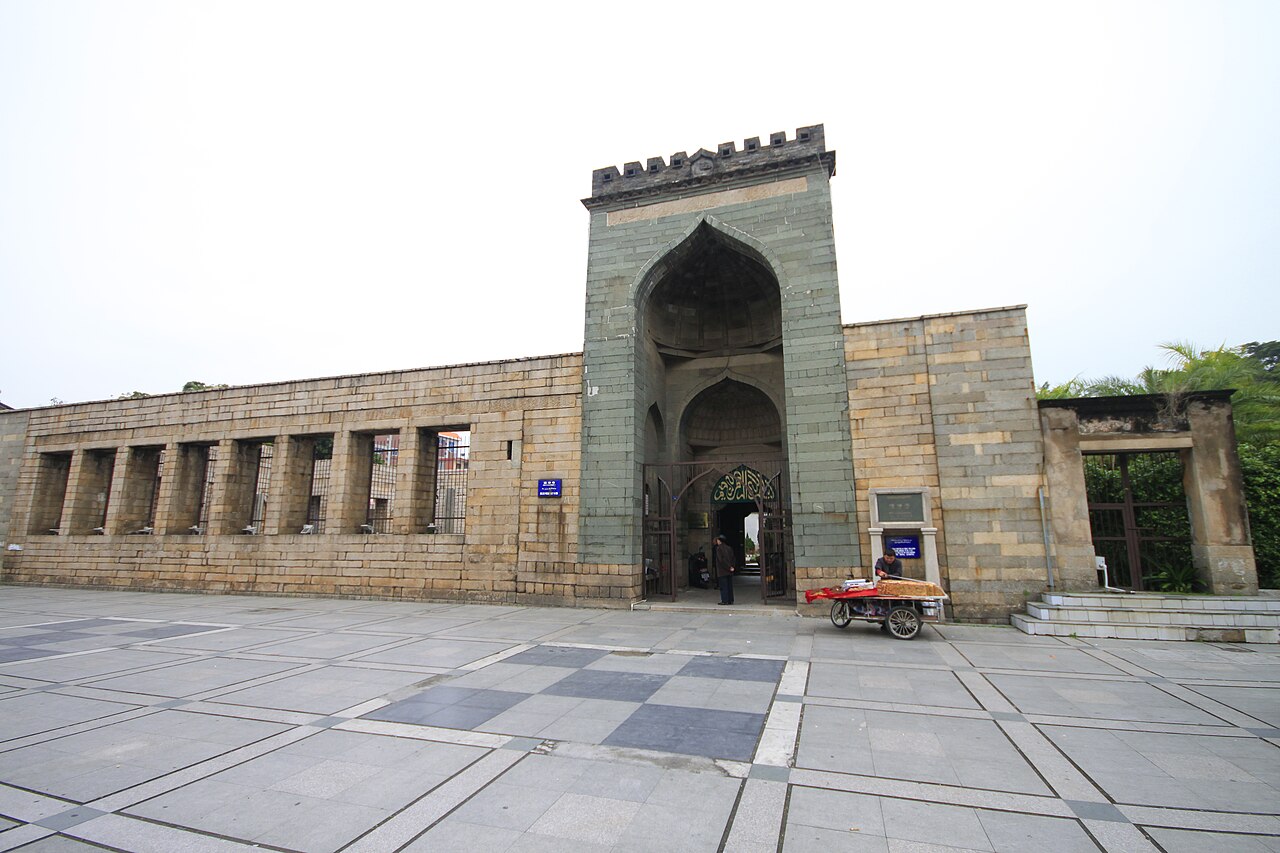
Front view of a stone mosque gateway with a tall green-tiled central portal topped by a crenellated parapet, flanked by long low stone walls with arched openings. A paved plaza in the foreground has a small cart with a person beside it on the right.Artifact

Secondary source

Qingjing Mosque

1009 or 1010 CE

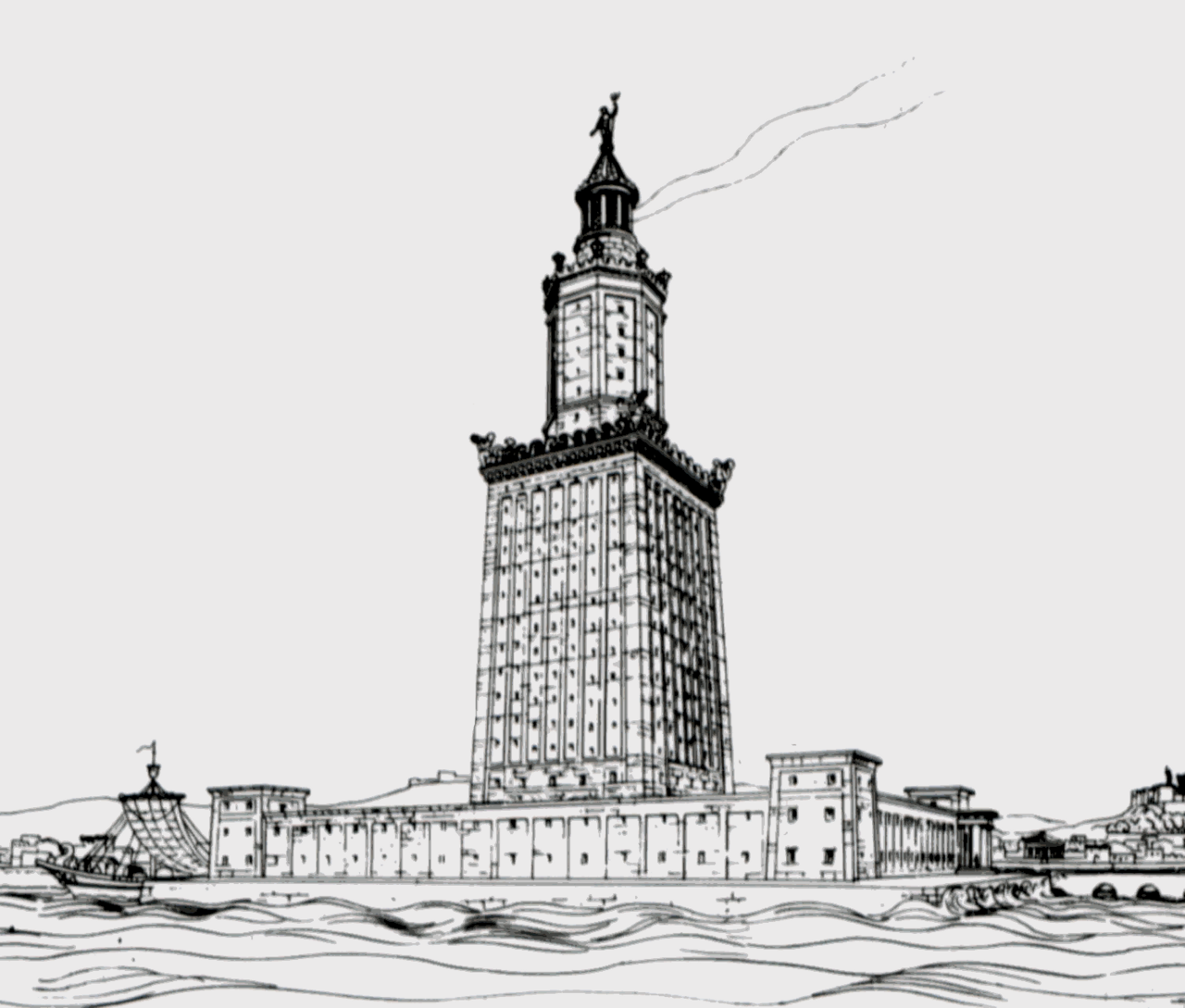
Black and white line drawing of a tall, multi-tiered stone lighthouse rising from a broad fortified base beside the sea. A statue stands atop the upper tower, with a plume of smoke or fire trailing to the right. A ship with a sail is at left, and waves fill the foreground.Artifact

Secondary source

Lighthouse of Alexandria

c. 278 BC

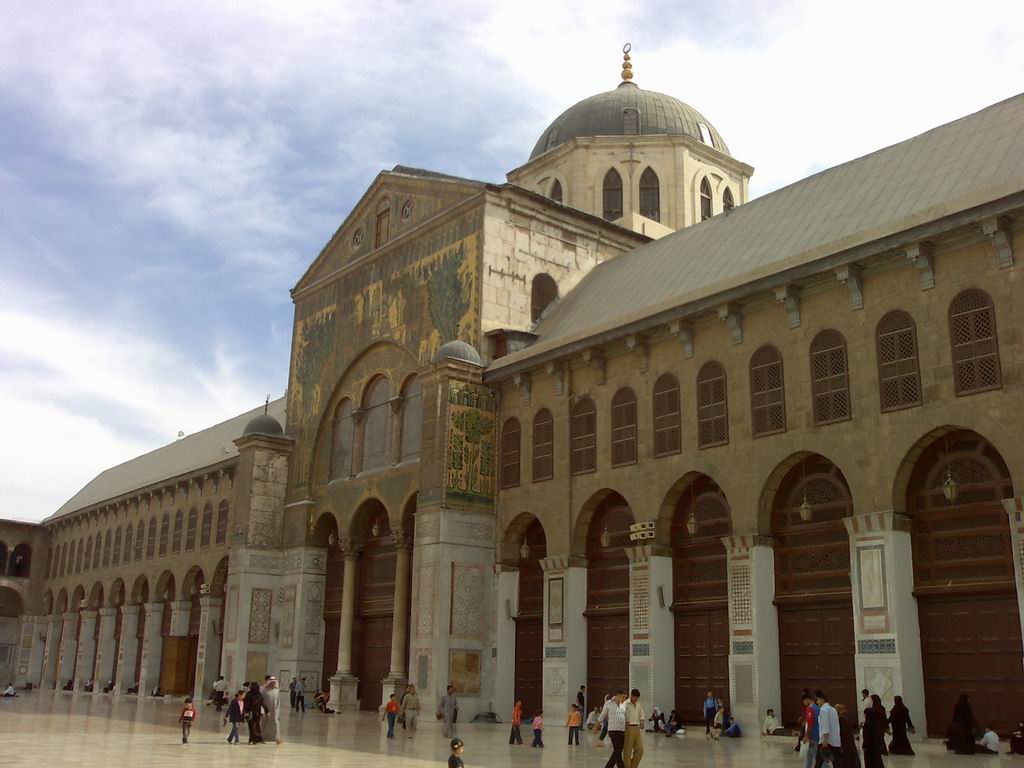
Exterior view of the Umayyad Mosque in Damascus across a paved courtyard with people walking. A large gray stone dome with a golden finial rises above a mosaic-covered facade, with arched windows and tall wooden doors along the stone colonnade.Artifact

Secondary source

Umayyad Mosque

706 CE

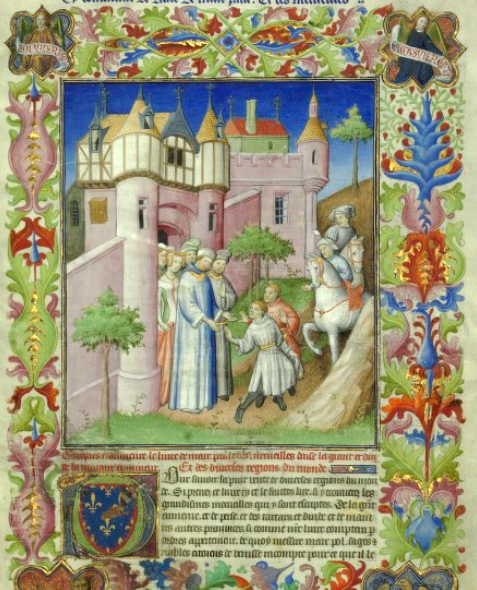
Illuminated manuscript page with a decorated border and a miniature painting of a medieval walled city with pink towers and a rider on a white horse greeting a group of robed men. Text in columns below.Book

Secondary source

The Travels of Marco Polo

Rustichello da Pisa · 1298

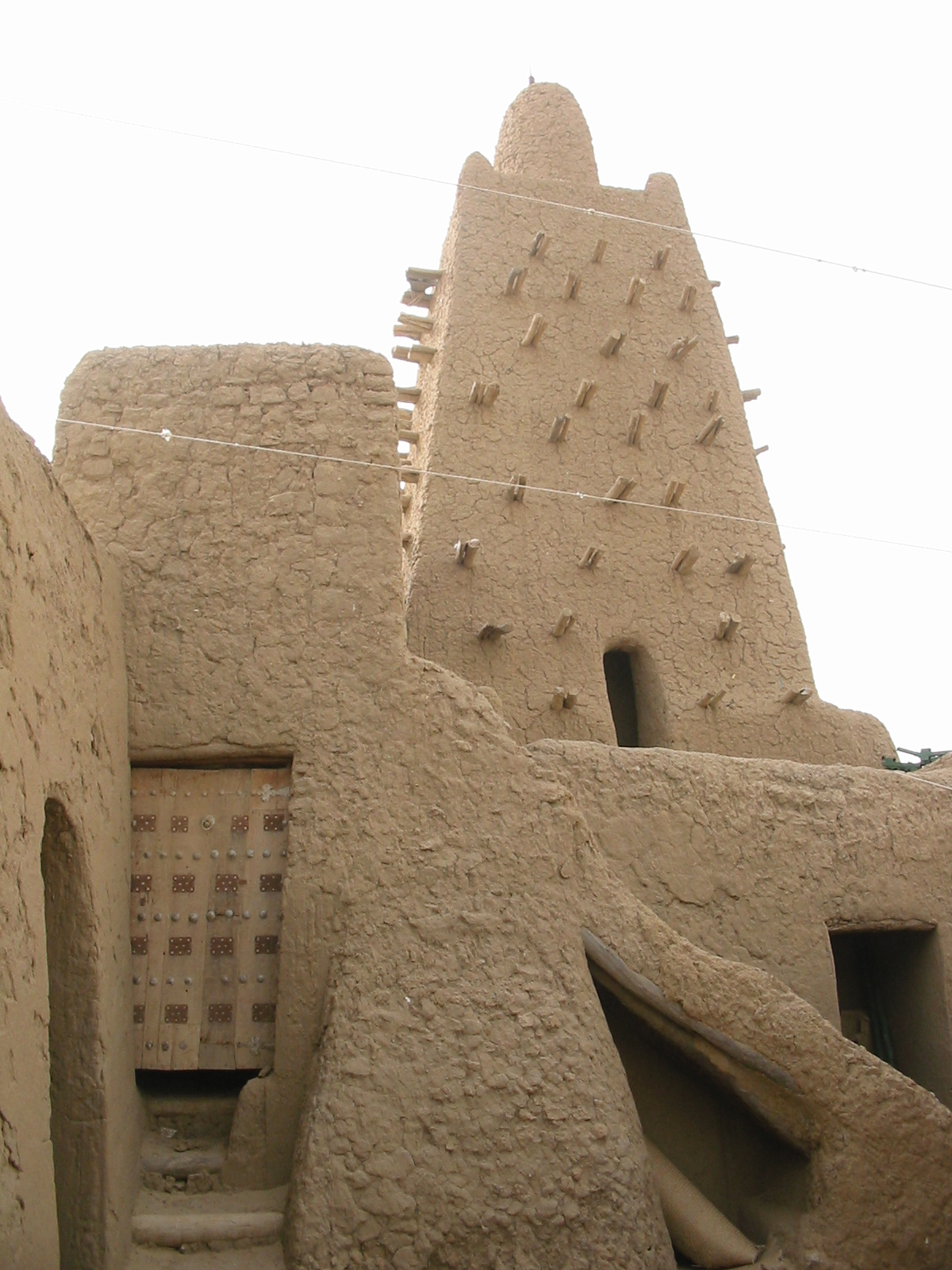
Exterior view looking up at a mud-brick mosque with a tall tapering tower topped by a rounded dome, with protruding wooden beam ends set in its walls. A large studded wooden door sits at lower left beside steps, under a pale sky with power lines crossing.Artifact

Secondary source

Djinguereber Mosque

1327 (traditional date)

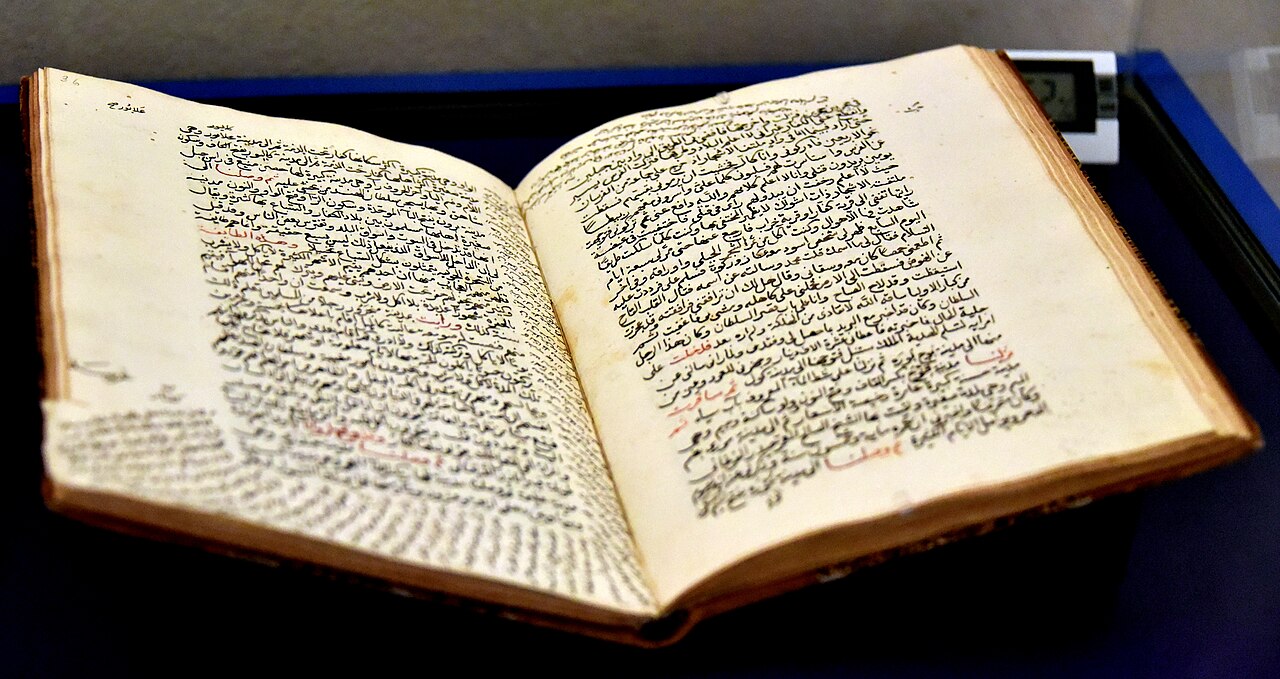
An open handwritten Arabic manuscript lies on a dark display stand with a blue-edged base. Brown leather covers frame densely written black script with some red-ink headings on yellowed pages. A small digital clock sits in the background.Book

Secondary source

Historic Copy of Selected Parts of Ibn Battuta's Travel Report

1836

Back cover of a blue cloth-bound book, plain with no visible text except a small faint mark near the lower right edge. Worn corners and spine edge visible against a black background.Book

Secondary source

Tuhfat al-Nuzzar fi Ghara'ib al-Amsar wa Aja'ib al-Asfar (1867 Printed Edition)

Ibn Battuta · 1867

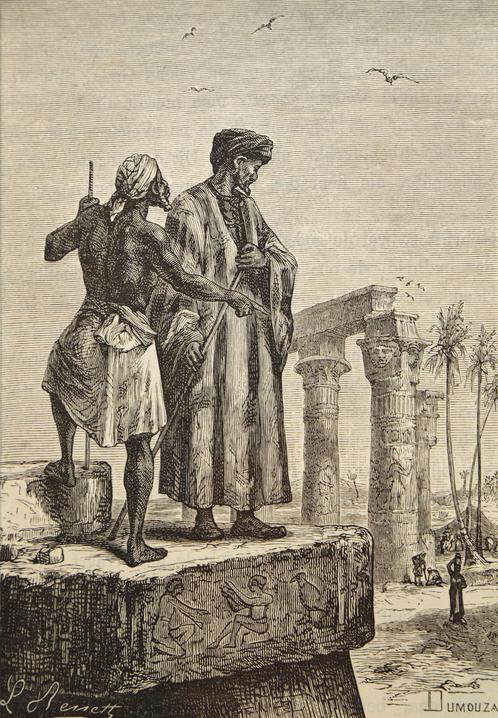
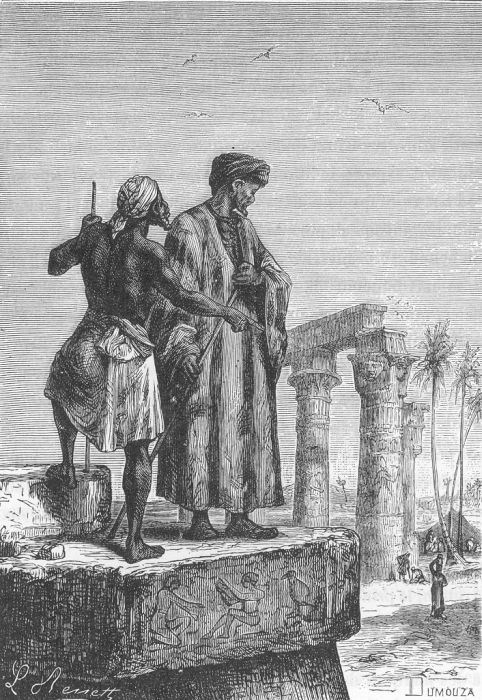
Black and white engraving of two men on a carved stone block in front of ruined temple columns with palm trees. A bearded man in a turban and long robe stands looking down; a man in a headwrap, seen from behind, points. Signed L. Benett at lower left.Painting

Secondary source

Ibn Battuta in Egypt

Léon Benett

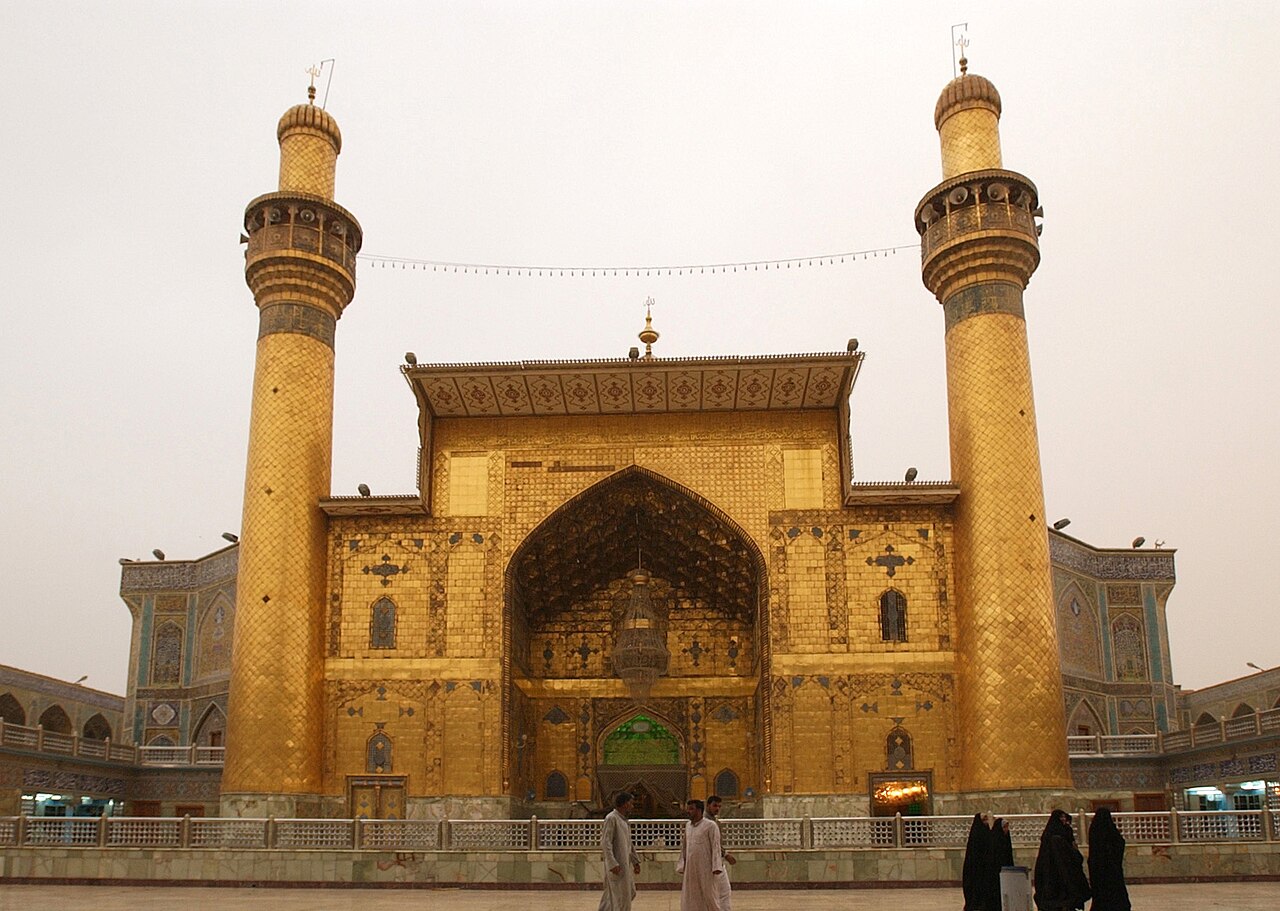
Golden-domed facade of the Imam Ali Mosque in Najaf, Iraq, with two tall minarets covered in gold tilework, a large pointed iwan entrance, and people walking across a paved courtyard under a hazy sky.Artifact

Secondary source

Imam Ali Shrine

977

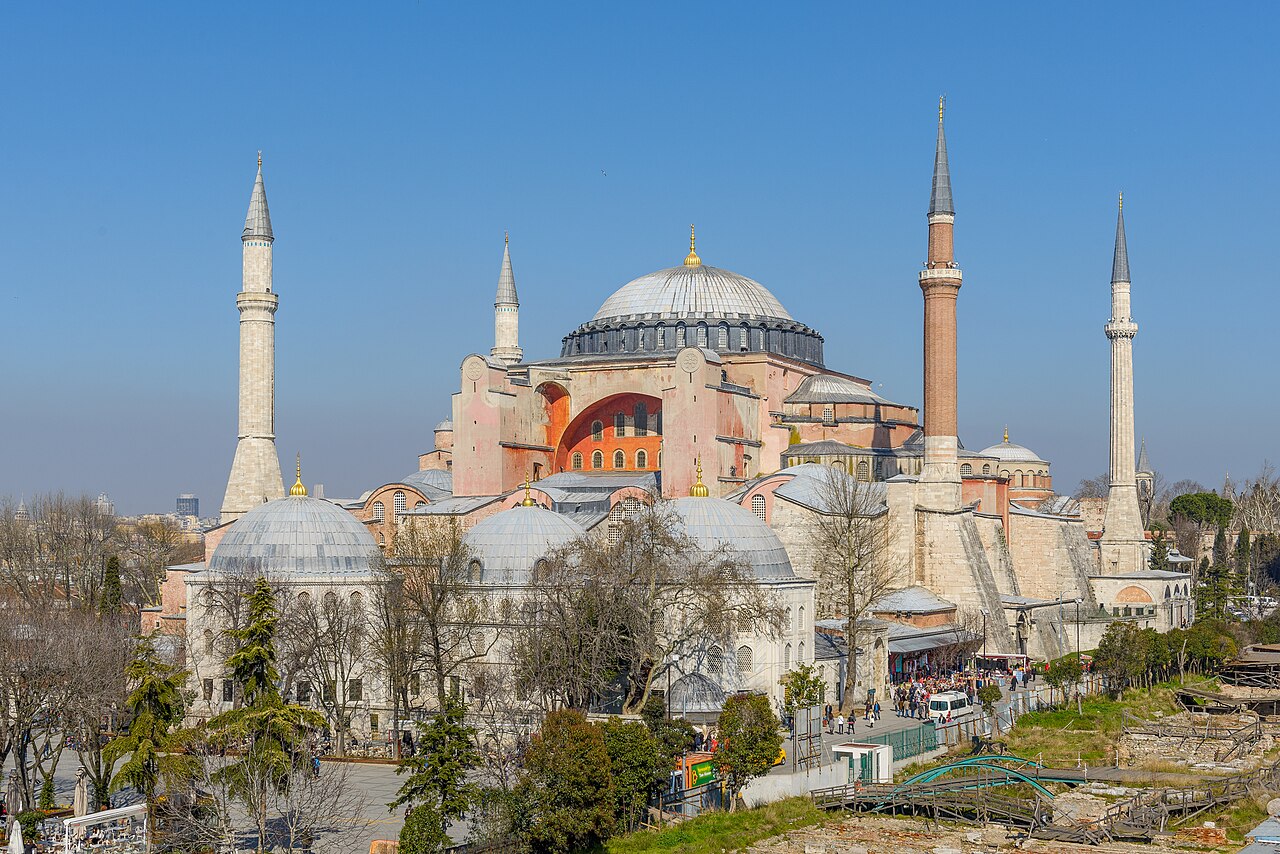
Exterior view of the Hagia Sophia in Istanbul under a clear blue sky. A large central dome rests on a pink-and-cream walled structure, flanked by tall white minarets and a brick-red minaret, with smaller domes and trees in the foreground and visitors on the paths below.Artifact

Secondary source

Hagia Sophia

Isidore of Miletus and Anthemius of Tralles · 532-537 CE

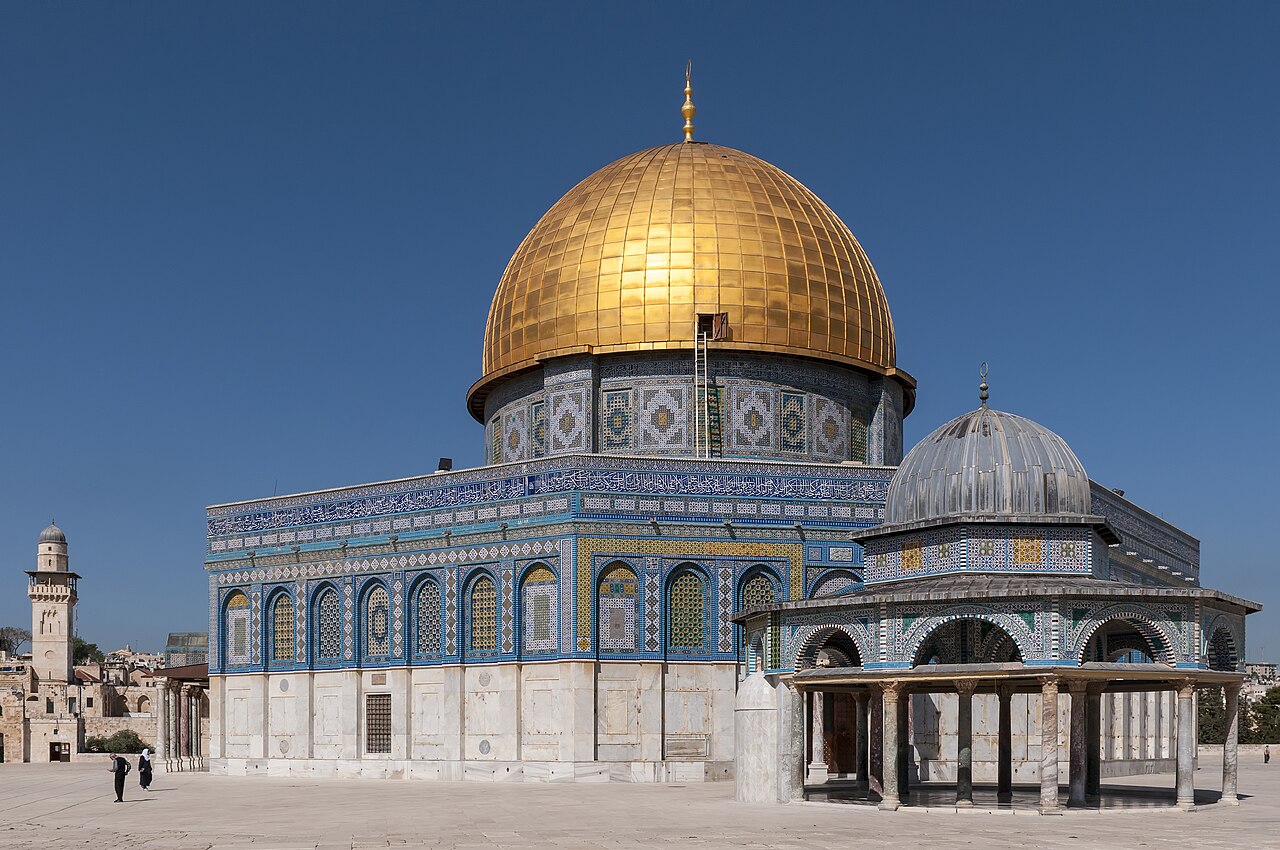
The Dome of the Rock in Jerusalem under a clear blue sky: a large gold dome atop an octagonal building with blue and white tiled walls and arched windows, with a smaller domed pavilion on the right and a minaret on the far left.Artifact

Secondary source

Dome of the Rock

Abd al-Malik · 691-692 CE

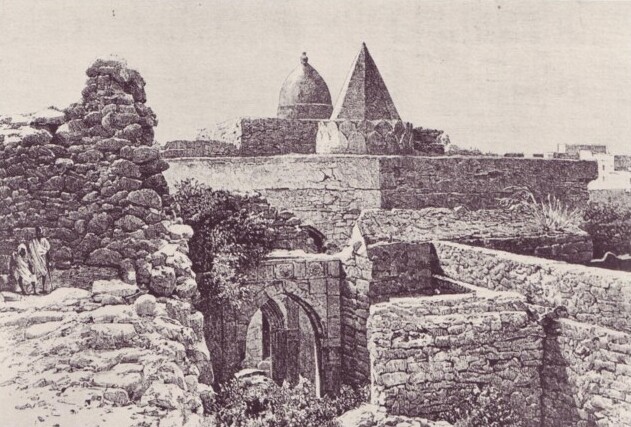
Engraved view of ruined stone buildings in Mogadishu, with a low dome and a pointed tower behind a wall, and a pointed arched doorway in the foreground. Two small figures stand at left among rubble.Artifact

Secondary source

Fakr ad-Din Mosque

Sultan Fakr ad-Din · late 13th century

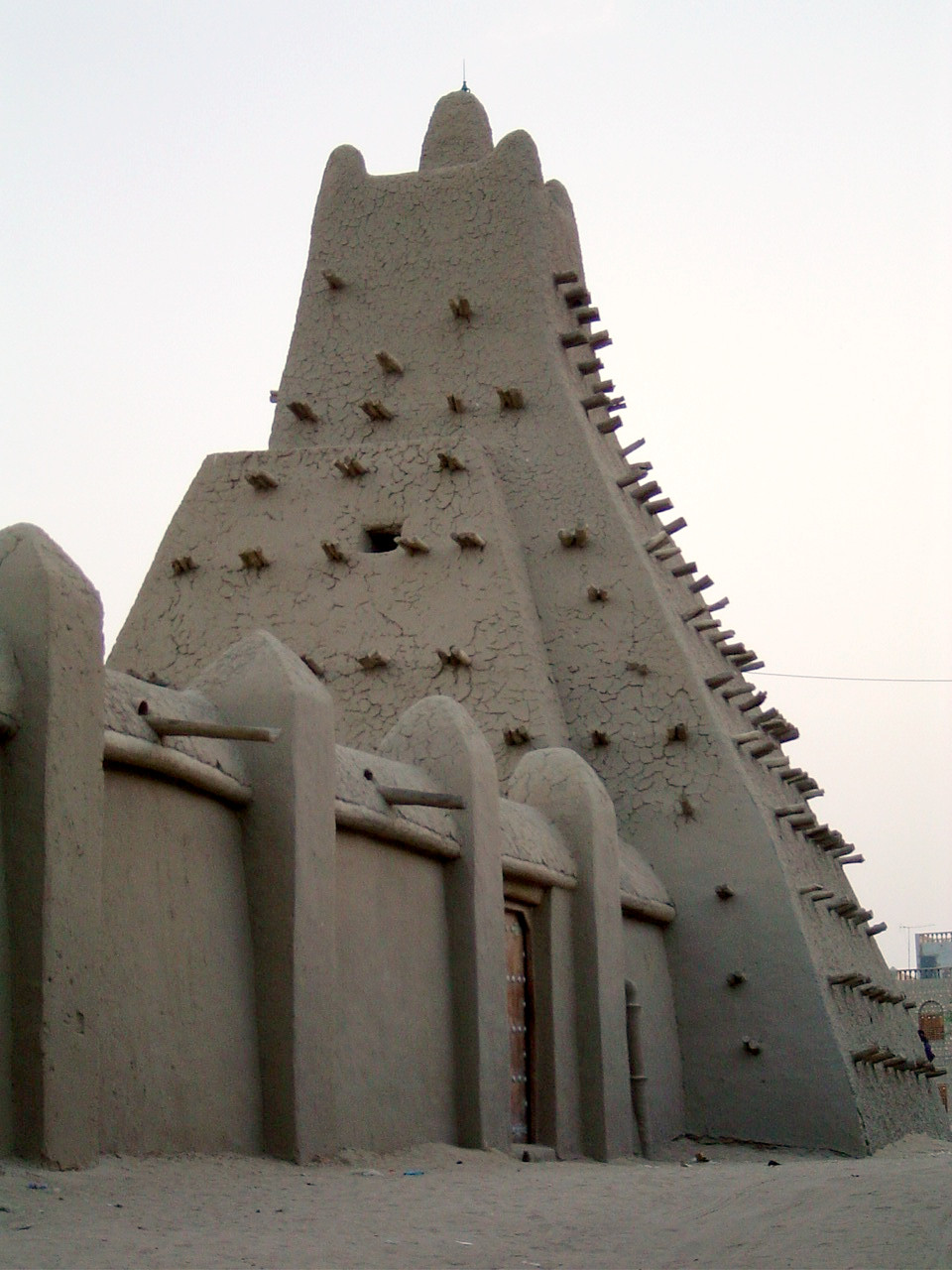
Tall mud-brick mosque with stepped towers, small wooden beam projections on its walls, and a low wall with arched buttresses and a wooden door, set on sandy ground under a pale sky.Artifact

Secondary source

Sankoré Madrasa

14th-15th century

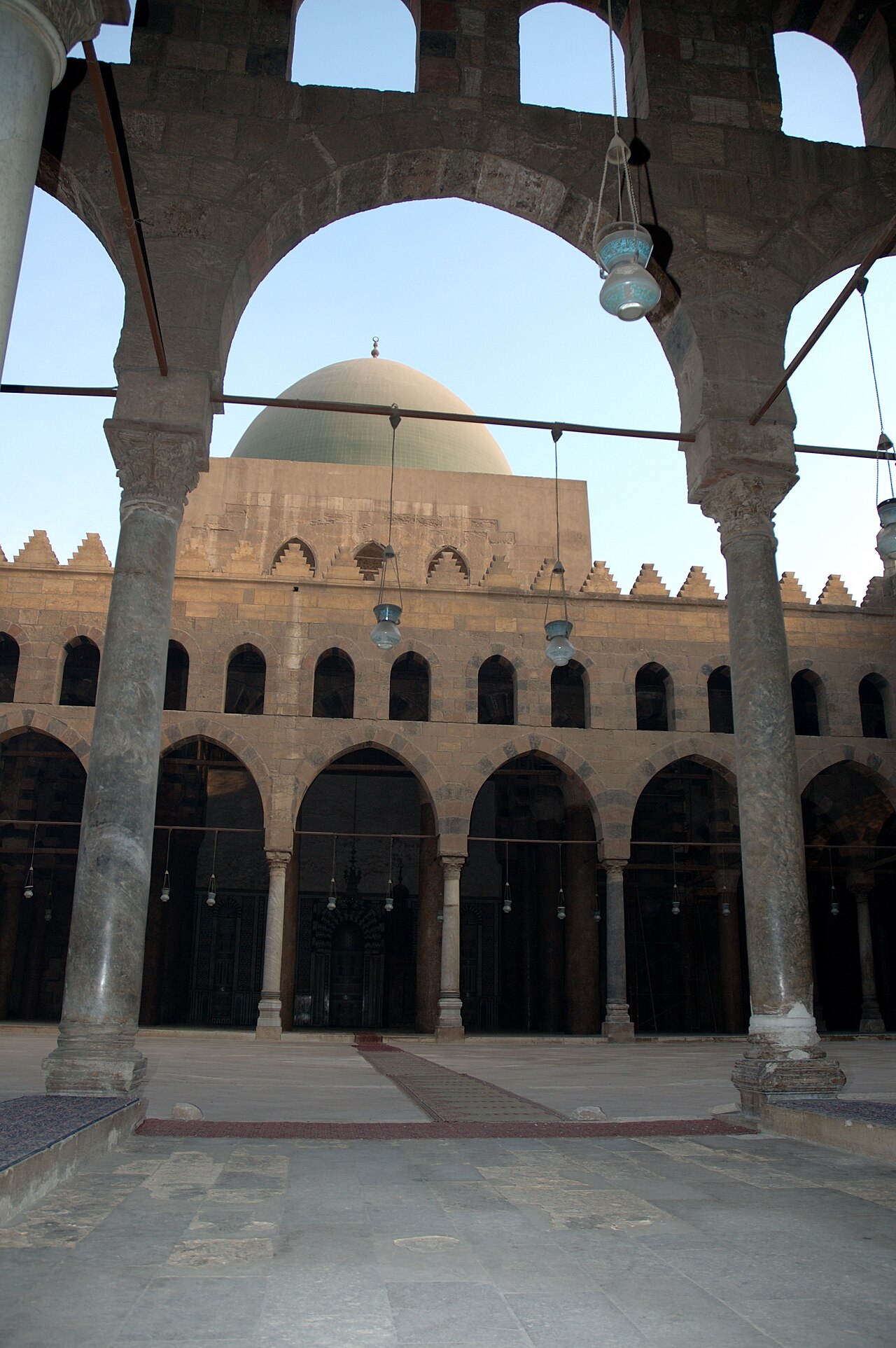
Interior courtyard of a stone mosque with tall grey marble columns and carved capitals supporting pointed arches. Through the arcade, a pale green domed roof and a crenellated stone wall are visible under a clear blue sky. Hanging glass lamps with blue decoration are suspended from the arches.Artifact

Secondary source

Al-Nasir Muhammad Mosque

1318

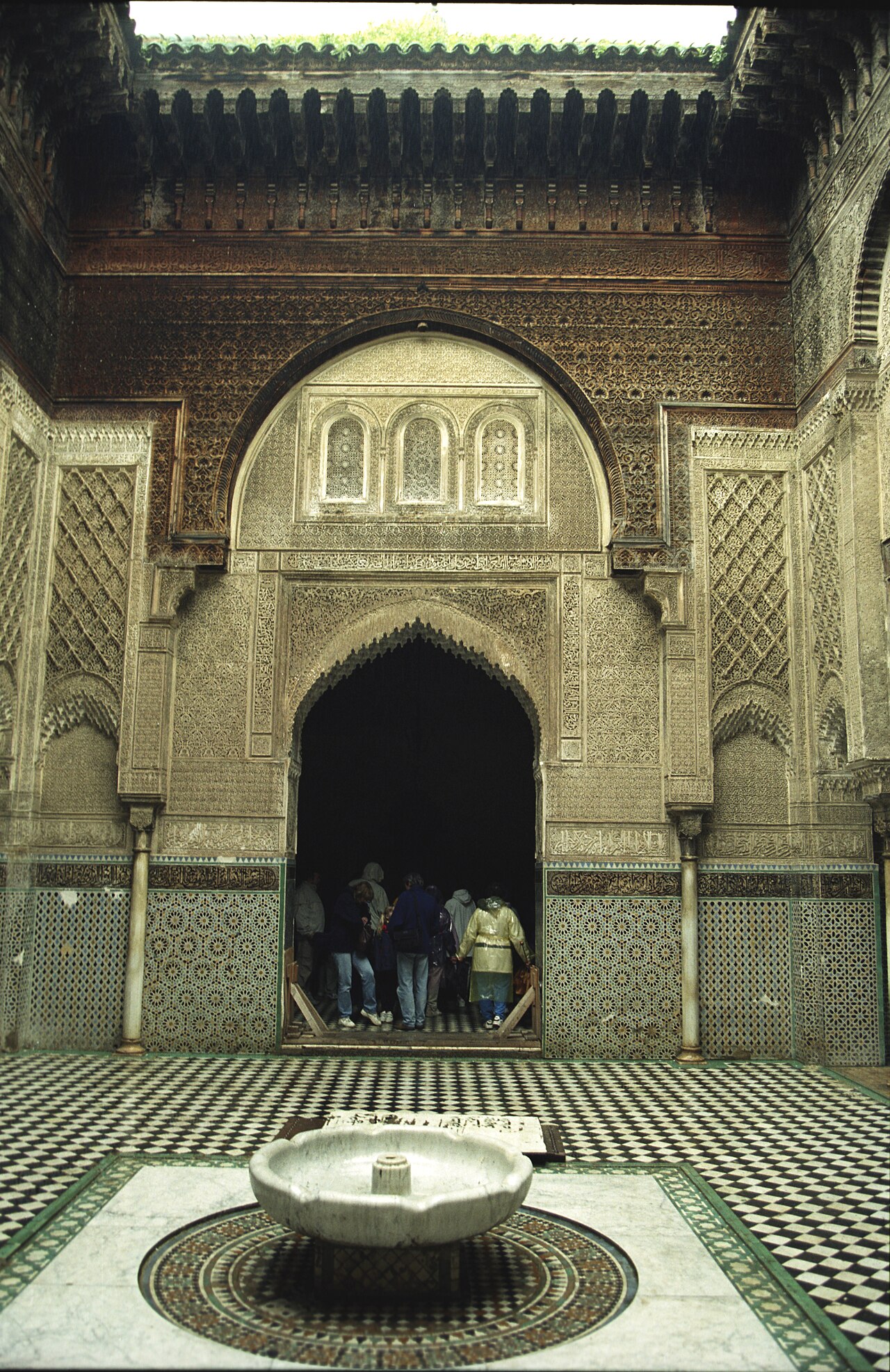
Ornately carved stucco and zellige-tiled courtyard of a historic madrasa. A tall pointed-arch doorway leads into a dark interior where visitors are gathered. A white marble basin sits on a checkered tiled floor in the foreground.Artifact

Secondary source

Al-Attarine Madrasa

Sultan Abu Sa'id Uthman II · 1323-1325 CE

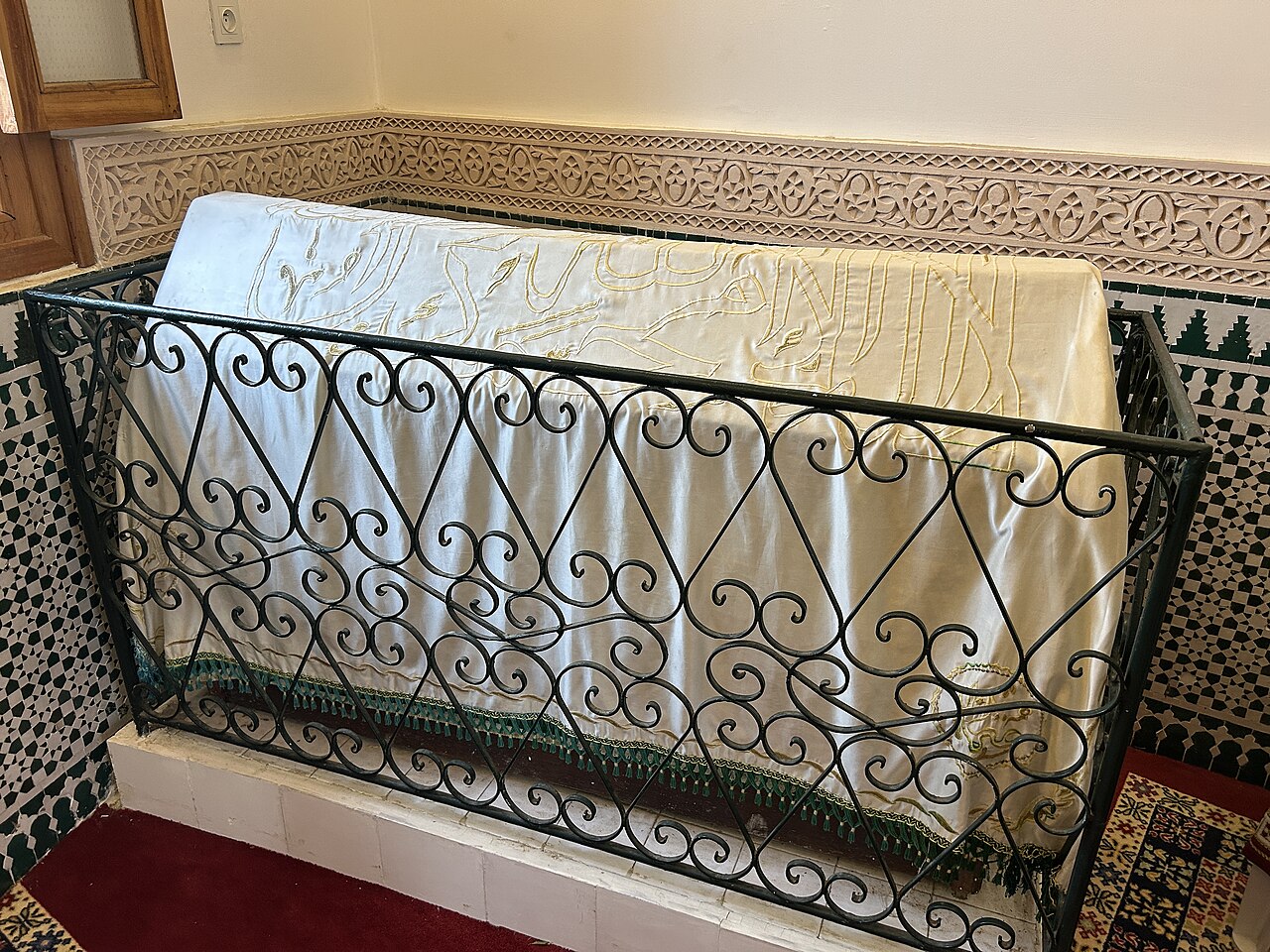
Interior of a tomb: a rectangular stone tomb covered with a pale cream silk cloth embroidered with gold calligraphy, enclosed by a black wrought-iron railing with scroll patterns. Green tiled mosaic walls and a carved plaster frieze surround it, with a red rug on the floor.Artifact

Secondary source

Tomb of Ibn Battuta

traditional site, date uncertain

Document

Tertiary source

Encyclopædia Britannica Entry on Ibn Batuta

Henry Yule · 1911

Black-and-white engraving of two men on a carved stone block in front of ruined columns and palm trees. The left man is bare-chested with a wrapped cloth at his waist and a turban, and points forward. The right man wears a long robe and turban and looks down. Birds fly in the sky. Signature 'L. Benett' at lower left.Painting

Secondary source

Découverte de la Terre Illustration

Léon Benett

Book

Primary source

The Travels of Ibn Batuta

Ibn Battuta

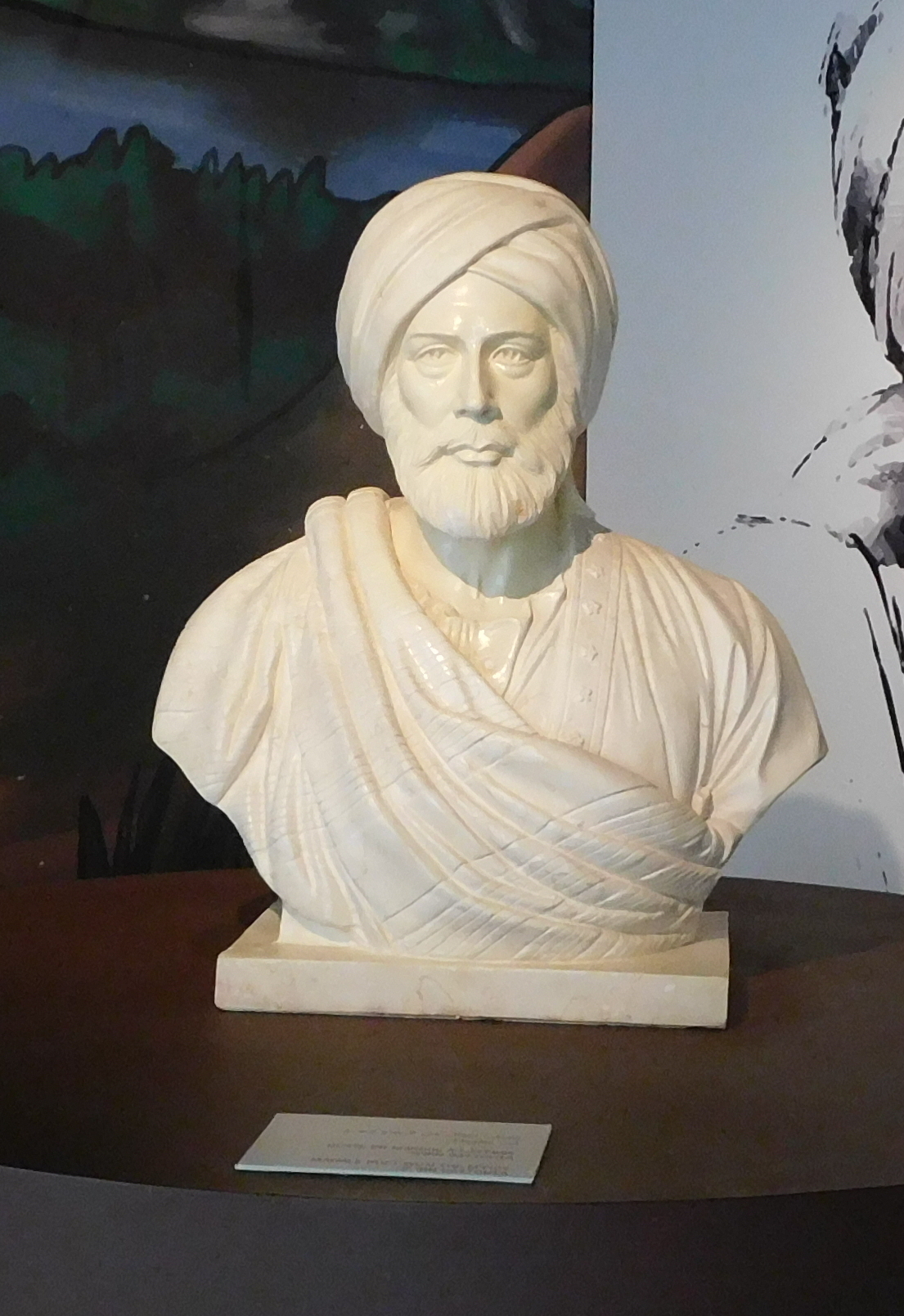
White sculpted bust of a bearded man wearing a turban and a draped garment, mounted on a rectangular base on a dark wooden surface, with a painted landscape backdrop and a small placard in front.Sculpture

Secondary source

Bust of Ibn Battuta at the Ibn Battuta Museum

Ideophagous · 10 March 2022 (photograph)

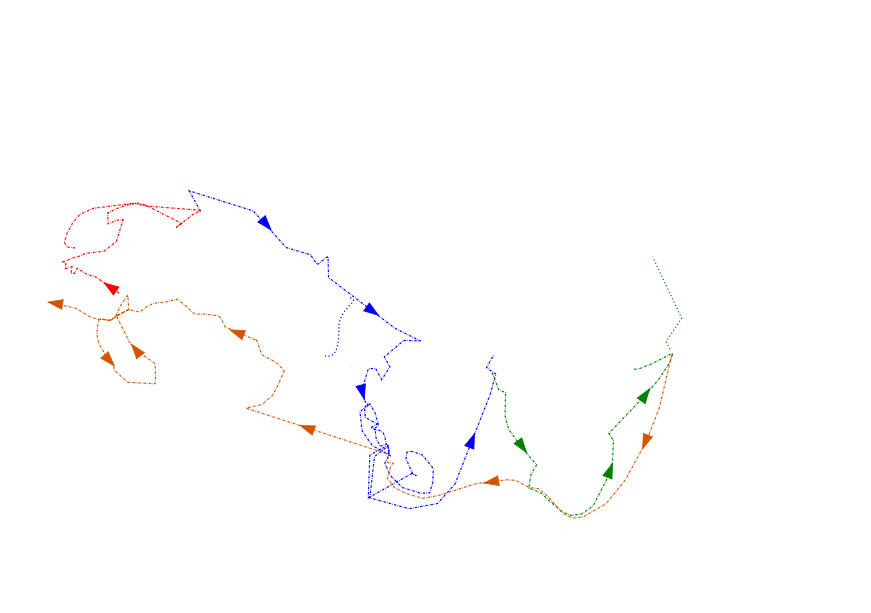
Colored dotted route lines with arrows on a white background, tracing travel paths in red, blue, orange, and green across a map-like layout, representing Ibn Battuta's itinerary from 1332 to 1346.Artifact

Secondary source

Map of Ibn Battuta's Itinerary, 1332-1346

Sladew · 2010

The Travels of Ibn BattutaBook

Secondary source

The Travels of Ibn Battuta

Sir E. Denison Ross and Eileen Power (eds.) · 1929

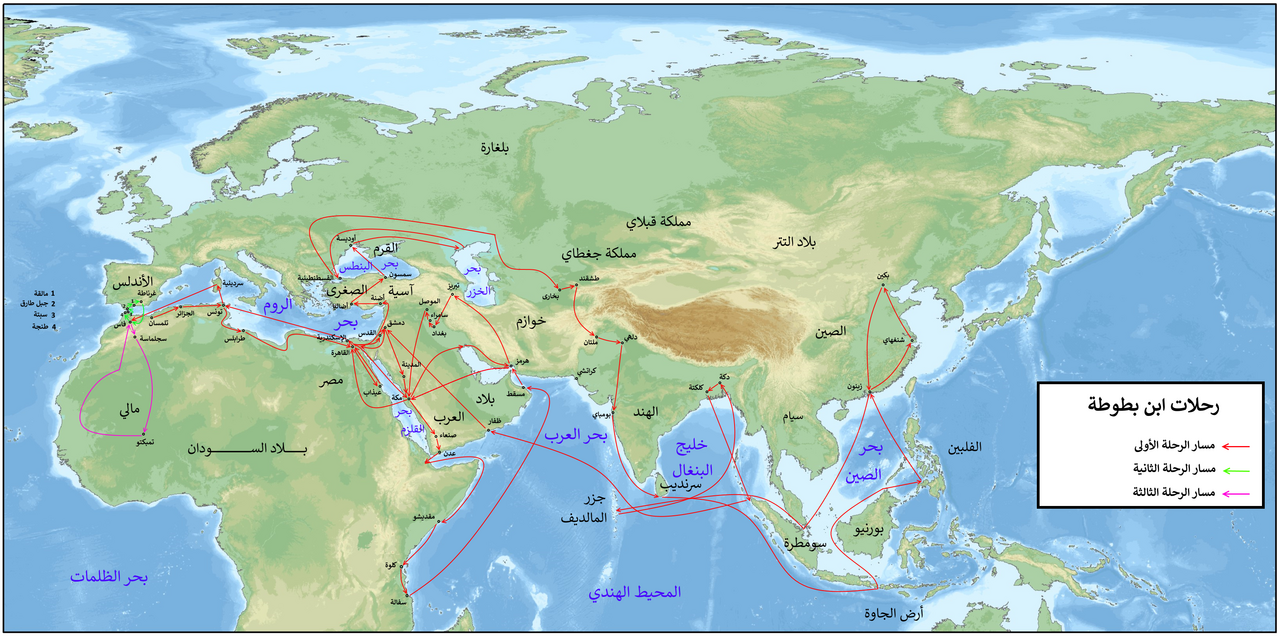
Arabic-labeled map of Afro-Eurasia showing red, green and magenta routes of Ibn Battuta's three journeys across Africa, Europe, Asia and the Indian Ocean, with a legend in the lower right corner.Artifact

Secondary source

Routes of Ibn Battuta's Three Journeys

Michel Bakni · 12 May 2019

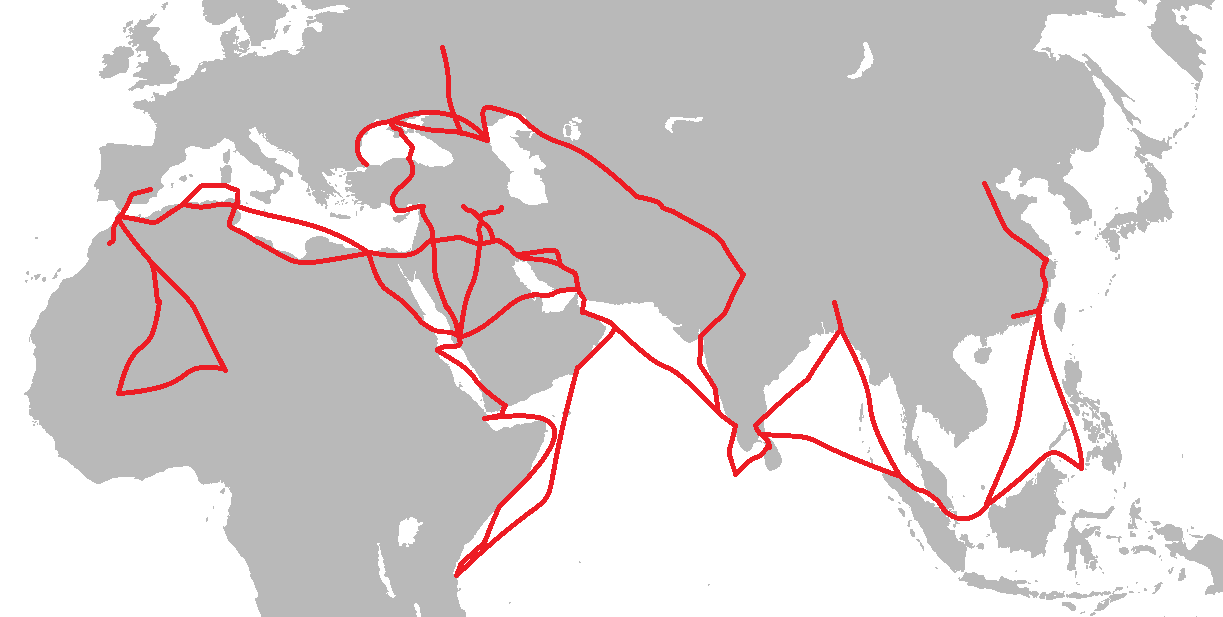
Grey world map of Afro-Eurasia with red lines tracing travel routes across North Africa, the Middle East, Central Asia, India, Southeast Asia and China, showing the journeys of Ibn Battuta.Artifact

Secondary source

Travel Route of Ibn Battuta Map

Weetjesman · 2 September 2018

Front cover of a worn Armenian-language book, brown cloth spine on the left and tan paper cover on the right. Red Armenian title reads Իբն-ի Բաթութա with a line below naming the author and translator. A library call-number label is pasted on the lower left.Book

Secondary source

Armenian Entry on Ibn Battuta

Hrachia Adjarian · 1940

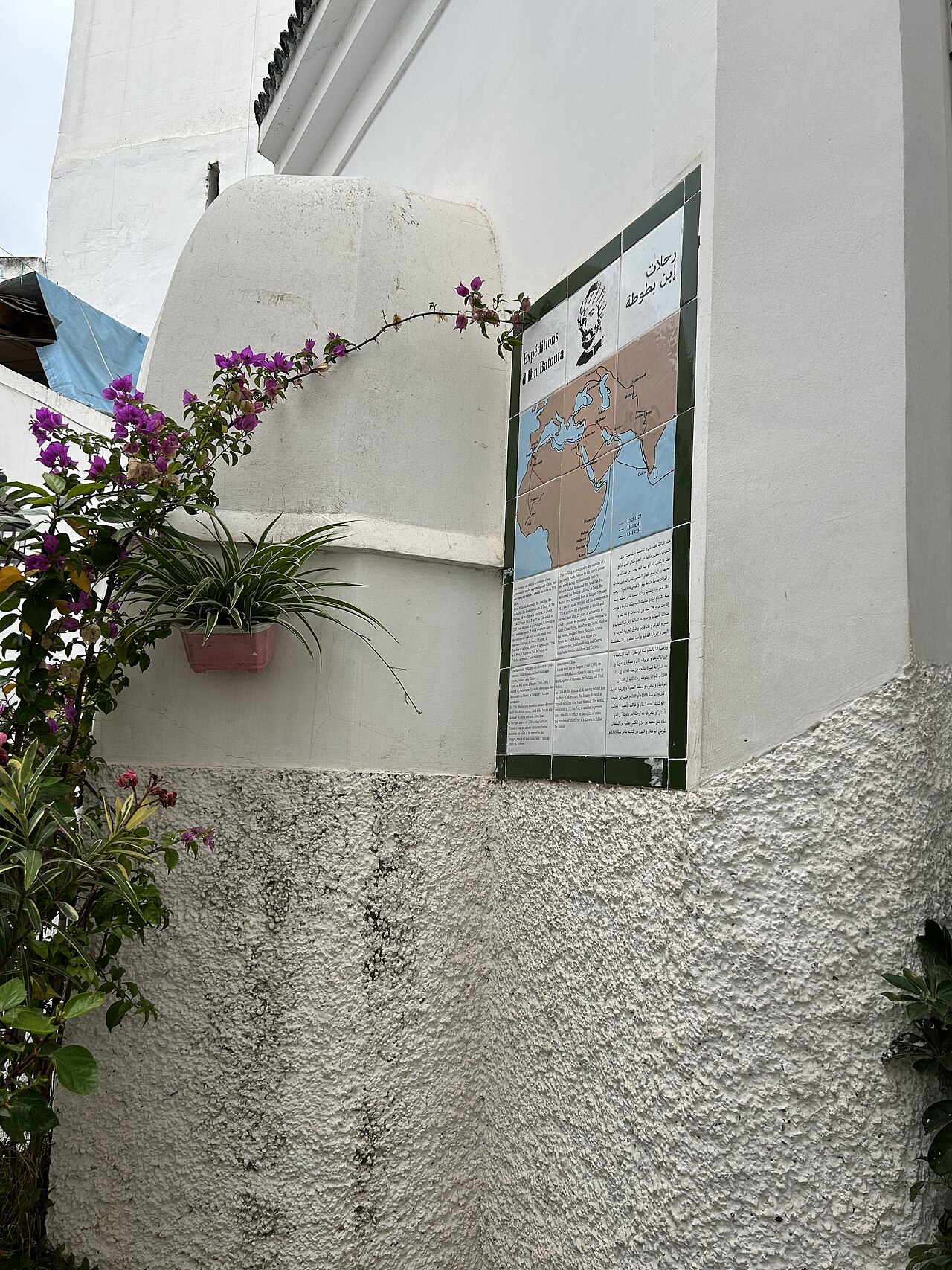
Photo of a white wall with a tiled information sign reading 'Expeditions of Ibn Battuta' in English and Arabic. It shows a portrait sketch, a map of Africa, Europe and Asia, and text panels. Pink flowers and a potted plant are beside it.Artifact

Secondary source

Sign on Ibn Battuta's House in Tangier

Anass Sedrati · 18 November 2024

Black-and-white drawing of a bearded man wearing a large layered turban, shown in head and shoulders, with a dark garment at the bottom. He gazes to the side with a serious expression.Painting

Secondary source

Imaginary Sketch of Ibn Battuta

Unknown · 1961

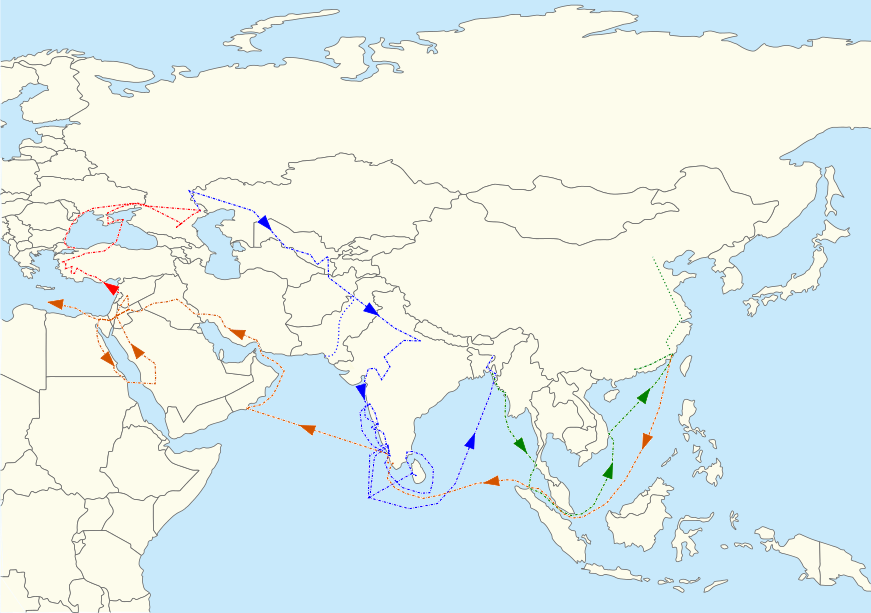
Political map of Afro-Eurasia on a light background with colored dotted routes with arrowheads. Red routes run through Europe and the Black Sea region, blue through Central Asia and India, green through Southeast Asia to China, and orange through the Middle East, Arabia, the Indian Ocean, and back. The routes depict travels from 1332 to 1346.Artifact

Tertiary source

Ibn Battuta Reiseroute 1332–1346

Sladew · 2014-11-02

Book

Primary source

The Travels of Ibn Battuta, A.D. 1325-1354 (Hakluyt Society edition)

Ibn Battuta · 1354 (English translation published 1958-2000, Hakluyt Society)

Book

Primary source

Tuhfat al-Nuzzar (The Rihla)

Ibn Battuta · 14th century

Book

Primary source

The Travels of Ibn Battuta, A.D. 1325-1354, Volumes I-III

Ibn Battuta · 1325-1354 (reissued edition)

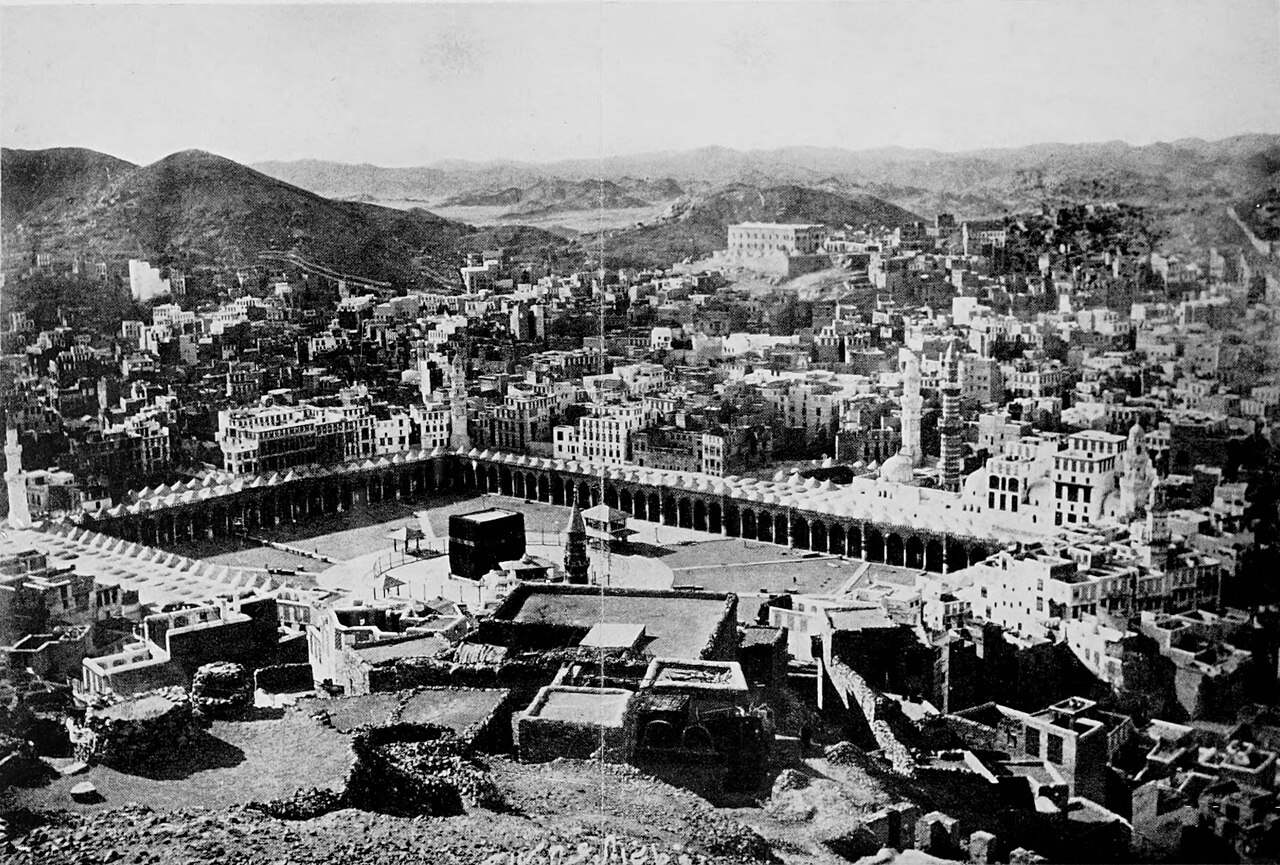
Black-and-white elevated view of the Great Mosque of Mecca. A dark cube, the Kaaba, stands in an open courtyard ringed by stone arcades and minarets, with dense city buildings and bare hills behind.Painting

Secondary source

The Mosque of Mecca with the Kaaba, from the East

Ibn Battuta

Front cover of a blue cloth-bound book with a gold-stamped illustration of a medieval sailing ship with multiple masts and sails, centered on the cover. The cover has faint decorative rules along the edges and faded title lettering at the top.Book

Primary source

The Travels of Ibn Battuta, Volume 2

Ibn Battuta · 14th century text, this edition date unknown

Title page of a French book reading 'COLLECTION D'OUVRAGES ORIENTAUX PUBLIÉE PAR LA SOCIÉTÉ ASIATIQUE.' in bold black serif capitals on a white page, with a 'Digitized by Google' watermark in the lower right corner.Book

Primary source

Voyages d'Ibn Battuta, Index Volume (Defrémery and Sanguinetti edition, 1855)

Ibn Battuta · 1855

Front cover of a dark blue cloth-bound book with a white library label on the upper left spine area reading 'UNIVERSITY OF TORONTO' and a barcode with the number 31761 01169490 8.Book

Primary source

Voyages d'Ibn Battuta, Volume 1

Ibn Battuta · 1855

Dark blue cloth book cover with a white library barcode label at upper left reading University of Toronto and the number 3 1761 01584249 5. The label is vertical with black barcode lines.Book

Primary source

Voyages d'Ibn Battuta, Volume 3 (Defrémery and Sanguinetti edition, 1855)

Ibn Battuta · 1855

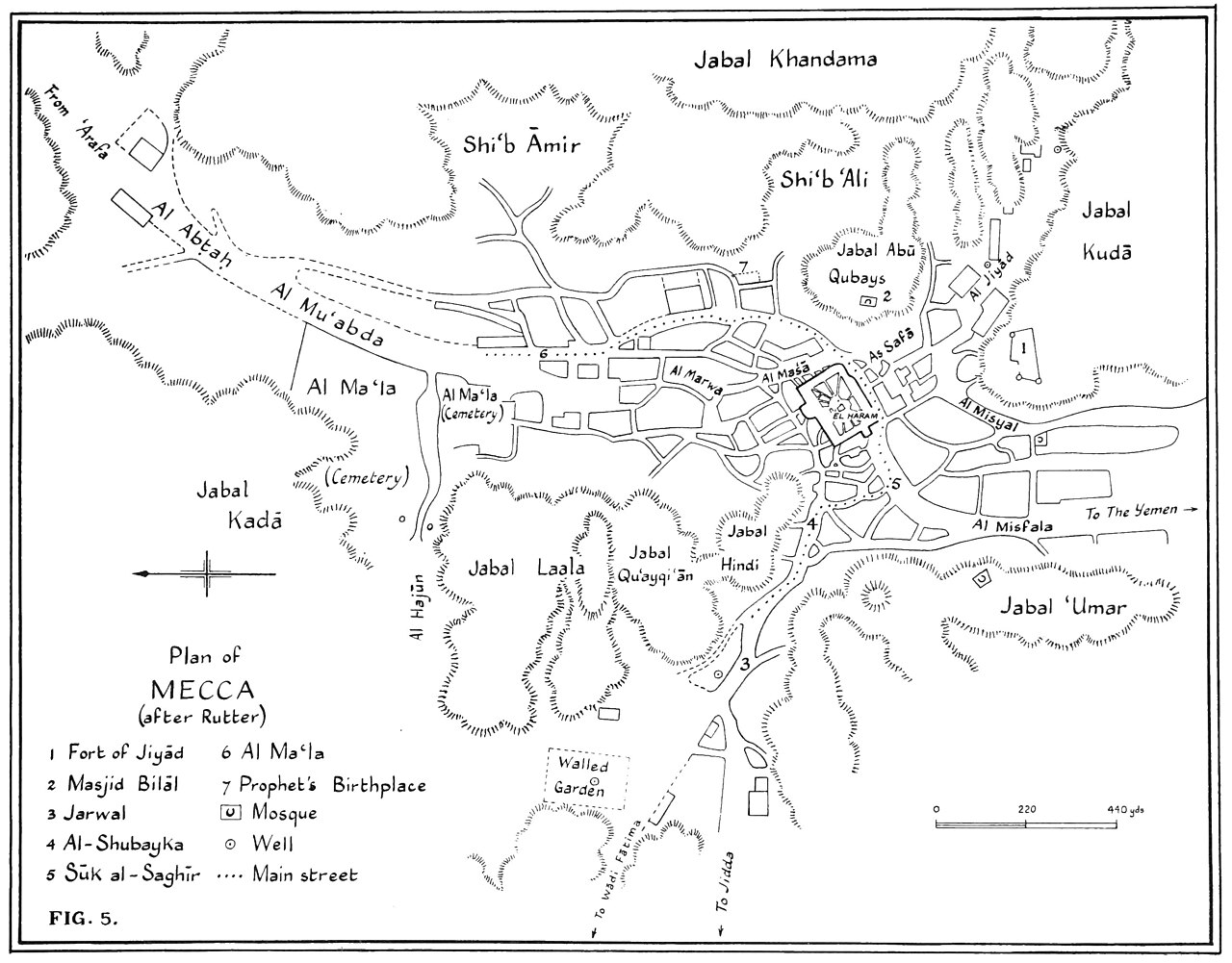
Line drawing titled 'Plan of MECCA (after Rutter)', labeled Fig. 5. It shows the city's streets, hills such as Jabal Khandama and Jabal Kuda, the Haram at center, and the roads to Jidda and Yemen. A key and scale bar are at the bottom.Document

Primary source

Plan of Mecca from Ibn Battuta's Travels

Ibn Battuta · 12 June 1354

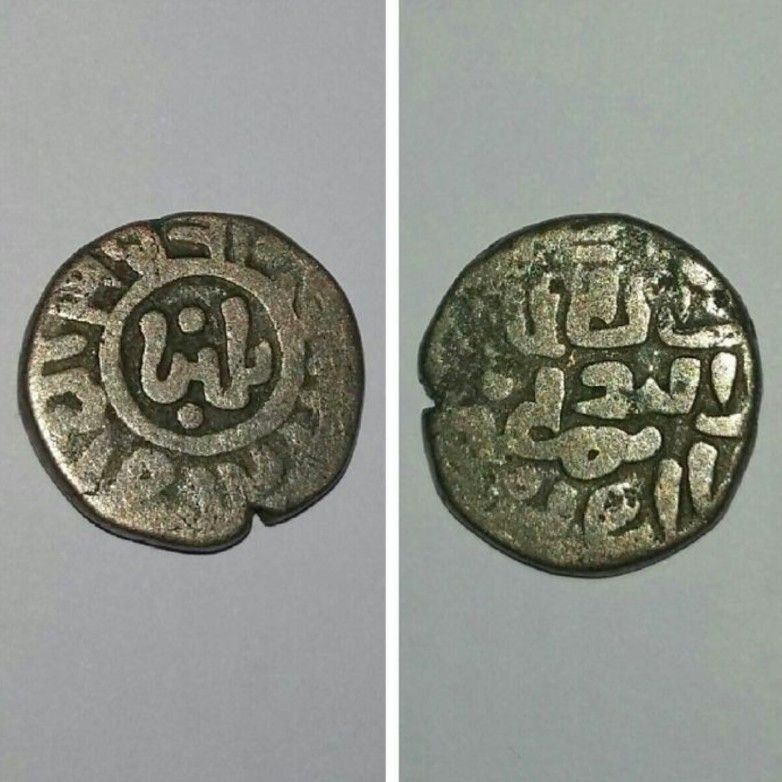
Two photographs side by side of a small, worn, round silver-grey billon coin. Left side: a central circle with Arabic-script legend inside, surrounded by inscription around the rim. Right side: Arabic inscription in several lines across the field. Grey background.Artifact

Primary source

Billon Coin of Ghiyas-ud-din Balban

1266-1287

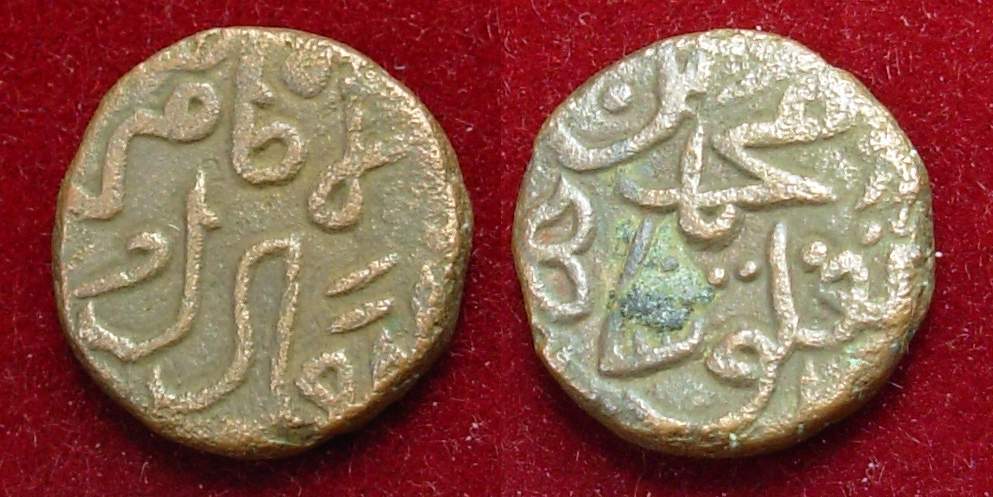
Two views of a small, worn bronze coin on a red velvet background. The left side shows Arabic-script inscription in raised letters; the right side shows more Arabic script with a greenish patina spot near the center.Artifact

Primary source

Coin of Muhammad bin Tughluq, Delhi Sultanate

14th century

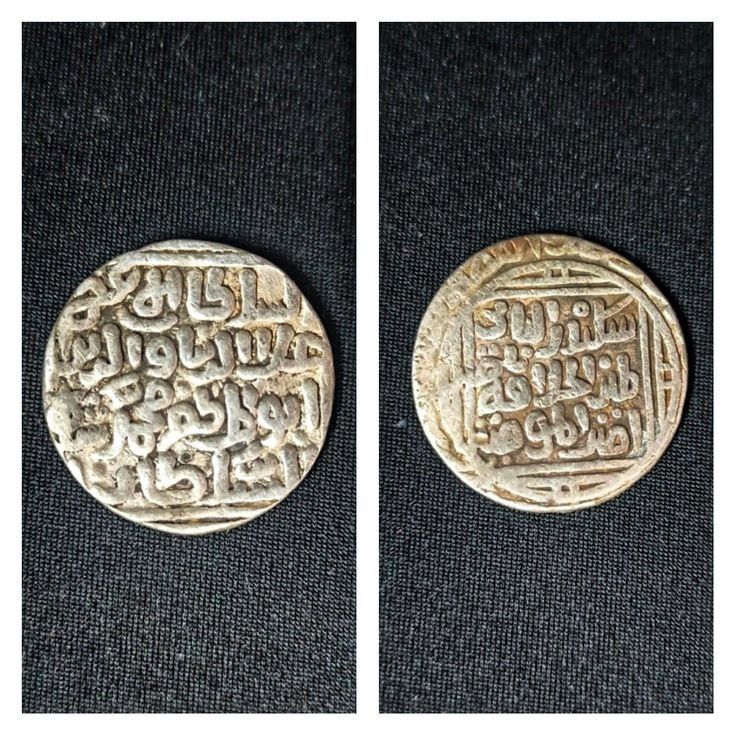
Two photographs of a silver coin on a dark fabric background, side by side. Left: obverse with raised Arabic-script inscription in several lines. Right: reverse with a square-framed Arabic inscription surrounded by a border of lettering. The coin is worn and slightly uneven.Artifact

Primary source

Silver Tanka of Alauddin Khilji

c. 1296-1312

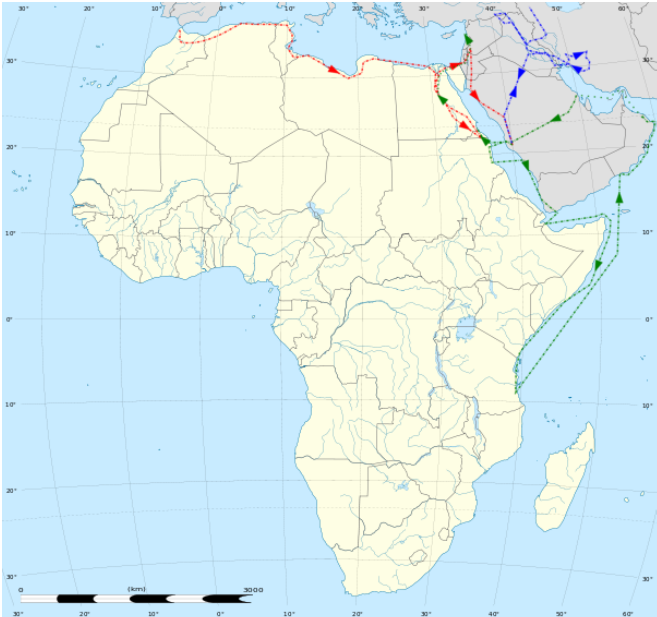
Map of Africa, Arabia and the Indian Ocean coast showing Ibn Battuta's travel routes from 1325 to 1332. Red dotted lines run along North Africa and the Nile, blue lines cross the Arabian Peninsula, and green lines follow the East African coast with arrows indicating direction.Document

Secondary source

Map of Ibn Battuta's Journeys in Africa, 1325-1332 (Bengali)

1325-1332 (map created later)

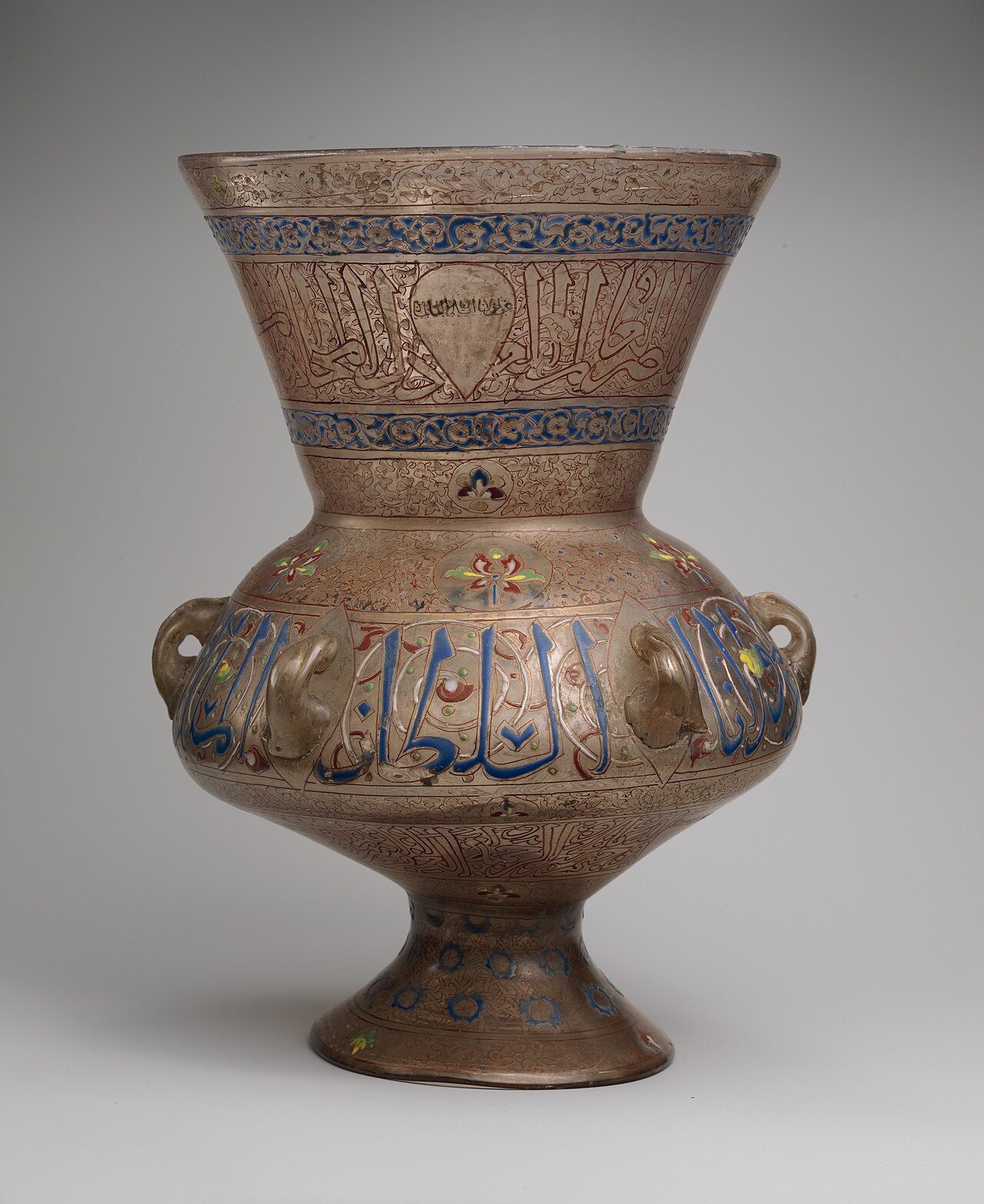
Photo of a brass mosque lamp with a flared rim, narrow waist, two loop handles on the shoulder, and a footed base. Its surface is engraved with Arabic inscriptions and blue enamel bands, with dotted floral and star motifs. Plain grey background.Artifact

Primary source

Mosque Lamp of Sultan al-Nasir Muhammad

c. 1340

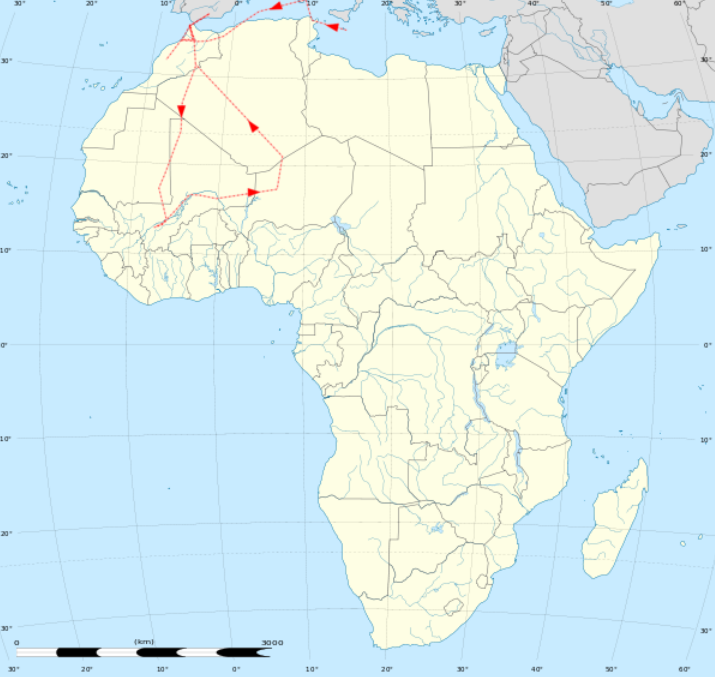
Outline map of Africa with political borders and rivers on a light yellow land area and pale blue sea. Red dotted lines with arrowheads trace a route across North Africa, from the Mediterranean coast westward and southward through the Sahara to West Africa. Latitude and longitude labels and a scale bar in kilometres appear at the edges.Document

Secondary source

Map of Ibn Battuta's Journeys in North Africa

Asifmuktadir

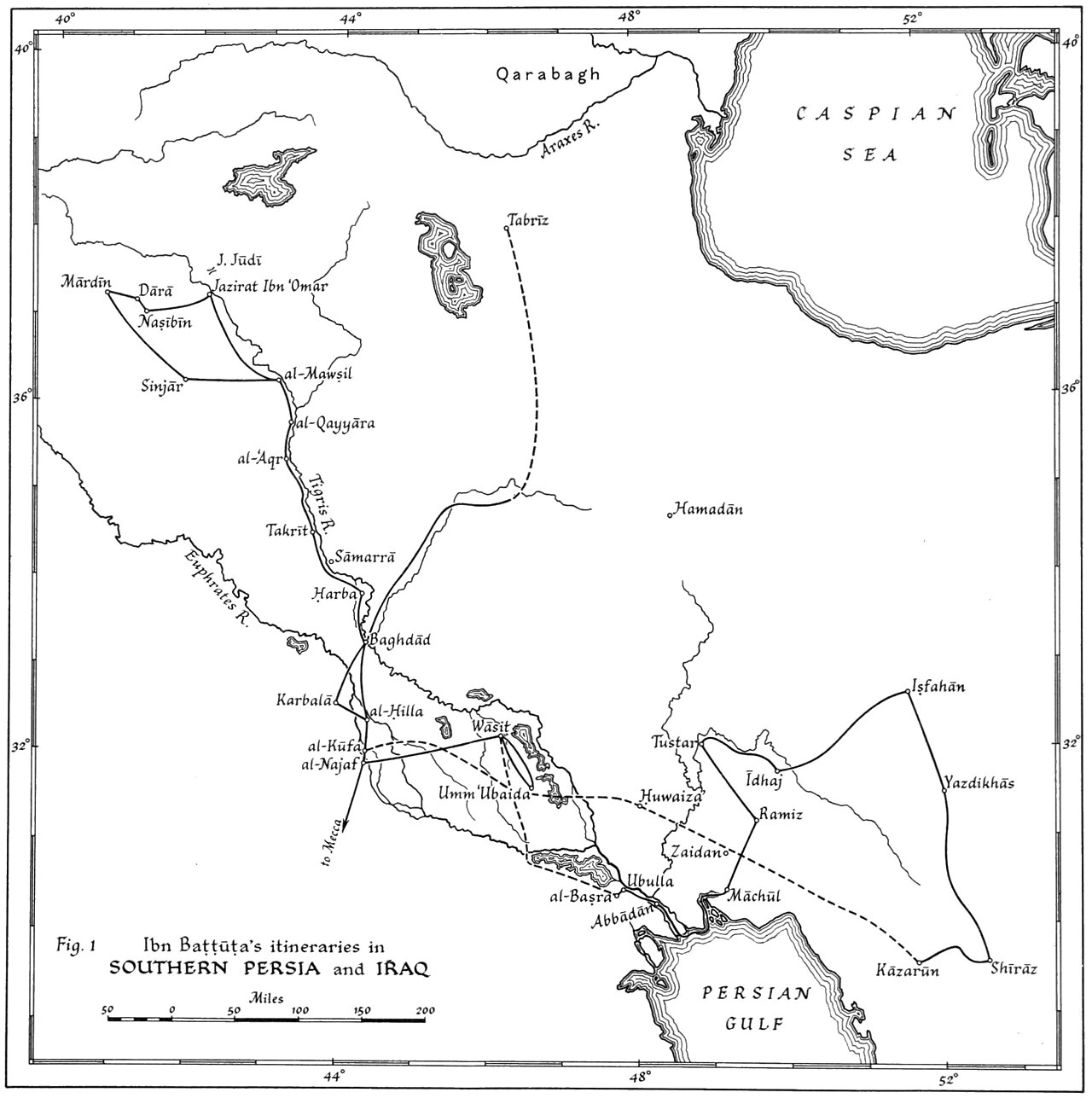
Black-and-white map titled Fig. 1, Ibn Battuta's itineraries in Southern Persia and Iraq. Solid and dashed route lines link cities such as Mardin, Nasibin, Mosul, Baghdad, Basra, Isfahan, Shiraz and Kazarun, with the Tigris, Euphrates, Caspian Sea and Persian Gulf labeled, and a scale bar in miles.Document

Secondary source

Ibn Battuta's Itineraries in Southern Persia and Iraq

1354

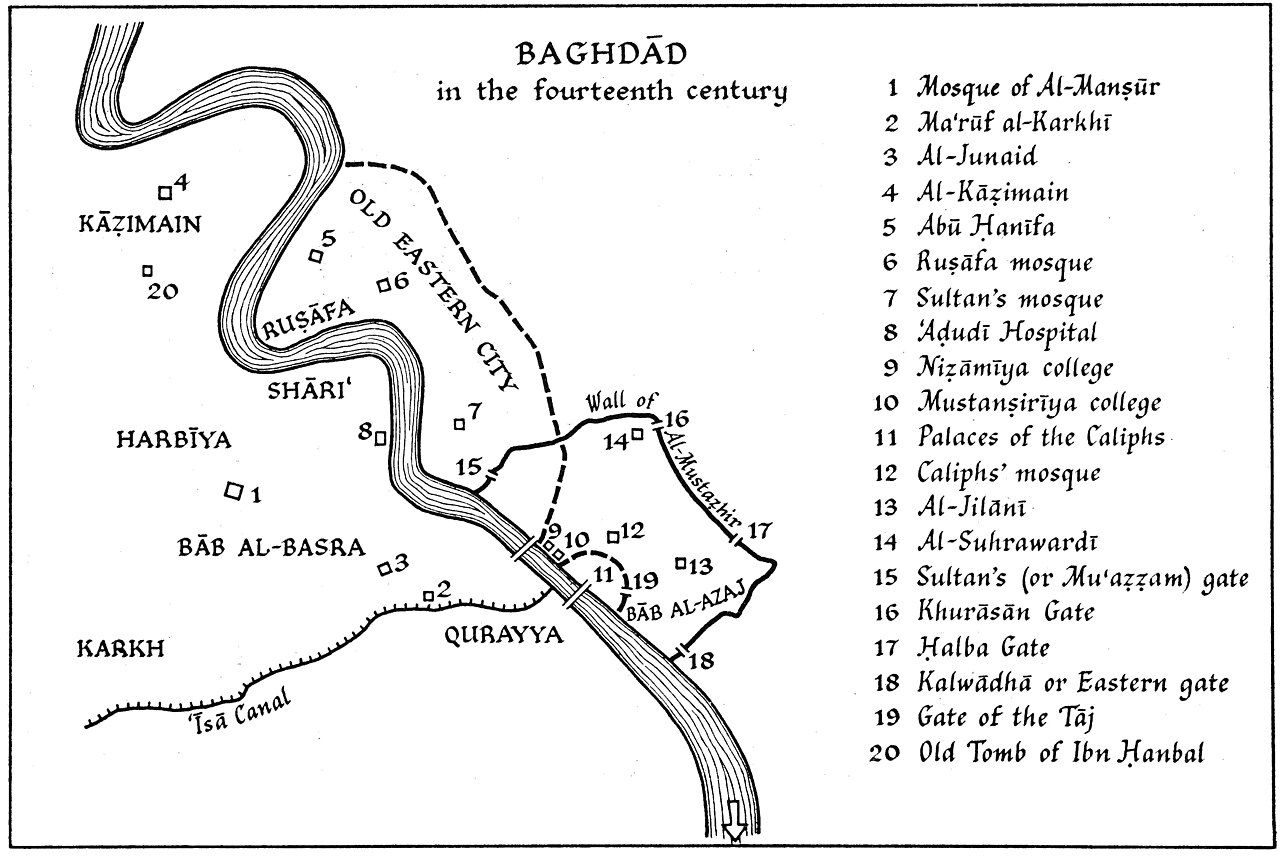
Black-and-white line map titled 'Baghdad in the fourteenth century'. The Tigris river winds from top left down to bottom right. Labeled areas include Kazimain, Harbiya, Bab al-Basra, Karkh, Qurayya, and Old Eastern City, with the Wall of Al-Mustazhir and an 'Isa Canal. A numbered key on the right lists 20 sites, including mosques, colleges, gates, and the Old Tomb of Ibn Hanbal.Document

Secondary source

Baghdad in the Fourteenth Century

1354

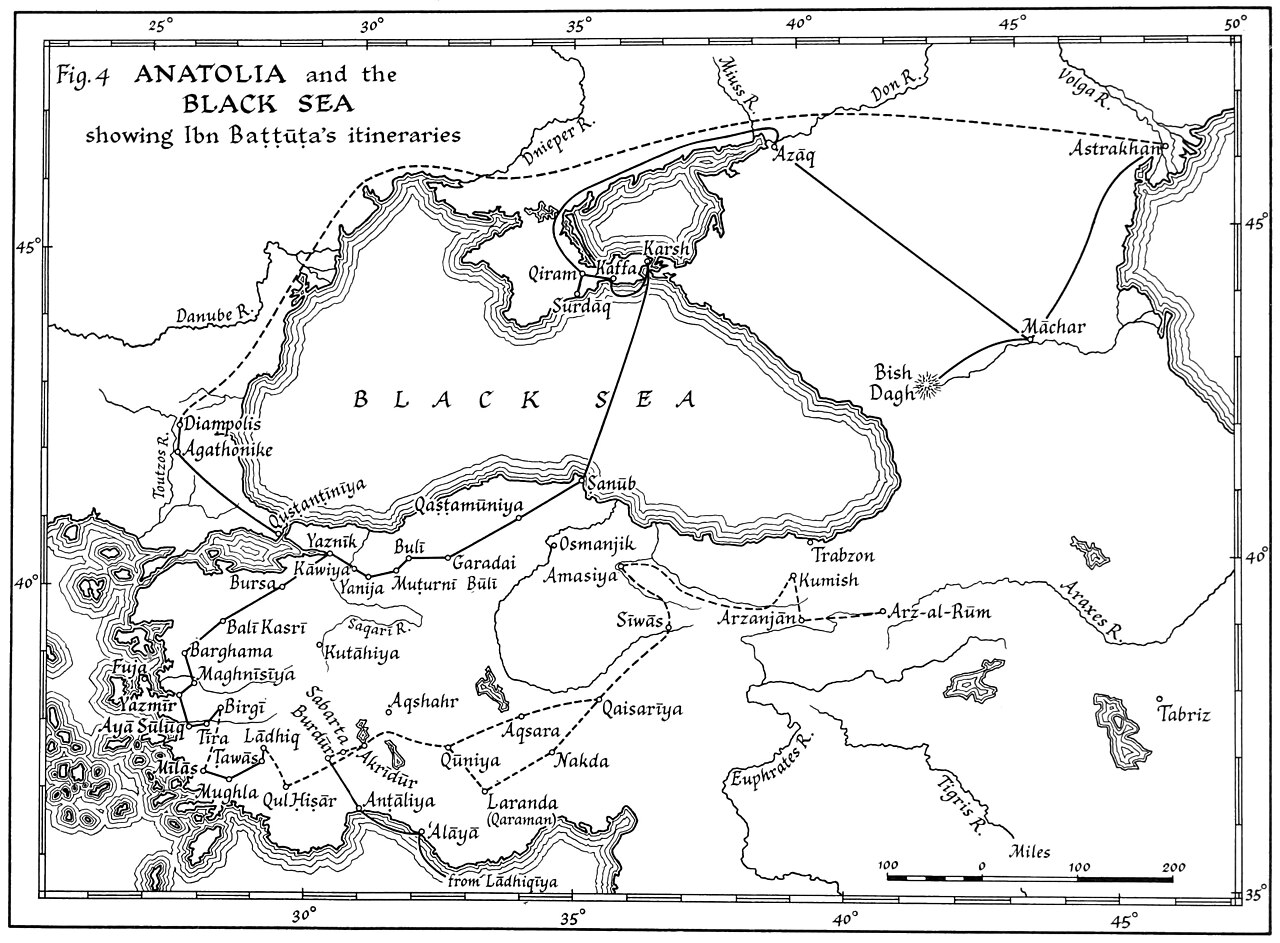
Map titled 'Fig. 4 ANATOLIA and the BLACK SEA showing Ibn Battuta's itineraries'. Shows the Black Sea, Anatolia, and surrounding regions with dashed and solid lines tracing routes between cities such as Constantinople, Caffa, Sinop, Bursa, Antalya, Erzurum and Tabriz, with latitude and longitude markings and a scale bar in miles.Document

Secondary source

Map of Ibn Battuta's Route through Anatolia and the Black Sea

1354

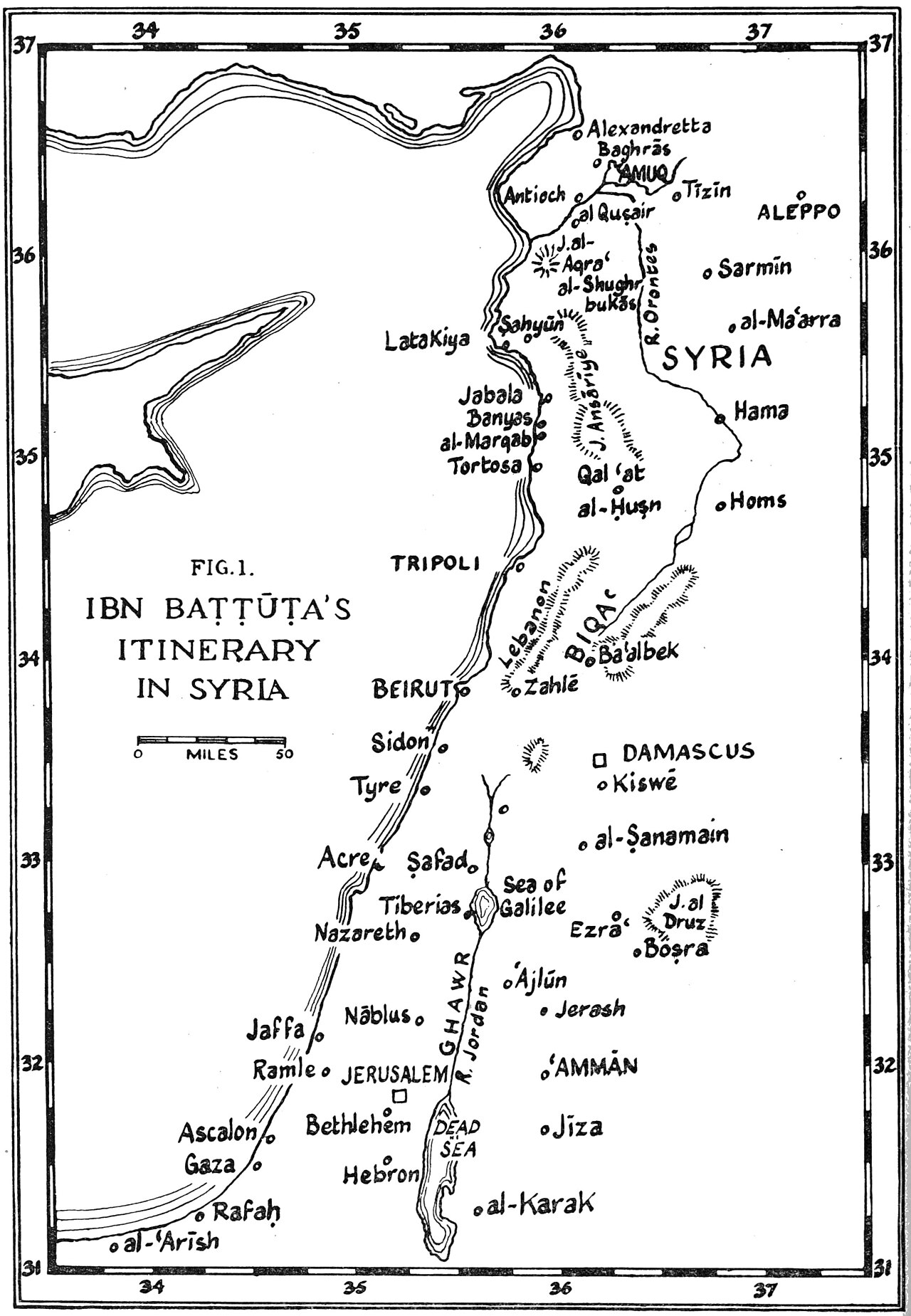
Black-and-white map titled 'Fig. 1, Ibn Battuta's Itinerary in Syria', with latitude and longitude gridlines, a scale bar in miles, and labeled towns including Beirut, Damascus, Jerusalem, Aleppo, Hama, Homs, Tripoli and the Dead Sea, with a coastline and mountain ranges drawn in.Document

Secondary source

Ibn Battuta's Itinerary in Syria

1354

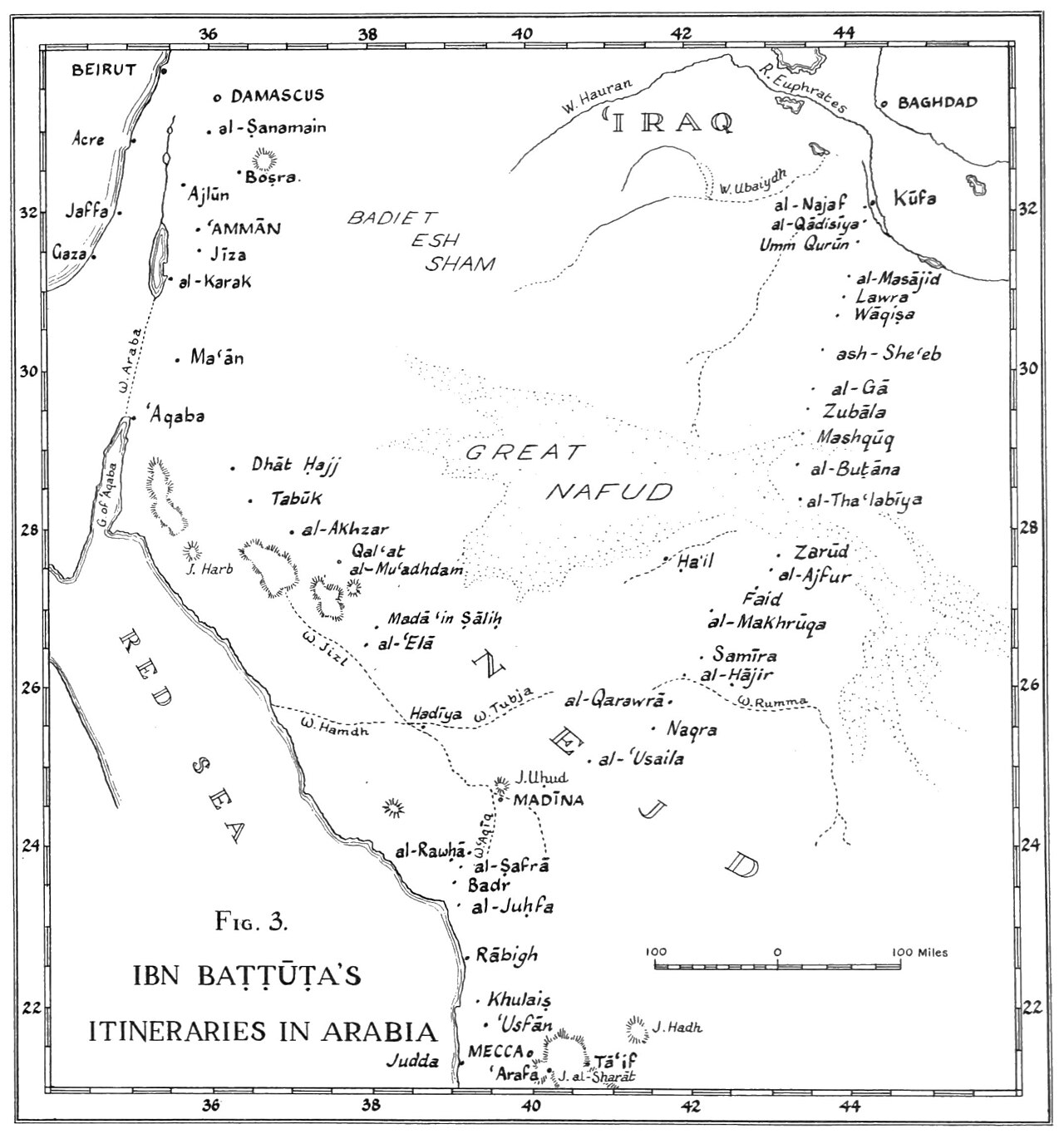
Historical map titled 'Fig. 3. Ibn Battuta's Itineraries in Arabia', showing the Red Sea, Iraq, Damascus, Baghdad, Mecca, Medina and Beirut with dotted routes and place names across the Arabian Peninsula and the Great Nafud desert.Document

Secondary source

Ibn Battuta's Itineraries in Arabia

1354

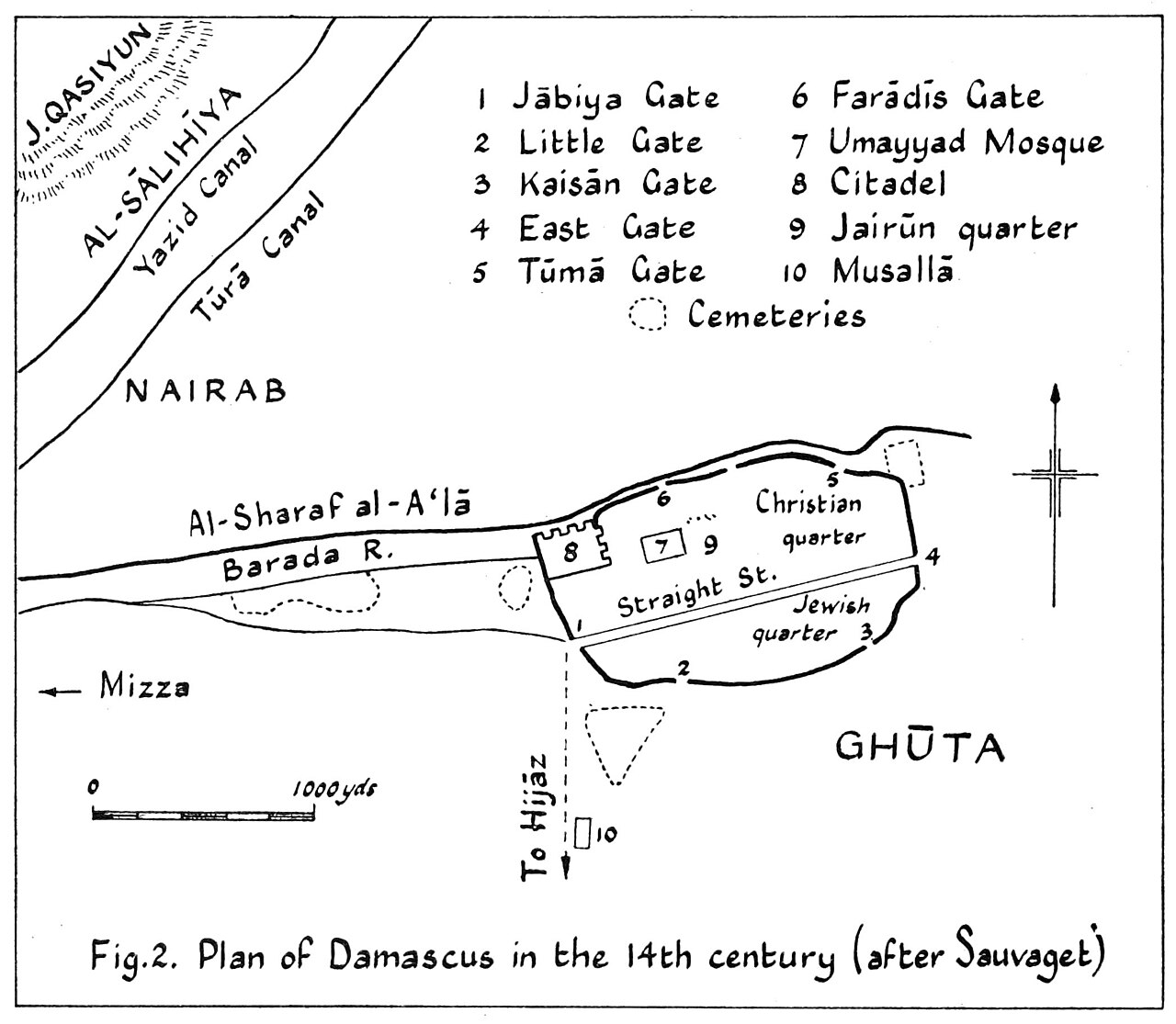
Hand-drawn black-and-white plan of 14th-century Damascus showing the city walls, gates numbered 1 to 10, the Umayyad Mosque, citadel, Christian and Jewish quarters, Straight Street, the Barada River, canals, cemeteries, and a 1000-yard scale bar. Caption reads Fig. 2, Plan of Damascus in the 14th century (after Sauvaget).Document

Secondary source

Plan of Damascus in the 14th Century

1354

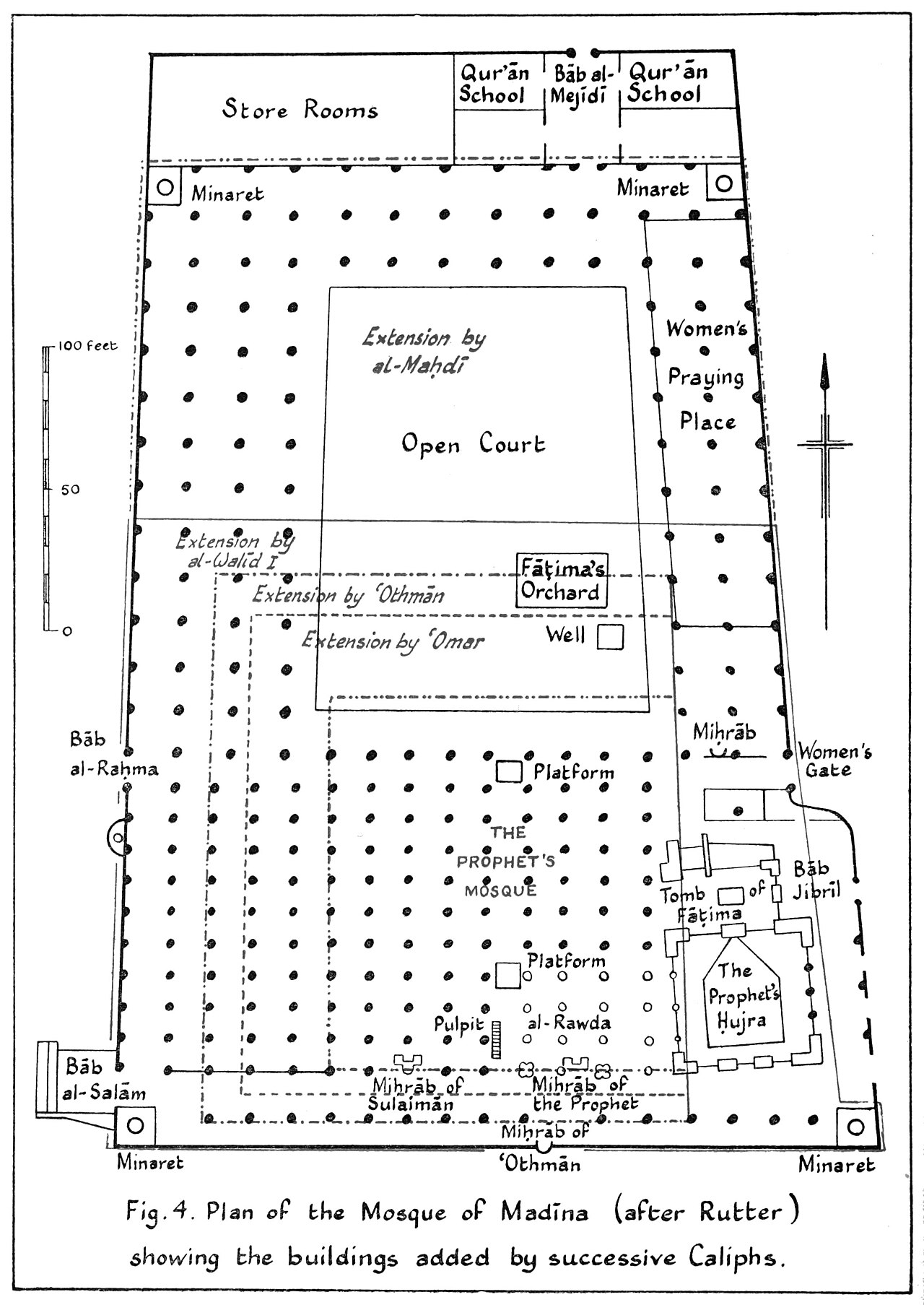
Black-and-white architectural plan of the Mosque of Madina. Labeled features include store rooms, two Qur'an schools, Bab al-Mejidi, minarets, the Prophet's Mosque, the Prophet's Hujra, Fatima's Orchard, a well, and several mihrabs. Caption: Fig. 4, after Rutter.Document

Secondary source

Plan of the Mosque of Medina

1354

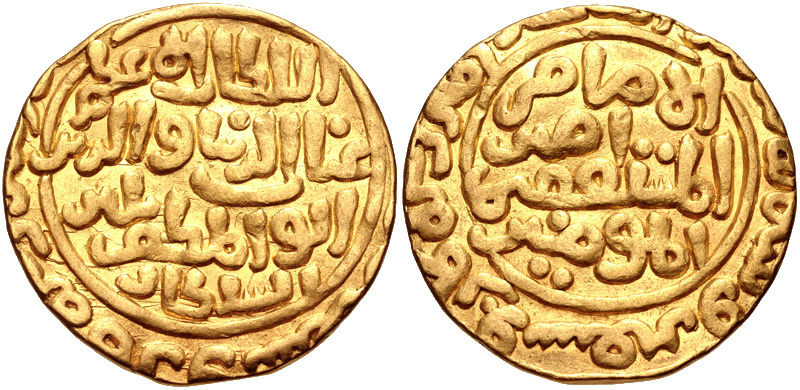
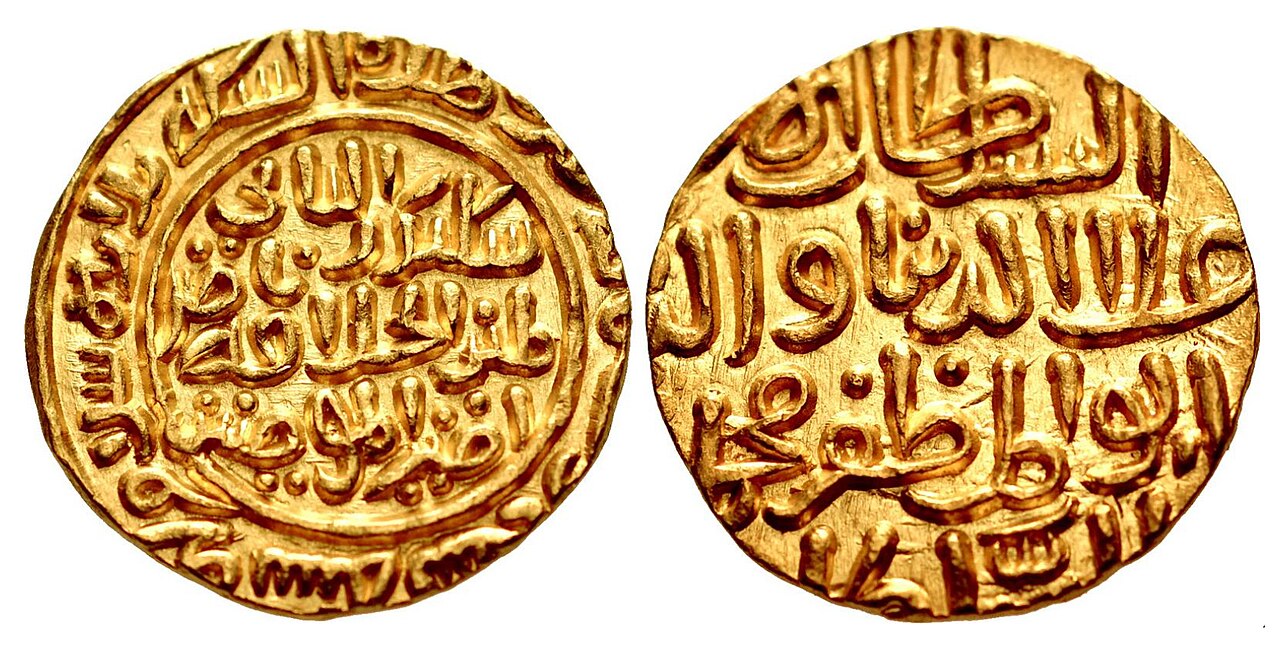
Two sides of a gold coin with raised Arabic calligraphic inscriptions in concentric circles. The left side has text in the center and around the rim; the right side has text in the center and a border of script around the edge.Artifact

Primary source

Delhi Sultanate Coin of Ghiyath al-din Balban, AH 677

1278-9 CE (AH 677)

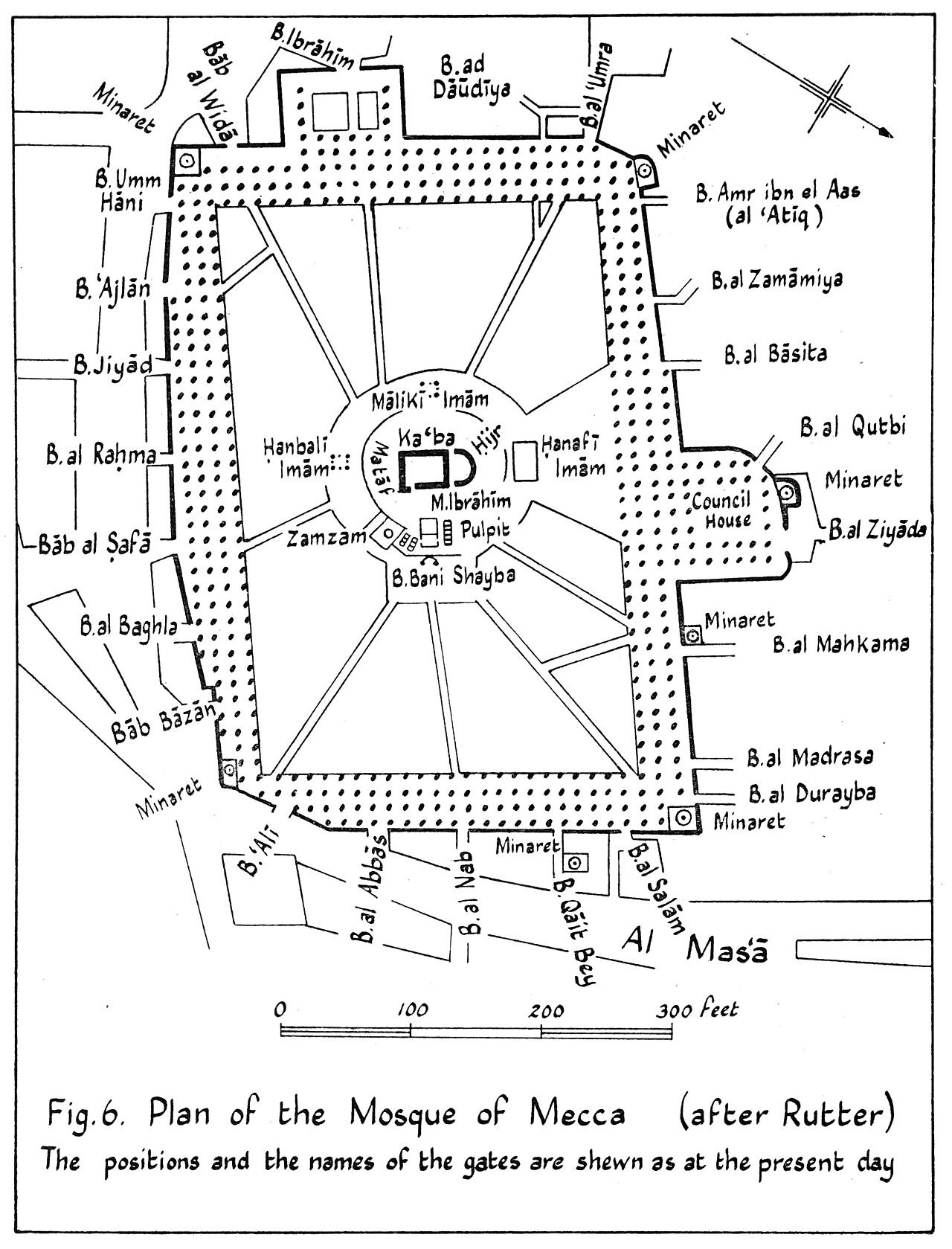
Line-drawing plan of the Mosque of Mecca with the Kaaba, Zamzam, Maqam Ibrahim, and pulpit at center, surrounded by arcaded courtyard and labeled gates (Bab al Wida, Bab al Umra, Bab Bazan, Bab al Safa). Scale bar in feet at bottom and caption 'Fig.6. Plan of the Mosque of Mecca (after Rutter)'.Document

Secondary source

Plan of the Mosque of Mecca

1354

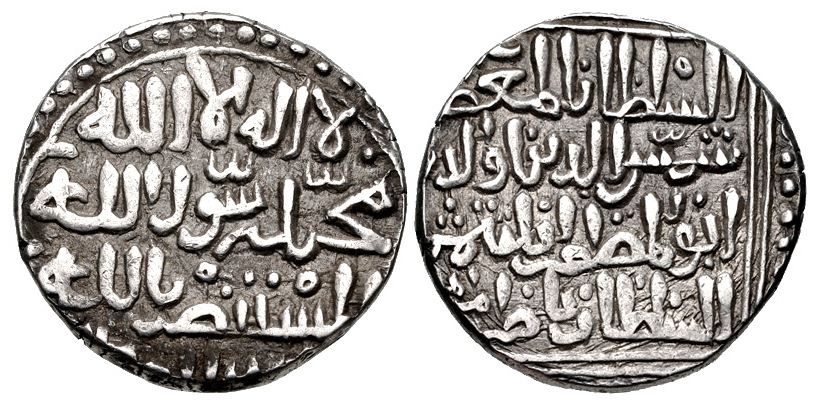
Two sides of a silver coin. Left side has Arabic inscriptions in a circular field with a beaded border, including the Islamic declaration of faith. Right side shows Arabic inscriptions in a rectangular field with a beaded border on the edge.Artifact

Primary source

Delhi Tanka of Iltutmish

Shams al-Din Iltutmish (mint of Delhi) · AH 607-633 / AD 1210-1235

Two views of a round gold coin with raised Arabic calligraphy: the obverse has a central inscription within a beaded border and marginal text; the reverse has a larger inscription in several lines. The coin is bright gold and shown at close range.Artifact

Primary source

Delhi Coin of Ala al-Din Muhammad

Ala al-Din Muhammad (Dar al-Islam mint) · AH 709 (AD 1309-10)

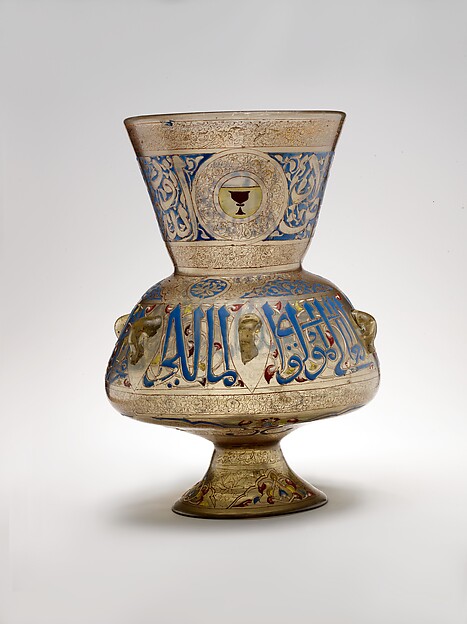
Photograph of a glass mosque lamp with a flared neck, rounded body, and short foot, decorated with gold and blue enamel. Blue and gold Arabic calligraphy wraps the body, with a medallion showing a lamp on the neck and three loop handles on the shoulders. Plain light background.Artifact

Primary source

Mosque Lamp of Amir Qawsun

'Ali ibn Muhammad al-Barmaki · ca. 1329–35

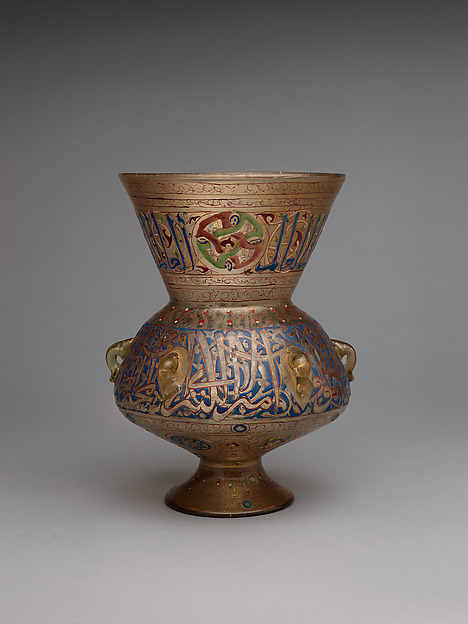
Photograph of a mosque lamp made of enameled glass, with a flared neck, globular body, three loop handles, and a short foot. Blue and red enamel calligraphy and ornament cover the gold-toned surface against a grey background.Artifact

Primary source

Mosque Lamp of Enameled Glass

14th century

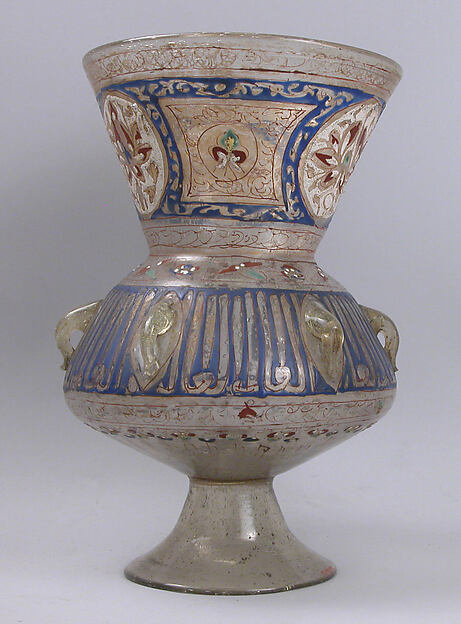
A glass mosque lamp with a flared neck and a footed base, decorated with blue and gold enamel, red and green floral motifs, and bands of Arabic-style script. Two loop handles are on the body.Artifact

Primary source

Mosque Lamp, Colorless Glass

14th century

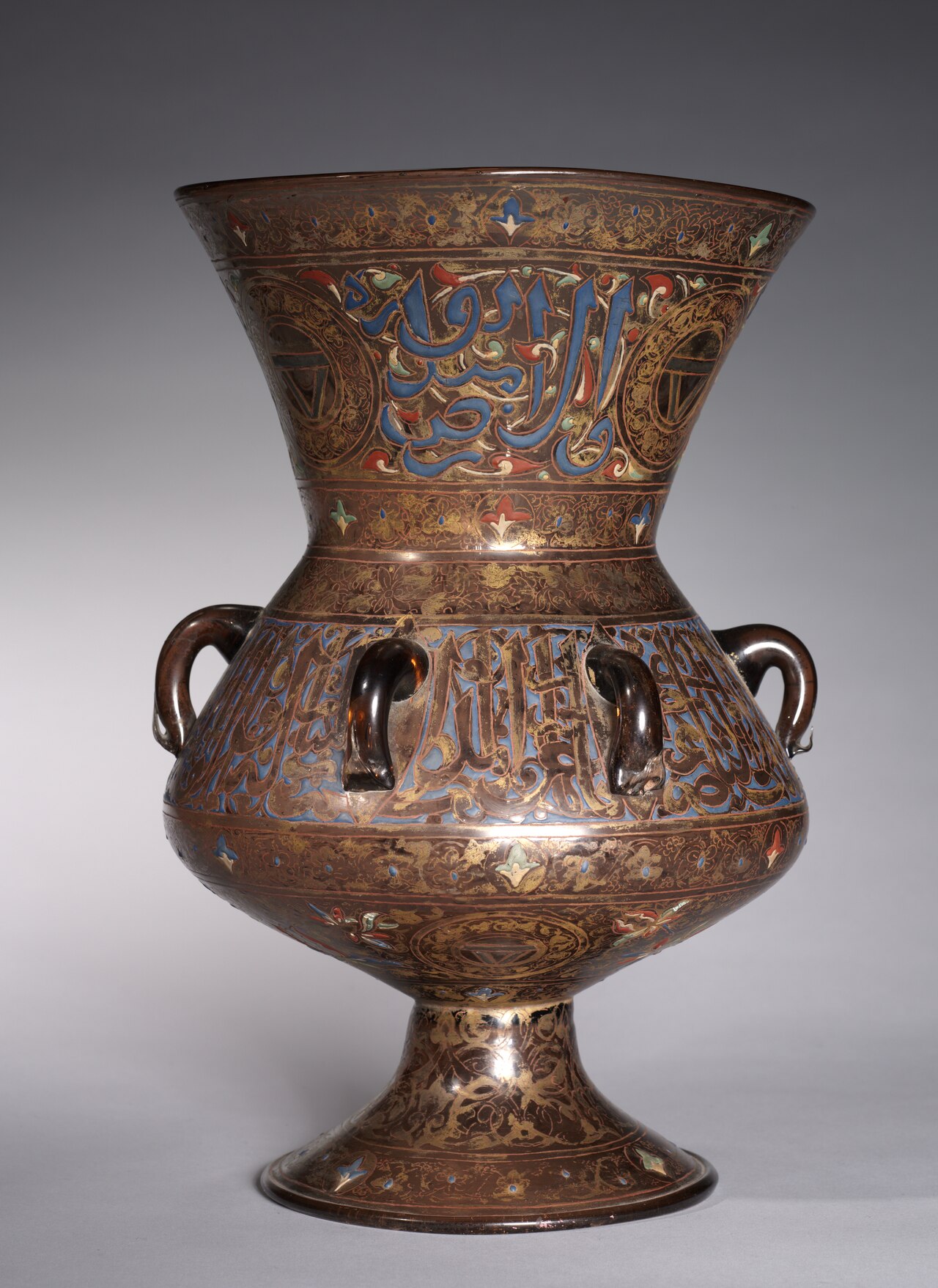
Brown metal mosque lamp with a flared neck, rounded body, and splayed foot, decorated with gold and blue enamel Arabic calligraphy bands, floral scrollwork, and three looped handles on the shoulder. Gray background.Artifact

Primary source

Mosque Lamp with Verse of Light Inscription

circa 1315

Title page of The Travels of Ibn Battuta, Vol. II, Hakluyt Society, Second Series No. CXVII, issued for 1959. Black serif text on white background; no map or illustration is visible.Book

Secondary source

Title Page, The Travels of Ibn Battuta, Vol. II (Hakluyt Society Edition)

Hakluyt Society · 1959 edition (text originally 1354-06-12)

Want the full shelf? Chat with Ibn Battuta in the app and open the Sources panel — every quote links back to the original.

Use Ibn Battuta in class

1 collection

A ready-made collection from the Humy team that features Ibn Battuta. Preview it, then try it free.

Trusted by educators worldwide

Conversations
375,000+
Real exchanges between students and historical figures
Messages exchanged
4,142,000+
Across every figure, classroom and language
Historical figures
100,000+
Each informed by a curated biography and selected sources
Languages supported
50+
From English and Spanish to Arabic and Korean

Paying customers

Used by 98 schools and universities

Partner school logo
Tecnológico de Monterrey logo
Hyper Island logo
Partner school logo
Chambersburg Area School District logo
Broward County Public Schools logo
Nebo School District logo
National Louis University logo
South Florida PBS logo
Punahou School logo
University of Wisconsin–River Falls logo
Partner school logo
Partner school logo
Archbishop Mitty High School logo
Kingsburg High School logo
Norwalk Public Schools logo
Partner school logo
Connections logo
Partner school logo
Moore Public Schools logo
Partner school logo
Partner school logo
Partner school logo
Partner school logo
Robbinsville Public Schools logo
Partner school logo
Partner school logo
Partner school logo
Tecnológico de Monterrey logo
Hyper Island logo
Partner school logo
Chambersburg Area School District logo
Broward County Public Schools logo
Nebo School District logo
National Louis University logo
South Florida PBS logo
Punahou School logo
University of Wisconsin–River Falls logo
Partner school logo
Partner school logo
Archbishop Mitty High School logo
Kingsburg High School logo
Norwalk Public Schools logo
Partner school logo
Connections logo
Partner school logo
Moore Public Schools logo
Partner school logo
Partner school logo
Partner school logo
Partner school logo
Robbinsville Public Schools logo
Partner school logo
Partner school logo

What educators are saying

“We enjoyed the program last year and used it frequently.”
“My students say it’s a welcome change of pace. I’m not a fan of the “sage on the stage” model, so I try to incorporate research-oriented and self-paced activities. With Humy, students have to take charge of their learning. They’ve become more adept at critical thinking, forming better questions, and improving their reading comprehension. The interview feature has been my go-to tool. I create assignments where students must ask historical figures a set number of questions, then summarize the responses to ensure they’re truly absorbing the material. This approach lets them actively explore the past rather than passively consuming information.”
“Humy has helped me bring historical figures, sometimes long past, to life. When my students interact with these figures in real-time, it eliminates some of the perceived “ancient” characteristics of my curriculum. This has shifted my students’ thinking away from viewing history as abstract or irrelevant. Real-time interactions make historical figures relatable, even allowing students to ask off-topic questions that help put historical lives in a more relevant context for 13-year-olds. The feature I use the most is the interview feature. After teaching a topic, most recently Gandhi and Joan of Arc, I have the students ask pointed, focused questions. We practice good conversation techniques beforehand, teaching them to listen (or read) carefully and formulate thoughtful follow-up questions rather than just interrogating. It helps students practice effective conversation skills.”

FAQ

Frequently asked questions

Who is Ibn Battuta?
Renowned Moroccan explorer and traveler. On Humy.ai you can chat with an AI version of Ibn Battuta that draws on a short biography and 68 historical sources during the conversation — by text or voice, in 42 languages.
Is Ibn Battuta AI free?
Ibn Battuta is part of Humy's full library of more than 100,000 figures, which comes with a paid plan. A free account (no credit card) includes 20 messages a month with the free library's figures, so you can try how the conversations work first.
What sources does the Ibn Battuta AI use?
It draws on a short biography and 68 historical sources (artifacts, books and documents), including “The Rihla”, “Manuscript of the Rihla by Ibn Juzayy” and “Tughlaqabad Fort”. Each source has its own page on Humy.ai.
How historically accurate is the AI version of Ibn Battuta?
Each figure uses a short biography and a small set of selected historical sources as context (retrieval-augmented generation), so answers stay closer to known material than the model's general knowledge alone. It isn't a citation-grade research tool — like any LLM, the AI can get details wrong or extrapolate. Treat it as a strong starting point for inquiry and cross-reference important claims.
Can I talk to Ibn Battuta by voice?
Yes. In addition to text chat, you can call Ibn Battuta and hear their voice respond in real time — useful for auditory learners, interview practice and Socratic dialogue.
Is Humy.ai safe and compliant for schools?
Yes. Humy.ai is used by more than 100 schools, universities and organisations. The platform is FERPA- and GDPR-aligned, supports SSO, and offers an IT-approval pack tailored for school procurement teams.

Ready when you are

Start chatting with Ibn Battuta now.

20 messages free · No credit card · Available in 50+ languages.